Top Die Casting High Precision Casting Suppliers for Quality Solutions
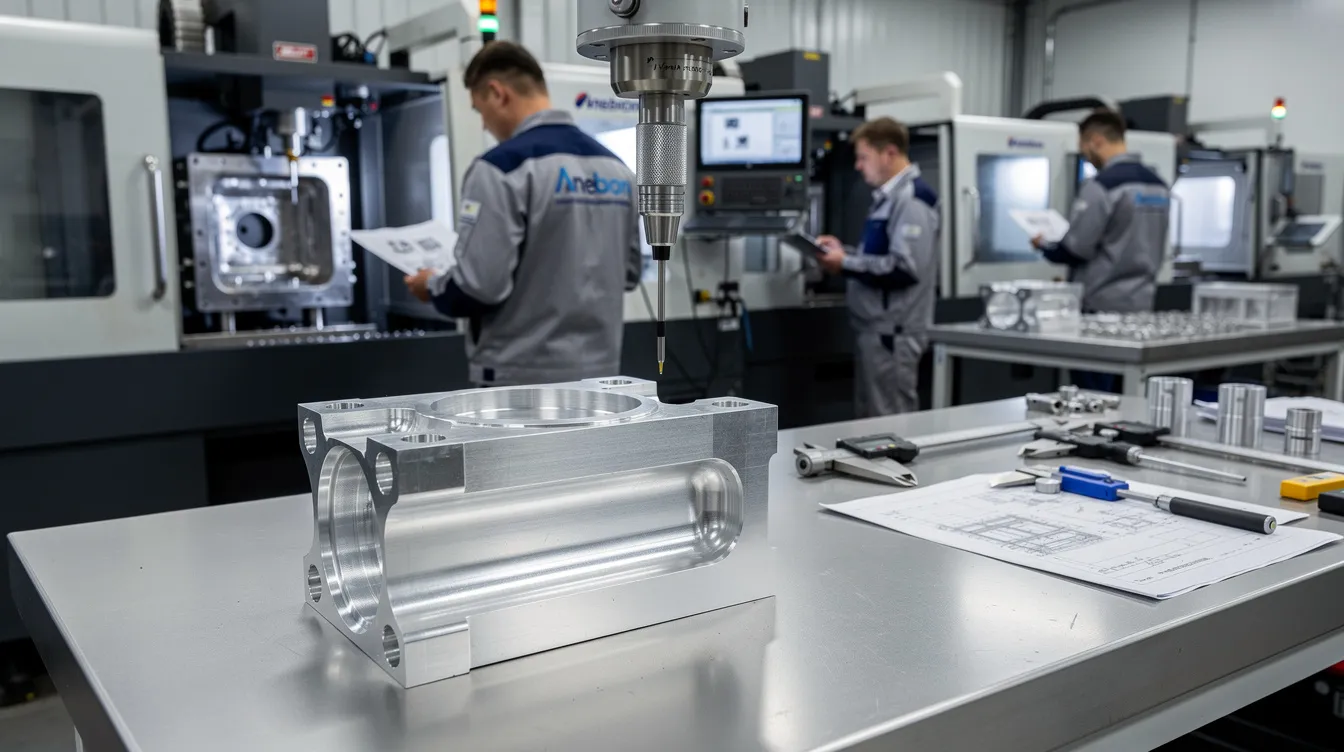
Die Casting High Precision Casting Suppliers: How Anebon Delivers Tight-Tolerance Metal Parts
Finding die casting high precision casting suppliers that can consistently deliver complex metal parts with verifiable dimensional accuracy is one of the most consequential decisions an OEM engineering team will make. This guide breaks down what separates a precision die casting supplier from a standard one, how aluminum cold chamber die casting works at a technical level, and why Anebon Metal Products Limited has built its operations around tight tolerances, integrated CNC machining, and full-service casting solutions for demanding industries.
Overview: What “High Precision” Die Casting Suppliers Actually Do
A high precision die casting supplier does more than pour molten metal into a mold. These companies operate at the intersection of die casting, CNC machining, and surface finishing to produce high precision metal components that meet exact specifications for fit, function, and assembly. They serve overseas OEMs in industries where dimensional accuracy, surface integrity, and repeatability directly affect product performance – aerospace, medical devices, automotive and EV, electronics, and robotics.
Anebon Metal Products Limited is a B2B/OEM-focused metal fabrication company headquartered in Dongguan, Guangdong, China. Founded in 2010, Anebon specializes in aluminum die casting, precision CNC machining (including multi-axis milling and turning), and sheet metal fabrication. The company holds ISO 9001:2015 and ISO 14001:2015 certifications and serves clients across five continents.
What sets a high precision supplier apart from a general casting company is measurable: die casting produces parts with tight tolerances of ±0.05 mm on linear dimensions, and die casting tolerances can be as tight as ±0.001 inches on critical features. With integrated CNC machining, Anebon pushes that further – down to ±0.002 mm under controlled conditions. High-precision parts require tight tolerances from suppliers, and that capability gap matters when standard die casting services only guarantee ±0.1–0.5 mm.
Here is what these suppliers typically produce:
-
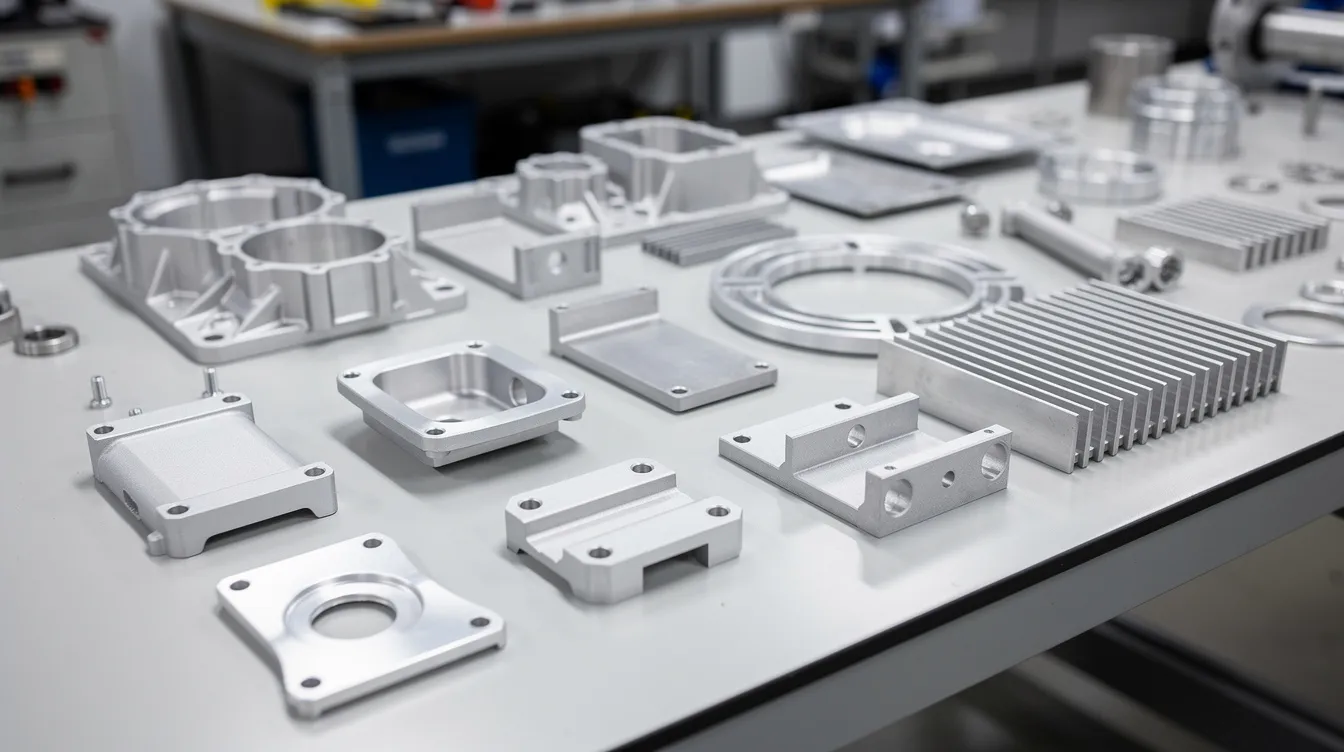
Medical pump housings with leak-tight sealing surfaces and precise fluid passages
-
Automotive gearbox covers requiring flatness under 0.05 mm on mating faces
-
Drone motor mounts with thin walls (2–3 mm), high stiffness, and precise bolt-hole patterns
-
Electronic heat sinks demanding flat thermal interfaces and good surface integrity for coatings
-
Robotics end-caps and brackets with tight true-position requirements for bearing seats
Die Casting Basics: From Molten Metal to High-Precision Cast Parts
The die casting process starts with molten metal – typically aluminum, zinc, or magnesium alloy – forced under high pressure into a hardened steel die cavity. Once the metal solidifies against the cooled die surfaces, the die halves separate, ejector pins push the part out, and the cycle restarts. Die casting enables rapid production cycles, often under a minute per shot, which is why the process dominates for high volume production of complex shapes with minimal finishing required afterward. Die casting allows for complex shapes with minimal machining because the die itself forms the part geometry with high fidelity.
The core die casting process involves clamping, injection, cooling, ejection, and trimming. Compared to other methods like sand casting or investment casting, high pressure die casting delivers superior repeatability, speed, and surface quality. Sand casting uses expendable molds with lower surface finish and larger tolerances. Investment casting achieves good accuracy but at slower speeds and higher per-piece cost. High-pressure die casting allows for rapid production of precise components at scale – especially in aluminum and zinc alloys.
Key metals used in die casting:
-
Aluminum alloys (A380, ADC12, A383) – dominant for lightweight, thermally conductive, structural parts
-
Zinc alloys (Zamak series) – excellent for fine details and superior surface finishes
-
Magnesium alloys – extreme lightweight, high strength-to-weight ratio
-
Copper-based alloys – specialized applications requiring thermal or electrical conductivity
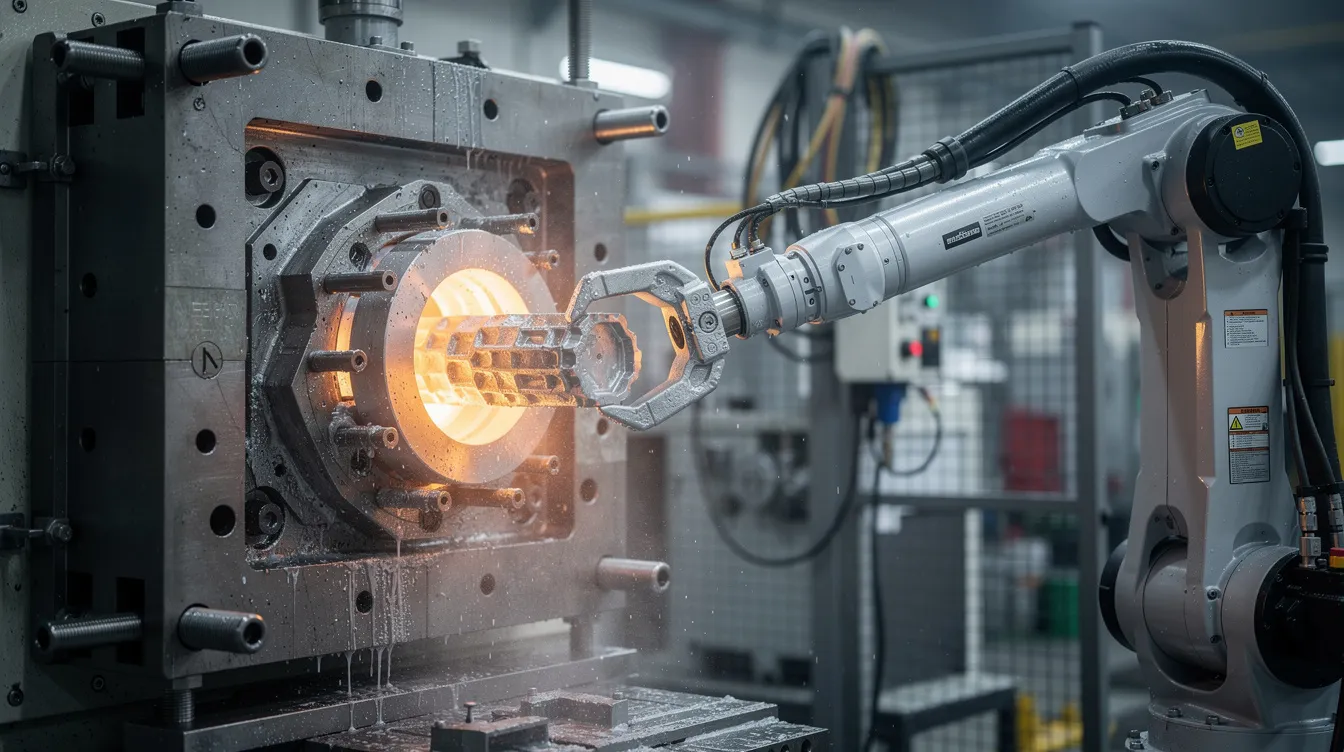
Die casting machines come in two main configurations. Hot chamber die casting is suitable for low-melting-point metals like zinc, where the injection mechanism sits submerged in the melt. Cold chamber die casting is used for metals with higher melting points – primarily aluminum – where molten aluminum is ladled from a separate furnace into a shot sleeve before injection. Die casting molds are often made in two sections for uniformity and precise parting-line control.
High Precision Requirements: Tolerances, Surface Finish, and Stability
“High precision” in die casting is defined by numbers, not marketing language. Die casting can achieve dimensional accuracy of ±0.05 mm on linear features and ±0.10 mm on hole positions as-cast. Die casting molds typically maintain tolerances of ±0.003″ to ±0.005″ across their working life. When critical interfaces demand more, CNC machining brings features to ±0.005–0.025 mm, and Anebon’s controlled-environment machining reaches ±0.002 mm on specific dimensions. Die casting produces parts with complex geometries and tight tolerances – but the tightest numbers always come from the combination of casting and machining.
High-pressure die casting improves dimensional accuracy and surface finish compared to gravity or low-pressure methods. Here are the key considerations for precision:
-
As-cast surface finish from aluminum HPDC: Ra 1.6–3.2 µm, depending on die polish and alloy
-
Machined surfaces (milling, turning): Ra 1.6–3.2 µm standard; fine boring or grinding reaches Ra 0.4–0.8 µm
-
GD&T controls – flatness, parallelism, perpendicularity, true position – become essential for mating faces and assembly datums
-
Dimensional stability over longer part spans requires controlled die temperature, uniform cooling, and shrinkage management
-
Capability indices (Cp, Cpk) measured on critical dimensions across production runs ensure long-term consistency
Concrete examples: a medical device housing may require sealing faces machined to Ra ≤0.8 µm with flatness under 0.05 mm. An EV power electronics enclosure demands heat-sink surfaces flat to 0.05 mm with hole-pattern true position of ±0.05–0.10 mm. These are the tolerances that separate precision die casting from commodity casting.
Aluminum Die Casting and Cold Chamber Die Casting Explained
Aluminum die casting dominates the precision casting landscape for good reason. Aluminum is lightweight and corrosion-resistant, with a density of ~2.7 g/cm³, tensile strength of 320–360 MPa (alloy-dependent), and thermal conductivity of ~96 W/m·K. These properties make it the default choice for die cast components in automotive, electronics, and aerospace applications where weight, heat dissipation, and structural integrity all matter.
In a cold chamber die casting machine, molten aluminum is held in a separate furnace – a necessity because aluminum’s melting range (~540–595°C for A380-type alloys) would attack the injection components of a hot chamber system. The process works as follows:
-
Aluminum is melted in an external furnace and ladled into the shot sleeve
-
A hydraulic plunger injects the alloy into the die cavity at high pressure (typically 70–140 MPa)
-
Cooling channels in the die extract heat; the metal solidifies rapidly
-
The die opens, ejector pins release the part, and gates and runners are trimmed
Compared to aluminum, zinc die castings are known for their high density and ductility – ideal for small, detail-rich zinc die cast components like connectors and hardware. Magnesium has a high strength-to-weight ratio but is more expensive and harder to handle safely. Copper die castings offer excellent thermal and electrical conductivity but impose significant die wear due to high melting temperatures.
From 2024 through 2026, the EV powertrain sector has driven major demand for cold chamber die casting. Inverter housings, battery tray components, and motor casings require thin walls (2–3 mm), high thermal management performance, and critical mounting hole patterns – all produced in aluminum alloys like A380 or ADC12.
Advanced Die and Tooling Design for Complex Geometries
The die is the single most important variable in precision casting. Advanced die design – covering thermal management, venting, gating, and parting-line placement – directly determines part accuracy, porosity levels, surface finish, and cycle time. Die casting is cost-effective due to reusable molds, but only when the tooling is designed correctly from the start.
Anebon provides DFM support during the CAD phase, offering feedback to reduce undercuts, optimize draft angles, and maintain uniform wall thickness. This early collaboration between the engineering team and the customer prevents costly tool revisions later. Key tooling elements include:
-
Gates and runners sized to ensure smooth, laminar metal flow into the mold cavity
-
Overflow wells to capture initial cold metal and gas, reducing porosity in the final part
-
Vacuum ports that evacuate air from the die cavity before injection – critical for reducing gas porosity below 2% of surface area
-
Cooling channels engineered for uniform die temperature and consistent solidification
-
Slides, lifters, and core pins to form undercuts and internal features without compromising quality
Cores in die casting should be designed long enough to withstand stress during injection and ejection. Adding ribs to designs enhances structural integrity and reduces material use – a principle that also helps avoid sink marks on cosmetic surfaces. Simulation tools (mold flow, thermal analysis, solidification modeling) predict fill patterns, air entrapment, and shrinkage zones before the die is cut, saving weeks of trial-and-error.
Integrated CNC Machining and Secondary Operations
Even with die casting producing parts at ±0.05 mm, many functional features require tighter tolerances that only CNC machining can deliver. Sealing faces, bearing bores, threaded holes, and datum surfaces regularly need machining to ±0.005–0.025 mm. Secondary operations in die casting can include CNC machining, heat treatment, and assembly – and suppliers that handle these in-house eliminate handoff delays and tolerance stack-up between vendors.
Anebon operates 3-axis, 4-axis, and 5-axis CNC machining centers alongside CNC turning equipment, enabling post-cast machining of complex features in a single setup. This matters because CNC machining on cast parts requires custom fixturing that references as-cast datums – expertise that general machine shops often lack.
Concrete examples of integrated casting + machining:
-
Machining datum faces and bearing seats on aluminum gearbox housings to ±0.01 mm
-
Drilling and tapping M2–M8 threads in electronics enclosures with positional accuracy of ±0.05 mm
-
Fine-boring hydraulic valve seats in medical pump housings to Ra ≤0.8 µm
Typical secondary operations beyond machining include deburring, shot blasting, grinding, anodizing, powder coating, wet painting, chromate conversion, and vacuum impregnation for porosity sealing. Die cast components are highly durable and wear-resistant, and when combined with the right surface treatment, they deliver optimal performance across demanding service environments. This casting-machining-finishing workflow is what enables delivering high quality parts from a single source.
Quality Systems and Certifications: What to Expect from a Precision Casting Company
Quality control is essential for high-precision components in die casting, and a credible casting company backs its claims with certified systems and measurable data. ISO 9001:2015 certification ensures quality management in die casting through documented procedures, traceability, and continuous improvement. Anebon also holds ISO 14001:2015 for environmental management – increasingly important for OEMs with sustainability mandates.
Quality assurance processes minimize defects in die cast components. Here is what a well-equipped precision supplier provides:
-
PPAP (Production Part Approval Process) for automotive clients; FAI (First Article Inspection) for new tooling
-
Control plans and capability studies (Cp ≥ 1.33, Cpk ≥ 1.33 minimum; target Cpk ≥ 1.67) on critical dimensions
-
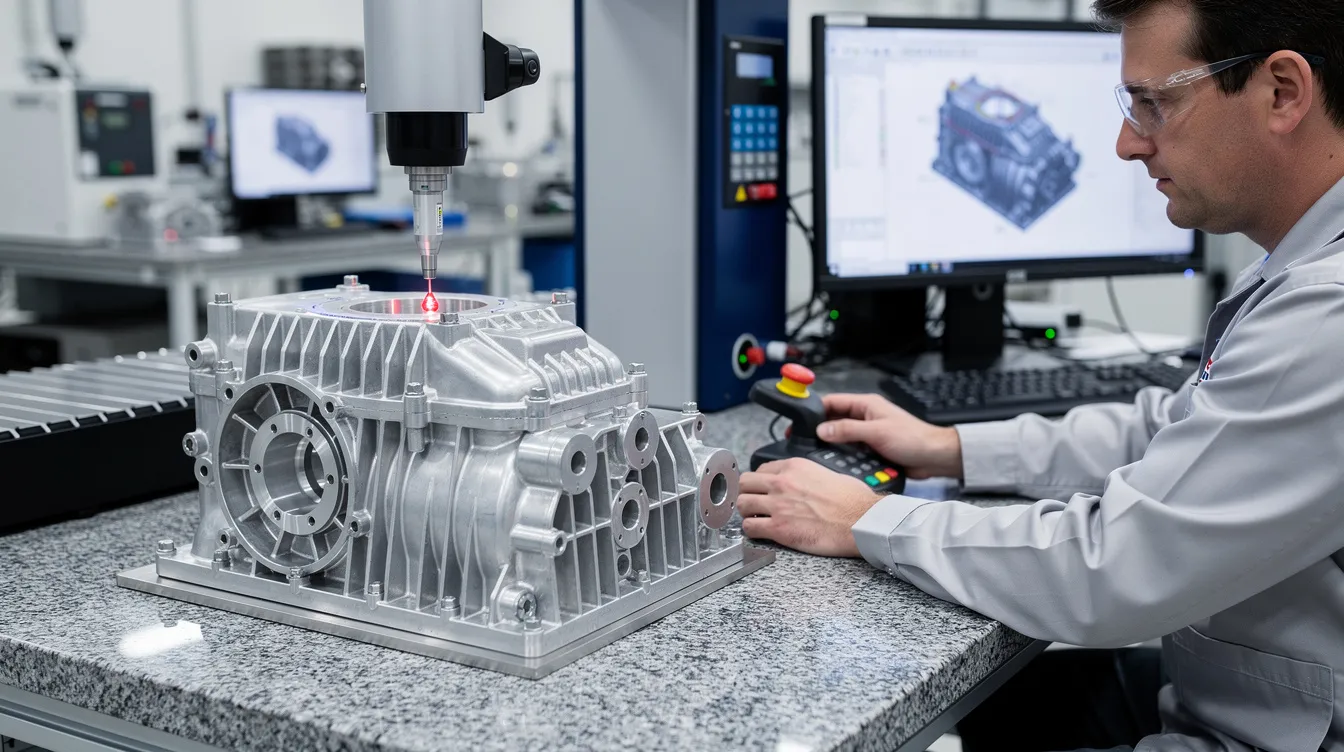
CMM (coordinate measuring machine), optical comparators, surface roughness testers, hardness testers, and X-ray inspection for internal defect detection
-
Material traceability is important for quality assurance in manufacturing – full documentation from ingot lot to finished part
-
Inspection reports, material certificates, and RoHS/REACH compliance statements delivered with each shipment
IATF 16949:2016 certification is crucial for automotive die casting quality and should be verified when sourcing for automotive programs. Verifying quality certifications is critical for supplier reliability – ask for certificate copies, audit dates, and scope of certification.
Industries and Applications for High-Precision Die Cast Parts
Key industries served by die casting include automotive, electronics, and consumer goods – but the demand from aerospace, medical, and robotics has grown substantially since 2020. Between 2020 and 2026, EV adoption and robotics automation have driven a measurable increase in demand for aluminum die casting in cold chamber die casting machines.
-
Automotive/EV: Die casting is widely used in the automotive industry. Nearly all engine blocks are die cast in automotive manufacturing, and the EV transition has added inverter housings, motor casings, and structural frames to the mix.
-
Medical devices: CT scanner brackets, surgical tool housings, and pump enclosures requiring leak-tight sealing and biocompatible coatings.
-
Electronics: The electronics industry relies on magnesium die castings for housings. Aluminum heat sinks for LED lighting and power electronics demand smooth surfaces and flatness for thermal contact.
-
Industrial automation and robotics: Servo motor end caps, robotic arm joints, and gearbox housings where dimensional stability and weight reduction improve cycle speed and accuracy.
-
Consumer goods: Die casting produces components like gas pump handles and faucets. Zinc castings are used for door handles and cabinet hardware, and zinc die casting remains the go-to for decorative hardware with fine detail.
How to Evaluate High Precision Casting Suppliers
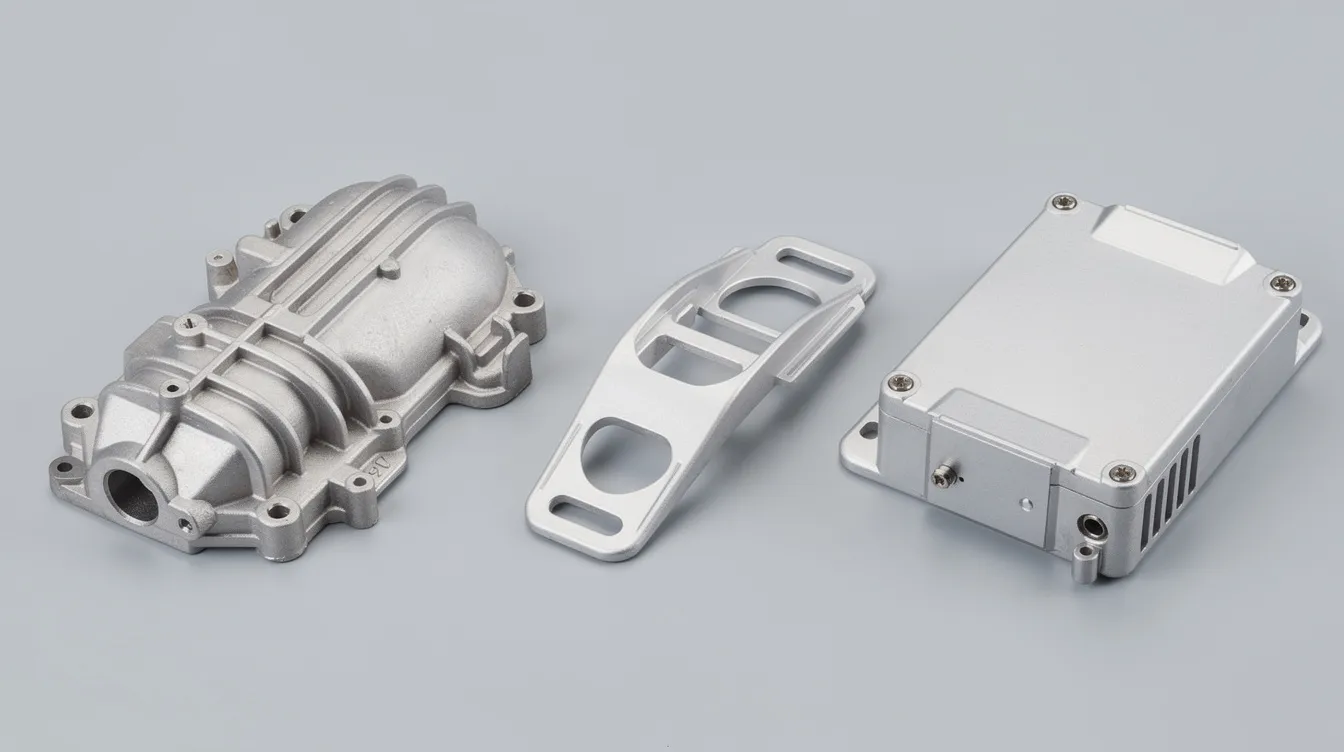
Choosing the right manufacturing partner requires more than comparing unit prices. Suppliers should focus on technical expertise, production capacity, and quality certifications – and you should verify each claim with evidence. Assessing vendor quality assurance methods is critical for meeting specifications, and NADCA provides a searchable database of die casting companies and industry suppliers that can serve as a starting point.
Use this checklist when evaluating die casting companies:
-
Confirm cold chamber die casting tonnage range, maximum part envelope, and annual shot capacity
-
Verify ISO 9001:2015 and any industry-specific certifications (IATF 16949 for automotive, ISO 13485 for medical)
-
Manufacturers should have experience with specific metals like zinc, aluminum, magnesium, or copper – ask for material-specific case studies
-
Die casting suppliers should have the capacity to scale for high volume production – confirm whether they run single-shift or multi-shift operations
-
Evaluate in-house CNC machining and finishing versus reliance on subcontractors for critical secondary operations
-
A strong supplier should respond quickly to technical questions and provide clear production schedules
-
Request sample parts, DFM reports, and inspection plans before committing to production tooling
-
Review documentation practices: do they provide PPAP packages, material certs, and dimensional reports as standard?
Design for Manufacturability (DFM) with High Precision Die Casting
Anebon’s approach to DFM starts during the CAD phase – before any steel is cut. The goal is to balance part performance, precision, and tooling costs through collaborative design review with the customer’s engineering team.
Key DFM rules for precision die casting:
-
Maintain uniform wall thickness (typically 2–4 mm for aluminum) to avoid shrinkage porosity and uneven cooling
-
Apply proper draft angles (1–3° minimum) on all surfaces parallel to die pull direction for clean ejection
-
Use radii on internal corners to improve metal flow and reduce stress concentrations
-
Design ribbing strategies for stiffness – ribs at 50–60% of adjacent wall thickness help avoid sink marks while enhancing structural integrity
-
Part consolidation: combining multiple machined parts into a single casting reduces assembly steps, eliminates alignment issues, and lowers total cost
-
Die casting is not economical for quantities under 1000 parts – DFM reviews should confirm that projected volumes justify tooling investment
A practical example: redesigning a multi-piece machined bracket assembly (originally five CNC-machined aluminum pieces with fasteners) into a single aluminum die cast part with integrated mounting bosses and alignment features. The result: fewer assembly operations, reduced tolerance stack-up, and lower per-unit cost at volume.
Typical Die Casting Project Flow at Anebon
Here is the step-by-step flow from initial inquiry to mass production:
-
RFQ and NDA: Customer submits CAD files, 2D drawings, and technical requirements. NDA signed to protect IP.
-
DFM review: Anebon’s engineering team reviews geometry, proposes changes to improve castability, and identifies critical tolerances requiring machining.
-
Quotation: Detailed quote covering tooling costs, unit pricing at target volumes, lead times, and secondary operations.
-
Tool design: 1–2 weeks for die design, including simulation (mold flow, thermal analysis) and customer approval.
-
Tool manufacture: 4–6 weeks for new aluminum cold chamber tooling after design freeze.
-
T0 samples: 1–2 weeks for initial sample shots. Parts measured against drawing; dimensional report issued.
-
Validation: Customer reviews samples and inspection data. Adjustments made if needed (T1, T2 iterations).
-
Ramp-up: Transition to production quantities with established process parameters and control plans.
Communication touchpoints for overseas clients include design reviews via video call, weekly status updates during tooling, and structured feedback loops after each sample iteration. Submitting rapid prototypes (CNC-machined from solid) can help in negotiating production tooling by confirming form and fit before die investment. Engineering change requests (ECR/ECO) are managed through a formal revision process that avoids disrupting ongoing production for existing cast parts.
Balancing Cost, Precision, and Volume
Die casting’s economics hinge on the relationship between tooling investment and per-piece cost. Tooling for a cold chamber aluminum die can range from several thousand to tens of thousands of dollars, depending on complexity. But die casting is ideal for high-volume production of metal parts – once the die is built, per-piece costs drop significantly compared to CNC machining from solid billet.
-
Die casting is commonly used in automotive and electronics industries precisely because annual volumes justify tooling
-
For a part machined from solid aluminum at 15–20 minutes per piece, switching to die casting + targeted CNC machining might cut cycle time to 2–3 minutes total – a cost reduction of 60–80% at volumes above 2,000–5,000 units per year
-
Higher-precision requirements increase tool complexity (more slides, tighter polishing, vacuum assist) and machining content – Anebon optimizes this balance by identifying which features truly need ±0.01 mm versus which can stay at as-cast ±0.05 mm
-
For prototyping and low volumes (<500 units), CNC machining alone is typically more economical; die casting becomes the clear winner above 1,000 units for cost efficiency
Materials and Alloys Used in High Precision Die Casting
The choice of die casting materials directly affects castability, mechanical properties, machining behavior, and finishing options. Here are the most common aluminum die casting alloys:
-
A380: ~8.5% Si, 3.5% Cu. UTS ~324 MPa, yield ~159 MPa, elongation ~3.5%. The workhorse alloy for general-purpose housings and structural die cast parts.
-
ADC12 / A383: Higher silicon (~10–12%), better fluidity for thin-wall fill, slightly lower strength. Common in consumer electronics and sensor housings.
-
A360: Better corrosion resistance and pressure tightness than A380. Preferred for fluid-handling and marine applications.
Beyond aluminum and zinc die casting alloys, magnesium (AZ91D) offers the lightest option with good strength, while copper alloys provide unmatched thermal and electrical conductivity for specialized die casting products. Lead and tin are less commonly used due to health regulations – RoHS and REACH compliance restrict cadmium, lead, and hexavalent chromium content, which is particularly relevant for medical devices and electronics.
Material selection also affects downstream processes. Higher silicon content in aluminum alloys increases abrasiveness during CNC machining, accelerating tool wear. Copper content improves hardness but can complicate anodizing. These interactions between alloy chemistry and secondary operations are why a broad range of materials expertise matters when selecting a manufacturing partner.
Process Control and Defect Prevention in Precision Casting
Precision in die casting is maintained through process control – not just post-production inspection. Key parameters controlled in high pressure die casting include:
-
Melt temperature: A380 aluminum melts at ~540–595°C; maintaining consistency prevents hot tears and gas pickup
-
Die temperature: uniform heating via cooling channels and die pre-heating prevents cold shuts and uneven solidification
-
Injection speed and pressure: fast fill aids thin-wall sections but must be balanced against turbulence and gas entrapment
-
Cooling time: too short causes distortion; too long wastes cycle time
Common defects and their prevention:
-
Porosity (gas and shrinkage): controlled through vacuum assist, proper gating and overflow design, and avoiding thick cross-sections. Anebon targets porosity under 2% of surface area.
-
Cold shuts and misruns: prevented by optimizing gate size, die temperature, and injection parameters
-
Flash: minimized through die maintenance and proper clamping force
-
Warpage: managed through uniform cooling channel design and controlled ejection
Die casting parts typically maintain tolerances of ±0.003″ to ±0.005″ over the working life of the tool, and die casting can produce parts with tolerances as tight as ±0.001 inches with premium tooling and tight process windows. Real-world quality measures include leak testing (helium or pressure decay) for fluid-handling parts and X-ray or CT scans for safety-critical castings in aerospace and medical applications.
Case Study Examples: From Prototype to Full Production
2023 – Medical Pump Housing: A European medical OEM needed a leak-tight aluminum housing with sealing faces machined to Ra ≤0.8 µm and flatness under 0.05 mm. Anebon’s DFM review consolidated a three-piece machined assembly into a single die casting with integrated fluid channels and mounting bosses. CNC machining was applied only to sealing surfaces and critical bores. Outcome: part count reduced from 3 to 1, machining time cut by approximately 65%, and dimensional capability improved from Cp 1.0 to Cpk 1.67 on critical seal dimensions.
2024 – UAV Motor Mount: A drone manufacturer required a thin-wall (2.5 mm) motor mount in ADC12 with bolt-hole true position of ±0.05 mm. Anebon produced CNC-machined prototypes for flight testing within two weeks, then transitioned to cold chamber die casting for production volumes of 5,000+ units annually. Weight was held to target (42 g ±1 g), and surface finish met Ra 3.2 µm as-cast.
2025 – EV Charging Connector Enclosure: An automotive Tier 1 needed a connector housing with integrated heat sinks, IP67-rated sealing surfaces, and compliance with RoHS and REACH. Anebon delivered T0 samples in six weeks from design freeze, using A380 aluminum with anodized and powder coating finishes. The die casting solutions integrated vacuum assist to keep porosity below 1.5% on sealing faces.
Working with an Overseas High Precision Casting Supplier
North American and European OEMs sourcing from China often raise concerns about communication, IP protection, logistics, and lead time. These are legitimate, and the right manufacturing partner addresses them with systems rather than promises.
-
IP protection: Anebon executes NDAs before receiving CAD data and maintains secure file-handling protocols. Engineering drawings and tooling remain customer property.
-
Communication: English-speaking engineering support, video-call design reviews, and weekly written status updates during tooling and sample phases.
-
Logistics: Air freight for prototypes (3–7 days to most regions); sea freight for production (20–35 days depending on destination). Anebon coordinates packaging, customs documentation, and carrier selection.
-
Risk mitigation: Consider dual-sourcing for critical casting products, maintain safety stock of 4–6 weeks during production ramp, and involve the supplier early in the design phase to avoid late-stage surprises.
-
Lead times: Typical tooling lead time is 4–6 weeks; initial samples 1–2 weeks after tool completion; production ramp within 2–3 weeks of sample approval.
Working with a proven track record matters more than geographic proximity when the supplier’s systems, documentation, and responsiveness are verifiable.
Why Choose Anebon as Your High Precision Die Casting Partner
Anebon Metal Products Limited has operated as a precision die casting and CNC machining supplier since 2010, building its die casting experience across complex projects in aerospace, medical, automotive, electronics, and robotics. The company’s differentiators are concrete: ISO 9001:2015 and ISO 14001:2015 certifications, integrated cold chamber die casting and multi-axis CNC machining under one roof, and documented ability to hold tolerances down to ±0.002 mm on machined features.
As industry leaders in aluminum die casting with cold chamber technology, Anebon combines custom die tooling design, DFM collaboration, and a broad range of finishing options – anodizing, powder coating, wet painting, chromate conversion – to deliver high quality casting services from prototype to full-scale production without compromising quality at any stage.
-
Tight tolerances: ±0.05 mm as-cast; ±0.002 mm with integrated CNC machining
-
Die casting materials: aluminum alloys (A380, ADC12, A360), zinc alloys, magnesium
-
Full workflow: casting → machining → finishing → inspection → packaging → shipping
-
Online die casting services: submit CAD files and drawings for DFM review and quotation
-
Proven success in delivering high quality parts for medical devices, EV components, drone systems, and industrial equipment
Ready to start your next project? Send your CAD files and technical drawings to Anebon’s engineering team for a detailed DFM review and quotation. Whether you need rapid prototyping via CNC machining or high-volume aluminum die casting production, Anebon has the capabilities, certifications, and die casting experience to be your precision manufacturing partner.