Top Die Casting Companies in the China: A Comprehensive Guide
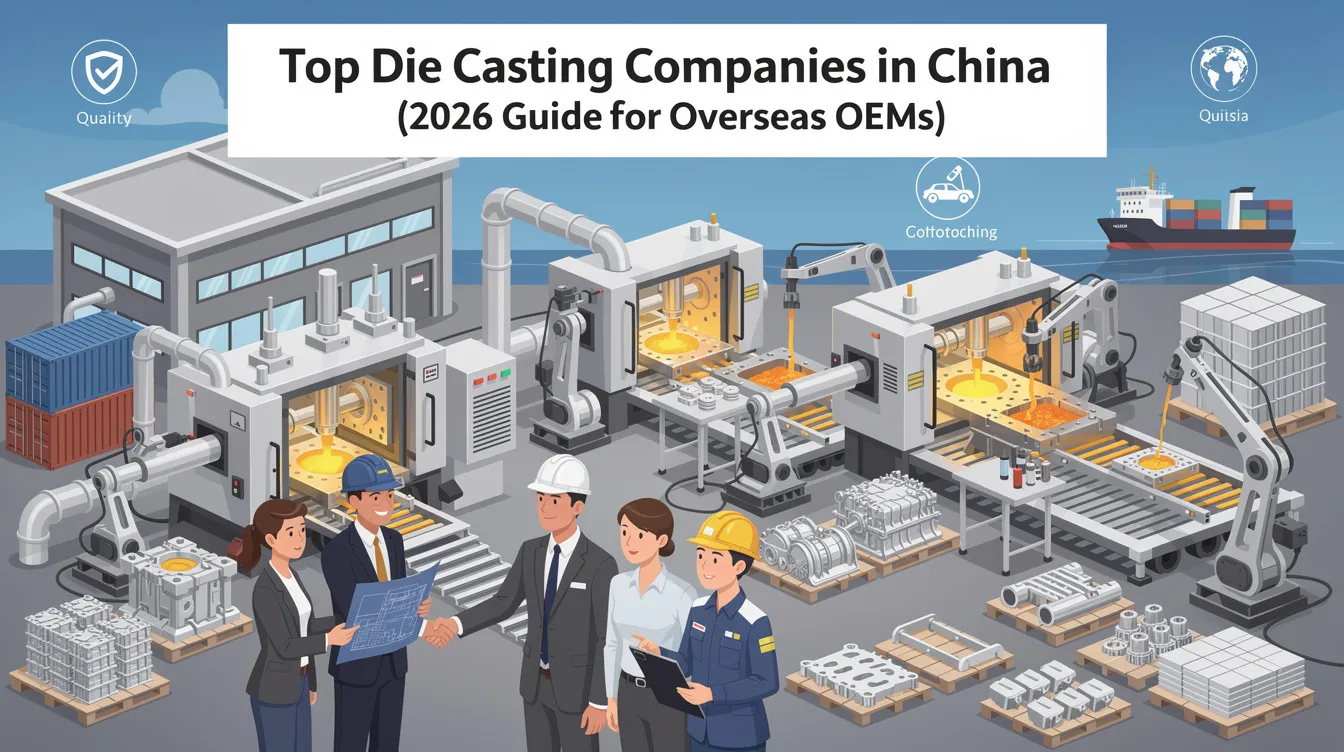
Top Die Casting Companies in China (2026 Guide for Overseas OEMs)
Introduction: Why Choosing the Right Die Casting Manufacturer in China Matters
China has a highly developed die casting sector specializing in automotive applications, EV components, electronics enclosures, and industrial equipment. The country’s aluminum die casting market reached approximately USD 4.8 billion in 2025 and is projected to grow at a 7.7% CAGR through 2033. The automotive sector represents the largest market for Chinese die casters, but demand from telecom, medical devices, and robotics is accelerating just as fast.
This guide answers a straightforward question: who are the top die casting companies in the china, and how should overseas OEMs evaluate them? You’ll find a quick-reference list of casting manufacturers, detailed profiles of aluminum die casting leaders, a breakdown of quality control practices, and practical advice on cost and lead time. We also profile our own company, Anebon Metal Products Limited, an ISO 9001:2015 and ISO 14001:2015 certified precision manufacturer in Dongguan, Guangdong, established in 2010 and serving global OEM clients with integrated die casting and CNC machining.
Quick Answer: The Leading Die Casting Companies in China You Should Know
The following is an at-a-glance list of representative top-tier Chinese casting manufacturers in 2026, presented in no particular order. This is not a ranked list – each company brings different strengths depending on your project requirements.
-
Guangdong Wencan Die Casting Co Ltd – Guangdong. Aluminum die casting for automotive and new energy vehicles. IATF 16949 certified. A leading aluminum supplier to major EV and ICE OEMs.
-
Chongqing Dajiang Millison Die Casting Co Ltd – Chongqing. High pressure die casting (350T–8,800T), telecom and automotive structural parts. ASI certified, serves Ford, Volvo, Rivian, Toyota.
-
EMP Tech Co Ltd – Ningbo. Precision aluminum die casting for automotive and electronics. IATF 16949, Zeiss CMM, x ray inspection.
-
Guangdong Hongtai Technology Co Ltd – Zhaoqing, Guangdong. 37 HPDC machines (160T–4,000T), ~15,000 tons annual capacity. Serves Toyota, Honda, BYD, Bosch.
-
Zhejiang Yongzhu Casting Technology Co Ltd – Zhejiang. Engine and structural aluminum casting for automotive applications.
-
Dalian Yaming Automotive Parts Co Ltd – Dalian. Automotive parts and powertrain housings.
-
Yangzhou Kaixiang Precision Casting Technology Co Ltd – Yangzhou. Aluminum structural parts, dual-clutch transmission housings. 200–500 employees.
-
Ningbo DeLeon Industrial Co Ltd – Ningbo. Die casting plus machining and surface finishing for a diverse range of industries.
-
Global Metal Plastic – Holds both IATF 16949 and ISO 13485 certifications, serving automotive and medical device sectors.
-
Anebon Metal Products Limited – Dongguan, Guangdong. Die casting cnc machining integration, rapid prototyping through full production, ISO 9001:2015 and ISO 14001:2015.
Additional manufacturers worth noting include Ningbo Yujun Mechanical Technology (established in 2014), Dongguan Xinghang Precision Hardware (founded in 2017), Suzhou Xiyi Trading (holds five quality certifications including ISO 9001), L-TOOLING (HK) with a facility size between 10,000 to 30,000 m², and Zhejiang Yulong Vehicle Industry which operates a factory size of over 30,000 m². Detailed profiles for selected companies follow below.
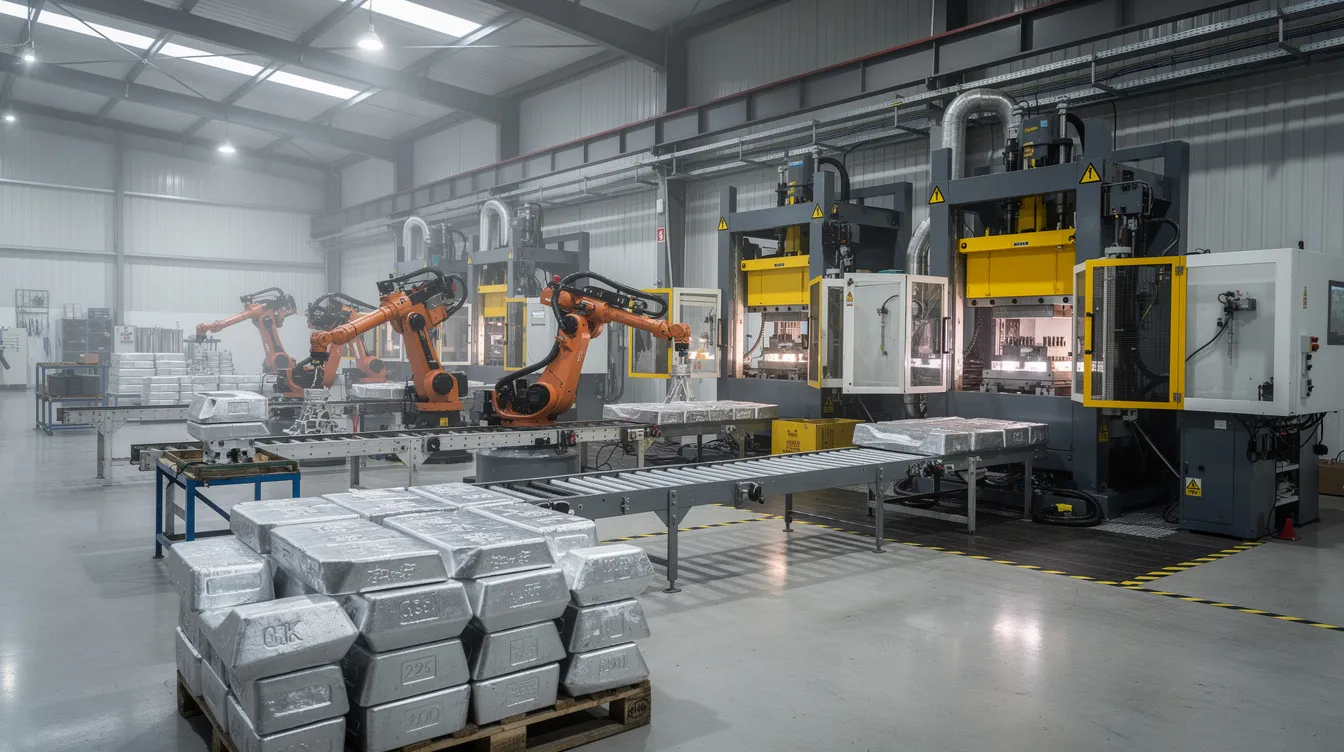
What Defines a “Top” Die Casting Company in China?
Beyond competitive pricing, what separates a trusted die casting partner from a generic supplier comes down to process capability, engineering depth, and export experience. Chinese manufacturers maintain strategic relationships with international quality certifications, and ISO 9001 and IATF 16949 are common certifications among reputable die casting manufacturers in china. Here are the criteria that matter most:
-
In-house tooling and mold design with simulation tools (Moldflow, FEA)
-
High pressure die casting capability – casting machines from 160T to 3,000T+ with automation
-
Full-chain services under one roof: rapid prototyping, die casting, CNC machining, surface treatment, and assembly
-
Certifications: ISO 9001 (consistent quality management), IATF 16949 (automotive), ISO 14001 (environmental management), ISO 45001 (occupational health and safety management), and ISO 13485 (medical devices)
-
Advanced quality control: CMM, x ray inspection, leak testing, spectrometers
-
Proven export track record to the EU, US, Japan, and other countries
Major manufacturers focus on full-service capabilities including mold design and CNC machining. Overseas engineers should prioritize these factors based on part complexity – structural EV components demand large-tonnage vacuum HPDC, while cosmetic housings emphasize surface finishing and tight tolerances.
Overview of Die Casting Capabilities in China (Processes & Materials)
Chinese casting manufacturers in china deploy several core processes. Die casting uses high-pressure to inject molten metal into steel dies, and high-pressure die casting is commonly used for creating high-volume precise parts. Cold chamber die casting dominates aluminum production because aluminum’s melting point requires external furnace melting before injection. Hot chamber processes handle zinc alloys and other low-melting-point materials. Die casting processes also include gravity casting and sand casting for lower-volume or larger components.
Many leading die casting manufacturers in China emphasize aluminum, magnesium, and zinc alloys. Key material families include:
-
Aluminum alloys (ADC12, A380, AlSi10MgFe) – good corrosion resistance, lightweight, ideal for automotive and electronics
-
Zinc alloys – suited for small, intricate metal components with fine detail
-
Magnesium die casting – the lightest structural option for weight-critical applications
Die casting can achieve tolerances as precise as ±0.01 mm, though most production parts target wider bands unless paired with precision machining. The use of advanced technology facilitates high-volume production in China’s die casting sector – leading firms invest heavily in automated production lines for die casting processes. Die casting companies in China use high-tonnage machines, with cold chamber units ranging from 160T to over 8,800T in the largest plants. Casting equipment also includes robotic extraction, automated spraying, and mold temperature control systems.
Anebon focuses on aluminum and zinc die casting paired with precision CNC machining for tight-tolerance OEM components.
Top Aluminum Die Casting Companies in China (Automotive & EV Focus)
Leading die casting companies focus on high-precision lightweight aluminum alloy components for the automotive industry. China’s automotive die casting market has pivoted toward solutions for electric vehicles, with battery trays, motor housings, and structural underbody parts driving demand for large-format aluminum casting.
Guangdong Wencan Die Casting Co Ltd is one of the most recognized names. Guangdong wencan specializes in powertrain and structural castings for both ICE and energy vehicles platforms, supplying major global OEMs with cutting edge technology in vacuum HPDC.
Chongqing Dajiang Millison Die Casting Co Ltd was founded in 2001, operates four domestic sites plus a US facility, and produces over 50,000 tons of large precision castings annually. Their casting machines span 350T to approximately 8,800T. Key customers include Ford, Stellantis, Volvo, Rivian, NIO, and Toyota. They hold ASI Performance Standard certification and serve telecom and automotive sectors with a strong emphasis on responsible aluminum sourcing.
EMP Tech Co Ltd brings nearly three decades of industry experience in Ningbo. With 13 high-tonnage die casting machines (350T–3,050T), 150+ CNC machining centers, and IATF 16949 certification, emp tech delivers precision die casting aluminum alloy parts for EV structural frames and electronics enclosures. Their facility covers over 30,000 sqm.
Guangdong Hongtai Technology Co Ltd, established in 2005, runs 37 HPDC machines imported from Italy and Japan. Annual output reaches ~15,000 tons of aluminum castings. Customers include Toyota, Honda, BYD, Geely, Volvo, Bosch, and Denso.
Zhejiang Yongzhu Casting Technology Co Ltd focuses on engine blocks and structural auto parts for domestic and international OEMs. Their facilities often exceed 20,000 m² in size for production.
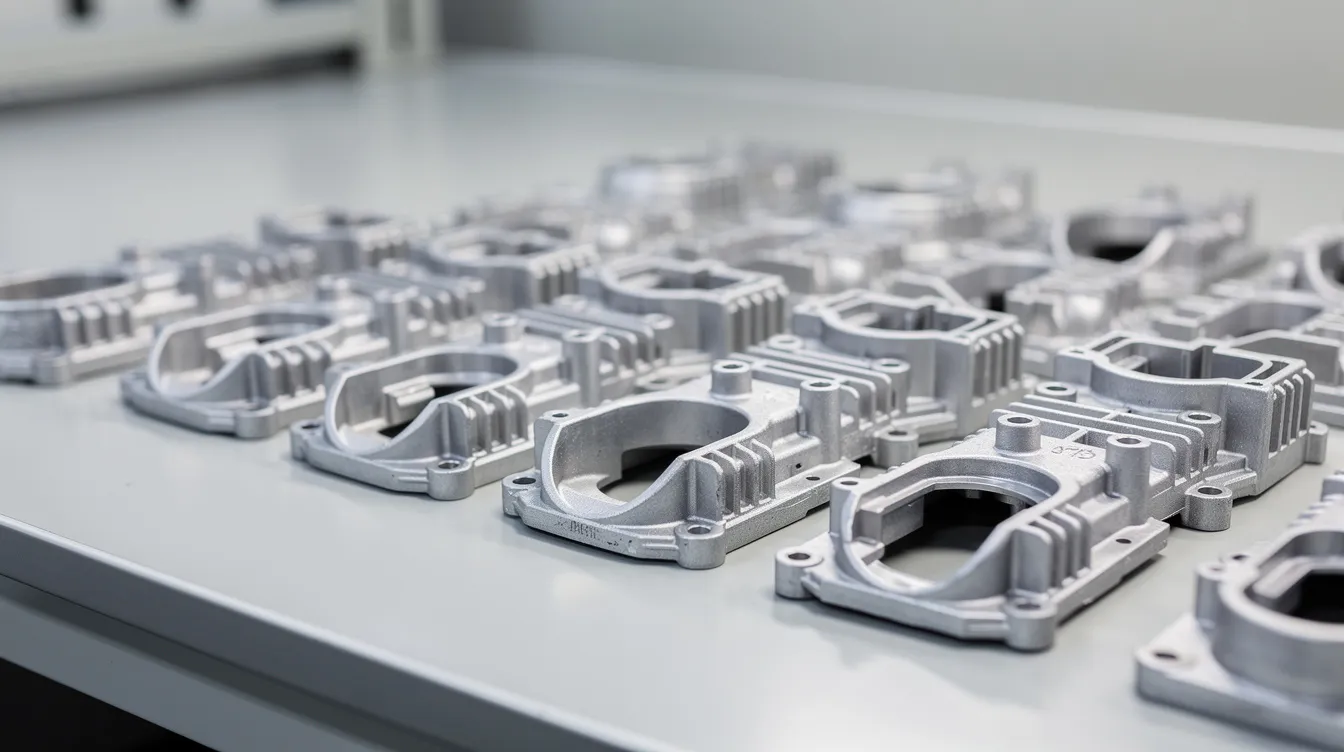
Representative Multi-Process and Precision Casting Manufacturers
Some Chinese suppliers combine die casting with investment casting, sand casting, and precision machining to cover broader bill-of-materials needs. This is valuable when a project requires both non-ferrous die cast parts and ferrous precision cast components.
-
Ningbo DeLeon Industrial Co Ltd – Offers die casting plus CNC machining and surface finishing. Handles aluminum and zinc die casting alongside stainless steel machined parts. Targets industrial applications and construction machinery.
-
Yangzhou Kaixiang Precision Casting Technology Co Ltd – Founded 1993, provides aluminum die casting with automated lines and machining centers. Registered capital ~116 million CNY, 200–500 skilled professionals, producing transmission housings and structural components.
-
Ningbo Qianhao Metal Product Co Ltd – Complements die casting projects with steel investment casting and sand casting for mixed-metal assemblies. Materials include aluminum, stainless steel, and carbon steel.
Die casting processes include sand casting and investment casting, and these multi-process shops give OEMs the ability to source complex assemblies from a single supplier. Their strong capability in both casting and machining reduces lead times and quality risk compared to splitting orders across multiple vendors.
Anebon Metal Products Limited – Your One-Stop CNC & Die Casting Partner
Anebon Metal Products Limited is a Dongguan-based precision manufacturer founded in 2010, built to serve overseas OEM clients who need high quality products with engineering-level support. Our ISO 9001:2015 certification ensures consistent quality management, and ISO 14001:2015 certification focuses on environmental management standards across our operations.
Core services include:
-
Die casting (aluminum and zinc), die casting cnc machining integration
-
CNC milling, CNC turning, and 5-axis machining – CNC machining services include 3-, 4-, and 5-axis options
-
Sheet metal fabrication and rapid prototyping
-
Materials: aluminum, stainless steel, titanium, plastics
-
Some manufacturers achieve tolerances as precise as ±0.002 mm – Anebon delivers this on CNC parts
Our workflow: DFM feedback during design, rapid prototyping, transition to full-scale production, and final assembly for export. We focus on high-mix, medium-volume OEM projects for aerospace, medical devices, robotics, industrial machinery, and electronics.
Anebon’s Die Casting Capabilities and Equipment
Anebon’s die casting capabilities align with the criteria that define a top-tier die casting manufacturer in China. Our casting equipment includes cold chamber aluminum and hot chamber zinc casting machines across a range of tonnages for producing motor housings, heat sinks, structural brackets, and complex electronic enclosures.
-
Automated and semi-automated casting cells with robotic extraction
-
Integrated in-house CNC machining cells for post-cast precision machining – which complements die casting to enhance quality and dimensional accuracy
-
Surface treatments include anodizing, powder coating, and polishing
-
Heat treatment for mechanical property optimization
Batch sizes range from prototypes to thousands of pieces per run. Our experienced engineers optimize the die casting process for reduced porosity through process control, vacuum-assist techniques, and mold temperature management. Typical lead times: 3–5 weeks for tooling, 1–2 weeks for first-article samples.
Quality Control in Chinese Die Casting: From X-Ray to CMM
Quality is what separates a generic casting company from a trusted partner delivering stable quality to global OEMs. Chinese die cast manufacturers serve global OEMs in various industries including automotive, and high-precision die casting is critical for producing parts in industries like medical devices. ISO 13485 certification is crucial for medical device manufacturing, and IATF 16949 is a key automotive quality standard.
Key quality tools among top casting manufacturers:
-
X ray inspection for internal porosity and blow-hole detection in aluminum casting housings
-
CMM measurement (Zeiss and equivalent) for dimensional verification
-
Spectrometers for alloy composition verification
-
Leak and pressure testing for sealed enclosures
-
SPC/statistical process control on critical dimensions
At Anebon, our quality control workflow includes incoming material inspection, in-process checks during both die casting and machining, and final inspection with full reports. We provide PPAP documentation for automotive clients when required.
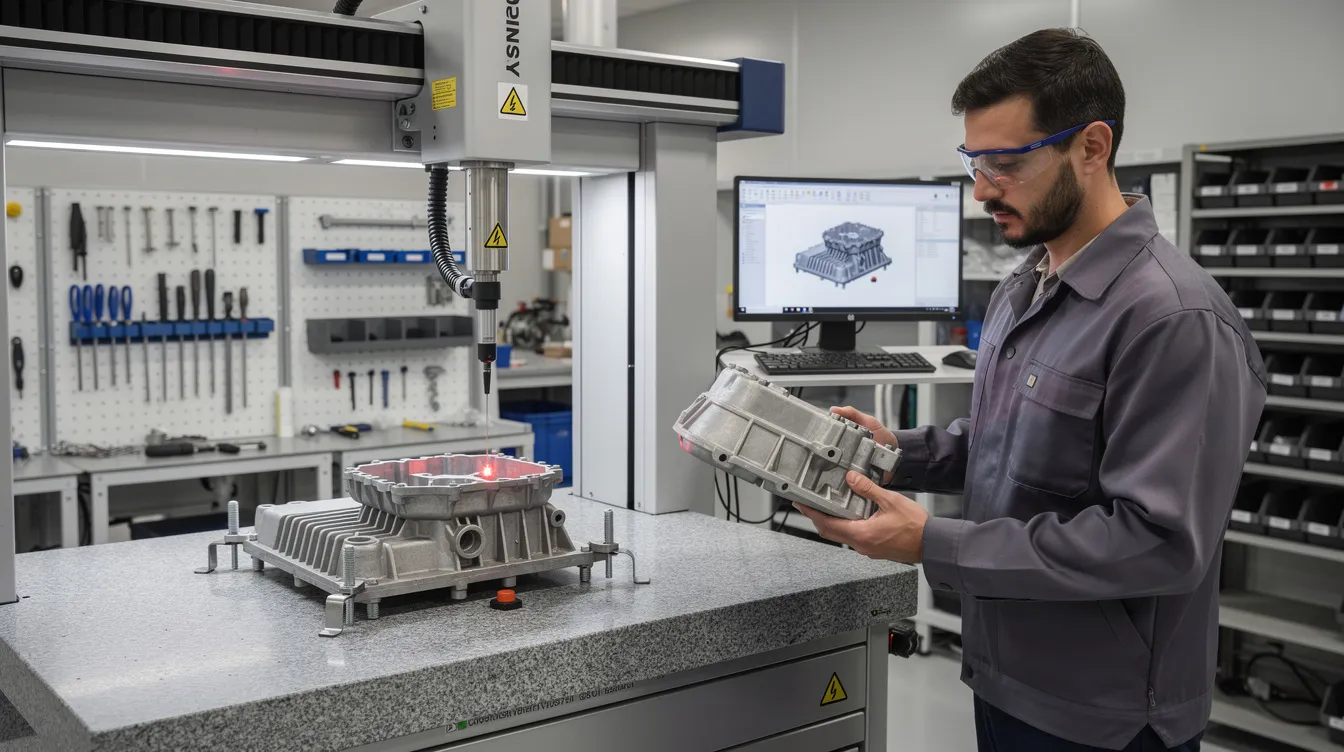
How to Evaluate and Compare Die Casting Manufacturers in China
A structured supplier evaluation process protects your project from costly surprises. Here’s a practical checklist for overseas OEMs:
-
Review certifications (ISO 9001, IATF 16949, ISO 14001) and verify they are current
-
Request recent inspection reports and x ray samples for comparable parts
-
Assess mold making and tooling design capability, including DFM support
-
Confirm casting equipment range – tonnage, automation level, vacuum capability
-
Ask about typical scrap rates and defect control methods
-
Inspect sample parts for surface finish and machining quality
-
Verify export experience and communication responsiveness
Consider this scenario: Supplier A has full in-house die casting, CNC machining, and surface finishing. Supplier B outsources machining to a third party. Supplier A typically delivers 2–3 weeks faster with tighter dimensional control because parts never leave the facility between processes. That integration matters.
We encourage you to request a detailed quote and manufacturability review from Anebon as a benchmark when comparing casting services from other Chinese die casting manufacturers.
Die Casting Applications and Industries Served by Leading Chinese Suppliers
Top die casting companies in China support a wide spread of industries with different performance and regulatory demands. Chinese die casters produce components for sectors such as consumer electronics and industrial machinery. Key industries served by Chinese die casting manufacturers include automotive and telecommunications.
-
Automotive & EV: Die casting is commonly used for automotive components such as battery trays and motor housings. Integrated large-scale casting utilizes high-tonnage machines for complex structures in new energy vehicles.
-
Electronics & Telecom: Heat sinks, RF shields, and aluminum die casting components for 5G base stations.
-
Medical Devices: Enclosures and structural components requiring tight tolerances and ISO 13485 compliance.
-
Industrial Machinery & Robotics: Gearbox housings, brackets, frames for industrial equipment and construction machinery.
-
Aerospace & Drones: Lightweight structural parts in aluminum and magnesium.
Anebon and other top suppliers provide not just castings but also CNC machining, surface treatments, and assembly – shortening the supply chain for OEMs. Matching supplier strengths to each application is essential: automotive-grade high pressure die casting for structural parts versus precision small zinc components for electronics.
Cost, Lead Time, and Risk: What Overseas OEMs Should Expect in 2026
As china continues to lead global die casting production, cost advantages remain significant – but they interact with tooling investment, logistics, and quality risk.
-
Tooling costs for aluminum die casting typically range from USD 5,000–50,000+ depending on part complexity and die size; zinc die casting tooling is generally lower
-
New tooling lead times: 4–8 weeks; first-article samples: 1–3 weeks after tooling
-
Complex geometries increase cycle time and may require vacuum HPDC or secondary machining
-
Single-source versus multi-source strategies: concentrating at a strong capability supplier reduces coordination overhead
-
Robust quality systems (including x ray, CMM, and certifications) reduce long-term risk even if unit price is slightly higher
Anebon approaches quoting with a transparent breakdown of tooling, piece price, machining, and finishing. We manage lead times with a mix of rapid prototyping and production tooling, giving OEM clients realistic timelines from day one.
Frequently Asked Questions About Die Casting Manufacturers in China
How do I verify a Chinese die casting co ltd is legitimate and certified? Request copies of ISO 9001, IATF 16949, or other certifications and verify them against the issuing body’s online registry. A reputable casting co ltd will provide these proactively.
Can Chinese casting manufacturers meet automotive IATF 16949 and medical ISO 13485 requirements? Yes. Companies like EMP Tech and Global Metal Plastic hold IATF 16949 and ISO 13485 certifications. Anebon supports automotive and medical clients with documented quality systems.
What information do I need to provide for an accurate die casting quote? 3D CAD files (STEP or IGES), material specification, annual volume estimate, surface treatment requirements, and critical tolerance callouts.
How are defects like porosity controlled in the die casting process? Through vacuum-assisted HPDC, mold temperature control, process control parameters, and post-cast x ray inspection. Leading firms invest in real-time monitoring.
Can I combine die casting with CNC machining and surface treatment at a single supplier? Absolutely. This is one of the key advantages of working with an integrated supplier like Anebon, where die casting, machining, powder coating, anodizing, and assembly happen under one roof.
What is the role of X-ray and CT scanning in high-reliability aluminum die casting parts? X ray and CT scanning detect internal porosity, shrinkage cavities, and inclusions that are invisible on the surface. They are essential for auto parts and medical enclosures where structural integrity cannot be compromised.
Conclusion: Working with Trusted Die Casting Partners in China
The criteria are clear: a top die casting manufacturer combines advanced casting equipment, experienced engineers, rigorous quality systems, and proven export capability. China offers a diverse range of these suppliers – from gigacasting specialists producing EV underbodies to precision shops delivering tight-tolerance electronic enclosures.
While many casting manufacturers exist, only a subset deliver the combination of mold design expertise, automated high volume production, and inspection rigor (including x ray and CMM) needed to consistently produce high quality products for demanding OEM programs. The right trusted partner isn’t the cheapest – it’s the one whose engineering depth matches your project’s requirements.
Anebon Metal Products Limited is ready to serve as your integrated die casting, CNC machining, and sheet metal fabrication supplier. Whether you need high precision customized aluminum die casting auto parts or complex multi-process assemblies, contact us today for a free DFM review or to request a quote.