Top Die Casting Companies Delivering Unmatched Quality and Precision
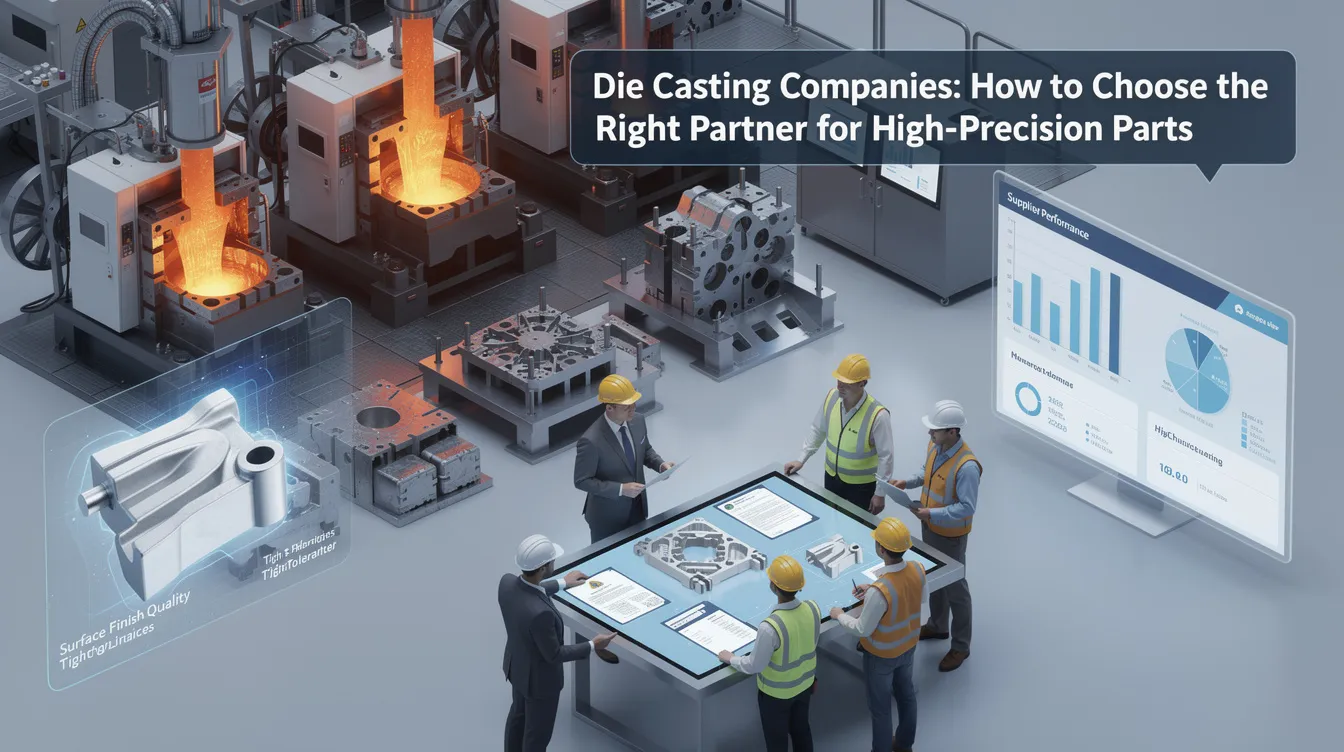
Die Casting Companies: How to Choose the Right Partner for High-Precision Parts
Introduction: Why Your Choice of Die Casting Company Matters
Selecting the right die casting company directly affects your launch dates, warranty rates, and total cost of ownership. Choosing the wrong die casting partner can lead to delayed product launches, ballooning scrap rates, and strained customer relationships. With over 300 die casting companies in the USA alone and the US aluminum die casting market valued at $10.49 billion by 2025, the options are overwhelming-but not all suppliers deliver equal results.
Anebon Metal Products Limited is a China-based, ISO 9001:2015 and ISO 14001:2015 certified die casting manufacturer that has served overseas OEMs since 2010. At its core, die casting is a high pressure process that uses high-pressure injection of molten metal into hardened steel dies to produce complex, near-net-shape components at scale. Industries from automotive and aerospace to medical devices, robotics, electronics, and industrial machinery rely on aluminum die casting, zinc die casting, and magnesium die cast parts for critical components. This guide walks you through how to evaluate and compare die casting companies, and where Anebon fits as a precision casting partner providing advanced die casting solutions and CNC machining.
What Is Die Casting? Core Processes and Materials
Die casting uses reusable steel dies and high pressure injection to achieve rapid solidification and excellent dimensional repeatability-producing finished products that sand casting and permanent mold casting simply cannot match in cycle time or surface quality. Die casting machines operate at pressures from hundreds to thousands of psi, forcing molten alloys into every detail of the cavity.
Hot chamber vs. cold chamber:
|
Feature |
Hot Chamber |
Cold Chamber |
|---|---|---|
|
Alloys |
Zinc alloys, lead, tin, some magnesium |
Aluminum, magnesium, copper |
|
Cycle speed |
400–900 shots/hr |
Slower due to separate furnace ladling |
|
Best for |
Small zinc castings, complex configurations |
Structural aluminum and magnesium parts |
Cold chamber die casting dominates for aluminum and magnesium because these alloys’ high melting temperatures would damage submerged injection components.
Common alloys include aluminum (A380, ADC12) valued for being lightweight with high dimensional stability, zinc (Zamak 3, Zamak 5) preferred for small, tight-tolerance components, and magnesium (AZ91D) whose die casting market is expanding at an 8.25% CAGR. Zinc die casting is specialized for complex configurations where fine detail and durability matter. High pressure die casting is the standard choice for high volume production of aluminum parts across various industries.
Where advanced die casting solutions go beyond standard practice: vacuum-assisted casting reduces porosity for leak-tight housings, MAGMAsoft® simulation optimizes die casting quality and design before steel is cut, and robotic automation enhances precision in die casting processes through consistent shot-to-shot repeatability. These proprietary techniques help manufacturing companies develop parts that meet the tightest specifications.
Cold Chamber Die Casting and Aluminum Die Casting Explained
Cold chamber die casting and aluminum die casting form the backbone of modern lightweight components. The process flows in clear stages: metal melts in a separate furnace above 660 °C, a ladle transfers the shot into the shot sleeve, the plunger drives molten aluminum into the die under high pressure, water-cooled channels accelerate solidification, and the part is ejected and trimmed.
Aluminum die casting is almost always performed in cold chamber machines because aluminum’s melting point would destroy submerged injection hardware. Aluminum die casting machines range from 250 to 2000 tons of clamping force depending on part sizes and complexity. Aluminum dominates 57% of the North American automotive die casting market, and high-volume aluminum die casting serves automotive, industrial, and heavy-duty sectors equally well.
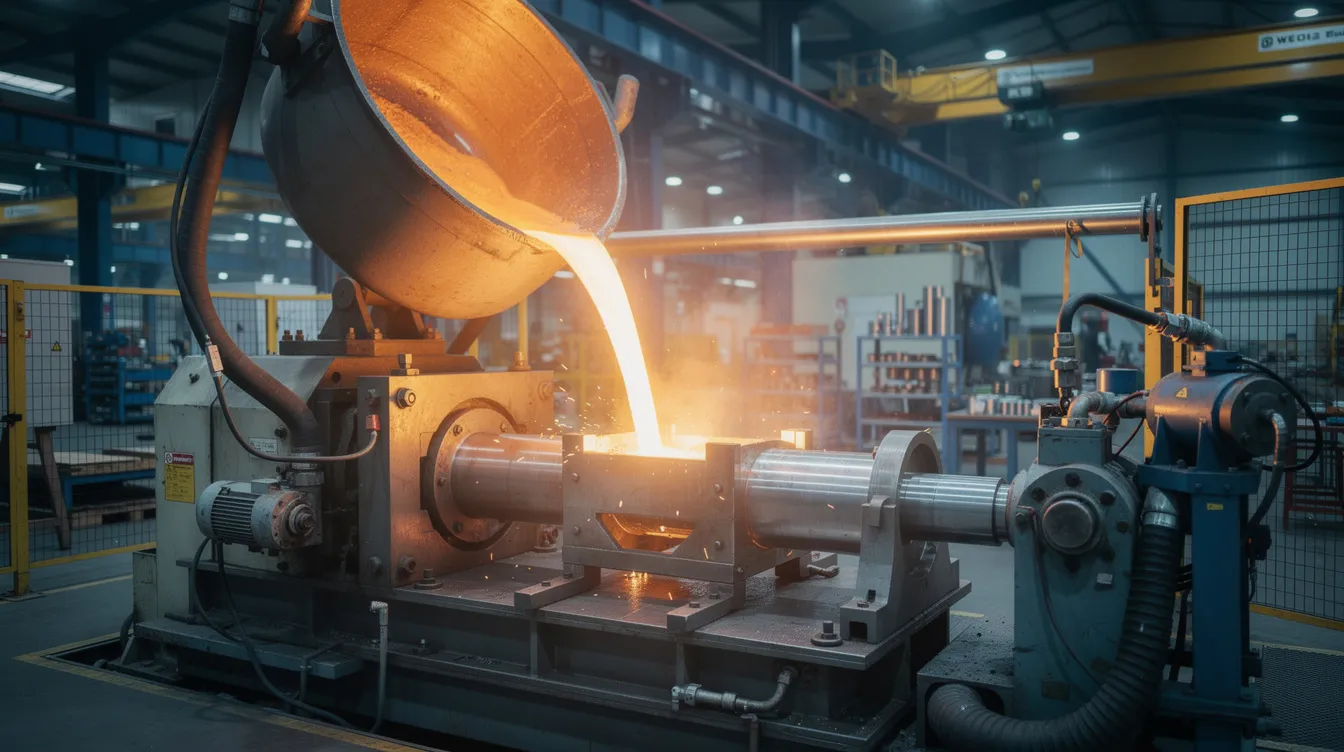
The advantages are compelling: low weight for EV battery housings and inverter enclosures on 2020–2026 vehicle platforms, excellent thermal conductivity for 5G base station housings and heat sinks, corrosion resistance, recyclability, and cost-effectiveness at volume. Medical imaging frames and robotics arms also benefit. Anebon operates cold chamber die casting lines for alloys like ADC12 and A380, paired with in-house CNC machining, to produce precision aluminum components for EV structural frames and other applications where tight tolerances are non-negotiable.
How to Evaluate a Die Casting Company or Manufacturer
Use this checklist when vetting any die casting manufacturer or metalcasting company:
-
Certifications: ISO 9001:2015 certification indicates a company’s quality management system meets international standards. IATF 16949:2016 certification is crucial for automotive die casting suppliers. ISO 14001:2015 focuses on environmental management systems. ISO certifications enhance reliability and quality assurance across the board-Anebon holds both ISO 9001:2015 and ISO 14001:2015.
-
Machine tonnage range: Small precision parts need 80–200T machines; medium structural components require 400–800T; large assemblies demand 800–2000T+. A mismatch leads to flash, distortion, or inflated cost.
-
Alloy and process versatility: Verify capabilities in aluminum die casting, zinc, and magnesium. Ask about cold chamber and hot chamber equipment, plus advanced die technologies like vacuum assist and real-time shot monitoring.
-
In-house capabilities: Tooling and tool design, die maintenance, CNC machining, secondary operations, assembly, plating, powder coating, and packaging should ideally live under one house to reduce costs and quality risks.
-
Engineering support: Expect DFM reviews, mold flow simulation, PPAP documentation, and fast response to design changes. Good casting solutions come from design engineers who understand both the process and your end-use reality.
Reliability is measured by quality certifications and production consistency. Industry leaders like Kenwalt Die Casting have produced over 10 million parts, while companies like A&B Die Casting specialize in low-to-medium volume production. RCM Industries and similar manufacturers demonstrate that the ability to serve niche requirements-whether oil and gas housings or medical enclosures-matters as much as raw capacity. Consider whether the parent company structure supports long-term stability and investment.
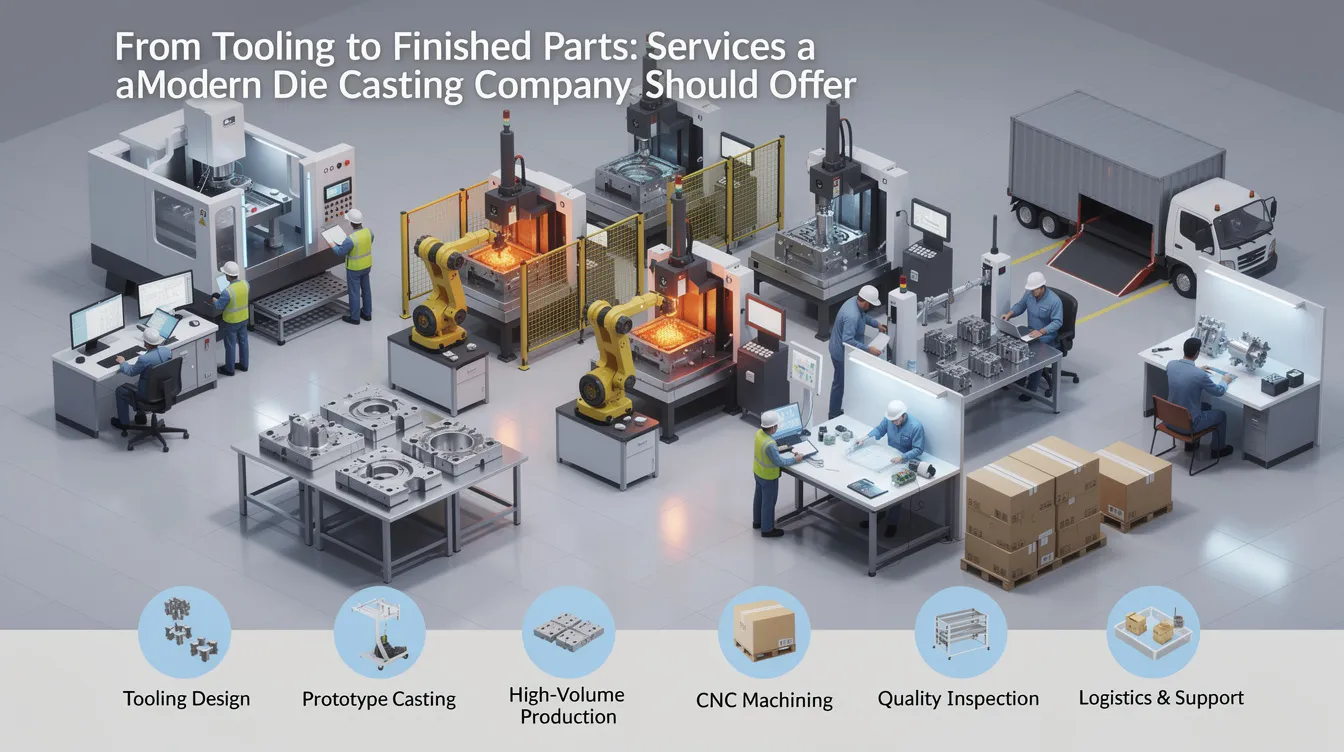
From Tooling to Finished Parts: Services a Modern Die Casting Company Should Offer
Top-tier die casting companies act as integrated manufacturing partners, not simple foundries. Die casting suppliers must offer a complete range of value-added services including machining and finishing to deliver excellently manufactured components.
A typical project flows through these stages:
-
Design review and DFM feedback
-
Die design and manufacture (4–8 weeks typical)
-
Sample runs and first-article inspection
-
Validation (FAI, PPAP documentation)
-
Ramp-up to high volume production
-
Steady-state production with continuous improvement
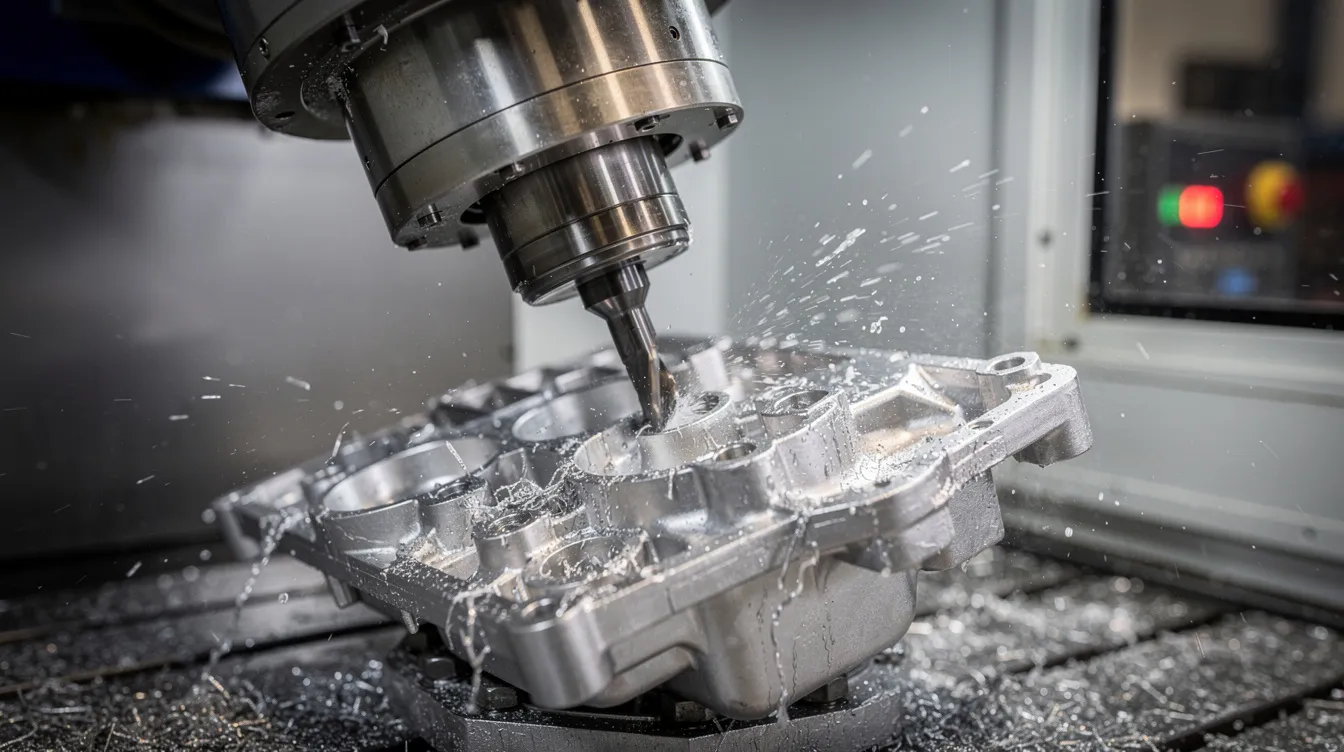
Key value-added services to demand: close-tolerance CNC machining (milling, turning, drilling, tapping), deburring, surface finishing (anodizing, powder coating, plating), and assembly. Precision CNC machining offers tight tolerances as precise as ±0.002 mm on critical features. When casting and machining happen under the same roof, you eliminate freight between suppliers, reduce lead time, and enhance product quality through unified process control.
High-volume runs require in-house quality control processes for defect prevention. CMM inspection is essential for maintaining part tolerances in die casting, and die casting companies must utilize automated leak testing to ensure quality on pressure-tight housings. SPC charts, optical measurement, and functional gauges round out a robust quality infrastructure. Anebon operates as an aluminum die casting manufacturer and precision machining provider in Dongguan, enabling rapid prototyping through full production for overseas OEMs-all under one roof.
Advanced Die Casting Solutions and CNC Machining Capabilities at Anebon
Anebon is a precision-focused die casting manufacturer delivering advanced die casting solutions alongside high-end CNC machining for global customers across various industries.
-
Die casting capabilities: Aluminum die casting for ADC12 and A380, cold chamber machines covering small to medium part sizes, and support for structural automotive brackets, electronic enclosures, and medical device housings.
-
CNC machining strengths: 3-axis, 4-axis, and 5-axis machining centers plus CNC turning, with the ability to hold tolerances as tight as ±0.002 mm on critical machined features after casting. This level of precision is what separates a capable casting company from a commodity supplier.
-
Engineering support: DFM feedback on wall thickness, draft angles, fillets, gating, and part consolidation to reduce weight and tooling count. Simulation-driven tool design helps customers develop optimized geometries before committing to steel.
-
Quality and environmental credentials: ISO 9001:2015 and ISO 14001:2015 certifications, documented process control, material traceability, and RoHS/REACH-compliant finishing when specified.
In a recent project, Anebon optimized an aluminum die cast heat sink housing for an electronics client by re-orienting rib geometry and adjusting gating-reducing secondary machining time by roughly 25% while improving thermal performance. These tailored solutions reflect the kind of expertise that turns a casting into a competitive advantage.
When to Choose a China-Based Casting Company and How to Work With Anebon
Many overseas OEMs select China-based partners for die cast and CNC machining programs because the reality of global manufacturing economics supports it. China accounts for approximately 65% of global aluminum and zinc die casting exports, backed by mature supply clusters where alloy suppliers, tooling makers, and finishing houses sit within the same industrial region.
Key advantages:
-
Competitive production cost for high volume production runs
-
Broad material availability across aluminum, zinc, and magnesium alloys
-
Comprehensive services from prototyping through mass production
-
Strong export infrastructure supporting North America and Europe
Addressing buyer concerns: Lead time, logistics, IP protection, and communication are legitimate risks. Mitigate them with clear NDAs, verified certifications, detailed 3D CAD models with GD&T, digital collaboration tools, and PPAP/FAI clauses in your contracts.
Engaging with Anebon typically follows this path:
-
Submit an RFQ with 3D CAD, 2D drawings with tolerance schemes, annual volume estimates, and surface finish requirements
-
Receive DFM feedback and a quotation breaking out tooling cost versus piece price
-
Approve samples from first-article runs (tooling lead time: 4–8 weeks; samples: 1–3 weeks after)
-
Ramp to steady-state production with ongoing quality monitoring
Design engineers and procurement teams looking for an aluminum die casting manufacturer with integrated CNC machining, proven certifications, and the focus to support everything from rapid prototyping to full-scale OEM production should contact Anebon for a personalized quote on their next project. The right casting partner doesn’t just produce parts-it helps you reduce costs, compress timelines, and ship with confidence.