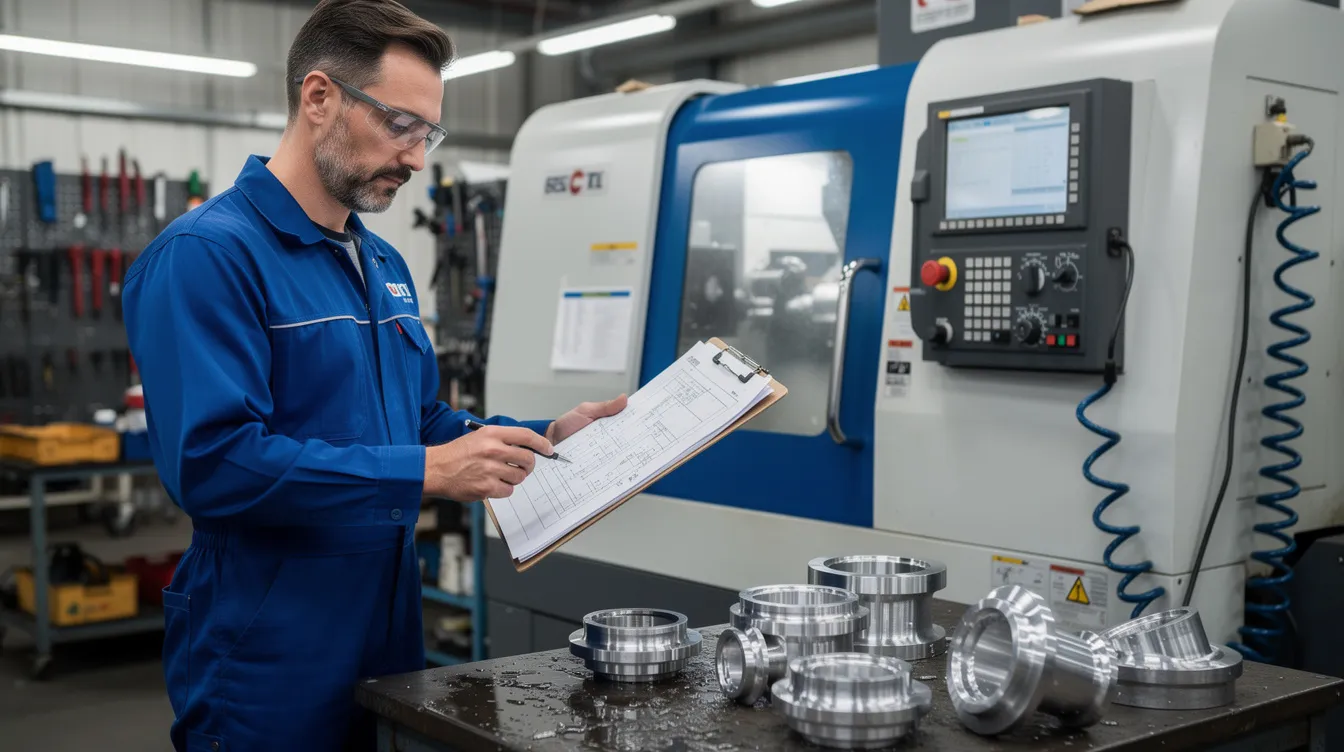
Top CNC Turning Services for Precision Parts and Custom Solutions
CNC Turning Services for High‑Precision OEM Parts | Anebon Metal Products Limited
Introduction to CNC Turning Services
CNC turning is one of the most efficient ways to produce rotational parts with exceptional accuracy, and it remains a cornerstone of modern cnc machining. For design engineers and OEM buyers sourcing precision components, understanding what cnc turning services offer-and who can deliver them reliably-is the difference between a smooth production program and costly delays.
Anebon Metal Products Limited, founded in 2010 in Dongguan, China, provides precision cnc turning from rapid prototyping through full-scale production. With ISO 9001:2015 and ISO 14001:2015 certified operations, Anebon serves overseas OEMs across numerous industries including aerospace, medical devices, automotive, electronics, robotics, and industrial machinery. CNC turning is used in automotive and aerospace industries for high-accuracy components, and Anebon’s shop floor reflects that demand daily.
Concrete examples of parts produced include stainless steel medical shafts for surgical instruments and alloy steel drivetrain pins used in automotive powertrains. These parts require tight tolerances-Anebon achieves tolerances as tight as ±0.0025mm on critical features-along with consistent surface quality across every batch. CNC turning services at Anebon can handle low to high volume production, from single prototypes to thousands of pieces per month.
For OEMs evaluating a new supplier, Anebon offers a cnc turning quote response within 24 hours on business days, giving procurement teams the speed they need to keep project timelines on track.
What Is CNC Turning?
CNC turning is a subtractive manufacturing process in which a rotating workpiece is shaped by a stationary cutting tool mounted on a cnc lathe. The cnc turning process involves rotating a workpiece at high speeds while one or more cutting tools move along programmed paths to remove material and produce the desired shape. Raw material is secured in a spindle on a lathe during cnc turning, and the combination of rotational speed and controlled tool movement creates surfaces of revolution with precise tolerances.
CNC turning uses a lathe to create cylindrical shapes, and the range of features goes well beyond simple diameters. Typical parts include shafts, bushings, pins, sleeves, fasteners, gear blanks, connectors, valve components, housings, and threaded parts. CNC turning is used to create shafts, pins, molds, and threaded parts that serve applications from consumer electronics to heavy industrial machinery.
It is important to contrast cnc turning with the broader category of cnc machining services. While cnc turning focuses on rotational symmetry, cnc milling removes material by rotating the tool while the part is fixed or repositioned, and 5-axis cnc machining enables complex contours across multiple planes. Together, these processes cover nearly every geometry an OEM might need.
Anebon routinely turns bar stock in round, hex, and square forms, with diameters ranging from approximately 1 mm up to 300 mm and part lengths up to 600 mm. For very small or slender work, Swiss-type lathes handle diameters as small as 0.5 mm with guide bushing support.
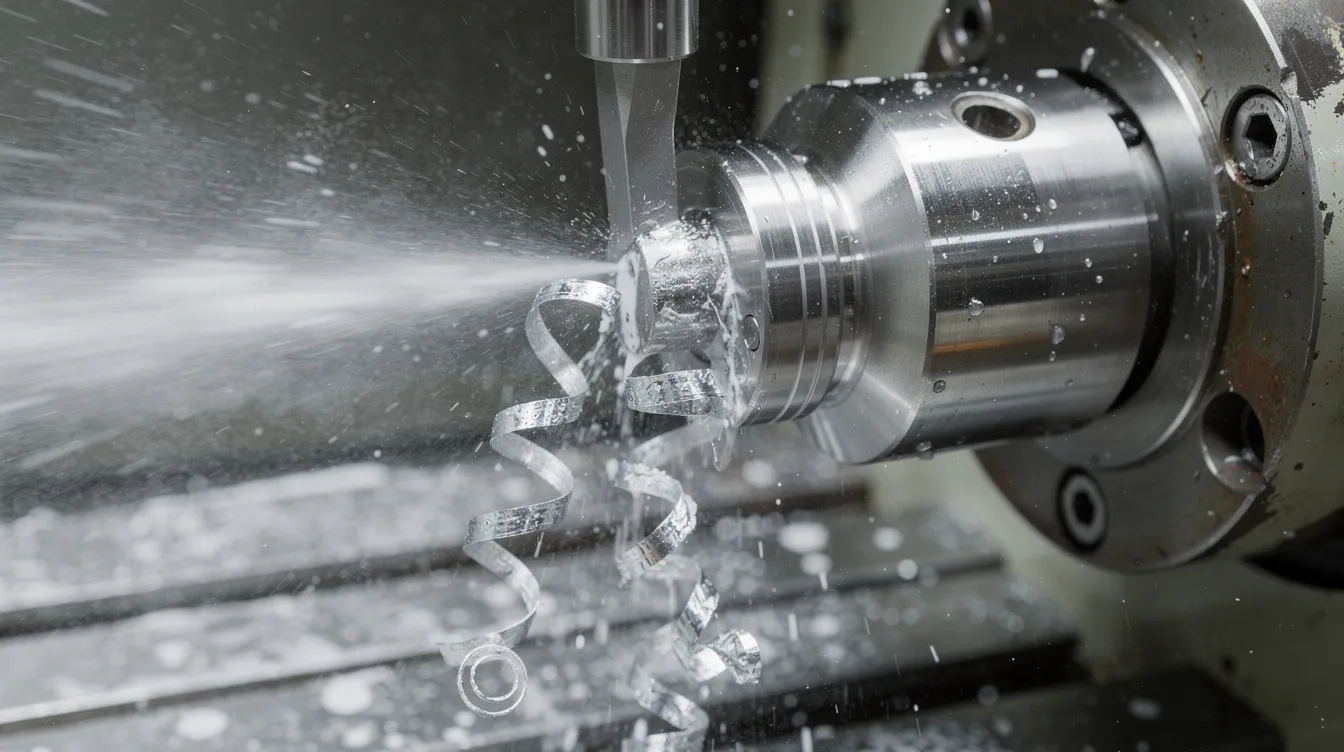
The CNC Turning Process: From CAD to Finished Part
The cnc machining process for turned parts follows a digital workflow that ensures repeatability from the first piece to the last. Each step builds on the previous one, and the sequence is designed to catch errors early-long before they become expensive.
CAD Model and Drawing Review. Engineers supply 3D models in STEP or IGES format, along with 2D drawings that include dimensions, tolerances, GD&T callouts, surface finish requirements, and material specifications. Anebon’s team reviews every file for manufacturability, providing DFM feedback on wall thickness, undercuts, standard thread forms, and potential cost drivers. CNC turning requires precise communication for technical queries during production, so this upfront dialogue prevents misunderstandings downstream.
CNC Programming. CNC systems automate the cnc turning process using G-code generated from CAM software. Programmers plan roughing and finishing passes, select appropriate inserts or tools, and define feeds, speeds, and compensations. For parts with off-axis features, live tooling or multi-setup strategies are programmed at this stage.
Machine Setup. The stock material is clamped using a collet, 3-jaw chuck, or soft jaws for delicate workpieces. For long slender parts, a tailstock or steady rest prevents deflection. Bar feeders automate material stock feeding for higher-volume runs, reducing cycle-to-cycle handling time.
First-Article Inspection. After the initial part is cut, critical dimensions are measured against the drawing using micrometers, CMMs, and optical comparators. Any tool offset or feed adjustment is made before the production run begins.
Production Run. Full batch machining proceeds with periodic in-process checks to monitor tool wear, dimensional drift, and surface finish consistency. CNC turning minimizes human error through computer control, ensuring each part matches the programmed geometry. This level of automation reduces production costs with fewer operator interventions compared to manual methods.
Final Inspection and Shipping. Every lot undergoes final measurement of all critical features, threading checks, and any required hardness or material verification. Parts ship with full traceability-material heat numbers, lot numbers, and inspection reports-per customer requirements.
Anebon can combine turning and secondary cnc milling operations in the same setup using live tooling on a cnc turning center, or perform milling features in a subsequent operation for complex geometries that demand both precise diameters and prismatic features.
CNC Turning Machines and Capabilities at Anebon
Anebon operates a diverse fleet of cnc turning machines configured for different part sizes and complexity levels. The shop floor includes conventional 2-axis CNC lathes, Y-axis lathes capable of off-center drilling and milling, and advanced CNC turning centers that incorporate milling functionality for complete part processing in a single setup. CNC turning uses advanced lathes for high precision machining across every machine type.
For standard turning work, 2-axis cnc lathe machines handle external and internal diameters up to approximately 300 mm OD and 500 mm length, achieving typical tolerances of ±0.01 mm and surface roughness values in the Ra 0.8–3.2 µm range. Mill-turn centers with live tooling extend capabilities to off-axis holes, flats, and slots, with tolerances around ±0.005 mm on shorter features and finishes as fine as Ra 0.8 µm. For small-diameter precision components, Swiss-type lathes process bar stock up to 32 mm diameter with guide bushing support, delivering ultra-precision cnc turning tolerances down to ±0.002 mm.
Key machine components directly influence part quality. The chuck or collet secures the workpiece concentrically, the tool turret indexes rapidly between cutting tool positions, and the spindle provides stable rotation with minimal run-out. Bar feeders automate stock loading for volume work, while tailstocks and steady rests support long parts against deflection. CNC lathes can achieve tolerances up to ±0.0025mm on critical features, and CNC turning can produce parts with precision outer and inner diameters that meet the tightest OEM drawing requirements.
Modern CNC controls, stable ambient temperature conditions, and preventive maintenance policies all contribute to consistent quality across multi-shift large cnc turning production runs. Thermal compensation routines and regular calibration ensure that dimensional accuracy does not drift over time.
Common CNC Turning Operations
A single CNC turning cycle often combines multiple machining operations to complete as many features as possible in one setup. This approach reduces handling, improves concentricity between features, and lowers per-part cost for OEM customers. CNC turning can create various features like turning, boring, drilling, facing, and threading-often all within the same program.
Facing creates a flat, perpendicular surface at the end of a workpiece. It is used on shaft ends, flange faces, and end caps to establish clean reference surfaces.
Straight Turning produces cylindrical surfaces at a consistent diameter. This is the foundational operation for shafts, bushings, and any feature requiring accurate machining of external diameters.
Taper Turning generates conical sections by programming the cutting tool along an angled path. Spindle tapers and machine component interfaces frequently require this operation.
Grooving cuts narrow recesses into external or internal surfaces-retaining ring grooves and O-ring seats are common examples.
Parting separates the finished part from the remaining bar stock using a thin blade-style tool.
Drilling creates axial holes through the center of a workpiece. Combined with live tooling, cross-holes and off-axis holes are also possible, enabling complex shapes without a second setup.
Boring enlarges and finishes pre-existing holes to tight tolerances. Internal boring for hydraulic cylinders and bearing seats demands surface finishes below Ra 0.8 µm.
Threading produces external or internal threads in metric, UNC, BSP, or custom pitch forms. Threaded connectors and fasteners rely on this operation heavily.
Reaming refines internal diameters for improved roundness and finish. Knurling adds patterned grip textures to handles and knobs. Chamfering removes sharp edges that could interfere with assembly or pose safety risks.
CNC turning can create complex geometries with live tooling, allowing milling features, cross-drilling, and polygon machining without unclamping the part. Anebon’s programmers optimize tool paths and cutting tool selection-carbide inserts, coated carbide (TiAlN, TiN), and CBN for difficult materials-to balance surface finish, tool life, and cycle time.
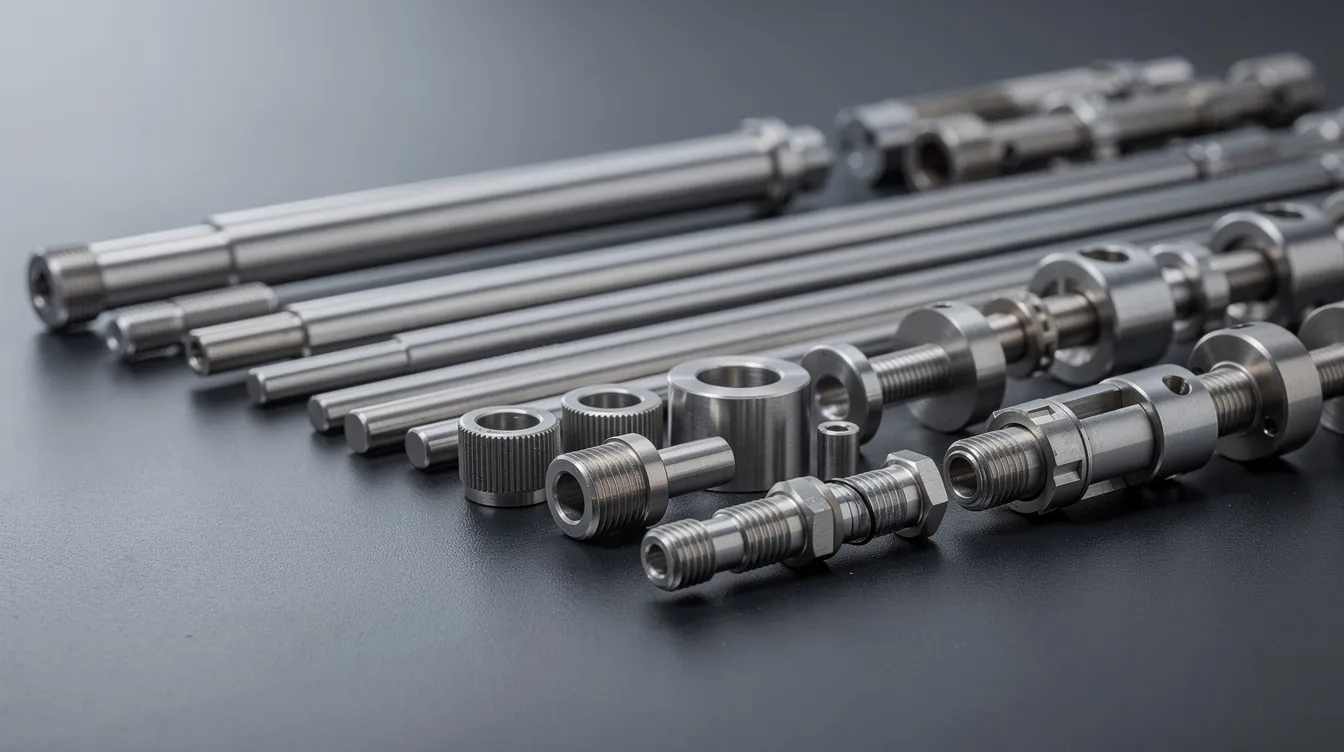
CNC Turning vs. CNC Milling (and When to Use Each)
The core difference is straightforward: in cnc turning, the workpiece rotates and the tool is stationary relative to that rotation. In cnc milling, the tool rotates in a cnc milling machine while the part is clamped and repositioned. This fundamental distinction determines which machining process suits a given part geometry.
Parts best suited for cnc turning include alloy steel drive shafts (cylindrical, requiring concentricity and roundness), brass bushings (internal and external diameters with sliding fits), and stainless steel valve stems with threaded profiles. Parts better suited for milling include aluminum housing blocks with pockets and ribs, complex brackets with multiple angled faces, and heat sinks with fin arrays.
Many real-world production parts require both processes. Anebon regularly produces turned shafts with milled flats, cylindrical housings with cross-holes, and components requiring both precise diameters and complex 3D features. Advanced CNC turning centers can incorporate milling functionality, handling many of these combined geometries in a single clamping.
From a cost and lead-time perspective, cnc turning is generally more economical for medium-to-high volume runs of cylindrical parts-fewer setups, faster cycle times, and less tooling complexity. Milling or 5-axis machining becomes necessary when the desired geometry includes non-axisymmetric features that cannot be produced on a lathe. Anebon operates as a one-stop cnc machining service provider, offering cnc turning, cnc milling, and 5-axis machining in-house, simplifying sourcing for OEM customers who need multiple processes on a single purchase order.
Materials for CNC Turning (Metals and Plastics)
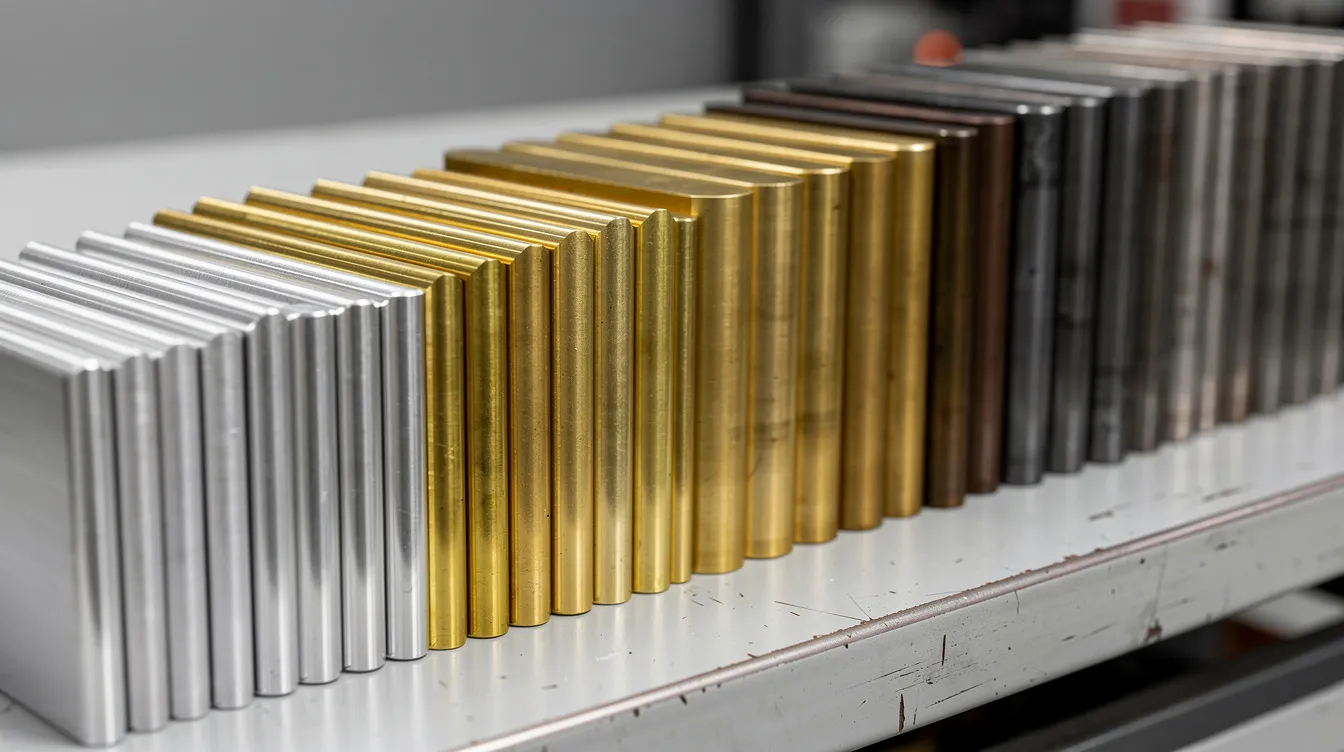
Anebon offers a wide range of standard and custom sourced materials for cnc turning, covering both metal and plastic options. Material selection is one of the earliest decisions in any project, and it directly affects machinability, cost, tolerance capability, and final part performance. CNC turning processes can handle hard materials like aluminum, brass, and steel, and the shop regularly works with both common and specialty grades.
Aluminum alloys like 6061 and 7075 are popular for CNC turning. Aluminum 6061 machines easily and takes anodized finishes well, making it a go-to for aluminum parts in electronics and aerospace. 7075 offers higher strength but generates more heat during cutting, requiring careful feed rate management.
Stainless steel grades such as 304, 316, and 17-4 PH are chosen for corrosion resistance, strength, and biocompatibility. Stainless steel turning requires slower feeds and sharper inserts due to work hardening, but the results justify the effort for medical, food-processing, and chemical-exposure applications.
Alloy steel (4140, 4340) and mild steel serve power transmission, drivetrain, and structural applications. These steel alloy grades are heat-treatable and offer good mechanical properties and wear resistance, though post-machining hardness testing may be required.
Brass and copper provide excellent machinability, good electrical conductivity, and attractive finishes for electrical components, terminals, and connectors. Titanium is favored for its strength-to-weight ratio in CNC turning, commonly appearing in aerospace and medical applications where light weight and excellent chemical resistance are critical. Titanium’s lower thermal conductivity and higher tool wear rates demand slower speeds and specialized inserts.
CNC turning can utilize plastics such as ABS and nylon, alongside engineering grades like acetal (POM/Delrin) with good dimensional stability, PEEK with high heat resistance and excellent chemical resistance, and polycarbonate for impact-resistant plastic parts. Plastic materials require different cooling strategies and sharper tools to avoid melting or deformation, and tolerances are generally wider than metals.
Anebon helps customers choose materials based on strength, corrosion resistance, weight, cost, and finishing requirements. The material drop down in Anebon’s quoting system covers standard grades, and the team can source custom materials outside the standard list subject to feasibility review and material certificate verification.
Surface Finishes and Secondary Operations
Secondary surface finishing is often critical for CNC turned parts because it affects corrosion resistance, appearance, friction, cleanliness, and wear resistance. A well-chosen finish can extend part life, improve sealing performance, or meet regulatory requirements for industries like medical devices and food processing. CNC turning finishes can enhance surface roughness and hardness beyond what the cutting tool alone achieves.
Anebon provides standard post-turning operations including deburring, edge-breaking to remove sharp edges, precision grinding, polishing (including mirror polish for medical components), vibratory finishing for batch smoothing, and ultrasonic cleaning. These steps eliminate visible tool marks and prepare surfaces for subsequent coatings.
CNC turning can include secondary finishes like anodizing and plating. Anodizing improves corrosion resistance and can add color, making it popular for aluminum parts. Type II anodizing creates a corrosion-resistant finish for aluminum that balances cost and performance, while Type III (hard anodize) delivers a thicker, harder layer for high-wear applications. Plating options include nickel, chrome, and zinc for steel and brass components. Black oxide provides mild protection and a uniform dark appearance for steel. Passivation is standard for stainless steel to remove free iron and enhance long-term corrosion resistance.
Powder coating creates a durable, wear-resistant layer on parts that require both protection and aesthetic appeal. Hardening and case hardening treatments increase surface hardness for steel alloy components in high-load applications.
Surface treatments add thickness, and Anebon accounts for coating dimensions when machining critical features-parts are machined undersize where plating or anodizing will be applied. Additional services like laser engraving for part numbers, logos, and traceability marks, plus simple assembly of multi-component subassemblies, can be integrated into the turning production workflow.
Advantages of CNC Turning for OEM Production
The advantages of cnc turning center on four pillars: precision, repeatability, speed, and cost-efficiency for rotational parts. For OEM buyers evaluating machining services, these translate directly into lower total cost of ownership and more reliable supply.
CNC turning offers high precision, often achieving tolerances around ±0.125 mm for general features, with critical dimensions held to ±0.005 inches or tighter. CNC turning allows for high repeatability in production runs, meaning part number 5,000 matches part number 1 within the specified tolerance band. CNC turning is ideal for both low and high-volume production runs, from single prototypes to continuous monthly shipments.
Cycle times for bar-fed parts are fast-CNC turning can produce parts in as fast as 1 day for urgent prototype needs, enabling rapid turnaround that keeps development schedules intact. Rapid prototyping through precision cnc turning at Anebon allows design engineers to validate form, fit, and function before committing to production tooling. CNC turning can produce both prototypes and medium-volume production runs with the same programmed setup.
Automation plays a significant role. CNC turning centers with bar feeders and automatic tool changers reduce labor content, enabling competitive pricing even when shipping internationally. Anebon’s ISO-controlled processes, documented inspection reports, and ability to scale production give overseas OEMs confidence in supply stability.
From a logistics standpoint, Anebon’s location in Dongguan provides proximity to raw material suppliers and shipping infrastructure, supporting consolidated shipments and long-term production arrangements for OEM customers in Europe, North America, and Asia-Pacific.
Industries and Typical CNC Turned Parts Anebon Produces
Anebon’s global customer base spans overseas OEMs primarily in Europe, North America, and Asia-Pacific, with each industry bringing distinct material, tolerance, and documentation requirements.
Automotive and E-Mobility. Automotive parts commonly produced by CNC turning include engine shafts and bushings, along with sensor housings, connector pins, and drivetrain fasteners. Materials lean toward alloy steel (4140, 4340) and stainless steel, with tolerances typically in the ±0.01–0.02 mm range for bearing and seal interfaces. The automotive industries demand high repeatability and consistent documentation across every shipment.
Aerospace and UAV. Lightweight aluminum and titanium bushings, connector pins, and aircraft components require tighter tolerances (±0.005 mm or better) and smoother surface finishes (Ra ≤ 0.8 µm). Materials include 7075-T6 aluminum, 17-4 PH stainless steel, and titanium alloys, all demanding cutting edge technology and careful process control.
Medical Devices. Medical components like surgical tools can be manufactured using CNC turning, alongside implant components and instrument shafts. Medical CNC machining uses stainless steel 316L, cobalt-chrome, and titanium, with documentation traceability for material certificates and regulatory compliance.
Industrial Machinery and Robotics. Hubs, couplings, rollers, and actuator rods are common mechanical parts, typically in alloy steel or stainless steel with moderate-to-tight tolerances depending on bearing and seal requirements.
Electronics and Instrumentation. Threaded connectors, spacers, and custom terminals in brass, copper, and aluminum serve electronics applications. Small diameters, fine threads, and plated finishes are typical, and Anebon supplies RoHS/REACH compliance documentation where needed.
Quality Assurance and Tolerances in CNC Turning
Accurate machining depends on machine condition, programming, tooling, and inspection-all controlled under Anebon’s quality system. CNC turning requires in-house quality assurance processes to meet tolerances, and Anebon’s ISO 9001:2015 framework ensures that every step from incoming material to final shipment follows documented procedures.
Incoming material inspection verifies chemical composition, hardness, and physical properties against supplied certificates. In-process checks use micrometers, plug gauges, calipers, and CMM sampling at defined intervals to catch dimensional drift before it produces scrap. Final inspection employs CMMs, optical projectors, surface roughness testers, thread gauges, and hardness testers as required by the drawing.
Typical general tolerances for CNC turned production parts are ±0.01 mm as standard. Precision components requiring tighter control can be held to ±0.005 mm, and CNC turning achieves tolerances up to ±0.0025mm on ultra-critical features after drawing review and process validation. CNC turning offers tolerances as tight as ±0.0025mm, but tolerance capabilities of CNC turning providers must be verified for specific requirements-Anebon encourages customers to supply clear 2D drawings with GD&T to ensure every critical feature is explicitly defined.
Anebon maintains full traceability, recording machine, operator, lot number, and material heat number for every batch. For regulated industries, this documentation is available with every shipment, providing the audit trail that aerospace, medical, and automotive OEMs require.
How to Get a CNC Turning Quote from Anebon
If your next project involves precision parts with rotational features, requesting a cnc turning quote from Anebon is the fastest way to get pricing, lead times, and DFM feedback from skilled machinists who understand OEM requirements.
To receive an accurate quote, provide the following: a 3D CAD model (STEP or IGES format), 2D drawings with tolerances and GD&T, material specification including alloy grade or plastic type, surface finish and post-processing requirements, quantity for both prototype and production volumes, and any special inspection or certification needs. The more detail you supply upfront, the more precise the quote will be.
Anebon’s quote process begins with a technical review of your files, followed by DFM suggestions where improvements can reduce cost or improve manufacturability. You will receive a pricing and lead-time proposal that includes shipping terms (EXW, FOB, CIF, or DAP as needed). Standard production lead times are important for meeting project deadlines in CNC turning, and Anebon provides clear timelines for both prototype (often 5–10 days) and production orders. CNC turning can produce parts in as fast as one day for expedited prototype requests, giving engineering teams rapid prototyping speed when schedules are tight.
Typical response time for quotes is within 24 hours on business days. For confidential projects, NDA agreements can be signed before any technical data is exchanged. Contact Anebon through their website quote form or email to start your next precision cnc turning project with a team that delivers exceptional accuracy, material versatility, and the consistency your OEM program demands.