Top CNC Service Solutions for Efficient and Cost-Effective Production
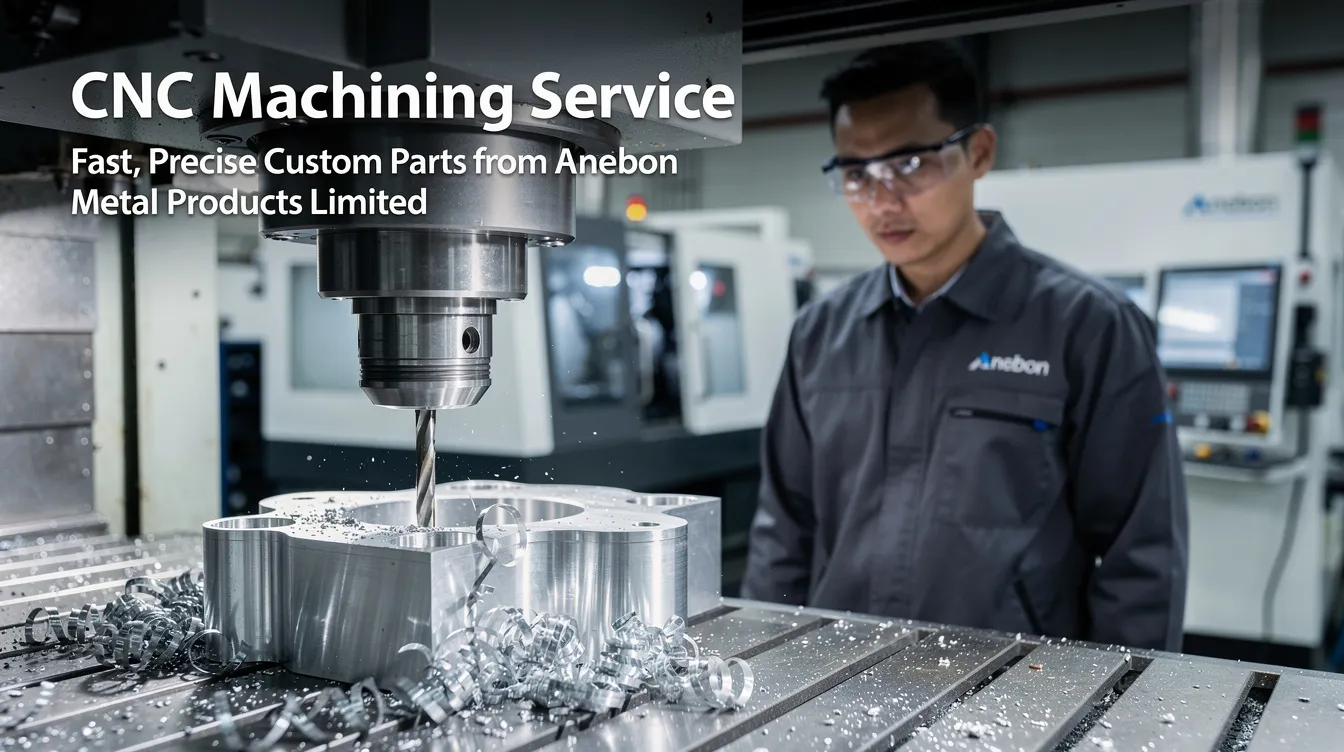
CNC Machining Service: Fast, Precise Custom Parts from Anebon Metal Products Limited
Introduction to Our CNC Machining Services
Anebon Metal Products Limited is a precision cnc machining service provider headquartered in Dongguan, Guangdong, China. Since our founding in 2010, we have delivered cnc machining services to overseas OEMs, design engineers, and R&D teams who need reliable cnc machined parts at competitive prices with consistent quality. We hold ISO 9001:2015 and ISO 14001:2015 certifications, which ensure quality assurance and environmental management across every project we handle.
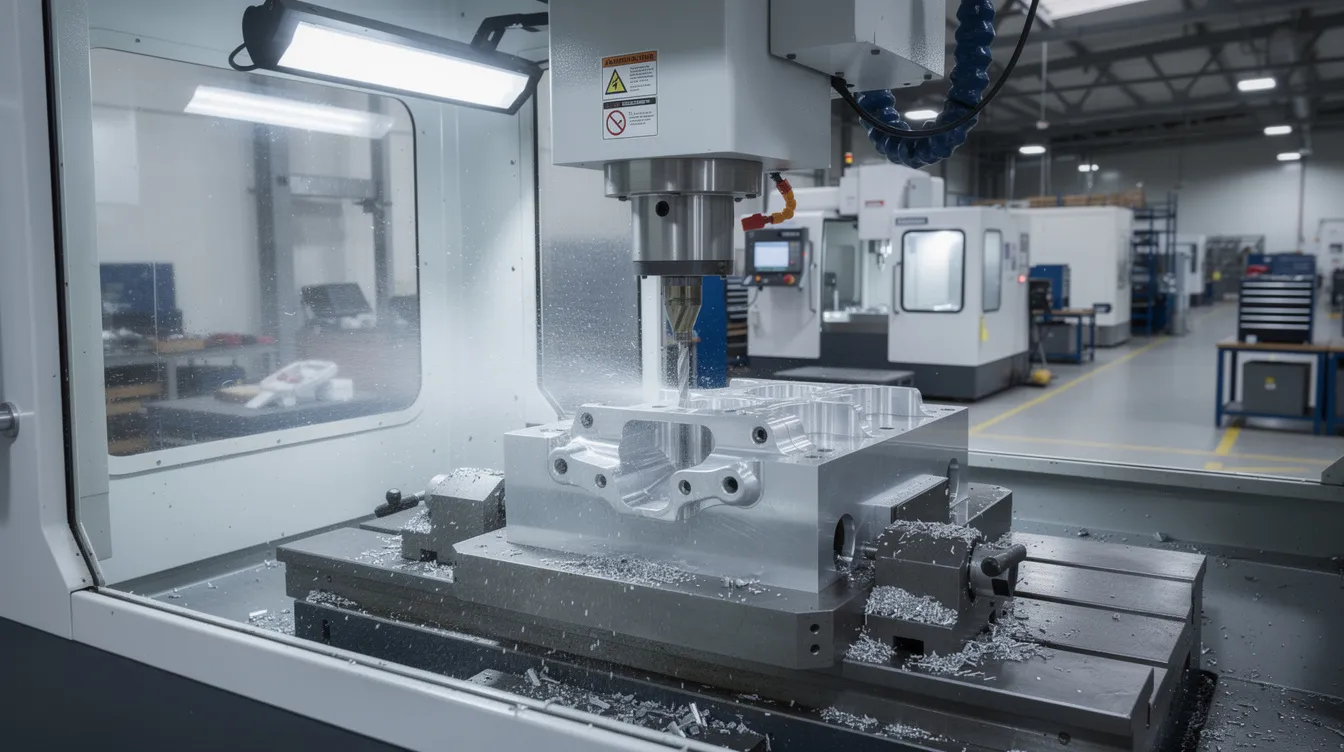
At its core, cnc machining uses computer numerical control for precision manufacturing. CNC services involve using computers to automate and control machine tools-milling cutters, lathes, and multi-axis centers-that systematically remove material from a workpiece to produce finished components. This subtractive manufacturing approach stands apart from two other common methods:
-
3D printing builds parts layer by layer. It excels at complex organic shapes and quick concept models, but generally delivers lower structural strength, rougher surface finish, and limited material performance compared to machined metal parts.
-
Injection molding offers very low per-unit cost at high volumes but demands expensive upfront tooling and long mold lead time. CNC remains the more economical choice for quantities up to a few hundred or low thousands of parts.
CNC machining is used across various industries including aerospace, automotive, electronics, and medical. At Anebon, we regularly produce parts for diverse industries such as aerospace, medical devices, automotive and e-mobility, consumer electronics, robotics, and industrial machinery. Typical cnc machined parts coming off our shop floor include housings, brackets, heat sinks with complex fin geometry, shafts, fixtures, bushings, valves, and sensor components.
CNC machining can produce both prototypes and high-volume production parts-from a single piece to full-scale OEM runs. If you have a project ready to go, upload your cad file (STEP, STP, IGES, or SLDPRT) today along with your technical drawings and tolerance notes to request a CNC machining quote.
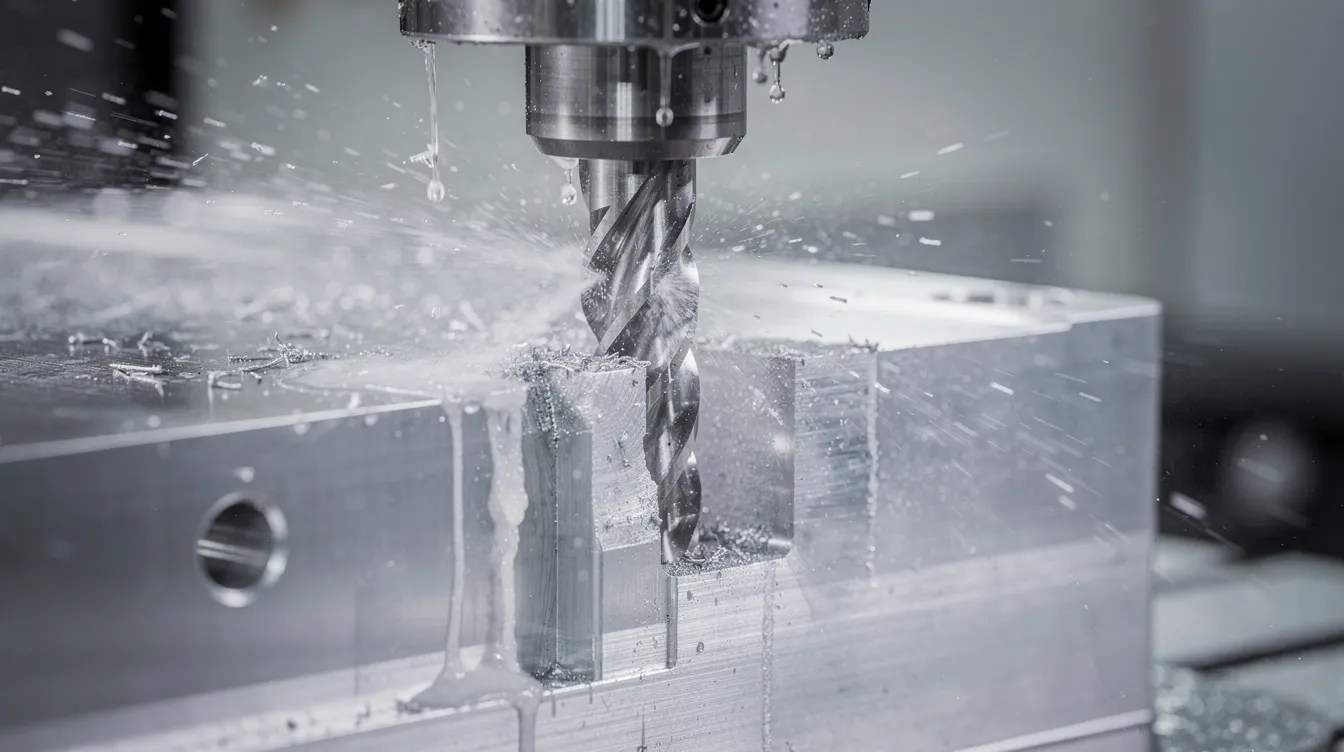
How Our CNC Machining Process Works: From CAD File to Finished Part
Every project at Anebon follows a structured digital workflow-from the moment you submit a computer aided design file to the day your finished machined parts ship from our cnc machining factory. Understanding how CNC machining works helps you prepare better files and get faster results.
1. Quoting
You upload your cad file (STEP, STP, IGES, SLDPRT) and a 2D drawing (PDF) that includes tolerance callouts, threading specifications, surface finish requirements, and any material preferences. Our quoting team reviews the geometry, selects the appropriate manufacturing process, and returns a detailed quote-typically within 24–48 hours when documentation is complete.
2. DFM Review
Before any cutting tool touches material stock, our engineers perform a design for manufacturability review. They examine:
-
Wall thickness and depth-to-width ratios
-
Undercuts and tool access challenges
-
Sharp edges and minimum internal corner radii
-
Tolerance stack-ups and feasibility on selected materials
If adjustments can reduce costs or improve reliability, we share specific recommendations during this design phase so you can approve changes before machining begins.
3. CAM Programming and Setup
Once the design is locked, our programmers generate toolpaths using CAM software, select the right machine (3-axis, 4-axis, 5-axis CNC machining, or CNC turning), and design fixtures that ensure repeatable positioning across multiple parts.
4. Machining and Inspection
Cutting machines run the programmed toolpaths, removing material from bulk material stock with high precision. CNC machining minimizes material wastage through controlled, optimized cuts. In-process checks use machine probes and test cuts. A first-article inspection confirms that the part meets all dimensional requirements before the full batch proceeds. CNC machines can operate 24/7, enabling faster production and improved time-to-market.
5. Surface Finishing and Quality Control
After machining, parts move to finishing (anodizing, bead blasting, powder coating, or other treatments as specified). A final dimensional report-generated via CMM or other calibrated instruments-accompanies the shipment.
6. Packing and Export Shipping
Parts are packaged for safe transit with export documentation. Air freight delivers prototypes in 3–5 days; sea freight handles larger production orders over 20–40 days depending on destination.
Approximate lead time benchmarks:
|
Order Type |
Machining Time |
Total Lead Time (incl. shipping via air) |
|---|---|---|
|
Rapid prototypes (1–5 pcs, simple) |
1–3 days |
5–10 days |
|
Small batch (10–50 pcs) |
5–10 days |
10–17 days |
|
Production run (200–500+ pcs) |
15–25 days |
25–40+ working days |
Parts can be ready in as fast as 1 day for urgent prototype orders on standard materials.
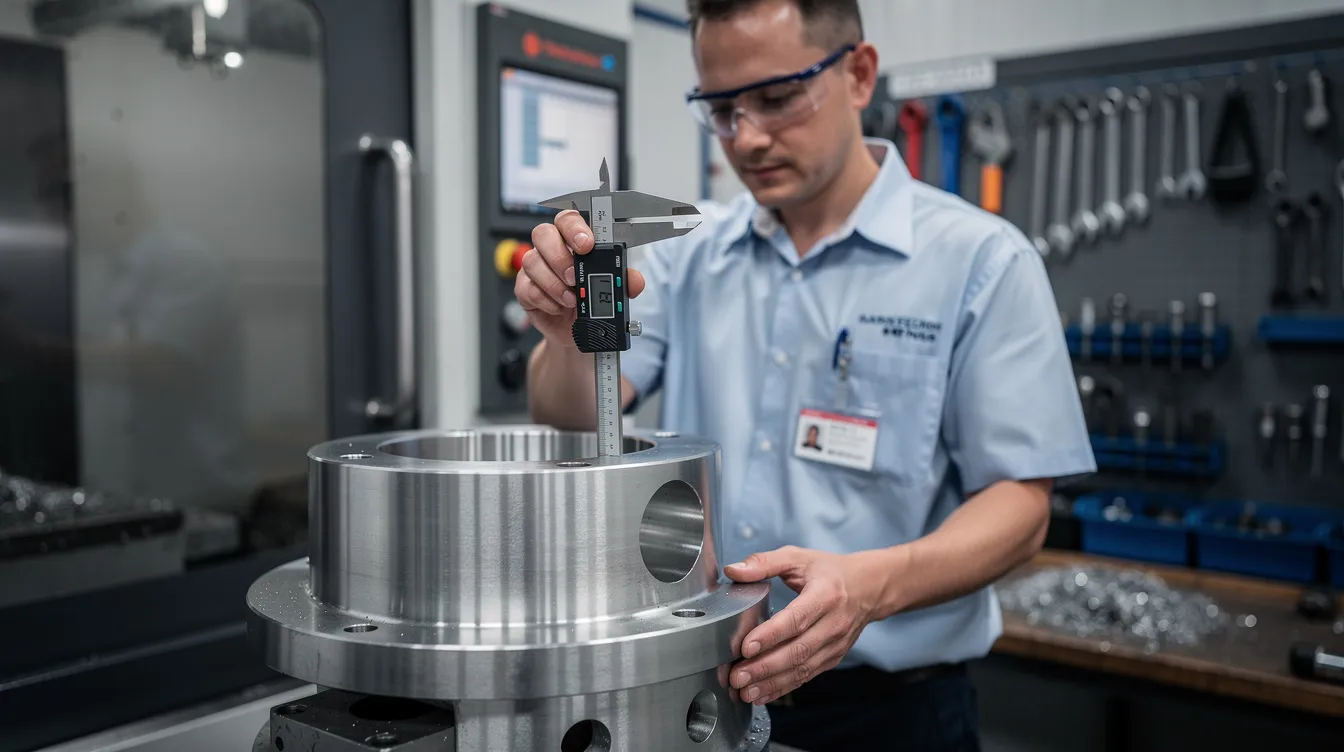
Core CNC Machining Capabilities at Anebon
Anebon offers cnc milling, cnc turning, and multi-axis mill-turn capabilities for both metals and plastics. CNC machining can handle complex geometries with 3, 4, and 5-axis systems, and our equipment handles production volumes from 1 to 100,000 parts per order. Whether you need cnc machined prototypes for validation or tens of thousands of production parts for OEM fulfillment, our CNC machining center infrastructure scales to match.
One of the key cnc machining advantages is that CNC machining retains all mechanical properties of the materials used. Unlike some additive methods that can introduce anisotropy or porosity, a CNC-machined part inherits the full tensile strength, fatigue strength, and heat resistance of its parent material.
CNC machining offers high precision and accuracy with tolerances as tight as ±0.002 mm on critical features when design geometry and material selection allow. For general tolerances, we typically hold ±0.1 mm, stepping down to ±0.025 mm for precision features, and achieving ±0.005 mm or tighter for sealing or optical surfaces. In imperial terms, CNC machining achieves tolerances of +/-0.001″ to +/-0.005″, with standard work falling in the +/-0.005″ to +/-0.01″ range.
Surface roughness options range from as-machined (~3.2 µm Ra) to polished or ground finishes (~0.2–0.4 µm Ra) for sealing faces and optical components. We can combine CNC machining with die casting or sheet metal fabrication to deliver complete assemblies where your project requires it.
CNC Milling Services
CNC milling is our primary process for flat, stepped, and 3D contoured parts. CNC milling typically operates on a 3-axis system for cutting-handling pockets, slots, drilled holes, tapped threads, and planar surfaces. For parts with complex contours, undercuts, or features on multiple faces, we use 5-axis milling to reduce setups, improve accuracy, and shorten lead time.
Typical CNC milling applications include:
-
Aluminum heat sinks with intricate fin patterns for consumer electronics
-
Precision plates and covers for medical devices
-
Structural brackets and mounts for aerospace assemblies
-
Custom irregular aluminum parts with 3D surfacing
Our machine table sizes accommodate small precision components up to medium-sized structural parts. Maximum size depends on part geometry and the specific machine selected during programming.
CNC Turning and Mill-Turn Services
CNC turning is the go-to process for cylindrical, conical, and threaded parts. Our multi-axis lathes combine turning with live-tool milling-enabling cross holes, flats, keyways, and custom threads in a single setup. This turning and milling integration eliminates re-fixturing, improves concentricity, and cuts overall machining time.
Common turned parts we produce:
-
Medical connectors and surgical instrument shafts
-
Aerospace bushings and precision fasteners
-
Automotive sensor housings and valve bodies
-
Robotics couplings and bearing seats
We support metric, UNC/UNF, and custom threads with tight geometric tolerances on concentricity and runout. Parts requiring both precise tolerances on turned diameters and milled features benefit significantly from our mill-turn approach.
Materials and Surface Finishes for CNC Machined Parts
Anebon machines a wide range of different materials-over 50 metal and plastic options-to meet varying performance, weight, and cost requirements. CNC machining can utilize over 50 different materials, giving you flexibility to match material properties to application demands.
Metals
|
Material Family |
Common Grades |
Key Properties |
|---|---|---|
|
Aluminum |
6061-T6, 6082, 7075-T6 |
Lightweight, good mechanical properties, excellent machinability |
|
Stainless steel |
304, 316, 316L, 17-4PH, 430 |
Corrosion resistance, heat resistance, high strength |
|
Carbon steel / mild steel |
1018, 1045 |
High tensile strength, affordable price, weldable |
|
Medium carbon steel |
1040, 1050 |
Good balance of strength and ductility |
|
Alloy steel |
4140, 4340 |
Fatigue strength, wear and corrosion resistance after heat treatment |
|
Brass & Copper |
C360, C110 |
Electrical conductivity, low friction, corrosion resistant |
|
Titanium |
Grade 2, Grade 5 (Ti-6Al-4V) |
Extreme strength-to-weight ratio, performance at extreme temperatures |
Aluminum 6061 and 7075 are common CNC machining materials for aerospace and consumer electronics. Stainless steel has five types available for CNC machining, each suited to different corrosion, temperature, and strength requirements.
Plastics
CNC machining can utilize plastics like ABS and polycarbonate, alongside engineering-grade polymers:
-
Plastic ABS – lightweight, impact-resistant, commonly used for prototypes and housings
-
PC (polycarbonate) – optical clarity, high impact strength, chemical resistance
-
POM (Acetal/Delrin) – low friction, dimensional stability, wear resistance
-
PEEK – a high-performance thermoplastic used in CNC machining for medical and aerospace applications; withstands extreme temperatures, offers low moisture absorption, and maintains strength under load
-
Nylon – good fatigue strength, moisture absorption to consider in design
-
Carbon fiber composites – high strength, lightweight, used in advanced technology applications
-
Epoxy resin laminates – used in specialized electrical and structural components
Customers can specify custom alloys or plastic grades. We review machinability, hardness, and material stock availability before confirming lead time and pricing.
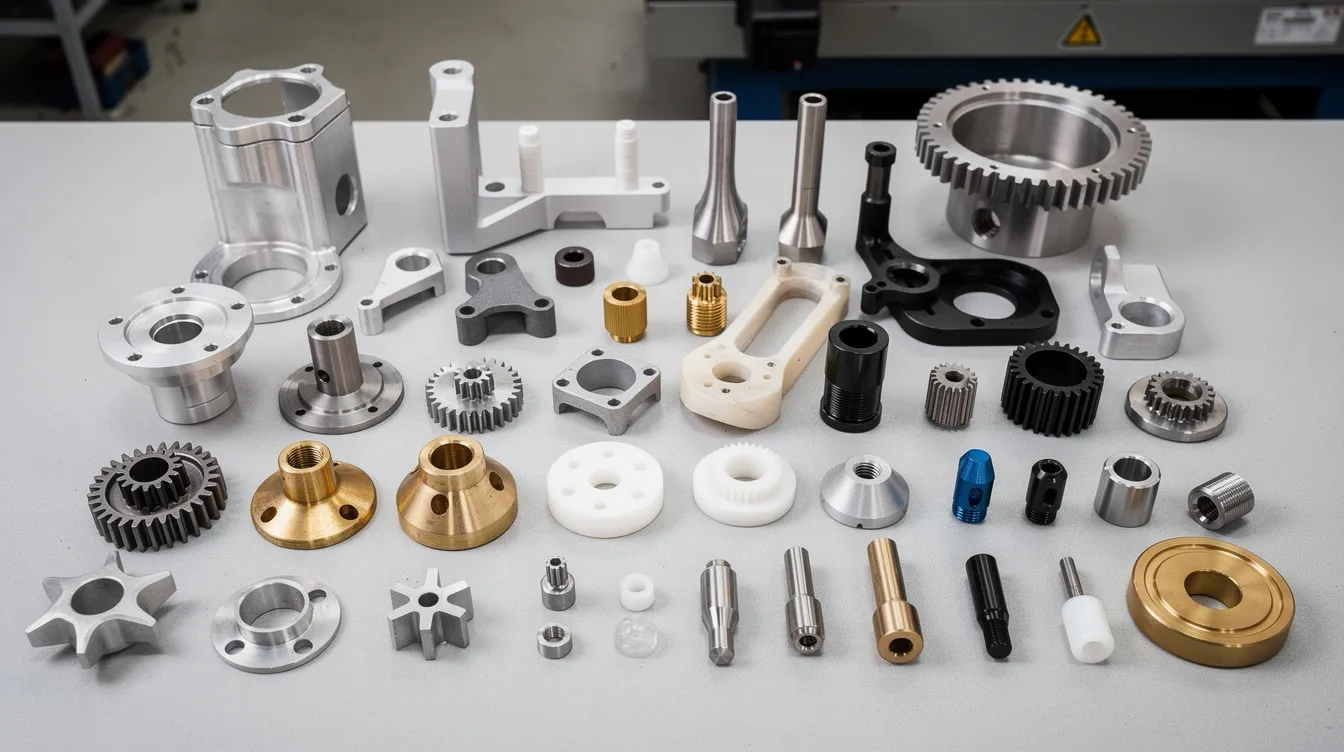
Common Surface Treatments and When to Use Them
The right surface finish protects your cnc machined parts from environmental degradation, improves aesthetics, and can enhance functional performance. Anebon offers a full range of finishing options that can be applied to custom parts per customer specification.
Anodizing (Type II and Type III)
CNC machining offers anodized finishes for aluminum parts. Type II anodizing creates a decorative oxide layer (4–12 µm) with color options-ideal for consumer electronics enclosures and robotics housings. Type III hard anodize builds a thicker, wear-resistant layer (50–100 µm) for parts exposed to abrasion. Anodized finishes improve corrosion resistance of aluminum, extending service life in outdoor applications and humid environments.
Chromate Conversion Coating
Chromate conversion coating is applied to aluminum and zinc parts where electrical conductivity must be maintained-grounding points, EMI shielding components, and RF enclosures. It provides corrosion resistance with minimal thickness change. Learn more about aluminum surface treatment options for your specific application.
Passivation
Passivation for stainless steel removes free iron from the surface, enhancing corrosion resistance without adding significant thickness. This treatment is required for medical devices and food-contact components where cleanliness is critical.
Bead Blasting and Polishing
Bead blasting reduces machining marks on CNC parts, creating a uniform matte texture suitable for visible product surfaces. For higher-end cosmetic requirements, polishing or electropolishing can achieve mirror-like finishes with Ra values below 0.4 µm.
Powder Coating and Plating
CNC parts can be finished with powder coating for durability-offering thick, color-matched coatings suitable for outdoor applications and rugged equipment. Electroless nickel plating enhances wear resistance of parts and provides a uniform coating even on complex geometries.
We can combine multiple treatments on the same part-for example, machining + anodizing + laser marking-to meet both functional and branding requirements.
CNC Machining Service Cost: What Affects Your Quote
Understanding what drives cnc machining service cost helps you make smarter design and sourcing decisions. Here is a breakdown of the major cost components:
|
Cost Component |
Typical Share of Total |
What Drives It |
|---|---|---|
|
Material |
20–40% |
Alloy grade, certification requirements, stock size |
|
Machine time |
30–50% |
Complexity, axis count, tolerances, number of setups |
|
Setup & programming |
5–20% |
CAM programming, fixture design (fixed cost per order) |
|
Tooling & consumables |
5–15% |
Tool wear rate, specialty cutters for hard materials |
|
Finishing & inspection |
10–30% |
Anodizing, plating, CMM reports, PPAP documentation |
Geometry factors: Deep cavities, thin walls, and tight internal corners increase machining time and cutting tool wear, raising cost. Features requiring special tool access-like internal undercuts-may demand custom fixturing or additional setups.
Material cost and machinability: Aluminum machines roughly 4–6 times faster than titanium or Inconel, with far less tool wear. Choosing carbon steel or aluminum over exotic alloys can dramatically reduce costs when the application allows.
Volume effects: Setup and programming are fixed costs spread across total quantity, so unit price drops significantly from prototype to full production. CNC machining reduces overhead costs by eliminating the need for individual customers to purchase and maintain expensive equipment-you pay for the parts, not the machine.
Tolerances and quality requirements: Moving from general tolerances (±0.1 mm) to precise tolerances (±0.005 mm) can multiply cost 2–5× on affected features due to slower feeds, additional finishing passes, and increased inspection. Full inspection reports and traceability documentation add additional cost.
We encourage you to share target budgets and annual volumes so our team can suggest design, material, or process optimizations to reduce costs without compromising function. For a deeper dive, read our guide on how to calculate CNC machining cost.
Practical Tips to Reduce CNC Machining Costs
Here are actionable strategies we share with customers during the design phase:
-
Simplify geometry where possible. Avoid unnecessary undercuts, extreme aspect ratios, and microscale features that demand specialty cutting tools. Eliminating features with no functional purpose can cut machining time significantly.
-
Apply tight tolerances only where they matter. Use standard tolerances on non-mating or cosmetic areas. Reserve ±0.025 mm or tighter callouts for sealing faces, bearing fits, and alignment features.
-
Choose readily available materials. Standard aluminum (6061-T6) and 304 stainless steel are stocked widely, ship quickly, and machine efficiently. Custom alloys or certified aerospace grades add procurement lead time and cost.
-
Consolidate setups. Designing parts so that critical features can be reached in fewer orientations-or leveraging 5-axis CNC machining-reduces fixture changes, improving both accuracy and cost.
-
Collaborate early with our engineers. Sharing your design intent and budget targets during the design phase lets us propose trade-offs-alternative materials, relaxed finishes on hidden surfaces, or feature consolidation-that deliver the same function at an affordable price.
-
Order in batch. Low volume production orders carry higher per-unit fixed costs. If your forecast supports it, ordering multiple parts in a single batch spreads setup costs and unlocks better material pricing.
Industries and Typical Applications for Our CNC Machining Services
Anebon supports multi-industry OEMs worldwide, from early-stage R&D teams validating cnc machined prototypes to long-term manufacturing partners running annual production programs. CNC machining is widely used in aerospace and automotive industries, but its reach extends far beyond those sectors.
Aerospace
Structural brackets, precision spacers, manifolds, and sensor housings demand high strength-to-weight ratios and tight tolerances. We machine these from aluminum 7075-T6 and titanium alloys, often with Type III hard anodize for wear resistance. Parts must perform reliably at extreme temperatures and under cyclic loading, making CNC the preferred manufacturing process for flight-critical hardware.
Medical Devices
Components such as surgical instrument handles, implant-related fixtures, and diagnostic housings require biocompatible materials-stainless steel 316L, titanium Grade 5, or PEEK-with passivated or electropolished finishes. Traceability and documentation are essential in this sector, and our ISO 9001:2015 quality system supports those requirements.
Automotive and E-Mobility
Powertrain brackets, battery enclosures, cooling plates, and sensor mounts are machined from aluminum and steels. These parts need corrosion resistant finishes and dimensional repeatability across production runs. Heat treatment may be applied to alloy steel components for improved fatigue strength in high-cycle applications.
Consumer Electronics
CNC machined aluminum housings, bezels, heat sinks, and internal frames combine aesthetics with thermal performance. Tight surface finish specifications (Ra 0.8 µm or lower), anodized color matching, and precise tolerances on assembly interfaces are standard expectations in this space.
Industrial Machinery and Robotics
Precision gears, couplings, bearing seats, and custom parts for automation equipment demand reliability and repeatability over millions of cycles. Materials like POM offer low friction for sliding components, while hardened alloy steel handles high-load bearing seats. These parts serve diverse industries from food processing to semiconductor fabrication.
Why Choose Anebon Metal Products Limited for CNC Machining
Anebon combines precision CNC machining, die casting, and sheet metal fabrication under one roof-giving you a flexible, scalable OEM manufacturing partner rather than a simple job shop. Here is what sets us apart:
Experience and location. Operating since 2010 from Dongguan, Guangdong, we specialize in serving overseas OEMs, design engineers, and R&D teams. Our location in China’s manufacturing heartland provides access to advanced technology, skilled machinists, and a mature supplier ecosystem for raw materials and finishing services.
Certifications. ISO 9001:2015 and ISO 14001:2015 certifications underpin our quality management and environmental responsibility. Our structured quality control process covers incoming material inspection, in-process checks, and final inspection with dimensional reports available on request.
Direct manufacturer advantages. Working directly with a cnc machining factory-rather than through a broker or online cnc marketplace-means consistent communication, transparent lead times, and better control over quality and engineering changes. You deal with the same engineering team from quote through shipment.
Full lifecycle support. We support rapid prototyping through full-scale production, including secondary operations (tapping, reaming, assembly) and integrated surface finishing. CNC machining can produce parts in volumes from 1 to 100,000, and our capacity scales to meet your program’s growth. Online cnc machining services and instant pricing platforms have their place for simple parts, but complex projects with tight tolerances, custom finishes, and ongoing engineering collaboration benefit from a dedicated manufacturing partners relationship.
Broad material and process range. With over 50 materials available, combined milling and turning capabilities, and in-house finishing lines, we handle the full scope of your project. Whether you need a handful of cnc machined prototypes in PEEK or thousands of aluminum production parts with Type II anodize, Anebon delivers.
Integration with Other Manufacturing Processes (Die Casting, Sheet Metal, 3D Printing)
Many OEM projects involve more than one manufacturing process. Anebon manages multiple processes under one roof, simplifying your supply chain:
-
CNC machining + die casting: We machine critical interfaces, precision holes, and sealing surfaces on die cast components to achieve final tolerances that casting alone cannot deliver. This hybrid approach is common for automotive and electronics housings.
-
CNC machining + sheet metal: Sheet metal fabrication handles enclosures, brackets, and chassis efficiently, while CNC operations add precision features-threaded bosses, alignment pins, and tight-tolerance mounting surfaces-that sheet metal processes cannot produce.
-
3D printing + CNC machining: 3D printing can produce rapid prototypes, fixtures, or complex internal geometries that are not economical to machine directly. Once designs are validated, parts transition smoothly into CNC-machined or cast production parts for full-scale manufacturing.
This integrated approach helps customers validate designs quickly during prototyping, then move into volume production without changing suppliers. Anebon acts as a single manufacturing partner managing these processes-reducing coordination overhead, shortening overall lead time, and keeping quality consistent across every part in your assembly.
Ready to get started? Send us your cad file and project details-material, quantity, tolerances, and finish requirements-and receive a detailed CNC machining quote within 24–48 hours. Whether you need a single prototype or a run of thousands of metal parts, Anebon Metal Products Limited has the precision, capacity, and engineering support to bring your custom parts from digital design to delivered hardware. Contact our team today.