Top CNC Service: Precision Machining for Your Custom Projects
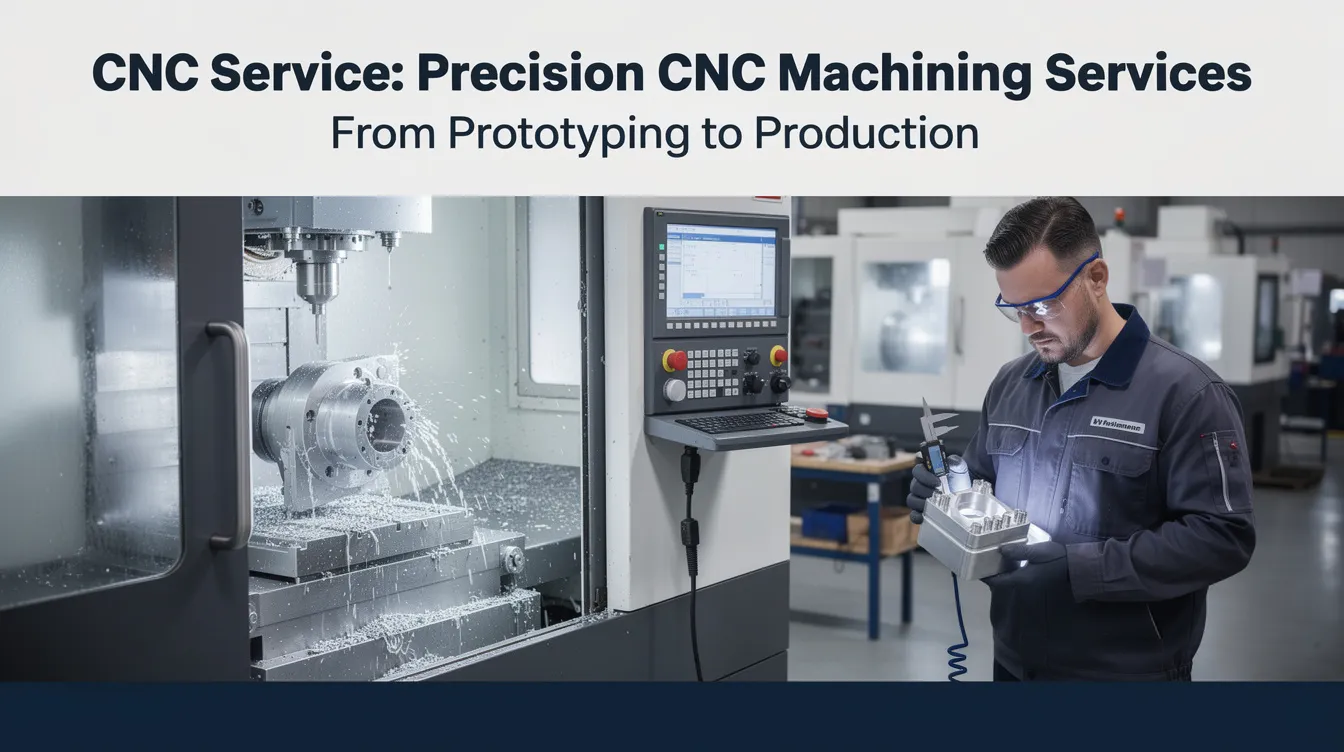
CNC Service: Precision CNC Machining Services from Prototyping to Production
Finding a CNC service that delivers tight tolerances, fast turnaround, and reliable quality across the full product lifecycle is a challenge most OEM engineers know well. This guide walks you through everything you need to evaluate and use precision CNC machining services effectively – from materials and tolerances to cost optimization and file preparation.
Fast CNC Machining Services Overview
CNC machining services cover a broad range of subtractive manufacturing processes where computer numerical control machines remove material from a solid block of metal or plastic to produce finished components. Anebon Metal Products Limited, based in Dongguan, China, supports overseas OEM clients with rapid prototyping and full-scale production runs, handling everything from single-piece orders to tens of thousands of CNC parts per month.
-
Engineers can request online quotes with detailed DFM feedback typically returned within 24 hours, and lead time for standard parts starts at 3–5 working days.
-
Core capabilities include CNC milling, CNC turning, 5-axis CNC machining, die casting, and sheet metal fabrication – all consolidated under one roof.
-
CNC machining tolerances can be as tight as ±0.002 mm on critical features, backed by ISO 9001:2015 and ISO 14001:2015 certifications.
-
Primary customer base includes overseas OEM brands in consumer electronics, aerospace, medical devices, automotive, and robotics requiring consistent performance across product generations.
-
CNC machines operate 24/7 with minimal supervision, enabling high throughput and increased efficiency for time-sensitive projects.
What Is CNC Machining and Why It Matters
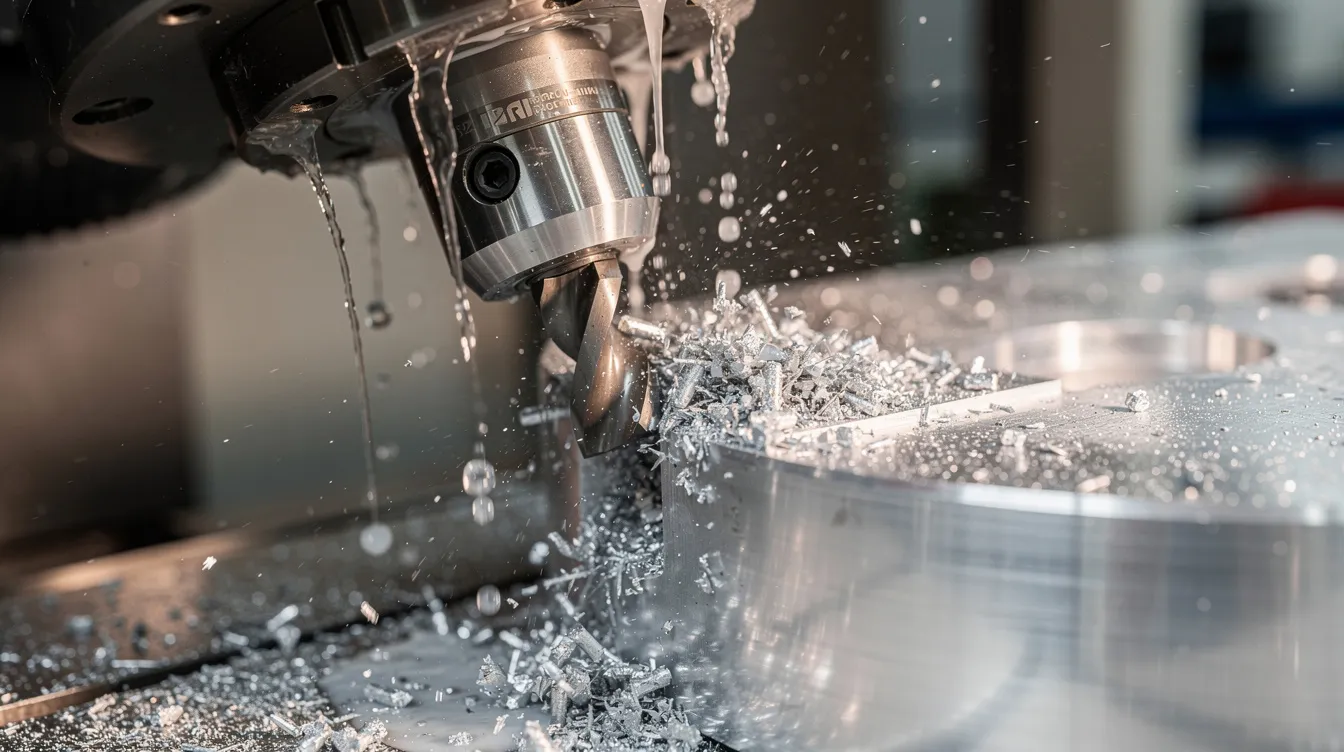
CNC machining – where CNC stands for computer numerical control – is a subtractive manufacturing process in which a machine follows pre-programmed toolpaths to shape raw material into precision parts. CNC services involve computerized machinery to cut and shape raw materials with high precision and consistent dimensions, which are key benefits over manual methods. Unlike manual machining, the CNC machining process delivers automation, repeatability, and the ability to produce complex designs that would be impractical or impossible by hand. CNC services reduce human error and ensure consistent product quality across every batch.
Anebon uses three major machine types to cover a diverse range of part geometries. CNC milling centers (3-axis through 5-axis) handle prismatic shapes, pockets, and freeform surfaces. CNC turning centers (lathes) excel at rotational parts like shafts and bushings, and can include live tooling for secondary milling operations. Modern multi-axis CNC machines can create intricate 3D shapes, undercuts, and contoured surfaces in a single setup, cutting cycle times and improving accuracy.
CNC capabilities include the use of CAD/CAM software for design and toolpath generation, and CNC machining can utilize over 30 different materials. In 2024–2026, CNC machined parts are found everywhere: consumer electronics housings for smartphones and laptops, medical implants and surgical instruments, robotics joints and actuators, and automotive brackets for EV platforms. CNC technology is used in diverse industries such as automotive, aerospace, and medical – and the demands on precision manufacturing only continue to grow.
Core CNC Machining Services (Milling, Turning, 5‑Axis)
Anebon’s CNC machining services combine CNC milling, CNC turning, and multi-axis machining into a single manufacturing network for custom metal and plastic components. CNC machining includes processes such as milling, turning, and laser cutting, giving engineers flexibility to match the right process to each feature on a part.
-
CNC milling is ideal for prismatic parts, pockets, slots, and complex 3D surfaces, while CNC turning suits shafts, bushings, pins, and rotational parts.
-
3-axis, 4-axis, and 5-axis CNC machining are available to reduce the number of setups and improve accuracy on intricate geometries and undercuts – particularly valuable for aerospace and medical components.
-
CNC machining can produce parts in volumes from 1 to 100,000, covering everything from one-off prototypes to thousands of production parts per month for long-term OEM programs, with no minimum order quantity.
-
For example, a consumer electronics brand may need five prototype units of a milled magnesium-alloy frame, then scale to 5,000 units per month once the design is validated – all handled within one facility.
CNC Milling Services
CNC milling is the go to material removal process for flat surfaces and 3D contours. A rotating multi-point cutting tool moves across the workpiece on X, Y, and Z axes, and CNC milling typically uses a 3-axis system for cutting, though 4-axis and 5-axis configurations handle more complex geometry.
-
Common applications: enclosures for consumer electronics, heat sinks, mounting plates, structural brackets, and complex molds or fixtures.
-
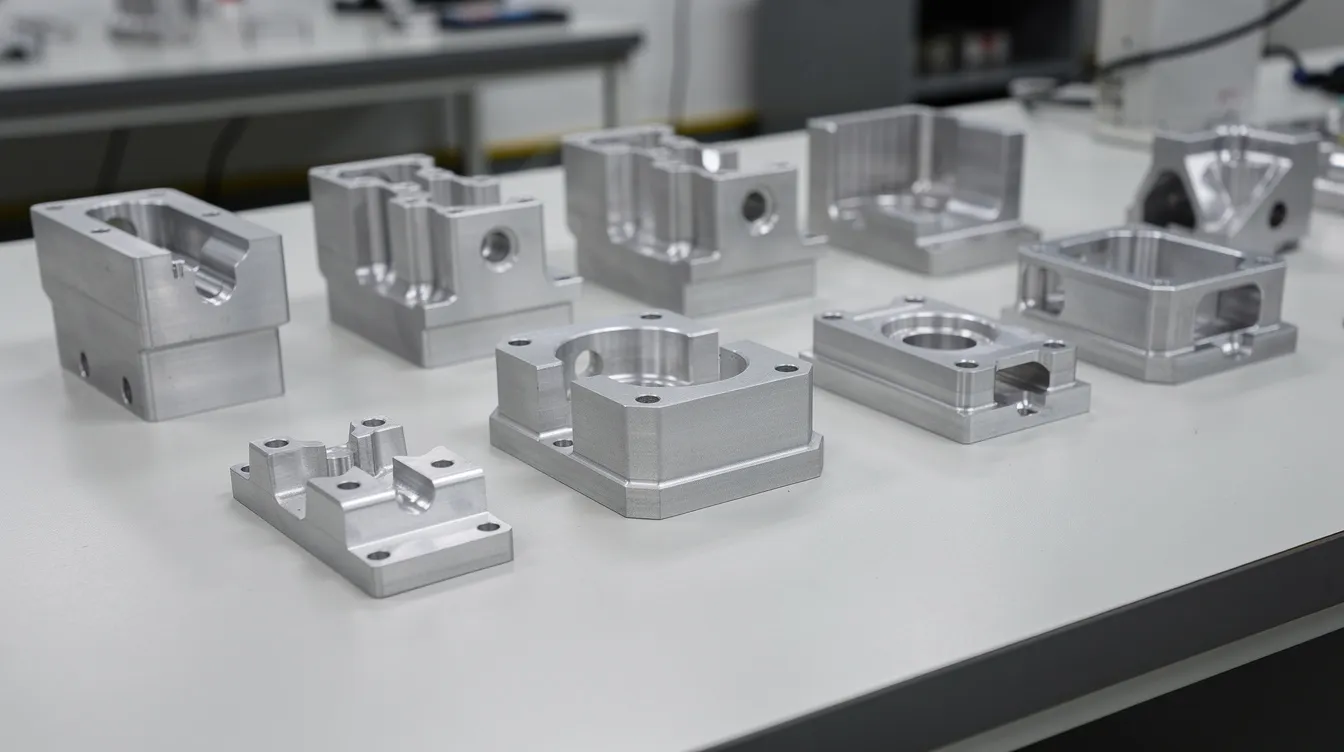
Anebon’s typical milling envelope accommodates parts up to roughly 1200 × 600 × 400 mm, with practical tolerance ranges from ±0.05 mm for general features down to ±0.005 mm on critical dimensions.
-
CNC milling supports both metals – aluminum, alloy steel, stainless steel, titanium – and plastics like plastic ABS, POM, and PEEK.
-
Real-world example: a milled aluminum 6061 camera housing with 1.5 mm walls, Type II anodized finish, and ±0.02 mm positional tolerance on lens mount bores – delivered from CAD file to finished part in under seven days.
-
Another example: a CNC milled alloy steel gearbox plate in 4140 with ground datum surfaces, held to flatness within 0.015 mm over a 200 mm span, then black-oxide coated for corrosion resistance.
CNC Turning Services
CNC turning is a machining process where the workpiece rotates on a spindle while a single-point cutting tool removes material, making it well suited for cylindrical and tubular components. This process produces parts with excellent dimensional stability in roundness, concentricity, and surface finish.
-
Typical CNC turning output includes shafts, spacers, bushings, threaded connectors, precision pins, and valve components.
-
Anebon operates bar-fed CNC lathes with live tooling capability, enabling simple milled features (cross-holes, flats, keyways) on turned parts without remounting – reducing handling and improving concentricity.
-
Supported diameters range up to approximately Ø400 mm, with between-center lengths up to 1,500 mm for longer shaft work.
-
Tight concentricity (within 0.005 mm between features in one setup), machined finish quality down to Ra 0.8 µm, and the ability to combine CNC turning and milling operations in one clamping all contribute to faster throughput and fewer sources of error.
-
Use cases span from stainless steel surgical instrument handles to brass electrical connectors and titanium aerospace fasteners.
From Design Parts to Finished CNC Machined Components
The path from design parts to finished CNC machined components follows a structured workflow that helps catch issues before they become expensive. It starts when a customer uploads or sends a CAD file and 2D drawings. Anebon’s engineers then review the geometry for manufacturability, checking tool access, wall thickness, fillets, thread specifications, and whether the requested tolerances are achievable with the intended material and process.
Design for Manufacturability (DFM) feedback can enhance production efficiency significantly. For instance, consider a consumer electronics housing designed with 0.8 mm walls and sharp internal corners. Machining such geometry requires very thin tools that deflect under cutting forces, increasing cycle times and scrap risk. If the designer increases wall thickness to 1.5 mm and adds R0.5 mm fillets to internal corners, the machining process becomes more stable, tool wear drops, and the CNC machining service cost decreases – often by 15–25% on cycle time alone. Rapid prototyping allows for quick iterations of design changes like these before committing to production tooling.
Anebon supports customers through every stage: early-stage prototyping, design validation builds (DVB), engineering validation test (EVT) runs, and full production transfer. CNC services can streamline production from prototypes to full-scale runs, keeping material, machining parameters, and finishing consistent across each phase. This continuity matters because switching vendors between prototype and production often introduces dimensional drift and finish variation that eats into development schedules.
Materials for CNC Machining: Metals
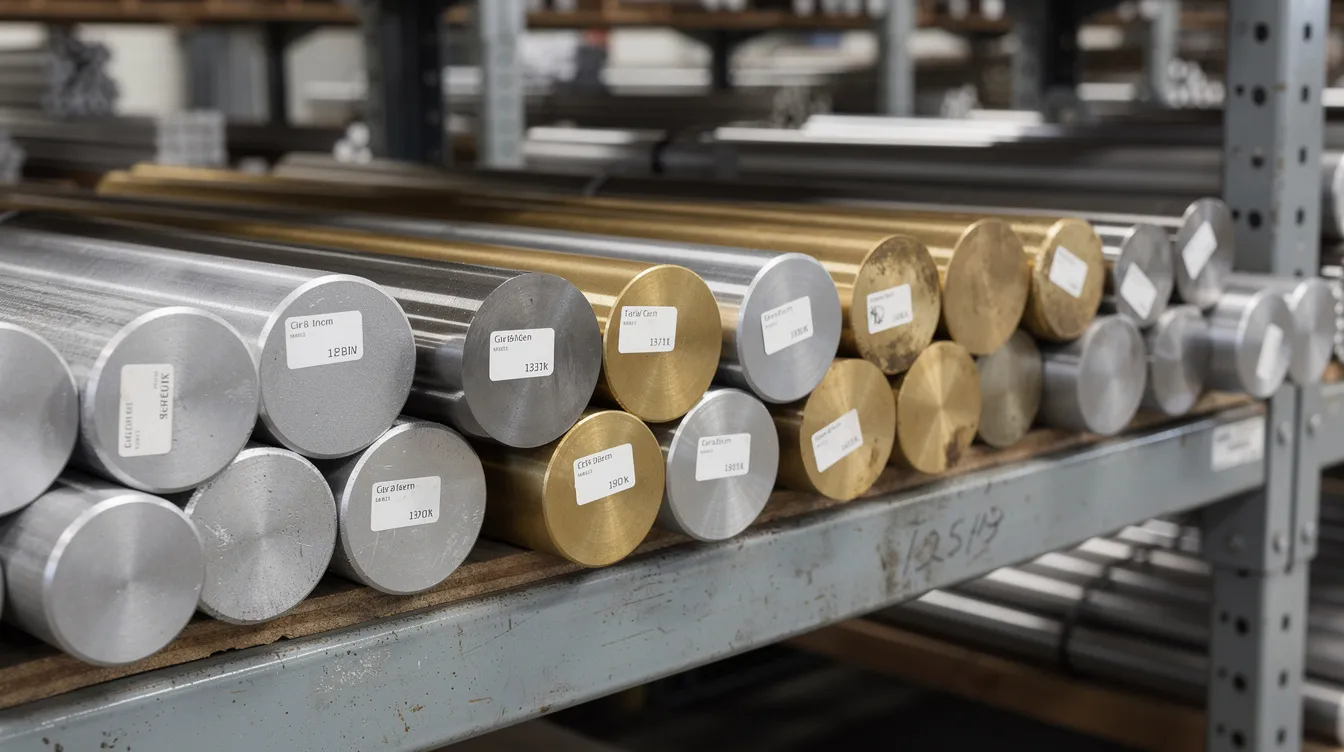
Anebon machines a broad range of metals to meet custom specifications across diverse industries. The portfolio includes aluminum, stainless steel, alloy steel, mild steel, spring steel, brass, copper, and titanium – each selected based on the part’s mechanical, thermal, and environmental requirements.
-
Aluminum (6061, 7075, 2024, 5052): Aluminum alloys like 6061 and 7075 are commonly used for CNC machined parts in aerospace, automotive, and consumer electronics. Aluminum 6061 offers good machinability and corrosion resistance, making it a go-to choice for housings and brackets. 7075 provides higher tensile strength for structural applications but generates more tool wear. Both grades are lightweight, which matters when weight budgets are tight.
-
Alloy steel (4140, 4340): Alloy steel like 4140 delivers good mechanical properties – high strength, fatigue resistance, and wear toughness – making it ideal for gears, shafts, structural brackets, and fixtures. Steel alloy components often require heat treatment for optimal hardness, which adds a process step but yields consistent performance under load.
-
Stainless steel (304, 316, 17-4PH): Stainless steel offers excellent machinability and uniformity, along with strong corrosion resistance for medical devices, food-processing equipment, and marine applications. 316L is preferred for harsh environments, while 17-4PH provides high stiffness and strength after precipitation hardening.
-
Brass and copper: Brass is corrosion-resistant and easy to machine, making it a natural fit for electrical connectors, fittings, and decorative parts. Copper is highly ductile and electrically conductive, used where thermal or electrical performance is the priority.
-
Titanium (Grade 2, Grade 5): Titanium has a high strength-to-weight ratio and corrosion resistance, which is why it’s selected for high-end aerospace fittings and medical implants where biocompatibility matters. Machining is slower and more expensive – expect 2–5× the cycle time versus aluminum – but the material’s high tensile strength and heat resistance justify the cost for demanding applications. Mild steel and spring steel round out the offering for general structural and elastic applications.
Materials for CNC Machining: Plastics
Engineering plastics fill an important role in CNC machining when parts need low friction, chemical resistance, electrical insulation, or weight savings beyond what metals offer. Anebon machines a diverse range including ABS, POM/Delrin, nylon, polycarbonate, and PEEK.
-
Plastic ABS: Low-cost and easy to machine, ABS is well suited for prototypes, housings, and pre-production consumer goods testing where mechanical loads are moderate.
-
POM/Delrin: This material provides low friction, excellent wear resistance, and excellent dimensional stability – making it the default choice for gears, bushings, sliding components, and any part where consistent mechanical properties under repeated motion matter.
-
Nylon: Nylon is known for its high tensile strength and durability, handling moderate loads and repeated impacts better than most commodity plastics. It’s commonly used for structural clips, cable guides, and bearing surfaces.
-
Polycarbonate: Transparent, tough, and impact-resistant – used where optical clarity or visual inspection windows are needed.
-
PEEK: Selected for aerospace, medical, and high-temperature environments (continuous use above 250°C), PEEK delivers chemical resistance and good quality mechanical performance under extreme conditions. Machining PEEK requires slower feeds and careful thermal management, so it adds to cost and lead time.
Material selection directly affects machining parameters, surface finish, and final part performance. Exotic or high-performance plastics can increase cycle times by 2–5× compared to standard aluminum, so engineers should consider whether the application truly demands these grades.
Standard Tolerances and Surface Quality
Specifying the right tolerances is one of the most impactful decisions an engineer makes when ordering CNC machined parts. Over-tolerancing drives up CNC machining service cost and lead time; under-tolerancing risks parts that don’t fit or function. Anebon follows ISO 2768 as a default standard and encourages engineers to specify tighter tolerances only where functionally necessary.
-
General tolerance range for non-critical features: ±0.01 mm to ±0.05 mm, depending on part size and geometry.
-
Critical features (bores, mating faces, alignment datums): capable down to ±0.002 mm with appropriate fixturing, environmental control, and CMM verification.
-
CNC machining can achieve high precision with a 90% first-pass yield, meaning most parts pass inspection without rework – but this demands realistic tolerance callouts and well-prepared CAD files.
-
Standard edge breaks and deburring: 0.2–0.5 mm chamfers on sharp corners unless drawings specify otherwise; sharp internal corners receive the smallest achievable fillet based on tool diameter (typically R0.5 mm minimum for milling).
-
Surface finish ranges:
|
Finish Level |
Ra Value |
Typical Use |
|---|---|---|
|
As machined |
3.2–6.3 µm |
Internal features, non-cosmetic |
|
Fine machined |
0.8–1.6 µm |
Mating surfaces, sealing faces |
|
Polished/ground |
0.2–0.4 µm |
Cosmetic, optical, medical |
Tool marks are visible on as-machined surfaces and progressively removed with finer finishing passes or secondary operations like bead blasting and polishing.
Surface Treatments and Finishing Options
Post-machining surface treatment transforms a machined part into a finished component ready for its end-use environment. Anebon offers a full range of finishing options that serve both functional and cosmetic purposes.
-
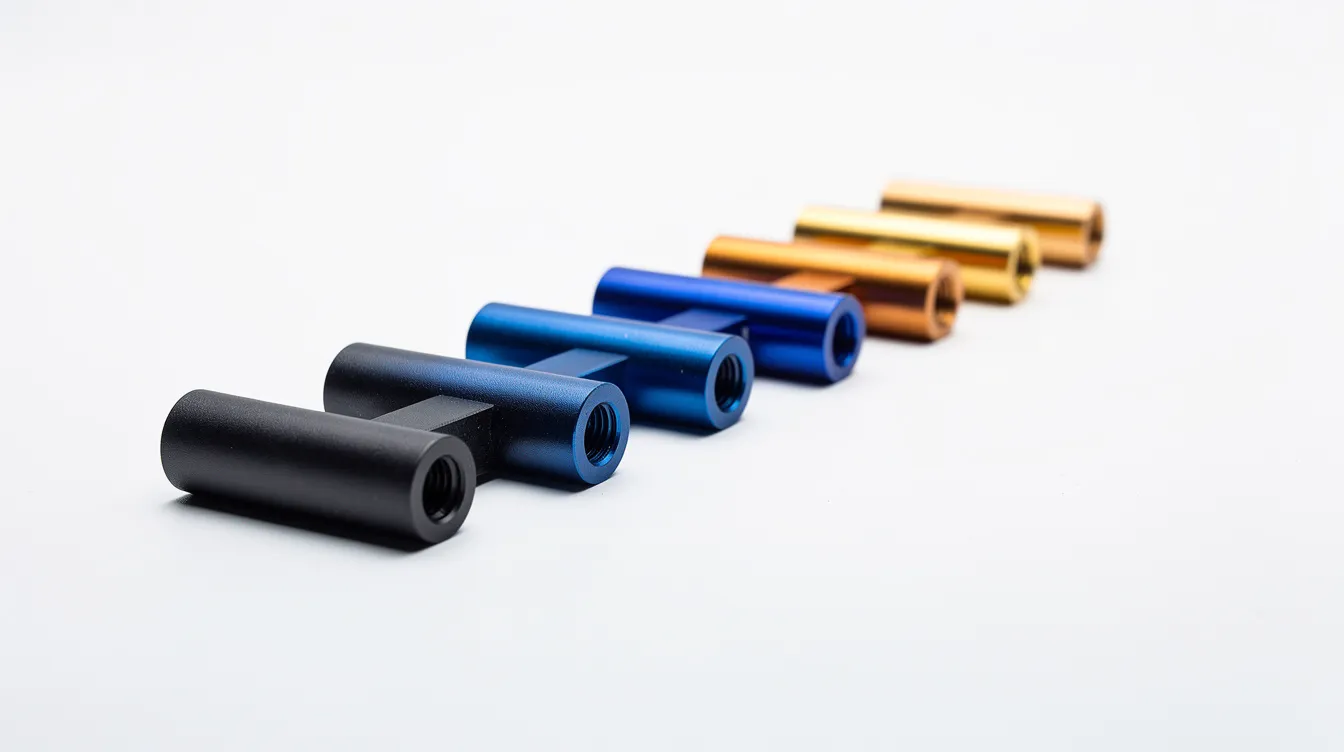
Anodizing (Type II, hard anodize): Builds a protective oxide layer on aluminum, available in clear, black, or custom colors. Critical for consumer electronics parts where consistent anodized appearance on 6061 and 7075 aluminum housings is expected.
-
Powder coating and painting: Durable color finishes for steel, aluminum, and other substrates; more wear-resistant than liquid paint in most applications.
-
Electroplating and nickel plating: Adds corrosion resistance and decorative luster to steel and brass parts; common in automotive and consumer goods.
-
Passivation: Enhances corrosion resistance on stainless steel by removing free iron from the surface – required for medical and food-contact parts.
-
Bead blasting: Creates a uniform matte texture that hides minor tool marks and provides a consistent surface finish.
-
Laser marking and engraving: Applies logos, part numbers, serial codes, and regulatory markings with controlled depth and high contrast.
Example of a full process chain: CNC milling of an aluminum 6061 enclosure → bead blasting for uniform texture → Type II anodizing in black → laser etching of a customer logo. Each step adds time and cost, but the result is a production-ready part with professional appearance and long-term durability in harsh environments.
CNC Machining Service Cost: What Influences Your Quote
Understanding what drives CNC machining service cost helps engineers design parts that deliver the required function without unnecessary expense. Cost transparency is essential when selecting a CNC provider, and stable pricing structures with clear cost breakdowns allow for informed decisions.
-
Material choice: Titanium and exotic alloys cost significantly more than aluminum – both in raw material price and machine time. A titanium part may cost 3–5× what the same geometry in aluminum 6061 would.
-
Part complexity: Number of setups, deep cavities, undercuts, thin walls, and complex designs all increase cycle time. A part that requires five setups on a 3-axis mill might need only two on a 5-axis machine – trading higher hourly machine rate for lower total time.
-
Tolerances: Every feature held to ±0.01 mm or tighter adds inspection steps, slower feeds, and more rigid fixturing. Relaxing non-critical dimensions to ±0.05 mm can meaningfully reduce cost.
-
Surface finish requirements: Moving from as-machined to polished or anodized adds secondary operations. Specify only where the application demands it.
-
Order quantity: Prototypes carry higher per-piece cost due to setup amortization. At production volumes, CNC processes optimize raw material usage, reducing waste and costs.
Anebon can provide estimated cost comparisons between design options – for example, showing the price difference between a 5-axis single-setup approach and a 3-axis multi-setup approach – so engineers can make informed trade-offs before committing. Instant pricing estimates are available for simple parts upon CAD file upload, with detailed quotes following within one business day.
File Preparation and DFM for CNC Machining
Submitting well-prepared files accelerates quoting and reduces the chance of misunderstandings that delay production. Here’s what Anebon’s engineering team needs to get started.
-
Accepted 3D CAD formats: STEP (.stp), IGES (.igs), Parasolid (.x_t), and native formats from SolidWorks, Inventor, or Creo. STEP is preferred for broadest compatibility.
-
2D drawings: PDF or DWG format with complete dimensioning, tolerances, GD&T callouts, thread specifications, and critical-to-quality (CTQ) notes clearly marked.
-
DFM best practices:
-
Avoid unnecessarily thin walls (keep above 1.0 mm for metals, 1.5 mm for plastics where possible).
-
Specify standard thread sizes (M3, M4, M5, etc.) to avoid custom tap costs.
-
Add fillets to sharp internal corners – a minimum R0.5 mm lets standard end mills reach the feature without deflection.
-
Ensure tool access to deep cavities; as a rule of thumb, depth-to-width ratios above 4:1 require special tooling.
-
Indicate surface finish and treatment requirements on the drawing, not just in email.
-
Anebon’s engineering team reviews every CAD file and may suggest changes before the CNC work begins to improve manufacturability, reduce risk, and lower cost. This DFM review is included at no charge with every quote request.
Quality Assurance and Certification
Reliable quality assurance separates a precision machining partner from a commodity job shop. Anebon has operated under ISO 9001:2015 certification since its founding in 2010, ensuring documented procedures and systematic quality management across every project. ISO 9001 certified facilities ensure high-quality standards through structured process control, while ISO 14001 certification indicates strong environmental management – both are maintained and audited annually.
Quality control practices include documented procedures and inspection reports at every stage. Advanced inspection tools ensure accurate dimensions on every critical feature, and Anebon’s quality assurance program includes full traceability of materials.
-
Metrology equipment: CMMs (coordinate measuring machines), optical projectors, surface roughness testers (profilometers), height gauges, and precision calipers.
-
Inspection stages: First-article inspection (FAI) before full production runs, in-process monitoring at key operations, and final inspection reports – all available to customers upon request.
-
Material traceability: Material certificates (EN 10204 Type 3.1) for metals such as alloy steel 4140, stainless steels, and aerospace-grade aluminum. Material traceability is important for compliance in specialized industries like aerospace and medical.
-
Confidentiality: Ensuring confidentiality and protection for intellectual property is crucial. Anebon executes NDAs and maintains strict data-handling protocols for customer designs.
-
Yield: A 90% first-pass yield target across production orders minimizes rework and ensures on-time delivery.
Industries and Applications Served
Over 20,000 customers worldwide use CNC machining services for parts spanning nearly every sector of precision manufacturing. CNC machining serves industries like automotive and aerospace with equal rigor, and Anebon adapts process controls to match the tolerance demands and regulatory expectations of each sector.
-
Aerospace: Aluminum drone frames, titanium structural fittings, and 7075 aluminum avionics enclosures requiring tight tolerances and traceability. Aerospace parts often demand AS9100-level documentation.
-
Medical devices: CNC machining is used for medical device manufacturing – stainless steel surgical instrument handles, titanium orthopedic implants, and PEEK spinal cages all require biocompatible materials and validated processes.
-
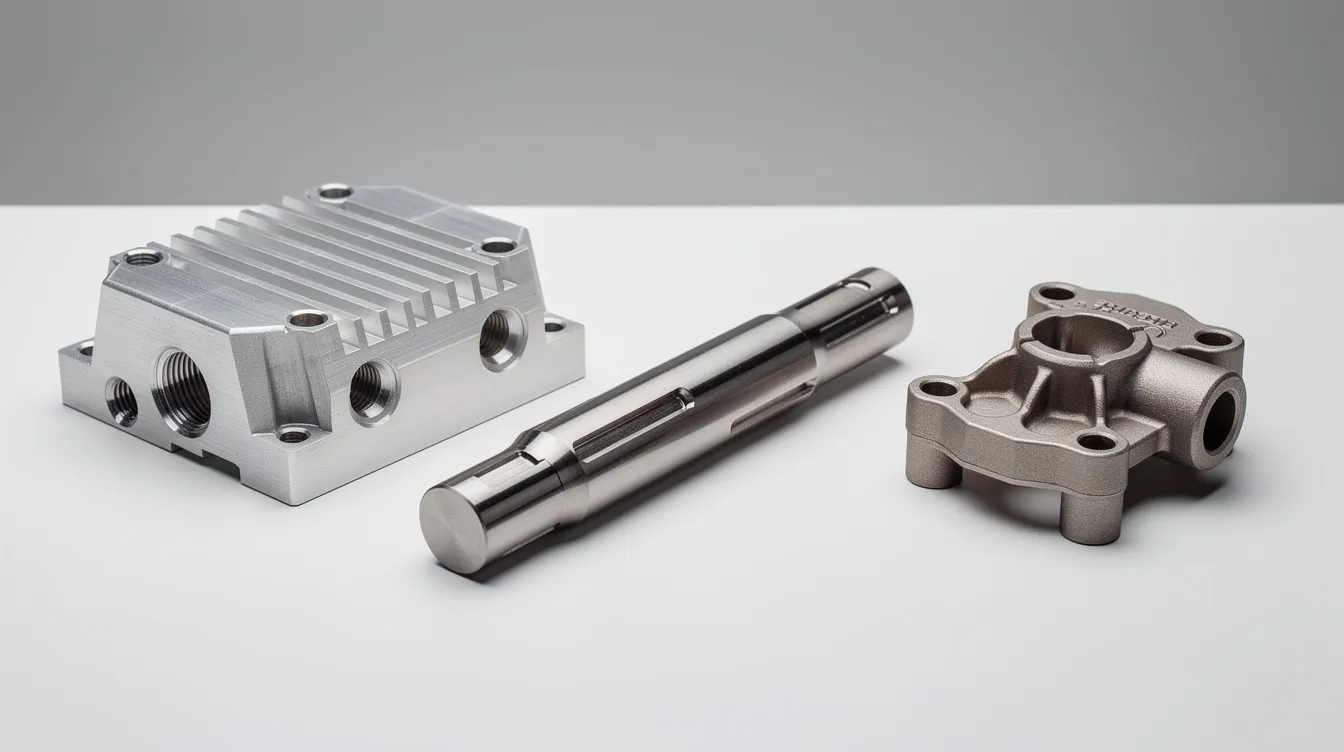
Automotive: Alloy steel transmission shafts, aluminum suspension brackets, and die-cast + CNC-finished engine covers for both traditional and EV platforms.
-
Consumer electronics: CNC machining produces parts for consumer electronics – laptop chassis, smartphone frames, speaker enclosures, and camera gimbals in anodized aluminum.
-
Robotics: CNC machining is essential for robotics applications, producing precision joints, actuator housings, and sensor mounts that demand repeatable accuracy across hundreds of units.
-
Industrial machinery: Stainless steel valve bodies, hardened steel tooling plates, and custom fixtures for production lines in various industries.
Anebon emphasizes long-term partnerships with overseas OEMs and R&D teams who need a consistent supply of machined parts across multiple product generations, adapting to evolving designs while maintaining the same quality baseline.
From Prototype to Full Production
One of the strongest advantages of working with a single CNC service provider is continuity. Anebon supports the full product lifecycle: prototype machining, engineering validation test (EVT) builds, design validation test (DVT) runs, and mass production for OEM programs.
-
Rapid prototyping can produce parts in as fast as 1 day for urgent requests, with standard prototype lead times of 5–7 days for simple parts. Rapid prototyping supports production volumes from 1 to 100,000 parts, covering everything from a handful of functional prototypes to full-scale production runs.
-
Rapid prototyping is essential for functional prototypes and production parts, letting engineers verify fit, form, and function before committing to high-volume tooling. It enables engineers to build better products faster by catching issues in physical parts rather than only in simulation.
-
As volumes grow, Anebon can transition suitable parts to die casting or sheet metal fabrication where those processes offer better per-unit economics, while maintaining CNC machining for precision features and lower-volume components.
-
Keeping prototyping and production with one partner ensures the same material lots, machining parameters, and finishing processes carry forward – eliminating the dimensional drift and finish variation that plague multi-vendor supply chains.
-
Dongguan’s manufacturing infrastructure provides access to a deep supplier ecosystem for materials, heat treatment, and plating, enabling production capacity that scales to thousands of CNC parts per month.
Why Choose Anebon for CNC Machine Services
Selecting the right CNC machining partner affects product quality, development speed, and total cost of ownership. Providers should demonstrate experience with relevant materials and project types – and Anebon has built that track record over more than a decade of serving overseas OEMs since 2010.
-
Integrated capabilities: CNC milling, CNC turning, 5-axis machining, die casting, and sheet metal fabrication under one roof simplify supply chains and reduce vendor management overhead. Fewer hand-offs mean fewer opportunities for error.
-
Engineering support: English-speaking engineers provide DFM feedback, cost-reduction suggestions, and design iteration support – not just order processing.
-
Materials and finishes: A portfolio spanning 30+ metals and engineering plastics, combined with in-house surface treatments, means most projects can be completed without outsourcing secondary operations.
-
Global shipping: Established logistics relationships with express carriers for delivery to North America, Europe, and Asia-Pacific, with typical transit times of 3–5 days via air freight.
-
Certifications: ISO 9001:2015 and ISO 14001:2015 as baseline, with the process discipline and documentation that regulated industries expect.
Rather than defaulting to only local suppliers, consider what a facility in Dongguan’s precision manufacturing ecosystem offers: competitive pricing, deep technical capability, and a manufacturing network built to support high-mix, low-to-medium volume CNC work at good quality levels.
How to Request a CNC Machining Quote
Getting started is straightforward. Here’s what to include when you reach out to Anebon’s engineering team for online CNC machining services:
-
3D CAD file in STEP or IGES format, along with a 2D drawing (PDF or DWG) showing tolerances, threads, and critical dimensions.
-
Material specification – for example, aluminum 6061, alloy steel 4140, stainless steel 316L, or PEEK.
-
Surface finish and treatment requirements – as-machined, anodized, powder coated, passivated, etc.
-
Quantity and desired delivery date – whether it’s 5 prototypes or 5,000 production parts.
-
End-use industry and any special requirements – regulatory standards, testing, certification documents, or confidentiality agreements.
Anebon typically responds with pricing and manufacturability feedback within one working day for straightforward CNC machined parts. For complex multi-operation jobs, expect a detailed quote with DFM notes within 48 hours.
Ready to move forward with your next project? Contact Anebon’s engineering team with your files and specifications to receive a detailed quote, free DFM review, and a clear production timeline. Whether you need precision parts for a first prototype or consistent supply for an established OEM program, having the right manufacturing partner makes the difference.