Top CNC Machining Shops for Precision and Custom Fabrication Services
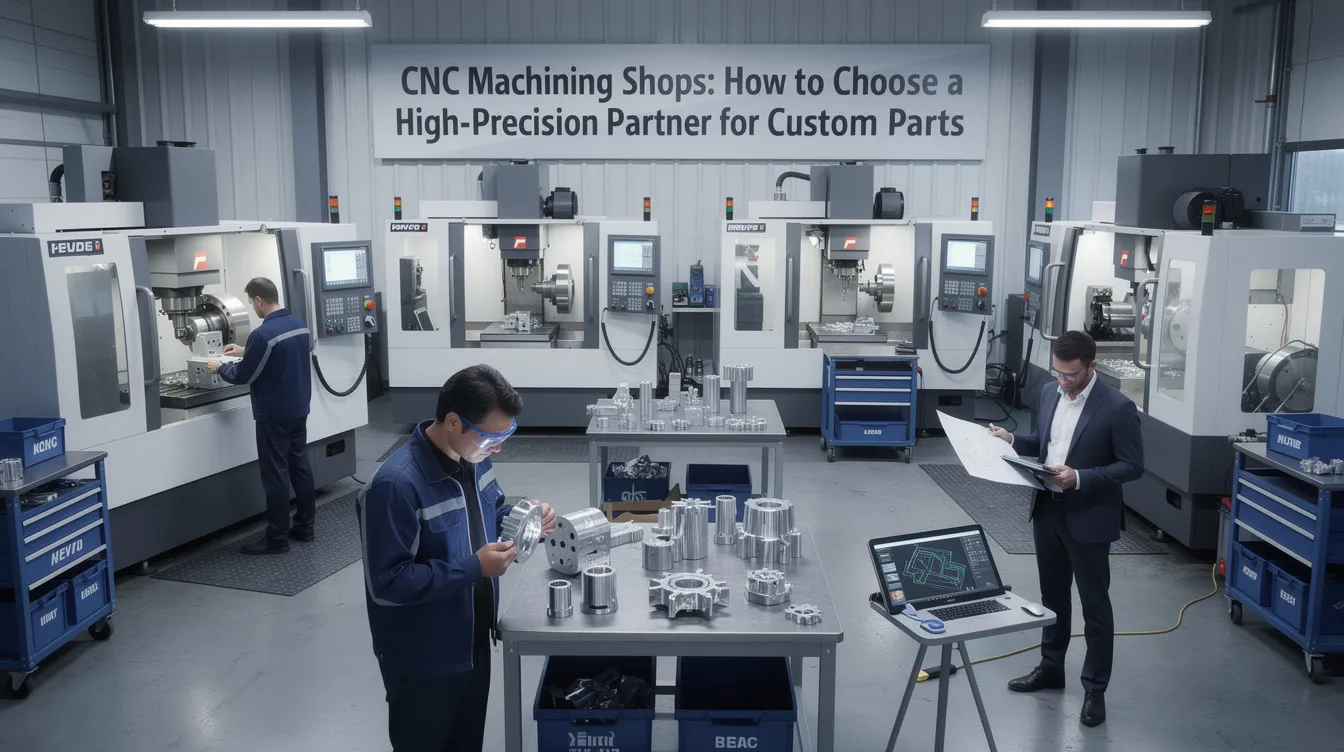
CNC Machining Shops: How to Choose a High‑Precision Partner for Custom Parts
Selecting the right CNC machining partner can make or break your product program. For overseas OEMs sourcing custom cnc parts, the decision involves far more than price-it requires evaluating tolerances, materials, quality systems, lead time, and engineering support before a single chip is cut. This guide walks you through exactly what to look for in cnc machining shops and how to assess whether a supplier can deliver high quality products consistently at scale.
Fast overview: what OEMs should look for in CNC machine shops
A CNC machine shop uses computer-controlled cutting tools to transform raw material into precision machined parts through subtractive manufacturing. The process-guided by CAD/CAM programming-covers milling, turning, drilling, and grinding across metals and plastics. For overseas OEMs, the choice of supplier directly impacts part fit, function, reliability, and ultimately your product’s reputation. Quality certifications like ISO 9001:2015 ensure consistency in CNC production, while poor supplier selection leads to scrap, delays, and costly field failures.
Anebon Metal Products Limited is a China-based precision CNC machining and metal fabrication company founded in 2010 in Dongguan, Guangdong. Certified to both ISO 9001:2015 and ISO 14001:2015, Anebon serves global OEMs with precision machining services spanning CNC milling and cnc turning, 5‑axis machining, die casting, and sheet metal fabrication-from rapid prototyping through full production.
Here are the core evaluation criteria to apply when comparing cnc machining shops:
-
Tolerances: Can the shop hold ±0.01 mm standard and go down to ±0.002 mm on critical features? CNC machining achieves tolerances of +/-0.001″ to +/-0.005″ as a general range, with ultra-precision capability reaching ±0.0001 inches.
-
Machine range: Does the shop operate 3‑, 4‑, and 5‑axis machining centers plus turning centers?
-
Materials: CNC machining can accommodate various materials including metals and plastics-look for shops covering 50+ grades.
-
Surface finishes: Anodizing, powder coating, plating, heat treatment, and secondary machining under one coordinated workflow.
-
Quality system: ISO certifications, CMM inspection, first article reports, material traceability.
-
Responsiveness: DFM feedback speed, quoting turnaround (1–3 business days), and engineering support in your time zone.
Capacity and lead times should match production requirements. Anebon delivers standard cnc machined parts in 5–7 business days, with CNC machining capable of producing parts in lead times as short as 3 days for simple rapid prototyping geometries. Upload your cad file and request a quote to get started.
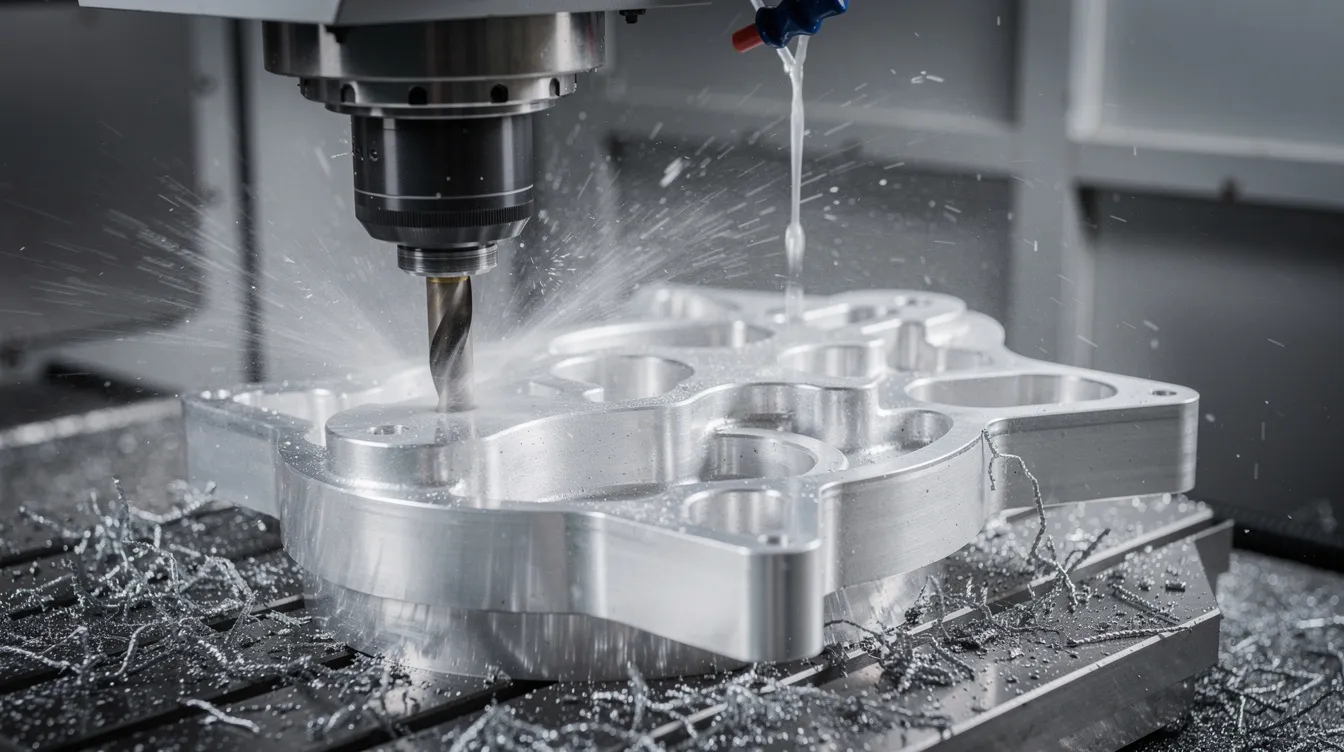
Core capabilities of modern CNC machine shops
Today’s cnc machining shops function as full manufacturing partners-not just job shops running one-off work orders. The best shops provide end-to-end production for custom parts, covering everything from DFM consulting through final inspection and shipping. CNC machining is vital for industries requiring reliable complex components, including aerospace, medical devices, automotive, electronics, robotics, and industrial machinery.
Core machining services include:
-
CNC milling: 3‑axis, 4‑axis, and simultaneous 5‑axis CNC machining for complex geometries
-
CNC turning: lathes with live tooling and sub-spindles for cylindrical and rotational parts
-
Grinding: surface and cylindrical grinding for tight-tolerance finishing
-
Secondary machining: drilling, tapping, reaming, countersinking, boring, and keyway cutting
-
CNC drilling creates precise holes in components at programmed locations and depths
Anebon operates multi-axis CNC machines capable of handling complex geometries, undercuts, and simultaneous multi-face machining. Machinery capabilities must match the part’s geometry and complexity-which is why the shop maintains a diverse fleet rather than relying on a single platform.
Typical work envelopes include milling capacity up to approximately 1600 × 1200 × 600 mm (roughly 63″ × 47″ × 24″) and turning from Ø2 mm upward for small precision components through medium-diameter shafts. The shop supports rapid prototyping runs of 1–50 pieces as well as production volumes reaching tens of thousands of machined parts per year per SKU. Using modern technology is crucial for efficient CNC production, and CNC machines can operate 24/7 for continuous production when demand requires it.
CNC milling capabilities
CNC milling uses rotating cutting tools to create complex shapes by removing material from metal or plastic stock, guided by CAD/CAM toolpaths. It excels at prismatic components, pocketed housings, and freeform 3D surfaces that would be impractical to produce any other way.
Anebon’s cnc milling services include:
-
3‑axis vertical mills for cost-effective production parts with straightforward geometry
-
4‑axis indexed operations for parts requiring features on multiple faces without re-fixturing
-
Full 5‑axis CNC milling for aerospace and medical parts demanding complex geometries with high precision in a single setup
CNC milling can produce parts up to 80″ × 48″ × 24″ in size on large-format machines. Standard milled-feature tolerances reach ±0.01 mm, with process review enabling ±0.002 mm on critical dimensions. 5-axis CNC machining allows for complex geometries in one setup, dramatically reducing cumulative error from multiple fixtures.
Typical milled part types include housings, brackets, heat sink structures, medical fixtures, and robotics end-effectors machined from aluminum, stainless steel, titanium, and engineered plastics. Cnc milling services can also be combined with metal fabrication-such as welded frames-then finish-machined for overall dimensional accuracy.
CNC turning and mill‑turn capabilities
CNC turning involves rotating the workpiece while cutting tools remove material, making it ideal for cylindrical and rotational parts like shafts, bushings, fittings, manifolds, and connector bodies. Mill-turn centers combine lathe operations with milling capability in a single machine.
Anebon’s CNC turning centers feature live tooling, sub-spindles, and Y-axis capability that enable one-and-done machining of complex turned-milled parts. This eliminates the need to transfer parts between machines, preserving concentricity and reducing per-piece cost.
Realistic capacity covers:
|
Parameter |
Small precision parts |
Medium components |
|---|---|---|
|
Diameter |
From Ø2 mm |
Up to Ø300+ mm |
|
Length |
From 2 mm |
Up to 600+ mm |
Material processing includes machining raw stock, fabrications, or castings. 5-axis machining allows simultaneous movement along five axes for complex parts that combine turning profiles with milled flats, cross-holes, or slots.
Use cases span automotive sensor housings, medical device implant components, and industrial machinery pneumatic and hydraulic fittings. Combining cnc turning with precision milling reduces setups, improves concentricity, and lowers per-piece cost for OEMs ordering production parts at volume.
Materials and surface finishes offered by CNC machining shops
The best cnc machining shops support a wide range of metals and plastics, plus professional surface finishing, so they can deliver fully ready-to-assemble components. CNC machining services can process over 75 different materials, and over 50 industrial-grade metals and plastics can be machined on modern equipment. CNC machining retains all mechanical properties of materials used, which matters for load-bearing and safety-critical applications.
Anebon routinely machines 6000- and 7000-series aluminum, stainless steels (304, 316L, 17-4PH), carbon steels, brass, copper, titanium, and engineering plastics like PEEK, POM, and Nylon. CNC machines can handle both rigid plastics and metal alloys, and common metals for CNC machining include aluminum, brass, and titanium.
For OEMs, this breadth allows consolidating suppliers for cnc machined parts, metal fabrication, die cast components, and plastic machined parts under a single quality system. Surface treatment options-anodizing, hard anodizing, chromate conversion coating, powder coating, electroless nickel, and heat treatment-are available through qualified in-house or partner facilities. Material certificates and finish certifications are provided when required by aerospace, medical, or automotive standards.
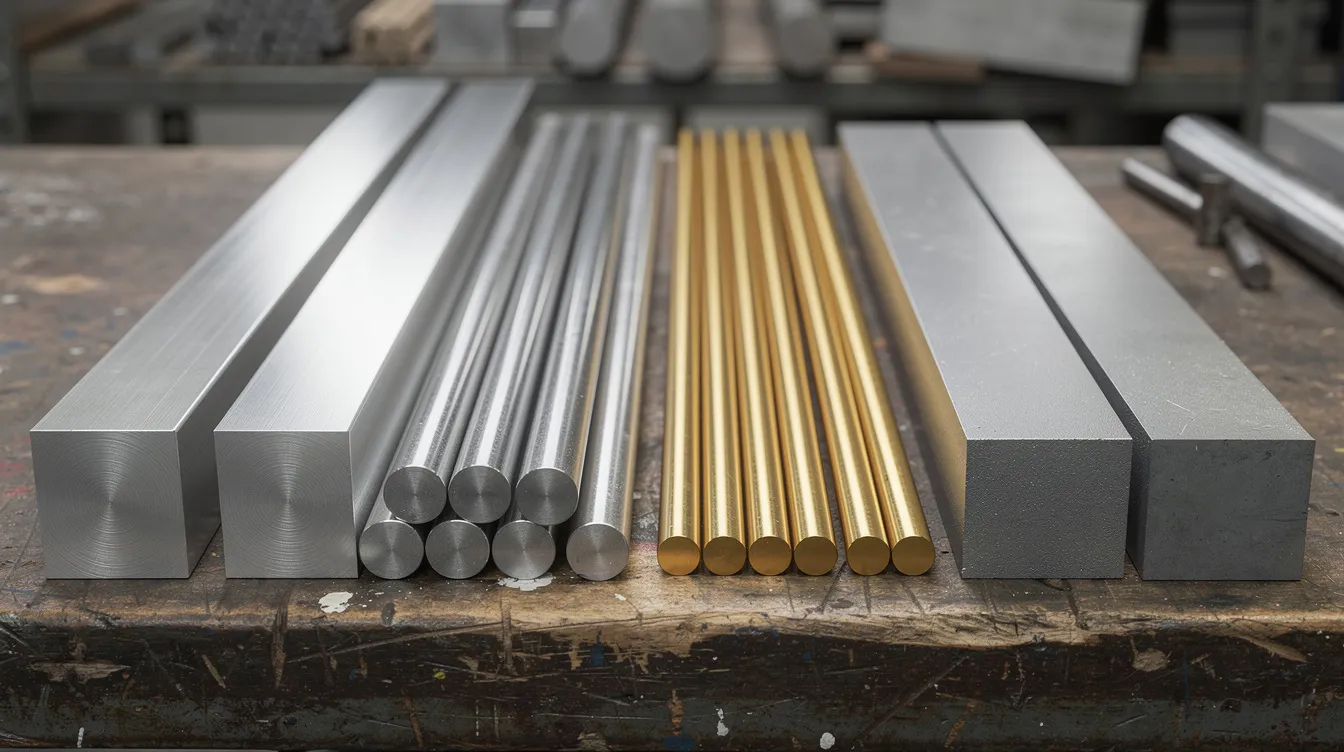
Metals for CNC machining and metal fabrication
Key aluminum grades commonly stocked include:
-
6061-T6: General structural use, good machinability and corrosion resistance, widely used for housings and brackets
-
6082: Higher tensile strength than 6061, common in European structural applications
-
7075-T6: High strength aluminum for aerospace and high-stress components; fatigue strength and strength-to-weight ratio are exceptional
Main stainless steel options include 303 (free-machining), 304 and 316/316L (excellent corrosion resistance for medical, marine, and food equipment), and 17-4PH (precipitation hardened for high strength combined with corrosion resistant properties). Carbon steels like 1018 and 4140 serve high-strength applications such as molds, dies, and wear resistance components.
Anebon’s metal fabrication services support cutting, forming, and welding of sheet and plate materials, followed by CNC machining of critical interfaces. All raw material is sourced from long-term certified suppliers to ensure traceability and consistent machining behavior across batches.
Plastics and high‑performance polymers
OEMs specify plastic cnc machined parts for electrical insulation, weight reduction, chemical resistance, and low friction applications. CNC machining can utilize materials like PEEK and ABS plastics, alongside a full range of engineering polymers.
Common machined plastics and their key properties:
|
Material |
Key Property |
|---|---|
|
ABS |
Good impact strength, easy to machine |
|
POM (Delrin) |
Low friction, dimensional stability |
|
Nylon |
Wear resistance, low moisture absorption |
|
Polycarbonate (PC) |
High impact, optical clarity |
|
PEEK |
Extreme temperatures resistance, biocompatibility potential |
|
PTFE |
Chemical resistance, very low friction |
|
UHMW-PE |
High impact strength, low moisture absorption |
Materials like UHMW-PE offer high impact strength for CNC machining applications in conveyor components and wear guides. PEEK handles extreme temperatures and is often specified for aerospace and medical applications where standard sizes of metal parts would add unnecessary weight.
Anebon’s engineers advise on material selection based on operating temperature, wear, and regulatory requirements. Tight tolerances are achievable on many plastics, but design and inspection plans must account for thermal expansion and creep. Example parts include electrical insulators, medical device components, test fixtures, and gears machined from engineered plastics.
Surface finishes, heat treatment, and coatings
Surface finishing and heat treatment are essential to performance, wear and corrosion resistance, and aesthetics of cnc machined parts. CNC shops often offer post-processing and finishing services, and secondary services can include finishing or assembly to streamline production.
Common aluminum finishes:
-
Type II anodizing in clear and colors for cosmetic protection and moderate corrosion resistance-ideal as a standard finish for consumer and industrial enclosures
-
Type III hard anodizing for wear-critical parts requiring surface hardness above 60 HRC equivalent
-
Chromate conversion coating (chem film) for electronics housings and aerospace parts where conductivity and corrosion resistance are both required
-
Powder coating for outdoor applications requiring UV and weather resistance
Heat treatment services for steels and aluminum alloys-quench and temper, age hardening-achieve specified hardness and mechanical strength. CNC machining can produce parts with a surface finish of 125 Ra or better (approximately Ra 3.2 µm), with fine finishes reaching Ra ≤ 0.8 µm for sealing surfaces.
Additional options include bead blasting, brushing, polishing, and plating. Anebon combines these in a controlled process flow to ensure the finished part meets both dimensional and cosmetic specifications.
Precision, tolerances, and quality control in CNC machine shops
Precision machining is defined not only by machine capability but by process control, measurement, and quality culture. CNC machine shops specialize in producing high-precision parts, and quality control processes are essential in reliable CNC machining.
Anebon’s typical dimensional tolerances start at ±0.01 mm as a standard, with tighter capability down to ±0.002 mm after DFM review. CNC machining can achieve tolerances of +/- 0.001 inches on critical features, and precision tolerances can be held to sub +/- 0.001 inches when process parameters are optimized. For ultra-critical dimensions, CNC machining can maintain accuracy within ±0.0001 inches-though this requires in-process probing, temperature-controlled environments, and conservative feeds. Tolerance capabilities are critical for high-stress or medical parts where deviation means failure.
ISO 9001:2015 and ISO 14001:2015 certifications underpin process consistency and environmental responsibility. Core inspection equipment includes:
-
Coordinate measuring machines (CMMs) for 3D dimensional verification
-
Height gauges and optical projectors for profile inspection
-
Surface roughness testers (profilometers) per ISO 21920-2 standards
-
In-process touch probes for drift correction during machining
Quality documentation-inspection reports, material certificates, PPAP, and FAIR-is available for regulated industries. Anebon’s quality assurance approach emphasizes catching deviations early rather than relying solely on final inspection.
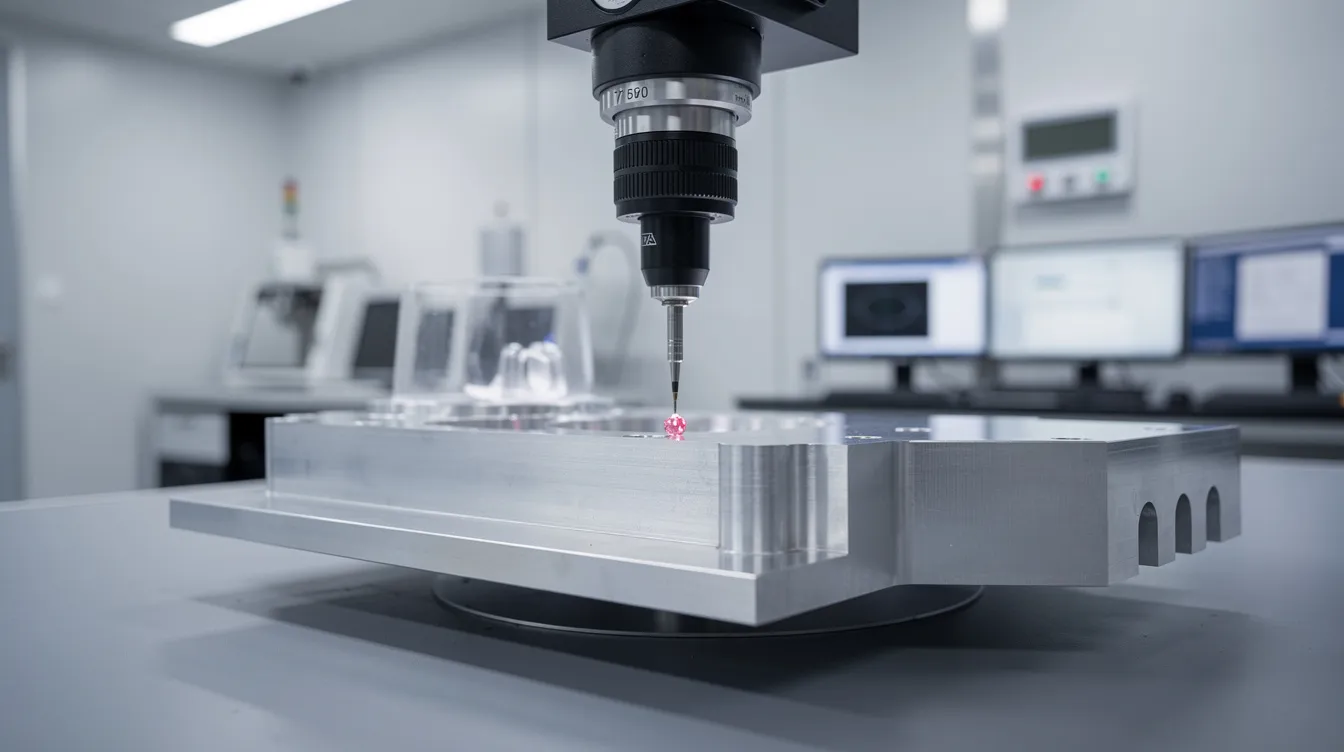
Inspection workflow from first article to mass production
A typical quality workflow follows these stages:
-
Contract review: Confirm material, tolerances, GD&T, surface finish, and special requirements
-
DFM feedback: Identify potential issues before cutting begins
-
Process planning: Define machining sequence, fixturing, and inspection points
-
First article inspection (FAI): Full dimensional report on the first production part(s)-every feature measured and compared to drawing
-
Capability study: For critical features, run short statistical studies to verify process stability
-
Batch inspection: Sampling plans based on ISO or customer requirements with clear acceptance criteria
For new cnc machined parts, Anebon performs full first article inspection with dimensional reports before authorizing mass production. Traceability practices include lot numbers, operator tracking, and machine programs archived for repeat orders.
Communicating tolerances, GD&T, and inspection priorities clearly in technical drawings helps the CNC machine shop focus quality control where it matters most.
From RFQ to delivery: how CNC machine shop projects typically run
Clear communication and a structured workflow reduce lead time and risk for international OEM projects. Turnaround times affect the deadline of CNC part deliveries, so understanding the process helps set realistic expectations.
Anebon handles inquiries through a straightforward sequence:
-
CAD and drawing upload: Submit STEP, IGES, Parasolid, or 2D PDFs with tolerances and finishes specified
-
NDA and data security: Signed before review if required
-
DFM review: Engineering team evaluates manufacturability and suggests optimizations
-
Quotation: Delivered within 1–3 business days for most projects-machining quotes include material, machining, finishing, inspection, and shipping
-
Sample production: CNC machined prototypes validated before committing to volume
-
Production ramp-up: Fixtures proven, inspection plans locked, repeat orders flow at reduced lead time
Preferred information to include with your RFQ: material grade, quantity, target lead time, special processes (heat treatment, coatings), and any industry-specific documentation needs.
CNC machining can produce parts in as little as one day for simple geometries and common materials. Typical lead time for rapid prototyping from China ranges from 3–7 business days for machining plus 3–5 days for air express shipping. Production batches of 10–200 pieces typically require 10–15 days machining plus finishing and inspection.
DFM feedback and cost optimization
Early design for manufacturability feedback from a CNC machine shop can significantly reduce machining time, scrap, and rework. Choosing based on long-term value rather than initial cost is recommended, because a shop that optimizes your design saves more than the cheapest bidder who machines a problematic drawing as-is.
Common DFM suggestions include:
-
Increasing wall thickness to avoid deflection and distortion during machining
-
Relaxing ultra-tight tolerances where not functionally required-moving from ±0.01 mm to ±0.05 mm on non-critical features can reduce cnc machining service cost by 30–50%
-
Adjusting internal radii to match standard end-mill sizes, eliminating the need for custom cutting tools
-
Removing unnecessary sharp edges that require secondary deburring operations
Anebon engineers regularly suggest material or process changes-switching from a fully machined block to CNC machining plus metal fabrication, or transitioning to die casting for high volumes where unit economics favor it. Share your expected annual volume, application environment, and regulatory constraints so the shop can propose the most cost-effective solution with competitive pricing.
Optimized fixturing and combining operations on multi-axis CNC machines remain the primary levers for reducing unit price at scale.
How CNC machine shops integrate with metal fabrication and other processes
Many OEM projects require more than standalone cnc machining. A complete assembly might involve welded structures, sheet metal enclosures, cast blanks, and secondary operations-all needing to come together within tight tolerances.
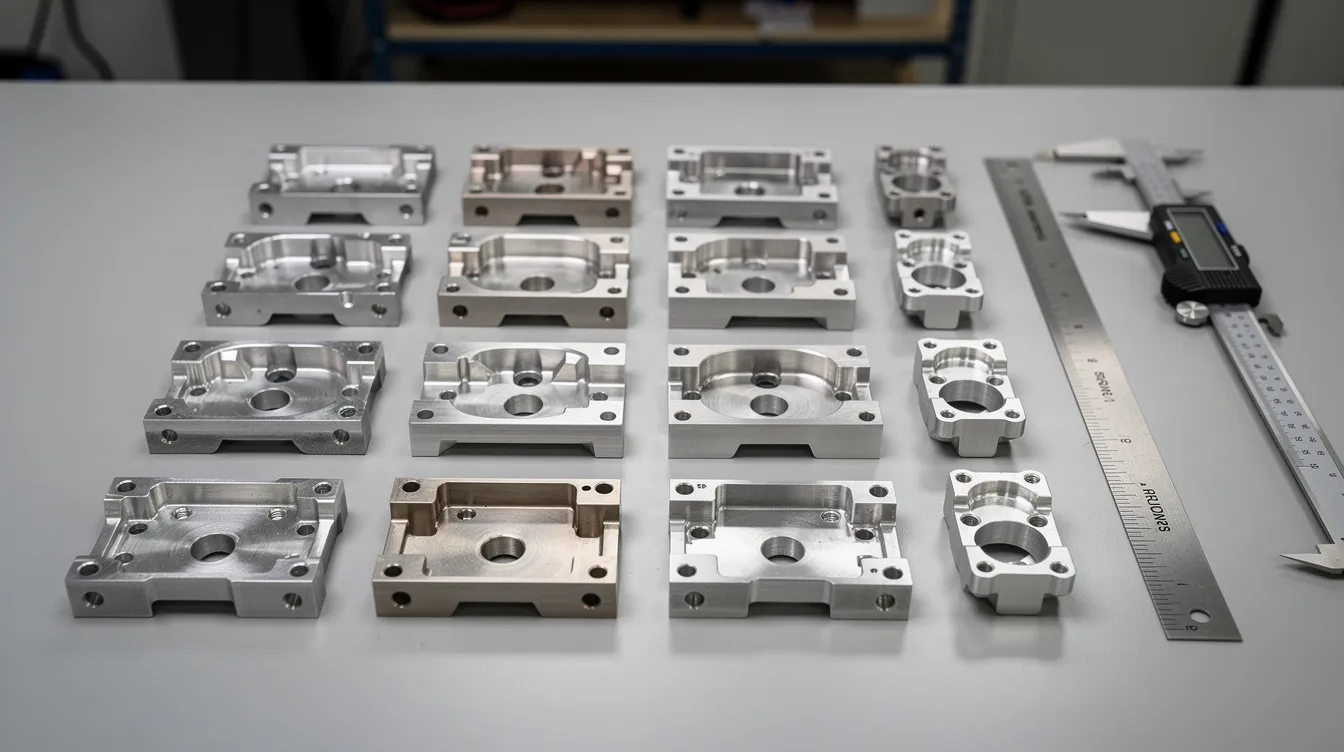
Anebon operates as an integrated supplier, combining precision CNC machining, sheet metal fabrication, die casting, and assembly under one coordinated workflow. A typical project might involve a sheet metal chassis that is laser-cut and bent, then sent to cnc milling for critical interfaces requiring flatness and hole location accuracy within ±0.02 mm.
The shop also machines die cast or investment cast blanks, adding precision features like sealing surfaces, threaded ports, and alignment bores. While injection molding is handled by specialized partners, Anebon coordinates the full supply chain so OEMs deal with a single point of contact.
Optional value-added services include sub-assembly, kitting, labeling, and custom packaging for direct shipment to overseas OEM production lines.
Secondary machining, heat treatment, and finishing logistics
Common secondary operations after primary CNC machining or fabrication include:
-
Tapping, countersinking, and reaming for fastener and dowel features
-
Keyway cutting and precision boring for shaft assemblies
-
Grinding for surfaces requiring Ra < 0.4 µm
Anebon coordinates heat treatment and surface finishes-chromate conversion coating, anodizing, and powder coating-to avoid forcing customers to manage multiple external vendors. Process routing is planned to control distortion: rough machining first, then heat treatment, then finish machining to final tolerance.
Scheduling multi-step processes is optimized to maintain lead time commitments, particularly for overseas shipments that must meet fixed container or air-freight dates. Having one accountable supplier improves traceability and simplifies non-conformance handling if issues arise.
Industries and applications served by precision CNC machine shops
The most capable cnc machining shops tailor materials, tolerances, documentation, and cleanliness standards to specific industries. CNC machining is widely used in aerospace and automotive industries, and experience in specific industries is important when selecting a CNC shop.
Primary sectors Anebon serves:
-
Aerospace: Structural brackets, actuator housings, and avionics enclosures requiring ultra-precision CNC machining, exotic materials (titanium, Inconel), full traceability, and first article inspection per AS9102. Aerospace components require ultra-precision cnc machining services with tolerances often below ±0.01 mm.
-
Medical devices: Surgical instrument components, implant interfaces, and diagnostic fixtures. Medical devices often utilize CNC machining for precision parts with biocompatibility requirements and ISO 13485 documentation. CNC machining is essential for producing complex parts in biotechnology applications as well.
-
Automotive and EV: Sensor housings, battery module components, and transmission parts. High volume with PPAP validation and emphasis on repeatability.
-
Electronics: Enclosures, heat sinks, and connector bodies where surface finish and EMI shielding matter. CNC machining supports industries like robotics and consumer electronics with moderate tolerances but high cosmetic standards.
-
Industrial machinery and robotics: End-effectors, linear guide mounts, and pneumatic manifolds. CNC machining is widely used in aerospace and medical industries, but industrial automation represents growing high demand.
Key industries for CNC machining include aerospace and medical equipment, while CNC shops serve demanding fields such as aerospace and automotive where failure is not an option. Anebon’s precision machining services support both early-stage R&D cnc machined prototypes and fully validated production runs across all these sectors.
Environmental and supply chain considerations
Anebon’s ISO 14001:2015 certification reflects structured environmental management across machining, metal fabrication, coolant handling, and waste disposal. Sustainable practices include optimized nesting for material utilization, coolant recycling, and energy-efficient CNC machines.
Overseas clients benefit from a stable, long-term supply partner in Dongguan-one of China’s manufacturing hubs with mature logistics routes for air and sea freight to North America, Europe, and Asia-Pacific. Shipping options include EXW, FOB Shenzhen, and CIF to major ports, with packaging for metal parts designed to protect critical surfaces and coatings against humidity and transit damage.
OEMs should work with their CNC machine shop early to align safety stock, order batches, and replenishment cycles to buffer transit times-especially when lead time predictability matters for just-in-time manufacturing.
How to evaluate and select a CNC machine shop for your next project
The right CNC machine shop is a strategic partner, not just a vendor-especially for long-life OEM products where switching suppliers mid-program is expensive and risky. CNC machining is widely used in aerospace and automotive industries precisely because these sectors demand the kind of reliability that only comes from carefully vetted partners with deep industry experience.
Key evaluation questions to ask any prospective shop:
|
Evaluation Area |
What to Ask |
|---|---|
|
Machine capabilities |
What axis configurations, work envelopes, and machine brands do you operate? |
|
Tolerances |
What is your standard tolerance band, and what is achievable on critical features? |
|
Certifications |
Are ISO 9001, ISO 14001, AS9100, or ISO 13485 current and auditable? |
|
Material range |
Can you source and machine various materials including specialty alloys and plastics? |
|
Surface finishes |
Are finishing processes in-house or coordinated? Can you provide salt spray and finish certifications? |
|
Quality procedures |
Do you offer FAI, PPAP, CMM reports, and material traceability? |
|
DFM support |
How proactive is your engineering team in optimizing designs for manufacturing? |
|
Communication |
What is your typical quote turnaround? Do you assign a dedicated project engineer? |
Before committing a full production program:
-
Request sample custom cnc parts-a small prototype order with critical-feature measurement reports-to validate claimed capabilities
-
Ask for quality documentation examples from previous projects
-
Run a trial prototype order with realistic tolerances and finishes
-
Evaluate responsiveness: does the shop deliver an instant quote or detailed machining quotes within 1–3 days?
-
Assess transparency on pricing, including any premium for tight tolerances, exotic materials, or special finishes
A shop that provides honest DFM feedback and tells you where to relax tolerances is more valuable than one that silently quotes everything at the tightest spec and highest price.
Overseas OEMs should also confirm shipping logistics, packaging standards, and the shop’s ability to handle your service requirements end-to-end-from cnc machining services through finishing, inspection, and delivery.
Anebon Metal Products Limited has been delivering precision machining services to global OEMs since 2010. With ISO 9001:2015 and ISO 14001:2015 certifications, a full range of CNC milling, cnc turning, 5-axis machining, die casting, and sheet metal fabrication capabilities, and a commitment to DFM-driven cost optimization, Anebon is built to serve as a long-term manufacturing partner across industries.
Send your cad file and technical drawings to Anebon for a no-obligation quote. Whether you need a single cnc machined prototype or thousands of production parts per month, the engineering team will review your requirements and respond with a detailed proposal-typically within one to three business days.