Top CNC Machining Services in the Aerospace Industry You Can Trust
CNC Machining Services in the Aerospace Industry
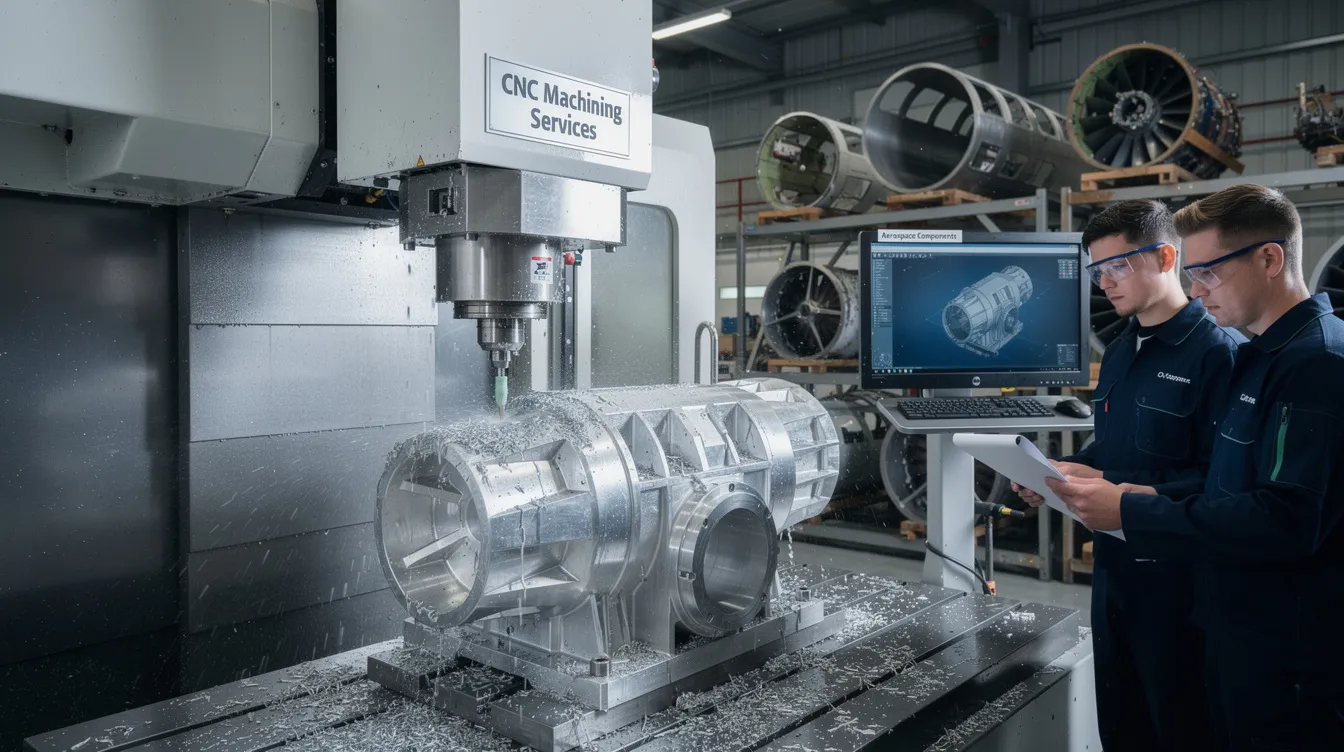
From the composite-intensive fuselage of a Boeing 787 to the rapidly iterated thrust structures on SpaceX launch vehicles, cnc machining sits at the center of modern aerospace manufacturing. Every bracket, spar, turbine casing, and avionics enclosure depends on computer numerical control to translate CAD geometry into flight-ready hardware with repeatable accuracy. For overseas OEMs seeking a precision manufacturing partner, Anebon Metal Products Limited has delivered tight tolerances down to ±0.002 mm since 2010, supporting design engineers across commercial aviation, defense, UAV, and space programs.
This article is written for aerospace companies and design teams who need engineering-level detail, not generic overviews. It covers the applications, machining processes, aerospace materials, quality expectations, cost levers, and future trends that shape how cnc machining aerospace parts actually gets done. Whether you are sourcing structural components for a narrow-body jet or satellite components for a CubeSat constellation, the information here will help you specify, source, and qualify parts with confidence.
Why Precision CNC Machining Matters in the Aerospace Industry
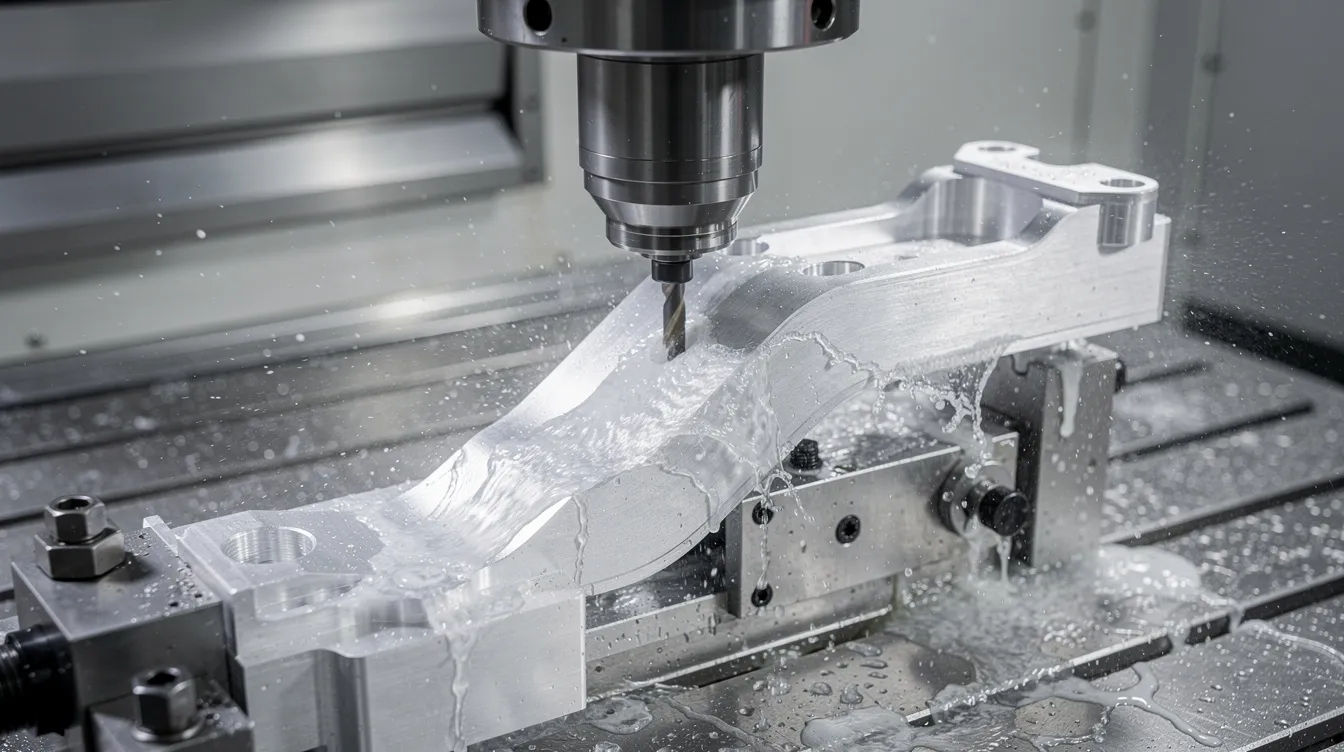
Dimensional errors at the micron scale have real consequences in flight hardware. A misaligned turbine blade disrupts airflow and degrades engine efficiency. A bore that is out of round on a landing gear actuator leads to seal failure and hydraulic leaks. A poorly located fastener hole in a fuselage frame concentrates stress and accelerates fatigue cracking. Precision cnc machining eliminates these risks by holding features to statistically controlled limits, which is why the aerospace sector enforces standards like AS9100D and NADCAP across the supply chain. CNC machining ensures components meet strict aerospace safety standards, and dimensional inspection and material traceability are critical at every step.
Aerospace precision machining also directly improves aircraft performance. On long-haul platforms like the Airbus A350 XWB, aerodynamic surfaces with smooth finishes reduce drag, and precisely concentric rotating assemblies in engines and generators improve thermal efficiency, all contributing to measurable gains in fuel efficiency. Interchangeability matters just as much: when every cnc machined part meets the same GD&T specification, airlines can swap components globally, cutting aircraft-on-ground time and simplifying spares logistics.
Anebon supports this model by producing repeatable, high precision batches for overseas OEMs, combining the cost advantages of Chinese manufacturing with the documentation and process rigor that Western aerospace companies expect.
Core Aerospace Components Made with CNC Machining
Aerospace cnc machining spans everything from primary airframe structure to propulsion systems, cabin interiors, avionics housings, and ground support tooling. The subsections below walk through each category with concrete part examples, typical materials, and tolerance benchmarks. Anebon focuses on high-precision metal and plastic parts across these assemblies, especially where 5-axis machining and tight GD&T callouts are required.
Structural and Airframe Components
CNC machining creates structural components like wing spars and fuselage frames on platforms such as the Boeing 737 MAX and Airbus A320neo. These load-bearing structures must resist tensile, compressive, shear, and fatigue loads while maintaining precise hole patterns for rivets and accurate mating surfaces for aircraft assembly. Common materials include several aluminum alloys in the 7000 series (7075-T6, 7050) for thick plates and forgings, plus titanium alloys like Ti-6Al-4V for highly loaded joints. 5-axis cnc milling reduces setups on contoured structures, cutting cumulative tolerance stack-ups. Anebon supports structural brackets, hinges, and fittings from prototype through recurring production lots for Tier-1 and Tier-2 aerospace companies.
Tail Section and Flight Control Components
Vertical and horizontal stabilizers, rudders, elevators, ailerons, flaps, and spoilers all contain internal ribs and spars that are CNC milled to tight tolerances. Hinge bores and bearing seats on control surfaces demand precise concentricity and alignment, often within ±12–25 µm, to prevent flutter and maintain control authority. On programs like the Boeing 777, machined aluminum and titanium forgings form the tail beam attachments and actuator pivot brackets. Anebon machines long, slim components such as control rods and torque tubes while controlling distortion and holding straightness below 0.1 mm over a meter of length.
Engine, Powertrain, and Thermal Management Components
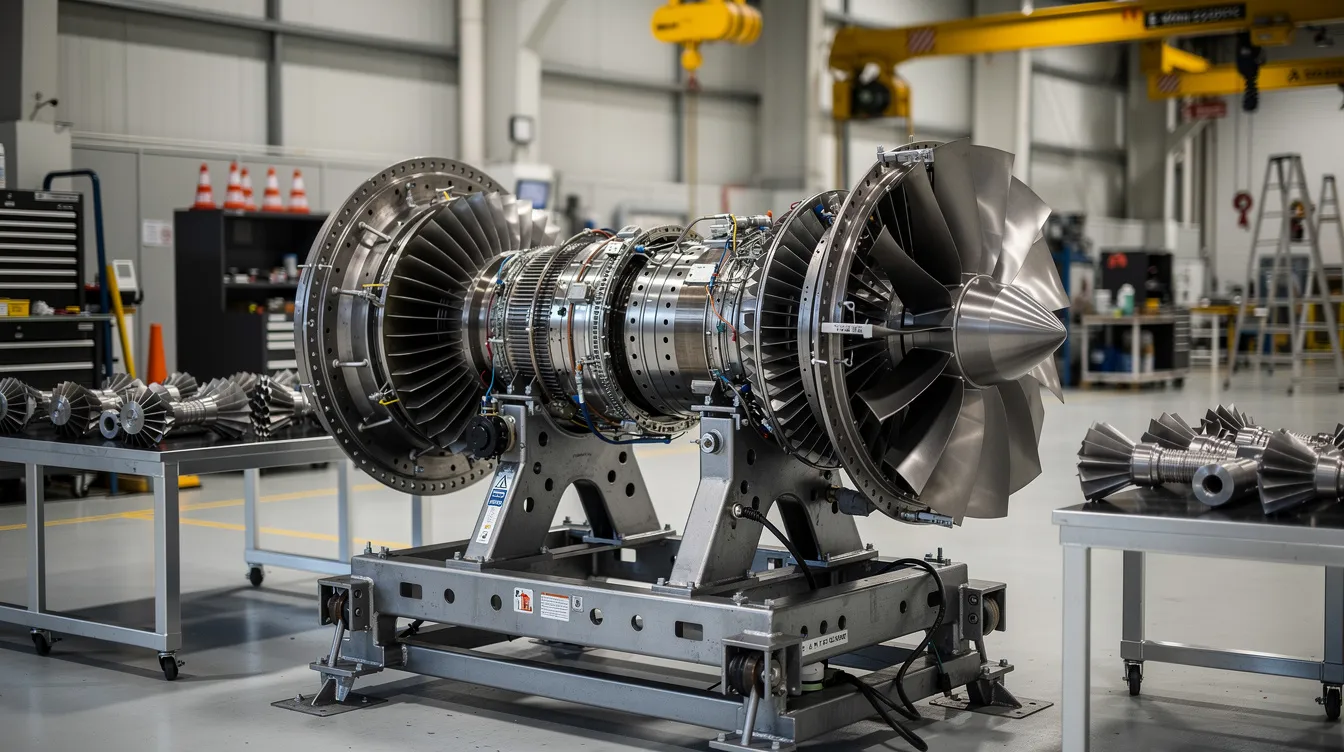
CNC machining is vital for manufacturing engine components in aerospace, including compressor and turbine casings, bearing housings, fuel system covers, and heat exchanger end caps. Aerospace cnc is critical here because complex 3D geometries, accurate concentricity, and fine surface finishes (Ra 0.2–0.4 µm on aerofoil surfaces) directly affect airflow, combustion efficiency, and thermal performance. Nickel-based superalloys like Inconel 718 and Waspaloy are used for jet engine components due to their high strength at extreme temperatures, while titanium alloys serve low-pressure compressor hardware. Engine components cnc machining in these alloys requires optimized toolpaths, high-pressure coolant, and specialized tooling to prevent work hardening. Anebon focuses on non-flight-critical but demanding engine-adjacent parts, brackets, housings, and covers, often as part of rapid prototyping for new engine programs. CNC machining produces turbine blades and turbine and compressor blades for aerospace engines where optimal performance depends on micron-level accuracy.
Satellite, Spacecraft, and UAV Components
CNC machining produces complex geometries for satellite components like instrument housings, reaction wheel brackets, antenna mounts, and propulsion system manifolds. Tolerances on rocket engine hardware can reach ±0.003 mm with surface finishes of Ra 0.2–0.4 µm. UAV components, motor mounts, propeller hubs, gimbal parts, demand light weight with tight balance and alignment. Anebon’s experience with small, intricate parts in aluminum and high-performance plastics supports NewSpace startups and UAV developers who need fast iteration cycles.
Interior, Avionics, and Ground Support Equipment
Interior components like cabin panels, seat tracks, galley hardware, latch systems, and cockpit panel bezels are all made with CNC machining. Avionics housings are manufactured using cnc machining for precise fitting, requiring EMI shielding, tight flatness, and accurate cutouts for electrical connectors and displays. Ground support equipment, jigs, fixtures, and docking brackets, rounds out the scope. Anebon combines CNC machining with sheet metal fabrication to deliver assemblies such as avionics enclosures for aerospace manufacturing and MRO users.
Key CNC Machining Processes Used in Aerospace Manufacturing
Aerospace parts rarely rely on a single manufacturing process. A typical workflow chains rough milling, semi-finish, precision finish, turning, grinding, and sometimes EDM before coatings and non-destructive testing. Process selection drives cost, lead time, and compliance. Anebon runs multi-axis CNC mills, CNC lathes, and related cnc equipment, enabling both rapid prototyping and production runs for complex aerospace parts.
3-Axis CNC Milling for Prismatic Aerospace Parts
Mounting plates, simple brackets, hydraulic manifold blocks, and flat avionics panels are well suited to 3-axis milling. Benefits include cost-effective setups and fast material removal on aluminum alloys. Design tips: orient features to minimize setups, keep tool access straightforward, and use standard cutter sizes to control manufacturing costs. CNC machining reduces production cycles and increases output when parts are designed for efficient 3-axis processing. Anebon often uses 3-axis for early prototypes and cost-sensitive structural brackets.
5-Axis CNC Machining for Complex Aerospace Geometries
When parts have features on multiple faces or need angular tool approaches, 5-axis cnc machining becomes essential. Impellers, blisks, complex brackets on composite fuselage interfaces, and tight-package UAV structures all benefit. CNC machining produces parts with complex geometries and tight tolerances in a single setup, improving positional accuracy to ±5–12 µm and delivering better surface finish on aerodynamic surfaces. Aerospace designers working on programs from the mid-2010s onward increasingly specify 5-axis for complex titanium brackets mating to composite wings. Anebon’s advanced 5-axis capabilities let overseas customers send CAD models and receive DFM suggestions that reduce setups and machining time.
CNC Turning and Mill-Turn for Cylindrical Aerospace Parts
CNC turning handles shafts, bushings, bearing housings, actuator pistons, couplings, and sensor housings throughout aircraft and spacecraft. Mill-turn centers combine turning and milling, completing keyways, cross-holes, and flats in a single clamping for superior concentricity. CNC machines effectively handle difficult materials like titanium and Inconel on these platforms, and computer controlled machines maintain runout and roundness within 2–5 µm for rotating and hydraulic sealing parts. Anebon’s cnc turning services support both metal and engineering plastic parts, from small batches to recurring orders.
CNC Grinding, Honing, and Finishing Operations
Many aerospace parts require secondary operations like grinding or honing on bearing journals, valve components, or precision guide surfaces. Grinding maintains tight size and geometry, roundness, cylindricity, while providing fine surface finishes (Ra ≤ 0.1–0.2 µm) that reduce wear and leakage. Landing gear components, actuator rods, and high-speed shafts are standard applications. These machining processes often require specialized tooling and NADCAP-approved vendors. Anebon coordinates finishing operations as part of a full-service aerospace machining workflow.
Integrating CNC Machining with Additive Manufacturing
Additive manufacturing integration is reshaping how complex aerospace parts are produced. 3D-printed near-net shapes, lattice brackets, fuel nozzles, topology-optimized structures, save material and enable design freedom, but CNC machining is used for final mating surfaces, bolt holes, and sealing interfaces. Additive manufacturing processes introduce residual stresses and surface irregularities that only precision machining can resolve. CNC machining will integrate with additive manufacturing technologies more deeply as hybrid machines and workflows mature. Anebon acts as the subtractive partner in these workflows, fixturing and machining customer-supplied additive parts to final tolerances.
Materials Used in Aerospace CNC Machining
Aerospace materials must balance weight, strength, fatigue resistance, corrosion resistance, and temperature capability. This section compares machinability, cost, and use cases for the metals, polymers, and composites that aerospace manufacturers specify most often. Anebon works with a wide range of aerospace-grade materials and advises customers on selection for manufacturability and cost.
Aluminum Alloys in Aerospace Machining
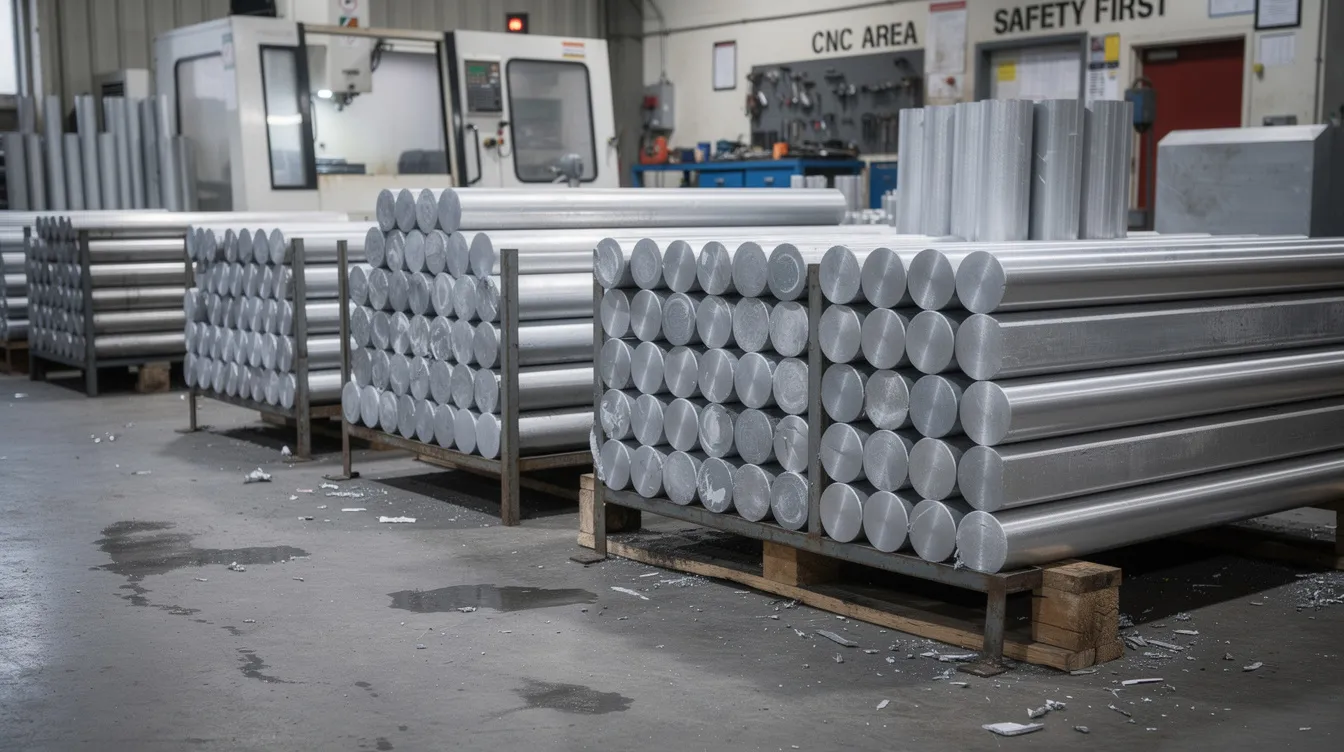
Aluminum alloys are lightweight and corrosion-resistant materials that dominate airframe and interior structures. Several aluminum alloys see heavy use: 6061-T6 and 6082 for general structures, and 7075-T6, 7050, and 7150 for high-strength applications on aircraft like the Airbus A320 and Boeing 767. Advantages include an excellent strength-to-weight ratio, good fatigue performance, and superior machinability. Typical parts include seat tracks, avionics panels, and UAV frames. Anebon keeps popular aerospace aluminum grades in stock for rapid prototyping and short lead times.
Titanium Alloys and Nickel-Based Superalloys
Titanium alloys like Ti-6Al-4V withstand high temperatures and offer excellent corrosion resistance, making them essential for landing gear components, engine pylons, structural joints, and high-strength brackets on aircraft like the Boeing 787. Their high strength-to-weight ratio comes with machining challenges: low thermal conductivity drives rapid tool wear and demands rigid workholding with adapted cutting tools. Nickel-based superalloys, Inconel 718, Waspaloy, Hastelloy, serve hot-section engine parts, combustion chambers, and exhaust systems. CNC machining’s ability to manage work hardening and heat accumulation in these alloys separates capable aerospace shops from general job shops. Anebon applies optimized feeds, speeds, and tooling strategies for titanium and superalloys, focusing on demanding components for OEMs.
High-Performance Polymers and Engineering Plastics
High-performance polymers like PEEK are used in critical engine parts, and alongside ULTEM (PEI), PTFE, and PPS, they serve as bushings, insulators, connector bodies, and lightweight interior components. Benefits include low density, chemical resistance, thermal stability, and electrical insulation for avionics and cabin systems. Machining considerations include controlling heat buildup, avoiding burrs, and maintaining dimensional stability on thin-walled features. Anebon regularly machines engineering plastics for aerospace electronics, sensor housings, and electrical components with tight tolerances.
Composites and Composite-Related Machining
Composite materials like carbon fiber are used for lightweight aerospace parts on platforms like the Boeing 787 and Airbus A350, where carbon fiber composites form primary fuselage and wing structures. While carbon fiber-reinforced polymers are typically molded, CNC machining is essential for trimming, drilling, and producing metallic attachment fittings and tooling molds. Challenges include delamination risk, abrasive tool wear, and dust control, all of which require specialized cutting tools. Advanced materials like carbon fiber composites will be increasingly used in next-generation aircraft, and Anebon machines composite-related tooling and metallic interface hardware for these programs.
Design and Manufacturing Challenges in Aerospace CNC
Aerospace cnc machining is more demanding than general industrial work due to tighter documentation, GD&T complexity, exotic materials, and strict traceability. This section focuses on practical DFM points aerospace engineers should consider when sending parts to machining suppliers. Anebon provides early-stage DFM feedback to help overseas OEMs avoid costly design iterations.
Tight Tolerances, GD&T, and Complex Geometries
CNC machining achieves tolerances as tight as ±0.002 mm, but tightening every feature to that level drives up cost and scrap risk. Common aerospace ranges span ±25 µm for structural features to ±2.5–5 µm for critical bores and sealing surfaces. Well-defined GD&T datums, position, and profile callouts control assemblies without over-constraining manufacturing. Design tips: allow standard radii in internal corners, limit deep narrow pockets, and share functional requirements so your supplier can suggest safe tolerance relaxation to reduce human error in inspection and lower overall cost.
Managing Distortion, Residual Stresses, and Thin Walls
Thin-walled aluminum or titanium parts are prone to warping after heavy material removal from forgings or plate. Mitigation techniques include balanced machining sequences, stress-relief heat treatment of raw stock, and intelligent fixturing such as vacuum chucks for thin walls. Aerospace designers should specify minimum wall thicknesses, consider pocket depth-to-wall ratios, and add stiffening ribs where possible to maintain structural integrity during machining. Anebon collaborates with customers during prototype phases to refine designs before committing to production volumes.
Surface Treatments and Corrosion Protection
Common aerospace finishes include Type II and Type III anodizing for aluminum, chromate conversion (Alodine), passivation for stainless steel, hard chrome, nickel plating, and dry-film lubricants. Each adds thickness (typically microns) that must be factored into tolerance schemes. Hard anodizing suits sliding components, conversion coatings protect structural parts, and electroless nickel serves fuel system hardware. Anebon coordinates finishes via vetted partners and ensures they meet relevant aerospace and ISO specifications.
Quality Control and Certifications in Aerospace CNC Machining
Aerospace manufacturing success depends as much on process control and documentation as on machine capability. Aerospace CNC machining must adhere to quality standards like AS9100 and NADCAP, where AS9100 certification is specific to aerospace quality standards. Anebon holds ISO 9001:2015 and ISO 14001:2015 certifications and aligns its quality system with aerospace expectations.
Inspection Methods and Metrology for Aerospace Parts
Robust inspection capabilities are essential for ensuring quality in aerospace parts production. Key tools include coordinate measuring machines (CMM), optical and laser scanners, surface roughness testers, and hard gauges. Typical inspection plans follow first-article inspection per AS9102, in-process checks after roughing, and final dimensional reports. Aerospace components require rigorous validation processes for quality, so parts should be designed with probe access and clear datums in mind. Anebon supplies detailed inspection reports and measurement data to support customer regulatory requirements.
Traceability, Documentation, and Process Control
Manufacturers should provide extensive documentation and process control for aerospace components. This includes material traceability via mill test reports, batch tracking through every process step, tool and program revision control, and documented process parameters. Nonconformance reports, corrective actions, and change control form the backbone of serious aerospace quality systems. Typical documentation packages include certificates of conformity, inspection records, material certifications, and surface treatment reports. Anebon maintains records and labeling so customers can trace parts back to raw materials and process conditions.
Cost Drivers and Sourcing Strategy for Aerospace CNC Machining
The main cost contributors in aerospace machining are material price, machine time, tooling consumption, quality control overhead, and logistics. Understanding which design choices most affect the quote helps engineers and buyers optimize without sacrificing performance.
How Design, Material, and Volume Affect CNC Costs
Complex geometries, deep cavities, axis cnc setups beyond 3-axis, and tight tolerances all increase machining time and inspection overhead. Material cost differences are stark: aluminum is inexpensive and fast to cut, while titanium and nickel superalloys require specialized tooling, slower feeds, and more frequent tool changes. Volume matters too: prototype quantities (1–10 pcs) carry high per-part cost that drops significantly across pilot and production runs. Practical tips: standardize features, consolidate part families, and avoid over-specification to keep manufacturing costs within budget.
Outsourcing Aerospace CNC: Local vs. Overseas Partners
|
Factor |
Local Supplier |
Overseas Partner (e.g., Anebon) |
|---|---|---|
|
Labor cost |
Higher |
Lower |
|
Audit ease |
On-site visits simple |
Requires travel or remote audit |
|
Shipping lead time |
Days |
Weeks |
|
Capacity & hours |
Standard shifts |
Extended / 24-hr production |
|
Documentation rigor |
Familiar standards |
Must be explicitly specified |
The key when choosing an overseas partner is verifying quality systems, communication capability, and experience with aerospace documentation. Anebon serves as an OEM-focused manufacturing partner in Dongguan, China, offering fast quoting, English-language engineering support, and robust export logistics. Best practice: start with smaller qualification batches, set clear quality expectations, and use NDAs for sensitive aerospace designs.
CNC Machining Across the Aerospace Lifecycle: From Prototype to Production
Aerospace projects move from rapid prototypes through qualification lots to recurring production, and cnc machining plays a role at every stage. Using similar materials and manufacturing methods in prototyping and production reduces risk when scaling. CNC machining is used for both prototyping and production in aerospace, making it the backbone manufacturing process across the entire lifecycle.
Rapid Prototyping and Design Validation
Aerospace engineers use cnc machining to quickly test brackets, avionics housings, and structural details before committing to castings or composite tooling. Prototypes typically use final materials, aluminum, titanium, high-performance polymers, to validate mechanical performance and assembly fit rather than just form. Anebon turns around prototype parts in days to weeks depending on complexity, serving customers in Europe, North America, and Asia. Early collaboration lets DFM feedback reach aerospace designers before design freezes, reducing certification delays.
Pre-Production, Qualification, and Full-Scale Manufacturing
Pre-production lots mirror production methods and fixtures, feeding functional, environmental, and fatigue testing. Full-scale manufacturing demands process capability (Cpk ≥ 1.33), repeatable quality, and stable supply chains. Anebon supports long-term production of highly precise components, including fixture optimization and multi-machine scheduling for stable lead times, while updating programs and fixtures as design revisions occur to maintain configuration control.
Future Trends in Aerospace CNC Machining
The global aerospace industry through the 2020s is evolving toward electric propulsion, urban air mobility (eVTOL), lighter structures, and more digitalized factories. These shifts are changing how aerospace cnc machining is specified and executed. Anebon is investing in advanced automation, tighter process control, and better integration with customers’ digital workflows.
Automation, Digitalization, and Industry 4.0
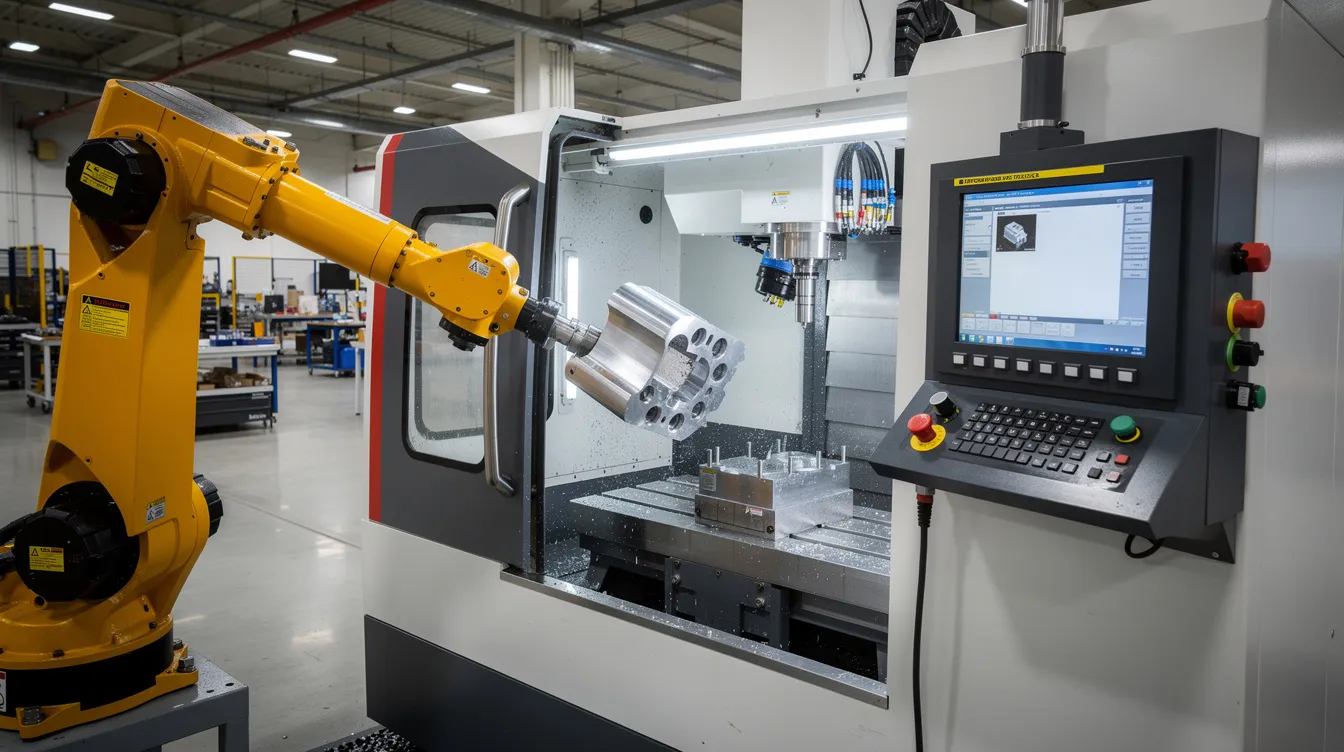
Robotics, pallet systems, and lights-out machining are raising throughput and consistency in aerospace CNC shops. Real-time data collection, machine monitoring, and predictive maintenance improve uptime and part quality while reducing human error. The digital thread, from CAD/CAM to CNC code to metrology data, links to part numbers and revisions for full aerospace traceability, creating connected manufacturing ecosystems. Automation and AI, including machine learning for adaptive toolpath optimization, will enhance CNC machining efficiency and quality. Anebon interfaces with customers via digital data exchange to accelerate quoting and manufacturing planning.
Advanced Materials and Additive Manufacturing Integration
Continued growth of advanced materials, more titanium, carbon fiber composites, and high-temperature alloys, pushes cnc machining toward better cutting tools, coolants, and strategies to maintain cost-effectiveness. Additive manufacturing integration enables printing complex aerospace geometries followed by CNC finish machining of precision interfaces, especially for low-volume, high-value propulsion systems and structural nodes. CNC machining will support the production of complex aerospace components as hybrid workflows become standard. Sustainable manufacturing practices will be prioritized in cnc machining as aerospace manufacturers pursue reduced waste, energy efficiency, and circular material strategies. Anebon stands ready to support customers adopting these hybrid manufacturing methods as a subtractive finishing and quality partner.
Why Partner with Anebon for Aerospace CNC Machining
Anebon Metal Products Limited has supported overseas OEMs since 2010, delivering high precision components from its Dongguan facility with ISO 9001:2015 and ISO 14001:2015 certifications. Capabilities span tolerances to ±0.002 mm, a wide material portfolio covering aluminum, titanium, stainless steel, and engineering polymers, and services from rapid prototyping to full-rate production. English-speaking engineering support and proactive DFM guidance help aerospace companies, R&D teams, and produce critical engine parts suppliers get from concept to qualified hardware faster.
Ready to discuss your next aerospace machining project? Request a quote, share your CAD models or drawings, and let Anebon show you what precision cnc machining backed by rigorous process control can deliver for your program.