Top CNC Machining Parts: Precision and Quality for Every Project
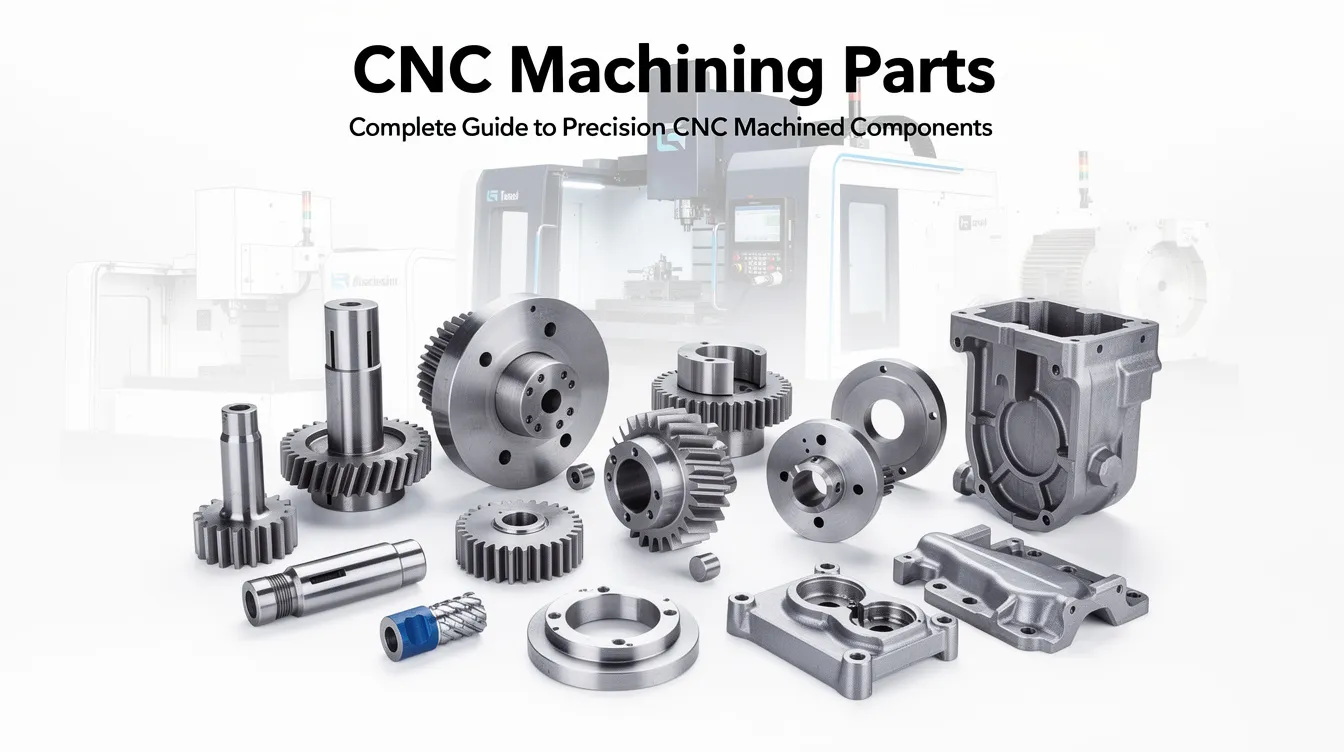
CNC Machining Parts: Complete Guide to Precision CNC Machined Components
Every high-performance product-from aircraft engine housings to surgical instruments-relies on components manufactured to exact specifications. CNC machining parts are at the center of this reality, turning digital designs into physical metal and plastic components with remarkable accuracy. This guide covers everything design engineers and OEM procurement teams need to know about precision cnc machining: processes, materials, tolerances, finishing, and how to get the best results from your manufacturing partner.
Overview of CNC Machining Parts and Services
CNC machined parts are components produced through a subtractive manufacturing process where computer numerical control directs cutting tools to remove material from a solid block of metal or plastic. Engineers create a digital model in CAD software, convert it into machine-readable G-code, and the CNC machine executes precise cuts to produce the finished part. CNC machining uses computer control for precise tool movement, which is essential for creating high-precision components across various industries.
It helps to clarify a few terms you’ll encounter:
-
CNC machined parts – the custom components produced on CNC equipment (this article’s focus)
-
CNC machine parts – the mechanical elements of the CNC machine itself (spindles, ball screws, guideways)
-
CNC parts – used loosely in industry for either; context matters
Anebon Metal Products Limited, founded in 2010 in Dongguan, Guangdong, China, is an ISO 9001:2015 and ISO 14001:2015 certified manufacturer serving overseas B2B and OEM clients. Anebon combines CNC milling, cnc turning, 5-axis machining, die casting, and sheet metal fabrication under one roof-offering a streamlined path from prototype to production parts.
This article covers the complete cnc machining process, material selection (aluminum, stainless steel, alloy steel, titanium, engineering plastics), surface treatments, comprehensive quality control, and real-world industrial applications. CNC machining can produce parts from various materials including metals and plastics, and CNC machining tolerances can be as tight as ±0.0002mm for critical features.
Ready to get started? Design engineers can request a quote for custom cnc machining services by uploading CAD files and technical drawings directly to Anebon’s engineering team.
Function of CNC Machining Parts in Modern Manufacturing
CNC machining parts support the most demanding sectors in modern manufacturing: aerospace structural components, medical devices requiring biocompatibility, automotive parts built for durability, robotics joints demanding repeatability, and electronic housings where dimensional precision determines assembly fit. CNC machining produces parts for automotive and aerospace industries at scales ranging from single prototypes to mass production runs.
The workflow is straightforward in concept: a CAD model defines the part geometry, CAM software generates optimized toolpaths (G-code), and the CNC machine executes those paths with micron-level control. CNC machining is a subtractive manufacturing process-material is removed from stock rather than added, as in additive manufacturing or shaped in a mold as in injection molding.
Compared to conventional manual machining, CNC machining delivers several clear advantages:
|
Advantage |
Detail |
|---|---|
|
Precision |
Anebon holds tolerances to ±0.002 mm; CNC machining offers tolerances around ±0.0002mm on critical features |
|
Repeatability |
CNC machining provides exceptional consistency across multiple parts-once programmed, CNC machines can operate continuously with minimal supervision |
|
Lower scrap |
Computer control minimizes human error, reducing material waste |
|
Reduced cost |
CNC machining reduces production costs due to fewer operator interventions |
|
Speed |
CNC machining can achieve faster fabrication times than traditional methods |
|
Design flexibility |
CNC machining allows for rapid design iterations without custom tooling |
Consider three practical examples of cnc machining solutions in action:
-
Aluminum drone housings – Milled from 6061-T6 or 7075-T6, these lightweight frames require tight tolerances on mounting bosses and are typically finished with anodizing for corrosion protection.
-
Stainless medical implants – Machined from 316 or 17-4PH steel, implant components demand surface finishes of Ra ≤0.4 μm on sealing faces and tolerances as fine as ±0.001 mm. CNC machining can produce medical devices with tight tolerances that meet regulatory requirements.
-
Alloy steel gearbox shafts – 4140 steel alloy shafts are turned and ground with concentricity tolerances under ±0.005 mm, then heat treated for fatigue resistance.
CNC machining is ideal for rapid prototyping and design flexibility, enabling R&D teams to iterate quickly. Changes in CAD translate directly to the machine with no need for custom tooling, making precision manufacturing accessible even at low volumes.
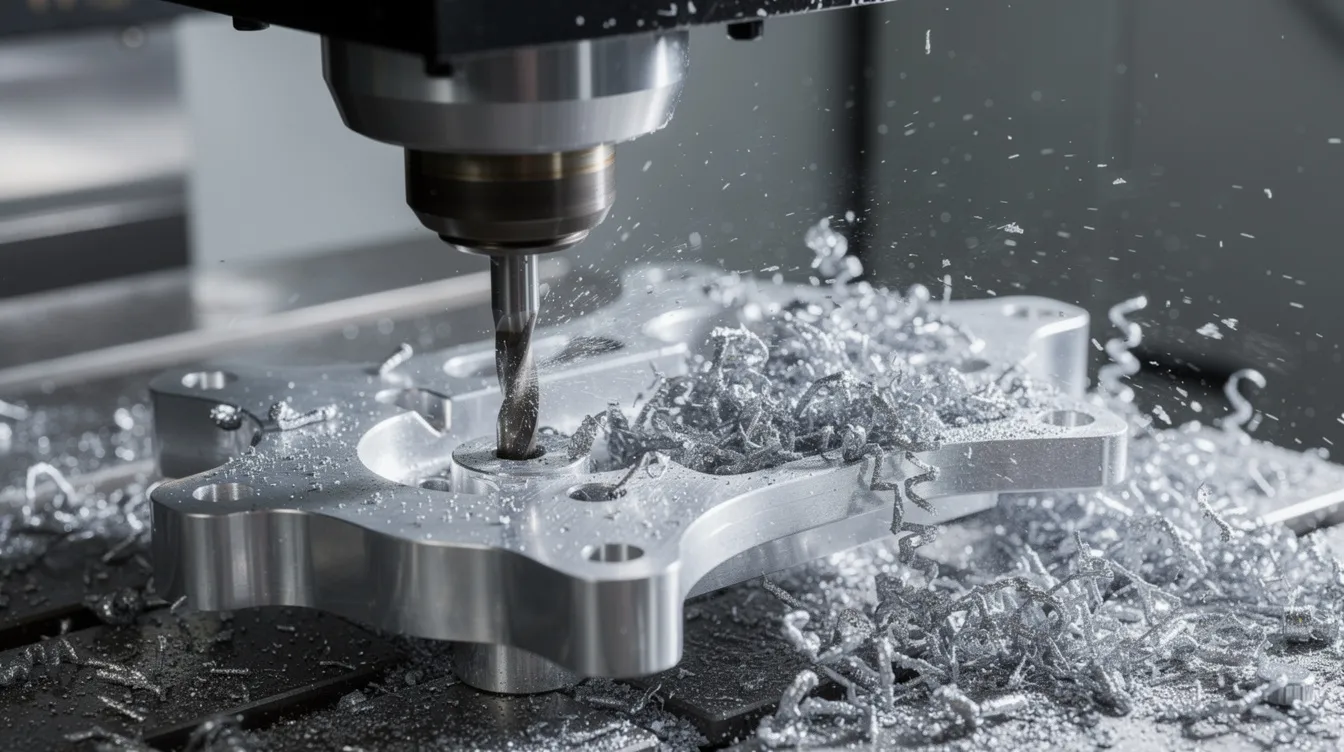
Complete Process of CNC Machining Parts
The end-to-end workflow for CNC machining parts runs from initial RFQ and DFM review through programming, setup, machining, finishing, and final inspection before shipment. The CNC machining process includes design, machining, and quality control as its core stages.
The subsections below break down each stage in detail. Anebon supports both rapid prototyping with lead times as short as a few days and full-scale production with stable, repeatable processes. CNC machining is used for rapid prototyping and low-volume production as well as high-volume runs.
Designing the Part (CAD Modeling & DFM)
The first step in CNC machining is CAD modeling of the part. CAD software is used to create 3D or 2D models of parts, typically delivered as STEP, IGES, or Parasolid files alongside 2D drawings that call out dimensions, tolerances, surface roughness, and geometric tolerances (flatness, concentricity, perpendicularity).
Anebon’s DFM (Design for Manufacturing) feedback helps engineers optimize designs before machining begins. Common recommendations include:
-
Minimum wall thickness: ~0.8–1.5 mm for metals; thicker for plastics to avoid warping
-
Hole diameters: ≥1.5–2 mm for drilled holes in metals without special tooling
-
Fillet radii: Internal corners should include radii to reduce stress concentrations and tool wear
-
Thread specs: Standard metric or UN threads; avoid deep blind threads in small diameters
Critical features like sealing surfaces or bearing bores are identified early so that tighter tolerances and focused inspection are allocated where they matter. Designers should consider whether cnc milling or cnc turning best suits the part geometry, as this decision directly affects setup count and cost.
Converting CAD to CAM and CNC Programming
CAM software-such as Mastercam, Siemens NX, or Fusion 360-translates the 3D model into CNC toolpaths, optimizing feed rates, spindle speeds, stepovers, and depth of cut. The output is G-code tailored to the specific machine: 3-axis, 4-axis, or 5-axis machining centers, as well as CNC lathes.
Before any metal is cut, simulation catches potential problems: collisions between toolholders and fixtures, excess tool deflection on long-reach operations, and overrun on complex 5-axis movements. This virtual validation prevents costly crashes and wasted raw material.
For difficult materials like hardened alloy steel or titanium, optimized CAM strategies matter significantly. Adaptive clearing and high-speed machining keep cutting loads consistent, reduce heat buildup, and extend tool life-directly lowering cycle time and cost per part.
Preparing the CNC Machine: Setup and Calibration
Machinists select and install cutting tools, vices, soft jaws, or custom fixtures based on part geometry and required tolerances. Work coordinate setup relies on touch probes and edge finders to establish precise datum positions, while tool length measurement ensures each cutter is referenced accurately. This probing step is non-negotiable for tight-tolerance machined parts.
Periodic machine calibration maintains geometric accuracy over time:
-
Laser interferometry verifies axis travel and scale accuracy
-
Ball-bar tests assess circular interpolation error and dynamic accuracy
-
Squareness and trunnion checks are critical for 5-axis machining centers
Environmental conditions also influence results. Shop temperature stability, coolant temperature control, vibration isolation, and effective chip evacuation all contribute to excellent dimensional stability during production runs.
Machining Operations: CNC Milling, CNC Turning, and 5-Axis
CNC machining starts from billet, bar, or forging stock and removes material layer by layer to achieve final geometry. It is fundamentally a subtractive manufacturing process, and the choice between milling and turning depends on part shape.
CNC milling handles prismatic parts-pockets, slots, contours, and complex 3D surfaces-produced on 3-, 4-, and 5-axis machining centers. Vertical milling is common for plates, brackets, and electronic housings, while 5-axis simultaneous milling enables complex geometries like impeller blades and orthopedic implants. CNC machining can create complex components like helicopter rotor blades that would be impossible to produce manually.
CNC turning produces rotational components: shafts, bushings, pins, flanges, and threaded connectors from bar stock. Lathes with live tooling can add flats, cross-holes, and keyways without removing the part, reducing handling error. Learn more about CNC turning and milling combined operations.
Anebon’s mill-turn centers combine both processes to machine complex parts in fewer setups, improving precision and reducing lead time. CNC machining enhances safety by limiting operator access to moving parts during operation.
When machining difficult materials like titanium (with its low thermal conductivity of ~6–7 W/m·K) or hardened low alloy steel, rigid fixturing, coated carbide tools (TiAlN, AlTiN), high-pressure coolant, and conservative feed rates prevent work hardening and tool failure.
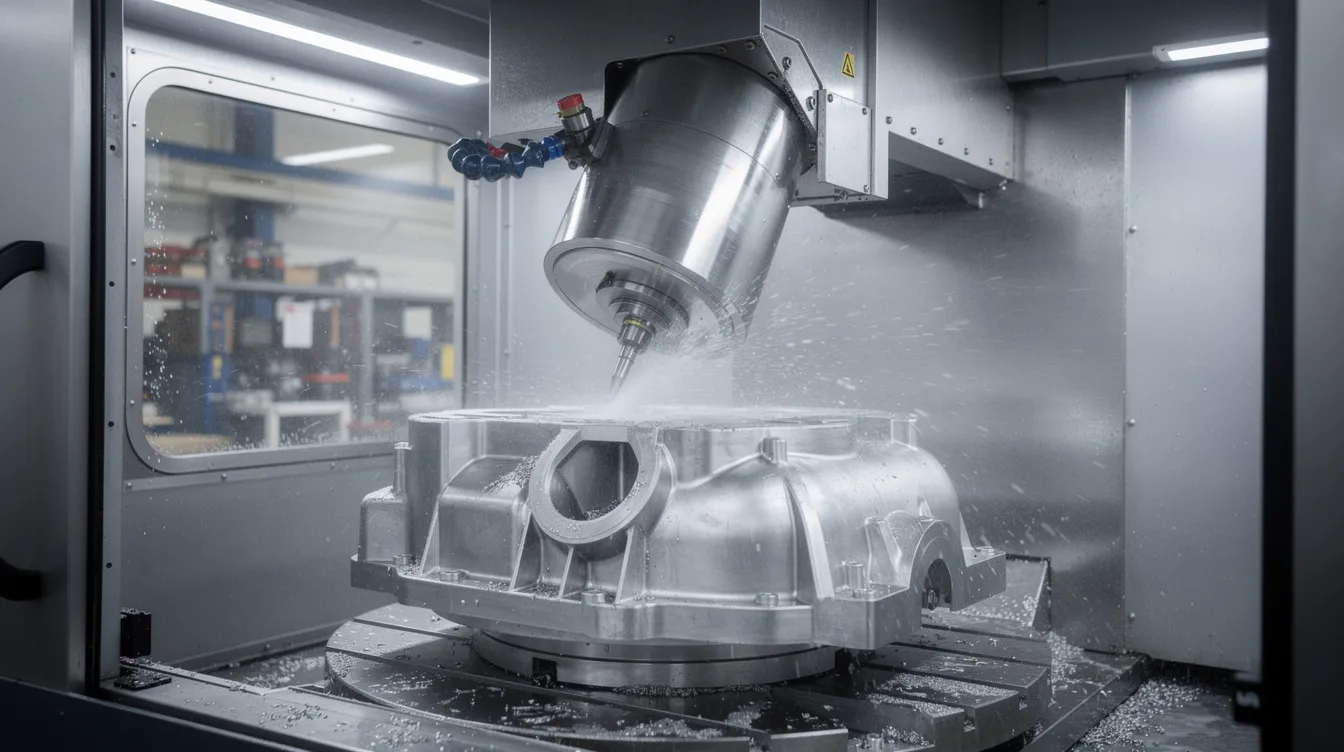
Finishing Operations and Surface Treatments
After machining, parts undergo deburring, edge breaking, and cleaning to remove chips, sharp edges, and residual cutting fluids. Additional finishing depends on functional and cosmetic requirements.
Common surface treatments Anebon coordinates include:
|
Treatment |
Typical Material |
Purpose |
|---|---|---|
|
Anodizing |
Aluminum |
Corrosion protection, color, hardness |
|
Black oxide |
Carbon steel, low alloy steel |
Mild corrosion resistance, appearance |
|
Nickel/zinc plating |
Various metals |
Wear resistance, corrosion barrier |
|
Powder coating |
Steel, aluminum |
Durable decorative finish |
|
Passivation |
Stainless steel |
Restore chromium oxide layer |
Surface roughness is specified and verified to match functional needs. CNC machining can achieve surface finishes of Ra 1.6 μm or finer. Typical ranges:
-
Standard machining: Ra 3.2–6.3 μm
-
Fine milling/turning: Ra 0.8–1.6 μm
-
Sealing or cosmetic surfaces: Ra 0.4 μm or better
For traceability, laser engraving or laser marking adds part numbers, lot codes, and OEM branding. Explore anodized aluminum parts for examples of finished custom components.
Comprehensive Quality Control and Inspection
Anebon operates under ISO 9001:2015 quality management and ISO 14001:2015 environmental management frameworks. These systems enforce documented procedures from material receipt through final shipment, ensuring comprehensive quality control at every stage.
Key inspection tools and methods include:
-
CMM (Coordinate Measuring Machine) – Verifies 3D geometry against CAD models. CNC machining maintains dimensional accuracy within ±0.001 inches on measured features.
-
Profilometers – Measure surface roughness to confirm Ra specifications
-
Hardness testers – Validate heat treatment results
-
Height gauges and micrometers – Check critical linear dimensions
Incoming raw material is verified against mill test certificates for chemical composition and mechanical properties. In-process inspections use probing to catch dimensional drift before it becomes scrap. CNC machining achieves a 90% first-pass yield for parts under standard conditions, and Anebon’s quality inspection processes push that even higher through systematic in-process checks.
For automotive and aerospace projects, Anebon provides FAI (First Article Inspection) and PPAP documentation with full traceability from raw material heat number to finished batch.
Types of CNC Machining Parts by Process
Part geometry drives the choice between cnc milling, cnc turning, or combined operations. A flat bracket with pocketed features calls for milling; a shaft with cylindrical features calls for turning; a complex housing with both prismatic and rotational elements benefits from mill-turn centers.
Anebon supports both simple and highly complex CNC machined parts, from small connectors to multi-feature housings with dozens of critical dimensions.
CNC Milling Parts
CNC milling is the go-to process for flat, cubic, and complex 3D shapes: brackets, heat sinks, manifold blocks, and electronic housings. CNC machining can produce parts with complex geometries and tight tolerances that would be difficult or impossible with other manufacturing processes.
Concrete examples include:
-
Aluminum 6061 drone frames – Lightweight structural parts with mounting features (aluminum CNC services)
-
7075-T6 aerospace mounting plates – High-strength structural components for aircraft assemblies
-
Stainless 304 food-processing plates – Outstanding resistance to chemicals and steam cleaning
-
PEEK medical instrument housings – Biocompatible, sterilizable precision components
Five-axis milling enables undercuts and compound angles for turbine impellers, orthopedic implants, and complex mold cavities. To reduce tooling and setup time, designers should favor standard hole patterns, chamfers, and fillets over features requiring long-reach or specialty tools.
CNC Turning Parts
CNC turning is optimized for parts with cylindrical features: shafts, pins, bushings, flanges, and threaded connectors. The workpiece rotates while stationary tools remove material-ideal for high concentricity and surface finish on rotational geometries.
Typical turned parts include:
-
4140 alloy steel transmission shafts – Heat treated for fatigue and wear resistance
-
Brass C360 plumbing fittings – High-volume, excellent machinability
-
Stainless 316 marine fasteners – Excellent corrosion resistance in saltwater environments
-
Titanium bone screws – Biocompatible, strong, lightweight
Lathes with live tooling add flats, cross-holes, and keyways in a single operation, eliminating re-fixturing. Long-run bar-fed CNC turning parts production is especially cost-effective for high-volume OEM components needing tight concentricity and controlled surface finish.
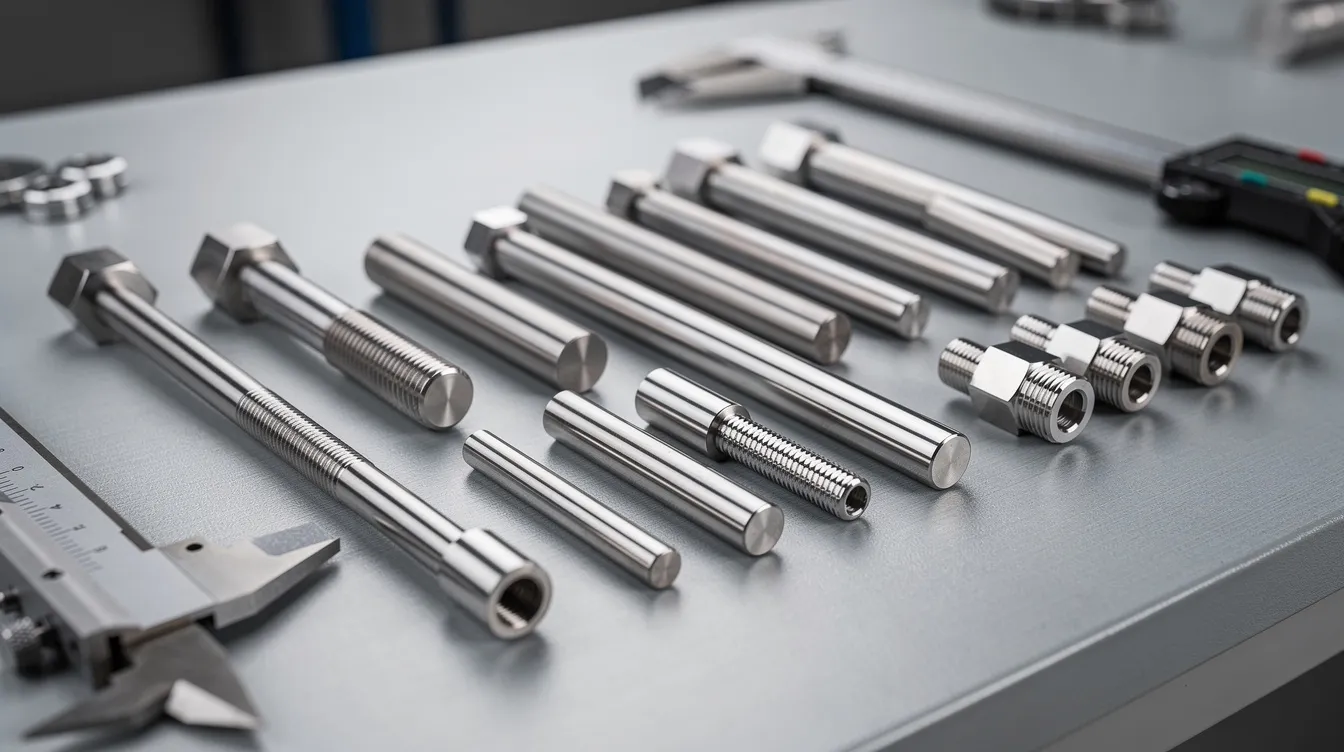
Materials for CNC Machined Parts
Material selection directly affects strength, weight, corrosion resistance, thermal properties, machinability, and cost. The right choice depends on the part’s function, operating environment, and budget constraints.
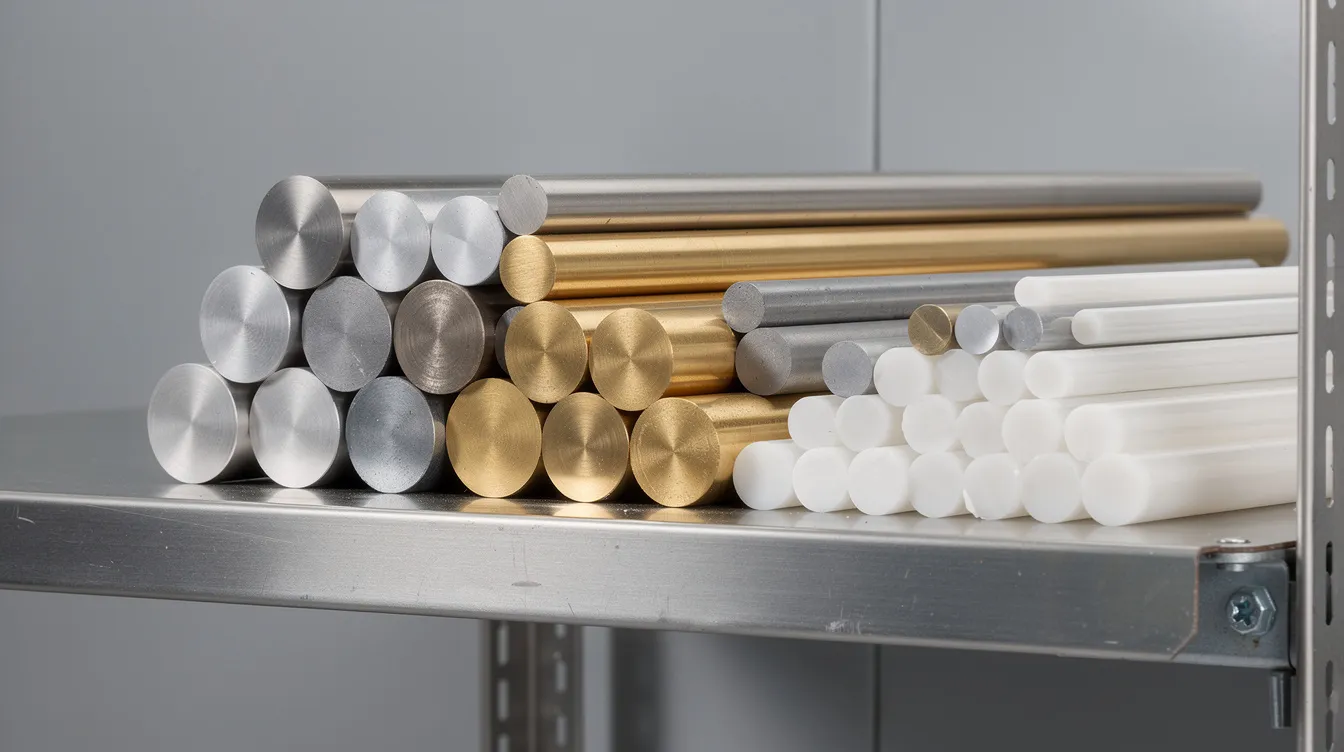
Anebon machines a broad range of metals-aluminum, stainless steel, alloy steel, brass, copper, titanium-and engineering plastics including ABS, PEEK, nylon, POM, and polycarbonate. The following subsections outline material properties and typical applications for each family. Engineers are encouraged to consult Anebon’s team for material selection support matched to their custom specifications and industry standards.
Aluminum and Aluminum Alloys
Aluminum is the most widely used material in CNC machining for good reason. Aluminum 6061 is lightweight with good machinability, offering tensile strength around 310 MPa in the T6 temper-sufficient for most structural and general-purpose applications. For higher-demand uses, 7075-T6 delivers over 500 MPa tensile strength, making it a staple for aerospace and defense structural components.
Key advantages of aluminum for CNC machining:
-
Low density (~2.7 g/cm³) for weight-sensitive designs
-
Excellent chip formation allows high cutting speeds
-
Natural corrosion resistance, enhanced by anodizing
-
Relatively low raw material cost
Common applications include automotive brackets, aerospace panels, consumer electronics enclosures, and drone structural frames. Aluminum’s compatibility with CNC milling of custom irregular parts makes it ideal for complex parts with tight tolerances and fine aesthetic finishes.
Anebon regularly stocks common aluminum grades to support fast-turn machining services for overseas OEMs.
Stainless Steel and Alloy Steel
Stainless steel offers excellent corrosion resistance and strength, making it indispensable for food processing, medical, marine, and chemical applications. Common grades include:
-
304 – General-purpose, good formability
-
316 – Superior corrosion resistance (marine, chemical)
-
17-4PH – Precipitation-hardened, high strength for aerospace and medical
Alloy steels like 4140 provide high fatigue strength and wear resistance for gears, shafts, and heavy-duty mechanical components. Low alloy steel and carbon steel grades are chosen when cost-effective strength is the priority, with heat treatment adjusting hardness and toughness to match the application.
Machining considerations for steel alloy materials include the tendency for work hardening (requiring sharp carbide tools and aggressive cooling), rigid setups to prevent chatter, and lower feed rates compared to aluminum. These factors increase cycle time and tool wear, but the material properties justify the investment for demanding industrial applications.
Examples of CNC machined parts in steel: surgical tools, pump bodies, stainless steel ring parts, high-pressure fittings, and industrial robot joints.
Brass and Copper Alloys
Brass is corrosion-resistant and easy to machine, with C360 (free-cutting brass) being the most popular grade for high-volume CNC turning of fittings, valves, and electrical connectors. Its excellent machinability translates to faster cycle times and lower per-part costs on production parts.
Copper is highly ductile and electrically conductive, making grades like C110 the standard for bus bars, heat sinks, terminals, and RF components where high electrical conductivity and thermal conductivity are essential requirements. Copper’s outstanding resistance to oxidation in controlled environments adds to its value in electronics.
Both materials require sharp tools and optimized feeds to maintain surface finish and avoid burrs or smearing. Anebon’s experience with small, precise brass and copper cnc parts directly benefits electronics and telecommunications OEMs seeking reliable custom components.
Titanium and High-Performance Alloys
Titanium has a high strength-to-weight ratio and corrosion resistance that make it the material of choice for aerospace fasteners, orthopedic implants, and high-performance automotive components. Grade 5 (Ti-6Al-4V) is the most common CNC machined titanium alloy, offering excellent biocompatibility for medical devices and heat resistance for components exposed to high temperatures.
However, titanium’s low thermal conductivity (~6–7 W/m·K versus ~167 W/m·K for aluminum) concentrates heat at the cutting edge, accelerating tool wear. Cycle times run 5–8× longer than aluminum, and raw material costs are 10–30× higher. Machining titanium demands rigid tooling, lower cutting speeds, coated carbide inserts, and abundant high-pressure coolant.
Engineers should carefully balance titanium’s performance advantages against its cost and machining difficulty. For projects where titanium is justified, Anebon’s titanium CNC machining capabilities deliver tight tolerances on complex aerospace and medical geometries.
Engineering Plastics
Engineering plastics are chosen for low weight, chemical resistance, electrical insulation, and low friction properties. CNC machining handles plastics that aren’t suited to injection molding at low volumes or that require tighter tolerances than molding can achieve.
Common CNC machinable plastics include:
|
Plastic |
Key Property |
Typical Application |
|---|---|---|
|
ABS |
Impact resistance, good mechanical properties |
Prototypes, enclosures |
|
POM (Delrin) |
Excellent dimensional stability, low friction |
Gears, bushings, guides |
|
Nylon |
High tensile strength and wear resistance |
Wear strips, rollers, bearings |
|
PEEK |
Heat resistant, biocompatible, strong |
Medical implants, aerospace insulation |
|
Polycarbonate |
Optical clarity, impact strength |
Clear covers, lenses |
|
PTFE |
Low friction, chemical inertness |
Seals, gaskets, bearings |
Plastics require adjusted cutting parameters-sharp tools to prevent melting, lower spindle speeds, and careful fixturing to prevent deformation of thin walls. Thermal expansion coefficients in plastics (50–200 × 10⁻⁶/°C) are significantly higher than metals, making environmental control important for achieving tighter tolerances. Anebon’s CNC turned plastic machining services address these challenges with optimized processes for different materials.
Key Design Considerations for CNC Machined Parts
Smart design decisions made early in the engineering phase can dramatically reduce CNC machining cost and lead time without sacrificing part performance. The guidance below helps engineers make informed tradeoffs on tolerances, geometries, material thicknesses, and finishing requirements.
Anebon provides free DFM feedback as part of its custom cnc machining service, helping customers optimize designs before cutting begins.
Tolerances, Geometries, and Feature Design
CNC machining offers high accuracy ideal for applications requiring tight tolerances, but not every feature on a part needs micron-level precision. The cost relationship is nonlinear:
-
Standard tolerances (±0.10–0.20 mm per ISO 2768-m) are achievable on standard cnc machines at baseline cost
-
Precision tolerances (±0.02–0.05 mm) add moderate cost for functional mating surfaces
-
High-precision tolerances (±0.005–0.002 mm) can increase cost by 2–5× compared to standard
CNC machining tolerances can be as tight as ±0.0002mm, and CNC machines can achieve tolerances as tight as ±0.00025 inches on small, well-supported features-but reserving these specifications for truly critical interfaces keeps costs manageable.
Practical design guidelines for precision machining:
-
Thin walls: Minimum ~0.8 mm for metals, ~1.5 mm for plastics to prevent deflection
-
Hole diameters: ≥1.5 mm in metals without specialty tooling; reaming or boring for tighter hole tolerances
-
Internal corners: Add fillet radii ≥ tool radius to avoid stress risers and reduce tool wear
-
Datums: Align critical features to a common datum to simplify inspection and fixture design
-
Deep pockets and thin ribs: Require special tools, lighter cuts, or multi-axis machining-increasing price and lead time
Material, Quantity, and Surface Finish vs Cost
Material selection impacts far more than part performance. Cycle time, tool wear, and raw material cost all scale with material difficulty:
|
Factor |
Aluminum |
Stainless Steel |
Titanium |
|---|---|---|---|
|
Raw material cost |
Low |
Moderate |
High (10–30× aluminum) |
|
Cycle time |
Fast |
Moderate |
Slow (5–8× aluminum) |
|
Tool wear |
Low |
Moderate–High |
High |
|
Typical tolerance |
±0.01 mm achievable |
±0.02 mm typical |
±0.005 mm on critical features |
Economies of scale matter. Setup cost is amortized across quantity: a prototype batch of 5 parts carries a high per-unit setup burden, while mass production of 5,000 parts spreads that cost thin. Machining services should be evaluated on total project cost, not just unit price.
Surface finishes like anodizing, polishing, and grinding add process steps and cost. Specify them only where function or appearance demands it-cosmetic surfaces, sealing faces, or sliding interfaces. Everywhere else, as-machined finishes (Ra 1.6–3.2 μm) typically suffice.
Early consultation with Anebon’s engineers ensures a cost–performance comparison for different materials and process choices, helping you make informed decisions before committing to production.
CNC Machining Services from Anebon Metal Products Limited
Anebon Metal Products Limited is a one-stop CNC machining partner for overseas OEMs who need reliable, quality-certified precision manufacturing from China. With CNC milling, CNC turning, 5-axis machining, die casting (including aluminum alloy high pressure casting), sheet metal fabrication, and precision sheet metal stamping under one roof, Anebon simplifies your manufacturing network and shortens lead times.
Core capabilities at a glance:
-
Tolerances to ±0.002 mm on critical features
-
3-axis, 4-axis, and 5-axis CNC machining centers
-
Mill-turn centers for complex parts in fewer setups
-
Materials: aluminum, stainless steel, alloy steel, titanium, brass, copper, engineering plastics
-
Surface treatments: anodizing, plating, powder coating, passivation, laser engraving
-
Prototyping in days; scalable to high-volume production parts
Anebon’s ISO 9001:2015 and ISO 14001:2015 certifications back a commitment to comprehensive quality control and environmental responsibility-from raw material sourcing and incoming inspection through in-process monitoring, CMM final verification, and full traceability documentation.
Get started today. Upload your cad files and technical drawing to receive a detailed CNC machining quote and complimentary DFM review. Whether you need custom parts for aerospace, medical devices, automotive industries, or electronics, Anebon’s team is ready to deliver machined parts that meet your custom specifications-on time and on spec.