Top CNC Machine Products for Precision and Efficiency in Manufacturing
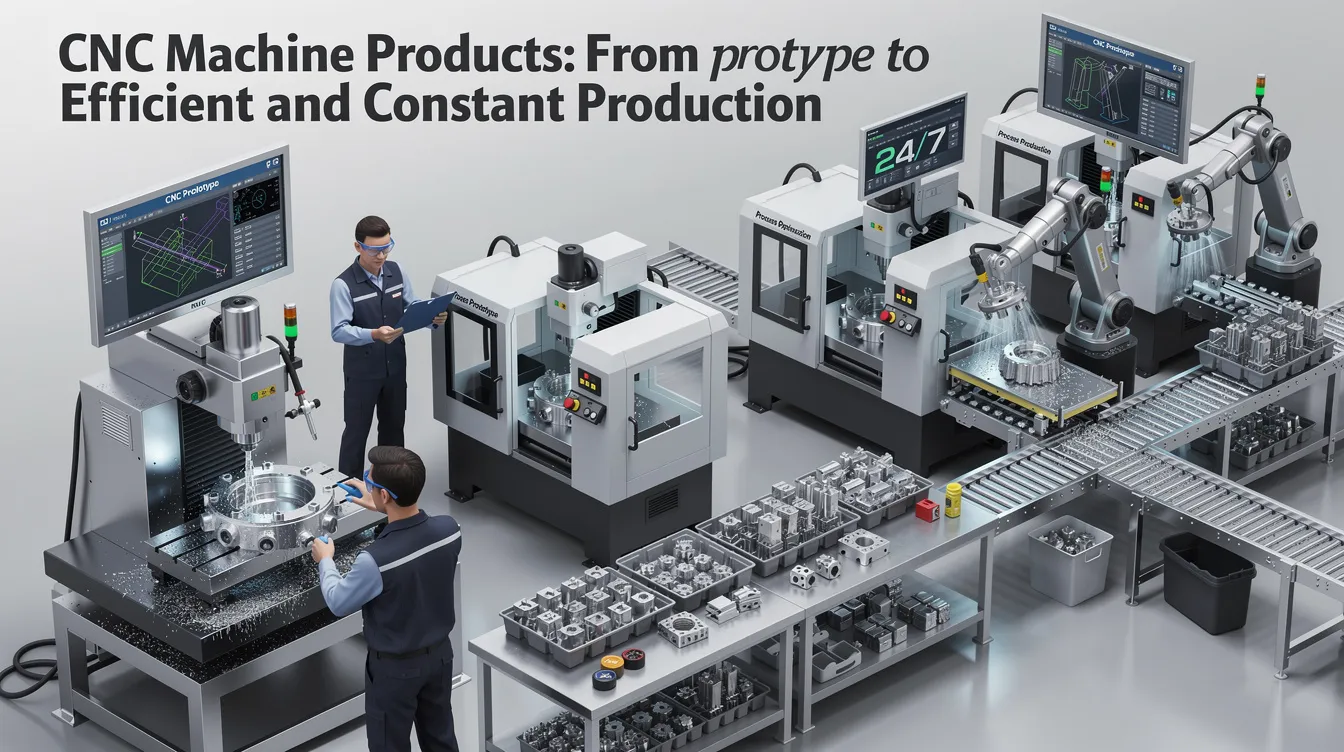
CNC Machine Products: From Prototype to Efficient and Constant Production
CNC machine products are precision-manufactured components created by computer-controlled cutting, drilling, and shaping equipment that translates digital CAD files into physical parts. For OEMs across the world, these parts form the backbone of everything from surgical instruments to satellite brackets. CNC machines offer high precision and repeatability across diverse sectors, making them the default choice when tolerances, consistency, and speed matter more than handwork ever could.
CNC machining is integral in industries like automotive and aerospace, but the technology reaches far beyond those sectors. Milling, turning, and 5-axis operations transform raw metal and plastic stock into finished component pieces and other component pieces used in medical devices, electronics, robotics, and industrial machinery. The core benefit over manual processes is efficient and constant production: once a program is proven, the machine can reproduce that part with identical accuracy across hundreds or thousands of cycles, with reduced scrap and minimal operator variation.
Anebon Metal Products Limited, founded in 2010 in Dongguan, Guangdong, China, is an ISO 9001:2015 and ISO 14001:2015 certified precision manufacturer committed to serving overseas OEM customers. To keep things concrete, consider the range of parts a shop like Anebon produces daily: 6061-T6 aluminum drone housings, stainless steel 316L surgical fixtures, and copper heat sinks for 5G base stations. That variety is the norm, not the exception.
Types of CNC Machines Used to Produce CNC Parts
Not every cnc machine does the same job. Matching the right equipment to the right geometry is what separates an efficient quote from an expensive one. Here is how the major machine families break down and what kind of products each one makes.
-
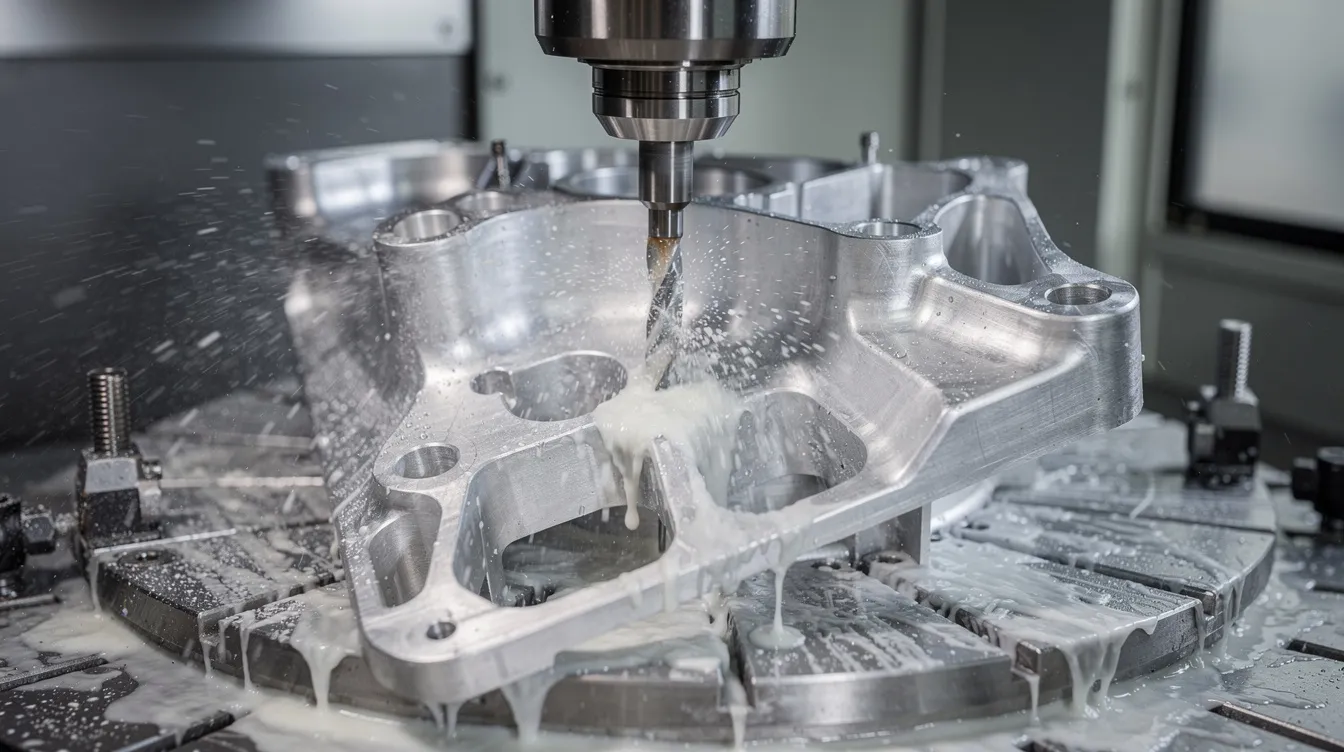
3-Axis CNC Milling Centers – Best for prismatic parts: electronic enclosures, brackets, jigs, and flat-surfaced housings. CNC milling machines operate on 3 to 5 axes, but a standard 3-axis setup handles X, Y, and Z linear movement with spindle speeds commonly between 12,000 and 24,000 RPM for aluminum, and lower for steel. Travel envelopes typically range from 500×300×300 mm up to 1,200×800×600 mm.
-
CNC Turning and Swiss-Type Lathes – Rotate the workpiece against the tool to produce shafts, bushings, fittings, and hydraulic valve bodies. Swiss-type lathes excel at small-diameter, high-precision work down to 1–2 mm, delivering tight concentricity and surface finishes that mating parts demand. Anebon’s CNC turning precision components cover diameters from miniature pins to large flanges.
-
4-Axis and 5-Axis Machining Centers – Add one or two rotary axes for compound angles, undercuts, and sculpted surfaces. Critical for turbine impellers, medical implants, and robotics end-effectors that would require multiple re-fixtures on a simpler machine. Typical 5-axis travel ranges span 500–2,000 mm on X/Y/Z with spindle speeds of 8,000–20,000 RPM.
-
Supporting Equipment – EDM machines are used for machining hardened materials or complex shapes that conventional cutters cannot reach. CNC laser machines use high-powered lasers for cutting and engraving materials, while CNC plasma cutters utilize a jet of ionized gas to slice through thick conductive metals. CNC routers are designed for cutting large sheet materials like wood and plastic and are widely used in woodworking and signage applications. Coordinate measuring machines (CMMs) handle final inspection.
-
Desktop and Entry-Level CNC – CNC machines can be operated by amateurs and hobbyists. Tormach machines, for example, run on single-phase power and are easy-to-use, and are designed to be upgradable and self-serviceable, making them popular in garage workshops and makerspaces.
Anebon operates a mixed fleet of modern CNC machining centers and turning centers, covering everything from one-off prototypes to long-term production runs without outsourcing core operations.
Common CNC Machine Products: Concrete Examples by Industry
The best way to understand what cnc machine products look like in practice is to walk through real part types by industry.
-
Automotive – CNC machining is critical in the automotive industry for producing high-volume and prototype parts. Typical examples include aluminum gearbox housings, suspension knuckles, and stainless steel exhaust flanges. CNC machines can produce over 1 million parts per year when running continuous production cells for high-demand components.
-
Aerospace – CNC machines are utilized in the aerospace industry to produce complex engine parts, titanium brackets, 7075-T6 structural fittings, and precision aluminum 2024 avionics housings. Traceability and tight tolerances are non-negotiable here.
-
Medical Devices – CNC machining creates specialized medical instruments and implants requiring high accuracy, including stainless steel 316L surgical tools, anodized aluminum components for imaging equipment, and small-volume plastic parts for diagnostic devices.
-
Electronics and Robotics – The electronics industry relies on CNC machining for manufacturing high-precision circuit boards, heat sinks, connector blocks, motor mounts, and robot end-of-arm tooling made from aluminum, copper alloys, and engineering plastics. CNC machines can even create custom phone cases for consumer electronics brands.
-
Consumer and Industrial Products – CNC machines can fabricate durable bike pedals, camera mounts, and custom machine fixtures. You can make jewelry and accessories with CNC machines, and CNC machining allows for the creation of custom engravings on awards, signage, and decorative items. CNC machining can even produce decorative fences and gates for architectural projects.
Anebon focuses on OEM custom parts rather than catalog hardware, working directly from customer drawings and 3D CAD models to create component pieces tailored to each project.
Materials for CNC Machine Products, Including Sheet Metal
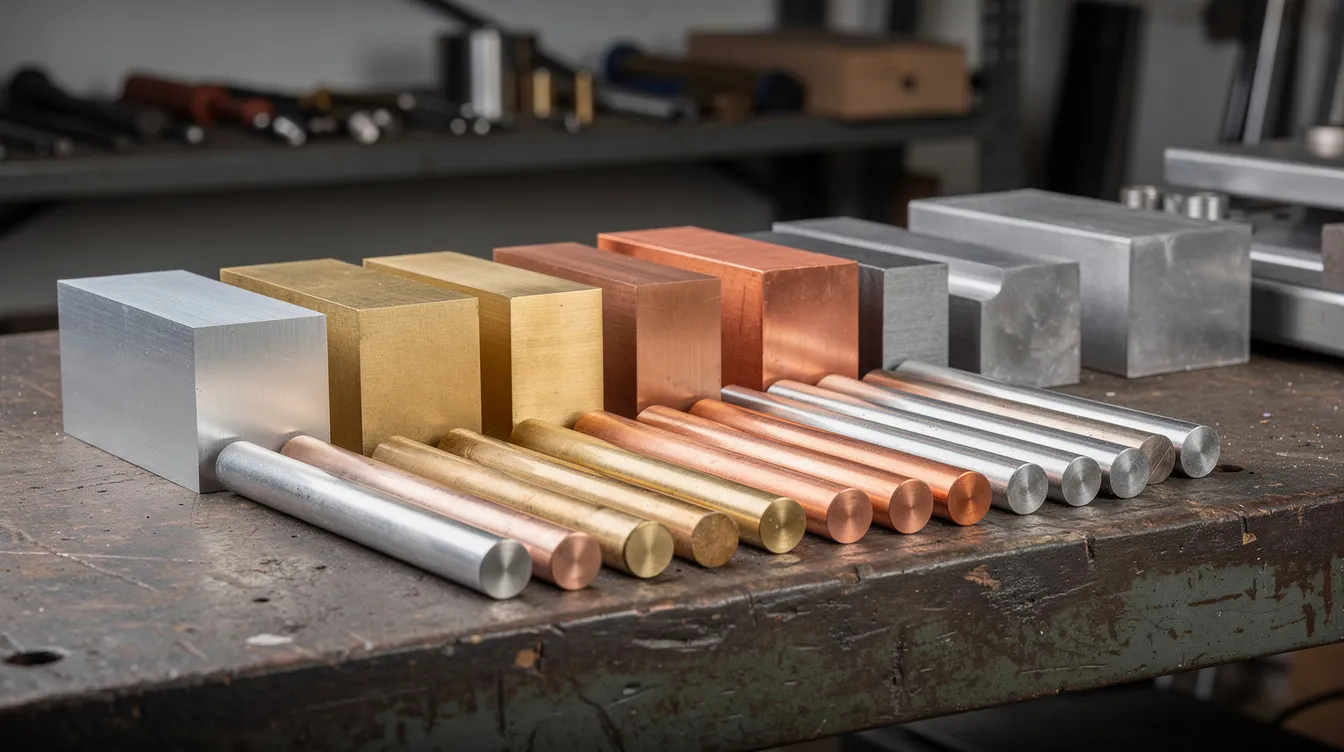
Material selection drives performance, cost, and manufacturability. CNC machines can work with hundreds of different materials, but the following families cover the vast majority of OEM projects. CNC machines can cut wood, plastics, aluminum, steel, and titanium, among several materials suited to different applications.
-
Aluminum Alloys – Aluminum 6061 and 7075 are commonly used CNC materials. 6061-T6 offers excellent machinability, is easy to anodize, and remains in stock at most suppliers. 7075 provides much higher strength but wears tools faster. Anebon’s aluminum CNC services and 7075-T6 machining cover both grades.
-
Stainless Steels – Stainless steel SUS304 is a popular material for CNC machining, alongside 316 and 17-4PH. These are specified for corrosion-resistant parts in food processing, marine, and medical environments.
-
Carbon and Alloy Steels – Grades like 4140 and 1045 serve wear-resistant machine shafts, gears, and tooling. Many require heat treatment; post-treatment grinding may be needed to retain dimensional accuracy. Turned bearing quality steel and bearing quality steel grades are specified for applications like bearings, rollers, and high-load rotating assemblies.
-
Copper, Brass, and Bronze – Used for electrical connectors, bushings, and sliding surfaces. Bronze is valued for its corrosion resistance in marine and industrial settings. Copper’s thermal conductivity makes it ideal for heat sinks.
-
Engineering Plastics – POM (Delrin), PTFE, PEEK, and ABS provide lightweight, non-conductive, or chemically resistant solutions for test fixtures, insulating components, and medical housings. Thermal sensitivity during cutting requires careful speed control.
-
Sheet Metal Materials – Cold-rolled steel, stainless steel sheet, and aluminum sheet from 0.5 mm to 6 mm are used for enclosures, chassis, brackets, and panels. Processes include laser cutting, bending, and CNC punching. Learn more about sheet metal fabrication on our resource pages.
Anebon supports multi-material projects, allowing customers to combine CNC machined and sheet metal parts in a single, integrated assembly.
From Rapid Prototyping to Efficient and Constant Production
The life of a cnc machine product typically moves through three phases: prototype, bridge production, and full-scale manufacturing. CNC machining can create both prototypes and production parts, and CNC machines can produce functional prototypes and production parts on the same equipment.
-
Rapid Prototyping – Anebon’s CNC machining prototype service delivers one-off and small-batch parts, typically within 1–3 machining days for simple aluminum components. Total cycle time from order to parts in hand can be as quick as 4–8 days via air freight. This helps R&D teams validate an idea before committing to tooling.
-
Bridge and Medium Volume Production – Between prototype approval and full tooling (e.g., while injection molds or die casting tools are being developed), CNC machining fills the gap. Small batches of 10–200 pieces typically require 7–15 machining days, with air shipping adding 3–7 days.
-
Constant Production at Scale – For recurring orders of 200–500+ pieces, Anebon achieves efficient and constant production through fixture standardization, tool libraries, and partially automated cells. First production runs take 15–25 days including first article inspection; repeat batches are faster. CNC machining can produce over 1 million parts per year when capacity is allocated for high-volume programs.
-
DFM Feedback – Before locking the design, Anebon’s engineering team provides Design for Manufacturability advice to simplify geometries, choose optimal tolerances, and reduce cycle time. This effort to ensure efficient production upfront often saves 15–30% on unit cost.
-
Combined Processes – Sheet metal fabrication and CNC machining are often combined for a complete product set: a machined heat sink paired with a sheet metal housing and machined mounting brackets, for example.
CNC Machining Processes and Surface Finishes
“CNC machining” is not a single operation but a group of processes. CNC machining services include turning, milling, and broaching, each suited to different geometries.
-
CNC Milling – Removes material with rotating cutters on 3 to 5 axes. Best for pockets, slots, flat surfaces, and complex 3D contours.
-
CNC Turning – Rotates the workpiece against a stationary tool. Ideal for cylindrical parts: shafts, pins, bushings.
-
Secondary Operations – Drilling, tapping, boring, reaming, and broaching create precision holes, threads, keyways, and fits.
Common surface treatments include:
-
As-machined (Ra ~1.6 µm default roughness)
-
Bead blasting for uniform matte texture
-
Polishing and brushing for luster
-
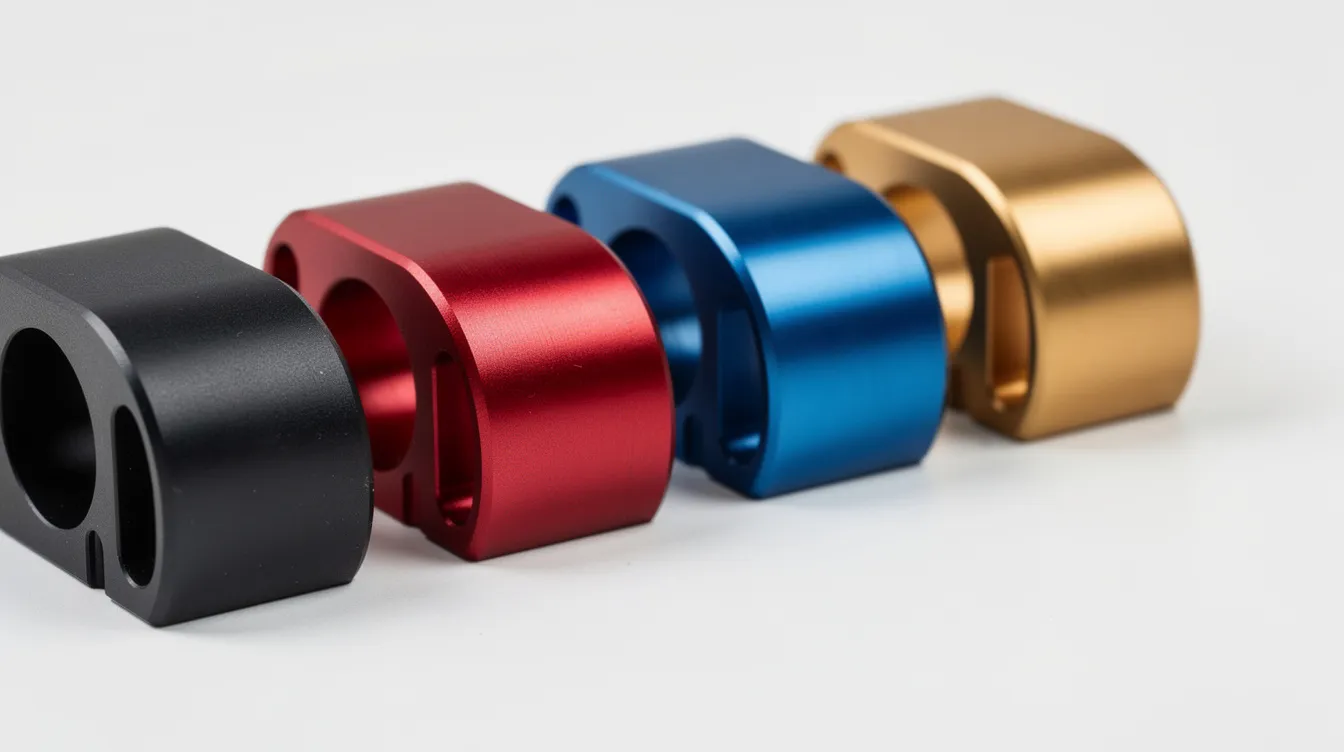
Anodizing (clear, colored, or hard) – black anodized aluminum is standard for consumer electronics housings
-
Powder coating and electroplating (zinc, nickel, chrome)
-
Passivation for stainless steel medical components
Anebon can meet tight dimensional tolerances as precise as ±0.002 mm on critical features and specified surface roughness down to Ra 0.8 µm or better for high-precision parts. Standard non-critical tolerances are ±0.1–0.13 mm, while precision features are held to ±0.01–0.03 mm.
Quality Assurance, Certifications, and Data Security
Quality is not a department – it is a system embedded at every stage of production.
-
Certifications – Anebon holds ISO 9001:2015 for quality management and ISO 14001:2015 for environmental management. These certifications matter because they provide overseas OEMs with auditable evidence of controlled processes, documented procedures, and continuous improvement.
-
Inspection Methods – Incoming material inspection, in-process dimensional checks, and final inspection using CMMs, optical measurement, plug gauges, and surface profilometers. First Article Inspection (FAI) and PPAP documentation are provided when requested.
-
Traceability – Material certificates (e.g., EN 10204 3.1), batch labels, and documented process parameters ensure full traceability for critical parts. This is expected by customers in aerospace, medical devices, and automotive Tier-1/Tier-2 supply chains.
-
Data Security – Customer CAD models and drawings are treated as confidential. Files are stored on secure internal systems with controlled access. Communication channels are managed to protect intellectual property throughout the project.
-
Industry Alignment – Quality and documentation practices are aligned with the demands of regulated industries, giving customers trust that their parts will meet specification on the first shipment.
Sheet Metal CNC Products and Integrated Assemblies
Many cnc machine products are not solid machined blocks. Thin-walled sheet metal assemblies and hybrid components make up a significant share of what OEMs order.
-
Typical Sheet Metal Parts – Server racks, electronics chassis, control panels, and machine guards produced by laser cutting, punching, and bending. Anebon’s custom precision sheet metal fabrication covers these applications.
-
Hybrid Machining – CNC machining is often used to add tapped holes, counterbores, precision pockets, or alignment features to sheet metal parts that cannot be achieved by bending or punching alone.
-
Full Assembly Example – A medical device housing that combines CNC-machined internal brackets, aluminum sheet covers, and stainless steel fasteners, all delivered assembled, inspected, and ready for integration.
-
Assembled Deliveries – Anebon delivers assembled and tested subassemblies, not only individual components, when required by OEM customers. This reduces handling, simplifies procurement, and limits the risk of errors during final integration.
Choosing a CNC Manufacturing Partner: Why Anebon
Selecting a manufacturing partner is about more than price. Here is what to evaluate – and how Anebon stacks up.
-
Machine Capacity – A mixed fleet of 3-axis, 4-axis, and 5-axis mills, CNC turning centers, wire EDM, and sheet metal lines. Competitors vary widely: JLCCNC, for instance, operates over 1,000 CNC machines in a 40,000+ sqm factory, but scale alone does not guarantee the unmatched attention to detail that smaller, dedicated teams provide.
-
Engineering Support – An in-house team delivers DFM advice on CNC machining, die casting, and sheet metal, reducing cost and risk before production starts.
-
Material and Process Range – Several materials, surface finishes, and secondary processes handled under one roof. Anebon provides services across the full spectrum from prototyping through medium volume production to long-term supply programs.
-
Communication – English-speaking project managers, clear quotation breakdowns, and responsive phone and email support. Forging long lasting relationships with overseas OEMs requires more than competitive rates; it demands dedication, transparency, and long lasting relationships built on results.
-
Export Experience – Since 2010, Anebon has been serving customers in Europe, North America, and Asia-Pacific, handling Incoterms, export packaging, and customs documentation. Employees across engineering and logistics work together to ensure efficient order flow.
-
Freedom to Scale – Whether you need a single prototype or a multi-year production program, Anebon acts as a single source and first choice partner across the full product lifecycle.
Ready to move from idea to finished part? Send your 2D drawings and 3D CAD files (STEP, IGES, or native formats) for a free, confidential quotation. Pictures of existing parts or samples can also be used as a starting point for reverse engineering. Reach out to Anebon’s team to get a quick response – typically within 1–3 business days.
FAQs About CNC Machine Products
What are the minimum and maximum order quantities? Anebon accepts single prototypes (MOQ of 1) through production batches of thousands of pieces. Pricing per unit decreases as quantity increases due to amortized setup cost. Orders for sale often start becoming cost-efficient around 10–50 pieces.
What machining tolerances are available? Standard tolerances for non-critical features are ±0.1–0.13 mm. For critical dimensions, ±0.01–0.03 mm is typical. Extreme tolerances as tight as ±0.005 mm or even ±0.002 mm are achievable with rigorous process control, though this impacts cost.
How long does delivery take? Prototype parts in simple aluminum: 4–8 days total via air. Small batches: 10–17 days. Production runs: 15–25 days machining plus shipping. Material availability, complexity, and finishing (e.g., hard anodizing, powder coating) influence the final delivery date.
Can you work from a sample part instead of a CAD file? Yes. Anebon can reverse-engineer existing parts using CMM measurement and scanning, then generate CAD models for your approval before machining.
Can CNC machining be combined with die casting? Absolutely. For higher-volume production, Anebon’s die casting services produce near-net-shape blanks that are then CNC machined to final tolerances. This combination is a fantastic way to reduce material waste and per-part cost while retaining precision on critical features. The amazing variety of processes under one roof – from rapid prototyping to class-leading production – makes Anebon a leader in the business of supporting OEM product development from imagination to reality.
Whether you work in automotive, aerospace, medical, or any of the industries that rely on precision metal and plastic parts, Anebon is capable of turning your concept into a production-ready reality. Our training programs keep machinists sharp, our security protocols protect your IP, and our dedication to quality keeps customers coming back. The articles on our blog provide further reading, but the fastest path forward is to send us your files and start a conversation.