Top CNC Aluminum Service for Precision Parts and Quality Assurance
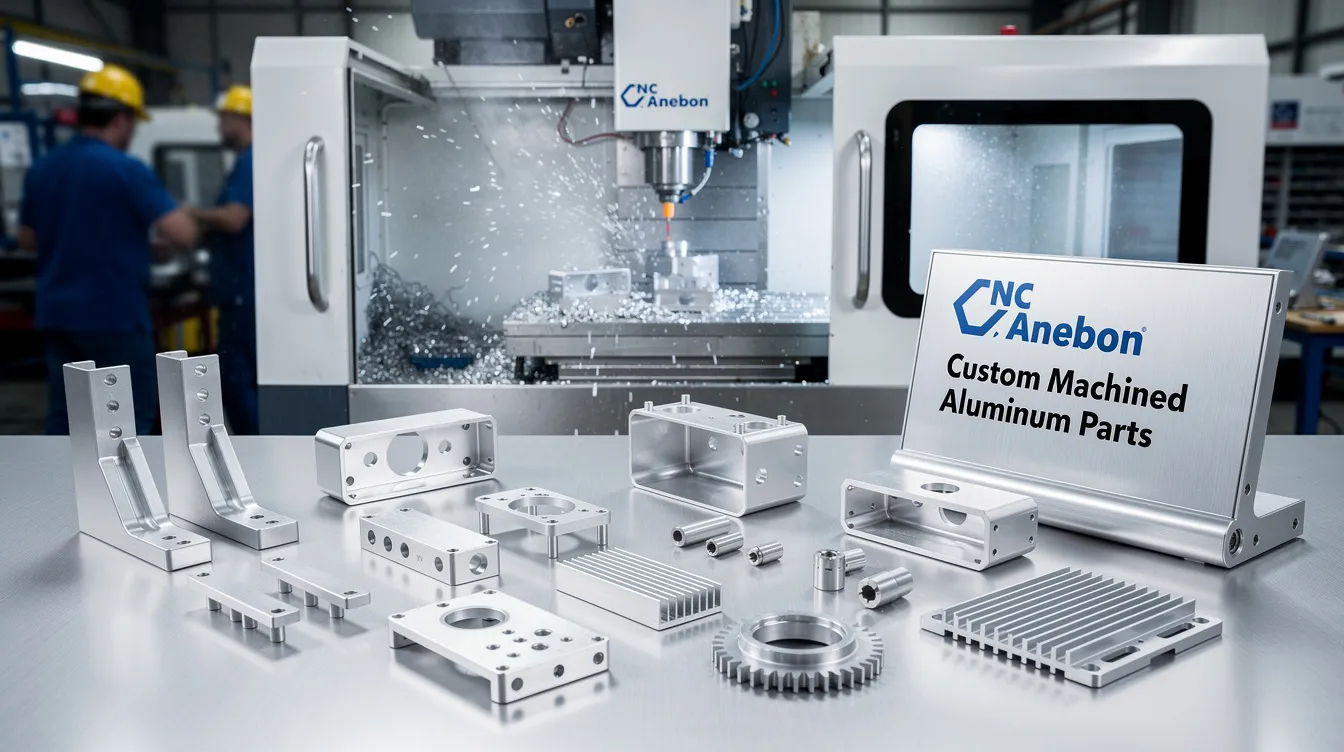
CNC Aluminum Service: Custom Machined Aluminum Parts from Anebon
Aluminum remains one of the most requested materials in precision manufacturing, and for good reason. This guide covers how Anebon delivers end-to-end cnc aluminum service – from alloy selection and machining capabilities to surface finishes, quality assurance, and quoting – so you can make informed decisions on your next project.
Overview of Our CNC Aluminum Machining Services
Anebon Metal Products Limited is a China-based precision manufacturer founded in 2010 in Dongguan, Guangdong. We hold ISO 9001:2015 and ISO 14001:2015 certifications and specialize in cnc machining of aluminum for overseas OEM clients. Our facility runs as a full cnc machining service, handling everything from single-piece rapid prototyping to full-scale production of cnc machined aluminum parts.
We use computer numerical control equipment across our aluminum machining services, covering the complete manufacturing process from raw billet to inspected, finished metal parts. Whether you need custom parts for a validation build or thousands of production parts for serial delivery, our shop is set up to scale.
Here’s what defines our capability:
-
Tolerances: We hold tolerances as tight as ±0.002 mm on critical features under controlled conditions. CNC machining can achieve tolerances as tight as ±0.0001 inches for ultra-precision work. Standard tolerances for non-critical dimensions follow ±0.005″ (±0.127 mm) unless your drawing calls for tighter specs.
-
Milling equipment: 3-axis, 4-axis, and 5-axis CNC milling machines capable of complex 3D surfaces, deep pockets, and thin-wall features.
-
Turning equipment: CNC turning centers with live tooling for combined rotational and prismatic features.
-
Auxiliary processes: wire edm, precision grinding, EDM sinker, and manual or automated deburring.
-
Volume range: Prototype runs of 1–50 pieces, pilot batches, and production batches of hundreds to tens of thousands.
-
Materials beyond aluminum: We also machine carbon steel, stainless steel, titanium, plastics, and free machining brass – though aluminum remains our highest-volume material.
-
Complementary services: In addition to cnc machining, we offer sheet metal fabrication and die casting for projects that require multiple manufacturing methods.
Why Choose Aluminum for CNC Machined Parts?
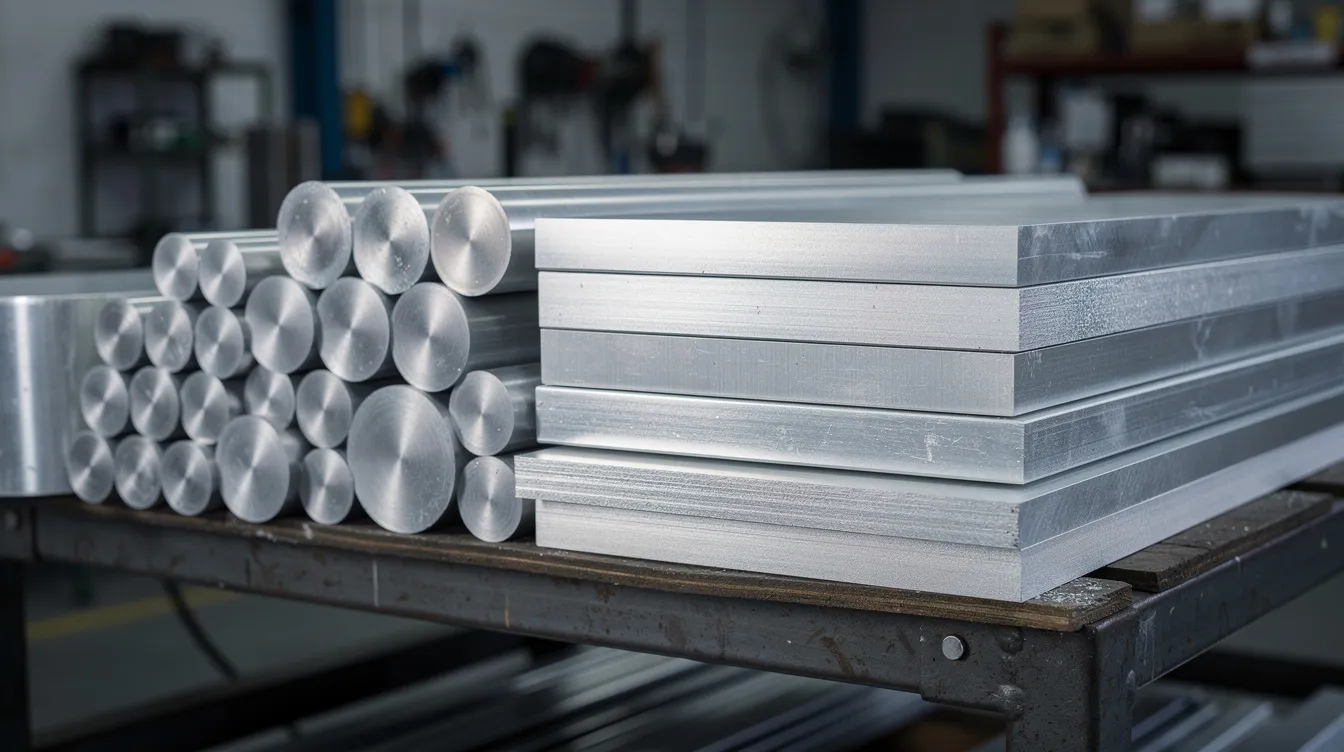
Engineers frequently choose aluminum because it is a versatile material that balances low weight, good mechanical properties, natural corrosion resistance, and competitive cost. Few metals match its combination of machinability and performance across various industries.
Strength-to-weight ratio. Aluminum has an excellent strength-to-weight ratio. With a low density of approximately 2.7 g/cm³ compared to steel’s ~7.85 g/cm³, aluminum delivers roughly one-third the weight at competitive strength levels. High strength alloys like 7075-T6 reach ultimate tensile strength values above 500 MPa, enabling significant weight reduction in aerospace applications, robotics, and automotive parts without sacrificing structural performance.
Thermal and electrical conductivity. Aluminum’s high thermal conductivity makes it a go-to for heat sinks, LED housings, and thermal management assemblies. Its electrical conductivity also suits RF shielding enclosures and electrical applications where signal integrity or grounding matters.
Corrosion resistance. Aluminum naturally forms a thin oxide layer that provides good corrosion resistance in many environments. This can be further enhanced through anodizing, making parts highly resistant to moisture and harsh environments – useful for outdoor electronics, drones, and marine-adjacent equipment.
Recyclability. Aluminum is highly recyclable and retains most of its mechanical properties after reprocessing. This aligns with our ISO 14001:2015 environmental management certification and the sustainability goals of many OEM clients.
Machinability. Compared with carbon steel or titanium, aluminum machines faster, produces cleaner chips, and extends cutting tools life – all of which lower per-part cost.
Common Aluminum Alloys We Machine
We commonly machine aluminum 6061 and aluminum 7075, but also work with other aluminum alloys depending on your project’s strength, corrosion, and finish requirements. Aluminum alloys like 6061 and 7075 are popular for CNC machining because they cover the widest range of applications, though alloy selection should always match the functional demands of the part.
Aluminum 6061 is a general-purpose alloy with excellent machinability, good corrosion resistance, and reliable weldability. In T6 temper (heat treated), it reaches an ultimate tensile strength of roughly 310 MPa. It’s commonly used for brackets, fixtures, chassis, and machine frames where balanced performance matters. Its main alloying element is magnesium with silicon, giving it good formability and anodizing response.
Aluminum 7075 is a high strength alloy with a tensile strength of 503 MPa and good fatigue resistance, making it the standard choice for aerospace and defense applications, performance automotive parts, drone arms, and sporting goods. It is typically heat treated to T6 or T651 temper. The tradeoff is lower weldability and reduced corrosion resistance compared to 6061, so protective finishes are usually required.
Aluminum 2024 delivers high fatigue strength for aircraft structures and high-load structural components. Aluminum 2024-T3 has a tensile strength of 345 MPa. Its copper content is the main alloying element here, which limits corrosion resistance – coatings or cladding are standard practice.
Aluminum 5052/5083 offers excellent corrosion resistance and high formability. Aluminum 5052-H32 is highly corrosion-resistant and not heat-treatable, making it suitable for marine applications, fuel tanks, enclosures, and lightweight structural panels. Its high corrosion resistance makes it corrosion resistant even in salt-spray conditions.
Aluminum 6063 is sometimes called the architectural alloy. It produces an excellent surface finish and anodizes with uniform color, ideal for decorative profiles, visible enclosures, and consumer-facing components. Tensile strength is lower (~200–240 MPa) but sufficient for non-structural parts.
MIC-6 is a precision cast aluminum plate engineered for dimensional stability and flatness. Aluminum MIC-6 is ideal for high-speed machining without distortion, making it the preferred material for CNC fixtures, inspection bases, and metrology equipment. It machines cleanly and holds shape even after aggressive pocket removal.
|
Alloy |
UTS (MPa) |
Key Strengths |
Common Uses |
|---|---|---|---|
|
6061-T6 |
~310 |
Good all-around, weldable |
Brackets, frames, fixtures |
|
7075-T6 |
~503–572 |
Very high strength, fatigue |
Aerospace fittings, drones |
|
2024-T3 |
~345 |
High fatigue strength |
Aircraft skins, load structures |
|
5052-H32 |
~200–290 |
Corrosion resistant, formable |
Marine, fuel tanks, panels |
|
6063-T5 |
~200–240 |
Excellent finish, anodizing |
Decorative profiles, enclosures |
|
MIC-6 |
~165 |
Flat, dimensionally stable |
Jigs, bases, metrology |
Our Aluminum CNC Machining Capabilities
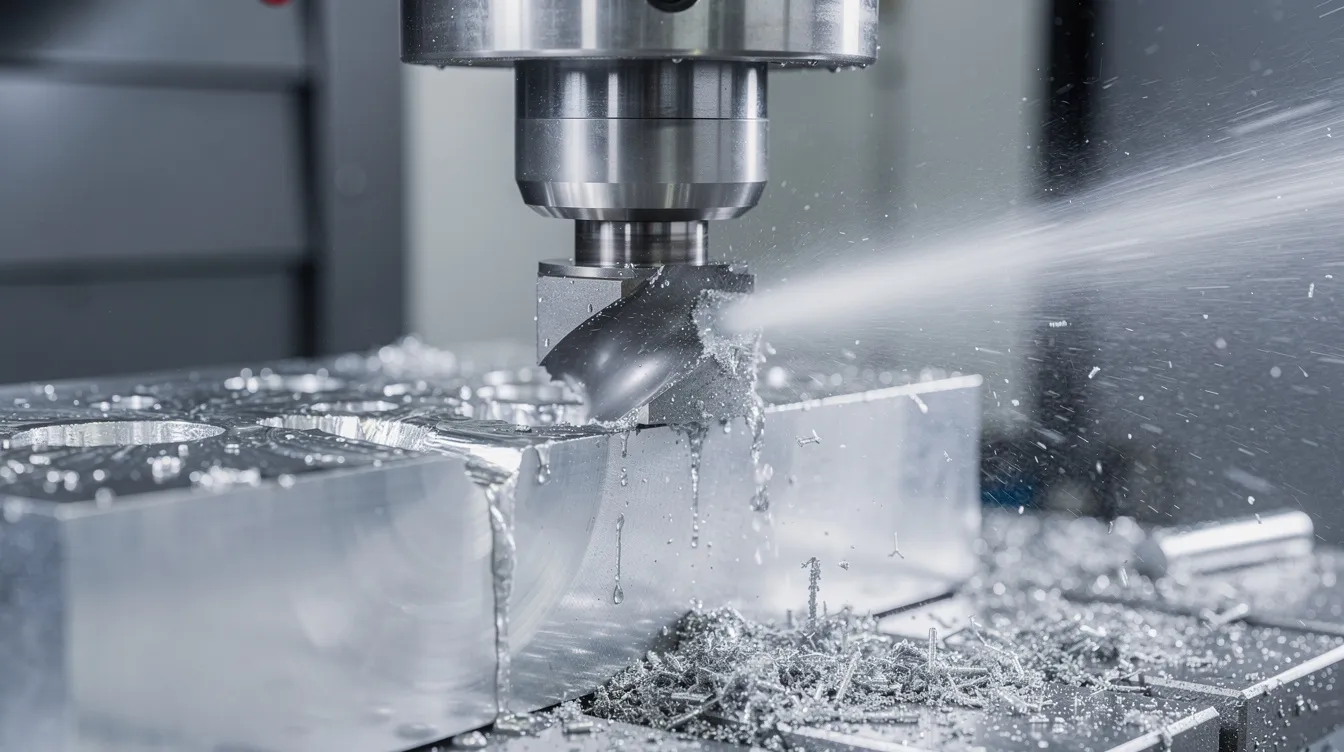
Anebon offers CNC milling, cnc turning, and multi-axis machining focused on aluminum parts with complex geometries and tight tolerances. CNC machining allows for complex geometries and high accuracy across every cnc product we deliver. Our cnc machining processes are built to handle everything from simple prismatic blocks to intricate 3D contoured surfaces.
-
CNC milling is a common aluminum machining process in our shop. We run 3-axis, 4-axis, and 5-axis machines with work envelopes up to approximately 800 × 500 × 500 mm, machining housings, manifolds, structural components, and complex parts requiring multi-face access in a single setup.
-
CNC turning is used to create cylindrical aluminum parts such as shafts, bushings, threaded connectors, and hydraulic fittings. Our turning centers include live tooling for cross-drilling, flats, and off-axis features.
-
Precision levels: Typical general tolerances run ±0.01–0.02 mm for most aluminum features, with tighter specs available after joint review. CNC machining produces parts with excellent mechanical properties because material integrity is preserved through controlled chip removal rather than deformation.
-
Thin walls and fine details: We machine walls down to ~0.8 mm in aluminum alloys such as 6061, using optimized feeds and specialized fixturing to minimize chatter and deflection – a challenge we address through deformation prevention strategies.
-
Prototype to production: We support prototype runs of 1–50 pieces and scale cnc machining orders to thousands of pieces. CNC machining minimizes labor and operating expenses over long production runs thanks to automated tool paths and repeatable setups.
Surface Finishes for CNC Machined Aluminum Parts
Surface finishes on machined aluminum parts serve both functional and aesthetic purposes. Aluminum can achieve remarkably smooth surface finishes after machining, with as machined Ra values typically between 1.6–3.2 µm. Secondary finishing operations then tailor appearance, chemical resistance, wear resistance, and heat resistance to your application.
Here are the surface finishes we offer:
-
As machined: No secondary finishing; Ra ~1.6–3.2 µm. Suitable for internal or non-cosmetic functional surfaces.
-
Bead blasting: Bead blasting creates a matte or textured finish on aluminum, hiding tool marks and producing a uniform satin appearance (Ra ~3.2–6.3 µm). Often used before anodizing or painting.
-
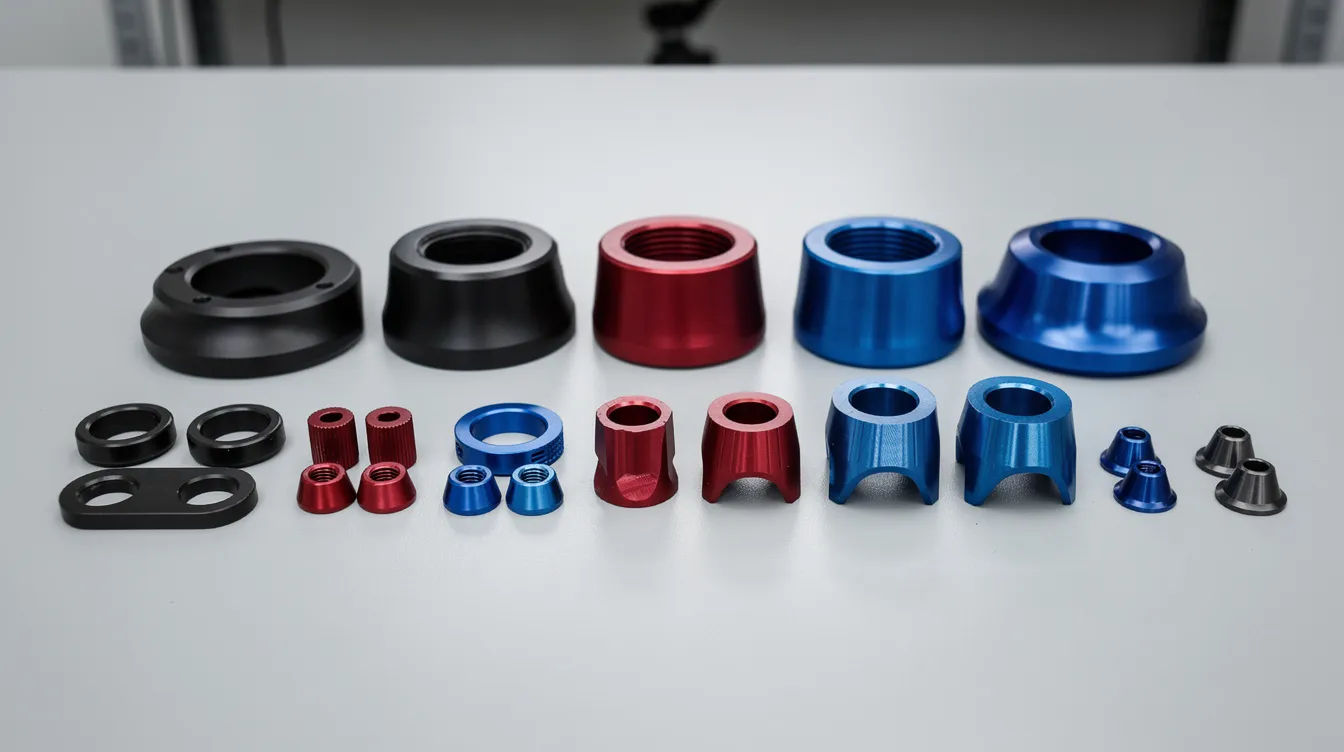
Anodizing (Types II and III): Three types of anodizing are commonly used for aluminum. Type II anodizing builds a 5–15 µm oxide layer, enabling colored finishes (black, clear, red, blue) for consumer electronics and sports equipment. Type III hard anodize grows a 25–50 µm layer for enhanced wear resistance on industrial equipment and mechanical wear surfaces. Anodizing improves corrosion resistance and wear resistance across all types, with anodizing types ii being the most common decorative option.
-
Powder coating: Powder coating provides a durable and protective finish with typical thickness of 60–200 µm. Available in a wide range of colors and textures, it suits outdoor components. Some powder coat formulations use epoxy resin bases for enhanced adhesion and chemical resistance.
-
Electroless nickel plating: Electroless nickel plating deposits a uniform nickel layer for hardness, wear, and conductivity. Nickel plating requires careful pre-treatment on aluminum but works well for functional or EMI-shielding surfaces.
-
Chemical conversion coating enhances corrosion resistance of aluminum and provides a base for paint adhesion, often specified as a chromate or non-chromate conversion per MIL-DTL-5541.
-
Polishing and brushing: For decorative cnc machined parts – visible panels, knobs, handles – we offer mirror polishing (Ra < 0.4 µm) or linear brushing.
|
Finish Type |
Typical Thickness |
Appearance |
Common Applications |
|---|---|---|---|
|
As machined |
N/A |
Smooth, tool marks visible |
Internal, non-cosmetic |
|
Bead blasted |
N/A |
Uniform matte |
Pre-anodize prep, cosmetic |
|
Type II anodize |
5–15 µm |
Colored, semi-gloss |
Electronics, consumer products |
|
Type III anodize |
25–50 µm |
Dark, hard |
Wear surfaces, industrial equipment |
|
Powder coat |
60–200 µm |
Colored, matte or gloss |
Outdoor, enclosures |
|
Electroless nickel |
5–25 µm |
Metallic, uniform |
EMI shielding, wear |
Certain finishes affect dimensional tolerances – anodize grows partly inward, powder coat adds significant thickness. Specify surface treatment requirements at the quotation stage so we can account for buildup on critical features.
Design Tips for CNC Machined Aluminum Parts
Good DFM (Design for Manufacturability) practice directly reduces cost and lead time for aluminum cnc machining. Here are practical guidelines based on what we see in our shop every day:
-
Wall thickness: Keep minimum walls at 0.8–1.5 mm for most aluminum parts. Thinner walls are possible but increase risk of vibration and chatter, especially in high strength alloys like 7075.
-
Tolerances on non-critical features: Avoid specifying ±0.02 mm where ±0.2 mm would work. Tightening tolerance on a non-functional bore, for instance, can double machining time and rejection rate – with zero functional benefit.
-
Inside corners and fillets: Internal corner radius should match or exceed your cutter radius (typically ≥R1.0 mm for standard endmills). Sharp inside corners require slower operations or secondary processes, increasing cost.
-
Deep pockets and undercuts: Consider tool access and clamping when designing deep features. If a pocket depth exceeds 4× width, special tooling and reduced feeds may be needed. We provide DFM feedback before production to flag these issues early.
-
Critical surfaces and datums: Clearly identify functional mating surfaces, inspection datums, and surface roughness requirements on your 2D drawings or 3D model annotations. This ensures our quality team focuses inspection on the areas that matter.
-
Cutting tools access: Ensure that all features can be reached by standard cutting tools from practical orientations. 5-axis machining helps, but designing with tool access in mind still saves cost.
Industries & Applications for CNC Aluminum Service
Anebon supplies cnc machined aluminum parts to overseas OEMs across multiple high-precision sectors. Aluminum is widely used in aerospace, automotive, and medical industries, and our shop supports all of them.
-
Aerospace: Lightweight brackets, actuator housings, and structural components in aluminum 7075 and 2024 for aerospace applications and aircraft structures. Good fatigue resistance and high strength drive alloy selection here.
-
Automotive & EV: Motor mounts, battery tray components, heat spreaders, and automotive parts in 6061 for weight reduction and thermal management.
-
Medical devices: Instrument housings, surgical instruments, and fixture bodies requiring smooth finishes and tight tolerances. CNC machined aluminum parts for medical devices typically undergo anodizing or passivation.
-
Industrial automation & robotics: End effectors, structural arms, and bearing housings where low weight and stiffness matter. Aluminum 6061 is common for industrial equipment brackets.
-
Electronics: Heat sinks leveraging high thermal conductivity, RF enclosures, and LED housings for electrical applications.
-
Marine: Enclosures and hardware in 5052/5083 with excellent corrosion resistance for marine applications and harsh environments.
We also support R&D departments and startups with rapid prototypes and engineering validation builds – often the first step before scaling to production parts.
Quality Assurance and Tolerances in Aluminum CNC Machining
Our ISO 9001:2015 quality system governs every cnc machining order for aluminum, from incoming material verification through final inspection and packaging.
-
Measurement equipment: CMM (coordinate measuring machine), height gauges, micrometers, calipers, and profilometers for surface roughness verification on cnc parts.
-
Standard tolerance policy: When drawings don’t specify otherwise, we apply ISO 2768-m (medium) general tolerances. Customers can request tighter tolerances on key dimensions – we’ll confirm feasibility during DFM review.
-
Surface roughness: As machined surfaces on aluminum typically measure Ra 1.6–3.2 µm. Fine machining or grinding can reduce this to 0.8 µm or lower.
-
Material traceability: Every order includes raw material traceability (mill certificates). FAI reports, full dimensional inspection reports, and certificates of conformance are available on request.
-
Packaging: Machined aluminum parts are packed with protective films and cushioning to prevent scratches or dents – especially important for anodized or decorative finishes shipped internationally.
These controls matter most for OEM clients in regulated sectors like medical and aerospace, where every cnc product must be traceable and verifiable.
How Our CNC Aluminum Service Process Works
Our workflow is designed to be straightforward for overseas OEM clients, from first contact to delivery.
-
RFQ submission: Upload your cad file (STEP, IGES, Parasolid, or SolidWorks format) along with 2D drawings showing tolerances and finish requirements.
-
DFM review: Our engineering team reviews your design and provides feedback on manufacturability, suggesting changes that save cost or improve quality.
-
Quotation: You receive a detailed quote with pricing, lead time, and material/finish confirmation.
-
Order confirmation and programming: We confirm material procurement, create CNC programs, and design fixtures.
-
Machining and finishing: Parts are machined, deburred, and sent to finishing (anodizing, powder coating, etc.) as specified.
-
Inspection: Dimensional and surface inspections per your requirements.
-
Shipping: Parts are protectively packaged and shipped internationally. We support NDAs and secure handling of all customer files.
Typical lead times for aluminum prototypes run 5–10 working days depending on complexity. Production runs are quoted case-by-case. A dedicated project engineer serves as your single point of contact, providing progress updates on larger cnc machining orders.
Getting a Quote for CNC Aluminum Machining with Anebon
Ready to move forward on your aluminum machining project? Here’s what to prepare:
-
3D CAD files and 2D drawings with tolerance callouts
-
Material specification (e.g., aluminum 6061, 7075, 5052)
-
Surface finish requirements and any color preferences
-
Quantity (prototype vs. production) and target delivery date
We offer pricing for different volumes and can suggest cost-saving design or material alternatives for your aluminum parts. Our online cnc machining quoting process makes it easy to get started – simply send your files to our team.
Anebon is built to be a long-term manufacturing partner for overseas OEMs seeking consistent quality, reliable lead times, and competitive pricing on machined aluminum parts. Whether you need a handful of cnc parts or thousands of production parts across various industries, our machining services are ready to deliver.
Send us your files today to receive a detailed CNC aluminum machining quote and start your project with Anebon.