Top Chinese Sheet Metal Fabricators for Small Quantities You Can Trust
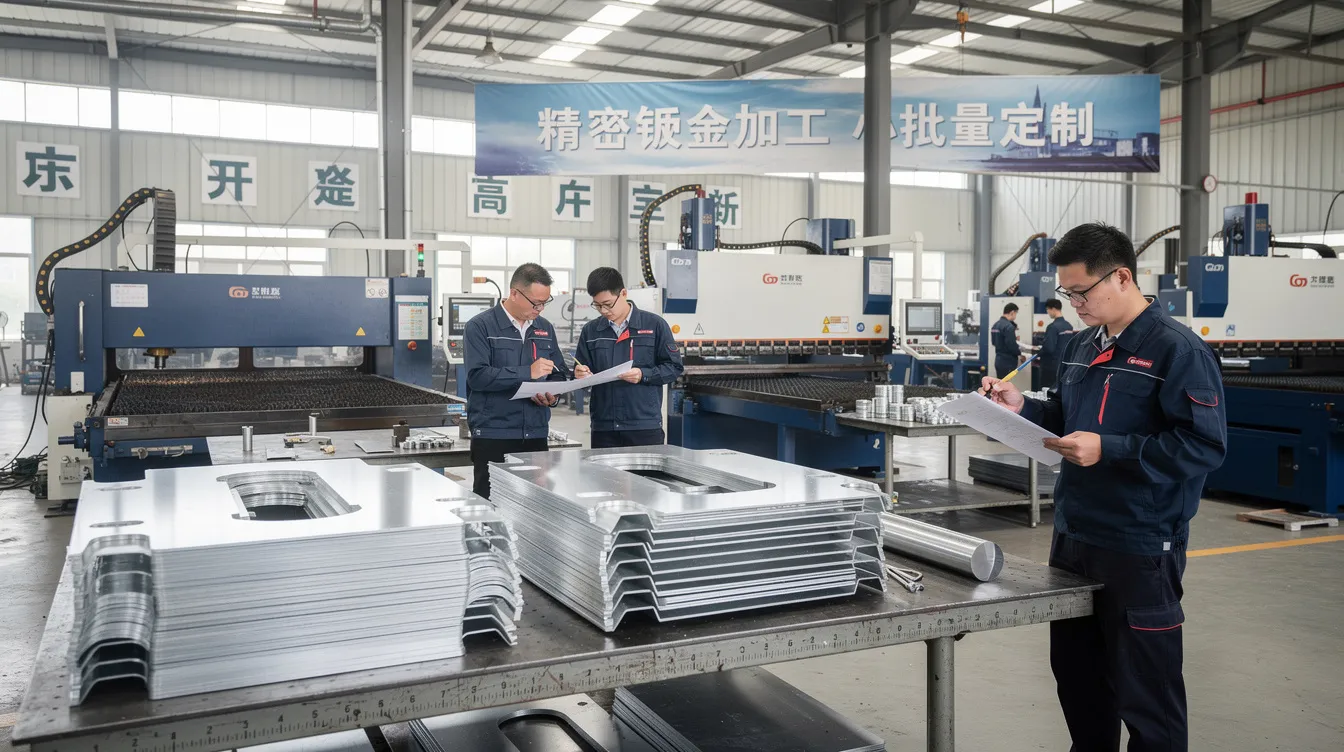
Chinese Sheet Metal Fabricators for Small Quantities
If you need 50 aluminum enclosures for a pilot build or 10 stainless steel brackets for a test rig, you might assume China is only for orders in the tens of thousands. That assumption is outdated. This guide covers everything overseas engineers and purchasing teams need to know about sourcing small-quantity sheet metal from Chinese fabricators, from realistic MOQs and lead times to quality systems, surface finishes, and total landed cost.
Quick Answer: Can You Get Small-Quantity Sheet Metal Parts from China?
Yes. Chinese sheet metal fabricators routinely accept orders ranging from a single prototype to 500 pieces. Thanks to widespread adoption of cnc machining, laser cutting, and cnc bending, China is no longer reserved for mass production. Shops across Guangdong and other manufacturing regions now handle rapid prototyping and bridge production runs with the same equipment used for larger batches.
Here is what to expect in terms of order size and timing:
-
Prototypes / engineering samples: 1–10 pieces, often with no formal MOQ.
-
Pilot runs: 20–200 pieces for design validation and field testing.
-
Early market batches: 200–500 pieces before committing to high volume production.
-
Lead times: 5–12 working days for simple formed parts; 10–20 working days for complex assemblies involving welding, machining, and finishing.
Rapid prototyping services can support low or no minimum order quantities, and quick turnaround times are critical at this stage. As one practical example, Anebon Metal Products Limited-founded in 2010 in Dongguan and certified to ISO 9001:2015 and ISO 14001:2015-supports custom sheet metal parts from single functional parts through production runs of thousands.
Why Source Small-Batch Sheet Metal from China?
China dominates global sheet metal fabrication due to deep expertise, dense supply chains, and a well-developed metal processing industry chain. Even at quantities as low as 20–50 pieces, automation equipment such as fiber lasers, CNC press brakes, and robotic welding cells keeps per-part costs competitive.
A well-structured manufacturing supply chain often utilizes integrated services from design to surface finishing, and the Guangdong region (Dongguan, Shenzhen, Guangzhou) concentrates raw material suppliers, tooling shops, and finishing partners within a short radius. This density translates into real advantages:
-
Cost: Lower labor and material costs compared to North America or Europe, even for small lots.
-
Speed: Many shops quote within 12–48 hours and deliver prototypes in under two weeks.
-
Flexibility: Fabricators accustomed to overseas R&D teams handle iterative design changes without penalizing the customer.
-
Access to advanced processes: Sheet metal fabrication services including advanced sheet metal fabrication techniques like 5-axis machining, precision cnc machining, and multi-process assembly are available under one roof.
-
Materials: Aluminum, stainless steel, galvanized steel, and carbon steel are widely stocked, with surface treatment options like powder coating, anodizing, and chrome plating readily accessible nearby.
What Counts as “Small Quantity” in Chinese Sheet Metal Fabrication?
For most chinese manufacturer shops focused on china sheet metal fabrication, “small quantity” means anything from 1 to roughly 500 pieces. The sub-bands look like this:
|
Order Type |
Typical Quantity |
Example |
|---|---|---|
|
Prototypes |
1–10 pcs |
5 pcs 304 stainless steel sensor housings |
|
Pilot runs |
20–200 pcs |
80 pcs 6061 aluminum housings for a medical device trial |
|
Early market tests |
200–500 pcs |
300 pcs galvanized steel enclosures for IoT deployment |
Pricing models shift across these ranges. At very low quantities, setup fees (nesting, machine programming, fixture creation) dominate the per-piece cost. Once you cross roughly 50 pieces for simple laser-cut and bent parts, setup amortizes and unit costs drop meaningfully. When stamping dies or progressive tooling would be needed for higher volumes, small batches rely instead on flexible processes like laser cutting and cnc bending, which require no hard tooling investment.
Anebon keeps the same process flow from 1 piece through bridge production and beyond, so designs refined in small batches transfer seamlessly when scaling to larger quantities.
Overview of Custom Sheet Metal Fabrication Processes Used for Low Volumes
Small-batch custom sheet metal fabrication relies on flexible, low-tool-cost processes rather than dedicated stamping dies. Sheet metal fabrication combines cutting, bending, and welding processes, and the five common sheet metal operations are cutting, bending, punching, stamping, and welding.
Key operations used for low volumes include:
-
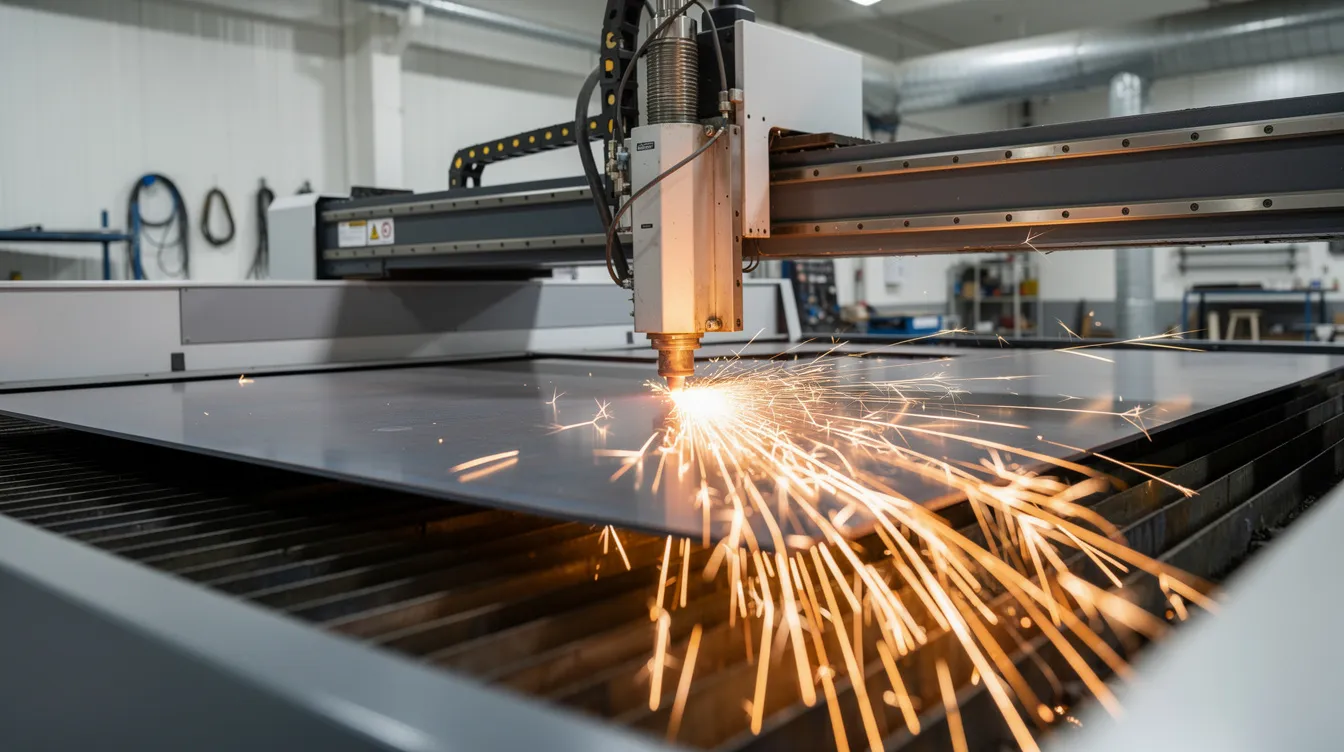
Laser cutting: Advanced technologies like laser cutting deliver precise, intricate profiles with minimal setup. Ideal for complex parts and prototypes.
-
CNC punching: Efficient for repeated standard holes or slots across flat metal sheets.
-
CNC bending / press brake: CNC bending machines can handle complex sheet metal shapes with programmable back-gauges and ±0.2 mm repeatability.
-
Welding: Spot, MIG, and TIG welding is essential for joining metal parts in fabrication and building complex assemblies.
-
Hardware insertion: PEM nuts, rivets, and studs installed during assembly.
-
Light cnc machining: For critical interface surfaces, flatness, or threaded features.
-
Finishing: Deburring, bead blasting, and surface finishing processes.
Material thickness ranges commonly handled in low quantities span 0.5 mm to 6.0 mm for aluminum stainless steel and carbon steel. Below 0.5 mm is foil territory; above 6 mm transitions into plate work. Stamping is a key process in sheet metal fabrication but typically reserved for higher volumes where die investment is justified.
Anebon integrates these processes-including sheet metal precision parts production-under one roof to minimize lead time for small orders.
Key Capabilities to Look For in Chinese Sheet Metal Fabricators for Small Quantities
Not every metal shop in China is optimized for prototypes or low volumes. Buyers must screen capabilities carefully. The market includes specialized players such as KDM Fabrication, which specializes in precision sheet metal fabrication, Ruixi Technology known for high precision custom sheet metal parts, and TUOFA Precision with over 15 years of experience in metal fabrication. When evaluating any supplier, check the following:
-
Export experience: Has the shop served European or North American OEMs since at least 2015? Familiarity with export documentation, packaging, and compliance matters.
-
Engineering support: English-speaking engineers who can review 3D CAD files (STEP, IGES, Parasolid) and 2D drawings, providing DFM feedback within 24–48 hours.
-
Process capability: Fiber laser cutting up to at least 6 mm steel; cnc bending with ±0.2 mm repeatability; cnc machining services with tolerances down to ±0.01 mm for critical features.
-
Flexible tooling: Quick-changeover fixtures and programmable equipment that keep setup time low for small lots.
-
Digital quoting: Digital quoting is essential for low-volume manufacturing and prototyping. Look for shops offering online RFQ submission and rapid turnaround.
-
Quality system: ISO 9001:2015 at minimum, with documented inspection protocols and measurement capability.
Precision sheet metal fabrication can achieve tolerances as tight as ±0.002 mm, and Anebon reaches this level on CNC-machined features within high precision machining parts, making it relevant for sheet metal assemblies requiring machined interfaces.
Materials and Thicknesses Commonly Used in Small-Batch Sheet Metal Work
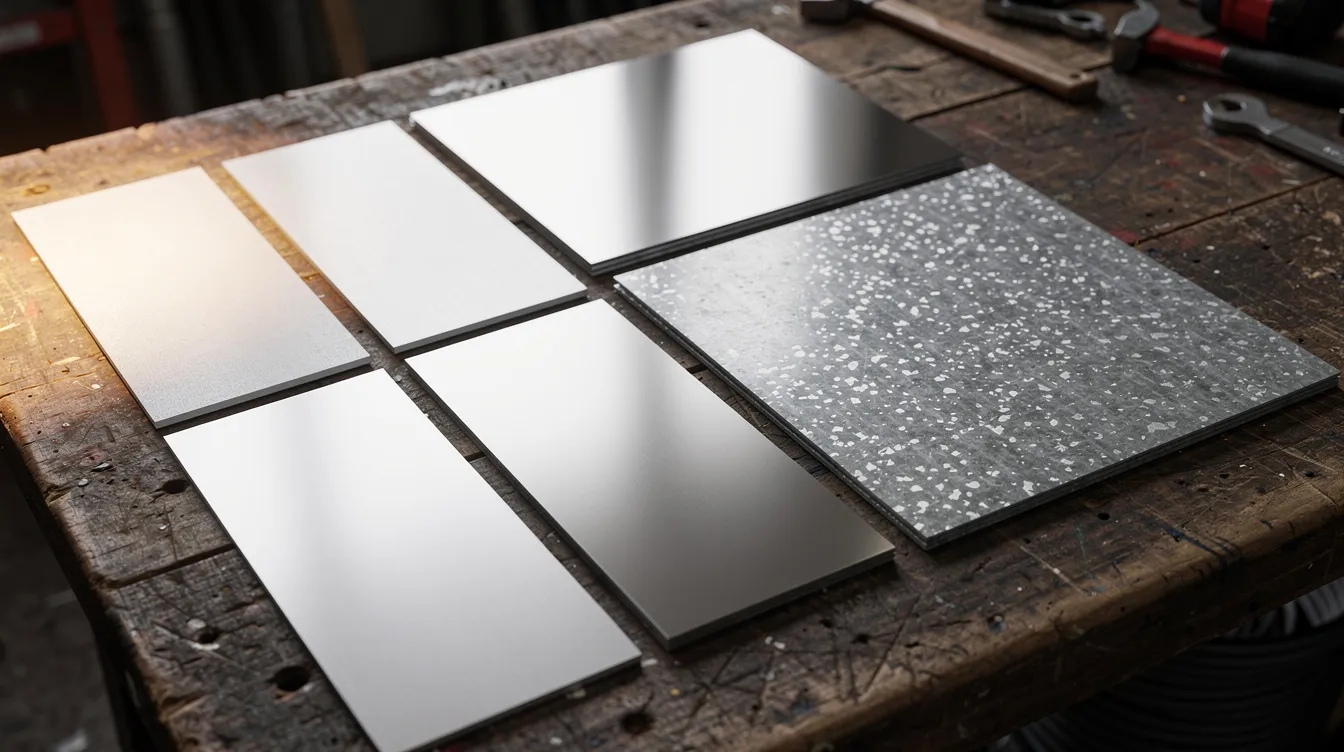
Chinese fabricators source a wide range of sheet metal materials in small lots thanks to strong local supply chains. Common materials for sheet metal fabrication include aluminum and stainless steel, but the range extends well beyond those two.
-
Aluminum (5052, 6061-T6): Aluminum is lightweight, ideal for aerospace and automotive work. Used for electronics enclosures, heat sinks, and structural components. Anodizing provides corrosion resistance and cosmetic appeal.
-
Stainless steel (304, 316): Stainless steel offers corrosion resistance for moisture-exposed applications. Common in medical devices, food equipment, and marine hardware. Passivation enhances durability.
-
Cold-rolled / carbon steel: Carbon steel is strong and affordable for structural components, brackets, and frames. Typically powder coated or plated for protection.
-
Galvanized steel: Galvanized steel has a protective zinc coating for outdoor use, making it a cost-effective choice for exterior enclosures and industrial parts.
-
Specialty metals: Some fabricators-including firms like KDM-use materials like brass, copper, and magnesium for fabrication in specific applications.
Sheet metal materials can withstand high heat and corrosion when the right grade and finish are specified. Gauge ranges from 0.5 mm (thin panels, consumer electronics covers) through 3–6 mm (brackets, heavy equipment components), with minimum bend radii increasing for thicker or harder materials.
From CAD to Parts: Typical Workflow with a Chinese Small-Quantity Fabricator
The standard workflow for overseas OEM clients engaging a chinese manufacturer for custom metal parts follows a clear sequence:
-
RFQ submission: Upload 3D cad files (STEP, STP, IGS) and 2D drawings (DXF, DWG) with material, thickness, tolerances, surface finishes, and target quantities.
-
DFM feedback: The fabricator reviews for manufacturability-flagging bend radii, hole-to-edge distances, weld access, and distortion risks. Usually returned within 24–72 hours.
-
Quotation: Itemized pricing covering material, labor, process steps, finishing, and any NRE/setup charges.
-
Prototype / sample run: Build 1–10 pieces for customer validation. Design for manufacturing feedback is valuable for optimizing production processes at this stage.
-
Customer validation: Check fit, function, and finish. Iterate if needed.
-
Small-batch build: 20–200+ pieces with consistent process and quality control.
-
Optional scale-up: Transition to mass production with stamping dies or automated fixtures if volumes justify it.
Design files must include tolerances (GD&T preferred), surface finish callouts, critical dimensions, and complete material specifications. Anebon provides DFM advice on bending reliefs, hardware selection, and welding sequences before cutting metal, helping overseas teams avoid redesigns after an initial failed batch.
Lead Times and Cost Structure for Low-Volume Sheet Metal Orders
Expect the following lead times from drawing approval for small runs from Chinese fabricators in 2024–2026:
-
Simple parts (flat blanks, 1–2 bends): 5–10 working days.
-
Complex assemblies (multi-bend, welding, machining, finishing): 10–20 working days.
The cost structure splits between fixed costs (programming, nesting, fixture setup) and variable costs (material, labor per piece). At 5 pieces, setup cost dominates. At 100+ pieces, variable cost per unit drops significantly.
|
Scenario |
Cost Driver |
Impact |
|---|---|---|
|
20 pcs vs 200 pcs aluminum bracket |
Setup amortization |
Unit cost roughly halves at 200 pcs |
|
Tolerance ±0.1 mm vs ±0.005 mm |
Cycle time, scrap, inspection |
Cost multiplier of 2–5× for tighter specs |
|
Adding powder coating |
Extra process step |
Adds 3–7 working days and per-part finishing fee |
Anebon can often combine cnc machining and sheet metal operations in one facility, reducing logistics overhead and shaving days off the total timeline.
Surface Finishes Available in Small Quantities
Chinese workshops routinely provide surface finishing even for batches as small as 5–10 metal parts, through in-house capability or local partner facilities. Available options include:
-
Powder coating (RAL color matching available)
-
Anodizing (Type II, Type III for aluminum)
-
Chrome plating and zinc plating
-
Brushing and bead blasting
-
Silk-screen printing and laser marking
Minimum batch charges may apply-finish shops often set a floor for color runs or plating loads. Color matching (e.g., RAL 9003, RAL 7016) needs clear specification in the PO. Adding finishing typically extends lead time by 3–7 working days. For outdoor galvanized steel components, specifying salt spray resistance (e.g., 100+ hours) ensures the corrosion resistant properties meet real-world requirements.
For a deeper dive into finish options, Anebon’s guide to surface treatment processes covers the technical details.
Industries That Commonly Use Chinese Small-Quantity Sheet Metal Services
Low-volume sheet metal fabrication is especially relevant for R&D, pilot production, and specialized equipment across different industries:
-
Aerospace: Avionics brackets, interior panels, lightweight fairings. Aluminum is the go-to material.
-
Medical devices: Stainless steel equipment covers, diagnostic instrument housings, mobile carts. Anebon’s medical device CNC machining capability supports these projects with traceability documentation.
-
Automotive & EV: Battery module shields, sensor brackets, test fixtures for design validation.
-
Electronics: Server chassis, 5G equipment housings, rack sub-assemblies for industrial applications.
-
Robotics & industrial machinery: Custom frames, safety guards, motor mounts for one-off builds or short runs in automation equipment deployments.
Regulatory and quality expectations vary-ISO 9001 certification is baseline, while aerospace and medical work may require additional documentation for material traceability and process control.
Comparing Prototyping vs Mass Production Approaches in China
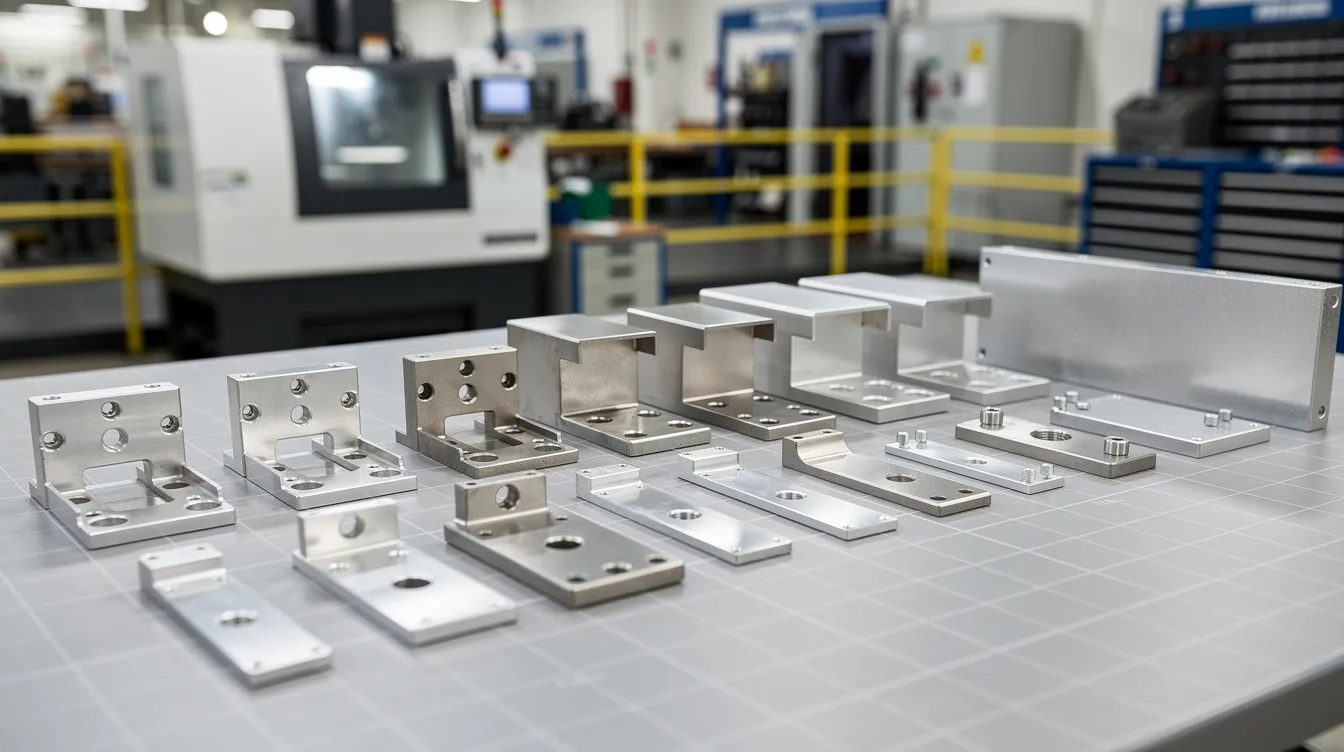
Early-stage builds differ from high volume production in tooling, process stability, and cost structure. Sheet metal prototypes and small batches rely on laser cutting, cnc machining, and soft tooling or no tooling at all, while mass production may introduce metal stamping dies, progressive tools, or automated welding fixtures.
-
Prototypes (1–10 pcs): No hard tooling. Laser-cut profiles, manual or CNC bends, hand-welded joints. High per-piece cost but zero tooling investment.
-
Pilot (20–200 pcs): Reusable fixtures, optimized nesting, documented process sheets. Cost drops; quality consistency improves.
-
Production (500+ pcs): Metal stamping parts and precision sheet metal stamping parts become viable. Sheet metal stamping and progressive dies lower unit cost but require upfront investment.
A well-chosen fabricator plans for scalability-designing bends and joints so they can later move to high-speed presses without major redesign. Anebon supports the full lifecycle from rapid prototyping (1–10 pcs) to thousands of functional parts per month with the same engineering team. Ask for a “scaling plan” during quotation if you anticipate ramping after field tests.
How to Evaluate a Chinese Sheet Metal Supplier’s Quality System
For overseas OEMs, consistent product quality and traceability are as important as unit price. Quality control measures are essential for precision metal fabrication, and advanced technologies enhance quality assurance in fabrication processes.
Key indicators to evaluate:
-
Certifications: ISO 9001:2015 certification ensures quality management standards. ISO 14001:2015 certification focuses on environmental management standards. Both should be current and verifiable.
-
Incoming inspection: Documented checks on raw material certificates, thickness, and grade.
-
In-process checks: Dimensional verification at key process steps (after cutting, after bending, after welding).
-
Final inspection: CMM or gauge data, visual inspection, and functional checks. Quality assurance includes rigorous testing and inspection processes.
-
First article inspection (FAI): Approve the first small batch before repeating orders. Request a formal FAI report with measurements against drawing tolerances.
Encourage requesting sample quality documents: control plans, PPAP-like documentation for automotive work, and material certificates for stainless or aluminum alloys. Anebon maintains measurement capability down to ±0.002 mm on CNC-machined features, supported by formal QA procedures documented on their quality assurance system.
Communication, DFM Support, and Language Considerations
Fast, clear engineering communication is crucial when developing small-quantity custom metal fabrication projects with a shop thousands of miles away.
-
Language: English-speaking project engineers who can annotate PDFs and 3D screenshots for DFM feedback.
-
Response time: Same-day or within 24 hours for active projects.
-
Common DFM topics: Minimum flange heights, hole-to-edge distances, reliefs to avoid tearing during sheet metal bending, weld accessibility, and hardware selection (PEM nuts, studs). Design for manufacturing feedback is valuable for optimizing production processes before any metal is cut.
-
Tools: Video calls, annotated CAD reviews, and shared markup documents work well for tolerance stackup discussions on complex parts.
Anebon routinely provides DFM feedback before production begins, helping overseas teams catch issues like insufficient bend relief or weld-access problems early.
Common Challenges When Ordering Small Batches from China (and How to Avoid Them)
Most issues stem from incomplete information at the RFQ stage. Here are the most common pitfalls and how to prevent them:
-
Unclear tolerances: Specify tolerance tables by feature. Not every dimension needs ±0.01 mm-apply tight tolerances only where function demands it.
-
Unspecified finishes: State surface treatment requirements explicitly (e.g., “Type II anodize, clear, 10–25 µm”). Don’t assume the shop will guess correctly.
-
Missing critical dimensions: Call out critical-to-quality (CTQ) features on the drawing. Use GD&T where possible.
-
Packaging assumptions: Specify protective film, foam, corner protectors, or crate requirements. Sheet metal products scratch easily in transit.
-
Underestimated logistics time: Add customs clearance and local delivery to your timeline, not just factory lead time.
-
IP concerns: Use NDAs. Where appropriate, split design files across suppliers so no single shop sees the full assembly.
Experienced suppliers like Anebon flag incomplete data during the RFQ stage rather than after production, saving time and avoiding costly rework on precision sheet metal parts.
Pricing Examples and When China Makes Sense for Small Quantities
At very low quantities (1–3 pcs), local prototyping may be comparable on total cost and faster on delivery. But from roughly 5–10 pieces upward, Chinese fabricators typically offer meaningful savings-even after accounting for shipping.
Illustrative cost benchmarks:
-
Laser cutting in low volume ranges from roughly $0.10 to $5.00 per cut depending on thickness and complexity.
-
Simple bends cost $0.50–$10.00 per bend in prototype work; costs drop at scale.
-
Welding assembly charges range from $5–$50 per joint depending on complexity.
Manufacturing marketplaces can provide vetting and quick quotes for smaller runs, and platforms like RapidDirect offer on-demand manufacturing services including sheet metal fabrication. However, working directly with a fabricator like Anebon often yields better pricing for repeat orders and consolidation across multiple part numbers in one shipment.
Always calculate total landed cost-ex-works price plus freight, duties, customs brokerage, and local delivery-rather than comparing unit prices alone.
Logistics, Shipping, and Lead Time to Europe and North America
Logistics planning is fundamental for low-volume sourcing from China, especially for time-sensitive pilot builds.
-
Express air (DHL, FedEx, UPS): 3–7 days door-to-door. Best for urgent sheet metal prototypes under ~50 kg.
-
Air freight + local courier: 7–12 days. Cost-effective for 50–200 kg shipments.
-
Sea freight: 25–40 days door-to-door in 2025–2026 conditions. Suitable for larger but still small production runs where timing is flexible.
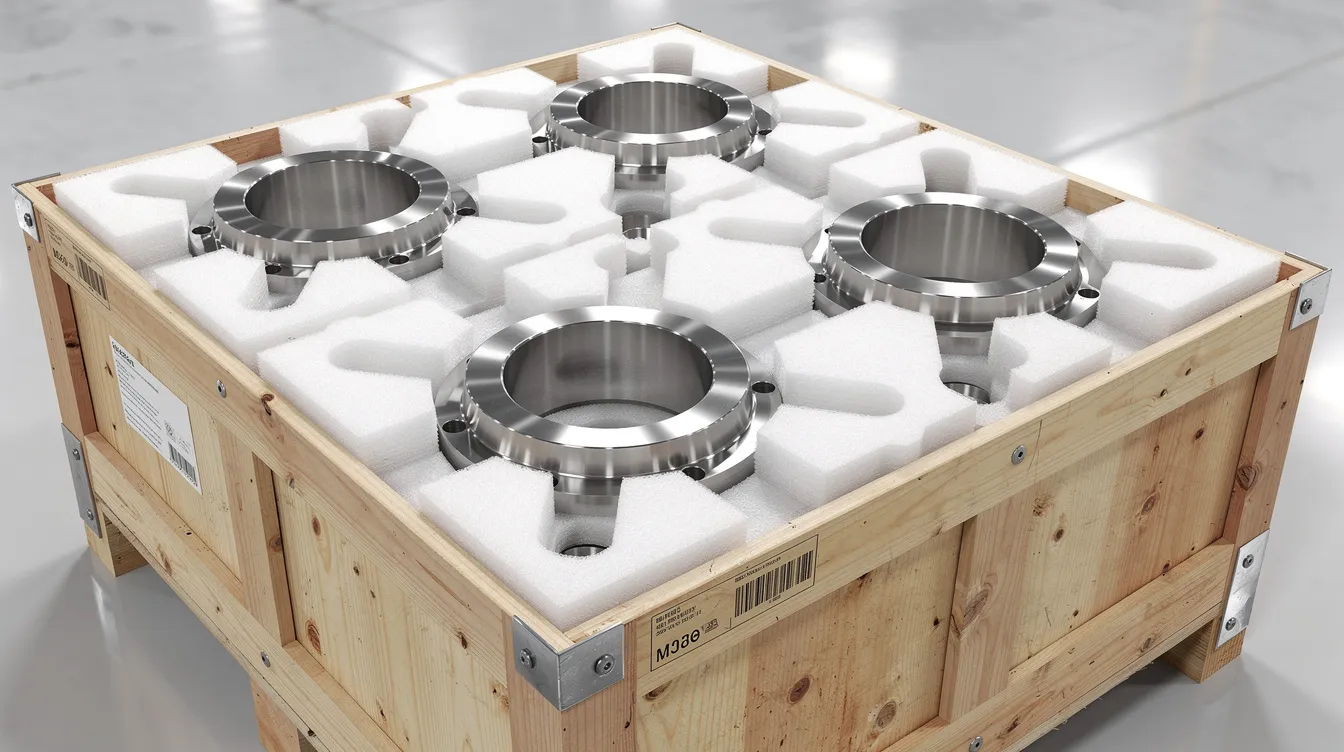
Packaging for steel parts and sheet metal fabrication parts typically includes protective films, foam inserts, corner protectors, and export-grade cartons or wooden crates. Confirm Incoterms (EXW, FOB Shenzhen, DAP) and clarify who handles customs clearance before production begins.
When to Choose a Precision Shop like Anebon vs a High-Volume Stamping Plant
Not all Chinese metal fabrication shops are interchangeable. Here is a quick comparison:
|
Criteria |
Precision Shop (e.g., Anebon) |
High-Volume Stamping Plant |
|---|---|---|
|
Ideal quantity range |
1–2,000 pcs |
5,000+ pcs |
|
Tooling approach |
Soft tooling, CNC programs |
Progressive dies, hard tooling |
|
Changeover speed |
Hours |
Days to weeks |
|
Tolerance capability |
Down to ±0.002 mm (machined) |
±0.05–0.1 mm typical |
|
DFM support |
Active engineering involvement |
Limited at order stage |
|
Best for |
High precision sheet metal, complex assemblies, mixed parts |
High-quantity identical metal stamping parts |
Project scenarios suited to a precision shop: 30 pcs complex stainless enclosures with machined interfaces, 150 pcs aluminum front panels requiring tight flatness, or 300 pcs mixed-size brackets for a robotics cell. Use expected annual volume and part complexity as your primary decision criteria.
Case-Style Examples of Small-Quantity Projects Done in China
Anonymous project examples help illustrate what is realistic. These sketches reflect common project patterns:
European medical startup – 40 pcs stainless test rigs (2023): The customer submitted STEP files for a multi-part stainless steel assembly. DFM feedback identified two bend reliefs that needed adjustment. Final processes: laser cutting, cnc bending, TIG welding, passivation. Total timeline: 18 working days from RFQ to delivery. First-batch feedback led to a 0.5 mm wall thickness increase before the 200 pcs follow-up order.
North American robotics company – 120 pcs aluminum link arms (2024): 6061-T6 aluminum, requiring ±0.05 mm on bore features. Laser cutting plus cnc machining of critical holes. Anodized finish. Delivered in 14 working days. The customer later scaled to 500 pcs/month using the same fixtures.
Electronics OEM – 250 pcs powder-coated server subframes (2024): Cold-rolled steel, 2 mm thick, with PEM hardware insertion, robotic welding of four joints, and RAL 7016 powder coating. Assembly services included installing captive nuts and cable-management clips. Timeline: 22 working days including finishing. Design changes after the first 50-piece lot reduced welding time by 15%.
These are the types of projects that fabricators like Anebon execute routinely for overseas OEMs requiring high quality parts in low to mid volumes.
Checklist for Selecting a Chinese Sheet Metal Fabricator for Small Quantities
Use this as a practical decision aid when comparing suppliers:
-
☐ Laser cutting, cnc bending, and cnc machining under one roof
-
☐ No rigid MOQ-willing to accept 1–50 pcs for prototypes
-
☐ DFM feedback provided within 24–48 hours of file upload
-
☐ Material range covers aluminum, stainless steel, carbon steel, and galvanized steel
-
☐ Surface treatment options: powder coating, anodizing, plating, bead blasting
-
☐ ISO 9001:2015 certified (ISO 14001:2015 preferred)
-
☐ FAI process documented with CMM or gauge measurement reports
-
☐ English-speaking engineering contact, not just sales
-
☐ Proven export experience to your target region
-
☐ NDA and IP protection willingness
-
☐ Clear logistics options with experience shipping to your country
-
☐ Ability to scale from prototypes to production without re-tooling the relationship
Prioritize quality system, communication, and process capability over pure unit price for mission-critical custom metal parts. Use this checklist when evaluating Anebon or any other supplier during your vendor selection process.
How Anebon Supports Overseas OEMs with Low-Volume Sheet Metal Projects
Anebon Metal Products Limited is a Dongguan-based precision cnc machining and sheet metal fabrication manufacturer founded in 2010. The company provides key services spanning rapid prototyping, custom sheet metal fabrication, die casting, and injection moulding-covering the full path from single prototypes to sustained production.
Core capabilities relevant to small quantities:
-
Industries served: Aerospace, medical devices, automotive, electronics, robotics and heavy equipment sectors, with typical initial builds of 20–200 pcs.
-
Tolerances: As tight as ±0.002 mm on CNC-machined features; standard sheet metal tolerances per ISO 2768.
-
Materials: Aluminum, stainless steel, carbon steel, titanium, plastics, and specialty alloys.
-
Surface treatments: Coordinated anodizing, powder coating, chrome plating, zinc plating, and other corrosion resistant finishes.
-
Certifications: ISO 9001:2015 and ISO 14001:2015.
-
Additional services: Die casting, 5-axis CNC machining, and assembly services for complete metal products.
Anebon’s primary call to action is straightforward: request a quote and engage the engineering team early for DFM and manufacturability reviews.
Getting Started: Information to Prepare Before Requesting a Quote
Having the right information ready shortens lead times and improves quotation accuracy with any Chinese fabricator.
Engineering inputs:
-
3D CAD files (STEP/IGES/X_T)
-
2D drawings with tolerances and critical dimensions
-
Material grade and thickness
-
Surface finish specification
-
Target quantity ranges (prototype qty + potential ramp)
-
Special testing or certification needs
Commercial details:
-
Target delivery date
-
Desired shipping method and destination
-
Preferred Incoterms
-
Any compliance requirements (RoHS, CE, etc.)
Anebon’s team can typically respond with a detailed quote and DFM notes within 24–48 hours when this information is complete. Consolidate part numbers and share expected annual volumes to enable better long-term cost planning across your sheet metal forming and precision sheet metal needs.
Conclusion: Is a Chinese Small-Quantity Sheet Metal Fabricator Right for Your Project?
China is suitable not only for mass production but also for precision, low-volume custom metal fabrication across virtually every industrial sector. The key is choosing the right partner and providing clear, complete engineering data from the start.
-
Quality: Look for ISO-certified shops with documented QA processes and FAI capability.
-
Communication: Prioritize fabricators with English-speaking engineers who provide proactive DFM support.
-
Cost: Calculate total landed cost, not just ex-works pricing. China typically wins from ~10 pcs upward.
-
Scalability: Choose a partner who can grow with you from sheet metal prototypes to sustained production runs.
Companies like Anebon combine sheet metal and cnc machining capabilities, DFM support, and certified quality systems tailored for overseas OEMs needing high precision, small-quantity metal parts. Start by evaluating one or two Chinese partners with a small pilot order of 20–50 pieces-test both the parts and the partnership before committing to long-term supply.