Top Chinese Sheet Metal Fabricators for Small Quantities Explained
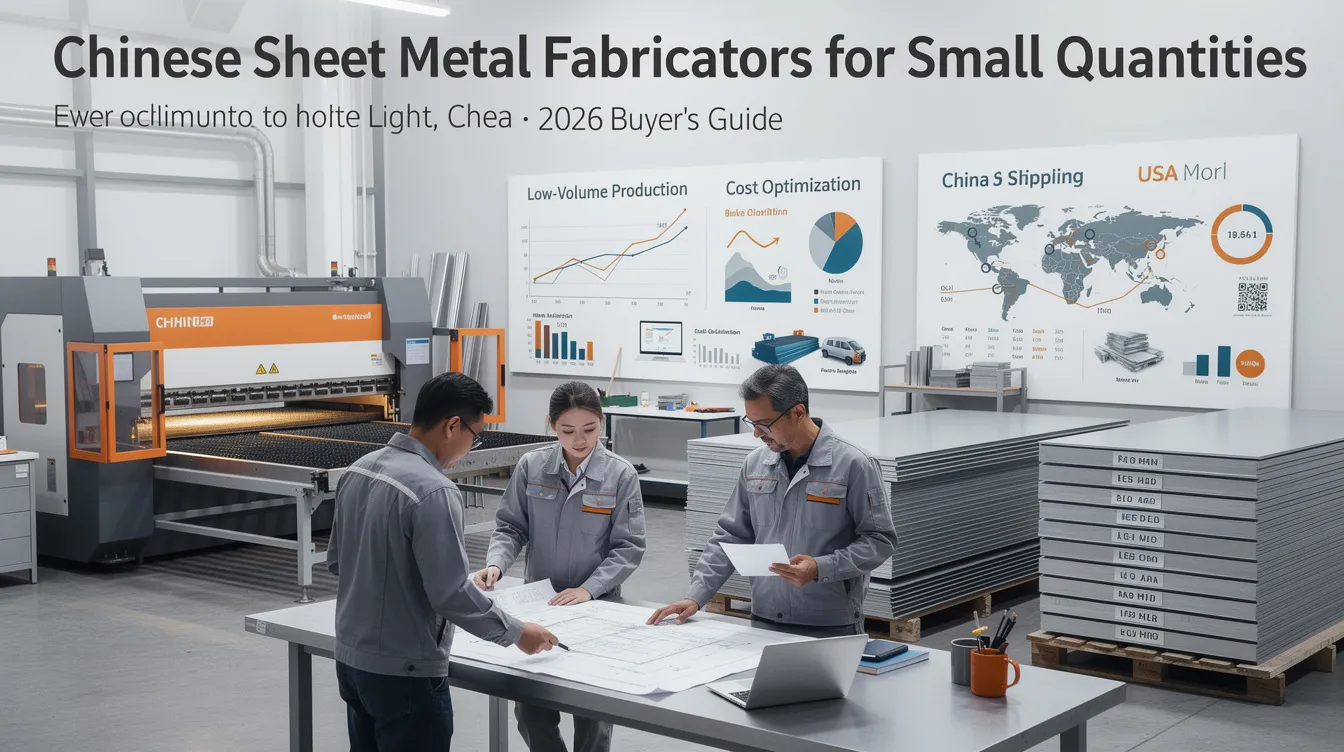
Chinese Sheet Metal Fabricators for Small Quantities: 2026 Buyer’s Guide
Ordering small quantities of custom sheet metal parts from China used to feel like swimming upstream. Most factories wanted thousands of pieces, not dozens. That reality has shifted dramatically. In 2026, a growing number of specialized Chinese fabricators actively welcome orders as small as five pieces, offering the same precision and finish quality that once required mass production commitments. This guide walks you through how to find the right partner, what to expect on pricing and lead times, and how to avoid the most common pitfalls when sourcing low-volume sheet metal from China.
Quick Answer: Can You Order Small Quantities from China Sheet Metal Fabricators?
Yes. Many china sheet metal fabrication shops historically preferred large batches where tooling and setup costs could be spread across hundreds or thousands of parts. But by 2026, the landscape has changed. Chinese sheet metal fabricators handle small-batch low-volume production as a core service line, not a side offering. Flexible, digital-first manufacturing approaches-fiber lasers, CNC press brakes with offline programming, and integrated quoting software-make it practical and profitable for shops to run 10, 50, or even single-piece orders.
Overseas OEMs can realistically order 5–200 custom sheet metal parts from specialized fabricators concentrated in hubs like Dongguan, Shenzhen, and Guangzhou. Typical MOQ ranges look like this:
-
Prototypes: 1–10 pieces, often with no minimum order quantity offered for small batches
-
Pilot runs: 20–100 pieces
-
Pre-production: 100–500 pieces
Approximate starting prices vary by complexity. Simple brackets in carbon steel or aluminum might begin around US$3–10 per piece once programming and setup are complete. Complex enclosures with multiple bends, welds, cutouts, and finishing can run US$30–100+ each.
Anebon Metal Products Limited is positioned exactly in this niche: rapid prototyping through small and medium batches, combining sheet metal fabrication, cnc machining, and die casting under one ISO-certified roof. The key for buyers ordering small quantities is providing high-quality drawings, clarifying tolerance priorities, and specifying surface finish expectations upfront. Omissions in these areas are the most common source of surprise costs and schedule delays among metal fabrication companies.
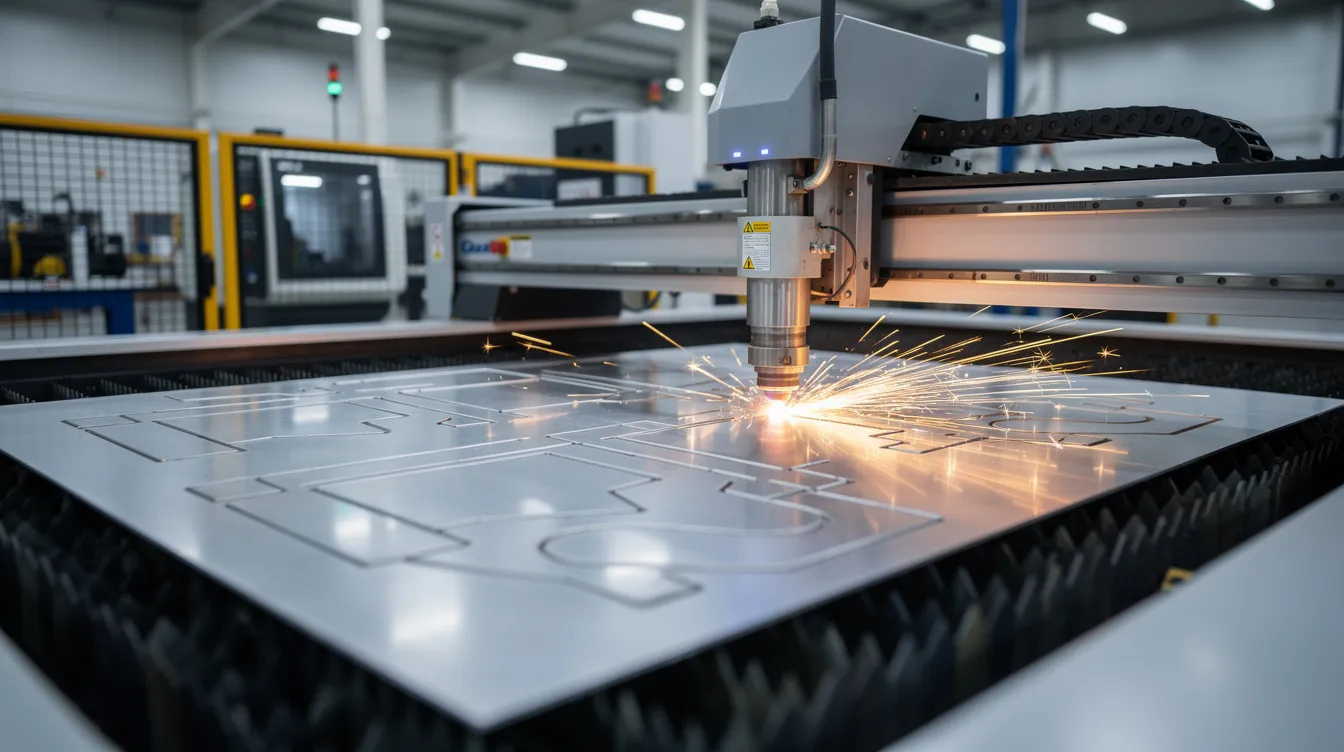
Why Source Small-Quantity Sheet Metal Parts from China?
Three drivers make China compelling for low-volume custom metal fabrication: cost, capability, and speed.
China’s dense manufacturing clusters-the Pearl River Delta (Dongguan, Shenzhen, Guangzhou) and the Yangtze River Delta (Shanghai, Suzhou, Ningbo)-host thousands of metal fabrication companies equipped with laser cutting technology, cnc bending machines, precision welding stations, and cnc machining centers. This density creates competition that benefits buyers, even on small orders. The global metal fabrication market reached over $20 billion in 2023, and China’s metal fabrication market exceeded $20 billion in that same year, underscoring the scale of available capacity.
Concrete cost advantages exist even for runs under 100 pieces. Fabricators purchase raw materials in bulk, use nesting software to maximize flat metal sheets utilization, and schedule small jobs alongside other work to reduce idle time. Automated workflows in sheet metal production allow bypassing traditional tooling costs, so buyers pay mainly for programming and machine time rather than expensive progressive dies. Chinese fabricators offer integrated services from fabrication to finishing, meaning a single supplier can handle laser cutting, bending, welding, machining, and surface treatment without subcontracting delays.
Chinese fabricators have evolved to support startups, R&D divisions, and engineering teams needing frequent design iterations. Shops like Anebon actively market low MOQ services and rapid prototyping to international buyers, treating small orders as the entry point for long-term relationships rather than an inconvenience.
Understanding Custom Sheet Metal Parts in Low Volumes
“Small quantities” in sheet metal manufacturing typically means 1–500 pieces per order, often with frequent design changes, mixed tolerances, and varied surface finishes. At its core, sheet metal fabrication transforms flat sheets into functional parts through a combination of cutting, forming, and joining operations.
Common small-quantity sheet metal components include:
-
Electronics enclosures and chassis
-
Instrument panels and front bezels
-
Medical brackets and housings
-
Sensor mounts and mounting plates
-
Functional prototypes and evaluation units
-
Low-volume machine covers for industrial equipment
Thickness ranges usually fall between 0.5 mm and 6.0 mm. Common materials for sheet metal fabrication include aluminum, steel, and copper, with stainless steel (304, 316) and aluminum (5052, 6061) being the most frequently requested alongside carbon steel. Galvanized steel, which has a protective zinc coating for outdoor use, is another option for corrosion resistant applications.
Even at low quantities, custom sheet metal parts often integrate multiple sheet metal processes: laser cutting → cnc bending → spot welding or TIG welding → cnc machining for precision features → surface treatment such as powder coating, anodizing, or chrome plating. Each added step increases cost and lead time, but is often unavoidable for functional prototypes or pilot parts requiring dimensional accuracy.
Key Processes Chinese Fabricators Use for Small Batches
Flexible, programmable equipment is the foundation of small-quantity precision sheet metal fabrication in China. Common operations include cutting, bending, and welding-all managed through digital workflows that minimize changeover time. Most reputable factories combine laser cutting, cnc bending, welding, and cnc machining in-house to avoid outsourcing delays for low-volume orders. Advanced equipment and advanced technology keep production efficiency high even when switching between part numbers frequently.
Laser Cutting for Flexible, Low-MOQ Production
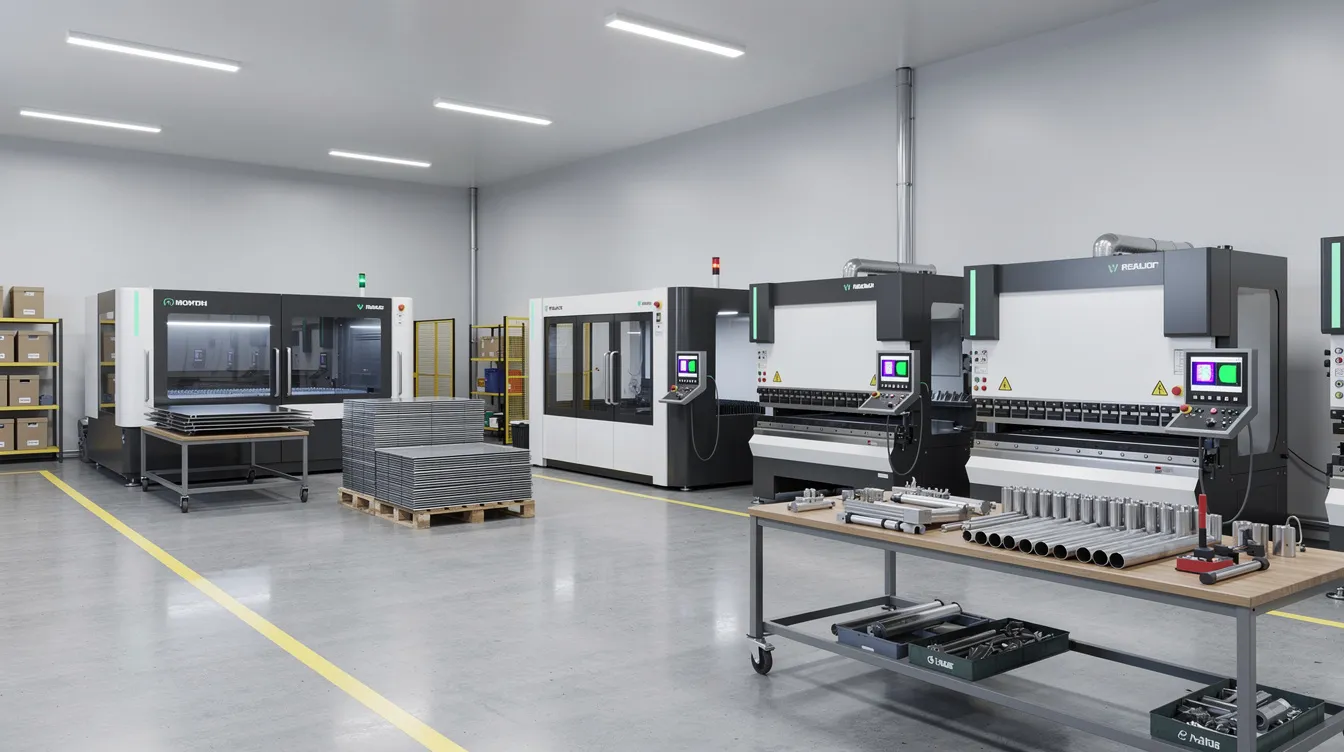
Modern fiber laser cutting technology allows rapid programming changes, making it ideal for 1–1,000 piece orders with frequent design updates. Typical capabilities include carbon steel up to 20–25 mm for plate work and stainless steel or aluminum up to 10–15 mm, though most sheet metal parts fall in the 0.5–6 mm range.
No hard tooling is needed, so buyers pay only for programming and machine time-not expensive dies. Cut tolerances of ±0.05 mm to ±0.10 mm are standard on flat features. Anebon uses high-speed CNC laser cutting to produce clean edges suitable for immediate bending or machining without excessive secondary deburring, supporting applications like control panels, front bezels, and mounting plates in low-volume china sheet metal fabrication.
CNC Bending and Forming
CNC bending transforms flat blanks into 3D shapes-channels, brackets, enclosures-using programmable press brakes. For small batches, quick-change tooling and offline programming minimize setup time, keeping unit costs reasonable even for 10–50 piece runs.
Achievable tolerances on modern machines include angle accuracy of ±0.5°–1° and bend-line positioning within ±0.2–0.5 mm. Special forming operations like hems, louvers, and embossed features can be produced without full progressive dies, which suits prototype and pilot builds. For more on bending stainless steel sheet metal, minimum bend radii of 1–2× material thickness help prevent cracking. Anebon’s cnc bending services hold tight angles suitable for assemblies that mate with cnc machined and die cast metal components.
Welding, Riveting, and Assembly
Manual MIG/TIG welding, spot welding, and occasional robotic welding handle joining tasks for small-batch sheet metal products. When parts need to be serviced or disassembled, mechanical fastening through rivets, PEM nuts, or screws is preferred over permanent precision welding. In low quantities, flexible jigs and moderate fixtures keep costs down compared to fully dedicated tooling.
Typical assemblies include telecom boxes, medical device frames, and robotics housings that combine many metal components into finished units. Anebon delivers sub-assemblies-welded frames plus cnc machined brackets, for example-to reduce buyer-side integration work.
CNC Machining Integration for Critical Features
When sheet metal parts require high precision features like countersinks, threaded holes, precision slots, or bearing seats, cnc machining (milling and turning) is integrated into the workflow. Anebon’s core strength is precision cnc machining, with tolerances as tight as ±0.002 mm on critical machined features-delivering unmatched precision where sheet metal parts must interface with high precision parts in final assemblies.
Machining only selected areas of a formed part is far more economical than fully machining the entire component from solid stock, especially for small runs. This hybrid approach reduces material waste and machine time while maintaining dimensional accuracy where it counts.
Metal Stamping Options for Small and Medium Quantities
For very small quantities (1–100 pieces), metal stamping is rarely economical unless existing tooling can be reused. Soft tooling with simple single-stage dies is an option for basic shapes, but tooling cost and lead time typically push fabricators toward laser cutting plus bending as the default for low volumes.
Above approximately 500–1,000 pieces per year, simple stamping tools may start to pay off for repetitive components-think small carbon steel clips, washers, or simple brackets reused across multiple product lines. Anebon offers both metal stamping parts and laser-cut solutions, advising customers on which approach is more cost-effective at their specific volume and design stage.
Surface Finishes: From Powder Coating to Chrome Plating
Typical finishes for small-quantity sheet metal parts include:
-
Powder coating (most common for steel enclosures)
-
Wet painting
-
Anodizing (aluminum)
-
Black oxide
-
Zinc plating
-
Chrome plating
-
Brushing, polishing, and bead blasting
Some finishes carry line setup costs or MOQ surcharges, so consolidating colors and textures across multiple part numbers saves money. Surface finish choices depend on material-carbon steel often gets powder coating or zinc plating, stainless steel gets passivation or polishing, and aluminum pairs naturally with anodizing. Anebon coordinates multi-stage surface treatment processes, such as powder coat over zinc plating for harsh environments, even for production volumes under 200 pieces.
Material Choices for Small-Batch Sheet Metal in China
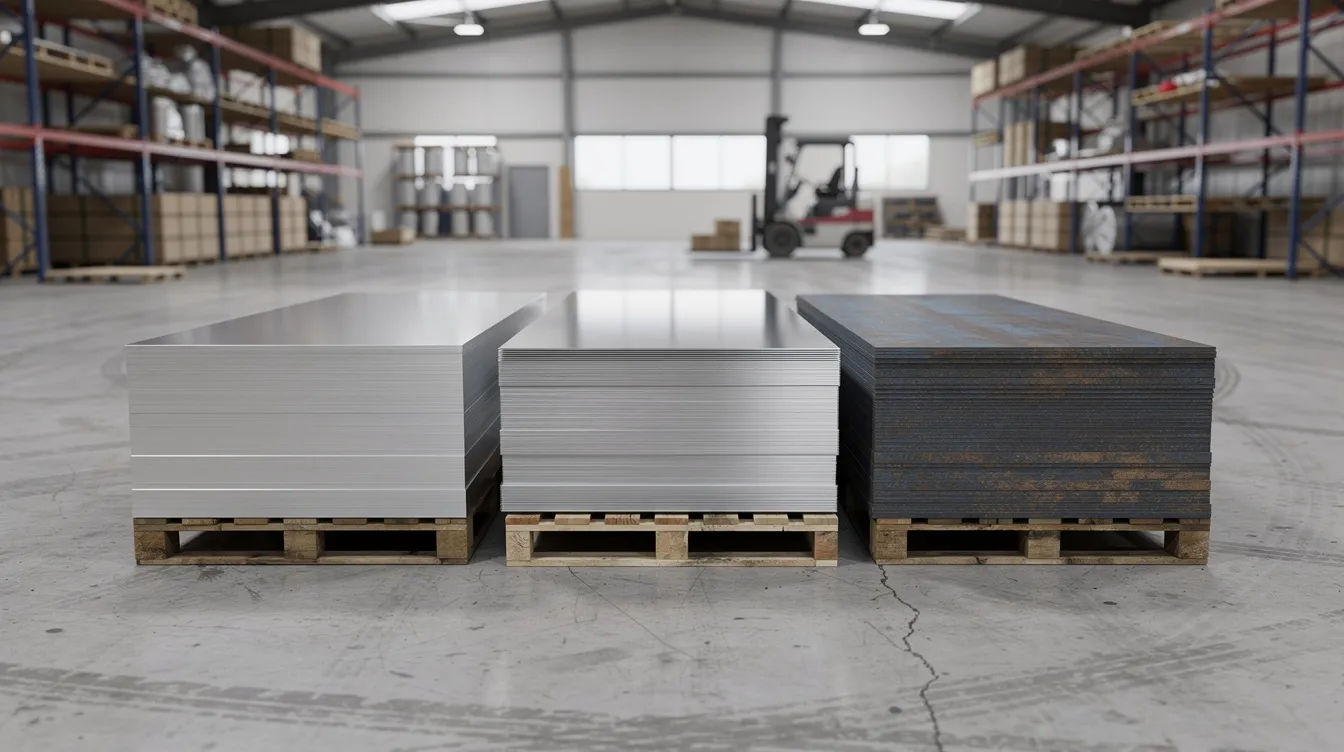
Material selection drives cost, manufacturability, and lead time. Widely stocked materials-cold-rolled carbon steel, 304 stainless, 5052 aluminum-give better competitive pricing and faster delivery than exotic alloys in small orders. Buyers should specify international grades clearly (ASTM, EN, JIS) and allow equivalent Chinese GB standards where appropriate.
Carbon Steel for Cost-Effective Strength
Carbon steel (Q235, Q345, or equivalent mild steels like SPCC/CRS) is the default for structural brackets, cabinets, and machine frames. Carbon steel offers strength and affordability for structural components and is the easiest material to process on laser cutting and cnc bending equipment. It welds cleanly, accepts powder coating, zinc plating, and chrome plating readily, and carries the lowest raw materials cost of common sheet metals.
Best for: indoor industrial machinery, enclosures, and non-corrosive environments where production costs matter most.
Stainless Steel for Corrosion Resistance and Hygiene
Grades 304 and 316 stainless steel provide corrosion resistance for moisture-exposed applications-medical devices, food processing equipment, outdoor installations, and consumer electronics housings. Stainless steel provides corrosion resistance for various applications but comes with higher manufacturing costs: slower laser cutting speeds, significant springback during sheet metal bending, and special care for weld appearance on visible surfaces.
Popular finishes include brushed, mirror polish, bead-blasted, and passivated surfaces. Use stainless steel only where true corrosion resistance or sterility requirements justify the cost premium over carbon steel.
Aluminum for Lightweight Enclosures and Panels
Common alloys like 5052-H32 and 6061-T6 dominate Chinese sheet metal fabrication for lightweight, corrosion resistant components. Aluminum is lightweight, ideal for aerospace and automotive applications where every gram matters. It is often used for lightweight aerospace components, robotics housings, and electronics enclosures. Aluminum pairs well with anodizing for colored, decorative, or wear-resistant surfaces in low-volume custom sheet metal parts.
Designers should note minimum bend radii requirements (typically 1× thickness for 5052, more for 6061-T6) and the risk of cracking in harder tempers. For projects combining formed aluminum with precision features, Anebon’s integrated CNC milling capability handles tight-tolerance machining on the same part.
Typical Order Sizes, MOQs, and Lead Times
Chinese sheet metal fabrication services categorize orders roughly as follows:
|
Category |
Quantity |
Typical Lead Time (2026) |
|---|---|---|
|
Prototype |
1–20 pcs |
5–10 working days |
|
Small batch |
20–200 pcs |
10–20 working days |
|
Pilot production |
200–1,000 pcs |
15–25 working days |
Rapid prototyping typically involves 1 to 25 units and can move fastest when materials are in stock and geometry is straightforward. Lead times for small batch production typically range from 1 to 3 weeks after drawing confirmation. Factors that push timelines longer include complex welding, rare materials, multiple surface treatments, or combined cnc machining and sheet metal operations.
Anebon can often quote within 24–48 hours and commence production quickly once DFM feedback is incorporated and the purchase order is confirmed. For international buyers, plan extra time for shipping: 3–7 days by air freight for small parcels, or 5–7 weeks door-to-door by sea for larger shipments.
Cost Structure for Small-Quantity Sheet Metal in China
Pricing for low-volume metal parts breaks into fixed and variable components:
-
Fixed costs: programming, machine setup, fixturing, DFM review, nesting/layout
-
Variable costs: material per piece, machine run time, labor, finishing, inspection, packaging
Setup costs remain similar regardless of order quantity in sheet metal fabrication, which is why per-unit price is significantly higher at 10 pieces than at 200. Empirically, per-unit cost may drop 30–50% when quantity increases from 20 to 200 pieces for identical parts. Still, total project cost for a 50-piece order from China can remain attractive compared to domestic suppliers.
At low production volumes, complex cnc machining, tight tolerances, and labor-intensive polishing or chrome plating can dominate total cost. Anebon provides line-item quotes-material, process, finishing broken out separately-so engineers can adjust design features to hit target budgets before committing.
Design for Manufacturability (DFM) Tips for Small Batches
Thoughtful sheet metal design can reduce price and lead time more effectively than pure negotiation, particularly in small orders. Design for Manufacturability (DFM) feedback is commonly included in the quotation process at shops like Anebon, and taking advantage of it early prevents costly rework downstream.
Optimizing Geometry and Tolerances
-
Avoid defaulting to cnc machining-level tolerances on all dimensions; specify ±0.1–0.2 mm where possible and reserve tighter specs for critical features only
-
Use standard bend radii and angles that match common tool sets in Chinese cnc bending machines
-
Avoid very small cutouts, long narrow slots, and sharp internal corners that slow laser cutting and increase scrap
-
Consider splitting a complex part into two simpler welded or fastened pieces to improve yield and reduce bending complexity
Material and Thickness Standardization
Limit a project to 1–2 sheet thicknesses (e.g., 1.5 mm and 3.0 mm) to simplify purchasing and nesting, especially below 200 pieces. Choose widely available grades-carbon steel, 5052 aluminum, 304 stainless-instead of rare alloys when performance allows. Standardization across an OEM’s product lines lets a Chinese sheet metal manufacturer reuse setups and fixtures, reducing unit cost over time.
Designing for Efficient Assembly
Add self-clinching fasteners, locating tabs, and slot features that speed manual assembly of small batches. Design enclosures and frames so they can be welded using simple jigs, minimizing one-off fixture cost. Combining sheet metal with cnc machining and die casting in one supplier like Anebon allows designers to optimize assembly sequencing from the start, reducing the number of vendors in the supply chain.
Quality Control for Low-Volume Metal Components
Rigorous quality control remains essential even for single prototypes or 20-piece pilot batches. These parts often go directly into testing, certification submissions, or customer evaluations where consistent quality is non-negotiable.
Typical inspection steps include:
-
Incoming material verification (MTRs, thickness, flatness)
-
In-process checks at laser cutting and bending stages
-
Weld inspections (visual, dimensional)
-
Final dimensional reports against drawings
Chinese manufacturers maintain certifications such as ISO 9001 and ISO 14001 as standard practice. ISO 9001:2015 is a baseline certification for fabricators. For regulated industries, additional standards apply: IATF 16949 is essential for automotive supply chains, AS9100D is the aerospace quality management standard, and ISO 13485 is required for medical device manufacturing. Anebon operates under one quality system with ISO 9001:2015 and ISO 14001:2015 certifications, using calibrated gauges and CMM measurement for sheet metal precision parts.
Buyers should specify critical-to-quality (CTQ) dimensions and acceptance criteria clearly so inspectors focus on what truly matters. A First Article Inspection (FAI) report for the initial batch builds confidence before scaling up.
Where Are Small-Quantity Sheet Metal Fabricators Located in China?
China’s sheet metal manufacturing capacity clusters in three main regions, each with distinct strengths:
South China (Pearl River Delta): Dongguan, Shenzhen, Guangzhou, Zhongshan, and Foshan. Over 70% of top-tier suppliers are in South China, making this the densest hub for precision sheet metal, cnc machining, and rapid prototyping. Shenzhen is a hub for rapid prototyping and just-in-time delivery, particularly for consumer electronics and smart manufacturing applications.
East China (Yangtze River Delta): Shanghai, Suzhou, Ningbo, Wuxi. East China balances precision and scale for medium-to-high volume orders, with strong logistics infrastructure and diverse material supply.
North China: Hebei, Tianjin, Cangzhou. Hebei Province is adjacent to China’s largest steel production bases, favoring heavy plate work and cost-sensitive structural components. North China offers unit costs 10–15% lower than South China, though specialization in rapid prototyping and high precision parts is less developed.
Anebon Metal Products Limited is based in Dongguan, strategically placed among electronics, robotics, and automation OEM ecosystems-ideal for small-quantity, high-precision work.

How to Evaluate Chinese Sheet Metal Fabricators for Small Orders
Selecting a supplier for 20–200 pieces requires different priorities than high volume production. Flexibility, communication speed, and engineering support matter more than sheer factory capacity. Shortlist 3–5 suppliers, request sample quotes, and evaluate responses for detail and clarity rather than chasing only the lowest price.
For context, suppliers in this space vary widely. 3ERP specializes in low-volume production runs of 10–500 parts. Komaspec handles batches of 500–5,000 parts for medium-volume work. TUOFA Precision has over 15 years of experience in metal fabrication. Anebon focuses on long-term relationships, often starting with small orders and scaling as customers move to full production.
Checking Technical Capabilities and Equipment
Verify specific equipment relevant to small-quantity projects: fiber laser cutters, CNC turret punches, cnc bending machines, TIG/MIG welding, cnc machining centers, and inspection tools. Request process capability overviews-maximum sheet size, bend length, achievable tolerances-and example project photos. Integrated cnc machining and sheet metal capabilities under one roof eliminates delays from multi-vendor coordination.
Verifying Experience with Prototypes and Low-Volume Runs
Ask for case studies of projects between 5 and 500 pieces, including timelines and industries served (robotics, medical devices, aerospace test rigs). Check if the supplier offers rapid prototyping services and small MOQ policies in writing. Anebon’s business model-from one-off prototypes to scaled production-demonstrates comfort with frequent design changes and engineering collaboration.
Assessing Quality Systems and Certifications
Request ISO 9001:2015 certificates, calibration records, and sample inspection reports even for low-volume orders. Certifications should be verified with the issuing body when quality is mission-critical. Traceability for materials and processes matters when prototype results feed into regulatory submissions for medical device or aerospace testing. Anebon’s ISO 14001:2015 certification shows responsible environmental management through a quality management system that global OEMs increasingly require.
Evaluating Communication and DFM Support
Send a detailed RFQ with a few ambiguous points intentionally left for clarification. Prioritize suppliers who provide constructive DFM feedback instead of simply quoting “as is” on problematic designs. Anebon’s engineering team responds within one working day in most cases, bridging time zone gaps with clear email and video call communication.
Practical Steps to Place a Small-Quantity Order with Anebon
The entire process from first contact to delivery follows a straightforward sequence:
-
NDA (if needed for IP protection)
-
Drawing submission – 3D CAD files (STEP/IGES/X_T) plus clear 2D drawings with tolerances, material, and surface finish
-
DFM review – Anebon’s team flags manufacturability issues and suggests optimizations
-
Quotation – line-item pricing typically within 24–48 hours
-
Sample approval – first article for verification
-
Production – small batch manufacturing
-
Quality check – dimensional inspection against CTQ features
-
Shipping – export packaging and logistics coordination
Typical payment terms for initial small orders are 30% deposit with 70% before shipment. Flexible terms can be arranged for repeat projects once trust is established. Include any required standards (RoHS, REACH, UL-related constraints) from the beginning so they’re factored into material and process selection. Anebon can also handle mixed orders combining custom metal parts with plastic injection molded components.
Managing Logistics and Shipping for Small Batches
Common logistics options for small quantities include express couriers (DHL, FedEx, UPS), air freight consolidations, and small LCL sea shipments. For 10–50 small sheet metal parts, air courier is usually fastest and most practical-though high shipping costs can outweigh manufacturing savings for small orders if parts are heavy or bulky.
Anebon handles export packaging (foam, cartons, wooden crates when necessary) and supports customs paperwork and HS codes. Clarify Incoterms (EXW, FOB Shenzhen, DAP) and ensure shipping responsibilities are agreed before production starts to avoid surprises at delivery.
Risks and How to Reduce Them When Ordering Small Quantities from China
Real concerns exist: quality consistency across batches, IP protection, communication gaps around tolerances or finishes, and overreliance on a single vendor. These risks are manageable with practical mitigation:
-
Provide detailed, dimensioned drawings with critical features highlighted
-
Approve sample parts before authorizing full batch production
-
Use staged payments tied to inspection milestones
-
Start with limited order sizes before scaling up
-
Use third-party or remote video inspections before shipment for critical complex metal components
Anebon signs NDAs, restricts internal data access, and honors OEM branding rules to protect customer intellectual property-standard practice for high quality products destined for competitive markets.
Industries That Benefit Most from Small-Quantity China Sheet Metal Fabrication
Certain sectors naturally require frequent design changes and small production runs:
-
Aerospace R&D: lightweight aluminum and titanium brackets, test rig components
-
Medical devices: stainless steel housings, instrument panels, sterilizable enclosures
-
Robotics and automation: sensor mounts, controller housings, actuator brackets
-
Industrial machinery: prototype covers, custom panels, structural components
-
Automotive components: motorsport brackets, EV prototypes, precision stamping parts
-
Electronics and test equipment: electronics enclosures, rack-mount panels, shielding boxes
Anebon serves many of these sectors, combining sheet metal, cnc machining, and die casting to deliver complete custom metal parts packages. A typical project might involve 50-piece medical enclosures in carbon steel with powder coating-from drawing review to delivered parts in under three weeks.
Why Anebon is a Strong Partner for Small-Quantity Sheet Metal Projects
Anebon Metal was founded in 2010 and is located in Dongguan, specializing in precision cnc machining, die casting, and custom sheet metal fabrication for overseas OEMs. With ISO 9001:2015 and ISO 14001:2015 certifications, tight machining tolerances down to ±0.002 mm, and experience across aluminum, stainless steel, carbon steel, titanium, and engineering plastics, Anebon delivers high precision parts consistently.
Anebon’s integrated sheet metal fabrication services-from rapid prototyping to mid-volume production-allow customers to validate designs in small quantities, then scale without changing suppliers. Capabilities attractive for small-quantity buyers include fast DFM feedback, flexible scheduling for urgent prototypes, and support for mixed orders combining metal and plastic injection components.
Ready to get started? Upload your CAD files for a no-obligation quote and manufacturability review. Anebon’s engineering team typically responds within 24–48 hours.
Conclusion: Making Small-Batch Sheet Metal Sourcing from China Work for You
China’s maturity in small-quantity precision sheet metal fabrication is no longer in question. In 2026, the combination of smart manufacturing equipment, competitive pricing, and experienced fabricators makes sourcing 10–200 custom sheet metal parts from Chinese suppliers a practical, cost-effective strategy for global OEMs. The keys to success are clear DFM communication, realistic tolerance specifications, and choosing a partner with integrated capabilities.
Working with an experienced partner like Anebon reduces risk by providing cnc machining, laser cutting, cnc bending, metal stamping, and finishing under one roof-with a quality system built for consistent quality across every order size. Start with a pilot project or prototype batch to validate quality, communication, and logistics before committing to larger programs.
High-mix, low-volume manufacturing from China supports faster innovation cycles for global OEMs in 2026 and beyond. The fabricators are ready. The question is whether your next design iteration is.