Top Aluminum Die Casting Companies in China for Quality Manufacturing
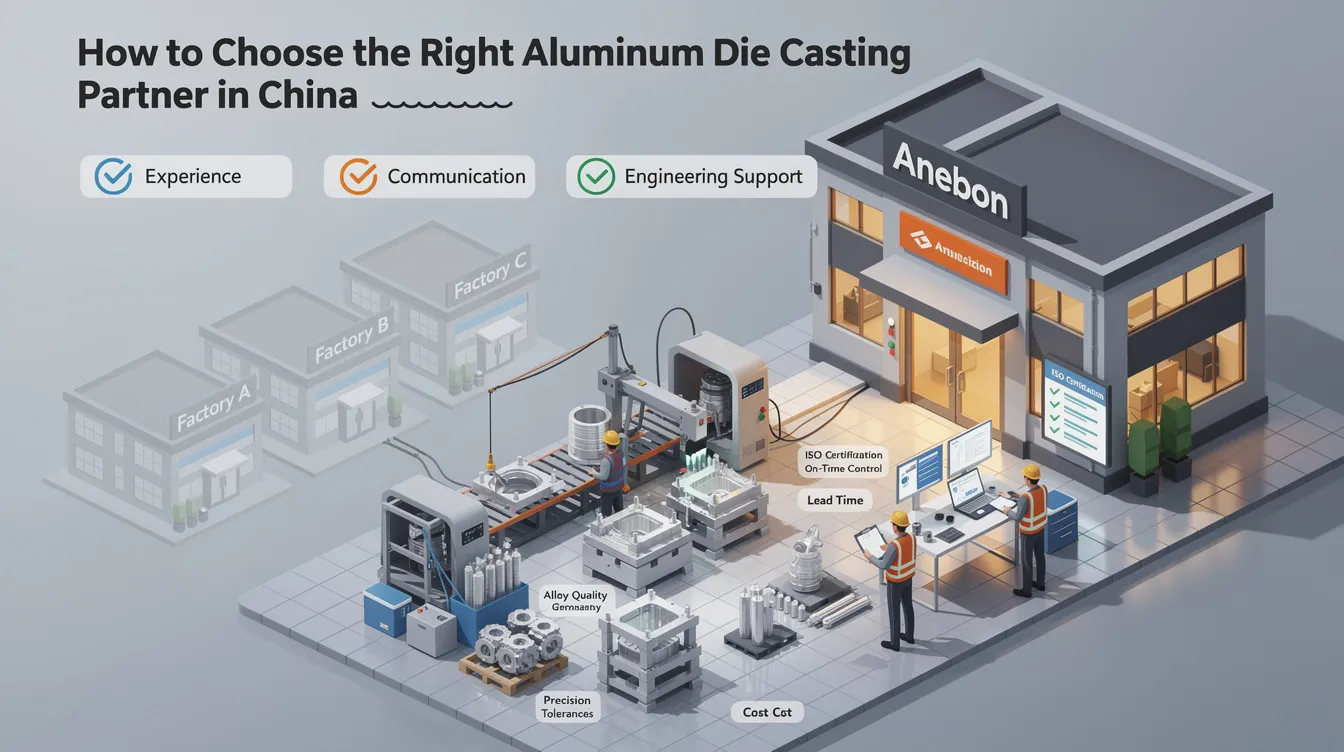
Aluminum Die Casting Companies in China: How to Choose the Right Partner (and Why Anebon Stands Out)
Introduction: Aluminum Die Casting in China Today
If you are an overseas OEM, engineer, or buyer looking for reliable aluminum die casting companies in China, this guide will help you evaluate suppliers, understand the processes available, and make a confident sourcing decision. China remains the global hub for aluminum die casting thanks to its massive supply chain, skilled workforce, advanced casting equipment, and competitive pricing.
In 2024, total Chinese casting output reached approximately 50.75 million tons, with aluminum alloy castings increasing their share to roughly 16.4% of production-driven largely by new energy vehicles and electronics. China’s share of EV sales climbed to nearly 45% in 2024, fueling demand for precision aluminum castings across various industries. Leading aluminum die casting companies in China specialize in end-to-end services, and many aluminum die casting manufacturers focus on industries like automotive and electronics, providing rapid prototyping through to mass production.
When evaluating suppliers, focus on three pillars:
-
Quality assurance and certifications
-
Lead time predictability
-
Total cost of ownership (not just unit price)
Anebon Metal Products Limited (founded 2010, Dongguan, Guangdong; ISO 9001:2015 and ISO 14001:2015 certified) exemplifies a modern casting manufacturer combining aluminum die casting, precision CNC machining, and sheet metal fabrication under one roof.
What Is Aluminum Die Casting? (Quick Engineer-Focused Overview)
Aluminum die casting is a metal casting process that injects molten aluminum under high pressure into hardened steel dies to produce castings with high dimensional accuracy and repeatability. Die casting uses high pressure to inject molten metal into a precisely machined mold cavity, producing parts with complex shapes and smooth surfaces.
Aluminum is preferred because aluminum die casting parts are lightweight yet durable, offer a favorable strength-to-weight ratio, excellent thermal and electrical conductivity, and strong corrosion resistance. Aluminum materials can withstand high operating temperatures, making them ideal for demanding applications. Unlike sand casting or investment casting (also known as lost wax casting), die casting delivers tighter tolerances and better surface quality at higher speeds, while forging excels in raw strength but lacks geometric complexity.
Typical industries using aluminum casting parts include:
-
Automotive: gearbox housings, brackets, cylinder heads
-
Electronics: heat sinks, enclosures, electronic components
-
Robotics & industrial machinery: frames, manifolds, construction machinery parts
-
Medical devices: brackets, enclosures for industrial equipment
Key advantages: high production efficiency, precision casting capability, dimensional consistency, and die casting molds can be reused multiple times-reducing costs across volume production runs.
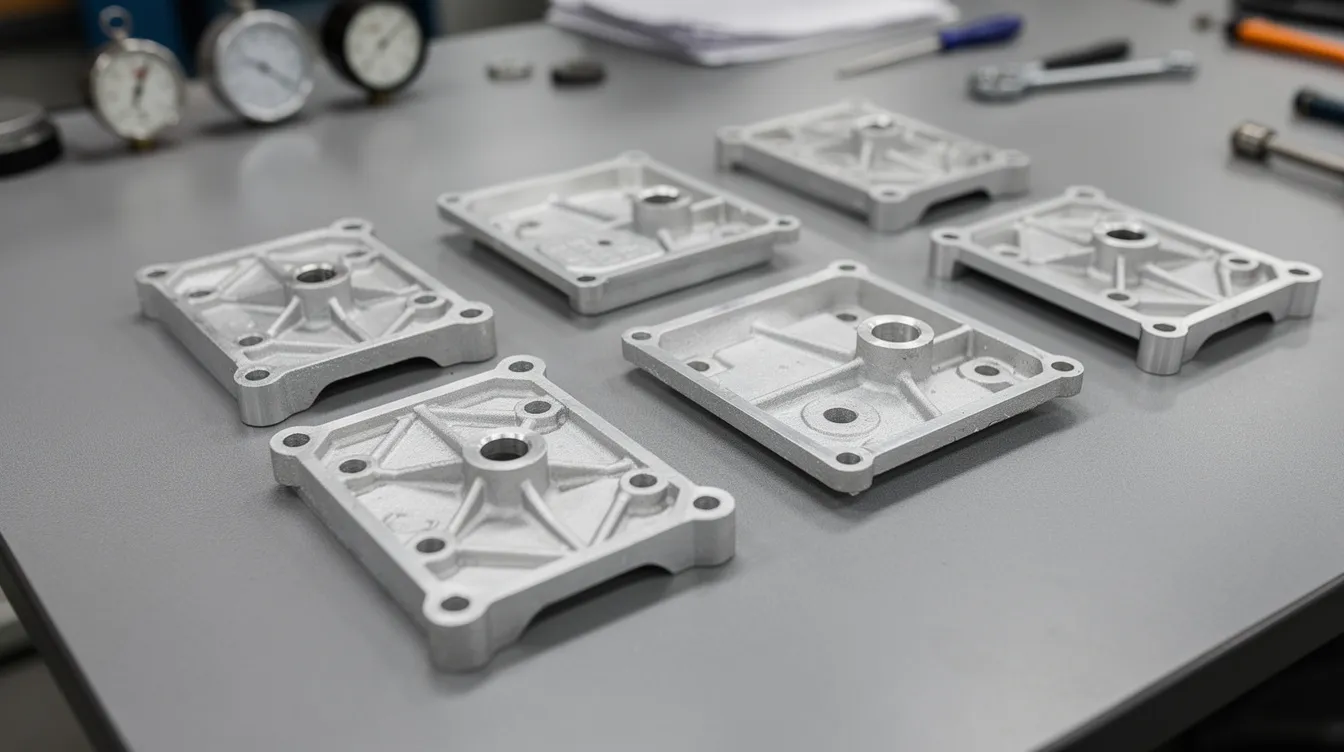
Key Aluminum Die Casting Processes Used in China
Chinese casting companies typically combine multiple casting process options to match part geometry, volume, and mechanical properties requirements. The primary methods include high pressure die casting, low pressure die casting, gravity die casting, and complementary methods such as squeeze casting and semi-solid processing.
Choosing the right casting method early impacts cost, defect rate, and attainable tolerance. Discuss process selection with your casting manufacturer before finalizing designs, and explore various casting processes to find the best fit for your application.
High Pressure Die Casting (HPDC) for Mass Production
HPDC uses cold chamber die casting machines to inject molten aluminum at pressures reaching hundreds of MPa. Cold chamber die casting involves heating metal in a separate furnace before transferring it to the shot chamber-distinguishing it from hot chamber die casting, which is faster and uses lower melting alloys like zinc. The aluminum die casting process via HPDC dominates in China for automotive, telecom, LED lighting, and consumer products.
Die casting machines range from 120 to over 1600 tons depending on part size, while Minghe Die Casting Company uses over 3000 ton cold chamber machines for large structural parts. Typical factories operate 280T–3500T machines, enabling aluminum die casting parts from 0.02 to 20+ kg with thin wall capability down to 1–2 mm.
HPDC excels at mass production: high-pressure die casting is common for consumer products, EV inverter housings, 5G base station parts, and drone frames. Aluminum die casting is suitable for mass production of complex shapes with excellent surface quality ready for powder coating or painting.
Low Pressure Die Casting (LPDC) and Low Pressure Systems
Low pressure die casting is a counter-gravity casting process where molten aluminum is pushed upward from a sealed crucible into a permanent mold using low pressure gas (typically 0.3–1 bar overpressure). Chinese die casting companies recommend low pressure casting for thicker wall sections, parts requiring heat treatment, and applications demanding improved integrity with low porosity.
Typical part weights range from several hundred grams up to 30 kg-common examples include alloy wheels, structural chassis components, and suspension parts. Compared to HPDC, low pressure casting offers slower cycle times but better feeding, lower turbulence, reduced porosity, and superior mechanical properties. Many advanced auto-focused factories in China add low pressure die casting lines specifically for safety-critical components.
Gravity Die Casting (Permanent Mold Casting)
Gravity die casting involves pouring molten aluminum into reusable steel or iron molds under earth gravity, sometimes with tilt-pour assistance. This permanent mold casting method suits medium-volume production where mechanical properties and surface finishing must exceed aluminum sand casting quality but volumes don’t justify HPDC tooling costs.
Typical examples include pump housings, gearbox covers, valve bodies, and medium sized castings for industrial equipment. Chinese factories commonly combine gravity die casting with CNC machining and surface treatment to deliver fully finished parts. Tilt-pour gravity machines reduce turbulence and defects for thicker sections requiring stable quality.
Complementary Casting Processes: Sand Casting, Squeeze Casting, Semi-Solid
Many Chinese aluminum foundries offer aluminum sand casting for prototypes, large parts, and design validation before migrating to HPDC once designs stabilize. Lost foam casting is another sand-based approach used for complex internal geometries.
Squeeze casting produces dense, heat-treatable parts through high pressure solidification-ideal for structural automotive components needing superior mechanical properties. Semi-solid processing (thixoforming/rheocasting) represents advanced technology adopted in high-end automotive and aerospace projects since approximately 2015–2020. Multi-slide die casting allows for complex and accurate castings in specialized applications, while multi-slide tooling enables intricate geometries with tight tolerances.
Always ask your supplier which casting processes they support in-house versus via partners to avoid hidden outsourcing risks.
The Aluminum Die Casting Process Step by Step
Here is a practical walk-through of the die casting process today as used in modern Chinese factories, from RFQ to shipment. The main phases include DFM review, die design and manufacturing, sample approval, mass production casting cycles, secondary machining, surface treatment, inspection, and packaging.
Advanced companies like Anebon use CAD/CAM, flow simulation tools, and ERP systems to control each stage. For automotive and medical customers, traceability and process documentation (PPAP, control plans, process FMEA) are critical.
Tooling & Mold Design (DFM, Flow Simulation, Steel Selection)
Mold cost is typically the largest up-front investment when working with aluminum die casting companies in China. In-house tooling design improves mold quality and efficiency, and tooling design can reduce defects in final products significantly. Advanced tooling can enhance production speed and reduce costs over the mold’s lifetime.
Design for Manufacturability support can enhance production efficiency and reduce costs by optimizing draft angles, wall thickness, ribs, fillets, gating, and ejector locations before steel is cut. Leading suppliers simulate filling behavior to predict porosity and cold shuts. Typical die steels include H13 and 8407, with tooling lead times of 5–8 weeks for standard molds and 8–12 weeks for complex multi-cavity tools. Tooling design is crucial for achieving tight tolerances in die casting, and key operational factors include tooling capacity and quality control systems. Mold design directly impacts part quality, cycle time, and overall project economics.
Die Casting Cycle: From Molten Aluminum to Solid Part
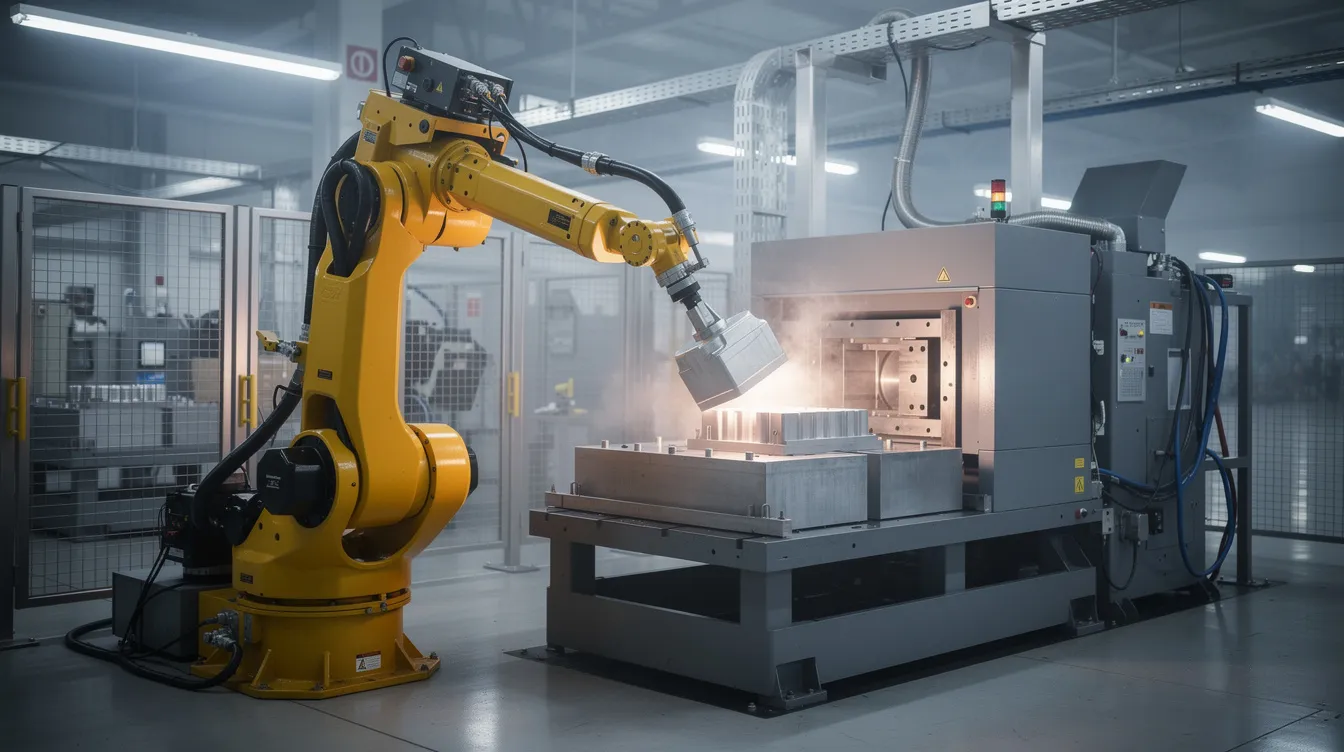
The core cycle follows these steps: die closing and clamping, injection (slow fill then fast shot), intensification and holding pressure, solidification, die opening, and ejection. In China, many HPDC lines feature robot-assisted ladling, die spraying, and part extraction to stabilize quality.
Typical cycle times range from 20 to 120 seconds depending on part mass and wall thickness. Professional factories monitor melt temperature, die temperature, injection speed profiles, and pressure curves in real time. Advanced manufacturers utilize technologies to manage porosity in cast components, and engineers should ask for process capability data (Cp/Cpk) on critical dimensions. Learn more about cycle time optimization.
Secondary Operations: CNC Machining and Deburring
Most aluminum die casting parts require secondary CNC machining for tight tolerances, precise holes, and sealing surfaces. Efficient manufacturers handle multiple operations including machining and surface treatment under one roof. Typical CNC operations include milling, drilling, tapping, boring, and turning-Anebon’s capabilities reach ±0.002 mm on critical dimensions.
Deburring and trimming of gates, runners, and flash use trim dies, manual methods, or robotic finishing. Working with a one-stop supplier that integrates die casting and CNC machining in the same facility helps save cost by reducing logistics and lead time. Specify which surfaces are cosmetic versus functional to optimize machining expense.
Surface Treatment and Finishing Options in China
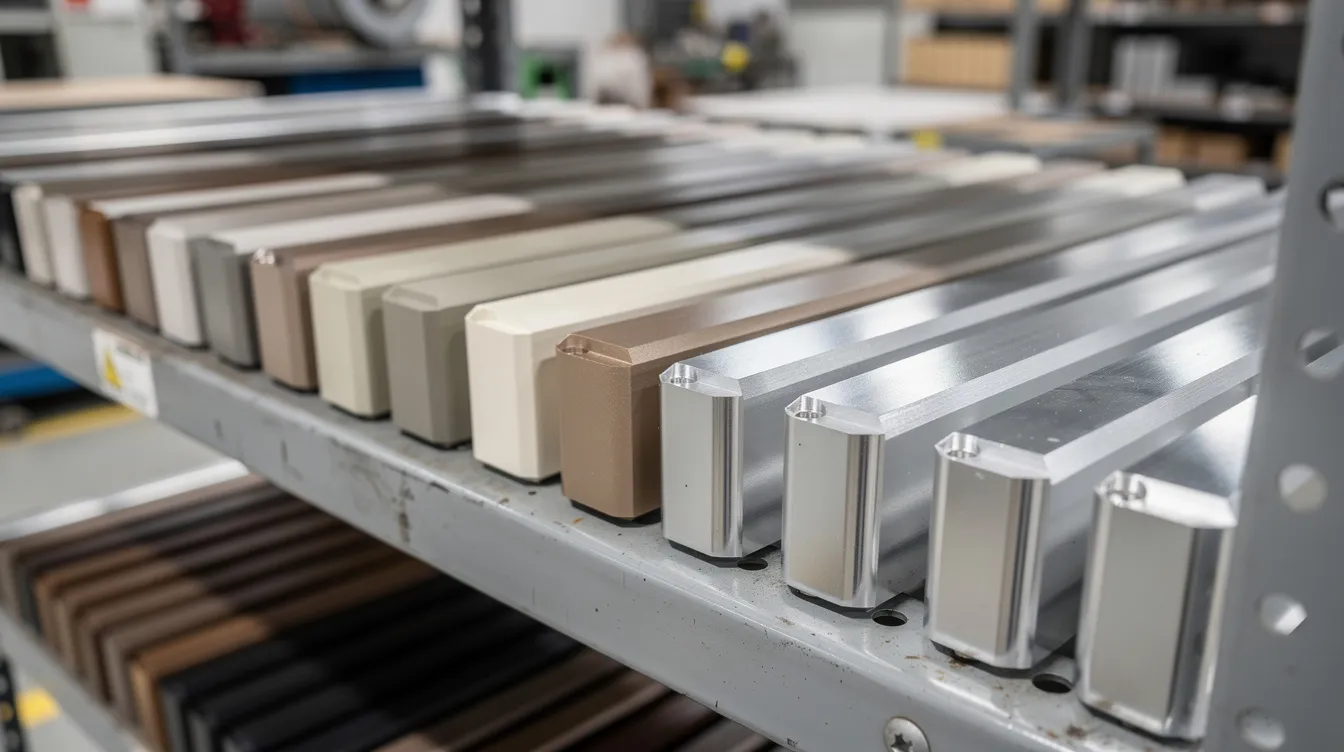
Surface treatment is critical for corrosion resistance, aesthetics, and wear resistance of aluminum die castings. Common surface treatments include anodizing and powder coating, while polishing and electroplating are also popular surface finishing options. Anodizing provides a protective oxide layer on aluminum surfaces, and surface treatments enhance corrosion resistance and aesthetic appeal while improving wear resistance of aluminum die cast parts.
Available finishes at Chinese factories include:
-
Anodizing (standard and hard anodizing)
-
Powder coating for outdoor housings
-
Wet painting, electrophoretic coating
-
Shot blasting, chromate conversion
-
Nickel and chrome plating
Anebon coordinates in-house and trusted partner surface treatments under ISO 14001:2015 environmental controls. Define clear specifications: RAL or Pantone color codes, gloss levels, salt spray hours, and A-side/B-side cosmetic standards.
Equipment and Technology Used by Chinese Aluminum Die Casting Companies
A supplier’s capability depends directly on their casting equipment, automation level, and measurement systems. A modern plant typically includes cold chamber high pressure die casting machines, low pressure and gravity casting cells, CNC machining centers, CMMs, and spectrometers.
Overseas buyers should request an equipment list-machine tonnage, brands, quantities-and factory layout when evaluating suppliers. Anebon operates in Dongguan with advanced equipment and environmental controls consistent with ISO standards. Look for evidence of preventive maintenance, spares management, and documented machine capability.
Die Casting Machines: Tonnage, Automation, and Control
Locking force (tonnage) must match the projected area and injection pressure of each aluminum die casting part. Inox Cast has 16 cold chamber die casting machines up to 1300 tons, while Cangzhou Weiheng Metal Products operates a 1250 ton die casting machine for larger components. Many small and mid-size Chinese factories operate 160T–800T HPDC casting machines, and larger players run up to 2500T–3500T for structural parts.
Hot chamber die casting is faster and uses lower melting alloys such as zinc alloy-distinct from cold chamber machines used for aluminum. Robotics for automatic ladling, die spray, and part extraction reduce variation and labor cost. Ask whether machines have real-time shot monitoring, data logging, and remote diagnostics for consistent production processes.
CNC Machining Centers and Measurement Systems
Serious aluminum die casting companies in China invest heavily in CNC milling, turning, and 5-axis machining centers. ZP Aluminum offers over 30 high precision CNC machines-representative of the advanced equipment found at leading suppliers. Anebon’s precision CNC machining includes 5-axis capability with tolerances down to ±0.002 mm for aerospace, robotics, and medical parts.
Quality inspection practices may include CMM and X-ray technologies for defect detection and porosity analysis. Full QA with CMM capabilities ensures dimensional accuracy, and advanced tools guarantee final parts quality without defects. OEMs should request sample inspection reports and capability studies during supplier qualification, including material certificates and RoHS/REACH statements.
Materials and Alloys: Aluminum and Zinc Alloy Options
Materials expertise is crucial as different projects may require specific aluminum alloys. A380 aluminum alloy is commonly used in die casting, alongside ADC12 (similar to A383) with typical properties of ~310 MPa ultimate tensile strength, ~150 MPa yield, and ~3.5% elongation. YuanZhong specializes in aluminum, zinc, and magnesium die casting, reflecting the breadth of alloy die casting options available from Chinese suppliers.
Zinc alloy options (Zamak 3, Zamak 5) suit miniature parts with very thin walls and high dimensional stability. For magnesium die casting, specialized hot chamber equipment and handling are required. The growing use of secondary (recycled) aluminum in China supports sustainability goals, and quality companies verify chemistry via spectrometer analysis each heat. Always specify exact standards (ASTM, EN, or JIS codes) and acceptance ranges.
How to Evaluate Aluminum Die Casting Companies in China
Use this section as a checklist when selecting a long-term manufacturing partner. Evaluate certifications, engineering support, process breadth, capacity, communication, and export experience. Undergo third-party audits to verify manufacturers’ operational capabilities before signing contracts.
Certifications, Quality Assurance, and Traceability
Quality certifications such as ISO 9001 and IATF 16949 are important for die cast manufacturers. ISO 9001:2015 certification ensures quality management systems are in place-Anebon holds this certification. ISO 14001:2015 certification focuses on environmental management, which Anebon also maintains. For automotive applications, IATF 16949 alignment is essential.
Quality control processes are essential for zero defect production. Expect suppliers to provide APQP, PPAP, control plans, FMEA, and SPC documentation. Full traceability from raw material heat number to finished part batch should be managed via ERP or MES systems.
Engineering Capability and DFM Support
Strong in-house engineering reduces defects, accelerates launches, and optimizes tooling cost. Look for ability to provide DFM feedback, run flow simulations, suggest process changes, and propose cost reductions. Anebon uses SolidWorks, UG/NX, and CAD/CAM software aligned with global OEM toolchains.
Share 3D models (STEP, IGES) and 2D drawings with GD&T early. Include engineering responsiveness in supplier scorecards-not just a competitive price.
Production Capacity, Lead Time, and Scalability
Manufacturers should evaluate their production capacity to match order size. Consider the number and size of die casting machines, shift patterns, and maximum monthly output. Typical lead times in China: tooling 4–10 weeks, samples 1–2 weeks after tool trial, mass production 2–4 weeks per batch.
Anebon offers rapid prototyping through full production, helping teams move from CNC machined prototypes to die cast production. Include contingency planning with backup cavities for mission-critical components.
Communication, Project Management, and Export Experience
English-speaking project engineers prevent misinterpretation of drawings and specifications. Good practices include clear timelines, weekly updates, issue logs, and structured sample approval. Anebon has over a decade of experience as a casting service provider for overseas OEMs across Europe, North America, Japan, and Australia.
Treat early communication quality-response time, clarity, completeness-as a proxy for long-term collaboration quality.
Cost Structure of Aluminum Die Casting in China
Main cost components include tooling, material, die casting process, CNC machining, surface treatment, inspection, and logistics. While unit prices offer a reasonable price advantage, evaluate full landed cost including tooling amortization and scrap rate.
Consider two suppliers: one offers lower unit price but 8% scrap, while another charges slightly more with <1% defect rate. The second supplier often delivers lower total cost. Key levers to save cost:
-
Simplify part geometry and consolidate features
-
Relax non-critical tolerances
-
Optimize surface finishing specifications
-
Increase annual volumes for better pricing
-
Choose a one-stop casting manufacturer to reduce logistics
Tooling Investment and Amortization
Tooling ranges from relatively modest for small single-cavity tools to substantial investments for large multi-cavity dies. Amortization can be handled as a separate line item or spread into part price over agreed volumes. Discuss tool ownership, storage, maintenance, and life expectancy in contracts explicitly.
Anebon’s in-house tooling design and management reduces lead time and maintenance responsiveness. Consider multi-cavity tooling where appropriate, balanced against shared downtime risk.
Part Price Drivers: Material, Complexity, Volume, and Finishing
Primary drivers include aluminum alloy choice, part mass, complexity (slides, cores, undercuts), required tolerances, planned annual volume, and surface finishing requirements. Simplifying geometry and relaxing non-critical tolerances meaningfully reduces cost.
Surface finish impact varies significantly: as-cast with minimal machining versus extensive CNC plus cosmetic powder coating or anodizing. Higher annual volumes unlock better pricing through optimized cycles and material purchasing. Request multi-tier pricing (1k, 10k, 50k pcs/year) to evaluate volume scenarios.
Industries Using Chinese Aluminum Die Casting Companies
Aluminum die casting companies in China serve traditional sectors and high-tech, regulated industries alike. Key sectors include automotive, electronics, industrial automation, medical devices, agricultural machinery, marine hardware, and consumer products.
Automotive and New Energy Vehicles (NEVs)
Aluminum die casting is widely used in the automotive industry for gearbox housings, motor housings, EV chassis parts, brackets, and pump bodies. Since approximately 2018, structural die castings in EV platforms have grown rapidly to reduce vehicle weight. Chinese foundries combine HPDC, low pressure die casting, and gravity die casting for different automotive components, delivering aluminum die casting parts with strict dimensional and cleanliness requirements.
Electronics, Telecom, and LED Lighting
Die casting parts are essential for telecommunication applications including base station housings, router enclosures, and LED street light housings. Thin wall casting, flatness control, and good thermal paths are critical. Chinese aluminum die casting companies often started in these markets in the early 2000s and now have deep process know-how for electronic components and heat management solutions.
Industrial Machinery, Robotics, and Automation
Aluminum die casting is used for industrial machinery components including gearbox casings, robot arm joints, manifold blocks, and covers. These applications demand tight tolerances, good stiffness, and repeatability. Aluminum die casting is also utilized in manufacturing marine hardware and agricultural machinery components. Many overseas machinery OEMs choose Chinese suppliers for both prototypes and production to produce castings efficiently and keep design iterations fast.
Working with Anebon Metal Products Limited as Your China Aluminum Die Casting Partner
Anebon Metal Products Co Ltd is a Dongguan-based, ISO-certified B2B OEM manufacturer focused on precision aluminum die casting, CNC machining, and sheet metal fabrication. Founded in 2010, Anebon supports overseas OEMs, design engineers, and R&D teams from rapid prototyping through full-scale production with integrated services and good quality standards.
Our Core Capabilities: Die Casting, CNC Machining, and Sheet Metal
Anebon’s aluminum die casting services focus on high pressure die casting for small to medium-sized parts with quality assurance suitable for demanding industries. Zinc die casting capabilities address miniature and highly detailed components. CNC machining-including 5-axis-holds tolerances as fine as ±0.002 mm. Complementary sheet metal fabrication (laser cutting, bending, welding) enables complete assemblies, positioning Anebon as a one-stop manufacturing process solution from drawing to finished parts.
Quality Systems and Engineering Support at Anebon
Quality management under ISO 9001:2015 includes in-process and final inspections with material traceability via ERP. Anebon provides material certificates, dimensional reports, capability studies, and RoHS/REACH compliance documentation. Collaborative engineering covers early-stage design optimization, wall thickness and draft feedback, and surface treatment recommendations-supporting prototypes, pilot runs, and ramp-up to serial production with stable quality.
How to Start a Project with Anebon (From RFQ to Production)
Getting started follows a clear path:
-
RFQ submission: Send drawings, 3D models, annual volume, and quality requirements
-
DFM review and quotation: Receive engineering feedback and detailed pricing
-
Tooling design and manufacturing: Mold build with progress updates
-
Sample build and approval: First article inspection and adjustments
-
Mass production ramp: Serial delivery with ongoing quality monitoring
Anebon handles packaging design, labeling, and export logistics for shipments to Europe, North America, Japan, and Australia. Send your aluminum die casting and CNC machining requirements for a detailed, no-obligation quote. Choosing a technically strong, ISO-certified partner like Anebon reduces risk and speeds up your time to market.
Conclusion: Selecting the Right Aluminum Die Casting Company in China
The die casting process today demands more than competitive pricing-it requires process expertise across HPDC, low pressure, and gravity methods, backed by robust casting equipment, quality systems, and responsive engineering support. Focusing only on unit price is risky; weigh total cost, stable quality, and long-term partnership potential when selecting among casting companies.
Use the evaluation criteria in this guide to shortlist suppliers, and consider Anebon Metal Products Limited as a proven partner for aluminum die casting and precision CNC machining in China. As EV, electronics, and automation markets continue expanding through 2026 and beyond, securing a capable and scalable casting service partner now positions your programs for success. Prepare your drawings and RFQs-your next project starts with the right conversation.