Top Aluminum Die Casting Companies: China Aluminum Die Casting Manufacturers
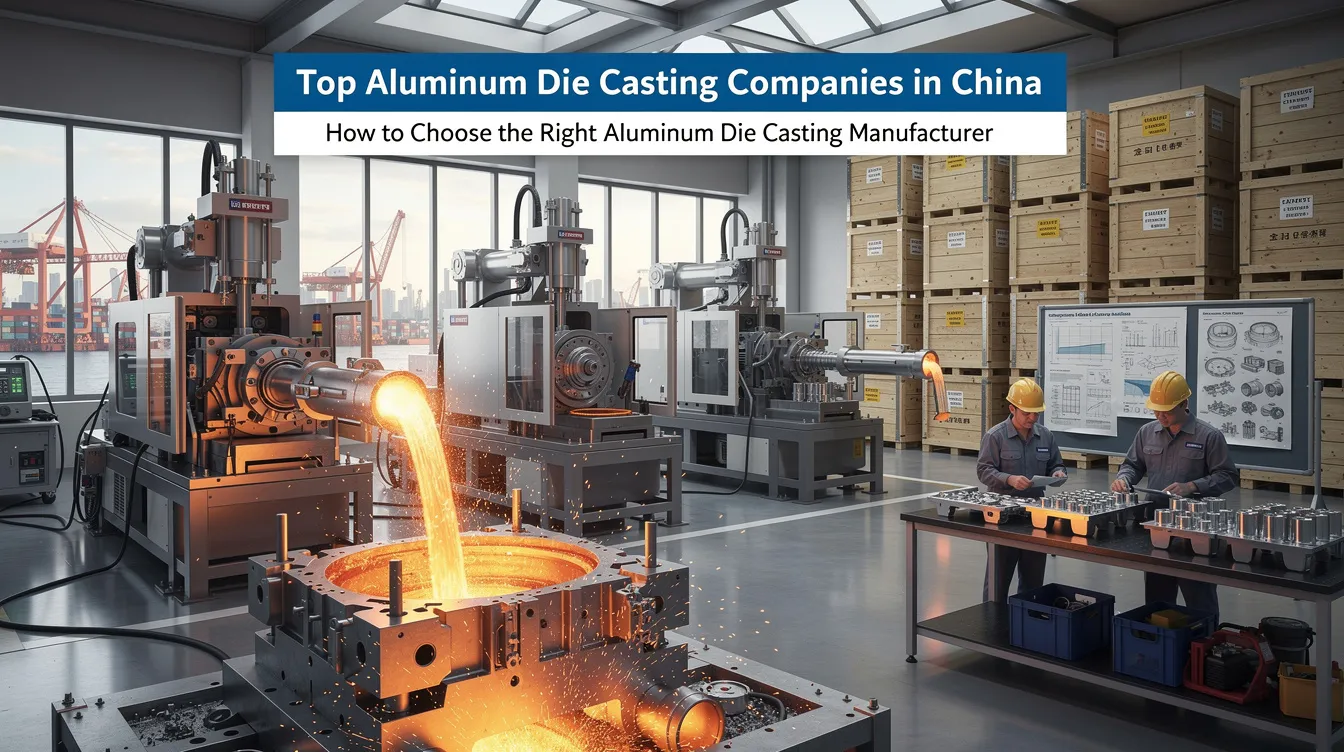
Top Aluminum Die Casting Companies in China: How to Choose the Right Aluminum Die Casting Manufacturer
China’s aluminum die casting industry is the largest and most diverse in the world, supplying everything from tiny electronic components to massive EV chassis structures. For overseas OEMs and design engineers, the sheer number of options can make selecting the right casting supplier feel overwhelming. This guide breaks down the leading die casting companies in China, walks through the key evaluation criteria, and explains the casting processes you need to understand before sending your next RFQ.
Quick Answer: Best Aluminum Die Casting Companies in China in 2026
China dominates aluminum die casting because of its unmatched production scale, deeply integrated supply chains, and continuous investment in advanced technology. Choosing the right partner matters because overseas OEMs need precision, stable quality, compliance with automotive and electronics standards, and engineering support to realize cost savings without risking part failures. China has a highly diverse aluminum die casting industry, and narrowing down the right fit requires understanding each manufacturer’s strengths.
Here are 6–8 standout manufacturers to consider in 2026:
-
Anebon Metal Products Limited (Dongguan, Guangdong) – One-stop partner for overseas OEMs since 2010. Strength in precision die cast parts combined with CNC machining and sheet metal fabrication. Common alloys: A380, ADC12, A360. Processes: high pressure die casting, CNC (3-/4-/5-axis), sheet metal.
-
Tuopu Group (Ningbo, Zhejiang) – Specializes in gigacasting and chassis systems for EV platforms. Structural alloys including AlSi10MnMg. Process: super-large cold chamber high pressure die casting (6,000–9,000T).
-
Guangdong Hongtu Technology – Ultra-large integrated die cast structural parts, including EV underbody and battery trays. Operates mega HPDC machines up to 16,000T with heat treatment capabilities.
-
EMP Tech (EMP Casting) – Mid-to-large tonnage HPDC specialist for global Tier-1/Tier-2 suppliers. Excels in thin wall precision enclosures and load-bearing brackets. Alloys: A380, A383/ADC12, AlSi10MnMg. Uses vacuum-assisted HPDC with X-ray NDT and 5-axis CNC.
-
Tianhe Casting (Deyang Tianhe Group) – Known for low pressure and gravity aluminum casting. Serves engineering machinery and automotive spare parts. Alloys: ZL101/104 equivalents. Annual capacity exceeds 7,000 metric tons.
-
Mulan Die Casting (Shanghai) – Precision custom HPDC and low pressure die casting for complex, aesthetic parts. Alloys: A380, ADC12. Processes include HPDC, low pressure, CNC, and surface finishing.
-
Yihui Casting (Dongguan) – Specializes in low-pressure and gravity die casting for thin-wall, air-tight parts with sub-1% porosity. Certified ISO 9001, IATF 16949, ISO 14001.
-
Dongrun Casting Industry Co., Ltd. – Diversified casting specialist covering sand casting, gravity casting, low pressure, and high pressure, with mold sizes up to approximately 1,500 mm.
The rest of this article details selection criteria, process options covering high pressure, low pressure, and gravity casting methods, and deep profiles of these leading aluminum die casting companies in China.
Why China Leads in Aluminum Die Casting in 2026
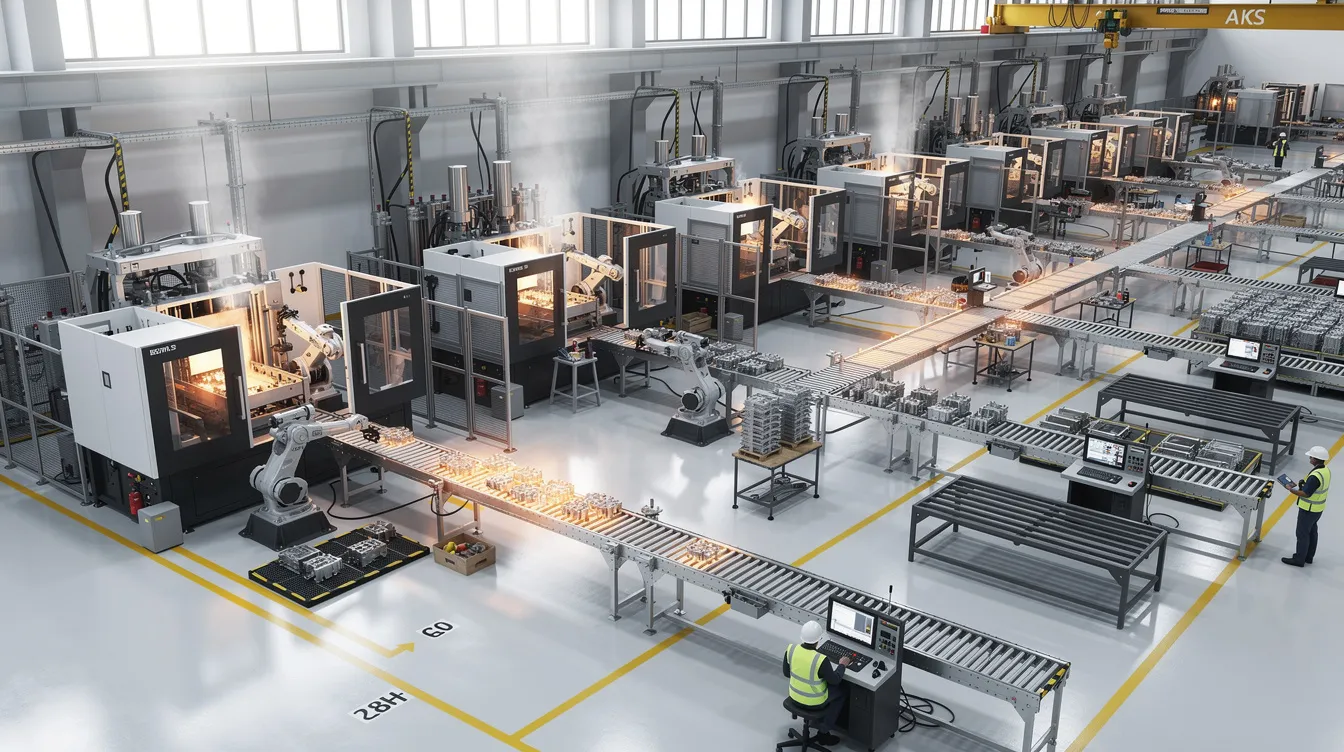
By the early 2020s, China had already become the world’s largest producer of die cast aluminum components in both volume and value. That dominance has only deepened. Between 2015 and 2025, Chinese foundries rapidly upgraded to automated casting cells, robotic handling, and in-line X-ray inspection, allowing them to meet the strictest OEM requirements while maintaining a competitive price. Rapid investment in gigacasting for electric vehicles has further accelerated this growth, with companies like Hongtu deploying 16,000-ton presses for single-piece EV underbodies.
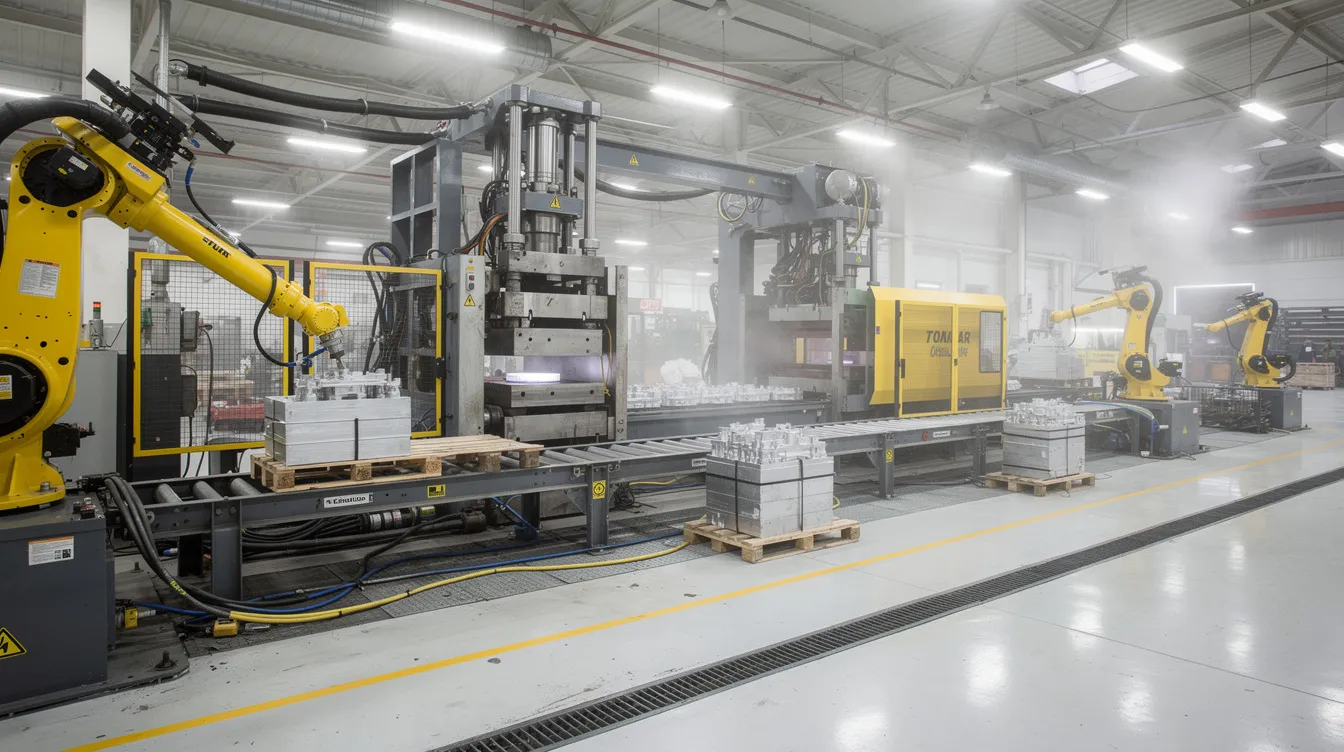
China’s die casting sector dominates global supply chains thanks to several structural advantages. Dense foundry clusters in Guangdong, Zhejiang, and Jiangsu provide access to toolmakers, heat treatment shops, surface finishing specialists, and metallurgy labs-all within short distances. Automation using robotic cells and digital quality control is increasing across the industry, and certifications like ISO 9001, IATF 16949, and ISO 14001 have become standard among top-tier aluminum die casting companies. China’s die casting industry serves various sectors including automotive and electronics, and the major demand drivers in 2026 include:
-
Electric vehicle platforms (battery trays, motor housings, underbodies)
-
5G telecom hardware (base station housings, RF modules)
-
Industrial robotics and industrial equipment
-
Medical devices
-
LED lighting heat sinks and housings
-
Smart home appliances and consumer electronics
How to Evaluate Chinese Aluminum Die Casting Manufacturers
This is a practical checklist for overseas sourcing teams and design engineers evaluating potential partners. Key considerations for selecting die cast manufacturers include technical expertise and certifications, but several other factors are equally important.
-
Casting processes offered: Does the supplier run high pressure die casting, low pressure die casting, gravity die casting, or sand casting? The right process mix ensures options for varying part geometries and wall thickness requirements.
-
Tonnage range: Machine tonnage largely determines the size of parts a company can produce. Look for ranges from 160T for small housings up to 2,000T+ for structural aluminum components.
-
Materials expertise: Expect proficiency in A380, A360, ADC12, A383, and structural alloys like AlSi10MnMg. Buyers should demand compositional and mechanical data per batch.
-
In-house tooling: Manufacturers should have in-house capabilities for tooling design and mold manufacturing. This reduces lead times and improves design-to-production communication.
-
CNC machining capacity: 3-axis, 4-axis, and 5-axis milling capability is a major differentiator. Look for integrated die casting CNC machining under one roof.
-
Surface finishing: Anodizing, powder coating, painting, bead blasting, chromate conversion. Ask about color matching (RAL/Pantone) and salt-spray test performance.
-
Quality systems: Most top manufacturers maintain strict international quality accreditations. Expect ISO 9001:2015 at minimum; IATF 16949 for automotive; practices like PPAP, FMEA, APQP, and SPC. Top suppliers usually maintain Cpk > 1.33 on critical dimensions.
-
Engineering support: DFM feedback, use of simulation tools (Moldflow, MAGMA), and process optimization to prevent porosity, sink marks, and warpage.
-
Export logistics: Familiarity with overseas packaging standards, customs documentation, and English-speaking engineering teams.
-
Factory audits: Visit in person or conduct video audits. Review process capability reports and examine real case samples from automotive or electronics programs.
The importance of one-stop service-covering die casting, CNC, surface treatment, and assembly-cannot be overstated. Anebon Metal Products Limited exemplifies this model, combining precision machining (tolerances to ±0.002 mm), sheet metal fabrication, and aluminum die casting in a single facility to reduce coordination risk.
Overview of Aluminum Die Casting Processes in China
Leading Chinese manufacturers typically run several casting process families under one roof, giving buyers flexibility to match the right metal casting process to each part. Aluminum casting techniques include die casting and sand casting, along with permanent mold casting and investment casting (also known as precision casting or lost wax casting). Die casting technology includes aluminum, zinc, and magnesium materials, though aluminum alloy remains the dominant material in Chinese export foundries.
The four main methods compared:
-
High pressure die casting (HPDC): Best for thin walls, high volumes, complex geometry. Fastest cycles; highest tooling cost. Dominant for automotive and electronics.
-
Low pressure die casting (LPDC): Controlled fill under low air pressure. Denser castings with fewer defects. Suited for wheels, suspension, aerospace.
-
Gravity die casting: Molten metal poured under gravity into permanent molds. Lower tooling cost, slower cycles. Good for pump housings, manifolds, medium sized castings.
-
Aluminum sand casting: For very large, low-volume, complex shapes. Rougher finish, thicker walls. Sand casting is suitable for producing complex shapes and low-cost parts.
Cold chamber die casting dominates the aluminum die casting process in Chinese industrial hubs due to its speed, flexibility, and compatibility with automotive and electronic components. Some advanced suppliers also offer squeeze casting or semi-solid casting for structural EV and aerospace parts, though these remain a smaller niche.
High Pressure Aluminum Die Casting
High pressure die casting is the most common aluminum die casting process in China and the backbone of the country’s export casting industry. Die casting uses high pressure to inject molten metal into precision steel molds at high speed, producing parts with excellent dimensional accuracy and surface finish in rapid cycles.
Cold chamber die casting involves heating metal in a separate furnace before ladling it into the injection chamber. This distinguishes it from the hot chamber die casting process, which is used for lower-melting-point materials like zinc and magnesium die casting alloys. For aluminum, cold chamber machines are essential because molten aluminum would corrode the injection system of a hot chamber setup.
Typical machine tonnage ranges at top Chinese companies span from 160T cold chamber machines for small to medium housings, through 800T for telecom and electronics parts, and up to 2,500T or higher for large structural components. Applications common among Chinese exporters include EV motor housings, gearbox covers, 5G base station housings, LED lighting heat sinks, drone frames, and appliance components.
Pros:
-
High production rate and short cycle times
-
Excellent repeatability and tight tolerances
-
Capable of thin wall sections (1–3 mm)
-
Good surface finish directly off the die
Cons:
-
Higher tooling cost (often tens of thousands of USD)
-
Risk of porosity or cold shuts without proper process control
-
Size limited by machine tonnage
Low Pressure and Gravity Die Casting in China
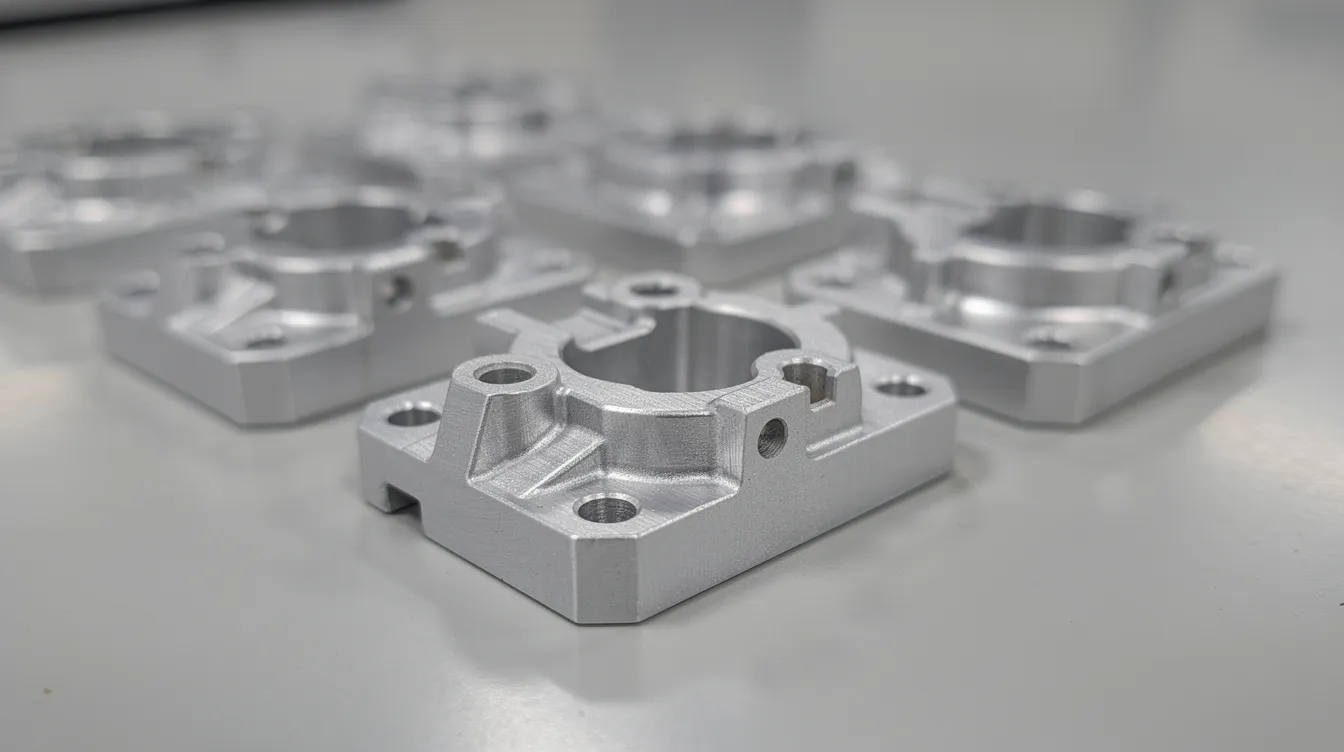
Low pressure die casting is an important casting method for thicker sections and high-integrity aluminum casting parts. The process uses a sealed furnace where controlled gas pressure forces molten aluminum upward into the mold cavity, reducing turbulence and producing denser castings with superior mechanical properties. Low pressure casting is used for thick wall casting parts requiring heat treatment, such as wheel hubs, engine blocks, and suspension components.
Gravity die casting, also called permanent mold casting, relies solely on gravity (sometimes with tilt pouring) to fill the mold. Tooling is less expensive than HPDC, making it economical for medium volume production of pump housings, manifolds, and lighting bodies.
Compared to high pressure die casting, both low pressure and gravity casting generally produce castings with better mechanical integrity and lower porosity, but at slower cycle times and with thicker minimum walls. Many top aluminum die casting companies in China-such as Tianhe Casting and Dongrun-combine all three casting processes under one brand to offer the best-fit casting process per project.
Top Aluminum Die Casting Companies in China (2026 Overview)
This section provides an overview of leading aluminum die casting manufacturers in China based on capabilities, certifications, and export track records. The list is representative, not exhaustive-buyers should still perform their own audits and RFQ comparisons.
Each profile covers: year founded, location, core casting processes, main industries served, and notable strengths. Anebon Metal Products Limited is introduced first as a benchmark for one-stop aluminum die casting and precision machining for overseas OEMs and R&D teams.
Anebon Metal Products Limited – One-Stop Aluminum Die Casting & CNC Machining Partner
Anebon Metal Products Limited (Co Ltd) is a Dongguan-based precision manufacturer established in 2010, focused exclusively on B2B/OEM overseas clients. The company holds ISO 9001:2015 and ISO 14001:2015 certifications, reflecting its commitment to both quality assurance and environmental management.
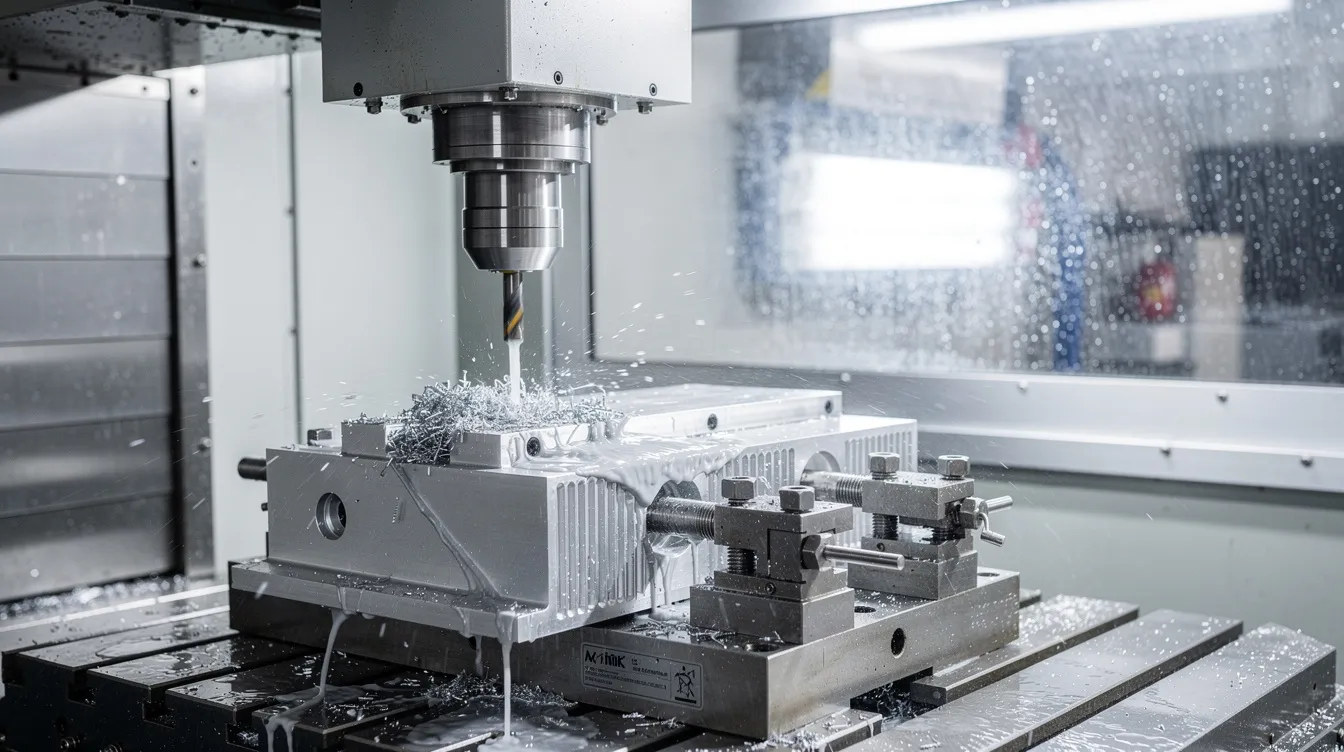
Anebon’s core services span aluminum die casting, precision CNC machining (3-, 4-, and 5-axis), and sheet metal fabrication-from rapid prototyping to full-scale volume production. Rapid prototyping is essential for evaluating design and manufacturing capabilities, and Anebon’s CNC machining prototype service lets customers validate designs before committing to tooling. Expanded CNC machining adds value to die casting services by enabling tight tolerances down to ±0.002 mm on machined features, with DFM feedback provided to design engineers and R&D teams before tooling begins.
Primary industries served include aerospace subsystems, medical devices, industrial robotics, automotive components, and high-end electronics housings. If you’re sourcing precision aluminum die casting parts, send your drawings for a detailed DFM review and quotation.
Other Notable Aluminum Die Casting Manufacturers in China
Beyond Anebon, China has many strong regional die casting companies with different specializations. Each profile below covers process capabilities, facility scale, and export focus to give sourcing teams usable comparison data.
Eastern China Automotive-Focused Aluminum Die Casting Company
Zhejiang and Jiangsu provinces host numerous foundries focusing on aluminum alloy die casting for automotive and motorcycle parts. A representative example is a facility like those in the Ningbo corridor-Ningbo Yujun Mechanical Technology, for instance, was established in 2014 and has grown rapidly serving automotive Tier-1s. These companies typically occupy facilities in the 20,000–30,000 m² range (Zhejiang Yulong Vehicle Industry, for example, has a facility size over 30,000 m²) and hold IATF 16949 and ISO 9001 certifications.
The process mix typically includes high pressure die casting up to 1,600T, gravity die casting, and in-house toolmaking with fully equipped machining centers. Products span engine brackets, gearbox housings, structural EV parts, and steering components. Buyers looking for large volumes with automotive-quality documentation-PPAP, IMDS, full traceability-should prioritize this type of die casting supplier.
South China Precision Electronics & Telecom Die Casting Company
Guangdong-based die casters often specialize in small to medium aluminum housings for telecom, 5G, and consumer electronics. Dongguan Xinghang Precision Hardware, for example, operates a 5,000–10,000 m² facility focused on cold chamber high pressure die casting in the 160T–800T range for thin wall parts and complex heat-sink geometries.
These companies use automated casting cells, vacuum-assisted die casting, and fine machining for EMI-shielded enclosures and base station components. Overseas customers in Europe and North America drive demand for high precision, cosmetically critical surfaces with powder coating and anodizing finishes.
Multi-Process Aluminum Casting & Fabrication Manufacturer
Some Chinese manufacturers combine aluminum die casting, sand casting, sheet metal fabrication, and CNC machining to deliver complete assemblies. A typical plant layout separates workshops for high pressure die casting, gravity casting, sheet metal bending and laser cutting, and final assembly.
This model excels when cast aluminum bases must be combined with sheet metal covers and machined inserts in a single BOM. Suzhou Xiyi Trading, which holds ISO 9001, ISO 14001, and ISO 45001 certifications, is one example of a multi-process operation maintaining broad quality systems. These suppliers suit industrial machinery, enclosures, and industrial equipment frames.
Large-Tonnage Structural Die Casting Factory
Plants equipped with 2,000T+ high pressure die casting machines target EV battery trays, large cross-members, and chassis components. Inox Cast, for example, has over 16 cold chamber die casting machines and handles large-tonnage production processes. These factories deploy advanced casting equipment including real-time shot monitoring, die temperature control, and in-line X-ray inspection.
Vacuum high-pressure die casting improves structural integrity for parts that may be welded or heat-treated post-casting. Global Metal Plastic, which holds IATF 16949 and ISO 13485 certifications, represents the kind of die casting company partnering with global OEMs on lightweighting projects with strict mechanical performance requirements.
Specialized Small-Run, High-Mix Die Casting Shop
Smaller Chinese die casting companies support R&D prototypes, low-to-medium volume production, and frequent design changes. Typical casting equipment includes several 160T–500T die casting machines with flexible fixturing and strong CAD/CAM capabilities. Multi-slide die casting allows for complex and accurate castings in these smaller setups.
Overseas startups and innovators often prefer these suppliers for quick iteration and fast tooling modifications-a sharp contrast to the large, automotive-focused foundries prioritizing very high-volume die casting production runs.
Capabilities You Should Expect from Top Chinese Aluminum Die Casting Companies
Leading firms differentiate themselves by specialized industry focus and the depth of their in-house capabilities. The most capable suppliers offer in-house mold design and quality inspection services, along with simulation tools like Moldflow and MAGMA to predict fill patterns and porosity before cutting steel.
Key capabilities to verify:
-
In-house die design and mold manufacturing
-
Automated casting cells with shot monitoring
-
Advanced CNC machining (3- to 5-axis) for machined parts
-
Full metrology labs: CMM, spectrometers, X-ray, hardness testing
-
Multiple casting processes: high pressure, low pressure, gravity, and in some cases sand casting
-
Materials beyond standard A380: A360, A383, ADC12, custom high-thermal-conductivity alloys
-
Turnkey surface treatment: anodizing, powder coating, painting, shot blasting
Anebon integrates precision CNC machining and sheet metal fabrication with aluminum die casting services, exemplifying the one-stop model that reduces supply chain complexity.
From Drawing to Finished Aluminum Die Cast Part: Typical Workflow
Top Chinese companies follow a structured workflow from RFQ to mass production that mirrors global Tier-1 standards:
-
RFQ and DFM review: Supplier examines 2D/3D CAD, identifies issues with wall thickness, draft, undercuts, and gating. Proper DFM analysis optimizes designs for casting to reduce defects and costs.
-
Tooling design and manufacture: Mold design with cooling, venting, and tool steel selection. Multi-cavity or family dies for higher volumes.
-
Trial casting and sample approval: Produce trial shots, perform filling simulations, submit samples with dimensional reports.
-
Mass production: Process optimization with monitored temperature, shot pressure, and speed parameters.
-
Secondary operations: CNC machining of critical surfaces, surface finishing, assembly.
-
Inspection, packing, logistics: Final dimensional and NDT inspection, export-ready packaging, shipping.
Anebon’s rapid prototyping to full production model illustrates how CNC-machined prototypes can validate designs before final die casting mold tooling is committed, saving time and cost.
Die Casting Tooling and Mold Design in Chinese Foundries
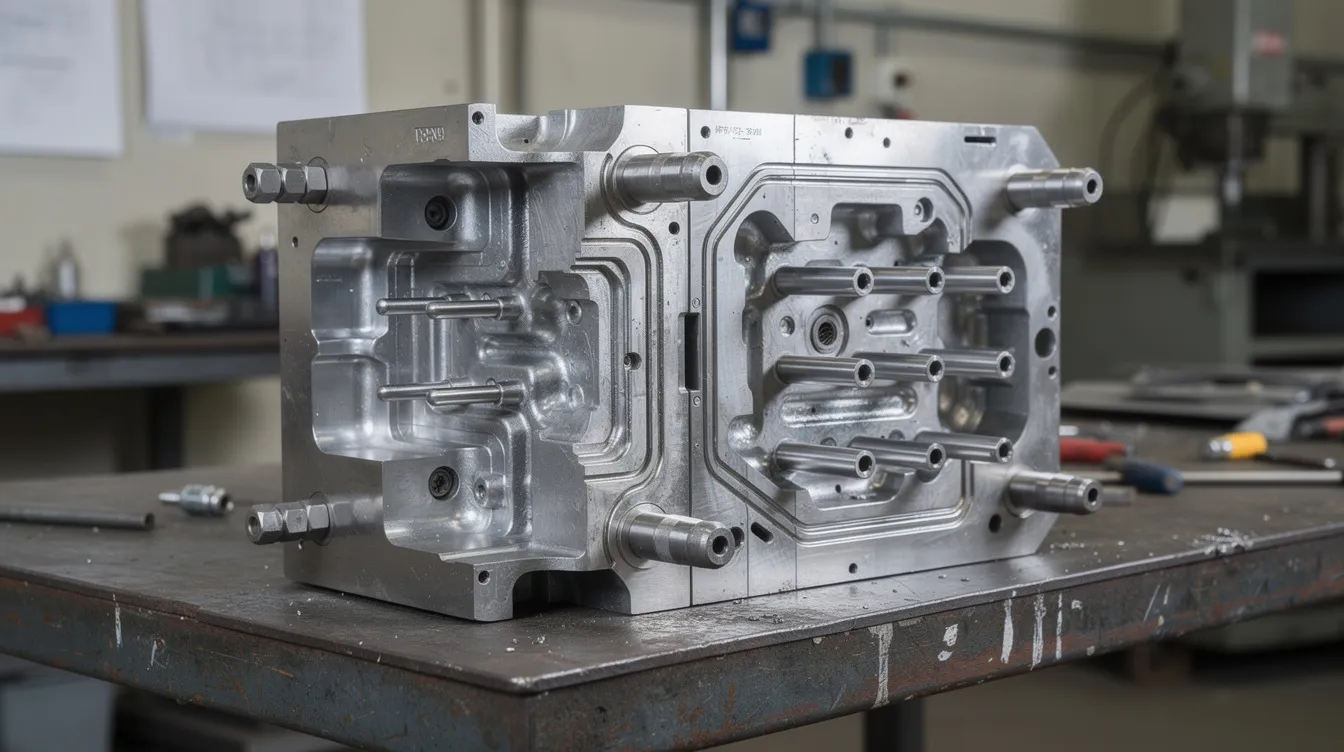
Tooling quality is central to part quality, cycle time, and cost in aluminum die casting. Chinese foundries use several mold design approaches: single-cavity for lower volumes, multi-cavity for high-volume die casting production, family tools for related parts, and interchangeable inserts for part variants.
Typical tool steels undergo precise heat treatment and feature engineered cooling channels for uniform solidification. Design considerations include gate and runner layout, overflow locations, venting slots, parting line planning, and allowance for machining stock. Advanced suppliers run flow and thermal simulation before cutting steel, enabling more stable pressure die casting processes and reduced porosity. Companies like Anebon manage the full in-house cycle from CAD design to mold testing, reducing lead times and communication errors.
Quality Assurance and Certifications
Overseas buyers should prioritize Chinese aluminum die casting manufacturers with robust quality systems and international certifications. ISO 9001:2015 certification ensures quality management systems are in place. IATF 16949 certification is crucial for automotive die casting quality. ISO 14001:2015 covers environmental management, and ISO 13485 applies for medical device supply chains.
Quality control processes include dimensional checks and flaw detection at multiple stages. Typical QA practices encompass incoming raw material inspection via spectrometer, in-process SPC, 100% leak testing for pressure-tight parts, and final CMM inspection. Advanced tools ensure zero defect targets in die casting parts through X-ray inspection, dye penetrant testing, and CT scanning for critical structural castings. Quality assurance involves post-casting operations like surface treatment and final verification.
Buyers should request control plans, FMEA documentation, PPAP packages, and traceability records during supplier evaluation. Suzhou Xiyi Trading’s ISO 45001 certification and Global Metal Plastic’s IATF 16949 plus ISO 13485 certifications demonstrate how leading Chinese suppliers pursue comprehensive quality systems.
CNC Machining and Post-Casting Operations
Most aluminum die casting parts require secondary machining and finishing operations to meet final tolerances. Aluminum die casting allows for complex shapes and designs, but features like bearing bores, sealing interfaces, and thread locations demand high precision CNC machining after casting. Aluminum die casting offers excellent dimensional accuracy as-cast, but critical features benefit from post-machining.
Top Chinese die casting firms operate vertical and horizontal machining centers, 5-axis mills, CNC turning, drilling, tapping, and grinding equipment. Common post-casting steps include deburring, shot blasting, heat treatment where applicable, impregnation for porous sections, and cleaning. Anebon specializes in precision CNC machining with tolerances down to ±0.002 mm, making it well-suited for high precision OEM components.
Surface Finishing for Aluminum Die Castings
Surface finishing affects corrosion resistance, aesthetics, and functional performance such as heat dissipation and electrical grounding. Major surface treatment options include:
-
Anodizing (clear, hard, colored)
-
Powder coating
-
Wet painting
-
Polishing and bead blasting
-
Chromate conversion coating
-
Selective plating
Powder coating is standard for outdoor telecom and led lighting housings. Anodized finishes suit electronics and medical aluminum components. When specifying finishes to Chinese suppliers, include color standards (RAL, Pantone), gloss levels, and salt spray or UV resistance requirements. Top suppliers coordinate surface finishing within controlled supply chains to maintain consistent color and adhesion across batches.
Common Aluminum Alloys Used by Chinese Die Casting Companies
Key aluminum die casting alloys in Chinese foundries include A380, A383/ADC12, A360, A413, and structural grades like AlSi10MnMg. Aluminum die cast parts have high thermal and electrical conductivity, making them ideal for heat sinks, motor housings, and electronic components.
|
Alloy |
Typical UTS |
Key Strength |
Common Use |
|---|---|---|---|
|
A380 |
~324 MPa |
Good all-round properties |
General housings, brackets |
|
ADC12/A383 |
~310 MPa |
Excellent fluidity, thin wall filling |
Precision electronics, telecom |
|
A360 |
~317 MPa |
Good corrosion resistance, thermal conductivity |
Outdoor/harsh environment parts |
|
A413 |
~296 MPa |
Pressure tightness |
Hydraulic, fluid-handling parts |
Alloy choice affects casting performance, machinability, and cost. Overseas buyers should share target mechanical properties and environmental conditions so the casting manufacturer can suggest optimal alloys. Use of secondary (recycled) aluminum is common in China for cost and sustainability, and top suppliers manage composition tightly through spectrometer checks on every batch to maintain stable quality.
Design for Manufacturability (DFM) for Aluminum Die Casting
Collaborating on design early with Chinese die casting engineers reduces cost and risk. Core DFM principles for the die casting process today include:
-
Consistent wall thickness to avoid warpage and shrinkage
-
Proper draft angles for clean die release
-
Rounded corners and fillets to promote melt flow and reduce stress concentration
-
Strategically placed ribs and bosses that avoid core-pull or undercut problems
-
Minimized undercuts unless using slides or collapsible cores
-
Clear parting lines and optimized gate/overflow placement
Gate and overflow placement, along with fillet design, help control liquid metal flow and reduce porosity and cold shuts during the casting process. Typical achievable tolerances for aluminum die castings in China range from ±0.1 to ±0.2 mm for medium-size parts, with machined sealing surfaces reaching ±0.02 to ±0.005 mm. Anebon provides DFM feedback and design optimization suggestions before tooling begins, particularly for OEMs and R&D teams working on new platforms.
Managing Cost When Sourcing Aluminum Die Casting from China
Cost advantage is a key reason to source from China, but cost must be balanced with quality and process control. The process is suitable for high-volume production runs, and per-part economics improve significantly at scale.
Major cost drivers include:
-
Tooling complexity and die casting mold design
-
Part size, weight, and raw material alloy type
-
Machining content and surface finishing steps
-
Inspection intensity and documentation requirements
Strategies to reduce cost: consolidate parts into a single casting, reduce unnecessary tolerances, use standard alloys available in local supply chains, and design for simpler tooling. Multi-cavity tools or family molds improve economics at higher volumes. One-stop suppliers like Anebon reduce overall landed cost by integrating die casting, machining, and sheet metal fabrication, minimizing logistics and handling between vendors.
Typical Industries Served by Chinese Aluminum Die Casting Companies
Chinese aluminum die casting parts are heavily used across multiple industrial sectors. Aluminum die casting is widely used in automotive applications, including gearbox housings, EV motor bodies, and structural brackets. Other major sectors include:
-
Telecom/5G: Base station housings, RF enclosures
-
Industrial machinery: Gearbox covers, valve bodies
-
Medical devices: Frames, brackets, instrument housings
-
Aerospace: Subsystem components
-
LED lighting: Heat sinks, housings
-
Consumer electronics: Enclosures, structural frames
Different industries impose varying requirements for tolerances, cleanliness, documentation, and traceability-all of which affect die casting supplier choice. Anebon targets higher-precision segments like robotics, medical, aerospace, and advanced electronics where machining accuracy and DFM support are critical. Aluminum die casting produces lightweight components that meet stringent weight and performance targets across these sectors.
Risks and Challenges When Outsourcing Die Casting to China
Sourcing from China offers clear advantages, but buyers should plan for potential risks:
-
Communication gaps: Differing specification standards (ASTM vs JIS vs GB), language barriers, and ambiguous GD&T can cause costly misunderstandings.
-
IP concerns: Mold designs and proprietary geometries need protection through NDAs and clear contractual terms.
-
Quality inconsistency: Suppliers may alter alloy sources or process parameters between batches. Monitor Cpk, require material certificates, and insist on traceability.
-
Logistics disruptions: Shipping delays, customs issues, and packaging damage remain real risks, occasionally compounded by holiday schedules or regional power constraints.
Mitigation steps: provide clear 2D/3D drawings with full GD&T, specify tolerances and finishes explicitly, implement staged approvals (T0/T1 samples), and define acceptance criteria before die casting production begins. Selecting suppliers with strong export histories and English-speaking engineering teams-like Anebon-reduces miscommunication. On-site audits, third-party inspections, and long-term partnerships help stabilize quality and lead times.
Future Trends in Aluminum Die Casting in China
Several trends are shaping the die casting field between 2024 and 2030:
-
Automation and Industry 4.0: Real-time process monitoring, MES systems, AI-driven parameter optimization, and digital twins for die and process design are becoming standard at leading foundries.
-
Gigacasting for EVs: Ultra-large casting machines (6,000–16,000T) enable single-piece underbodies and battery trays, replacing dozens of stamped and welded components.
-
Sustainability pressures: Higher recycled content, energy-efficient melting furnaces, and broader ISO 14001 adoption align with global environmental expectations-matching Anebon’s existing certifications.
-
Value chain integration: Rising integration of die casting with CNC machining and sheet metal fabrication to provide full system-level assemblies. This produce castings approach reduces lead times and quality variation for global OEMs.
When to Choose a One-Stop Aluminum Die Casting Partner Like Anebon
A one-stop manufacturing partner manages tooling, die casting, machining, finishing, and assembly under a single roof. This model is ideal when projects involve:
-
Complex parts requiring tight tolerances on machined features
-
Multi-process products combining cast bases with sheet metal covers and machined inserts
-
Time-critical R&D cycles needing fast iteration from prototype to production
-
Programs demanding strong engineering collaboration and DFM support
Anebon’s combined capabilities in aluminum die casting, CNC machining (including 5-axis), and sheet metal fabrication simplify project management for overseas OEMs. When choosing such a partner, look for demonstrated engineering depth, high precision machining benchmarks, ISO certifications, and a proven track record as a trusted die casting service provider in demanding industries like aerospace and medical devices.
Ready to get started? Prepare your CAD files, material specifications, and volume estimates, then contact Anebon for a detailed quote and manufacturability review.
Conclusion: Selecting the Right Chinese Aluminum Die Casting Company
China’s strength in aluminum die casting is built on scale, supply chain density, and continuous investment in advanced casting machines and quality systems. Choosing a supplier is about more than competitive price-engineering support, certifications, process control, and integrated die casting services determine long-term success.
Anebon Metal Products Limited stands as a practical option for overseas OEMs needing precision aluminum die casting, CNC machining, and sheet metal fabrication from a single, ISO-certified partner. Use the evaluation criteria and process overviews from this guide when sending RFQs and comparing quotes from different Chinese aluminum die casting manufacturers.
The strongest supplier relationships are built on clear communication, consistent quality, and continuous improvement. Find a partner who invests in your success as much as their own-and your next aluminum die casting project will be in capable hands.