Top Alloy Die Casting Company: Excellence in Precision Manufacturing
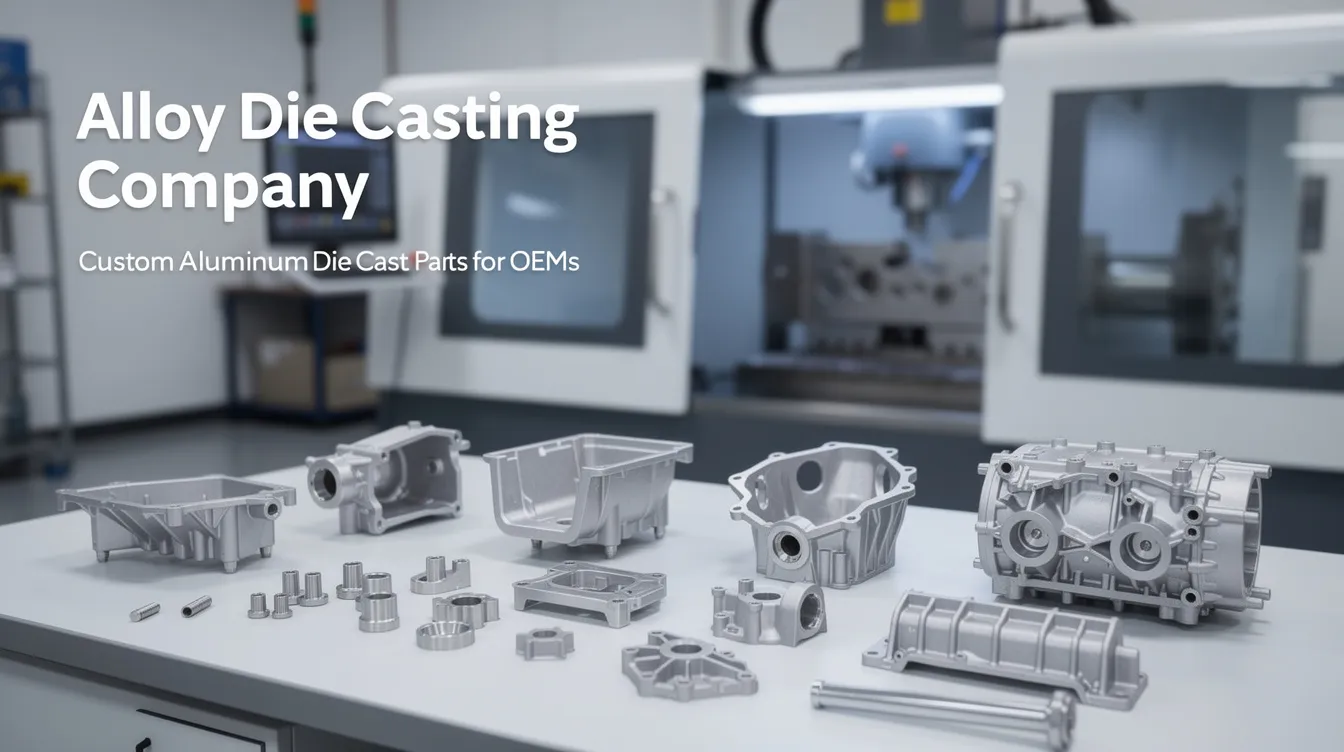
Alloy Die Casting Company: Custom Aluminum Die Cast Parts for OEMs
An alloy die casting company specializes in producing precision metal components by injecting molten aluminum, zinc, or magnesium alloys into hardened steel dies under extreme pressure. Aluminum die casting is a high-pressure manufacturing process capable of producing thousands of parts daily, making it the go-to method for OEMs that need consistent dimensional accuracy, thin walls, and cost-effective volume output.
Anebon Metal Products Limited, founded in 2010 in Dongguan, China, is an ISO 9001:2015 and ISO 14001:2015 certified aluminum die casting manufacturer serving overseas OEMs across automotive, aerospace, medical devices, electronics, robotics, and industrial equipment. Unlike sand casting (coarse finish, variable tolerances) or investment casting (slower, smaller batches), high pressure die casting delivers tighter tolerances – typically ±0.05 mm per inch as-cast per NADCA standards – faster cycle times, and superior repeatability for high volume production.
What Is Aluminum & Alloy Die Casting?
Aluminum die casting is the process of injecting molten aluminum alloy into a hardened steel die under high pressure, then rapidly cooling and ejecting the solidified part. Alloy die casting refers to using engineered aluminum alloys – A380, ADC12, A360, A383 – each selected for specific balances of fluidity, strength, thermal performance, and corrosion resistance. Aluminum die casting offers good corrosion resistance and mechanical properties, with A380 delivering a typical UTS of ~320–330 MPa. Zinc alloys are also used for smaller parts requiring finer detail and tighter as-cast tolerances.
Diverse material options impact casting techniques and tooling temperatures, so alloy selection directly shapes die design, gating strategy, and cooling. The core die casting processes include tool design, die manufacturing, melting, injection (cold chamber for aluminum, hot chamber for zinc), solidification, ejection, and trimming. Aluminum die casting allows for complex part geometries and thin walls – optimized tools can handle wall thickness down to 1.2 mm. Real-world examples include automotive gearbox housings, drone motor mounts, and LED lighting heat sinks.
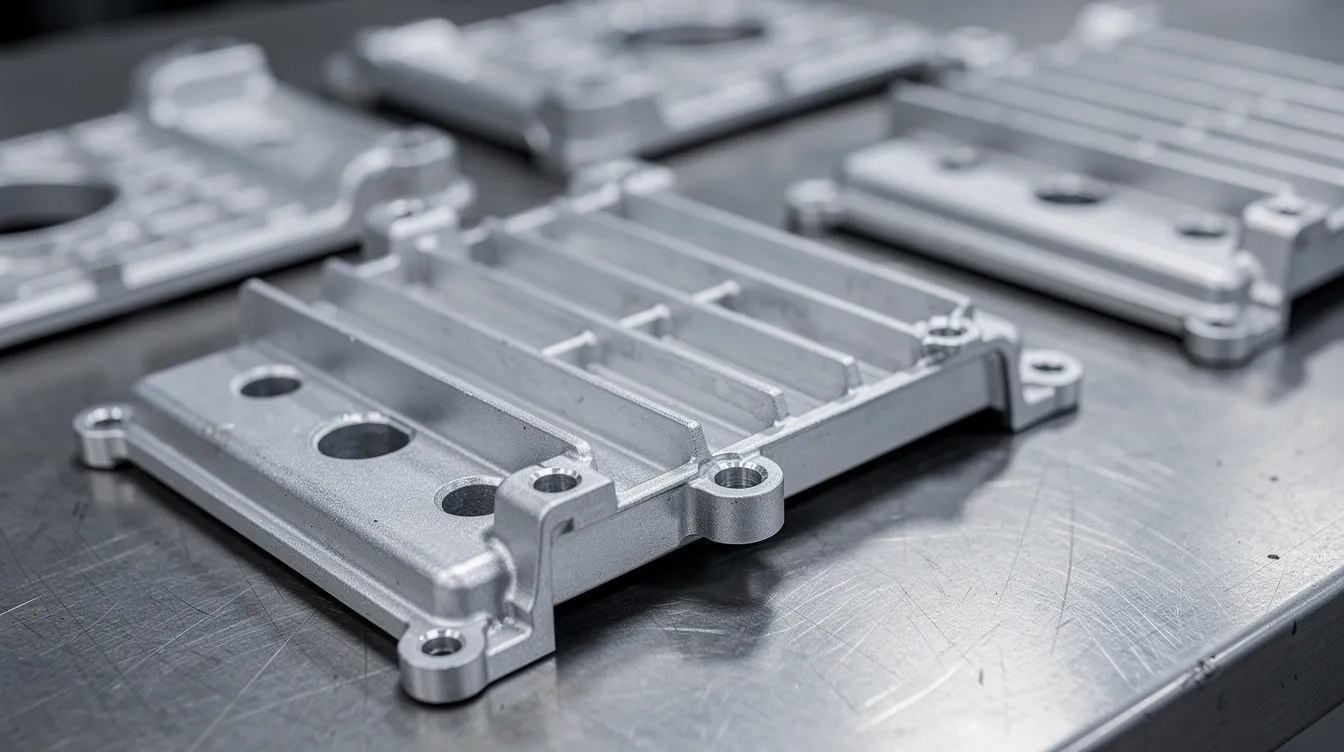
How the Die Casting Process Works in a Modern Casting Company
A professional aluminum die casting company handles every project from RFQ through mass production in a structured workflow: quoting, DFM review, tool approval, trial shots, first article inspection, and full-run production.
During the DFM stage, skilled engineers evaluate wall thickness uniformity, draft angles (minimum 1°+), rib placement for stiffness, and gating and venting to minimize gas porosity. Design for Manufacturing support can optimize part design and reduce weight before any steel is cut. Companies use MAGMAsoft® simulation to optimize aluminum casting quality and design, and digital tools help companies lower production costs by catching defects in the virtual stage.
Tooling is CNC-machined and EDM-finished from H13 tool steel, with lead times of 6–10 weeks for moderate dies and up to 16 weeks for complex multi-cavity tools. MAGMAsoft® simulation further optimizes die casting quality. During production, machine tonnage selection (150 to 800+ tons) matches projected shot weight and die size, with cycle times of 30–90 seconds for small-to-medium parts. Anebon integrates secondary operations – cnc machining, drilling, tapping, deburring – plus surface finishing such as anodizing, powder coating, chromate conversion, and shot blasting. The result: precision aluminum die cast parts held to as-cast tolerances of ±0.14 mm, with machined critical surfaces reaching ±0.002 mm.
Capabilities of an Alloy Die Casting Company Like Anebon
Anebon is a full-service aluminum die casting company that combines die casting, CNC machining (3-, 4-, and 5-axis machining), and sheet metal fabrication under one roof. The range of die casting alloys cast includes A380, ADC12, A383, A360, and AlSi10Mg, alongside zinc and magnesium options.
Production capacity and volume are critical in high volume die casting processes – some industry peers like PHB operate 58 die casting presses from 250 to 2,000 tons. Production capacity varies, and companies that handle large orders efficiently gain a competitive edge. Energy-saving machines are becoming standard in manufacturing, and companies use robots to reduce energy consumption across the shop floor.
Value added services at Anebon include rapid prototyping (CNC or soft tooling), leak testing, functional testing, and assembly. Typical volumes range from 1–50 piece prototypes to pilot runs of hundreds and mass production into tens of thousands. Mold flow simulation software optimizes gate design and cooling channels, reducing porosity before the first shot is fired.
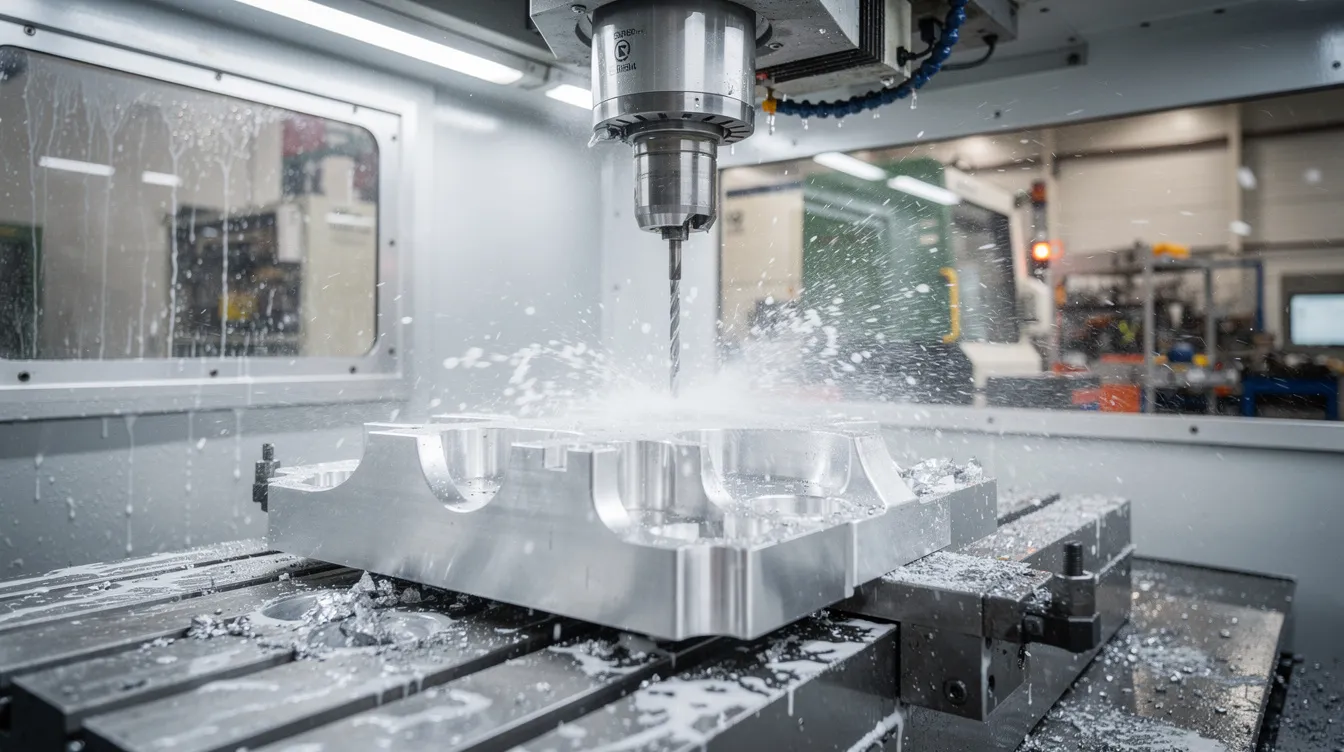
Aluminum Die Cast Parts We Commonly Produce
A specialized casting company focuses on application-specific cast parts that solve real engineering problems. Key part categories include:
-
Automotive & EV: motor housings, transmission cases, inverter housings, steering components – aluminum die casting is used in the automotive industry to achieve ~30–35% weight reduction versus steel assemblies.
-
Aerospace: structural covers and precision aluminum brackets – aerospace components are manufactured using aluminum die casting for strength-to-weight performance.
-
Electronics: telecom housings, connector bodies, sensor enclosures – aluminum die casting is essential for electronics cooling solutions, producing heat sinks with thin ribs as narrow as 1.5 mm.
-
Medical: imaging device structural parts, pump housings – medical devices utilize aluminum die casting for precision parts demanding low porosity and leak tightness.
-
Defense: ruggedized enclosures and mounting systems – defense industry components are produced with aluminum die casting for reliability under extreme conditions.
Lightweight die castings with thin walls benefit all these industries through heat dissipation, reduced weight, and complex geometries in a single shot. Anebon can combine die cast parts with stamped or machined components into subassemblies, simplifying the OEM supply chain. Surface finishes vary by sector: anodizing for aerospace, powder coating for outdoor electronics, and clear chromate for automotive.
Choosing the Right Aluminum Die Casting Manufacturer
Not all aluminum die casting companies deliver equal results. Choosing the right alloy die casting company requires evaluating a manufacturer’s material expertise, process range, machining capacity, and tolerance capability. Alloy capabilities involve verifying the company casts the specific metals required for your project needs.
Key evaluation factors:
-
Quality assurance processes: ISO 9001:2015 certification, incoming material inspection, in-process checks, CMM measurement, leak testing, and PPAP for automotive
-
Tooling: tooling ownership and maintenance policies affect production costs over time
-
Lead times: 7–16 weeks from tool kick-off to first articles; concurrent engineering and prototyping compress schedules
-
Cost structure: tooling cost, die life, cycle time, scrap rate, and machining content all shape part price – prioritize total cost of ownership
Good customer support ensures timely assistance for project needs, and effective communication enhances project success and satisfaction. Companies with strong customer support can handle large orders efficiently, and customer support includes managing finishing requirements for parts. Good service after purchase is crucial for project success. Anebon has served overseas OEMs since 2010 with fluent English engineering support, flexible MOQs, and the ability to scale from prototypes to full production.
Aluminum Die Casting vs. Other Casting Methods
When comparing casting methods, the right process depends on annual volume, tolerance, and geometry:
-
Die casting: best for high-volume, high-precision, thin-wall components – die casting is a high-pressure process for precise metal components
-
Sand casting: good for very large or low-volume parts with coarser tolerances (±0.25–1.5 mm)
-
Investment casting: suited for extremely complex shapes but slower and costlier per part
Anebon helps customers choose the right aluminum process based on their data. For example, converting a CNC-machined 6061 housing into an aluminum die cast design at 10,000 pcs/year can reduce per-part cost by 30–60% after tooling amortization. Where zinc alloy die casting may be preferred – smaller parts, tighter detail, lower melting temperatures – Anebon supports alloy selection across its full materials range.
CNC Machining & Finishing for Die Cast Parts
Most precision aluminum die cast parts still require some machining. Anebon’s CNC services include milling, turning, drilling, boring, tapping, and 5-axis machining for complex components like impellers or medical housings. Machining fixtures are designed around cast datums to maintain repeatability on critical features such as bearing bores and sealing faces.
A typical workflow runs: die cast → trim → shot blast → CNC machining → leak test → anodize → 100% visual inspection → packaging. Surface treatments include anodizing (clear, black, hard), powder coating, painting, bead blasting, polishing, and plating on compatible alloys – though high-silicon alloys like A380 do not anodize to bright decorative finishes and are better suited to coating or painting.
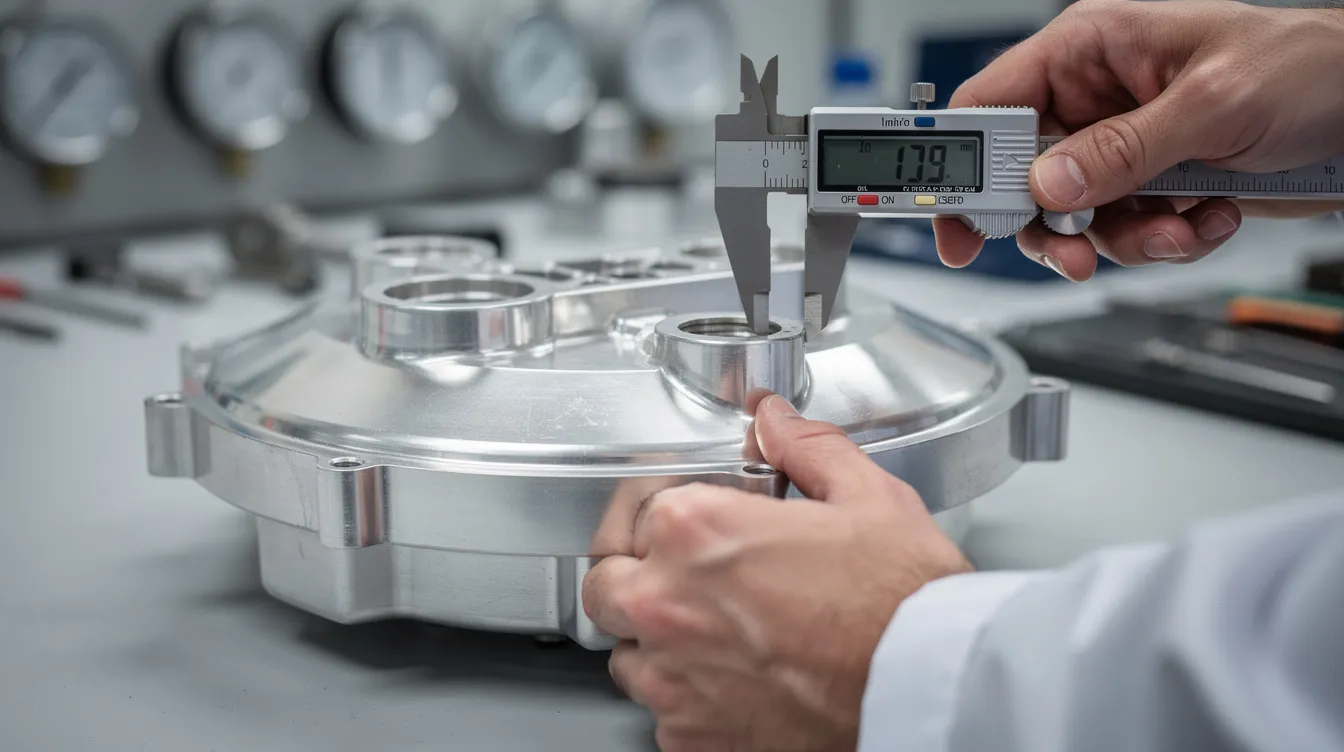
Quality Assurance & Certifications
Quality assurance processes are essential in precision manufacturing. Quality certifications ensure strict inspection protocols and process controls that make the difference between functional die castings and scrap.
Anebon’s certifications and methods include:
-
ISO 9001:2015 – a standard for quality management systems ensuring documented processes and traceability
-
ISO 14001:2015 – environmental management and responsibility
-
IATF 16949 – an automotive quality management standard supported through full PPAP/APQP documentation
-
NADCA guidelines set standard tolerances for consistency in die casting
-
Inspection: first article inspection (FAI), CMM dimensional checks, hardness testing, porosity checks, X-ray where required
Quality assurance ensures parts meet specifications and function correctly across production runs. Statistical process control (SPC) on critical dimensions reduces scrap and maintains consistency. Quality checks are crucial for maintaining high production standards. Documentation support covers material certificates, RoHS/REACH compliance, inspection reports, and full PPAP packages for automotive projects.
Industries & Case Examples Served by Anebon
Since 2010, Anebon has delivered solutions across multiple high-precision industries:
-
Automotive: Redesign of an aluminum die cast EV motor housing achieving ±0.14 mm as-cast tolerances and ±0.005 mm on machined surfaces, reducing weight by over 30% compared to the prior steel assembly while cutting machining time significantly.
-
Medical: A low-porosity die cast pump body for a European OEM with tight leak-rate requirements, smooth internal surfaces achieved through alloy selection (A360) and optimized venting design.
-
Industrial electronics: An IP-rated aluminum die cast enclosure with CNC-machined gasket grooves and powder-coated finish for outdoor use, producing thousands of units annually.
Each project followed the same discipline: design review, DFM optimization, tooling, sample validation, and production ramp. Anebon routinely ships to North America, Europe, and Asia-Pacific with tailored packaging and logistics support.
Packaging, Logistics & Global Support
Precision aluminum die castings need protection during international transport. Anebon uses layered separators, foam or EPE inserts, custom corrugated boxes, and returnable totes for long-term programs. Machined surfaces receive protective films, and sea shipments include desiccants for moisture control. Each package is labeled with part and batch data for traceability.
Shipping methods include express air for prototypes, air freight for urgent batches, and sea freight for bulk orders. English-speaking project managers provide regular production updates and digital documentation – a critical support layer for international OEM customers.
How to Start a Project with an Alloy Die Casting Company
Engineers and buyers can engage Anebon efficiently by preparing 2D drawings, 3D models (STEP/IGES), annual volume estimates, target pricing, preferred alloy, and any industry standards (automotive, medical, RoHS). Anebon’s typical RFQ-to-quote timeline runs 24–72 hours for standard parts, followed by DFM review, tool design approval, sample submission, and production ramp.
Collaborating early on casting-friendly geometry helps reduce machining content, improve mold design efficiency, and lower total cost. Many companies now aim for zero carbon emissions, and recycled materials are increasingly used in die casting – Anebon supports these sustainability goals through its ISO 14001 environmental management framework. Aluminum die casting can produce thousands of parts daily once tooling is validated, making it the most scalable path from prototype to high volume production.
Contact Anebon to request a quote and discover how our team of skilled engineers makes parts that meet your exact specifications – from rapid prototyping through long-term production. Browse our gallery to see what a dedicated alloy die casting company can create for your business.