Top Aerospace Medical Certified Precision Suppliers for Quality Parts
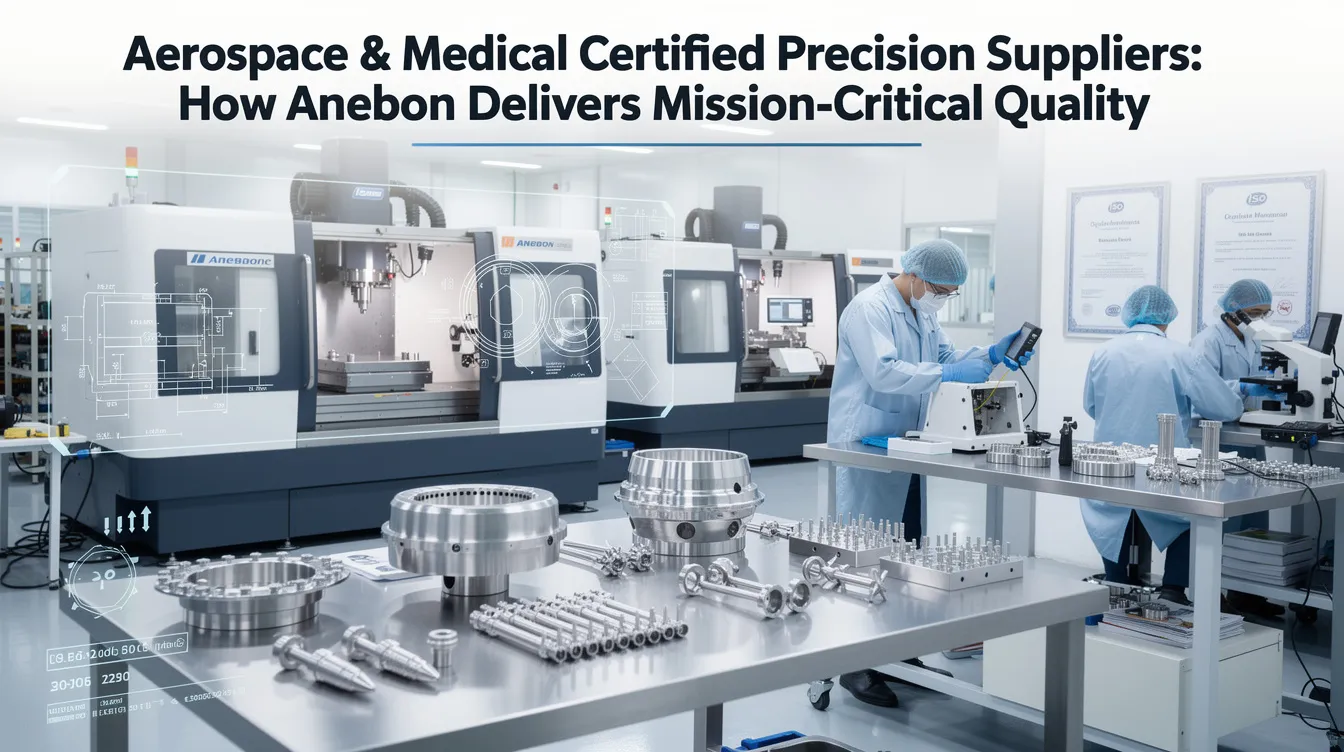
Aerospace & Medical Certified Precision Suppliers: How Anebon Delivers Mission‑Critical Quality
Introduction: Why Aerospace & Medical Programs Need Certified Precision Suppliers
Both aerospace manufacturing and medical device production occupy a tier of manufacturing where failure is not an option. Critical flight parts and medical implants demand micro-level precision, and the consequences of a missed tolerance or undocumented material lot can range from grounded aircraft to patient harm. Precision manufacturing reduces the risk of catastrophic failures in aerospace, while in the medical industry, dimensional accuracy directly influences device safety and regulatory approval.
This article is written from the perspective of Anebon Metal Products Limited, a B2B OEM precision manufacturer based in Dongguan, Guangdong, China. Since 2010, we have served aerospace customers and medical OEMs worldwide with cnc machining, die casting, and sheet metal fabrication – all backed by tolerances as tight as ±0.002 mm.
The overlap between these two regulated worlds is substantial: tight tolerances, validated processes, and robust documentation are non-negotiable whether the part flies at 40,000 feet or enters an operating room. Anebon is ISO 9001:2015 and ISO 14001:2015 certified, and we routinely work to AS9100‑driven aerospace standards and ISO 13485‑style medical quality expectations, even when the OEM customer holds the end certification.
-
Precision components for flight-critical and patient-contact applications
-
Tolerances down to ±0.002 mm across CNC milling, turning, and multi axis machining
-
Dual-industry quality systems supporting aerospace and medical documentation requirements
-
ISO 9001:2015 and ISO 14001:2015 certified facility in Dongguan, China
What “Certified Precision Supplier” Means in Aerospace and Medical Industries
A certified precision supplier is not simply a shop with a certificate on the wall. In practice, it means an audited quality management system, documented processes for every operation, calibrated equipment traceable to national standards, and a proven ability to hold demanding tolerances across production runs. Suppliers should have advanced inspection capabilities to ensure parts meet tolerances consistently, not just on the first piece.
Aerospace manufacturers typically require AS9100‑compliant processes. AS9100D certification ensures compliance with aerospace-specific quality standards and adds requirements beyond ISO 9001:2015 – including configuration management, counterfeit parts prevention, and product safety controls. Medical device OEMs look for ISO 13485‑style controls covering design history, risk management per ISO 14971, and post-market surveillance. ISO 9001 is a foundational quality management standard for aerospace, and it forms the base upon which both AS9100 and ISO 13485 build their sector-specific requirements.
Certification impacts everyday work in concrete ways:
-
First Article Inspection (FAI): Aerospace parts require AS9102-compliant FAI; medical validation runs serve a similar function.
-
Material traceability: Heat numbers, mill test certificates, and lot records travel with every shipment.
-
Controlled revisions: ECN-driven change management ensures everyone works from the current drawing revision.
-
CAPA systems: Corrective and preventive actions are documented and tracked to closure.
-
Training and internal audits: Operators are qualified on specific processes; audits verify compliance continuously.
Suppliers in aerospace and medical industries often maintain dual certification in AS9100 and ISO 13485, reflecting the overlapping rigor both sectors demand.
Anebon at a Glance: Capabilities for Aerospace & Medical OEMs
Anebon Metal Products Limited is a Dongguan-based precision manufacturer founded in 2010, serving overseas OEMs across aerospace, medical devices, robotics, automotive, electronics, and industrial machinery.
Core services:
-
CNC machining: 3-, 4-, and 5-axis milling plus CNC turning
-
Die casting: aluminum and zinc alloy tooling and production
-
Sheet metal fabrication: laser cutting, bending, welding, and assembly
Measurable capabilities:
-
Tolerances as tight as ±0.002 mm (±0.0001 inches)
-
Surface finishes down to Ra 0.8 µm for aerospace mating surfaces
-
Batch sizes from single prototypes to tens of thousands of parts per year
-
Typical prototype lead times of 5–10 working days
Unlike large digital brokers that operate as marketplaces – routing your files to anonymous shops – Anebon provides direct factory control. Your parts are machined, inspected, and shipped from a single facility where our engineering team manages every step. This means faster feedback loops, tighter process control, and a single point of accountability for quality systems and documentation.
Quality & Certification Framework (ISO 9001, ISO 14001, and Aerospace/Medical Expectations)
Anebon’s ISO 9001:2015 certification underpins every project we deliver. It ensures documented process control, calibrated measurement equipment, formal nonconformance handling, and a continuous improvement cycle that drives down defect rates over time.
Our ISO 14001:2015 environmental management certification reflects a growing requirement from aerospace and medical OEMs. Increasingly, aerospace companies and medical device firms prefer manufacturing partners with environmental accountability baked into their supply chains.
AS9100D certification includes aerospace-specific quality management requirements – risk-based thinking, configuration management, and counterfeit parts prevention – that go well beyond ISO 9001. While Anebon’s customers often hold the AS9100 certification themselves, we align our internal procedures to these clauses so that our documentation, inspection reports, and change control satisfy the OEM’s flow-down requirements without rework.
ISO 13485 is critical for medical device quality management. Anebon supports medical OEMs by maintaining lot traceability for biocompatible materials, providing device-history-ready documentation, and running validation builds when the customer’s quality team requires IQ/OQ/PQ evidence.
ITAR compliance is essential for defense-related aerospace projects. Anebon works with customers to ensure proper handling of controlled technical data when defense manufacturing requirements apply.
How customers benefit:
-
Material certificates (CoA/CoC) supplied with every aerospace and medical shipment
-
CMM inspection reports with full dimensional data
-
PPAP-style documentation packages on request
-
Rigorous quality control processes that mirror AS9100 and ISO 13485 expectations
-
NADCAP accreditation is crucial for specialized aerospace manufacturing processes – we coordinate with NADCAP-accredited partners for special processes such as heat treatment, NDT, and coatings when required
Precision CNC Machining Capabilities for Aerospace Components
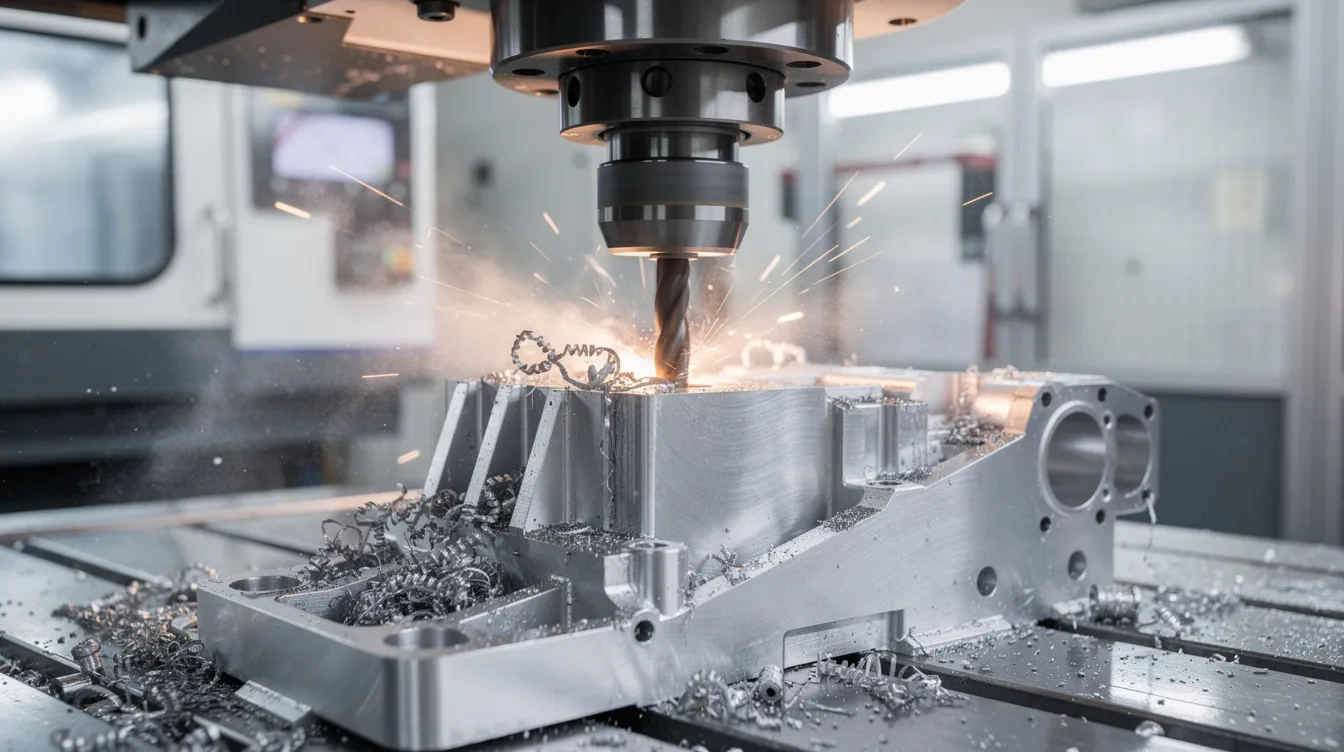
Anebon’s aerospace cnc machining services span the full range of precision operations needed for structural components, engine-adjacent hardware, and avionics housings. CNC machining is essential for producing complex aerospace geometries that cannot be achieved through conventional fabrication.
Our 5-axis CNC milling capability allows us to machine complex geometries in a single setup, reducing fixture-induced error and maintaining dimensional stability across multi-face features. Aerospace components require tolerances as tight as ±0.005 mm on critical interfaces, with true position and profile controls specified per GD&T. Suppliers should maintain tight tolerances often down to ±0.0001 inches for sealing surfaces and bearing bores.
Typical precision aerospace components we produce:
-
Brackets and structural assemblies for airframes and UAV frames
-
Avionics enclosures and housings with EMI shielding features
-
Manifolds and hydraulic blocks with intersecting bore patterns
-
Heat-sink structures for propulsion systems electronics
-
Satellite and space hardware from aluminum alloys and titanium
Equipment and process highlights:
-
3-, 4-, and 5-axis CNC milling with simultaneous contouring
-
Precision CNC milling and CNC turning on machines with positional accuracy verified to sub-micron levels
-
Advanced inspection systems including CNC CMMs with repeatability down to 0.001 mm
-
Programmable workholding and specialized tooling designed for thin-wall machining and deep pocketing
Aerospace tooling ensures consistent tolerances in component manufacturing. Precision tooling reduces material waste and improves production efficiency, while durable tooling maintains dimensional stability over long production runs. Tooling must accommodate high-strength materials like titanium and aluminum, and aerospace tooling includes progressive dies and custom forming tools where forming operations are part of the scope.
Compared to US-only shops, Anebon delivers cost-effective overseas production without sacrificing quality – the same CMM reports, the same material certifications, and the same engineering validation rigor that domestic shops provide, at a significantly lower piece price.
Medical Device & Surgical Component Machining Expertise
Anebon serves as a precision supplier to medical OEMs producing components for orthopedics, minimally invasive surgery, diagnostic equipment, and surgical robotics. Medical materials must include implantable-grade metals and medical-grade plastics, and our material inventory and sourcing network cover the grades these applications demand.
Typical medical components:
-
Bone screws and orthopedic plates
-
Surgical instrument handles and jaws
-
Robotic end-effectors and articulation joints
-
Instrument housings and imaging system brackets
-
Diagnostic device enclosures and fixtures
Extremely tight tolerances and clean surface finishes define medical machining. For sliding or implant-adjacent interfaces, we target Ra ≤ 0.8 µm, with burr-free edges verified under magnification. Every patient-contact surface receives dedicated inspection.
Common medical materials we machine:
-
Stainless steel 316L and 17-4 PH for instruments and housings
-
Titanium Grade 5 (Ti-6Al-4V) for implant-adjacent and structural medical components
-
Medical-grade aluminum alloys for lightweight enclosures
-
Engineering plastics like PEEK and Ultem for sterilizable components
When requested by the customer’s quality team, Anebon supports validation runs, IQ/OQ/PQ-style process stability studies, and sample submissions that demonstrate repeatability across dimensional, surface finish, and visual criteria.
Advanced Materials for Aerospace & Medical Applications
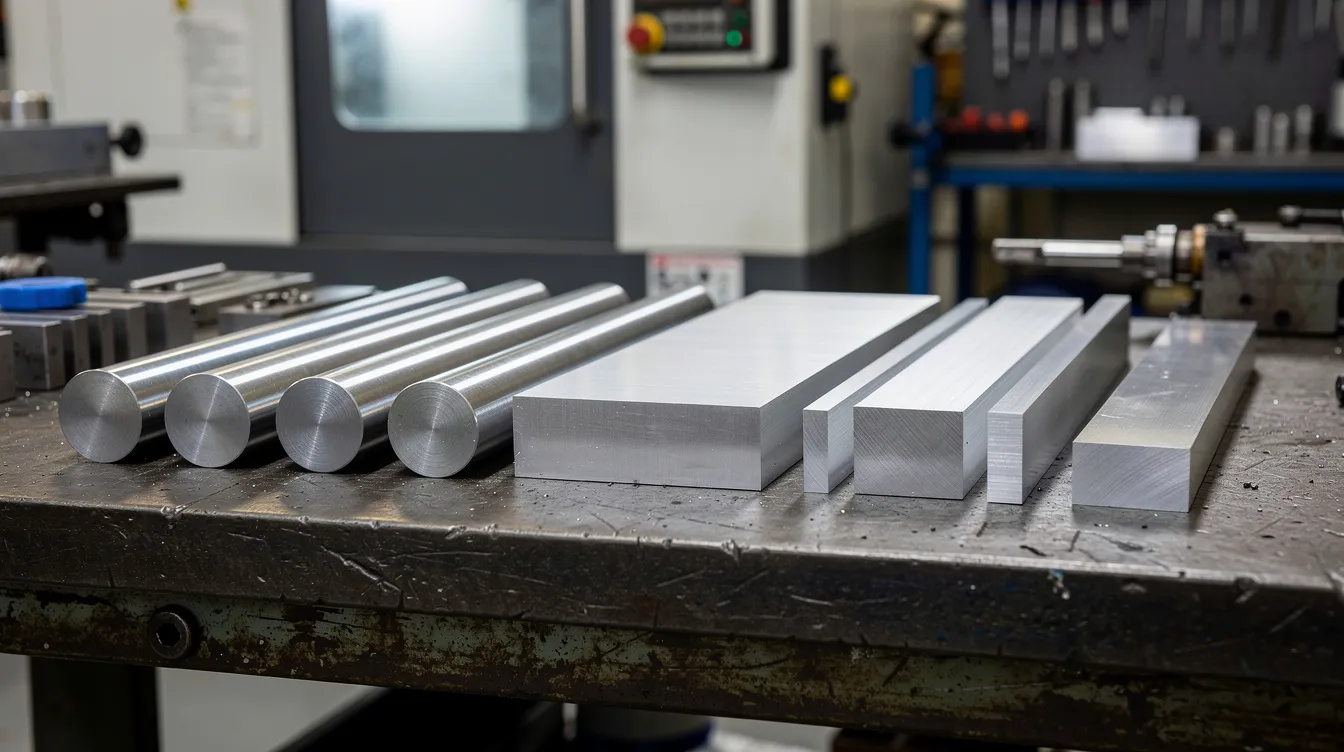
Materials used in aerospace and medical components require specialized, high-performance materials that meet strict material specifications for strength, weight, biocompatibility, or temperature resistance. Aerospace materials include high-strength steels, titanium alloys, and advanced composites. Aerospace materials require certified documentation of properties – every lot is accompanied by mill test certificates confirming chemistry, mechanical properties, and heat treatment condition.
Aerospace material families:
-
Aluminum alloys (6061, 7075, 2024): Aluminum alloys dominate airframe structures for low density. 7075 provides excellent strength-to-weight for structural components in modern aircraft.
-
Titanium alloys (Ti-6Al-4V): Titanium alloys are commonly machined for aerospace applications. Titanium alloys are used for high-temperature aerospace applications and offer exceptional corrosion resistance in demanding operating environments.
-
Stainless steels (17-4 PH, 15-5 PH): Stainless steels provide strength and corrosion resistance in aerospace and defense applications.
-
Nickel-based superalloys (Inconel 718): Nickel-based superalloys enable extreme temperature performance in turbines and engine components exposed to extreme temperatures.
-
Specialty metals and advanced materials: Including cobalt-chrome and high-performance polymers for specialized applications.
Medical material families:
-
Titanium Grade 5 and Grade 23 (ELI) for implants
-
316L stainless steel for surgical instruments
-
Cobalt-chrome alloys for articulating joint surfaces
-
PEEK and Ultem for lightweight, sterilizable structural medical components
Machining challenges and Anebon’s strategies:
Tool wear in titanium and Inconel is significant – we use carbide and ceramic tooling with optimized feeds, speeds, and coolant strategies. For thin-wall aluminum aerospace parts, distortion control through fixture design and machining sequence is critical to maintaining dimensional stability. When machining PEEK, heat management through controlled cutting parameters prevents surface degradation.
Surface Finishes, Cleaning, and Post‑Processing for Regulated Industries
Surface finish requirements differ between aerospace and medical applications, but both sectors demand consistency and documentation. For aerospace components, Ra 0.8–1.6 µm is typical for aerodynamic or mating surfaces. For medical instruments, smooth and easy-to-clean surfaces with Ra 0.4–0.8 µm and stringent burr control are standard. Special processes such as anodizing and welding may be required for precision parts in both industries.
Finishing processes Anebon coordinates:
-
Anodizing (Type II and Type III hard-coat) for aluminum aerospace parts
-
Passivation per ASTM A967 for stainless steel medical and aerospace parts
-
Bead blasting for uniform cosmetic finishes
-
Chromate conversion coating for corrosion resistance on aluminum
-
Painting and powder coating where specified
Medical-specific finishes:
-
Electropolishing for surgical instruments to achieve low-roughness surfaces
-
Laser marking of UDI codes on medical devices
-
Smooth radius transitions to minimize debris accumulation in sterilization
Cleaning and packaging:
-
Ultrasonic cleaning prior to inspection and packaging
-
Protective, clean-room-compatible packaging for medical shipments
-
Segregation of aerospace and medical jobs to prevent cross-contamination
Engineering Collaboration & DFM for Aerospace and Medical Projects
Engineering collaboration starts before chips fly. Anebon provides DFM (Design for Manufacturability) feedback, tolerance stack-up review, and material selection advice to design engineers in aerospace and medical sectors. Early stage prototyping with built-in DFM review reduces cost, machining risk, and lead time.
Typical workflow:
-
Customer sends STEP/IGES models and 2D drawings
-
Anebon reviews within 24 hours, identifying risk areas
-
We propose cost-effective changes – tooling strategies, fillet adjustments, process selection
-
Prototype development begins after approval
Concrete engineering touchpoints:
-
Tolerance negotiation: recommending where extremely tight tolerances are truly needed vs. where relaxation saves cost without compromising function
-
Process selection: advising whether 3-axis or 5-axis is most efficient for a given geometry
-
Material substitution: suggesting equivalent grades that machine faster or cost less while meeting material specifications
-
Prototype iteration support: rapid turnaround on revision changes during engineering validation phases
In one recent UAV bracket project, adjusting wall thickness and fillet radii per our DFM recommendations cut cycle time by 30% and reduced scrap rate from 8% to under 2%, with no change to fit or structural performance.
Traceability, Documentation, and Inspection Protocols
Both aerospace and medical OEMs require full part and material traceability. Suppliers must ensure full material, lot, and process traceability in regulated industries. Material certifications require coordination with suppliers for traceability documentation – from raw material mill certificates through every manufacturing step to final inspection.
Aerospace manufacturing demands comprehensive inspection and documentation. Full documentation is often required in aerospace and medical manufacturing including inspection and process records. Aerospace components require full material traceability for compliance.
Anebon’s standard documentation packages:
-
First Article Inspection Reports (FAIR) per AS9102 format
-
Dimensional inspection sheets with CMM data
-
Material certifications (CoA, CoC) with heat/lot numbers
-
Surface finish reports from calibrated profilometers
-
Process records for special operations (heat treatment, anodizing, etc.)
Records are stored for defined retention periods – typically 5–10 years depending on customer requirements – to support regulatory inquiries or root cause analyses.
Inspection equipment:
-
CNC coordinate measuring machines (CMMs)
-
Height gauges, calibrated micrometers, and bore gauges
-
Surface roughness testers
-
Optical comparators for profile verification
-
All instruments maintained via scheduled calibration in line with ISO 9001
Verification of special processes in aerospace often requires Nadcap approvals. Nadcap accreditation is often required for special processes in aerospace. When our customers’ programs require NADCAP-certified heat treatment or NDT, we coordinate with accredited partners and provide the complete certification chain.
Production Flexibility: From Prototype to Long‑Term Program Supply
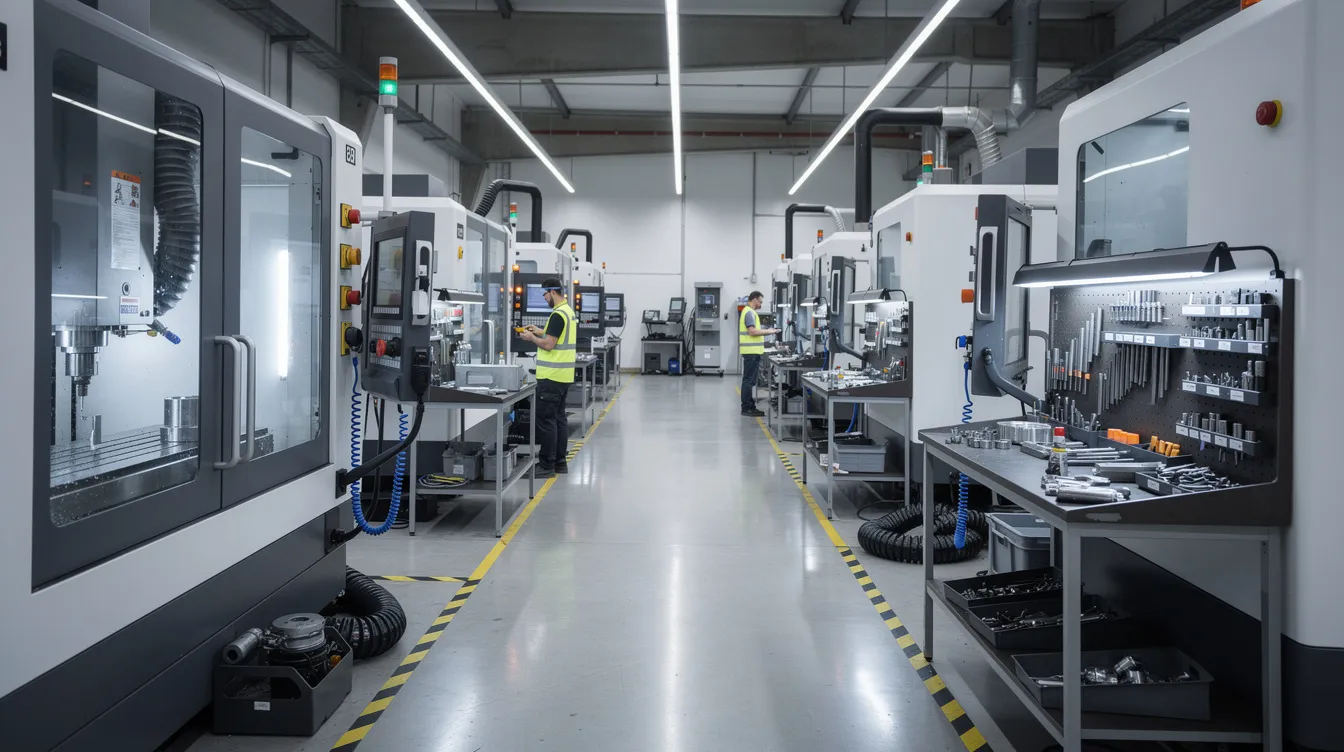
Anebon supports all stages of aerospace programs and medical device programs – from rapid prototyping and engineering validation builds to bridge production and full-scale annual volumes. Production scalability is built into our CNC cell architecture.
Example quantities:
-
1–20 parts for initial flight test hardware or clinical prototypes
-
50–500 units for engineering validation and qualification runs
-
1,000+ units/year for mature programs requiring production reliability
High precision improves combustion efficiency in aerospace engine components – a fact that drives repeat production of combustion-related hardware where Anebon’s machining capabilities ensure part-to-part consistency across high volume production runs.
We adjust capacity for ramp-ups using flexible CNC cells and multi-shift operations. Because Anebon combines cnc machining, die casting, and sheet metal fabrication under one roof, customers can consolidate their supplier count while gaining integrated assemblies from a single manufacturing partner.
Comparing Overseas Certified Precision Suppliers with Local Aerospace & Medical Shops
The decision between sourcing from local shops with AS9100 or ISO 13485 certification and working with an ISO-certified overseas supplier involves real trade-offs. Aerospace manufacturing faces challenges with complex geometries and specialized materials regardless of where parts are made – the question is who delivers the best combination of quality, cost, and communication.
Advantages of working with Anebon:
-
Cost efficiency: 30–50% lower piece prices vs. comparable US/EU shops, particularly on complex parts in titanium or Inconel
-
Broad process range under one roof: machining, casting, sheet metal, finishing – fewer logistics steps
-
Strong English-language engineering communication via digital collaboration tools
-
Quality certifications and documentation identical in rigor to domestic suppliers
Addressing common concerns:
-
IP protection: Enforceable NDAs, physical security protocols, and contractual safeguards
-
Logistics: Tracked shipping, sealed packaging, and buffer stock planning for critical programs
-
Lead-time reliability: Dedicated program managers and transparent production scheduling
-
Regulatory acceptance: ISO 9001 and ISO 14001 certificates, plus documentation packages that satisfy aerospace and medical audit requirements
Manufacturers rely on data, not geography. When a pilot order demonstrates that inspection reports, dimensional data, and material traceability meet your quality standards, the supplier’s location becomes secondary to their technical capability.
How to Qualify Anebon as an Aerospace or Medical Precision Supplier
Qualifying a new manufacturing partner for demanding aerospace applications or medical device production follows a structured path. Here is how it typically works with Anebon:
-
Initial RFQ: Share 3D CAD models (STEP/STP), 2D drawings with GD&T, material spec, quantity, surface finish requirements, and any regulatory notes.
-
NDA signing: Protect your IP before detailed technical discussions begin.
-
Certificate review: Request and review Anebon’s ISO 9001:2015 and ISO 14001:2015 certificates.
-
Sample documentation pack: Review our inspection report templates, material certification format, and FAI examples.
-
Remote or on-site audit: Process walkthroughs via video call, or arrange an on-site visit to our Dongguan facility.
-
Pilot order: Start with 10–50 parts to validate fit, function, exceptional dimensional accuracy, and documentation flow.
-
Ramp to production: Scale volume after pilot approval, with established control plans and inspection routines.
Minimum data Anebon needs for an accurate quote:
-
3D CAD file (STEP, STP, or IGES)
-
2D drawing with tolerances, GD&T callouts, and surface finish requirements
-
Material specification and grade
-
Target quantity and annual forecast
-
Application context (aerospace or medical) and any special handling instructions
Cost and Lead‑Time Drivers in Aerospace & Medical Precision Machining
Understanding what drives cost helps engineers design custom aerospace parts and medical components that are both compliant and cost-effective.
Key cost drivers:
|
Factor |
Impact |
|---|---|
|
Material (titanium vs. aluminum alloys) |
Titanium can cost 5–10× more than aluminum; tool wear further increases machining cost |
|
Tolerance tightness |
Going from ±0.01 mm to ±0.002 mm can double machining time due to slower feeds and finer tools |
|
Surface finish level |
Achieving Ra 0.4 µm adds grinding, polishing, or electropolishing steps |
|
Part complexity |
5-axis operations cost more than 3-axis but reduce setups and improve accuracy |
|
Documentation intensity |
FAI, full traceability packages, and strict regulatory standards add front-end time |
Aerospace manufacturing lead times exceed commercial manufacturing due to documentation overhead. Realistic timelines from Anebon:
-
Simple prototypes in aluminum: 5–10 working days
-
Complex titanium aerospace parts or multi-component medical assemblies: 15–25 working days
-
Complex aerospace parts requiring special processes and full FAI: add 5–10 days for finishing and documentation
In one recent project, relaxing a non-critical bore tolerance from ±0.005 mm to ±0.01 mm reduced cycle time by 18% and eliminated a secondary grinding operation – saving cost without any impact on reliable performance or fit.
Future Trends: Digitalization and Global Supply Chains for High‑Risk Industries
Aerospace companies and medical OEMs are accelerating their shift toward digital supply chains. Online RFQ workflows, cloud-based drawing control, and real-time production visibility are replacing fax-and-email procurement.
Anebon already supports these digital workflows with secure file transfer, CAD/CAM integration, and documented revision control. When customers update a drawing, our system flags the change and ensures only the current revision reaches the shop floor – a basic but critical element of process control.
Emerging trends relevant to our manufacturing processes include:
-
Wider adoption of 5-axis machining for lightweight structures in modern aircraft and defense manufacturing
-
Increased use of high-performance polymers in medical devices, requiring specialized tooling and thermal management
-
Tighter lifecycle traceability driven by regulatory pressure in both aerospace engineering and medical device post-market surveillance
-
Growing demand for produce components with manufacturing precision verified by digital inspection records
Component failure in aerospace or medical applications has consequences measured in lives, not dollars. The suppliers who thrive in this environment are those who treat every part as if it matters – because it does.
Anebon is positioned as a long-term partner able to evolve with new aerospace standards, advanced materials, and process validations – not a one-off job shop, but a precision machine shop built for sustained program support.
Work with Anebon: Request a Quote for Aerospace or Medical Precision Components
If you are ready to manufacture components for aerospace and defense applications or medical programs, Anebon’s team is prepared to review your requirements and respond within 24 hours on working days – with pricing, lead time, and initial DFM feedback included.
What to include in your RFQ:
-
File formats: STEP, STP, PDF drawings
-
Target quantities and annual forecast
-
Required quality certifications and documents
-
Application context: aerospace or medical
-
Any special handling, finish, or packaging instructions
We encourage prospects to start with a pilot project to validate Anebon’s manufacturing capabilities, communication speed, and documentation quality before scaling volume. Whether you need precision machining services for a flight-critical bracket or a surgical instrument housing, our team is ready to deliver the quality, traceability, and engineering collaboration your program demands.
Contact Anebon to request a quote today.
Aerospace & Medical Certified Precision Suppliers: How Anebon Delivers Mission‑Critical Quality
Introduction: Why Aerospace & Medical Programs Need Certified Precision Suppliers
Both aerospace manufacturing and medical device production occupy a tier of manufacturing where failure is not an option. Critical flight parts and medical implants demand micro-level precision, and the consequences of a missed tolerance or undocumented material lot can range from grounded aircraft to patient harm. Precision manufacturing reduces the risk of catastrophic failures in aerospace, while in the medical industry, dimensional accuracy directly influences device safety and regulatory approval.
This article is written from the perspective of Anebon Metal Products Limited, a B2B OEM precision manufacturer based in Dongguan, Guangdong, China. Since 2010, we have served aerospace customers and medical OEMs worldwide with cnc machining, die casting, and sheet metal fabrication – all backed by tolerances as tight as ±0.002 mm.
The overlap between these two regulated worlds is substantial: tight tolerances, validated processes, and robust documentation are non-negotiable whether the part flies at 40,000 feet or enters an operating room. Anebon is ISO 9001:2015 and ISO 14001:2015 certified, and we routinely work to AS9100‑driven aerospace standards and ISO 13485‑style medical quality expectations, even when the OEM customer holds the end certification.
-
Precision components for flight-critical and patient-contact applications
-
Tolerances down to ±0.002 mm across CNC milling, turning, and multi axis machining
-
Dual-industry quality systems supporting aerospace and medical documentation requirements
-
ISO 9001:2015 and ISO 14001:2015 certified facility in Dongguan, China
What “Certified Precision Supplier” Means in Aerospace and Medical Industries
A certified precision supplier is not simply a shop with a certificate on the wall. In practice, it means an audited quality management system, documented processes for every operation, calibrated equipment traceable to national standards, and a proven ability to hold demanding tolerances across production runs. Suppliers should have advanced inspection capabilities to ensure parts meet tolerances consistently, not just on the first piece.
Aerospace manufacturers typically require AS9100‑compliant processes. AS9100D certification ensures compliance with aerospace-specific quality standards and adds requirements beyond ISO 9001:2015 – including configuration management, counterfeit parts prevention, and product safety controls. Medical device OEMs look for ISO 13485‑style controls covering design history, risk management per ISO 14971, and post-market surveillance. ISO 9001 is a foundational quality management standard for aerospace, and it forms the base upon which both AS9100 and ISO 13485 build their sector-specific requirements.
Certification impacts everyday work in concrete ways:
-
First Article Inspection (FAI): Aerospace parts require AS9102-compliant FAI; medical validation runs serve a similar function.
-
Material traceability: Heat numbers, mill test certificates, and lot records travel with every shipment.
-
Controlled revisions: ECN-driven change management ensures everyone works from the current drawing revision.
-
CAPA systems: Corrective and preventive actions are documented and tracked to closure.
-
Training and internal audits: Operators are qualified on specific processes; audits verify compliance continuously.
Suppliers in aerospace and medical industries often maintain dual certification in AS9100 and ISO 13485, reflecting the overlapping rigor both sectors demand.
Anebon at a Glance: Capabilities for Aerospace & Medical OEMs
Anebon Metal Products Limited is a Dongguan-based precision manufacturer founded in 2010, serving overseas OEMs across aerospace, medical devices, robotics, automotive, electronics, and industrial machinery.
Core services:
-
CNC machining: 3-, 4-, and 5-axis milling plus CNC turning
-
Die casting: aluminum and zinc alloy tooling and production
-
Sheet metal fabrication: laser cutting, bending, welding, and assembly
Measurable capabilities:
-
Tolerances as tight as ±0.002 mm (±0.0001 inches)
-
Surface finishes down to Ra 0.8 µm for aerospace mating surfaces
-
Batch sizes from single prototypes to tens of thousands of parts per year
-
Typical prototype lead times of 5–10 working days
Unlike large digital brokers that operate as marketplaces – routing your files to anonymous shops – Anebon provides direct factory control. Your parts are machined, inspected, and shipped from a single facility where our engineering team manages every step. This means faster feedback loops, tighter process control, and a single point of accountability for quality systems and documentation.
Quality & Certification Framework (ISO 9001, ISO 14001, and Aerospace/Medical Expectations)
Anebon’s ISO 9001:2015 certification underpins every project we deliver. It ensures documented process control, calibrated measurement equipment, formal nonconformance handling, and a continuous improvement cycle that drives down defect rates over time.
Our ISO 14001:2015 environmental management certification reflects a growing requirement from aerospace and medical OEMs. Increasingly, aerospace companies and medical device firms prefer manufacturing partners with environmental accountability baked into their supply chains.
AS9100D certification includes aerospace-specific quality management requirements – risk-based thinking, configuration management, and counterfeit parts prevention – that go well beyond ISO 9001. While Anebon’s customers often hold the AS9100 certification themselves, we align our internal procedures to these clauses so that our documentation, inspection reports, and change control satisfy the OEM’s flow-down requirements without rework.
ISO 13485 is critical for medical device quality management. Anebon supports medical OEMs by maintaining lot traceability for biocompatible materials, providing device-history-ready documentation, and running validation builds when the customer’s quality team requires IQ/OQ/PQ evidence.
ITAR compliance is essential for defense-related aerospace projects. Anebon works with customers to ensure proper handling of controlled technical data when defense manufacturing requirements apply.
How customers benefit:
-
Material certificates (CoA/CoC) supplied with every aerospace and medical shipment
-
CMM inspection reports with full dimensional data
-
PPAP-style documentation packages on request
-
Rigorous quality control processes that mirror AS9100 and ISO 13485 expectations
-
NADCAP accreditation is crucial for specialized aerospace manufacturing processes – we coordinate with NADCAP-accredited partners for special processes such as heat treatment, NDT, and coatings when required
Precision CNC Machining Capabilities for Aerospace Components
Anebon’s aerospace cnc machining services span the full range of precision operations needed for structural components, engine-adjacent hardware, and avionics housings. CNC machining is essential for producing complex aerospace geometries that cannot be achieved through conventional fabrication.
Our 5-axis CNC milling capability allows us to machine complex geometries in a single setup, reducing fixture-induced error and maintaining dimensional stability across multi-face features. Aerospace components require tolerances as tight as ±0.005 mm on critical interfaces, with true position and profile controls specified per GD&T. Suppliers should maintain tight tolerances often down to ±0.0001 inches for sealing surfaces and bearing bores.
Typical precision aerospace components we produce:
-
Brackets and structural assemblies for airframes and UAV frames
-
Avionics enclosures and housings with EMI shielding features
-
Manifolds and hydraulic blocks with intersecting bore patterns
-
Heat-sink structures for propulsion systems electronics
-
Satellite and space hardware from aluminum alloys and titanium
Equipment and process highlights:
-
3-, 4-, and 5-axis CNC milling with simultaneous contouring
-
Precision CNC milling and CNC turning on machines with positional accuracy verified to sub-micron levels
-
Advanced inspection systems including CNC CMMs with repeatability down to 0.001 mm
-
Programmable workholding and specialized tooling designed for thin-wall machining and deep pocketing
Aerospace tooling ensures consistent tolerances in component manufacturing. Precision tooling reduces material waste and improves production efficiency, while durable tooling maintains dimensional stability over long production runs. Tooling must accommodate high-strength materials like titanium and aluminum, and aerospace tooling includes progressive dies and custom forming tools where forming operations are part of the scope.
Compared to US-only shops, Anebon delivers cost-effective overseas production without sacrificing quality – the same CMM reports, the same material certifications, and the same engineering validation rigor that domestic shops provide, at a significantly lower piece price.
Medical Device & Surgical Component Machining Expertise
Anebon serves as a precision supplier to medical OEMs producing components for orthopedics, minimally invasive surgery, diagnostic equipment, and surgical robotics. Medical materials must include implantable-grade metals and medical-grade plastics, and our material inventory and sourcing network cover the grades these applications demand.
Typical medical components:
-
Bone screws and orthopedic plates
-
Surgical instrument handles and jaws
-
Robotic end-effectors and articulation joints
-
Instrument housings and imaging system brackets
-
Diagnostic device enclosures and fixtures
Extremely tight tolerances and clean surface finishes define medical machining. For sliding or implant-adjacent interfaces, we target Ra ≤ 0.8 µm, with burr-free edges verified under magnification. Every patient-contact surface receives dedicated inspection.
Common medical materials we machine:
-
Stainless steel 316L and 17-4 PH for instruments and housings
-
Titanium Grade 5 (Ti-6Al-4V) for implant-adjacent and structural medical components
-
Medical-grade aluminum alloys for lightweight enclosures
-
Engineering plastics like PEEK and Ultem for sterilizable components
When requested by the customer’s quality team, Anebon supports validation runs, IQ/OQ/PQ-style process stability studies, and sample submissions that demonstrate repeatability across dimensional, surface finish, and visual criteria.
Advanced Materials for Aerospace & Medical Applications
Materials used in aerospace and medical components require specialized, high-performance materials that meet strict material specifications for strength, weight, biocompatibility, or temperature resistance. Aerospace materials include high-strength steels, titanium alloys, and advanced composites. Aerospace materials require certified documentation of properties – every lot is accompanied by mill test certificates confirming chemistry, mechanical properties, and heat treatment condition.
Aerospace material families:
-
Aluminum alloys (6061, 7075, 2024): Aluminum alloys dominate airframe structures for low density. 7075 provides excellent strength-to-weight for structural components in modern aircraft.
-
Titanium alloys (Ti-6Al-4V): Titanium alloys are commonly machined for aerospace applications. Titanium alloys are used for high-temperature aerospace applications and offer exceptional corrosion resistance in demanding operating environments.
-
Stainless steels (17-4 PH, 15-5 PH): Stainless steels provide strength and corrosion resistance in aerospace and defense applications.
-
Nickel-based superalloys (Inconel 718): Nickel-based superalloys enable extreme temperature performance in turbines and engine components exposed to extreme temperatures.
-
Specialty metals and advanced materials: Including cobalt-chrome and high-performance polymers for specialized applications.
Medical material families:
-
Titanium Grade 5 and Grade 23 (ELI) for implants
-
316L stainless steel for surgical instruments
-
Cobalt-chrome alloys for articulating joint surfaces
-
PEEK and Ultem for lightweight, sterilizable structural medical components
Machining challenges and Anebon’s strategies:
Tool wear in titanium and Inconel is significant – we use carbide and ceramic tooling with optimized feeds, speeds, and coolant strategies. For thin-wall aluminum aerospace parts, distortion control through fixture design and machining sequence is critical to maintaining dimensional stability. When machining PEEK, heat management through controlled cutting parameters prevents surface degradation.
Surface Finishes, Cleaning, and Post‑Processing for Regulated Industries
Surface finish requirements differ between aerospace and medical applications, but both sectors demand consistency and documentation. For aerospace components, Ra 0.8–1.6 µm is typical for aerodynamic or mating surfaces. For medical instruments, smooth and easy-to-clean surfaces with Ra 0.4–0.8 µm and stringent burr control are standard. Special processes such as anodizing and welding may be required for precision parts in both industries.
Finishing processes Anebon coordinates:
-
Anodizing (Type II and Type III hard-coat) for aluminum aerospace parts
-
Passivation per ASTM A967 for stainless steel medical and aerospace parts
-
Bead blasting for uniform cosmetic finishes
-
Chromate conversion coating for corrosion resistance on aluminum
-
Painting and powder coating where specified
Medical-specific finishes:
-
Electropolishing for surgical instruments to achieve low-roughness surfaces
-
Laser marking of UDI codes on medical devices
-
Smooth radius transitions to minimize debris accumulation in sterilization
Cleaning and packaging:
-
Ultrasonic cleaning prior to inspection and packaging
-
Protective, clean-room-compatible packaging for medical shipments
-
Segregation of aerospace and medical jobs to prevent cross-contamination
Engineering Collaboration & DFM for Aerospace and Medical Projects
Engineering collaboration starts before chips fly. Anebon provides DFM (Design for Manufacturability) feedback, tolerance stack-up review, and material selection advice to design engineers in aerospace and medical sectors. Early stage prototyping with built-in DFM review reduces cost, machining risk, and lead time.
Typical workflow:
-
Customer sends STEP/IGES models and 2D drawings
-
Anebon reviews within 24 hours, identifying risk areas
-
We propose cost-effective changes – tooling strategies, fillet adjustments, process selection
-
Prototype development begins after approval
Concrete engineering touchpoints:
-
Tolerance negotiation: recommending where extremely tight tolerances are truly needed vs. where relaxation saves cost without compromising function
-
Process selection: advising whether 3-axis or 5-axis is most efficient for a given geometry
-
Material substitution: suggesting equivalent grades that machine faster or cost less while meeting material specifications
-
Prototype iteration support: rapid turnaround on revision changes during engineering validation phases
In one recent UAV bracket project, adjusting wall thickness and fillet radii per our DFM recommendations cut cycle time by 30% and reduced scrap rate from 8% to under 2%, with no change to fit or structural performance.
Traceability, Documentation, and Inspection Protocols
Both aerospace and medical OEMs require full part and material traceability. Suppliers must ensure full material, lot, and process traceability in regulated industries. Material certifications require coordination with suppliers for traceability documentation – from raw material mill certificates through every manufacturing step to final inspection.
Aerospace manufacturing demands comprehensive inspection and documentation. Full documentation is often required in aerospace and medical manufacturing including inspection and process records. Aerospace components require full material traceability for compliance.
Anebon’s standard documentation packages:
-
First Article Inspection Reports (FAIR) per AS9102 format
-
Dimensional inspection sheets with CMM data
-
Material certifications (CoA, CoC) with heat/lot numbers
-
Surface finish reports from calibrated profilometers
-
Process records for special operations (heat treatment, anodizing, etc.)
Records are stored for defined retention periods – typically 5–10 years depending on customer requirements – to support regulatory inquiries or root cause analyses.
Inspection equipment:
-
CNC coordinate measuring machines (CMMs)
-
Height gauges, calibrated micrometers, and bore gauges
-
Surface roughness testers
-
Optical comparators for profile verification
-
All instruments maintained via scheduled calibration in line with ISO 9001
Verification of special processes in aerospace often requires Nadcap approvals. Nadcap accreditation is often required for special processes in aerospace. When our customers’ programs require NADCAP-certified heat treatment or NDT, we coordinate with accredited partners and provide the complete certification chain.
Production Flexibility: From Prototype to Long‑Term Program Supply
Anebon supports all stages of aerospace programs and medical device programs – from rapid prototyping and engineering validation builds to bridge production and full-scale annual volumes. Production scalability is built into our CNC cell architecture.
Example quantities:
-
1–20 parts for initial flight test hardware or clinical prototypes
-
50–500 units for engineering validation and qualification runs
-
1,000+ units/year for mature programs requiring production reliability
High precision improves combustion efficiency in aerospace engine components – a fact that drives repeat production of combustion-related hardware where Anebon’s machining capabilities ensure part-to-part consistency across high volume production runs.
We adjust capacity for ramp-ups using flexible CNC cells and multi-shift operations. Because Anebon combines cnc machining, die casting, and sheet metal fabrication under one roof, customers can consolidate their supplier count while gaining integrated assemblies from a single manufacturing partner.
Comparing Overseas Certified Precision Suppliers with Local Aerospace & Medical Shops
The decision between sourcing from local shops with AS9100 or ISO 13485 certification and working with an ISO-certified overseas supplier involves real trade-offs. Aerospace manufacturing faces challenges with complex geometries and specialized materials regardless of where parts are made – the question is who delivers the best combination of quality, cost, and communication.
Advantages of working with Anebon:
-
Cost efficiency: 30–50% lower piece prices vs. comparable US/EU shops, particularly on complex parts in titanium or Inconel
-
Broad process range under one roof: machining, casting, sheet metal, finishing – fewer logistics steps
-
Strong English-language engineering communication via digital collaboration tools
-
Quality certifications and documentation identical in rigor to domestic suppliers
Addressing common concerns:
-
IP protection: Enforceable NDAs, physical security protocols, and contractual safeguards
-
Logistics: Tracked shipping, sealed packaging, and buffer stock planning for critical programs
-
Lead-time reliability: Dedicated program managers and transparent production scheduling
-
Regulatory acceptance: ISO 9001 and ISO 14001 certificates, plus documentation packages that satisfy aerospace and medical audit requirements
Manufacturers rely on data, not geography. When a pilot order demonstrates that inspection reports, dimensional data, and material traceability meet your quality standards, the supplier’s location becomes secondary to their technical capability.
How to Qualify Anebon as an Aerospace or Medical Precision Supplier
Qualifying a new manufacturing partner for demanding aerospace applications or medical device production follows a structured path. Here is how it typically works with Anebon:
-
Initial RFQ: Share 3D CAD models (STEP/STP), 2D drawings with GD&T, material spec, quantity, surface finish requirements, and any regulatory notes.
-
NDA signing: Protect your IP before detailed technical discussions begin.
-
Certificate review: Request and review Anebon’s ISO 9001:2015 and ISO 14001:2015 certificates.
-
Sample documentation pack: Review our inspection report templates, material certification format, and FAI examples.
-
Remote or on-site audit: Process walkthroughs via video call, or arrange an on-site visit to our Dongguan facility.
-
Pilot order: Start with 10–50 parts to validate fit, function, exceptional dimensional accuracy, and documentation flow.
-
Ramp to production: Scale volume after pilot approval, with established control plans and inspection routines.
Minimum data Anebon needs for an accurate quote:
-
3D CAD file (STEP, STP, or IGES)
-
2D drawing with tolerances, GD&T callouts, and surface finish requirements
-
Material specification and grade
-
Target quantity and annual forecast
-
Application context (aerospace or medical) and any special handling instructions
Cost and Lead‑Time Drivers in Aerospace & Medical Precision Machining
Understanding what drives cost helps engineers design custom aerospace parts and medical components that are both compliant and cost-effective.
Key cost drivers:
|
Factor |
Impact |
|---|---|
|
Material (titanium vs. aluminum alloys) |
Titanium can cost 5–10× more than aluminum; tool wear further increases machining cost |
|
Tolerance tightness |
Going from ±0.01 mm to ±0.002 mm can double machining time due to slower feeds and finer tools |
|
Surface finish level |
Achieving Ra 0.4 µm adds grinding, polishing, or electropolishing steps |
|
Part complexity |
5-axis operations cost more than 3-axis but reduce setups and improve accuracy |
|
Documentation intensity |
FAI, full traceability packages, and strict regulatory standards add front-end time |
Aerospace manufacturing lead times exceed commercial manufacturing due to documentation overhead. Realistic timelines from Anebon:
-
Simple prototypes in aluminum: 5–10 working days
-
Complex titanium aerospace parts or multi-component medical assemblies: 15–25 working days
-
Complex aerospace parts requiring special processes and full FAI: add 5–10 days for finishing and documentation
In one recent project, relaxing a non-critical bore tolerance from ±0.005 mm to ±0.01 mm reduced cycle time by 18% and eliminated a secondary grinding operation – saving cost without any impact on reliable performance or fit.
Future Trends: Digitalization and Global Supply Chains for High‑Risk Industries
Aerospace companies and medical OEMs are accelerating their shift toward digital supply chains. Online RFQ workflows, cloud-based drawing control, and real-time production visibility are replacing fax-and-email procurement.
Anebon already supports these digital workflows with secure file transfer, CAD/CAM integration, and documented revision control. When customers update a drawing, our system flags the change and ensures only the current revision reaches the shop floor – a basic but critical element of process control.
Emerging trends relevant to our manufacturing processes include:
-
Wider adoption of 5-axis machining for lightweight structures in modern aircraft and defense manufacturing
-
Increased use of high-performance polymers in medical devices, requiring specialized tooling and thermal management
-
Tighter lifecycle traceability driven by regulatory pressure in both aerospace engineering and medical device post-market surveillance
-
Growing demand for produce components with manufacturing precision verified by digital inspection records
Component failure in aerospace or medical applications has consequences measured in lives, not dollars. The suppliers who thrive in this environment are those who treat every part as if it matters – because it does.
Anebon is positioned as a long-term partner able to evolve with new aerospace standards, advanced materials, and process validations – not a one-off job shop, but a precision machine shop built for sustained program support.
Work with Anebon: Request a Quote for Aerospace or Medical Precision Components
If you are ready to manufacture components for aerospace and defense applications or medical programs, Anebon’s team is prepared to review your requirements and respond within 24 hours on working days – with pricing, lead time, and initial DFM feedback included.
What to include in your RFQ:
-
File formats: STEP, STP, PDF drawings
-
Target quantities and annual forecast
-
Required quality certifications and documents
-
Application context: aerospace or medical
-
Any special handling, finish, or packaging instructions
We encourage prospects to start with a pilot project to validate Anebon’s manufacturing capabilities, communication speed, and documentation quality before scaling volume. Whether you need precision machining services for a flight-critical bracket or a surgical instrument housing, our team is ready to deliver the quality, traceability, and engineering collaboration your program demands.