Top Aerospace Medical Certified Precision Suppliers for Quality Parts
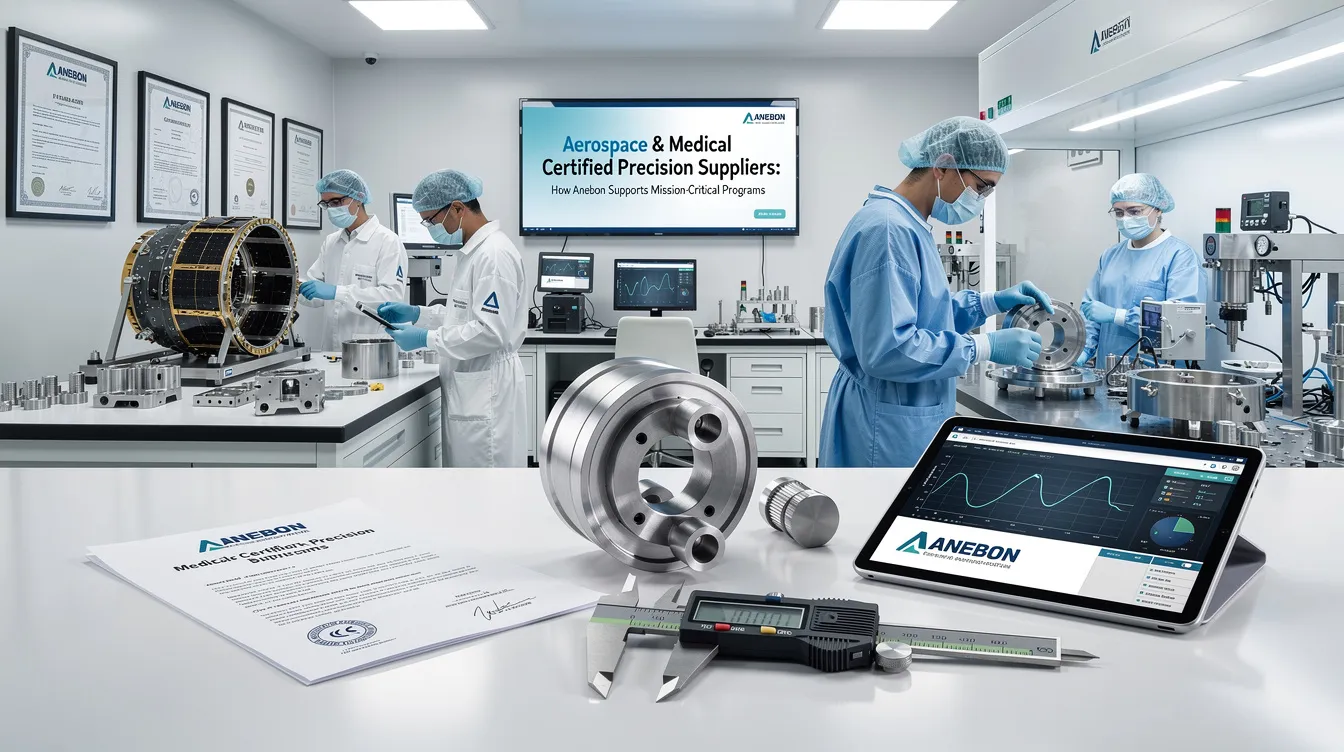
Aerospace & Medical Certified Precision Suppliers: How Anebon Supports Mission-Critical Programs
The US aerospace parts market reached $158.11 billion in 2025, and the medical device sector continues to grow alongside it. Both are highly regulated industries where a single dimensional error can ground a fleet or halt a surgical procedure. For OEM sourcing teams and design engineers, selecting aerospace medical certified precision suppliers is not a routine procurement decision – it is a risk management decision. Research consistently shows that 60 to 70 percent of quality issues trace back to supplier selection, making qualification the most consequential step in any program.
Several precision manufacturing suppliers specialize in serving both aerospace and medical industries. What separates credible partners from risky ones comes down to strict quality standards, advanced technical capabilities, and robust traceability – attributes that must be verified, not assumed.
Anebon Metal Products Limited, founded in 2010 in Dongguan, China, is a precision cnc machining, die casting, and sheet metal fabrication partner serving aerospace and medical programs worldwide. This article walks through how to evaluate certified precision suppliers – certifications, capabilities, inspection depth, and documentation – and then details how Anebon delivers against those criteria.
Regulatory Landscape for Aerospace & Medical Manufacturing
Aerospace and defense programs are governed by AS9100D, FAA and EASA airworthiness rules, and – for defense systems – export controls such as ITAR. Medical devices fall under ISO 13485, FDA 21 CFR Part 820, and the EU Medical Device Regulation updated between 2021 and 2024. The FDA’s final rule on its Quality Management System Regulation now incorporates ISO 13485:2016 by reference, with a compliance deadline of February 2, 2026. These overlapping frameworks create a demanding regulatory environment for any supplier touching both sectors.
Dual certification is common in aerospace and medical sectors due to stringent quality management standards. Suppliers certified in both aerospace and medical precision manufacturing hold key standards like AS9100D and ISO 13485. While Anebon holds ISO 9001:2015 and ISO 14001:2015 certifications, we regularly manufacture components that must integrate into AS9100- and ISO 13485-certified final assemblies, and our procedures are designed to meet those expectations.
Typical compliance obligations include documented procedures, risk management protocols, CAPA systems, design controls, and long-term record retention. Aerospace material traceability requires documentation for 10 to 20 years, and medical implant records may need similar or longer retention. Full material traceability is necessary for regulatory compliance and product recalls. Parts for ventilators, surgical instruments, airframe brackets, and avionics housings all require traceable production records that link every finished part back to its raw material source and processing history.
Core Certifications & Quality Systems Buyers Should Verify
Understanding what each certification actually requires helps buyers separate qualified manufacturing partners from those who merely claim compliance. ISO 9001:2015 establishes the foundation for any quality system – it mandates controlled documents, internal audits, calibrated measurement equipment, nonconformance handling, and management review. ISO 13485 is the standard for medical device quality management systems, adding emphasis on design controls, labeling, and regulatory traceability. AS9100D certification enhances aerospace manufacturing quality management systems by layering aerospace-specific clauses on top of ISO 9001:2015 – including product safety, counterfeit parts prevention, configuration management, and first article inspection requirements.
AS9100D includes additional requirements beyond ISO 9001:2015, and certification demonstrates commitment to quality management in aerospace. AS9100D requires documented procedures and trained personnel at every level, and annual audits verify compliance with AS9100D standards. AS9100 certification typically takes 12 to 24 months to earn, which signals that any supplier holding it has invested seriously in process discipline. Continuous improvement is essential for maintaining aerospace quality systems over time.
When defense programs are involved, ITAR compliance is required for defense-related work, and suppliers must maintain AS9100D, ISO 9001, and ITAR registrations. NADCAP accreditation is often required for special processes in aerospace such as heat treatment, coatings, and non-destructive testing. A strong quality management system helps ensure consistent quality rather than just end-of-line inspection.
Anebon holds ISO 9001:2015 and ISO 14001:2015 certifications. Our procedures for document control, process control, calibration, and traceability align with AS9100D and ISO 13485 expectations. Buyers evaluating any supplier should request valid certificates with dates, scope, and issuing body, a quality manual summary, sample control plans for key features, calibration logs for measurement equipment, and material traceability documents including mill test reports.
Precision CNC Machining Capabilities for Aerospace & Medical Parts
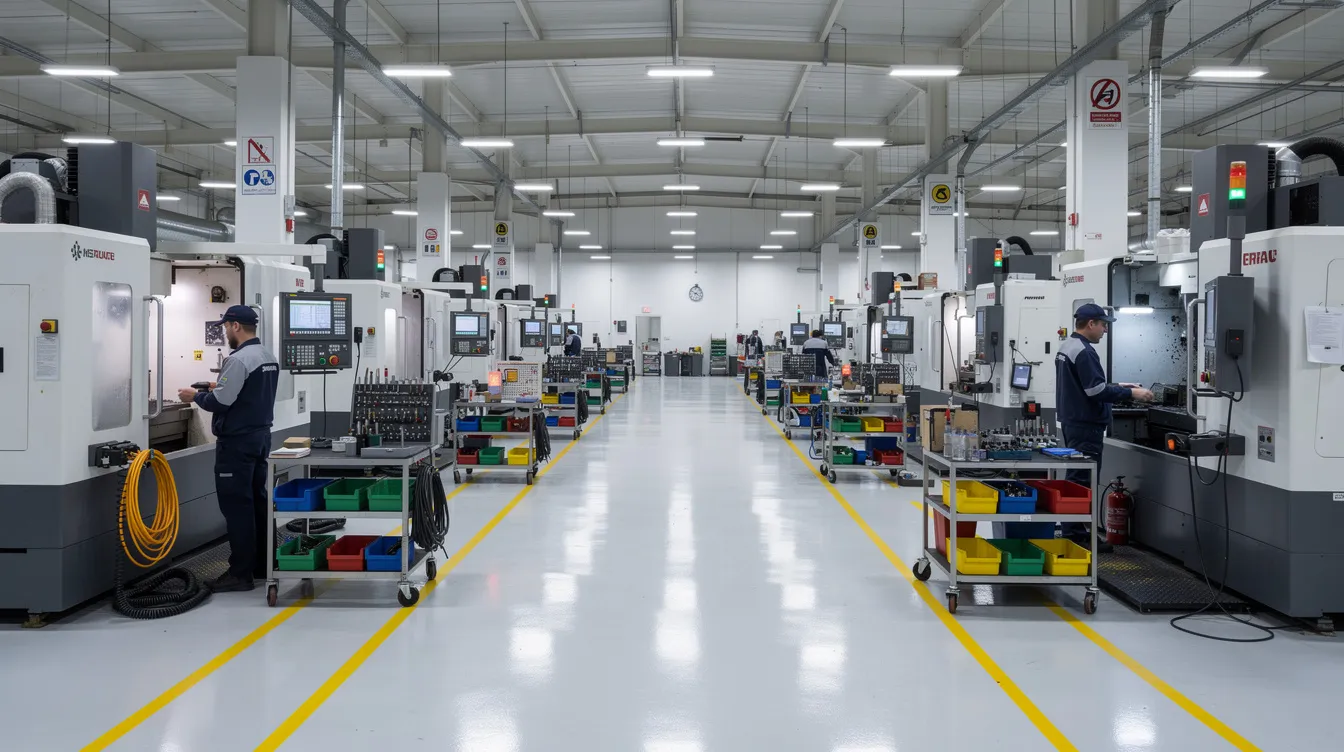
CNC machining is essential for complex aerospace geometries – thin-walled housings, deep-pocket structures, and multi-feature interfaces that define modern aerospace components and medical devices. These parts demand tight tolerance fits, smooth surface finishes for fatigue resistance and cleanliness, and repeatable accuracy across production batches.
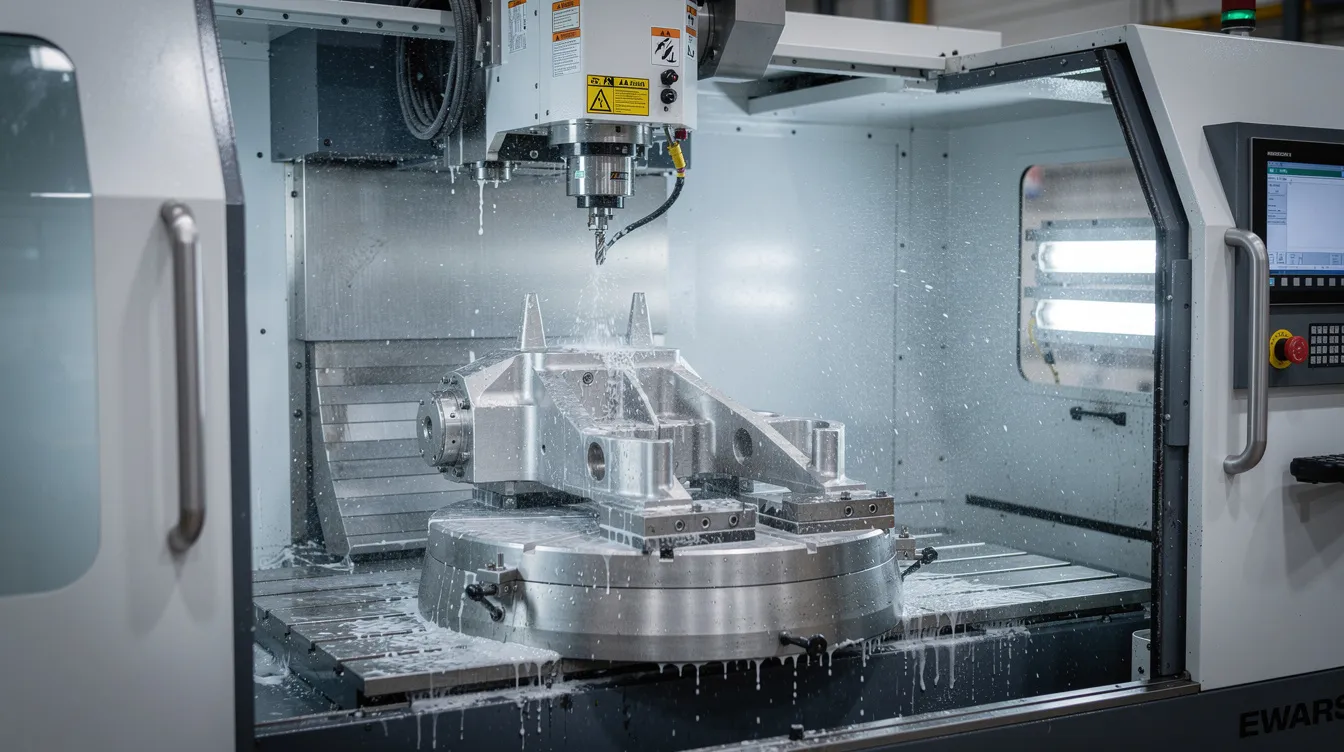
Manufacturing capabilities for dual-certified suppliers include 5-axis CNC milling and precision grinding, alongside 3-axis and 4-axis milling, cnc turning centers, and Swiss-style lathes for miniature components. Experience with multi axis machining is essential for creating tight tolerances in precision parts, particularly when manufacturing complex components for avionics, flight control systems, or implantable-device tooling. 5-axis CNC machining reduces setups and improves precision by eliminating error stack-up between operations.
Aerospace components often require tolerances of ±0.005 mm or better. CNC machining achieves tolerances as tight as ±0.005 mm, and Anebon’s machining range reaches ±0.002 mm where process-capable. Tight tolerances ensure assembly accuracy and system performance – dimensional errors in aerospace can lead to mission-critical failures. We routinely produce precision aerospace components including satellite brackets, UAV sensor housings, surgical instrument handles, and pump bodies where tight tolerances are essential for long-term reliability in aerospace components.
Aerospace components often require CNC machining of titanium alloys, and cnc machining supports rapid prototyping and low-volume production equally well. Aerospace manufacturing requires comprehensive inspection for tight tolerances, which is why high precision machining must always be paired with in-process verification – a topic we cover in depth in our dimensional control playbook.
Materials for Aerospace & Medical Programs: Metals, Alloys & Plastics
Material selection directly affects performance, cost, machinability, and regulatory compliance for both aerospace applications and medical industries.
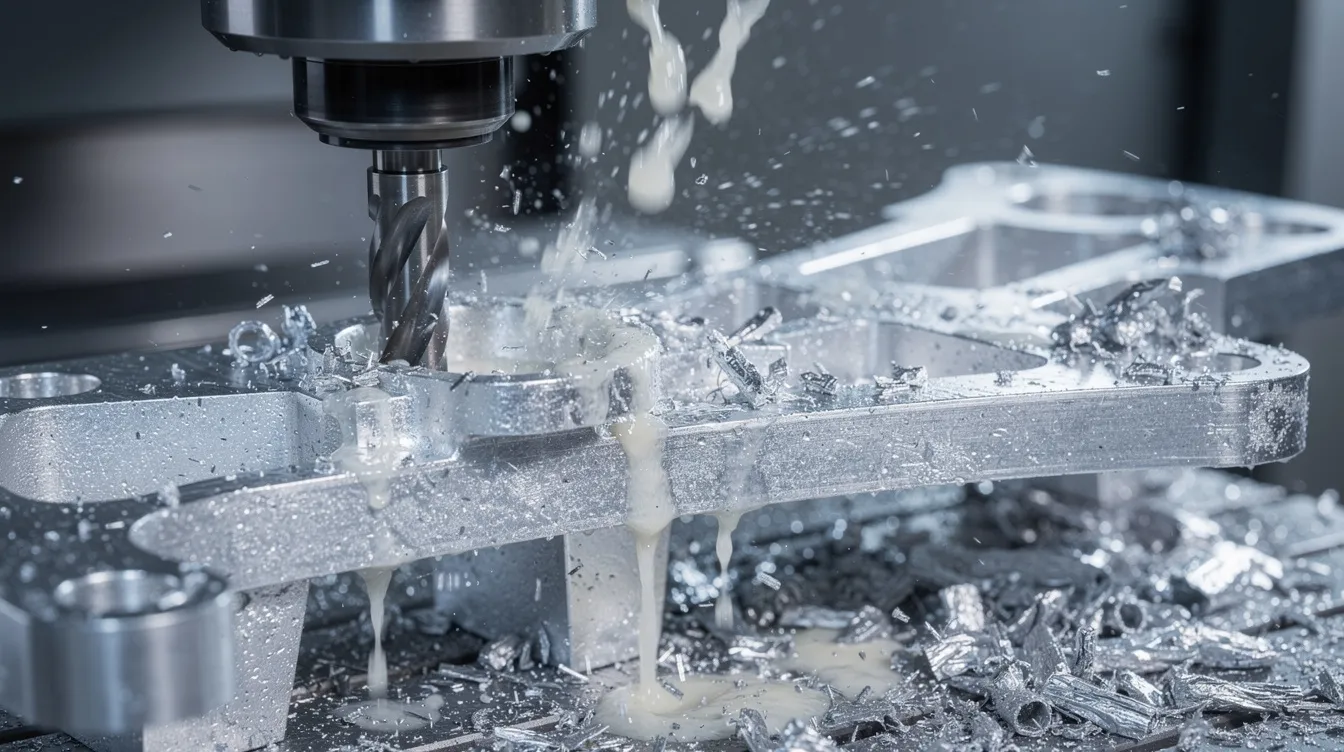
Aluminum alloys dominate airframe structures for low density. 6061-T6 offers good structural strength and machinability for brackets and housings, while 7075-T6 delivers higher strength for skins, frames, and structural components in military aircraft. Titanium alloys are used for high-temperature applications – Ti-6Al-4V provides the strength-to-weight ratio and corrosion resistance required for engine brackets, landing gear fittings, and medical implants. Machining titanium requires aggressive coolant application and careful speed control to manage heat buildup and tool wear. Nickel-based superalloys like Inconel enable extreme temperature performance in turbine hot sections and exhaust systems.
Stainless steels provide strength and corrosion resistance across both sectors. 17-4PH and 15-5 PH serve aerospace load-bearing roles, while 316LVM (vacuum-melted, low-carbon) is the standard for surgical tools and implants due to biocompatibility. High-performance plastics such as PEEK and Ultem handle sterilizable housings, fixtures, and non-metallic requirements, while medical-grade PVC and polycarbonate serve fluid management and transparent enclosures. Additive manufacturing and injection molding can complement CNC processes for certain polymer components.
Anebon sources certified materials with mill test reports, ensuring chemistry and mechanical properties are documented for every heat lot. Aerospace components must be traceable to their raw material heat number – we maintain this traceability through our material and process documentation workflow. Material recommendations are crucial for maintaining dimensional stability, and our engineers advise on the optimal alloy or grade before machining begins.
From Rapid Prototyping to Full Production in Regulated Industries
Aerospace and medical OEMs follow a structured path: concept, rapid prototyping, engineering validation, regulatory testing, and full production. Each stage demands different documentation depth, and the transition from prototype development to serial production is where many programs stumble.
Rapid prototyping supports low-volume aerospace production and enables engineering validation builds for aerospace before committing to production tooling. Prototyping reduces time-to-market for aerospace components by compressing design iteration cycles, and prototyping helps identify design flaws before full production – saving substantial rework costs downstream. First article inspection is crucial during rapid prototyping, verifying that initial pieces meet drawing intent before scaling up. Prototype optimization is essential for successful aerospace projects.
Anebon supports the entire lifecycle. We deliver CNC-machined prototypes in as few as five business days, provide DFM feedback during early design stages, and then stabilize processes with formal control plans for initial production runs. Consider a medical pump housing that starts as a five-unit prototype batch, iterates through two design revisions with our engineering team, and scales to monthly production after design freeze and qualification testing – all with the same supplier, same machines, same quality system.
Switching suppliers between prototype and production in regulated aerospace and medical programs is risky. Frequent supplier changes lead to inconsistent documentation and weak traceability, forcing re-qualification cycles that can delay programs by months. Selecting a scalable, certified partner from the start eliminates this risk.
Inspection, Metrology & First Article Inspection (FAI)
First Article Inspection verifies compliance with engineering requirements and confirms that the first part meets all drawing requirements before production proceeds. In aerospace manufacturing, FAI follows the AS9102 standard – three forms covering part number accountability, material and special process documentation, and detailed characteristic measurements. A medium-complexity aerospace part may require 50 to 100 individual characteristic measurements in Form 3 alone.
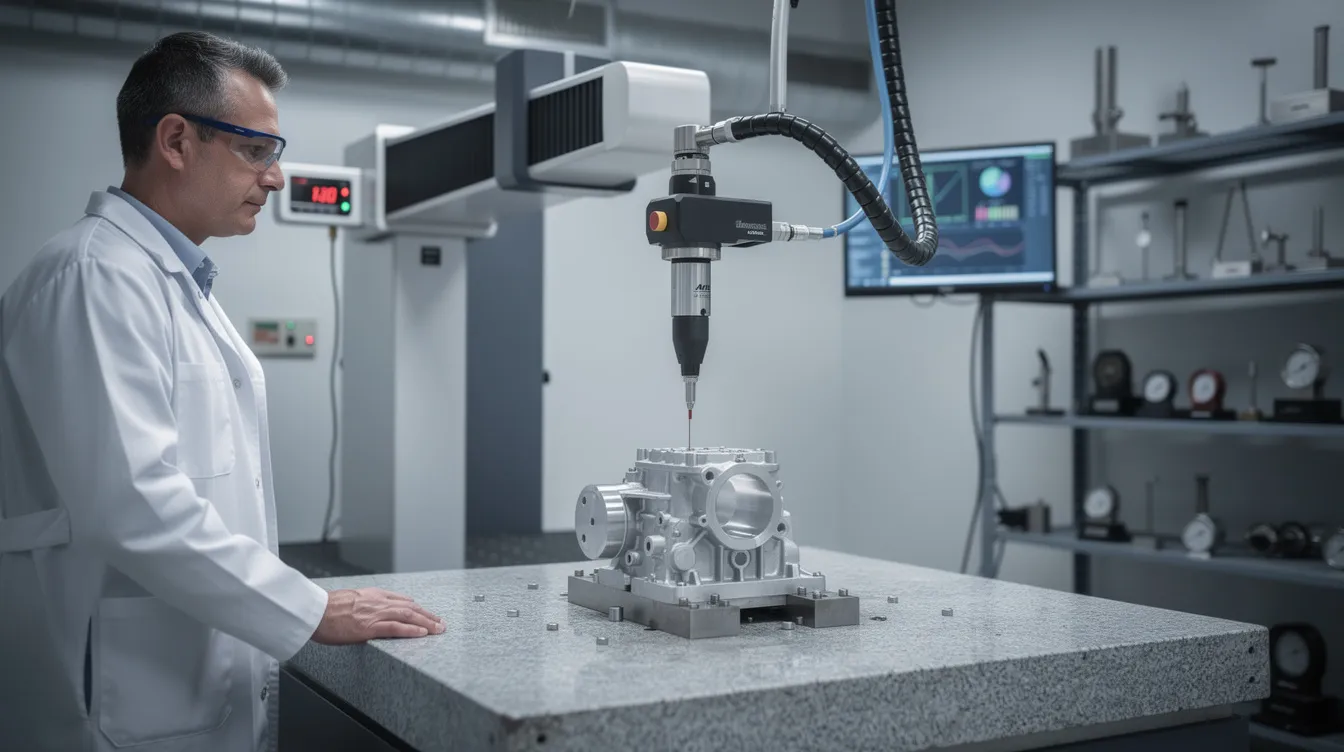
First Article Inspection verifies that parts meet all drawing requirements, and similar validation-lot practices support medical device programs. Advanced inspection capabilities include the use of Coordinate Measuring Machines, optical comparators, surface roughness testers, and calibrated micrometers – all with traceable calibration certificates. Aerospace components often require tolerances as tight as ±0.005 mm, demanding metrology equipment capable of micron-level resolution.
Anebon performs dimensional verification at multiple stages: article inspection of initial pieces, in-process checks during machining runs, and final inspections aligned with customer drawings and GD&T callouts. Our inspection checkpoints are structured to catch deviations early rather than relying solely on end-of-line measurement.
Inspection documentation that accompanies aerospace and medical shipments includes dimensional reports referencing drawing revisions, material certifications that trace chemistry to specific heat lots, and any special process certifications for heat treatment, plating, or anodizing. Material traceability requires documentation for every finished part, and material traceability requires full documentation for 10 to 20 years in aerospace programs. Traceability ensures components meet regulatory compliance standards throughout their operational life.
Surface Treatments, Cleanliness & Packaging for Critical Parts
Surface treatments protect structural integrity and functional performance. Common aerospace finishes include anodizing (per MIL-A-8625) for aluminum alloys, passivation for stainless steel parts, hard anodizing for wear-critical surfaces, conversion coatings, and protective paints or powder coatings for corrosion protection on structural components. Target surface roughness for aerospace parts typically ranges from Ra 0.8 to 1.6 µm, with sealing and high-stress surfaces pulled tighter.
Medical-specific needs differ: clean, burr-free edges are mandatory, electropolishing is standard for surgical tools, and packaging must protect sterility workflows. Individual bagging in clean environments, labeling by lot and date, and controlled handling procedures prevent contamination before sterilization.
Anebon manages or coordinates these special processes through approved sub-suppliers, maintaining certificates for each batch and tying them back to part and lot numbers. For stainless steel parts requiring passivation or electropolish, and aluminum components needing anodizing, we ensure that every finish is documented and traceable. Proper finishing and packaging also prevent cosmetic defects and corrosion during ocean or air freight from China to North America or Europe – we use vapor corrosion inhibitor bags, foam inserts, and sealed cartons rated for international transit.
Environmental & Sustainability Considerations (ISO 14001:2015)
Between 2023 and 2026, aerospace and medical OEMs have escalated requirements for suppliers to demonstrate environmental responsibility. Full material disclosure – beyond simple RoHS declarations – is increasingly expected, with OEMs demanding REACH/SVHC content verification for any components shipped into Europe.
ISO 14001:2015 certification means documented environmental aspects, waste reduction programs, energy monitoring, and controlled chemical handling. On Anebon’s shop floor, this translates to coolant recycling in CNC machining operations, controlled disposal of plating chemicals via certified waste partners, and active programs to reduce scrap rates in aluminum and stainless steel production runs.
Environmental performance connects directly to risk management and brand protection for aerospace customers and medical device OEMs. A noncompliant substance in a cockpit component or medical housing shipped after 2024 can trigger recalls, regulatory action, and reputational damage. Anebon’s ISO 14001:2015 certification gives customers documented assurance that environmental controls are embedded in our manufacturing processes – not treated as an afterthought.
Key Criteria for Selecting an Aerospace & Medical Precision Supplier
Supplier qualification for aerospace and defense applications should follow a structured framework. Here are the criteria that matter most, and what to look for under each.
Certifications: Verify that certificates are current, issued by accredited bodies, and that the scope covers the processes you need. Expired certificates or vague scopes are immediate red flags. For defense programs, confirm ITAR registration and any required NADCAP accreditation.
Process capability: Ask for Cpk data on critical dimensions, review past inspection documentation, and confirm that the supplier owns advanced equipment capable of the tolerances your parts demand. A supplier unable to quote GD&T correctly likely cannot hold it in production.
Materials and process expertise: Confirm that the supplier can source material specifications you require, provide mill test reports for every lot, and manage complex materials like titanium or nickel superalloys with appropriate specialized tooling and process knowledge.
Inspection depth: Request sample FAI packages and ask about in-process inspection frequency. Customer audits should be welcomed, not avoided.
Documentation discipline: Review how the supplier handles change control, drawing revisions, and record retention. Weak documentation is the single most common finding in aerospace program audits.
Scalability: Confirm that the supplier can move from prototype to production without requalification, and that their technical capability supports both low-volume and higher-rate manufacturing services.
Engineering support improves manufacturability and reduces project risk. Design for manufacturability reviews enhance production efficiency, and engineering collaboration reduces costs and improves manufacturability. Choosing purely on price in regulated aerospace or medical programs creates exposure – a 2026-era audit can trace failures back to supplier gaps that were invisible at the time of purchase order.
Anebon aligns with these criteria through ISO 9001 and ISO 14001 certifications, precision machining down to ±0.002 mm, robust inspection, and deep experience with both aerospace parts and medical metal components for overseas OEMs.
How Anebon Supports Overseas OEMs in Aerospace & Medical Sectors
Anebon Metal Products Limited operates from Dongguan, Guangdong, China, with a long-term focus on precision manufacturing services for export. Since 2010, we have built our manufacturing expertise around precision metal fabrication, die casting, and sheet metal fabrication – delivering precision machining services to design engineers and sourcing teams across North America, Europe, and Asia-Pacific.
Our typical customers are running aerospace programs or medical device projects that require precise aerospace manufacturing combined with responsive communication and Western-standard documentation. They need a partner who can deliver DFM feedback on CAD models, provide realistic tolerance advice, maintain batch traceability, and coordinate multiple processes under one project manager.
Consider a multi-process project: a CNC-machined aluminum chassis for avionics paired with sheet metal covers and die-cast subcomponents. Anebon handles the precision machining, coordinates the die casting and fabrication, manages surface treatments through approved processors, and ships the complete assembly with full article inspection reports and material certifications. This integrated approach – complex component manufacturing under a single quality system – eliminates the coordination risk of managing three or four separate vendors for defense manufacturing or medical programs.
Our technical data packages include dimensional reports, MTRs, finish certificates, and packaging records. For aerospace manufacturers and medical OEMs who need a proven, ISO-certified partner serving aerospace and medical industries simultaneously, Anebon offers the process expertise, quality certifications, and customer satisfaction track record to support long-term programs.
Managing Risk, Lead Times & Total Cost in Global Supply Chains
Working with a supplier in China means factoring logistics into program timelines. Typical flow is machining time plus 5 to 7 days for air freight or 3 to 5 weeks for ocean freight. With careful planning, these windows can align with aerospace and defense industries milestones – but only when the supplier communicates proactively and maintains schedule discipline.
Anebon mitigates risk through pre-production samples, dual inspection (in-process and final), safety stock arrangements for repeat orders, and clear change-control and ECN handling. During 2024–2026 supply-chain volatility, we have maintained delivery performance by securing raw material stock for high-demand aluminum alloys and stainless steels, and by flagging lead-time risks early in the quoting process.
Total cost of ownership matters more than piece price. A part quoted at $2 less per unit but arriving two weeks late to an aerospace program test window can cost tens of thousands in idle engineering time, delayed certification, and rescheduled flight testing. Similarly, a medical device launch delayed by supplier quality issues – missing material certifications, failed inspection, rework cycles – can push regulatory submissions by a full quarter. Precision manufacturing partners who invest in process control, documentation, and reliable logistics deliver lower total cost even when their unit price is not the absolute lowest.
For defense industries programs involving ITAR-controlled technical data, Anebon works under NDAs and controlled-access procedures to protect sensitive information throughout the manufacturing and shipping process.
Practical Steps to Engage Anebon for Aerospace or Medical Projects
Starting a project follows a straightforward sequence. Submit an RFQ with 3D models (STEP or IGES format) and detailed 2D drawings that include tolerances, GD&T callouts, material specifications, and finishing requirements. Include annual volume estimates and any specific first article inspection or FAIR templates your program requires.
Anebon’s engineering team provides DFM and manufacturability review within 24 to 48 hours, flagging potential issues with wall thickness, tolerance achievability, or material selection. This engineering support phase is where we help you choose suitable aluminum alloys, plastics, or stainless steel grades, and select optimal machining and finishing routes. Iterative quotation follows, with clear line items for machining services, tooling, finishing, and inspection.
After quote approval, we build a sample batch – typically 5 to 15 pieces – for your review and qualification testing. Approved samples trigger process lock and control plan documentation for scheduled production. Lead times for prototypes run 5 to 10 business days; production batches typically ship in 4 to 8 weeks depending on complexity, material availability, and finishing requirements.
If your program involves sensitive aerospace manufacturing solutions or medical device IP, request an NDA before sharing drawings. Anebon has extensive experience working under strict confidentiality for OEM projects across defense programs, commercial aerospace, and medical devices. Our approach to customer satisfaction starts with protecting your designs and ends with delivering parts that meet every requirement on your drawing.
Conclusion: Building Long-Term Partnerships with Certified Precision Suppliers
In aerospace and medical manufacturing, supplier choice directly affects safety, compliance, and lifecycle cost over many years. The consequences of a wrong selection – failed audits, grounded aircraft, recalled devices – extend far beyond a single purchase order.
The non-negotiable attributes of an aerospace medical certified precision supplier are a robust quality system, demonstrated process capability, full material traceability, and scalable production from prototype through long-term runs. These are not optional features; they are the baseline for any supplier touching critical components in the aerospace industry or medical industries.
Anebon Metal Products Limited brings ISO 9001:2015 and ISO 14001:2015 certification, tight-tolerance precision cnc machining, die casting, and sheet metal fabrication to aerospace customers and medical device OEMs worldwide. If you are planning your next aerospace or medical project, submit your CAD files and drawings for a free DFM review and quotation. Let us show you what precise aerospace manufacturing looks like when it is backed by the right certifications, the right equipment, and the right commitment to your program’s success.