The Definitive Guide to the Best ISO 9001 Precision CNC Manufacturers
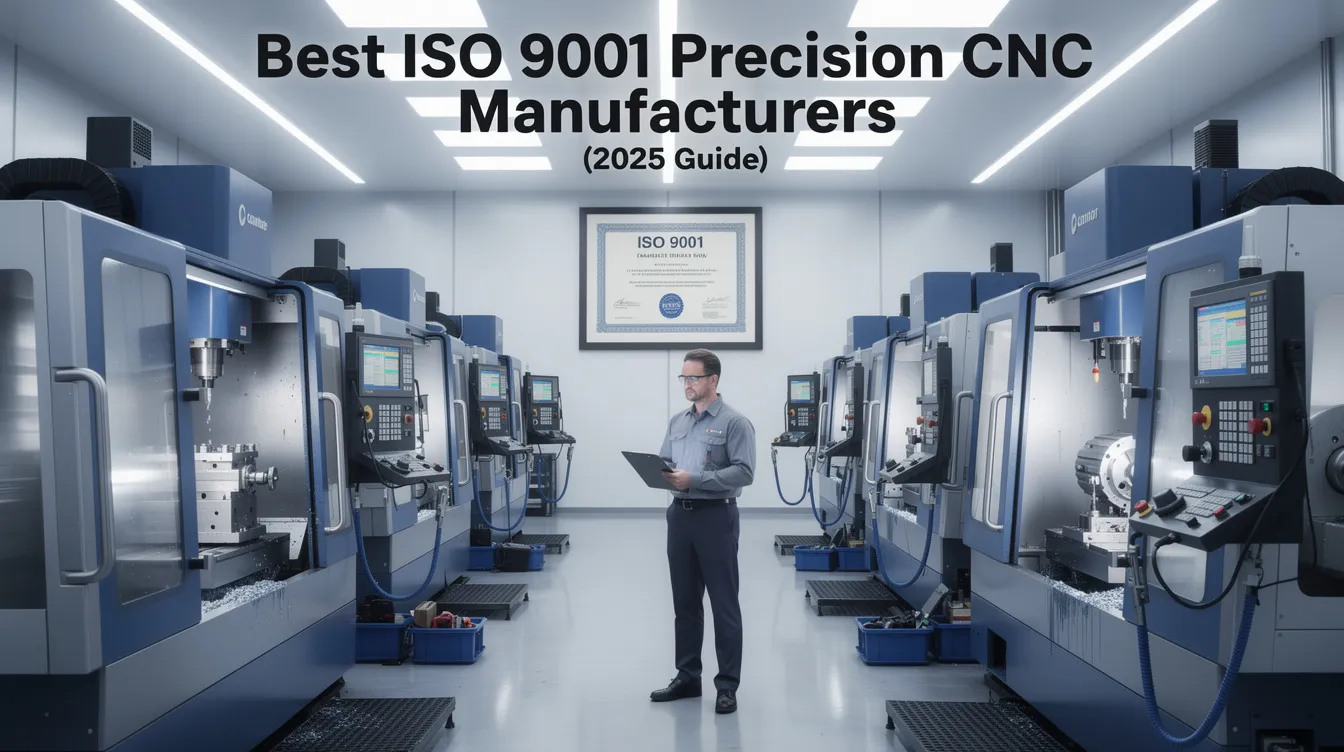
Best ISO 9001 Precision CNC Manufacturers (2025 Guide)
Introduction: What “Best ISO 9001 Precision CNC Manufacturer” Really Means
ISO 9001:2015 is a global quality management standard that governs how a manufacturing company controls processes, handles nonconformances, and maintains traceability from raw material to finished part. For precision CNC machining – a subtractive manufacturing process that removes material from solid stock to create finished components – this certification separates disciplined, auditable suppliers from shops running on tribal knowledge. CNC machining dominates the U.S. precision machining market with a 78.9% share, and the U.S. CNC machining market is projected to reach $37.1 billion by 2033, which underscores why buyers worldwide need reliable, certified manufacturing partners.
This guide focuses on precision CNC machining companies with verified quality systems, not just any cnc shop with a mill and a lathe. The applications driving demand include aerospace components, medical devices, robotics, automotive safety systems, and electronics industries.
We wrote this guide from the perspective of Anebon Metal Products Limited, an ISO 9001:2015 precision CNC machining company founded in 2010 in Dongguan, China. Here is what you will learn:
-
How to evaluate ISO 9001 cnc machining companies using concrete criteria
-
What precision tolerances, machining capabilities, and quality standards to expect
-
Profiles of notable manufacturers and how they compare
-
A step-by-step buying checklist for choosing a cnc machining partner
How We Evaluated the Best ISO 9001 Precision CNC Machining Companies
All candidates in this guide hold ISO 9001:2015 certification at minimum. Information is based on published data from 2024–2025 including company websites, certificates, and customer case studies. We aimed for a balanced view: strengths, limitations, and ideal use cases for each type of machining company.
Here are the evaluation factors we applied:
-
Machining capabilities: Range of axis cnc machining (3-, 4-, 5-axis milling), CNC turning with live tooling, swiss machining, and multi axis cnc machining capacity
-
Tolerance capability: Claimed and demonstrated precision tolerances, from ±0.05 mm general to ±0.002 mm ultra-precision
-
Certifications: ISO 9001 as baseline; additional certifications like AS9100D, ISO 13485, IATF 16949 for sector-specific compliance
-
Engineering support: DFM feedback, material recommendations, design collaboration
-
Track record with overseas OEMs: Documented quality reporting, on-time delivery, logistics management, and communication clarity
-
Production flexibility: Ability to handle rapid prototyping through volume production without quality drift
Why ISO 9001 Matters for Precision CNC Machining
ISO 9001 certification indicates established quality control systems across every stage of the manufacturing process. In practical terms, it means a cnc machining company documents its work instructions, calibrates machines on schedule, trains operators to standard procedures, and records every deviation and corrective action. ISO 9001 certification is essential for reliable manufacturing processes, especially when parts ship across borders and buyers cannot inspect every batch in person.
For precision cnc milling and cnc turning, ISO 9001 translates into controlled programs, verified tool offsets, and calibrated measurement instruments. ISO 9001 certified companies maintain documentation for quality assurance that includes material certificates, in-process inspection logs, and final dimensional reports. When a buyer in Munich or Detroit receives a box of machined parts from Dongguan, those documents serve as proof that the process was controlled and the parts meet specification.
ISO 9001 certification is a baseline requirement for many industries. Overseas OEMs who need consistent batches for regulatory compliance – whether FDA, FAA, or automotive PPAP – rely on these documented quality systems to survive audits and protect end users.
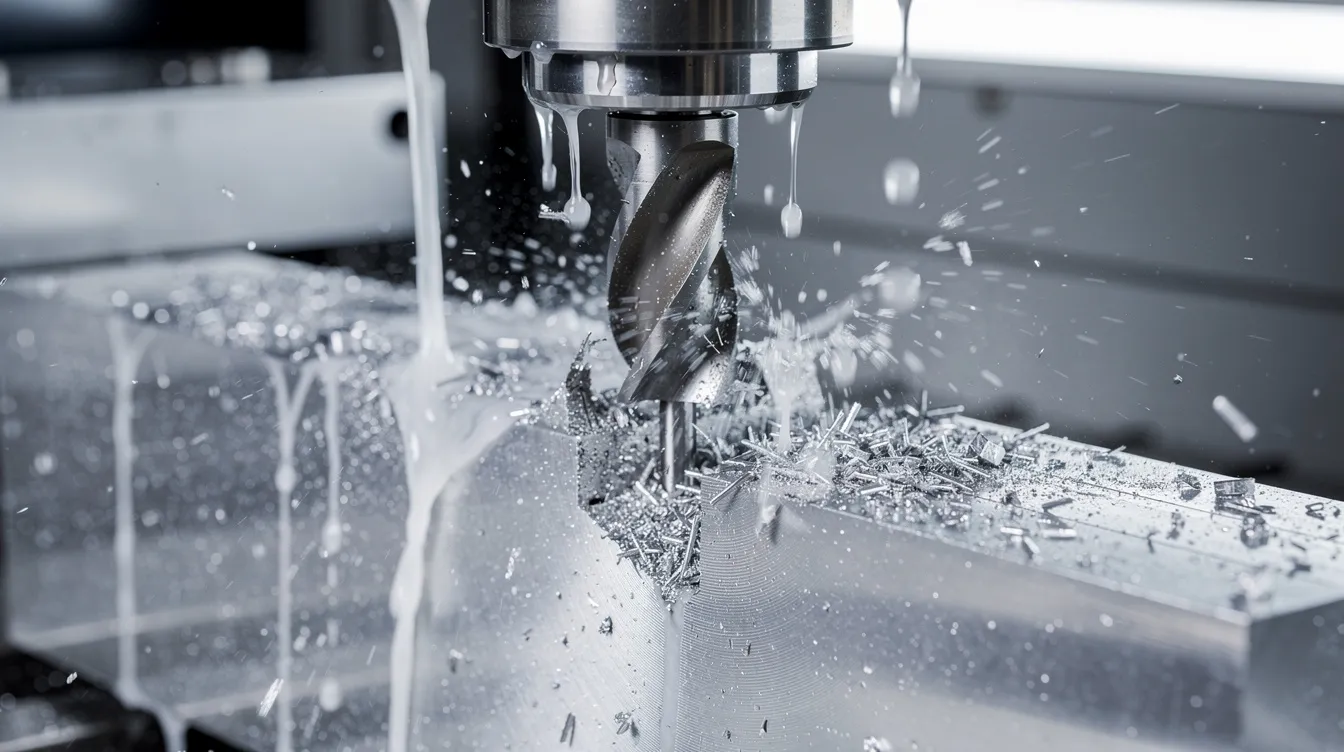
Core Capabilities of Top ISO 9001 Precision CNC Manufacturers
Technical capability matters as much as the certificate on the wall. The best cnc machining companies combine modern advanced equipment with experienced programmers who understand how to hold dimensions across different materials and geometries.
Key machining capabilities to expect from top cnc machining companies include:
-
Milling: 3-axis for simple plates and brackets, 4-axis for wrap-around features, and 5 axis cnc machining for complex parts like impellers, turbine housings, and medical implant tooling
-
Turning: CNC turning with live tooling, Y-axis, and sub-spindles for multi-operation shafts and fittings
-
Multi axis machining: Simultaneous multi axis cnc machining that reduces setups and improves accuracy
-
Secondary processes: Wire edm, grinding, tapping, threading, and integrated surface finishing
CNC machining includes 3-axis, 4-axis, and 5-axis processes. Common materials include aluminum, stainless steel, and titanium. Precision CNC manufacturers achieve tolerances as tight as ±0.002 mm on critical features, while many established Western precision shops work to ±0.005 mm. Typical parts include brackets, housings, manifolds, medical fixtures, and robotics end-effectors.
Precision & Tolerance Capability in ISO 9001 CNC Shops
Tight tolerances are non-negotiable for aerospace hardware, surgical tools, and precision robotics components. When a mating surface on a gearbox housing is off by 0.02 mm, the assembly fails. When an alignment-critical sensor mount drifts, the entire system loses accuracy.
Here is how precision machining tolerances break down:
|
Level |
Tolerance Range |
Typical Applications |
|---|---|---|
|
Standard |
±0.05 mm (±0.002″) |
General functional fits, non-critical features |
|
Tight |
±0.01–0.02 mm |
Sealing surfaces, bearing bores, mating interfaces |
|
Ultra-precision |
±0.002 mm and below |
Aerospace flight hardware, medical implants, optics |
CNC machining can achieve tolerances as tight as ±0.0001 inches with rigorous quality control. Top precision CNC manufacturers utilize advanced inspection tools like CMMs. CMM inspection is a common method for ensuring part accuracy, and shops complement it with optical projectors, profilometers, and GD&T-based inspection plans for verifying tight tolerance machining.
Consistent precision is tied to both machine capability and disciplined quality systems. Temperature-controlled environments, calibrated tooling, finishing passes, and statistical process control all contribute to holding dimensions across a production run.
Advanced CNC Machining Capabilities: From 3-Axis to 5-Axis
The best cnc machining companies pair a modern machine fleet with programmers who know when to use each configuration economically. A simple aluminum bracket runs efficiently on a 3-axis mill. A complex impeller or medical housing with undercuts and compound angles demands 5-axis CNC machining.
5-axis machining allows for complex geometries in one setup. It reduces the need for multiple setups, saving time and eliminating re-fixturing error. 5 axis cnc machining can achieve tolerances as tight as ±0.0001 inches, and this technology is essential for aerospace and medical applications. Beyond dimensional accuracy, 5-axis machining enhances surface finish quality significantly by maintaining optimal tool-to-surface angles throughout the cut.
CNC turning with live tooling and sub-spindles handles complex shafts, connectors, and multi-operation turned/milled parts in a single chucking. Multi tasking machines that combine turning and milling reduce handling and improve concentricity. Leading shops, including Anebon, run high-speed Japanese and European machining centers alongside precision lathes to cover the full spectrum of part complexity.
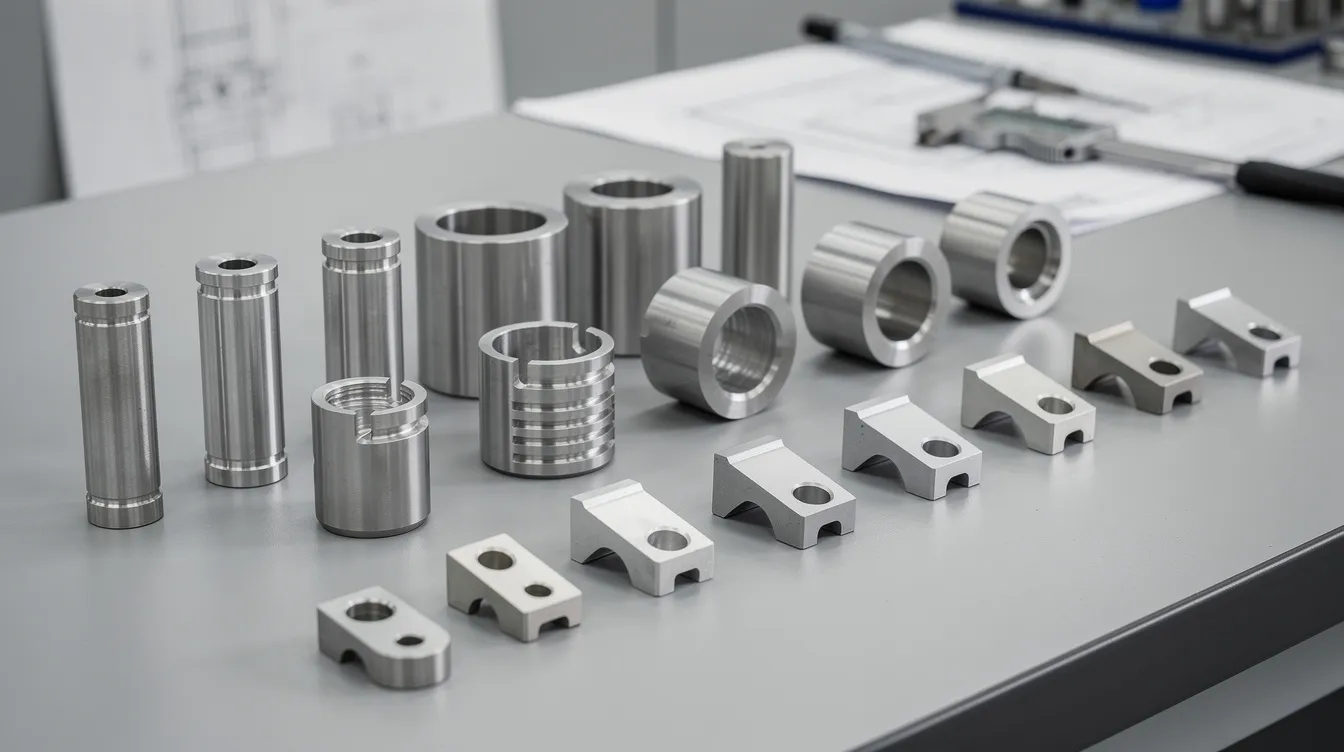
Material Expertise in ISO 9001 Precision CNC Machining
ISO 9001 precision shops must control material flow from incoming inspection through finished parts, with lot tracking and certificates at every stage. Material expertise goes beyond just cutting metal – it means understanding how each alloy behaves under tool pressure, heat, and coolant.
Key materials handled by leading shops:
-
Aluminum: Aluminum 6061 is widely used for structural parts; 7075 for high-strength aerospace applications
-
Stainless steels: 303, 304, 316, and 17-4PH for corrosion resistance and medical use
-
Titanium: Titanium alloys are preferred for high strength-to-weight ratio in aerospace and medical implants
-
Exotic alloys: Inconel, Hastelloy requiring specialized tooling, slow feeds, and careful coolant strategies
-
Plastics: Engineering plastics like PEEK and nylon are also commonly machined for electronics, medical, and industrial applications
Anebon’s machining capabilities cover both metals and plastic machining with precision tolerances for electronics industries, medical industries, and automotive customers. Materials like titanium or Inconel demand specific cutting parameters and coolant strategies to maintain tolerances and surface integrity. Strong suppliers maintain material certificates, lot tracking, and controlled storage as part of their quality systems.
Quality Systems Beyond ISO 9001: What to Look For
ISO 9001 is a baseline. Many precision CNC machining companies implement additional standards and internal controls that elevate their consistency. Certifications like AS9100 and ISO 13485 add industry-specific traceability requirements for aerospace manufacturing and medical device manufacturing respectively.
Leading manufacturers employ lean manufacturing practices to enhance efficiency and reduce waste. Robust quality control practices include in-process inspections and statistical process control. Implementation of rigorous quality control helps eliminate defects in critical applications. CNC machining companies often use in-house inspection for quality control, using calibrated CMMs, profilometers, and go/no-go gauges.
Anebon also holds ISO 14001:2015 for environmental management, which is increasingly important to global OEMs setting procurement policies around sustainability. Continuous improvement procedures should be in place to enhance manufacturing processes – this includes documented corrective actions, calibration schedules, and internal audit programs.
A typical quality workflow runs from RFQ review through process planning, first article inspection, in-process checks, final inspection with CMM inspection, and shipment with full documentation. ISO 9001 certification ensures quality management standards are met at each gate.
Engineering Support & DFM: Key Differentiators
Engineering collaboration separates a true cnc machining partner from a “build to print only” shop. When a supplier catches a tolerance issue or suggests a design simplification during quoting, it saves weeks and thousands of dollars downstream. Advanced manufacturers combine ISO 9001 with strong engineering expertise.
Top cnc machining companies provide DFM feedback covering tolerance rationalization, material recommendations, and design simplifications. Design for manufacturability feedback optimizes part production by addressing undercuts, fillet radii, wall thicknesses, and datum schemes before metal is cut. Companies offering DFM analysis can enhance product quality and cost-effectiveness.
Anebon offers design consulting and DFM feedback as early as the quotation stage for overseas OEMs and R&D teams. Engineering support helps reduce machining risk and improve manufacturability. Engineering collaboration can significantly accelerate product development timelines, and prototyping support is essential for optimizing designs before production. This engineering support is especially critical for rapid prototyping and new product introduction programs where iterations are frequent.
Production Flexibility: Prototyping Through Volume
The best precision CNC machining manufacturers support the full product lifecycle: single prototype, pilot runs, and scalable production. Rapid prototyping supports low volume production needs, letting engineers validate form, fit, and function before committing to tooling or high-quantity orders. Rapid prototyping can reduce time to market significantly.
Production stages typically look like this:
-
Prototype development: 1–10 pieces for design validation
-
Low volume production: 10–500 pieces for pilot runs and market testing
-
Bridge production: Hundreds to a few thousand units during ramp-up
-
Volume production: Thousands of pieces in serial runs
Anebon’s capability spans from rapid CNC prototypes to full-scale production using the same quality systems and programming base. ISO 9001 procedures help maintain consistency across changing batch sizes and revisions, so a 5-piece prototype run follows the same documented process as a 5,000-piece order. Flexible scheduling and machine availability handle urgent engineering changes without disrupting other programs. For buyers needing custom CNC machining solutions for low-volume, high-precision parts, this flexibility matters.
Global vs Local: How ISO 9001 Precision CNC Manufacturers Differ
Choosing between a local machining company (U.S. or EU-based) and an ISO-certified Chinese manufacturer like Anebon involves real trade-offs. Local shops offer shorter shipping, same-time-zone communication, and sometimes faster prototype turnaround. Chinese manufacturers typically offer competitive pricing, deep supply chains for surface treatments and specialized materials, and access to experienced machinists at scale.
Anebon’s Dongguan location provides direct access to regional supply chains for anodizing, plating, and heat treatment vendors, plus a large pool of skilled CNC operators. Industries that commonly outsource precision cnc machining to China include consumer electronics, robotics, automotive jigs and fixtures, and medical prototypes.
The bridge across geographic distance is documentation. ISO 9001 documentation and clear QC reporting – dimensional reports, photos, CMM data – let overseas OEMs verify quality without visiting the factory for every order. When paperwork is rigorous, distance becomes manageable.
Profile: Anebon Metal Products Limited (ISO 9001 Precision CNC Partner)
Anebon Metal Products Limited was founded in 2010 in Dongguan, Guangdong, China. The company holds ISO 9001:2015 and ISO 14001:2015 certifications and serves overseas OEMs across multiple industrial sectors.
Core services:
-
Precision CNC machining (milling and turning)
-
Precision cnc milling and CNC turning
-
Die casting (aluminum alloys)
-
Sheet metal fabrication (laser cutting, bending, welding)
Technical strengths: Tolerances as tight as ±0.002 mm, multi-axis machining centers, broad materials range covering aluminum, titanium, stainless steels, and engineering plastics. Anebon’s technical capabilities span from simple turned pins to complex 5 axis cnc multi-feature housings.
Industries served: Aerospace R&D, medical devices, automotive components, industrial automation, electronics, and robotics.
Getting started: Overseas OEMs and engineers can upload cad files, request a quote, and receive DFM and pricing feedback within approximately 24 hours. Anebon positions itself as a factory-direct alternative with strict quality control and cost effective manufacturing solutions for global supply chain needs.
Other Notable ISO 9001 Precision CNC Machining Companies (Brief Overview)
This section briefly profiles well-known cnc machining companies that illustrate what buyers should expect at the top tier of the market. These are manufacturing partners that set quality standards across the industry.
-
Protolabs: A digital manufacturing platform that supports cnc machining, injection molding, 3d printing, and sheet metal. Protolabs delivers parts within days, not weeks. Protolabs uses an automated quoting system for rapid prototyping, making it popular for prototype development and fast-turn production.
-
Xometry: Xometry offers rapid prototyping through a vast supplier network and acts as a marketplace connecting buyers with manufacturing companies. Their platform supports cnc machining, additive manufacturing, and other processes.
-
RapidDirect: A China-based precision manufacturing company offering cnc machining services, die casting, and surface treatments with ISO 9001 certification and fast RFQ turnaround.
-
Star Rapid: Specializes in rapid prototyping and low-to-mid volume precision manufacturing with quality systems tailored to overseas clients.
-
WayKen: Focuses on rapid prototyping and custom manufacturing solutions with multi-process capabilities.
These competitors illustrate the range of cnc machining services available globally. Anebon is positioned as a factory-direct alternative offering high precision machining, direct engineering support, and ISO-certified quality for overseas customers who want a hands-on cnc machining partner rather than a marketplace intermediary.
ISO 9001 Documentation, Traceability & Reporting Expectations
Any ISO 9001 precision CNC machining company should deliver more than parts – it should deliver proof. Quality assurance includes full traceability of materials used, linking each component to its material batch, machine program, operator, and inspection record.
Typical documents buyers should expect:
-
Certificates of Conformance (CoC)
-
Material mill certificates with heat/lot numbers
-
First article inspection (FAI) reports with dimensional data
-
In-process and final inspection records
-
Process change notifications
Anebon provides inspection summaries and can tailor reporting depth from basic checks to full dimensional reports with CMM data, depending on project requirements. This traceability supports root-cause analysis if a field issue occurs – you can trace a defective part back to its specific material lot, machine, and operator shift.
Surface Finishing & Post-Processing in Precision CNC Manufacturing
Finishing is where machined parts become functional products. Corrosion resistance, wear resistance, aesthetics, and biocompatibility all depend on the right surface treatment applied correctly.
Common finishes an ISO 9001 cnc machining company should support:
|
Finish |
Purpose |
Typical Materials |
|---|---|---|
|
Anodizing (Type II/III) |
Corrosion and wear resistance |
Aluminum |
|
Passivation |
Corrosion resistance |
Stainless steel |
|
Powder coating |
Aesthetics and protection |
Steel, aluminum |
|
Nickel/zinc plating |
Corrosion resistance |
Steel, brass |
|
Bead blasting |
Uniform matte finish |
Most metals |
|
Polishing |
Cosmetic/functional smoothness |
All metals |
Anebon coordinates machining and finishing on aluminum, stainless steel, and die cast components, maintaining dimensional control through the finishing process. ISO 9001 processes should include finishing vendor control, incoming inspection from subcontractors, and clear finishing specs on drawings. Typical surface roughness values range from Ra 1.6 μm for milled surfaces to Ra 0.4–0.8 μm for ground surfaces and Ra 0.2 μm or lower after polishing.
Industries That Rely on ISO 9001 Precision CNC Machining
Many regulated and high-performance sectors require certified manufacturing partners. Industry expertise in medical, aerospace, or defense ensures compliance with regulatory requirements. Industry experience ensures understanding of specific compliance standards.
-
Aerospace/Defense: Structural brackets, flight hardware, sensor mounts. A proven track record in aerospace and medical sectors is crucial. Experience with tight tolerances is essential for aerospace components. Shops serving aerospace typically hold AS9100D.
-
Medical Devices: Implant tooling, surgical instrument components, diagnostic housings. ISO 13485 adds device-specific traceability.
-
Automotive: Engine brackets, transmission housings, EV structural parts. IATF 16949 complements ISO 9001 for automotive quality standards.
-
Industrial Automation/Robotics: End-effectors, actuator housings, precision guide rails. Companies should have expertise in machining complex geometries.
-
Electronics/Semiconductors: Heat sinks, precision electronic machined parts, connector housings, RF enclosures.
-
Energy: Valve bodies, pump components, turbine fittings.
Anebon’s ISO 9001 system supports different customer documentation requirements – from medical DHR-style records to automotive PPAP packs. Industry experience helps in optimizing parts for manufacturability across all these sectors.
How to Evaluate an ISO 9001 Precision CNC Machining Company
ISO 9001 alone does not guarantee the highest precision machining capabilities. Certification tells you the system exists; it does not tell you whether the shop can hold ±0.005 mm on your specific part geometry in your specific material.
A structured evaluation should include:
-
Verify certifications: Request the ISO 9001 certificate, check the audit scope and surveillance dates
-
Review equipment: Ask for a machine list – what brands, how many axes, what spindle speeds
-
Assess engineering depth: Send a drawing and evaluate the quality of DFM feedback
-
Request sample QC reports: Ask for a real FAI or dimensional report from a previous project
-
Run a pilot job: Send a prototype or small batch and evaluate real-world quality, communication speed, and packaging
Key metrics to watch: on-time delivery rate, scrap/rework percentage, response time to RFQs (target: within 24–48 hours), and clarity of DFM feedback. Anebon can provide reference projects and sample inspection data for serious OEM prospects evaluating machined parts manufacturers.
Step-by-Step Buying Guide: Choosing a Best-Fit ISO 9001 CNC Partner
Start by defining your requirements clearly: tolerances, materials, surface finishes, annual volumes, and any industry-specific documentation needs. Incomplete specs are the single biggest source of quoting errors and quality disputes.
Next, shortlist three to five ISO 9001 shops based on their machining capabilities, materials experience, and relevant industry certifications. Request quotes along with DFM feedback – a supplier who just returns a price without commenting on your design is likely a build-to-print shop, not an engineering partner.
Compare responses not just on unit price, but on total cost of ownership: how much engineering time will you spend managing the supplier? What is the expected scrap rate? How fast can they turn ECOs? Place a trial order – ideally a prototype or small batch – to validate quality, communication, and logistics before committing to production volumes.
Many successful OEMs maintain one to three core precision cnc machining partners globally, including at least one ISO 9001-certified Chinese manufacturer like Anebon for competitive pricing and scalable production. Ask suppliers practical questions at each step: What is your CMM capacity? What is a typical lead time for 100-piece production? Can you provide material certificates for titanium Grade 5?
Lead Times, Logistics & Global Shipping Considerations
Domestic shops can often deliver prototypes in three to five days. Overseas manufacturers like Anebon typically deliver prototypes in five to ten working days including shipping, and standard batches in two to four weeks. For complex multi-operation assemblies, add additional time for finishing and inspection.
Anebon ships globally via DHL, FedEx, UPS, and freight forwarders, with standard transit times of about three to seven days to Europe and North America. ISO 9001 scheduling, production planning, and final inspection processes help keep shipments on schedule. Incoterms such as EXW, FOB, and DAP define cost and responsibility – clarify these early to avoid surprises on duties and insurance.
Cost Drivers in Precision CNC Machining Under ISO 9001 Quality Systems
Price differences between cnc machining companies are driven by material cost, machine time, part complexity, tolerance tightness, finishing requirements, and documentation depth. Costs rise nonlinearly when moving from ±0.05 mm to ±0.01 mm to ±0.002 mm – expect two to five times the cost per feature as tolerances tighten due to slower feeds, more inspection, and higher scrap rates.
ISO 9001 itself does not dramatically increase piece price, but it supports consistent quality that lowers the total cost of risk. A simple aluminum 6061 bracket with standard tolerances costs a fraction of a tight-tolerance stainless steel 316 manifold requiring full FAI, CoC, and material traceability.
Consolidating machining, finishing, and light assembly at one ISO 9001 machining company like Anebon reduces logistics handoffs, shortens lead times, and delivers cost effective manufacturing solutions. The value is fewer quality problems, lower rework, and reduced engineering oversight.
Common Pitfalls When Sourcing Precision CNC Parts (Even from ISO 9001 Shops)
Even certified suppliers can fail if the project is poorly defined. The most frequent issues include:
-
Incomplete drawings: missing tolerances, no GD&T callouts, undefined surface finish requirements
-
Unclear finishing specs: “anodize” without specifying type, color, or thickness
-
Ignoring material lot traceability on critical components
-
Assuming every ISO 9001 machining company can handle ultra-tight tolerances or complex 5-axis parts without verification
-
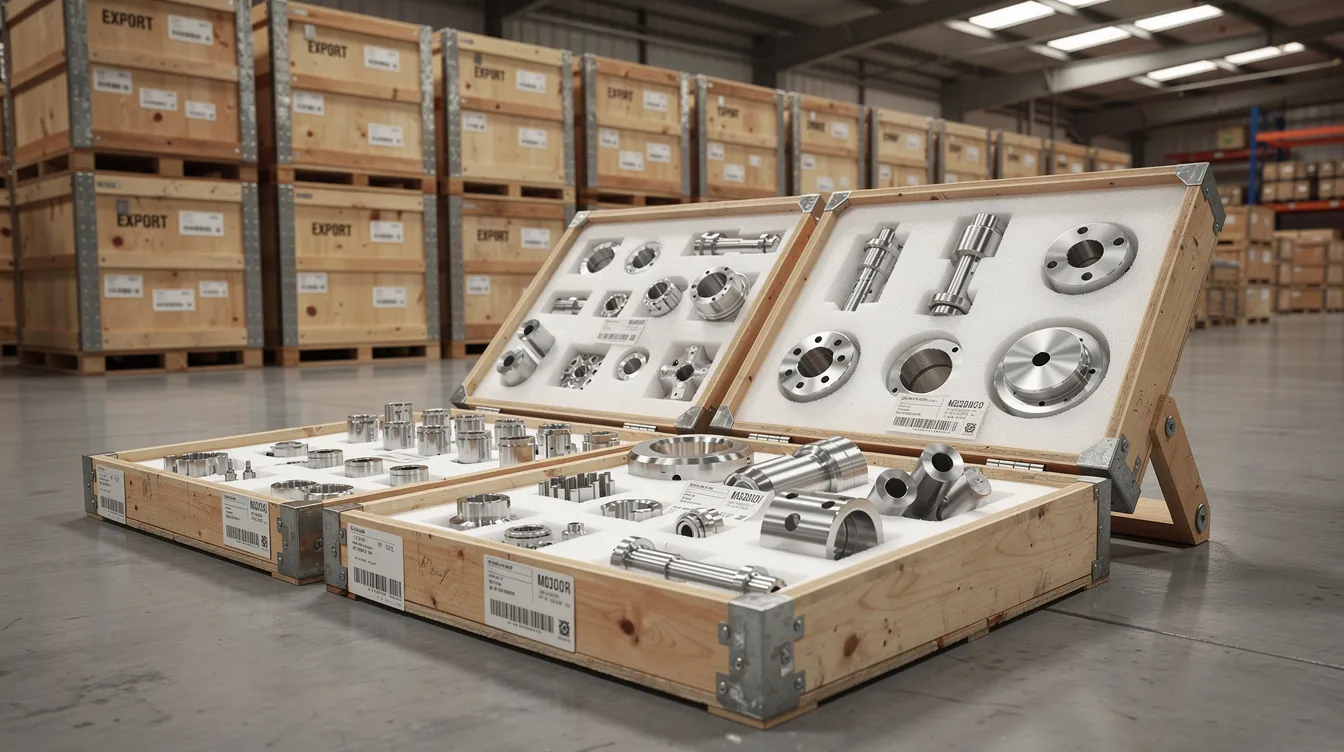
Inadequate packaging instructions leading to transit damage
Early technical calls and DFM reviews align expectations and prevent expensive surprises. Anebon mitigates these risks with up-front drawing reviews, clarification questions, and sample approval runs before committing to production quantities.
Multi-Process Manufacturing: CNC Machining, Die Casting & Sheet Metal
Many OEM projects combine multiple manufacturing processes around precision CNC machining. A motor housing might start as an aluminum die cast body, then receive CNC machining on critical mounting faces and bore features. An electronic enclosure might combine sheet metal panels with CNC-machined brackets and internal frames.
Anebon integrates cnc machining with aluminum die casting and sheet metal fabrication – including laser cutting, bending, and welding. Having a single ISO 9001:2015-certified supplier manage these processes ensures alignment of tolerances, reduces logistics, and simplifies quality control. This multi-process capability through metal fabrication and cnc machining sheet metal is a differentiator compared with traditional machine shops limited to a single process.
Digital Tools, CAD/CAM & Smart Manufacturing in ISO 9001 CNC Shops
Modern cnc machining companies leverage CAD/CAM software and digital workflows to improve precision and repeatability. Best-in-class ISO 9001 shops use advanced CAM for toolpath optimization, standardized post-processors, and digital job travelers. Some buyers now upload cad files through platforms – a digital manufacturing platform supports cnc machining quoting, DFM analysis, and order tracking in one workflow.
Anebon uses CAD/CAM to optimize toolpaths for complex parts and simulate machining before cutting material. Digital records integrate with ISO 9001 document control requirements: versioned drawings, change history, and NC program management are all traceable. Trends like lights-out machining, real-time machine monitoring, and cutting edge technology in digital inspection reports give overseas customers visibility into production status. Even free cad software can generate compatible STEP or IGES files for quoting – what matters is that the manufacturer’s digital infrastructure can ingest and manage those files reliably.
Case-Style Examples: How OEMs Use ISO 9001 Precision CNC Manufacturers
Example 1: Robotics Startup – Rapid Prototyping A robotics startup in Germany needed aluminum 6061 end-effector housings validated in under three weeks. They uploaded STEP files to Anebon, received DFM feedback within 24 hours (suggesting fillet radius changes to improve tool access), and had five prototype pieces shipped via DHL in 12 working days. Tolerances of ±0.02 mm on mating surfaces were confirmed via CMM inspection reports included in the shipment.
Example 2: Medical Device Company – Scaling to Production A U.S. medical device company moved from 20-piece pilot runs of stainless steel 316L instrument housings to 2,000-piece batches. Anebon’s ISO 9001 processes maintained full material traceability and dimensional consistency across the scale-up. Each lot shipped with CoC, material mill certs, and FAI data – documentation the customer needed for FDA design history files.
Example 3: Automotive Tier-2 – Custom Manufacturing Solutions A European automotive supplier consolidated machining, anodizing, and light assembly of aluminum sensor brackets at Anebon. By eliminating two sub-suppliers, they reduced lead time by 30% and cut incoming inspection overhead. The ISO 9001 system provided the documentation backbone that their IATF 16949 auditors required from sub-tier suppliers.
Frequently Asked Questions About ISO 9001 Precision CNC Machining
What does ISO 9001 certification actually guarantee? It guarantees that the machining company operates a documented quality management system with controlled processes, internal audits, corrective actions, and continuous improvement. It does not guarantee a specific tolerance capability.
What tolerances can ISO 9001 precision CNC shops typically achieve? Standard features hold ±0.05 mm. Tight tolerances reach ±0.01–0.02 mm. Ultra-precision shops like Anebon achieve ±0.002 mm on critical features.
What information do I need to provide for an accurate quote? 3D CAD files (STEP or IGES), 2D drawings with tolerances and GD&T, material specifications, surface finish requirements, and target quantities.
What is the difference between ISO 9001 and AS9100 or ISO 13485? ISO 9001 is the general quality management standard. AS9100 adds aerospace-specific requirements (risk management, configuration control). ISO 13485 adds medical device requirements (design controls, biocompatibility traceability). Manufacturing companies serving those sectors often hold both.
Can I place small orders or just prototypes? Yes. Most ISO 9001 precision CNC machining companies, including Anebon, accept orders from single prototypes through specialized materials runs with no minimum order quantity.
How is quality assured when I cannot visit the factory? Through documented inspection reports (CMM data, photos, FAI), material certificates, and video calls. ISO 9001 documentation and clear reporting bridge the geographic distance.
How quickly can Anebon quote and start a new project? DFM feedback and quotation are typically returned within about 24 hours after receiving complete cad files. Production start depends on material availability and complexity but usually begins within days of order confirmation.
How to Get Started with Anebon as Your ISO 9001 Precision CNC Partner
Anebon Metal Products Limited offers ISO 9001:2015 and ISO 14001:2015 certified precision CNC machining with tolerances as tight as ±0.002 mm, multi-axis CNC machines, and dedicated engineering support for overseas OEMs across the global supply chain.
To get started, prepare your STEP or IGES files along with 2D drawings that include tolerances, material and finish requirements, and target quantities. Anebon’s team returns DFM feedback and a quotation typically within about 24 hours for most RFQs.
We recommend starting with a prototype or pilot batch to validate quality, communication, and logistics before scaling to production. This approach lets you build confidence in your custom manufacturing partner with minimal risk.
If you are an engineer or purchasing team looking for an ISO 9001 precision CNC machining partner that combines machining services, die casting, sheet metal, and specialized materials expertise under one roof, contact Anebon to discuss your next project and begin building a long-term manufacturing partnership.