The Best Reliable CNC Factory in China for Quality and Precision
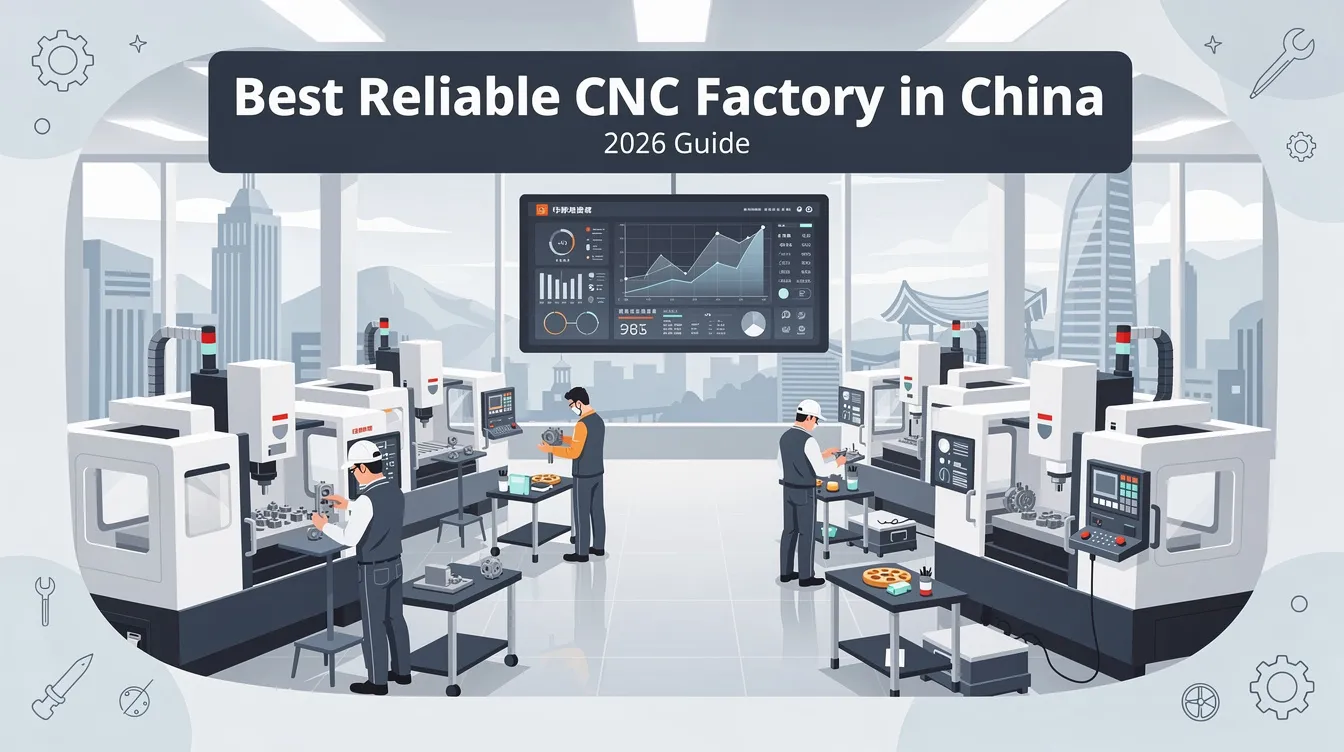
Best Reliable CNC Factory in China (2026 Guide)
Finding the best reliable CNC factory in China can make or break your product development timeline, per-unit cost, and final part quality. With hundreds of CNC machining companies operating across Guangdong, Jiangsu, and Zhejiang provinces, overseas OEMs face a real challenge in separating proven factories from middlemen. This guide breaks down what makes a Chinese CNC manufacturer truly reliable, walks through the evaluation process, and shows you why Anebon Metal Products Limited consistently earns trust from design engineers and purchasing teams worldwide.
Quick Answer: Why Anebon Is One of the Best Reliable CNC Factories in China
Anebon Metal Products Limited, a Co Ltd based in Dongguan, Guangdong, is a top choice for overseas OEMs seeking a reliable CNC machining company in China. Founded in 2010, the factory is ISO 9001:2015 and ISO 14001:2015 certified and focuses exclusively on B2B precision CNC machining, CNC milling, CNC turning, die casting, and sheet metal fabrication.
Here is what sets Anebon apart in concrete terms:
-
Tolerances as tight as ±0.002 mm on critical features, placing it in the top tier of Chinese manufacturers
-
3-axis, 4-axis, and 5-axis CNC machining for complex geometries in aerospace, medical, and robotics applications
-
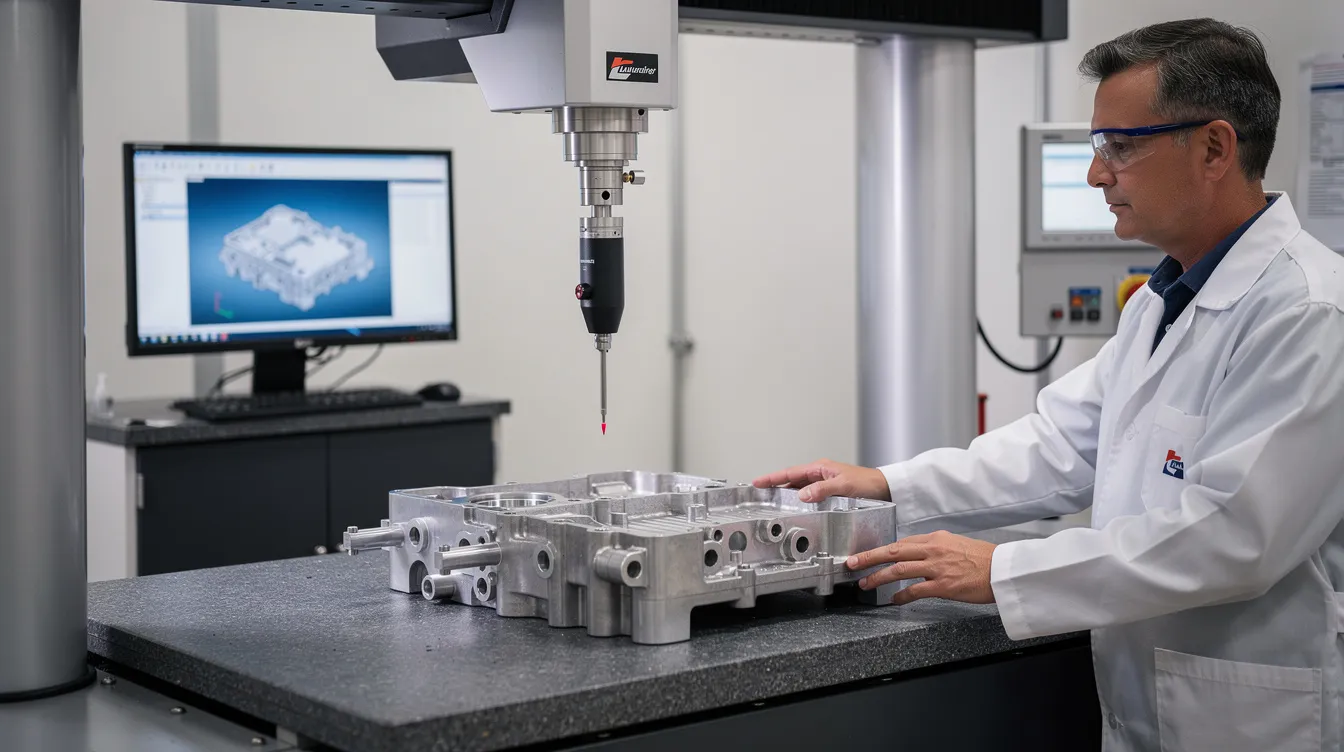
A multi-stage quality control workflow using CMMs, optical projectors, and surface roughness testers
-
Rapid prototyping turnaround in as few as five working days, with full production runs completing in three to five weeks
-
Competitive pricing driven by optimized production workflows and DFM feedback that reduces machining time and material waste
CNC machining companies that offer tailored product options across prototyping and volume production give OEMs the flexibility they need. Anebon does exactly that. If you need a reliable CNC machining company in China, send your CAD files to Anebon for a fast quote and DFM feedback.
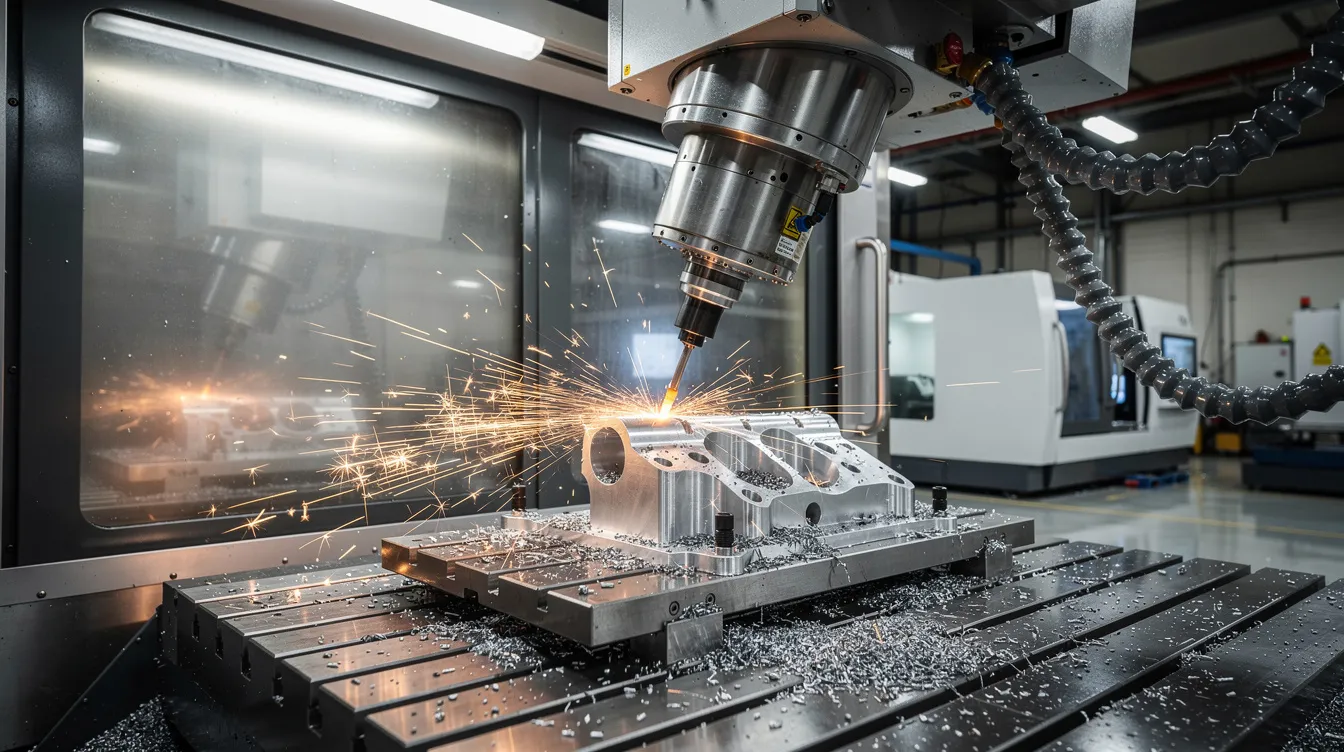
Why China Is Home to Many of the Best CNC Machining Companies
China has become the world’s largest base for CNC machining companies. This happened through decades of investment in supply chains, workforce training, and export-oriented manufacturing policies. The result is an ecosystem where raw materials, cutting tools, machine tools, and surface finishing services cluster within a few hours’ drive of each other.
The numbers tell the story clearly. China exported $11.267 billion in machine tools in 2024, making it a net exporter of advanced CNC machinery. By 2025, the domestic CNC machine tool market reached approximately RMB 123.4 billion, with the five-axis segment alone growing to RMB 12.9 billion and projected to hit RMB 35.2 billion by 2030.
Regions like Guangdong (especially Dongguan and Shenzhen), Jiangsu, and Zhejiang concentrate a large number of CNC machine manufacturers. This geographic density means a factory can source aluminum billets, stainless steel plates, titanium bar stock, and specialized cutting tools without long shipping delays or inflated costs.
This ecosystem enables CNC machining services that offer competitive pricing without quality compromise. China’s CNC machining costs are competitive due to advanced machinery and labor costs that are significantly lower than in Western countries. For OEMs in the US and Europe, CNC machining in China is often 30% cheaper than local suppliers while still meeting the same dimensional and surface finish requirements.
Many leading CNC factories in China are ISO 9001 certified, and overseas OEMs increasingly shift precision work to Chinese CNC machining companies to shorten development cycles and access advanced axis CNC technology that might be cost-prohibitive domestically.
About Anebon Metal Products Limited
This section presents Anebon as a case study of a best-in-class reliable CNC factory in China, illustrating the capabilities that define the top tier of Chinese CNC manufacturers.
Key company facts:
|
Detail |
Specifics |
|---|---|
|
Founded |
2010 |
|
Location |
Dongguan, Guangdong Province, China |
|
Business model |
B2B / OEM manufacturing |
|
Primary markets |
Europe, North America, Asia-Pacific |
|
Certifications |
ISO 9001:2015, ISO 14001:2015 |
Core services include precision CNC milling, CNC turning, 5-axis CNC machining, die casting, and sheet metal fabrication, all supported by in-house surface treatments and a qualified partner network for specialized finishes.
Many Chinese CNC manufacturers adhere to ISO 9001 quality standards, and Anebon’s dual ISO certifications indicate adherence to both international quality and environmental management standards. Each batch ships with traceable quality records.
Typical customers include design engineers, R&D teams, and purchasing managers across aerospace, medical devices, automotive, electronics, robotics, and industrial machinery. The factory can handle both prototypes and mass production under one roof, which simplifies supplier management for overseas OEMs.
Core CNC Capabilities: Milling, Turning, and 5-Axis CNC
This section covers the CNC machines and manufacturing processes that allow Anebon to handle everything from simple brackets to complex multi-surface components.
CNC Milling
Anebon operates 3-axis and 4-axis CNC milling machines and machining centers for prismatic parts, housings, brackets, and structural components. These milling machines process aluminum, stainless steel, titanium, brass, and engineering plastics. For parts requiring horizontal machining centers, Anebon can accommodate workpieces that demand high metal-removal rates and tight flatness specifications.
CNC Turning
Multi-axis CNC lathe machines handle shafts, bushings, fittings, and precision connectors. Live tooling options combine CNC milling and turning operations in a single setup, reducing fixture changes and improving concentricity on complex turned-milled parts.
5-Axis CNC Machining
5-axis CNC machining is where Anebon stands out for complex aerospace, medical, and robotics parts. Multi axis machining allows undercuts, free-form surfaces, and tight positional tolerances to be cut in a single setup. Advanced CNC factories in China utilize 5-axis machining technology precisely because it eliminates multiple fixtures and the cumulative error they introduce.
According to a 2026 audit of 456 verified precision CNC factories in China, only about 38 to 39 percent of shops have 5-axis or Swiss-type capabilities that can achieve tolerances finer than ±0.010 mm. Chinese CNC factories often achieve tolerances as tight as ±0.005 mm on demanding features, and Anebon’s capability down to ±0.002 mm on critical features places it among the most capable. CNC machining can achieve tolerances as tight as ±0.002 mm when design and material conditions allow.
Services include CNC milling, turning, and sheet metal processing, and programming is done with modern CAD/CAM software. DFM feedback is provided to optimize part designs for these axis CNC workflows before any metal is cut.
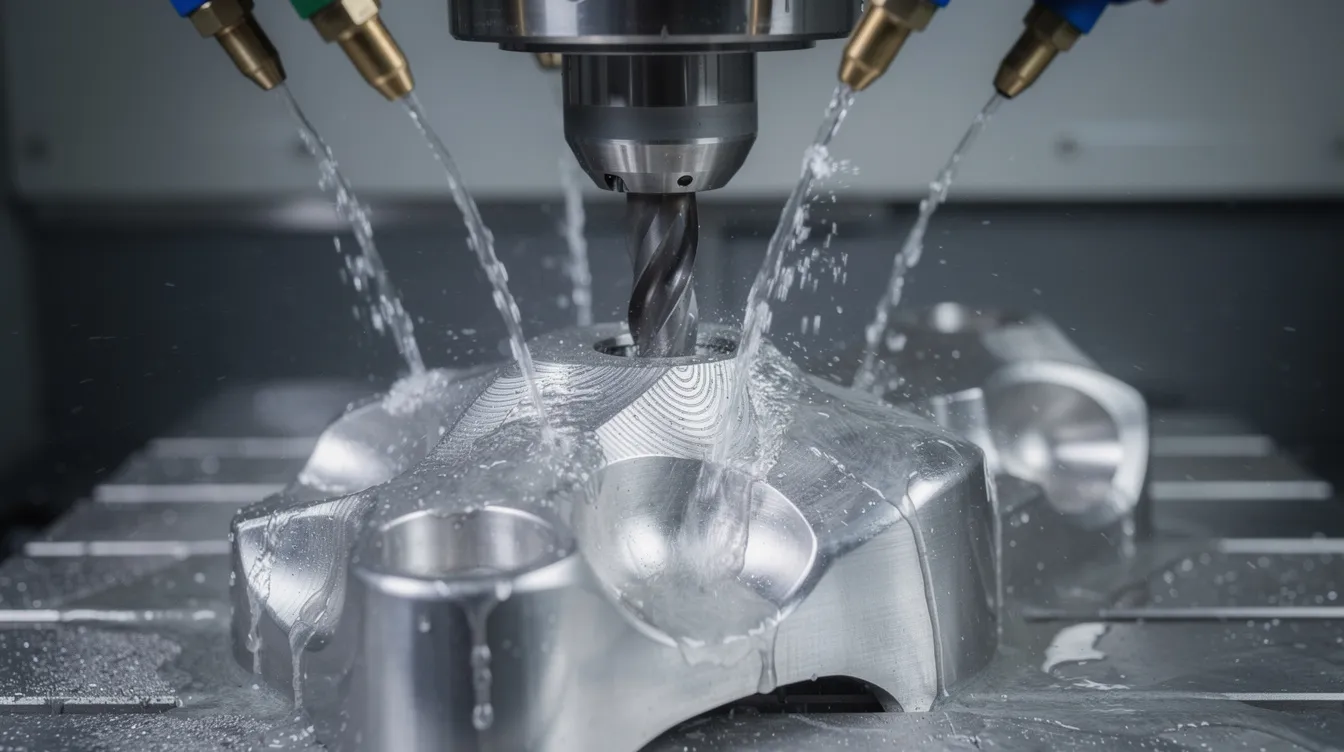
Beyond Machining: Die Casting and Sheet Metal Fabrication
A reliable CNC factory should offer more than just machining. This section highlights Anebon’s one-stop manufacturing capabilities that reduce handoffs and consolidate your supply chain.
Die Casting
Anebon provides aluminum and zinc die casting services with in-house CNC machining for critical features. This combination is ideal for automotive housings, heat sinks, and electronics enclosures where near-net-shape casting cuts rough machining time and material waste. Many companies also provide 3D printing and injection molding services for prototyping and low-volume tooling validation.
Sheet Metal Fabrication
Metal fabrication capabilities include laser cutting, bending, welding, and assembly for steel, stainless steel, and aluminum sheet components. Common applications include cabinets, brackets, chassis, and enclosures for industrial machinery and electronics.
Integration Advantage
By combining die casting, sheet metal, and CNC machining into one process chain, Anebon reduces the number of suppliers you manage, shortens lead times, and maintains consistent documentation across all manufacturing processes. This one-stop model is ideal for customers who want to consolidate suppliers while maintaining high precision parts and traceable quality records.
Advanced Equipment: CNC Machines, CNC Routers, and CNC Laser Machines
Reliable CNC factories in China are defined by their equipment base. The difference between a factory that can hold ±0.05 mm and one that consistently hits ±0.002 mm comes down to the machines on the floor and how well they are maintained.
Anebon’s equipment portfolio includes:
-
High precision vertical CNC machining centers for milling operations
-
Multi-axis CNC lathe machines with live tooling
-
5-axis CNC systems for complex geometries
-
CNC routers and desktop CNC routers for plastics, light composites, and plastic cutting applications
-
CNC laser machines and laser cutting systems for sheet metal and thin-walled parts, improving edge quality and reducing secondary deburring
-
Wire and sinker EDM for ultra-tight features and hardened materials
Advanced control systems, tool measurement systems, and probing cycles maintain consistency and reduce setup times across production runs. Laser cutting machines handle stainless steel plates and aluminum sheets with minimal heat-affected zones. While Chinese CNC machines have historically been perceived as lower-end, factories like Anebon invest in imported Japanese machines and advanced CNC machines that rival any Western shop floor.
This equipment mix lets Anebon handle complex, multi-process jobs across various CNC machines in metal and plastic without outsourcing critical steps. Whether a project calls for CNC machining centers, laser cutters, or engraving machines, the work stays under one roof.
Supported Materials and Surface Finishes
Material and finish flexibility is crucial when choosing a CNC machining company in China. The ability to switch between alloys or polymers without changing suppliers saves weeks.
Primary Metals:
|
Category |
Grades |
|---|---|
|
Aluminum |
6061, 6082, 7075 |
|
Stainless Steel |
304, 316, 17-4PH |
|
Other Metals |
Brass, copper, tool steels, carbon steels |
|
Titanium |
Ti-6Al-4V |
Engineering Plastics:
ABS, PC, POM (Delrin), PEEK, nylon, and other polymers for electronics, medical devices, and industrial applications.
Surface Treatments:
-
Anodizing and hard anodizing
-
Powder coating and painting
-
Bead blasting and polishing
-
Nickel and zinc plating
-
Conversion coatings
Customization options are available for various materials and designs. Anebon can also coordinate additional finishes like laser engraving and laser cleaning via qualified partners, along with laser marking technology for part identification, maintaining single-point responsibility for quality. This flexibility in custom machining services means your design is not limited by the factory’s material shelf.
Quality Assurance: How Reliable CNC Factories Control Precision
Long-term reliability depends on formal quality systems, not only on good machines. A new CNC machine will drift without proper calibration protocols, and even advanced machines produce scrap without disciplined inspection workflows.
Anebon’s Quality Workflow:
-
Incoming material inspection – raw stock is verified against material certificates before entering production
-
In-process checks – operators measure critical dimensions at the machine using calibrated instruments during the production process
-
Final inspection – completed parts undergo comprehensive dimensional and visual checks before packaging
Robust quality assurance practices integrate inspection equipment like Coordinate Measuring Machines (CMMs), optical projectors, height gauges, micrometers, and surface roughness testers to confirm GD&T features and tight tolerances.
Quality control processes often include First Article Inspection and material test certificates for traceability. When required by automotive and aerospace clients, Anebon provides PPAP documentation and capability studies.
Key certifications to understand:
-
ISO 9001 ensures quality management in CNC machining
-
ISO 14001 certification focuses on environmental management standards
-
AS9100 certification is essential for aerospace industry compliance
-
ISO 13485 certification is crucial for medical device manufacturing
Anebon currently holds ISO 9001:2015 and ISO 14001:2015. For projects requiring AS9100 or ISO 13485, buyers should confirm whether the specific production line has been audited to those standards.
Cost-Effectiveness and Competitive Pricing
Reliable CNC factories in China must combine precision with competitive pricing to be truly valuable to overseas OEMs. Price alone does not determine value, but cost efficiency built into every step of the production process does.
Concrete cost drivers at Anebon include:
-
Optimized production planning that groups similar setups and materials
-
Shared fixturing across repeat orders
-
Bulk raw-material purchasing at regional Guangdong prices
-
Efficient CNC machine utilization through 24/7 operation capability
CNC machining in China can reduce production costs by up to 30% compared to equivalent work in Western shops. Chinese CNC manufacturers achieve cost savings through optimized production workflows that minimize idle machine time and reduce scrap rates. Anebon amplifies this by using DFM to simplify features and cut unnecessary machine time before production begins.
Quotes are based on transparent cost components: material, CNC machining time, surface finish, inspection level, and logistics. This transparency lets buyers compare costs item by item rather than guessing at a lump-sum figure.
To get the most economical proposal, provide your expected volumes (prototype versus high volume production) so Anebon can propose cost breaks and recommend the best process, whether that is CNC machining, die casting, or a hybrid approach.
Lead Times, Logistics, and Global Shipping
Speed is a key reason to choose a Chinese CNC machining company. Chinese CNC factories can cut wait times by almost half compared to congested domestic shops, especially for prototype and bridge-production volumes.
Indicative Lead Times:
|
Order Type |
Typical Timeline |
|---|---|
|
Rapid prototyping (CNC milling/turning) |
7–10 working days |
|
Urgent prototypes |
As few as 5 working days |
|
Production runs (medium complexity) |
3–5 weeks |
|
High volume production (with tooling) |
4–6 weeks |
Anebon ships globally using air freight for urgent prototypes and sea freight for higher-volume, cost-sensitive orders. Parts are packed with proper protection, labeled clearly, and accompanied by packing lists and quality documentation to streamline customs clearance.
Dongguan’s location near major ports (Shenzhen and Hong Kong) and international airports helps reduce total transit time. For European destinations, sea freight typically takes 25 to 35 days; air freight reaches most cities in three to five days.
Industries Served and Typical CNC Projects
Anebon’s reliability comes from CNC machining experience across demanding industries where failure is not an option.
Main sectors served:
-
Aerospace: brackets, housings, structural components, and free-form surfaces requiring 5-axis machining
-
Medical devices: instrument handles, surgical guide fixtures, housings, and components requiring precision engineering and traceability
-
Automotive: engine-related parts, sensor housings, structural brackets, and metal stamping alternatives
-
Electronics: heat sinks, enclosures, connectors, and assemblies requiring tight flatness and good anodized finishes
-
Robotics and industrial machinery: end-effectors, gears, precision frames, and custom parts for smart manufacturing systems
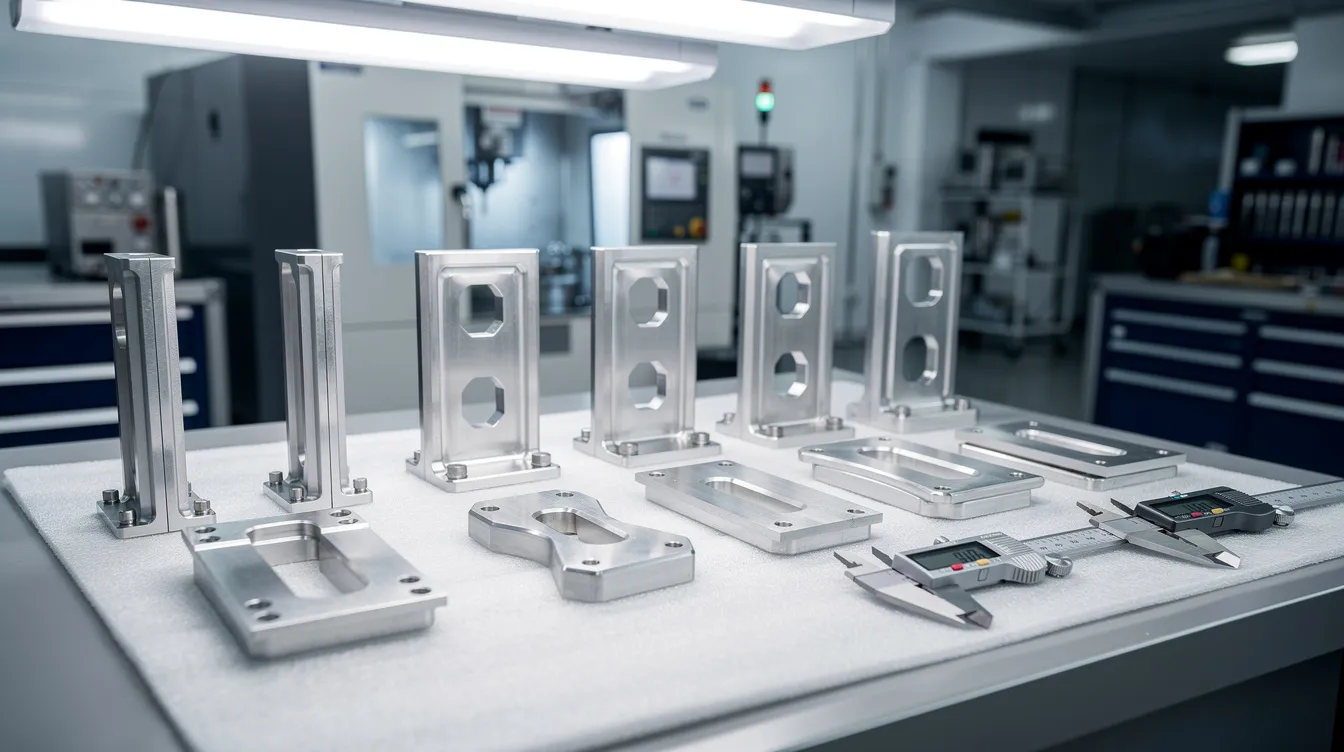
Precision CNC machining services are used for diverse industries including aerospace and medical devices. Typical CNC machining parts include tight-tolerance aluminum housings with complex internal channels and stainless-steel shafts with fine surface finish requirements (Ra ≤ 0.5 µm).
These projects often combine CNC machining with sheet metal fabrication or die casting, showing Anebon’s ability to manage multi-process manufacturing. Prototyping is essential for verifying dimensional accuracy before mass production, and Anebon’s workflow is designed to move parts from prototype approval to volume production without re-qualifying the process.
DFM Support and Engineering Collaboration
A modern CNC machining company must provide strong engineering support, not just machining capacity. The difference between a factory that simply makes what you draw and one that helps you make it better can save thousands of dollars per project.
Anebon’s engineers review customer CAD models (STEP, IGES, native formats) and prints to provide Design for Manufacturing (DFM) feedback before quoting. Many CNC manufacturers provide Design for Manufacturing support, but the quality of that feedback varies widely.
Typical DFM optimizations include:
-
Adjusting wall thicknesses to prevent deflection during machining
-
Adding appropriate fillet radii to internal corners for tool access
-
Relaxing non-critical tolerances to reduce machine time
-
Recommending thread specifications that match standard tooling
-
Suggesting material substitutions that improve machinability without sacrificing performance
Design for Manufacturability feedback helps identify potential machining bottlenecks and cost-saving opportunities early, when changes are cheap. Customization includes design optimization and material sourcing, and customization options allow adjustments during the production process as testing reveals new requirements.
Strong engineering communication enhances project management and reduces misunderstandings. Anebon’s engineering team communicates in English, targeting overseas design and R&D teams who need responsive, technically fluent collaboration. Strong project management includes responsiveness and clarity in communication during the RFQ process.
How Anebon Compares to Other CNC Machining Companies in China
Buyers often compare several CNC machining companies before choosing a long-term partner. Here is how Anebon stacks up against common alternatives.
Anebon vs. Online Platforms and Aggregators
Anebon operates as a single, ISO-certified factory rather than a broker or aggregator. This gives direct control over quality, schedule, and engineering communication. When you send drawings to Anebon, the same team that quotes is the team that machines.
Key Strengths:
-
Tolerances as precise as ±0.002 mm where feasible, matching or exceeding most Chinese CNC manufacturers in precision CNC machining
-
Focus on complex, high precision CNC parts rather than only low-cost commodity items
-
One-to-one engineering support with DFM built into the quoting process
-
A broader process range than many competitors: CNC milling, turning, 5-axis CNC, die casting, and sheet metal fabrication under one organization
Chinese CNC manufacturers can handle both prototyping and mass production, but not all do it with the same level of process control. Overseas buyers seeking deeper technical collaboration and consistent quality often prefer a focused OEM manufacturing model like Anebon’s over a marketplace approach. The factory offers tailored solutions rather than one-size-fits-all pricing tiers.
How to Evaluate a Reliable CNC Manufacturer in China
This checklist applies to any CNC manufacturer you are considering, with examples drawn from Anebon’s approach.
1. Verify Credentials
Confirm ISO certifications, years in business, export experience, and main markets served. Manufacturers must verify legal legitimacy and business licenses when sourcing CNC partners. Ask for the audit scope: does the certification cover the actual workshop, or just a trading office?
2. Assess Equipment and Process Capabilities
Ask about CNC machines and process capabilities: 3-axis, 5-axis, CNC router machines, CNC laser machines, sheet metal, and die casting. Make sure they align with your project needs. A shop with only 3-axis milling machines cannot reliably produce parts that require 5-axis access.
3. Request Sample Parts
Order a small trial batch to validate surface finish, dimensional accuracy, and packaging quality before committing to larger volumes. Chinese CNC companies often provide rapid prototyping and mass production, so use prototyping to test the relationship.
4. Evaluate Communication Quality
Engineering responsiveness, drawing format compatibility, and willingness to sign NDAs for sensitive projects matter as much as machine count. Poor communication is the most common reason OEM relationships fail in cross-border manufacturing.
5. Check References and Track Record
Ask for case studies or references from clients in your industry. Industrial manufacturers with experience in precision engineering for your sector will ramp up faster and produce fewer first-article rejects.
Step-by-Step: Working with Anebon from RFQ to Delivery
Here is how a typical project flows from first contact to delivered parts.
Step 1: Request for Quote (RFQ)
Send 2D drawings and 3D models along with material, quantity, and finish requirements. Anebon responds with pricing and lead time, typically within 24 to 48 hours for standard CNC machining services.
Step 2: DFM and Technical Review
Engineers discuss recommended design changes, tolerance clarifications, and process choices. For example, they may suggest switching from full CNC machining to die casting plus CNC finishing for volume orders to reduce per-unit cost.
Step 3: Prototyping
Anebon produces CNC prototypes or small batches for fit and functional testing. CNC machining companies offer services from rapid prototyping to full production, and this step validates both the design and the factory’s process window.
Step 4: Production and Quality Control
The full batch is produced with documented in-process inspections. First Article Inspection confirms that production parts match approved prototypes. Final checks verify dimensions, surface finish, and cosmetic requirements before secure packaging.
Step 5: Shipping and After-Sales
Parts ship via the agreed method (air or sea). Anebon supports follow-up questions, provides quality reports on request, and processes repeat orders with stored process parameters for consistency.
FAQs About Choosing the Best Reliable CNC Factory in China
What tolerances can Anebon and other Chinese CNC machining companies typically achieve?
Standard CNC milling and turning tolerances across Chinese factories are ±0.025 to 0.050 mm. Factories with 5-axis or EDM capabilities (about 38 to 39 percent of audited shops) can reach ±0.010 to 0.025 mm. Anebon achieves tolerances as tight as ±0.002 mm on critical features under controlled conditions. High precision parts with sub-±0.005 mm tolerances require discussion during DFM review.
What are the minimum order quantities?
Anebon accepts single-piece CNC prototypes as well as large production runs. There is no fixed minimum order quantity. Pricing scales with volume, so larger batches receive cost breaks.
How is intellectual property protected when sending drawings to a CNC machining company in China?
Anebon signs NDAs before receiving sensitive drawings. You should also consider splitting critical assemblies across multiple suppliers, watermarking drawings, and registering patents in relevant jurisdictions. Request written confirmation that your files will not be shared with third parties.
How do I choose between CNC machining, CNC milling, CNC laser machines, and CNC router processes?
The choice depends on material, geometry, and tolerance:
-
CNC milling and turning suit most metal and plastic parts requiring tight tolerances
-
CNC router machines and desktop CNC routers are better for large-area flat plastic cutting, light composites, or wood
-
Laser cutting machines and laser cutting systems excel at 2D profiles in sheet metal
-
Fiber laser and laser cutters handle thin materials with fine kerf widths
-
Additive manufacturing and 3D printing make sense for complex prototypes before committing to CNC tooling
Laser engravers, laser welders, and plasma cutters serve finishing, joining, and marking rather than primary shaping. Laser welding machines join thin sections without distortion. Digital cutters and edge banding machines serve niche applications outside typical metal machining. Your Anebon engineer can recommend the right process during DFM review.
What are typical lead times and shipping options for Europe and North America?
Rapid prototyping takes 7 to 10 working days, with urgent orders possible in 5 days. Production runs take 3 to 5 weeks. Air freight to Europe or North America adds 3 to 5 days; sea freight adds 25 to 35 days. Anebon handles packaging, labeling, and customs documentation.
Do I need to visit the factory before placing an order?
A factory visit is valuable but not strictly necessary for a first order. Start with a trial prototype to test quality, communication, and delivery performance. Many successful OEM relationships begin with a small sample order and scale from there.
What file formats does Anebon accept?
STEP, IGES, SolidWorks native files, and 2D PDF or DWG drawings. Including both 3D models and 2D prints with GD&T callouts speeds up the quoting and DFM process. Computer numerical control CNC programming starts from these files, so accuracy in your models directly impacts part quality.
Conclusion: Choosing Anebon as Your CNC Manufacturing Partner in China
Anebon Metal Products Limited represents one of the best reliable CNC factories in China for overseas OEMs seeking precision and consistency. With advanced CNC machines including 5-axis CNC systems, tolerances down to ±0.002 mm, an ISO-certified quality system, and integrated services from rapid prototyping to mass production, the factory covers the full lifecycle of custom parts manufacturing.
For design engineers and purchasing managers, the combination of DFM support, competitive pricing, stable lead times, and proven experience in demanding sectors like aerospace and medical devices means fewer surprises and faster time to market. Advanced automation and advanced equipment across the factory floor support both high precision CNC work and high volume production with consistent results. Whether you need precision CNC machining for a single prototype or a CNC manufacturer for ongoing production, Anebon delivers.
Send your drawings or 3D models to Anebon today for a tailored quote and technical review. Start with a prototype, validate the quality, and build a manufacturing partnership that scales with your product.