The Best Precision Component Solutions for Your Engineering Needs
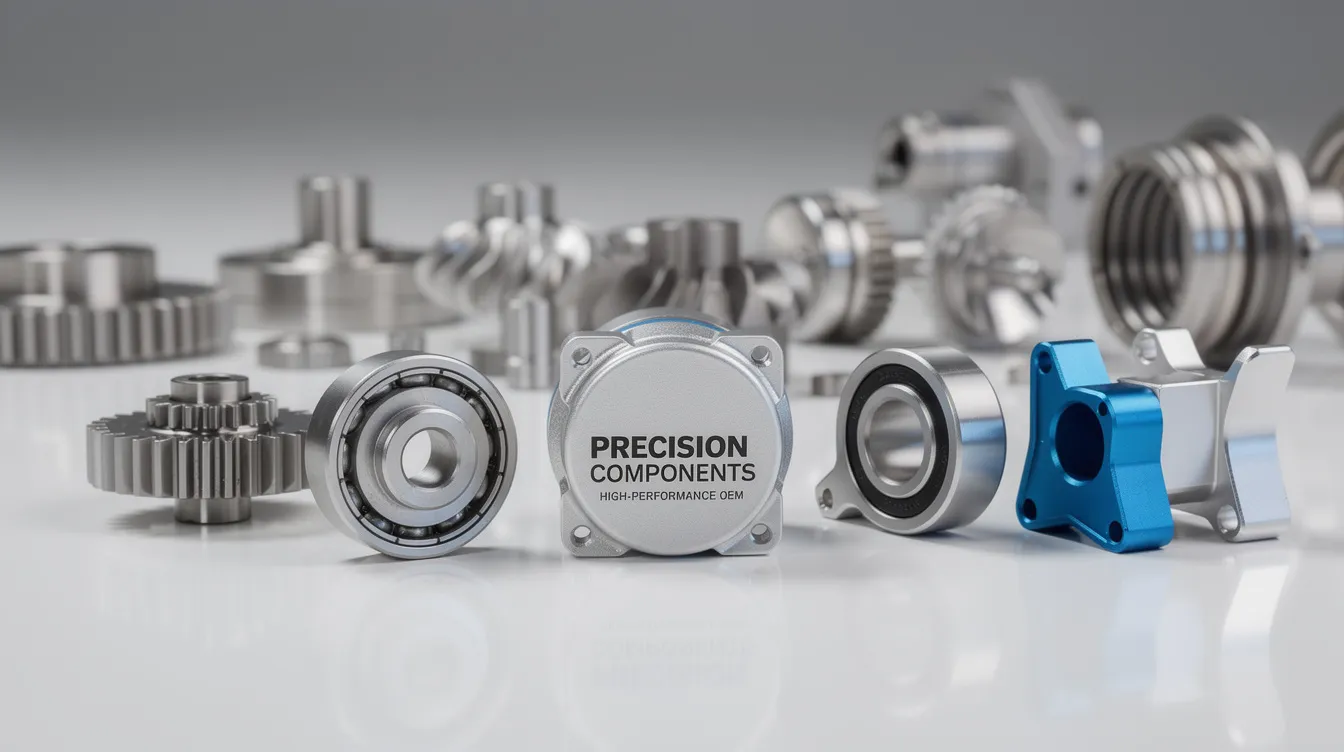
Precision Components for High-Performance OEM Products
Precision Components: Fast Answers for Your Next Project
Precision components are metal or plastic parts manufactured to extremely tight tolerances-often measured in micrometers-where dimensional accuracy directly determines whether an assembly works or fails. For OEMs in aerospace, medical devices, automotive, and electronics, these parts play a crucial role in product safety, performance, and regulatory compliance.
Anebon Metal Products Limited is a China-based precision machining supplier founded in 2010 in Dongguan, Guangdong, holding ISO 9001:2015 and ISO 14001:2015 certifications. The company serves overseas OEM customers with extensive experience across demanding industries. Engineers and buyers can request a quote or upload CAD files (STEP, IGES, Parasolid) for rapid DFM feedback on any precision component project.
Key capabilities include cnc machining, cnc turning, 5-axis milling, die casting, sheet metal fabrication, and additive manufacturing support-covering everything from rapid prototyping to full-scale production.
What Are Precision Components?
Precision components are parts manufactured to micrometer-level tolerances (as tight as ±0.002 mm) with repeatable quality across every production run. They are designed to operate with very tight tolerances and are often measured in micrometers for accuracy, manufactured to strict geometric standards that ensure perfect fit, safety, and functionality in complex systems.
What separates precise components from standard parts:
-
Tighter tolerances – critical features held to ±0.002–0.01 mm versus ±0.05 mm or wider on general parts
-
Controlled surface finish – Ra values from 0.4 µm to 1.6 µm for functional surfaces
-
Traceable materials – certified alloy, heat treatment, and batch documentation
-
Process validation – calibrated equipment, environmental controls, and statistical repeatability
Common examples include precision shafts, housings, heat sinks, gears, medical device implants, electronic enclosures, and custom fasteners. Precision components are made to withstand heavy loads and harsh conditions, and they require high tolerances and long-term durability. In various industries where failure causes safety risks or costly downtime, these parts are essential.
Key Manufacturing Processes for Precision Components
Anebon combines subtractive, formative, and additive processes to manufacture components from prototype through production. Process selection depends on part geometry, material (aluminum, titanium, stainless steel, engineering plastics), tolerance requirements, and annual volume. All processes are supported by CAM programming and DFM guidance.
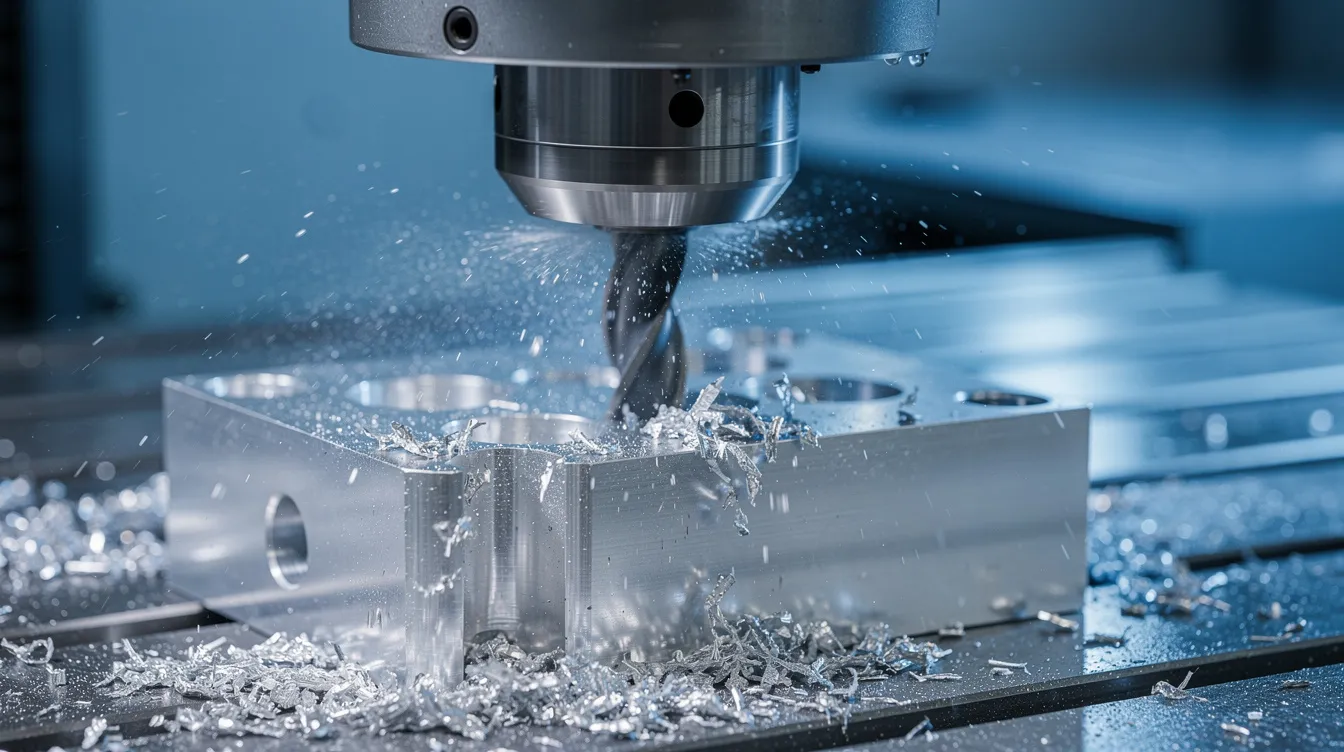
CNC Machining for Complex Metal Parts
CNC machining uses computer-controlled milling and drilling to shape metal and plastic stock with high precision. CNC machining produces components with tight tolerances in micrometers, and can achieve accuracies within 0.005 mm on critical features. Precision machining reduces raw material waste through high accuracy, and it reduces manufacturing costs by minimizing errors.
Anebon operates 3-axis and 4-axis CNC milling centers suited for low-to-medium production runs, tight-tolerance prototypes, and parts with pockets, threads, and complex 3D surfaces. Concrete examples include aluminum 6061 and 7075 housings for electronics, stainless steel 316L valve bodies, and titanium Grade 5 medical fixtures.
5-Axis and Multi-Axis Machining
5-axis machining is essential for complex geometries, undercuts, and organic shapes found in aerospace and robotics assemblies. It reduces setups, improves positional accuracy, and shortens lead time for intricate parts like impellers, topology-optimized structural brackets, and medical implant contours.
Anebon’s engineering team uses advanced technology in CAM software to simulate toolpaths, avoid collisions, and ensure consistent performance across every surface. This capability is critical for parts where even minor positional errors compromise the final product.
CNC Turning for High-Accuracy Rotational Components
CNC turning is the preferred process for cylindrical metal parts such as shafts, bushings, fittings, and threaded connectors. Anebon operates CNC lathes with live tooling to combine turning and milling in one setup, improving concentricity and throughput.
Achievable tolerances for diameters and runout reach ±0.005 mm. Typical materials include stainless steel, brass, copper alloys, and aluminum for hydraulic, pneumatic, and electronic connector parts. Robotic systems require exact repeatability for consistent production, and CNC turning delivers that reliability across automotive sensor housings, medical fluid connectors, and semiconductor equipment spacers.
Die Casting and Sheet Metal Fabrication
For higher volumes, Anebon complements machining with die casting and sheet metal fabrication. Die casting produces complex aluminum and zinc metal parts-motor housings, heat sinks, structural brackets-with good dimensional repeatability at scale. The break-even point versus CNC machining typically falls around 500–1,000 units, though die casting carries a higher upfront cost for tooling ($15,000–50,000).
Sheet metal processes include laser cutting, bending, stamping, and welding for enclosures, brackets, and chassis in electronics manufacturing and industrial machinery. Machined secondary operations tighten critical features on castings or sheet metal where required. Injection molding is used for mass production of precision plastic components when polymer parts are needed at volume.
Additive Manufacturing Support
Additive manufacturing builds objects layer by layer from digital models, making it ideal for rapid proof-of-concept parts and fixtures before committing to CNC tooling. Compatible materials include engineering plastics and selected metal printing options through trusted partners.
Benefits include fast design iteration, validation of ergonomics and assembly, and cost-effective low-quantity components. Anebon often combines 3D-printed prototypes with CNC-machined final parts for production qualification. Precision components are critical for emerging fields like nanotechnology and additive manufacturing, where innovation in component design pushes boundaries.
Materials for Precision Components
Anebon works with a broad range of metals and plastics to meet mechanical, thermal, and regulatory requirements. Material traceability, certifications, and RoHS/REACH compliance are available on request.
Metals for High-Strength and Thermal Performance
Aluminum is lightweight and commonly used in precision components-6061-T6 offers ~310 MPa tensile strength and 167 W/m·K thermal conductivity, making it ideal for heat sinks and drone housings. Stainless steel offers excellent corrosion resistance and strength, with 304 and 316L grades used in surgical instruments and harsh-environment applications. Titanium provides a high strength-to-weight ratio for aerospace applications, with Ti-6Al-4V (Grade 5) used in structural brackets and biocompatible implant fixtures.
Specialty options include copper alloys for electrical conductivity and thermal management, and tool steels for wear resistance. Electrical Discharge Machining shapes hard metals using electrical sparks, which is valuable for intricate features in hardened tooling. Technical ceramics resist wear and extreme temperatures in jet engines where metals alone fall short. Anebon advises on machinability and cost implications-machining titanium to ±0.002 mm costs significantly more than the same specification in aluminum.
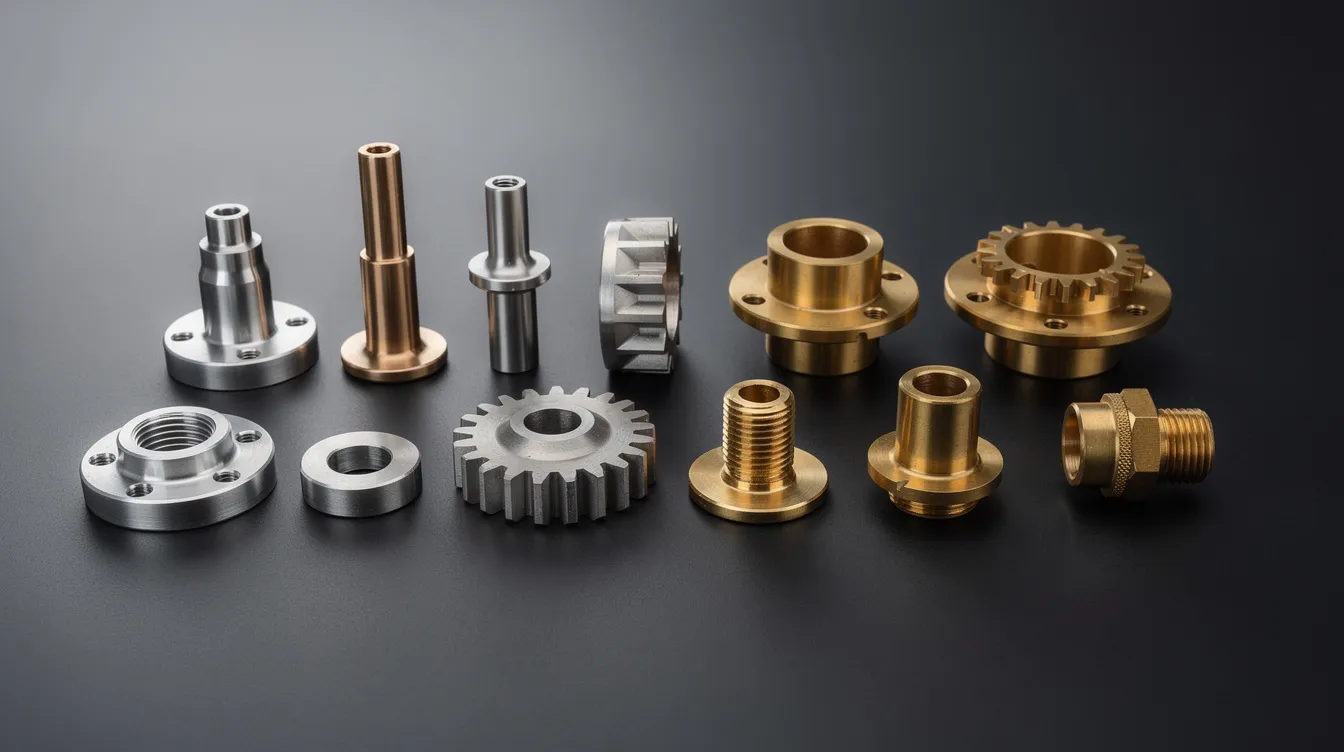
Engineering Plastics and Hybrid Designs
PEEK and Nylon are engineering plastics used for electrical insulation, along with POM (Delrin) and PC for lightweight, low-friction components. These materials serve medical devices, electronics manufacturing jigs, gears, and wear parts where noise reduction and corrosion resistance matter.
Anebon can combine metal and plastic precision components in assemblies, ensuring correct fits across materials. Understanding thermal expansion and creep is critical when designing tight-tolerance plastic parts-tolerances of ±0.01–0.05 mm are achievable depending on geometry and material stability.
Precision Components Across Various Industries
Anebon supplies custom precision components to overseas OEMs across multiple sectors, tailoring processes and materials to each industry’s quality standards. The company has served international clients in North America, Europe, and Asia since 2010 with the production capacity to handle projects from single prototypes to long-term supply agreements.
Aerospace, UAV, and Defense
Aerospace applications require parts to withstand extreme temperatures, vibrations, and pressures. Precision components are crucial in aerospace for safety and efficiency-brackets, housings, actuator parts, and lightweight structural elements are machined from aluminum, titanium, and high-strength alloys. Jet turbines rely on precision-machined parts to endure extreme conditions, and reliability is essential in sectors like aerospace and automotive, where precision prevents catastrophic failures.
UAV-specific examples include drone motor mounts, gimbal components, and precision camera housings needing high rigidity and low weight. Multi-axis machining and CNC turning minimize weight while maintaining strength and fatigue resistance.
Medical Devices and Laboratory Equipment
Precision parts in medical devices must operate safely within the human body. Precision manufacturing is crucial for medical devices like pacemakers and surgical instruments, and medical devices rely on precision components for accurate functionality. Common parts include instrument handles, diagnostic equipment housings, and biocompatible implant-related components in stainless steel 316L, titanium, and PEEK.
Anebon holds extremely tight tolerances on small features-critical for minimally invasive devices. Documentation includes material certifications, traceability, and inspection reports for regulated environments.
Automotive and E-Mobility
Automotive engines use hundreds of precision components for optimal performance. In EV drivetrains, battery modules, and sensor housings, repeatability and robust performance under extreme conditions are non-negotiable. Examples include CNC turned shafts, machined aluminum inverter housings, and precision brackets for ADAS sensors.
Precision engineering enables automated assembly which reduces production costs. Surface treatments such as anodizing, plating, and hardening ensure durability in harsh automotive environments. The initial investment in proper tooling pays off through consistent, defect-free production runs.
Electronics Manufacturing, Robotics, and Industrial Machinery
Electronics requires precision components for switches, connectors, and microchips, while electronics depend on micro-sized precision components for reliable operation. Precision components drive efficiency and support the miniaturization of technologies that shape our daily lives-from smartphones to electronic devices in data centers.
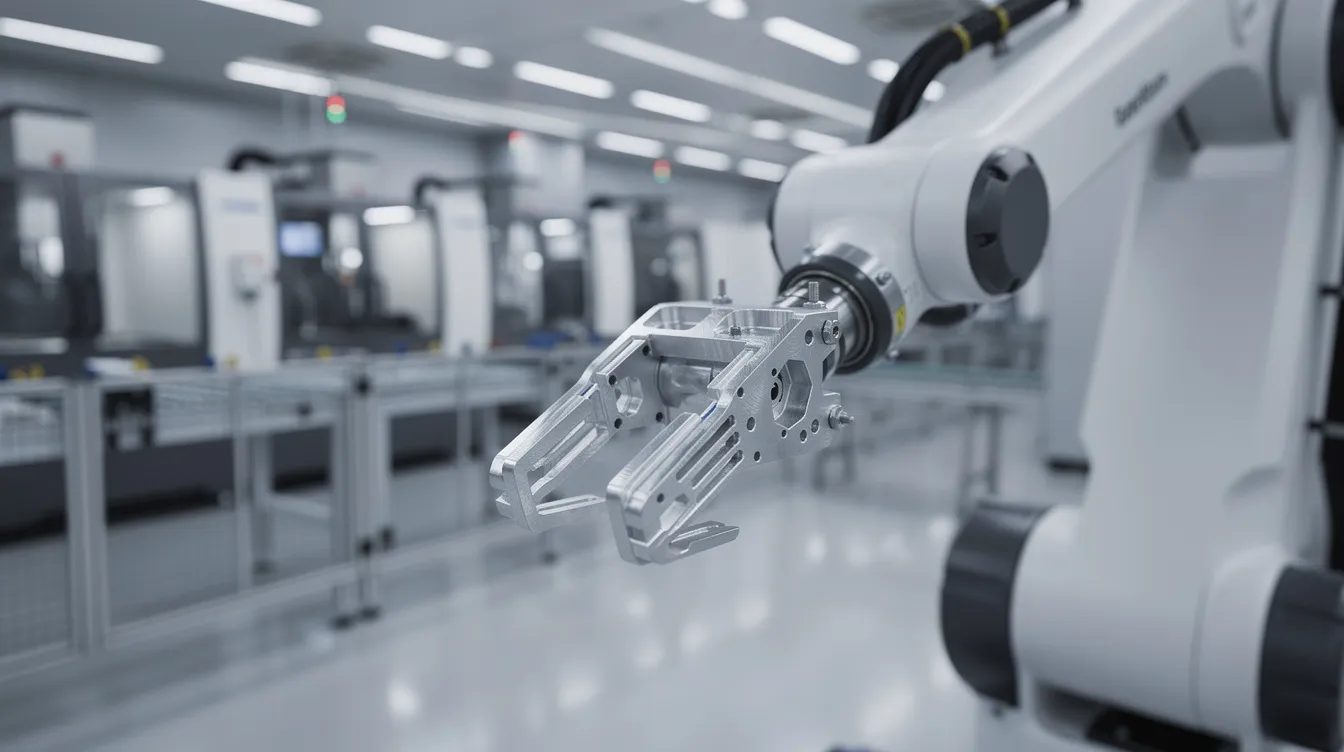
Industrial machinery demands strength and durability in precision components for automation. In robotics, gearbox housings, end-effector plates, and sensor mounts require tight geometric tolerances for efficient operation. Anebon’s cnc machining, cnc turning, and sheet metal capabilities support quick design changes typical in high-tech sectors, helping manufacturers meet each customer’s unique needs.
From Design to Finished Precision Component: Anebon’s Process
Anebon follows a structured workflow from RFQ to shipment, designed for overseas OEM customers needing clear communication and reliable lead times. Preferred file formats include STEP, IGES, and Parasolid, and NDAs are available for confidential projects.
DFM Support, Prototyping, and Production Scaling
Anebon engineers review CAD models to suggest design modifications for cost, manufacturability, and tolerance optimization. Rapid prototyping options include CNC-machined prototypes within short lead times and optional additive manufacturing for early physical samples.
Transition to production involves process validation, fixture design, and optimization of CNC programs for repeatability and cycle time reduction. Precision components minimize waste and production costs throughout scaling. Anebon maintains long-term supply with consistent quality, making it a suitable partner for OEMs planning multi-year product lifecycles. Tight tolerances reduce defective products and material waste across every batch.
Quality Assurance and Certifications
Precision components only deliver value when backed by rigorous quality control and certified systems. Anebon’s ISO 9001:2015 and ISO 14001:2015 certifications reflect commitment to continuous improvement and environmental responsibility. Precision components ensure compliance with strict safety regulations, and they prevent costly system failures in high-risk environments.
Core QA practices include incoming raw material inspection, in-process checks, final inspection, documented control plans, and full traceability. Advanced metrology equipment-CMMs, optical measurement systems, and surface roughness testers-validates critical dimensions to the highest standards.
Inspection, Measurement, and Documentation
Typical inspection steps include first-article inspection (FAI), sample-based in-process checks, and 100% inspection for critical features. Precision components increase lifespan by reducing vibration and friction, so verifying every specification matters. Anebon provides dimensional inspection reports, material certificates, and surface treatment certificates with each shipment.
Calibrated instruments and environmental controls maintain micrometer-level accuracy. The team collaborates with customers to align inspection plans with industry-specific standards and project risk levels, ensuring the highest quality components reach the production line.
Partnering with Anebon for Precision Components
Anebon Metal Products Limited has served as a B2B precision manufacturing partner for overseas OEMs since 2010, building a track record of excellence across aerospace, medical, automotive, and electronics. The company combines cnc machining expertise, cnc turning and 5-axis capabilities, die casting, sheet metal fabrication, a wide materials range, and ISO-certified quality assurance to meet the specifications of the most demanding projects.
Precision components enhance product quality and reliability while driving innovation in product development across the manufacturing industry. Whether your next project involves a single prototype or scaled production for critical applications, Anebon’s services are built to deliver a precise fit and on-time delivery.
Ready to start? Contact Anebon Metal Products Limited with your drawings and specifications to receive a tailored quote, lead-time estimate, and DFM feedback. Reach out via email or online form to discuss your next project in aerospace, medical devices, automotive, electronics, robotics, or any other industry where precision and quality define success.