The Best Metal Rivets for Steel: Types and Applications Explained
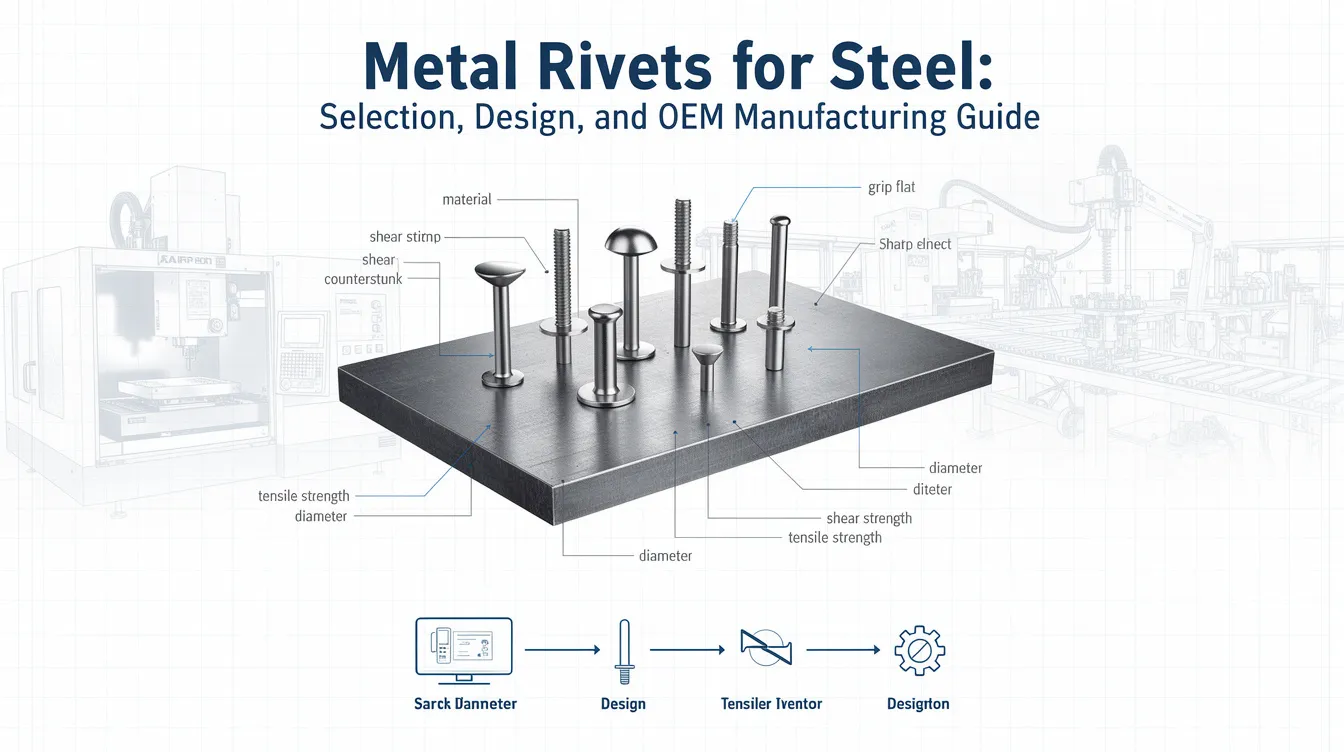
Metal Rivets for Steel: Selection, Design, and OEM Manufacturing Guide
Metal rivets for steel remain one of the most reliable permanent fasteners in industrial manufacturing. Whether you are joining thin sheet metal panels or heavy structural plates, understanding which rivet types to use-and how to design around them-can make or break your project. In this guide, you will learn how steel rivets, blind rivets, and pop rivets work in steel assemblies, how to choose the right materials, and how to plan for efficient OEM production.
Overview: Metal Rivets for Steel Assemblies
A rivet is a smooth cylindrical shaft with a head on one end. After insertion through pre drilled holes in steel plates, the opposite end is deformed to clamp the joint permanently. Riveted joints cannot be easily unfastened without destroying the fastener, making riveters offer permanent and secure joints that are tamper-resistant. Rivets are immune to vibration loosening compared to screws, and they provide quick, permanent fastening for prefabricated steel assemblies.
Key industries that use metal rivets for steel include automotive body-in-white, rail cars, construction hardware, electrical enclosures, HVAC housings, and industrial machinery. Metal rivets are used in bridge construction to accommodate shock-loading and vibration. Anebon Metal Products Limited supports OEMs with precision CNC machining and sheet metal fabrication of riveted steel components, with tolerances as tight as ±0.002 mm.
|
Metric |
Rivets |
Welds |
Bolts |
|---|---|---|---|
|
Permanence |
Permanent |
Permanent |
Removable |
|
Heat input |
Minimal |
Extensive |
None |
|
Vibration resistance |
Excellent |
Good |
Requires locking hardware |
|
One-side access |
Yes (blind rivets) |
Limited |
Requires rear-side access |
How Steel Rivets Work in Steel Structures
A rivet is inserted through aligned holes in steel plates. The factory head sits on one side; the protruding shank is then deformed with a pneumatic hammer or hydraulic tool to form a shop head, clamping the plates together. Loads transfer via shear (parallel to plates) and bearing between the shank and hole walls. Performance depends on rivet spacing (typically 3–5× diameter) and edge distance (minimum 2× diameter).
Typical diameters range from 3 mm to 12 mm for sheet-metal applications, with larger sizes for heavy structures. Historically, tens of thousands of hot steel rivets held together iconic structures like Scotland’s Forth Bridge, opened in 1890-many still standing today.
Types of Metal Rivets for Steel
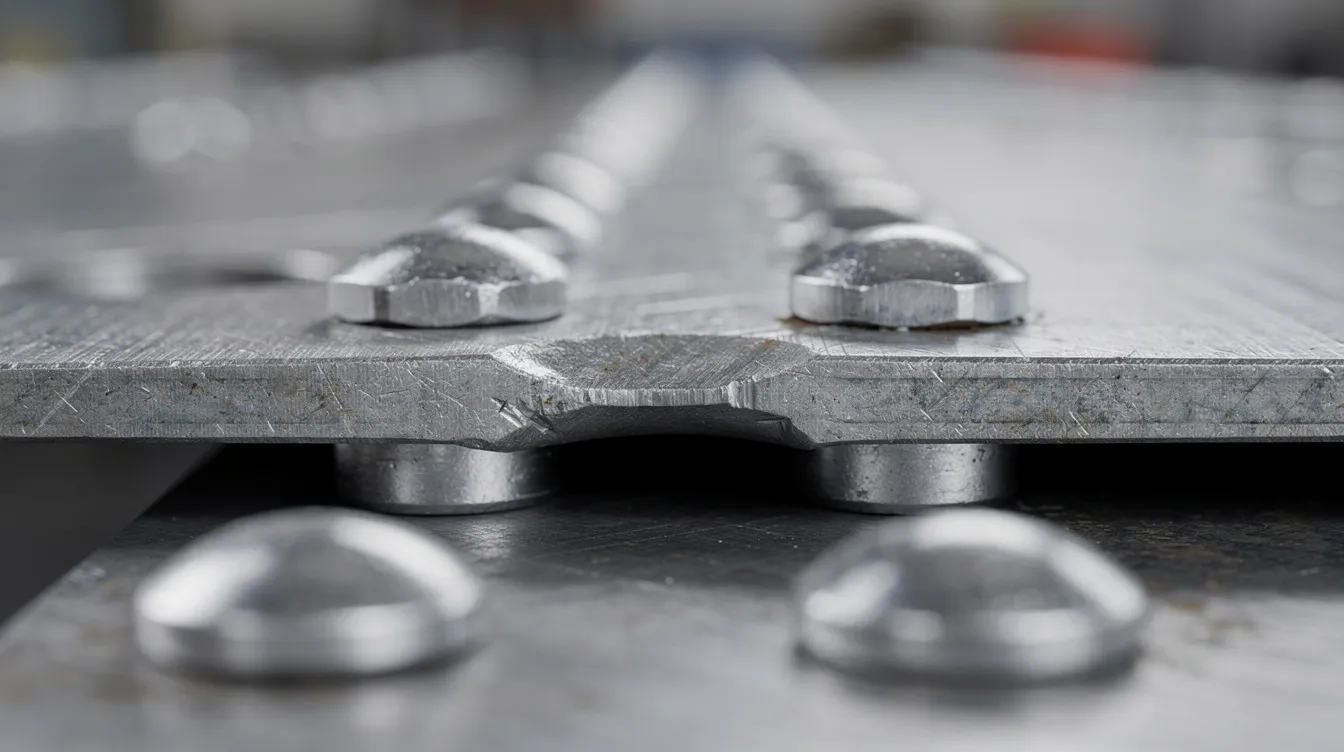
Steel can be joined using several rivet families, each optimized for access, strength, and installation speed:
-
Solid steel rivets – maximum strength, requires two-side access
-
Blind rivets / pop rivets – simple one-side installation
-
Structural blind rivets – high shear and tensile ratings for load-bearing joints
-
Tubular and semi-tubular rivets – lower setting force, ideal for hinges and pivots
-
Drive rivets – fast push-in installation for non-structural applications
Blind rivets and pop rivets are especially valuable where only one side of a steel assembly is accessible. Anebon regularly integrates multiple rivet types within the same assembly to balance cost, assembly rate, and serviceability.
Solid Steel Rivets
Solid steel rivets are permanent mechanical fasteners. They consist of a cylindrical shaft with a head-a simple one-piece shaft design. Head styles include round, flat, and countersunk; flush rivets provide aesthetic and aerodynamic advantages. Solid rivets are extremely durable and ideal for permanent joins in structural steelwork, heavy machinery, rail equipment, and even blacksmithing applications. They are available in various sizes for different jobs-a typical pack of assorted sizes contains 30 rivets each.
For heavy sections, hot riveting at 900–1,000 °C is common. Specify solid rivets when your project demands high fatigue resistance, high vibration tolerance, or restricted weld access. Anebon machines mating steel plates with tight positional accuracy so solid rivets fit with minimal rework.
Blind Rivets and Pop Rivets for Steel
Blind rivets are useful when only one side is accessible. The term “pop rivets” originated as a brand name but is now used generically. A mandrel is pulled through a sleeve, expanding the tail to form a blind head; the mandrel then snaps off. Steel blind rivets are best for standard steel-to-steel applications. Closed-end blind rivets are used for watertight joints and prevent leaks in water applications. Structural rivets offer maximum strength for heavy-duty applications, with shear loads reaching ~12.4 kN for a 4.8 mm structural blind rivet.
Hand tool installation:
-
Drill or punch hole to match rivet diameter
-
Insert sleeve through aligned holes
-
Pull mandrel with hand riveter until the blind head forms and mandrel breaks
Pneumatic installation: Same steps, but compressed air delivers consistent pull-off force and faster cycle times-ideal for large OEM runs. For detailed technique, see How To Rivet Sheet Metal.
Tubular and Semi-Tubular Rivets in Steel Fabrication
Tubular rivets require about 25% less force to set than solid rivets, making them perfect for high-speed automated lines. Applications include hinges in steel cabinets, linkages, automotive seat mechanisms, and appliance housings. Anebon produces precise holes, countersinks, and alignment features in steel parts so tubular rivets install consistently across large volumes.
Choosing Rivet Materials for Steel: Steel vs. Stainless vs. Aluminum
The rivet body material matters as much as the steel substrate. Rivet material should match the steel being joined to avoid galvanic corrosion. The grip range of a rivet must match the thickness of materials being joined.
|
Material |
Shear Strength |
Corrosion Resistance |
Best For |
|---|---|---|---|
|
Carbon steel |
300–400 MPa |
Requires coatings |
Cost-sensitive structural joints |
|
Stainless steel (304/316) |
>400 MPa |
Excellent |
Marine, chemical, outdoor |
|
Aluminum |
200–300 MPa |
Moderate (needs isolation from steel) |
Lightweight, interior panels |
Stainless steel rivets resist corrosion in harsh environments and are best for outdoor or marine environments. Stainless steel blind rivets are ideal for corrosive environments. Stainless steel rivets provide strong, permanent fastening solutions and are ideal for metal roofing applications. Zinc-plated steel rivets are suitable for indoor use but can rust if damaged. Aluminum rivets are not recommended for structural steel joints due to weakness. Anebon’s engineers recommend rivet materials during DFM reviews based on your operating environment.
Design Guidelines for Riveted Steel Parts
For design engineers creating riveted steel enclosures, follow these guidelines:
-
Edge distance: minimum 2× rivet diameter
-
Pitch: 3–5× rivet diameter center-to-center
-
Hole clearance: 0.1–0.3 mm larger than shank diameter
-
Tool access: model the rivet tool envelope in CAD for blind rivet placement
High shear strength makes rivets suitable for heavy-duty structural connections. Combine rivets with PEM nuts or self-clinching studs where removable covers are needed.
DFM checklist: material thickness, joint load path, corrosion environment, tool access, and automation potential.
Manufacturing & Installation of Riveted Steel Assemblies
A typical flow includes CNC cutting, hole punching, bending, surface treatment, and final riveting. Automated pneumatic tools can install blind rivets in ~4 seconds each. For a batch of 5,000 steel control boxes with 20 rivets per box, automation cuts total riveting time from ~28 hours to under 14. Anebon’s ISO 9001:2015 quality system ensures accurate hole alignment and repeatable production.
Surface Treatments and Corrosion Protection for Riveted Steel
Joint gaps and dissimilar metals accelerate corrosion at riveted connections. Common finishes include zinc plating, powder coating, e-coating, and hot-dip galvanizing. Coating before riveting protects interior surfaces but requires oversized holes; coating after riveting ensures full coverage but risks paint cracking around deformed heads. Anebon coordinates fabrication and finishing so riveted parts meet both mechanical and cosmetic requirements.
When to Use Rivets vs. Welds or Bolts in Steel OEM Designs
Use rivets when joining thin coated sheet metal, when heat from welding would cause distortion, or when joints face high vibration. Bolts or screws work better for assemblies requiring frequent disassembly or field service. For a deeper comparison, read Spot Welding vs Riveting for High-Load Enclosures. In automotive and electronics enclosure work, rivets increasingly replace spot welds to preserve coatings and improve aesthetics.
Partnering with Anebon for Riveted Steel Components
Anebon Metal Products Limited offers CNC machining, sheet metal fabrication, die casting, and assembly-supporting rapid prototyping through full-scale production with tolerances as tight as ±0.002 mm. We serve overseas OEMs in robotics, electronics, medical devices, and automotive, where riveted steel housings and brackets are common.
If you have questions about your next riveted steel project, send your CAD files (STEP, IGES, or native formats) for a DFM review focused on rivet-friendly hole patterns, material choices, and surface finishes. Request a quote or contact Anebon’s engineering team to find the perfect solution for your metal rivets for steel assemblies.