The Best Metal CNC Machine: Features, Benefits, and Options Explained
Metal CNC Machine: How to Choose the Right CNC Machinery to Cut Metal
Overview: Metal CNC Machines and When You Should (Not) Buy One
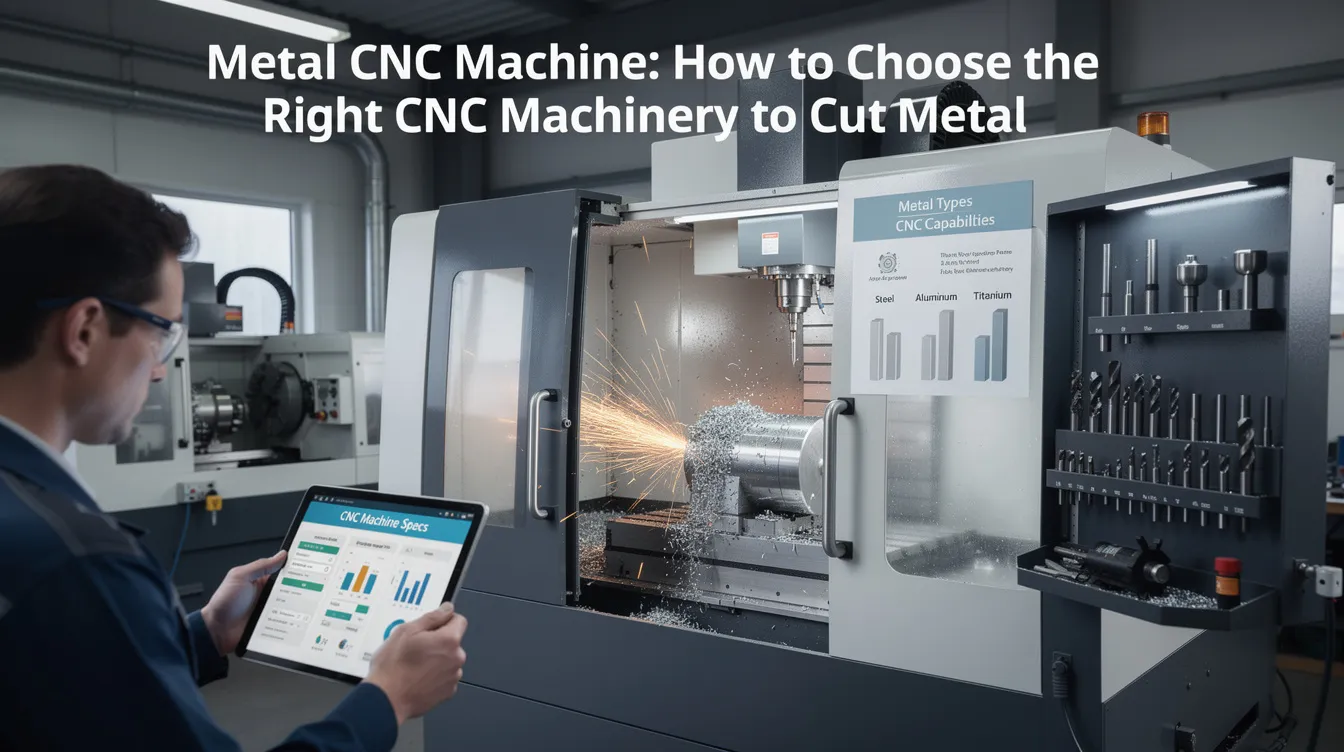
A metal CNC machine uses computer software to direct cutting tools along programmed paths, converting a digital design into a physical object through subtractive manufacturing. CNC machining is how manufacturers produce everything from aerospace brackets to surgical instruments, and in 2026 the demand for tighter tolerances, harder alloys, and faster turnarounds keeps growing. CNC machines include various types such as mills and lathes, plus routers, EDM machines that use electrical sparks to mold metal into shapes, CNC plasma cutters that use high heat to cut through metal, and fiber lasers that provide fast, precise cuts in metal applications.
In this guide you will learn how to pick the best CNC machine for metal versus when it is smarter to outsource cnc milling to a specialist. We will compare cnc machines, cnc routers, and desktop cnc options side by side, walk through the key features that matter for machining metal, and show you where the break-even point sits between buying and outsourcing. As a reference, Anebon Metal Products Limited has been providing precision CNC machining for overseas OEMs since 2010 from Dongguan, China, handling various materials from aluminum to titanium across cnc machinery that most small businesses cannot justify purchasing outright.
CNC machines can cut steel, aluminum, and copper, but not every machine type handles every metal equally. CNC lathes rotate the workpiece against a stationary cutting tool for circular parts, while CNC milling machines shape various materials with precision across flat and contoured surfaces. Understanding these differences is the first step toward a decision that saves money instead of burning it.
Quick Comparison Snapshot: CNC Mills vs CNC Routers vs Other CNC Machinery
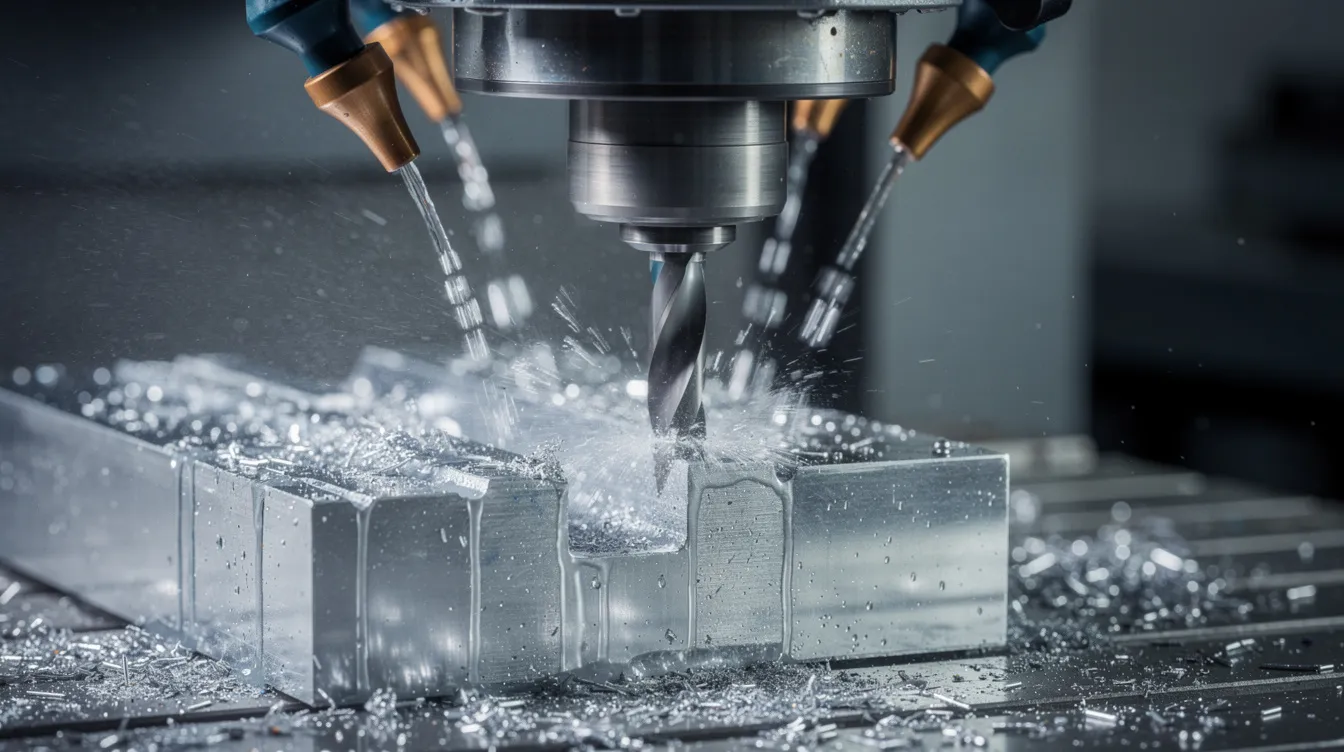
Before diving into specifications, here is a high-level view. CNC machine prices range from $2,095 to $225,995 depending on capability, so knowing which category fits your work prevents expensive mistakes. Larger machines and industrial machines command higher prices, but they also unlock harder materials and tighter precision. The price range below reflects mid-2026 market pricing.
|
Factor |
CNC Mill (3–5 Axis) |
CNC Router (Metal-Capable) |
Desktop CNC Machines |
Outsource to Anebon |
|---|---|---|---|---|
|
Typical materials |
Aluminum, stainless 304/316, titanium Ti-6Al-4V, tool steels, brass, alloys |
Aluminum 6061, thin brass, copper, plastics, wood |
Aluminum (thin), soft metals, plastics |
Full range: aluminum, stainless, titanium, copper, brass, tool steels, plastics |
|
Precision range |
±0.01–±0.002 mm |
±0.05–±0.1 mm |
±0.05–±0.1 mm |
|
|
Typical price bracket |
$30,000–$500,000+ |
$10,000–$25,000 |
$1,500–$7,000 |
No capital cost; per-part pricing |
|
Best for |
Production, hard metals, high accuracy, complex geometries |
Light metal cutting and engraving, signage, furniture parts, engraving materials |
R&D, producing prototypes, small businesses |
Low-to-high volume production, prototyping, multi-process needs |
Entry-level vertical machining centers cost $30,000 to $60,000, while CNC routers for metal typically range from $10,000 to $25,000. When precision and hard metals are non negotiable, cnc mills are the clear choice. If you need an outsourcing benchmark, Anebon provides 3-axis through 5-axis CNC milling plus turning with zero capital outlay on your side.
CNC Mills for Metal: When You Need Precision and Tough Materials
CNC mills are essential for high-precision metal work. Whether you are producing aerospace brackets from 7075-T6 aluminum, 17-4PH stainless surgical parts, or 5-axis milled turbine blades, a properly engineered mill delivers the dimensional accuracy and edge quality that functional parts demand. CNC machining allows for intricate cuts that are difficult or impossible manually, and CNC machines improve part quality with burr-free edges.
CNC machines require a cast-iron frame for rigidity to dampen vibration during metal cutting. Vertical machining centers (VMCs) are the most common layout; horizontal mills excel at chip evacuation for heavy roughing. CNC machines for metal cutting need consistent torque at low RPM, typically in the 5,000–12,000 RPM range for steel and titanium, backed by 7.5–20 kW of spindle power. Industrial grade mills are equipped with linear guides, ball screws with minimal backlash, and through-spindle coolant systems that prevent chip recutting in metal. These features separate a real machine for metal from a router pretending to be one.
A production cnc milling setup achieves surface finish values of Ra 0.8–1.6 µm on finishing passes, with tight tolerances down to ±0.002 mm on critical features. That level of precision engineering requires skilled programmers, CAM software like Mastercam or Fusion 360, stable 3-phase power, and ongoing maintenance. Anebon operates multi-axis CNC mills with exactly these capabilities, which OEMs can access without bearing the overhead.
Best CNC Mill Features for Metal Cutting
When evaluating the best cnc machine for metal, look at these key features:
-
Spindle speeds and spindle power: 10,000–15,000 RPM with 10–20 kW for stainless and titanium. Haas Mini Mill pricing starts at $35,000 to $45,000 and covers many general production needs.
-
Axis travel: a 600 × 400 × 400 mm envelope suits most automotive, electronics, and robotics parts.
-
Automatic tool changer: 12–40 tool capacity for production runs requiring drilling, roughing, and finishing in one setup.
-
Machine’s control system: Fanuc, Siemens, or Heidenhain controllers with rigid tapping, high-speed machining modes, and probing systems. A reliable control system directly affects speed, high accuracy, and repeatability.
-
Coolant delivery: through-spindle coolant at high pressure for titanium and Inconel work.
Anebon’s multi-axis machining centers are equipped with these specifications, giving OEMs production-grade access without six-figure capital commitments.
CNC Routers and Desktop CNC Machines: What They Can and Can’t Do with Metal
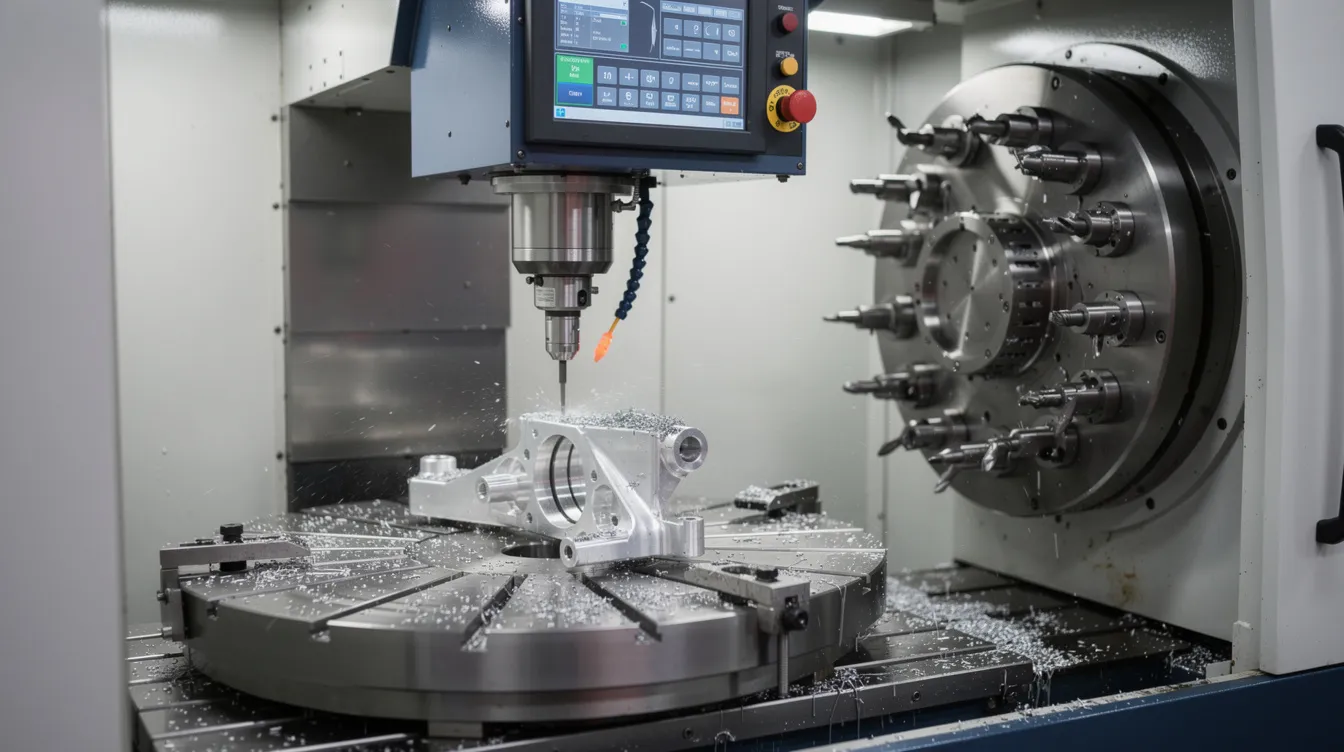
CNC routers are originally engineered for wood, plastics, and composites. Their gantry-style frames use aluminum extrusions or lighter steel, and high-speed gantries improve cycle times in soft materials. However, that same lightweight construction limits rigidity when you try to cut metal. CNC routers are suitable for light metals but not hardened steel.
A typical router runs spindle speeds of 18,000–60,000 RPM with modest torque, which is the opposite of what steel and titanium require. Desktop cnc platforms like the Tormach 1100MX, which costs around $20,000 to $30,000, bridge the gap somewhat and are suitable for R&D labs or universities producing prototypes in aluminum. But pushing consumer-grade routers to machine metal beyond their capability results in chatter, poor tool life, and inconsistent tolerances. For small businesses doing mixed-material work including furniture panels and aluminum fixtures, a router may serve double duty, but serious metal fabrication demands more.
What Metals Can You Realistically Cut with a CNC Router?
A robust router can handle these metals under controlled cutting conditions:
-
Aluminum 6061/6082 plate: up to 10–12 mm thick with carbide tooling and MQL lubrication.
-
Thin brass and copper: suitable for signage, electronics panels, and decorative engraving.
-
Mild steel: only very thin sheet under slow feeds on reinforced router frames; not recommended for production.
Stainless steel, hardened tool steel, and titanium are generally poor choices for routers because of insufficient rigidity and cutting force. Minimum quantity lubrication, conservative depth of cut, and proper chip evacuation are critical even for aluminum. Shops planning to scale metal production should evaluate a cnc mill or a machining partner like Anebon instead of upgrading routers repeatedly.
Key Buying Factors: Choosing the Best CNC Machine for Your Metal Parts
The best cnc machine is relative. The right choice depends on materials, tolerances, volumes, and budget. If you need ±0.01 mm on 10,000+ stainless parts per year, you are in production cnc mill territory. If you need 50 aluminum prototypes, a desktop cnc or outsourcing may be the smarter call.
Critical decision criteria:
-
Materials: aluminum versus titanium versus plastics dictates machine rigidity and capable spindle requirements.
-
Tolerances and surface finish: standard ±0.05 mm for general features; ±0.01 mm for functional fits.
-
Volume: mass production justifies capital; variable demand favors outsourcing.
-
Infrastructure: floor space, 3-phase power, coolant handling, chip management.
-
Total cost of ownership: machine price plus tooling, CAM software, operators, maintenance, and scrap. CNC machining reduces labor costs due to automation, lowers wastage and costs due to high efficiency and precision, and CNC machines can operate 24/7 with minimal downtime. They also enhance productivity by automating workflows, can lower utility costs through energy efficiency, can significantly reduce maintenance needs, and reduce total cost of ownership significantly over time. CNC machining also enhances safety by reducing operator exposure to cutting tools, which matters for user friendly operation on the shop floor and overall productivity.
Example scenario: a $50,000 CNC mill plus $15,000 in fixtures, tooling, and installation, plus annual operator and maintenance costs, may exceed $100,000 over three years. Outsourcing the same workload to Anebon at per-part pricing often costs less while delivering certified quality, unless volumes are high and stable enough to amortize capital.
In‑House CNC Machine vs. Outsourcing CNC Machining
|
Factor |
In-House CNC |
Outsource (e.g., Anebon) |
|---|---|---|
|
Capital cost |
$30K–$500K+ |
None |
|
Lead time control |
Direct, once running |
Dependent on scheduling |
|
IP control |
Full |
Requires NDA |
|
5-axis / multi-process |
Expensive to add |
Immediate access |
|
Scaling |
Slow (buy more machines) |
Flexible |
|
Quality certs |
You manage |
ISO 9001:2015, ISO 14001:2015 included |
Outsourcing to a precision partner is an excellent choice for OEMs that want immediate access to CNC turning, 5-axis milling, sheet metal, and die casting under one roof. Machine shops like Anebon have served overseas OEMs in aerospace, medical, automotive, and robotics since 2010. A hybrid approach often works: start by outsourcing prototypes and low volumes, then consider purchasing a CNC machine once demand is stable. For many manufacturers, keeping core design in-house and partnering for production is a game changer.
Anebon’s Metal CNC Machining Capabilities (Instead of Buying More Machines)
Rather than investing six figures into new cnc machinery, many OEMs leverage Anebon Metal Products Limited for precision metal fabrication. Core services include 3-axis and 5-axis cnc milling, cnc turning, rapid prototyping, die casting, and sheet metal fabrication for metals and engineering plastics.
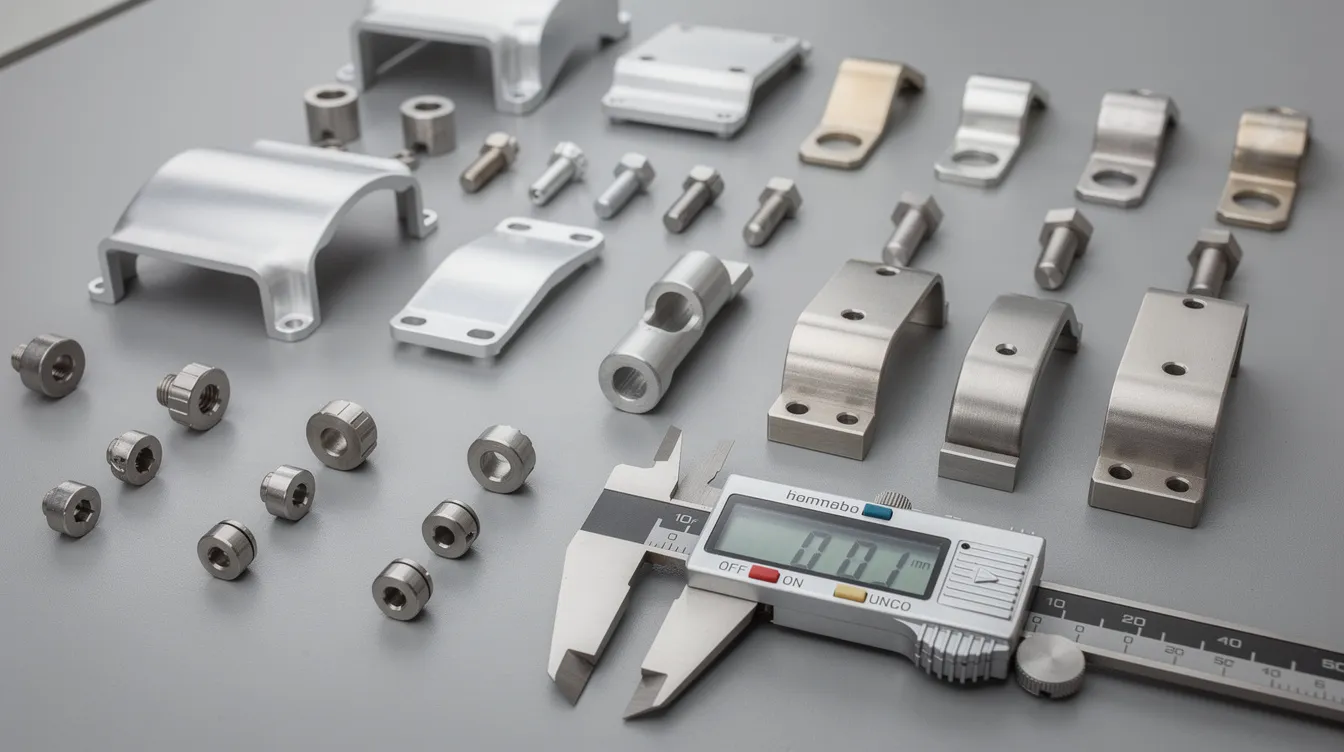
Anebon delivers tolerances down to ±0.002 mm, surface finishes suitable for medical and aerospace parts, and quality backed by ISO 9001:2015 and ISO 14001:2015 certifications. Typical metals machined include aluminum 6061/7075, stainless steel 304/316/17-4PH, titanium alloys, copper, brass, and tool steels. Anebon also provides DFM feedback to design engineers and R&D teams, helping reduce machining time and cost before production begins.
Ready to compare costs? Send your CAD files and target quantities for a free CNC machining quote.
Industries and Use Cases We Support
Anebon serves concrete projects across these sectors:
-
Aerospace: brackets, housings, and fixtures produced via 5-axis cnc milling from 7075 aluminum and titanium.
-
Medical devices: surgical instruments and precision aluminum enclosures for imaging systems, with surface roughness below 1 µm Ra.
-
Automotive and EV: battery cooling plates, gearbox housings, and custom jigs through cnc machining and sheet metal fabrication.
-
Electronics and robotics: heat sinks, precision milled frames, and custom mechanical parts for industrial machinery OEMs.
Anebon works primarily with overseas OEMs in North America and Europe, offering rapid lead times from Dongguan, Guangdong, China.
Next Steps: How to Move Forward Without Choosing the Wrong Metal CNC Machine
Not every shop needs to own the best cnc to get world-class metal parts. The smartest path forward is methodical:
-
Define part requirements: materials, tolerances, surface finish, annual volume.
-
Estimate demand for 12–24 months: stable high volume favors buying; variable or growing demand favors outsourcing.
-
Compare costs: get a CNC machining quote from Anebon and stack it against machine purchase, tooling, and labor costs over 3–5 years.
-
Validate before committing: start with a few prototype parts to confirm tolerance and surface finish before signing off on large production volumes.
Send your drawings or 3D models (STEP/IGES) to Anebon’s CNC machining team for a no-obligation quote as a benchmark. Our engineers can advise on material selection, manufacturability, and whether cnc mills or alternative processes like die casting deliver better long-term value for your business.
Contact Anebon Metal Products Limited today to discuss your next metal CNC machining project.