The Best Materials for High Precision CNC Parts: A Comprehensive Guide
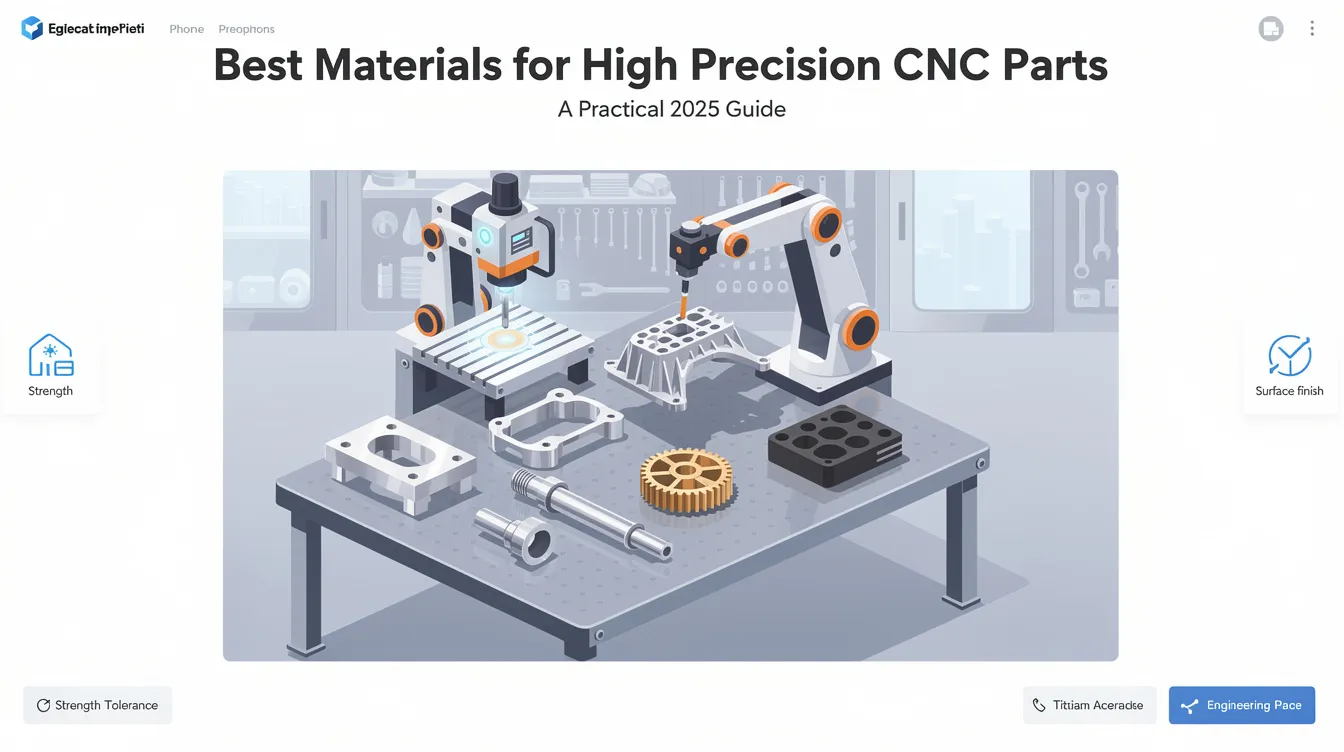
Best Materials for High Precision CNC Parts: A Practical 2025 Guide
Introduction: Choosing the Right Material for High Precision CNC Parts
Selecting the best materials for high precision CNC parts is one of the most consequential decisions an engineer makes before a single chip is cut. This article breaks down which cnc machining materials deliver the tightest tolerances, the most reliable dimensional stability, and the best real-world performance-and how to choose between them.
Both metals and engineering plastics serve high precision cnc machining, but each family behaves differently under cutting forces, temperature swings, and long-term service loads. Properties like thermal conductivity, electrical conductivity, machinability, and heat treatment response all determine whether a final component meets spec or drifts out of tolerance. Key materials in precision CNC machining include aluminum, stainless steel, titanium, and engineered plastics, while lesser-known options like magnesium-one of the lightest structural metals used in various applications-fill specialized niches. Precision CNC machining often balances strength, weight, and manufacturability in material selection, and material selection impacts performance, life, and cost.
At Anebon Metal Products Limited, we specialize in precision manufacturing through cnc milling, cnc turning, and 5-axis machining with tolerances as tight as ±0.002 mm, working across a wide range of cnc materials. In this guide we cover specific alloys and plastics-aluminum 6061 and 7075, stainless steel grades 303 through 17-4 PH, titanium Ti-6Al-4V, brass, copper, bronze, PEEK, Delrin, and more-plus a framework for choosing the right cnc machining material for your next machining project.
Key Criteria for Selecting the Best Materials for High Precision CNC Parts
Precision is not just about the CNC machine’s positioning accuracy. The cnc material’s behavior during and after the machining process-its response to cutting forces, heat, moisture, and time-determines whether you can consistently hold tight tolerances on finished parts.
Several core criteria drive material selection for precision machined components. Machinability describes how cleanly the material cuts, how fast tools wear, and what surface quality you can achieve. Dimensional stability is critical for maintaining tolerances during and after machining, especially in parts exposed to temperature variation or mechanical stress. Thermal expansion and thermal conductivity together determine how much a part moves with temperature: a 100 mm aluminum feature can shift roughly 0.07 mm over a 30 °C ambient swing-far exceeding many tolerance bands. Strength, hardness, and wear resistance dictate service performance and fatigue life. Corrosion and environmental resistance are important for the long-term performance of precision parts in marine, chemical, or medical environments. And cost effectiveness-encompassing raw material price, machining time, tool wear, and secondary processing-keeps programs viable.
These criteria constantly trade off against each other. For instance, aluminum 6061 is often chosen over 7075 for stable prototypes: its lower strength is offset by easier machining, better anodizing, and lower cost. Conversely, high performance alloys like titanium or aged 17-4 PH stainless deliver superior strength but demand slower cutting speeds, specialized tooling, and higher budgets. High-precision CNC components require excellent machinability and dimensional stability, so understanding these trade-offs before selecting a material is essential for any serious machining project.
Best Aluminum Alloys for High Precision CNC Parts
Aluminum is the most commonly used CNC milling material for good reason: it is lightweight, machines quickly with long tool life, offers good dimensional stability at ambient conditions, and is cost-effective across production scale from prototyping to mass production.
On modern 3-axis and 5-axis CNC machines, aluminum parts in 6061 or 7075 routinely hold ±0.01 mm to ±0.02 mm on general features. Critical dimensions can reach ±0.005 mm with fine tooling and stable fixturing, while diamond or PCD tooling can push into ±0.002 mm territory.
6061-T6 is the general-purpose workhorse among aluminum alloys. With yield strength around 276 MPa, hardness roughly 95 HB, and thermal conductivity of approximately 167–170 W/m·K, it excels in electronic housings, robotics brackets, marine hardware, and heat sinks. 6061 aluminum is lightweight and corrosion-resistant, anodizes evenly, and welds well. Its high thermal conductivity makes it ideal for heat sinks and electronics enclosures that need to dissipate waste heat. Aluminum has excellent corrosion resistance and machinability, which is why 6061 remains the default for so many industries.
7075-T6 steps up to yield strength around 503 MPa and UTS near 572 MPa-roughly double 6061-making it the choice for aerospace structural fittings, drone frames, motorsport components, and high-load brackets. However, it generates tougher chips, causes 10–20 % higher cutting tool wear, and costs two to three times more per kilogram. Anodizing quality is acceptable but less uniform, and stress corrosion cracking risk is higher unless specific tempers (T73, T7351) are specified. For custom irregular aluminum parts where strength-to-weight is paramount, 7075 is worth the trade-off.
When corrosion exposure, operating temperature, or fatigue loads exceed aluminum’s limits, it is time to consider stainless steel, alloy steel, or titanium as the right material for the application.
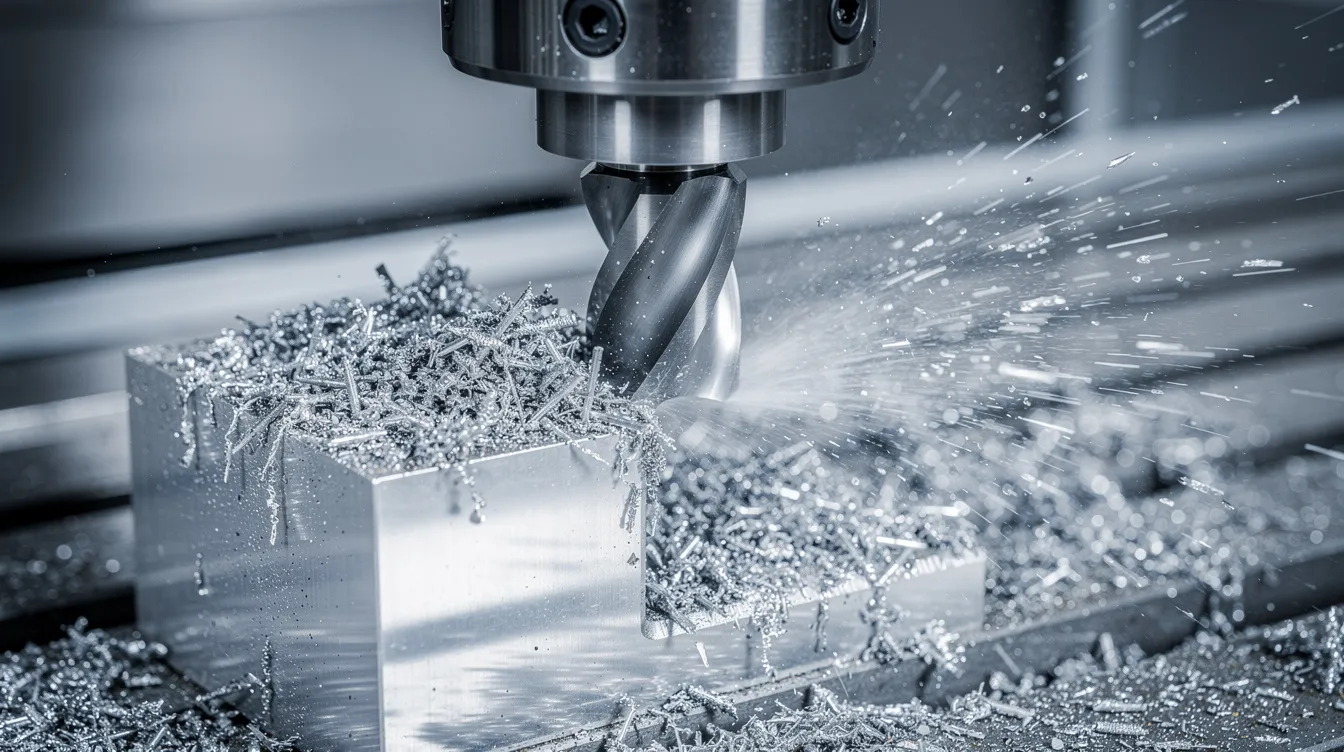
Stainless Steels: Corrosion-Resistant Materials for Precision Machined Components
Stainless steel is the go-to choice whenever corrosion resistance, hygiene, and long-term durability take priority. From surgical instruments to food-processing hardware and marine fittings, different stainless steel grades fill distinct roles across the manufacturing industry. Stainless steel offers high strength and corrosion resistance, though it is harder to machine than aluminum, demanding optimized machining strategies and coolant control.
303 Stainless Steel adds sulfur for improved machinability, making it the easiest stainless to cut. Corrosion resistance is modest compared to 304 or 316, so it suits fasteners, fittings, and shafts in moderate environments rather than chemical or marine exposure.
304/304L Stainless Steel is the general-purpose aus