The Best CNC Parts Suppliers: Your Guide to Quality and Reliability
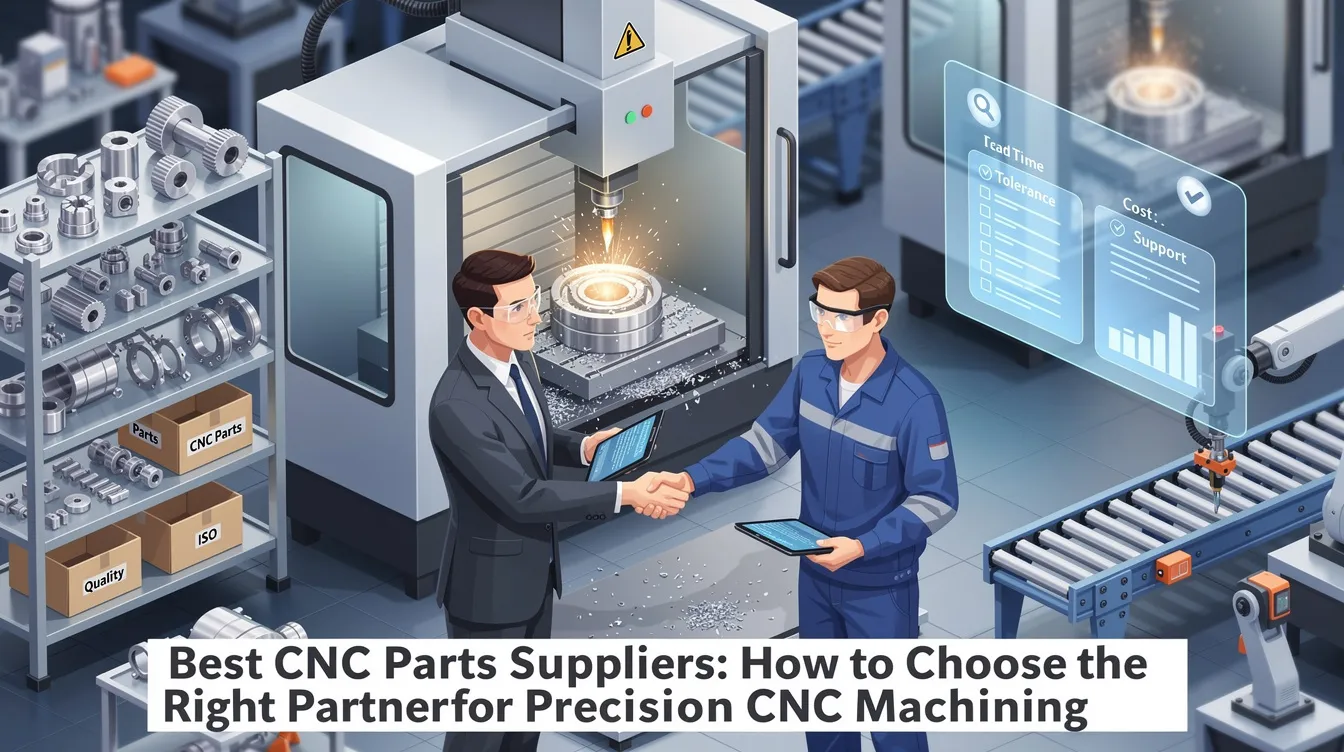
Best CNC Parts Suppliers: How to Choose the Right Partner for Precision CNC Machining
Finding the right supplier for cnc parts can make or break your product launch. This guide walks you through a practical framework for evaluating the best cnc parts suppliers-covering everything from material selection and tolerances to lead time, cost, and shop-floor problem-solving-so you can shortlist partners and request quotes with confidence.
Quick Answer: What Makes a “Best” CNC Parts Supplier in 2026?
The best cnc parts suppliers combine precision cnc machining, stable quality systems, and honest lead times rather than simply offering the lowest price. A structured evaluation process minimizes risks of defects and delays in cnc part production, which is why rushing to the cheapest quote usually backfires.
Here are the core traits to look for:
-
ISO 9001:2015 certification (or equivalent like AS9100 for aerospace) as a baseline quality standard
-
Proven tight tolerances-aerospace components require tolerances as tight as ±0.002 mm
-
Strong design for manufacturability dfm support before cutting starts
-
Clear, responsive communication in your language and time zone
-
Predictable lead time commitments backed by real capacity
-
Experience across cnc milling, cnc turning, and 5 axis machining
-
CNC suppliers should have proven experience with similar projects for optimal results
Top suppliers for cnc-machined parts include digital on-demand manufacturing platforms and high-precision firms. Anebon Metal Products Limited (founded 2010, Dongguan, China) fits this profile for overseas OEMs needing custom parts in aluminum, stainless steel, titanium, and engineering plastics. Key industries for cnc machining include aerospace, medical, and robotics-all areas where Anebon has deep production experience. The rest of this article gives you the details to shortlist suppliers and request quotes with confidence.
How to Define Your CNC Parts Requirements Before Choosing a Supplier
Clear technical requirements are the foundation for picking the right supplier and for getting accurate quotations. Without them, you’re comparing apples to oranges on every quote you receive.
Before reaching out, lock down:
-
3D CAD files and 2D drawings with full GD&T callouts and tolerances on every critical feature
-
Surface finish specs (e.g., Ra 0.8 μm for bearing surfaces, Ra 1.6 μm for non-critical faces)
-
Target quantities: prototype (1–10 pieces), short run production (10–100), or full scale production (100–100,000+)
-
Required lead time and ship-to destination
-
Inspection needs: CMM reports, material certificates (EN 10204 3.1), RoHS/REACH compliance, PPAP or FAI for regulated sectors
Different use cases demand different specs. Medical housings and surgical instruments need ultra-clean surfaces and biocompatible materials-precision machining is critical for medical device safety. Drone frames and sensor brackets often require 7075 aluminum with tight concentricity and complex geometries. Bushings need controlled IDs/ODs. Fixtures need flatness and stability. General industrial applications may allow for more flexible tolerances, which directly reduces cost.
Anebon routinely supports customers at this stage, reviewing CAD files, recommending tolerance relaxations where acceptable, and suggesting finish alternatives before the cnc machining process begins.
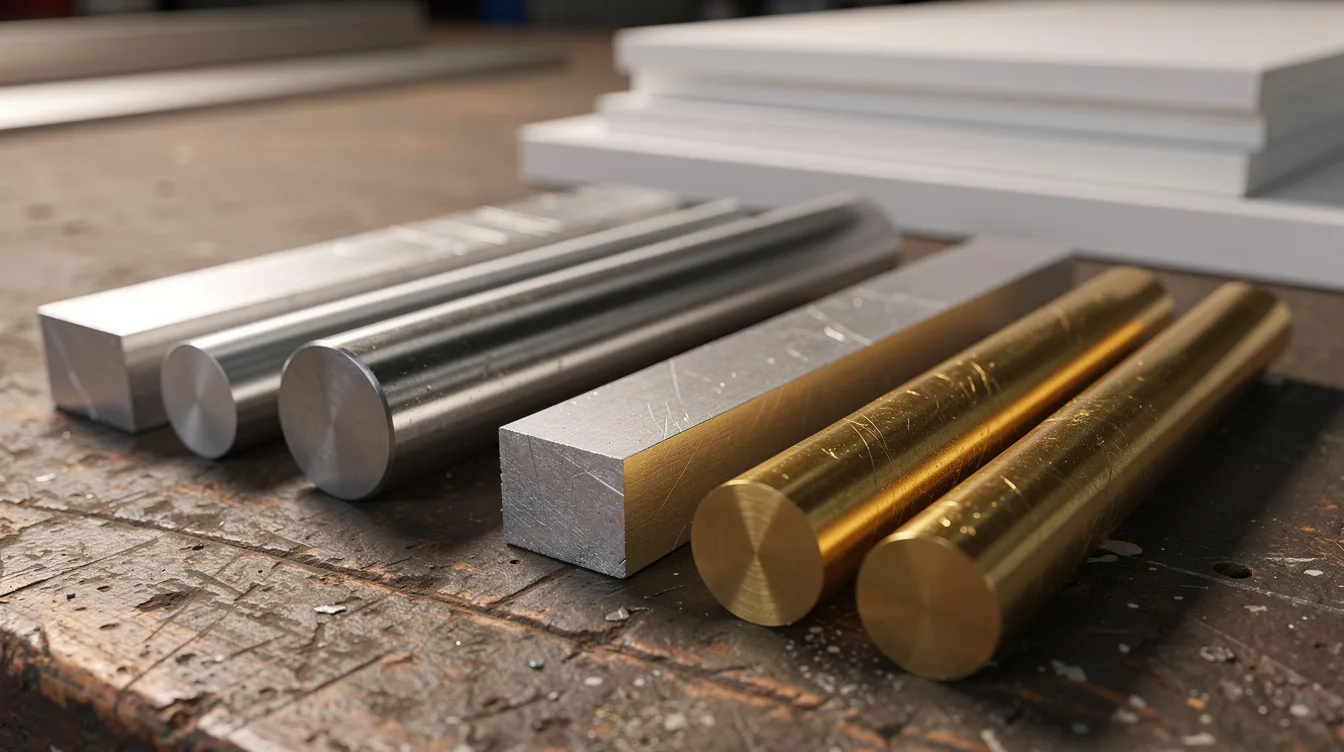
Material Selection for CNC Parts: Metals and Plastics That Top Suppliers Handle
The best cnc parts suppliers are defined by the breadth of their materials capabilities, especially when your assemblies mix metals and plastics. Your material selection directly influences machining strategy, tools, speed, and final cost.
Common metals:
-
Aluminum alloys like 6061 and 7075 are commonly used for lightweight structural and aerospace parts. 2024 is favored for fatigue-critical applications.
-
Stainless steel (304, 316L, 17-4PH) offers excellent machinability and uniformity, plus corrosion resistance for marine or food-contact use.
-
Carbon steels (1018, 4140) provide hardness and tensile strength for industrial machinery.
-
Brass is corrosion-resistant and easy to machine, ideal for fittings and electrical connectors. Copper suits thermal and electrical conductivity needs.
-
Titanium (e.g., Ti-6Al-4V) is known for its excellent strength-to-weight ratio, making it a go-to for aerospace and medical devices.
Key engineering plastics:
-
Delrin (POM) is a high-performance plastic with excellent wear resistance-perfect for bushings and small gears
-
ABS for housings and enclosures
-
PEEK for high-temperature, sterilizable medical components
-
Polycarbonate for impact resistance and transparency
-
PTFE for low-friction, chemical-resistant bushings and seals
-
PEI (ULTEM) for radiation-resistant and high-temp applications
Material choices affect machining profoundly. Titanium and hardened steel increase tool wear, require slower cutting speeds, and demand specialized coolant strategies. Plastics risk melting or warping if clamping force or spindle speed isn’t controlled. Some shops use rubber pads in fixtures to protect delicate plastic surfaces during clamping.
Anebon stocks over 50 metals and plastics with inspection certificates and advises on substituting more manufacturable grades to shorten lead times and reduce cost.
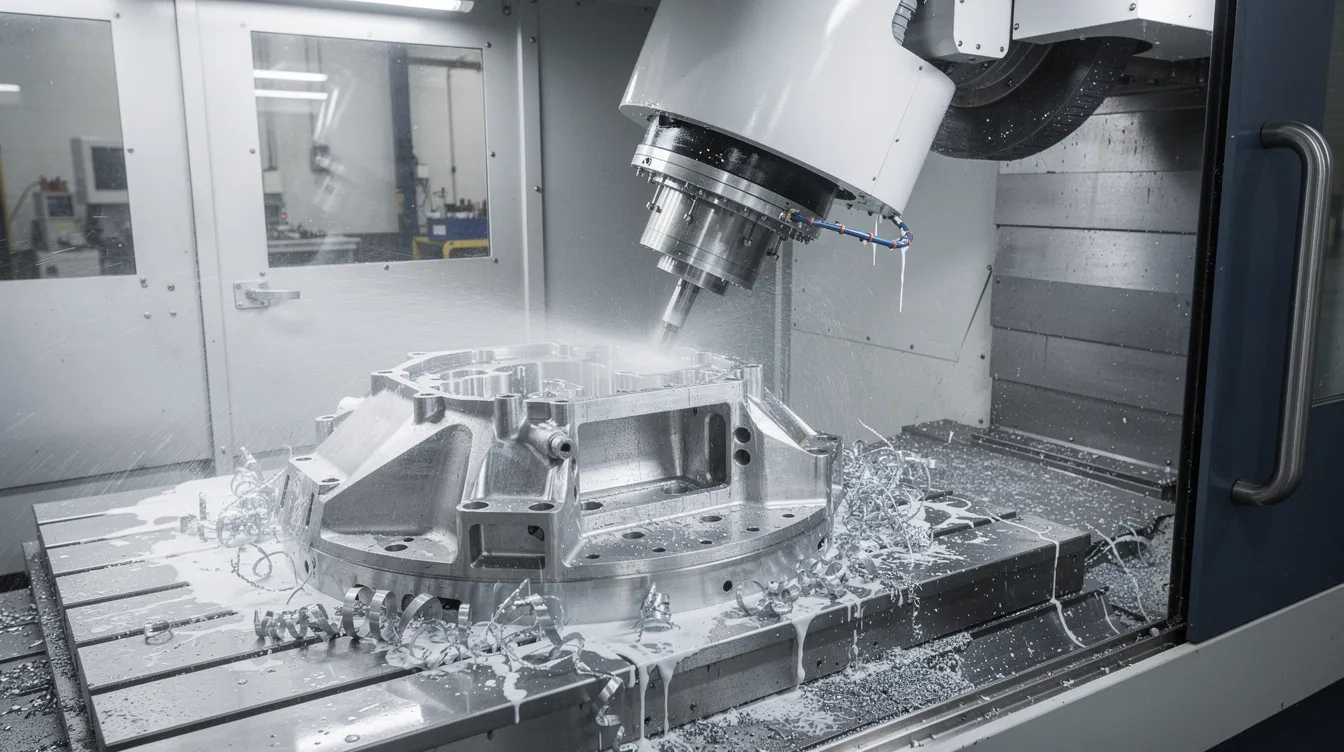
Core Capabilities: Milling, Turning, and 5-Axis Precision CNC Machining
Evaluating a cnc parts supplier starts with understanding their machine park and process range. A good CNC supplier offers 3-axis to 5-axis machining-anything less limits what they can produce for you.
CNC milling:
-
CNC machining includes 3-axis, 4-axis, and 5-axis processes. Three-axis handles simple pockets and profiles. Four-axis adds a rotary table for wrap-around features. 5 axis machining allows for complex geometries and intricate details without repositioning the part.
-
CNC milling can quickly drill, engrave, and mill complex parts-think drone frames machined from a solid block of 7075 aluminum, heatsinks, and multi-face sensor housings.
-
Tight tolerances are essential for mission-critical aerospace parts, where even cnc router parts for structural assemblies must meet ±0.005 mm or tighter.
CNC turning:
-
CNC turning is used for producing cylindrical parts efficiently: bushings, couplers, lock sleeves, turned pins, and threaded fittings.
-
Key metrics include concentricity, thread quality, and surface finish (e.g., Ra 0.8 μm). Swiss turning excels at small parts like medical pins and electronic connectors where precision and speed matter.
-
Anebon’s precision turned components include shafts, sleeves, and fittings with tight runout control.
Auxiliary processes:
-
EDM is a specialized cnc process for intricate shapes and hard materials-sharp internal corners, thin slots, and complex designs that conventional cnc router bits and end mills can’t reach.
-
Surface grinding, tapping, knurling, and small-hole drilling round out the capabilities needed for medical or aerospace production parts.
Anebon runs multi-axis milling centers and CNC lathes capable of ±0.002 mm tolerances on critical features, supporting aerospace, robotics, and medical device components.
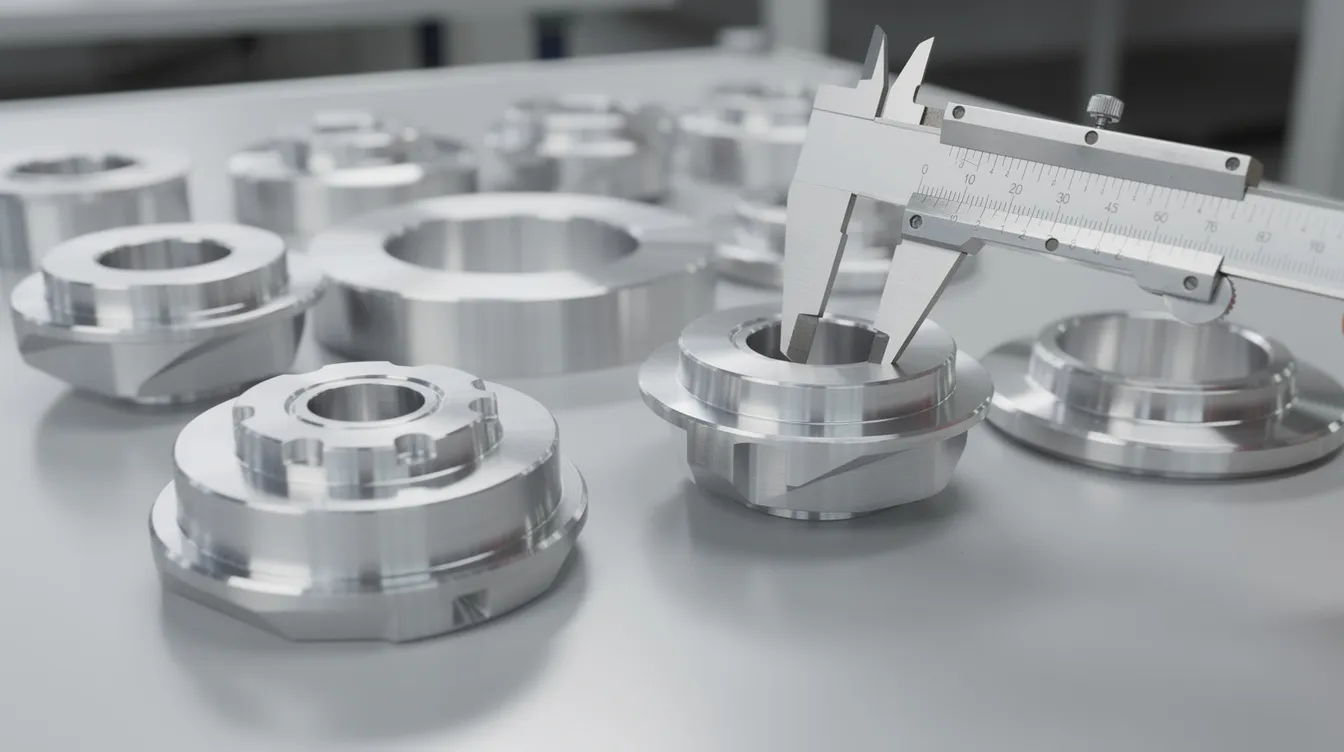
Quality Assurance: Certifications, Inspection, and Real-World Process Control
The difference between average and best cnc parts suppliers usually shows up in their quality system-not their marketing. What matters is how a factory reacts when something drifts out of spec mid-run.
Certifications and systems to verify:
-
ISO 9001:2015 certification ensures quality management standards. Quality certification such as ISO 9001 or AS9100 is essential in cnc machining. ISO certifications like AS9100 indicate high-quality aerospace standards.
-
ISO 14001:2015 for environmental management
-
Documented inspection procedures, calibration records, and lot traceability
-
ISO certifications indicate a reliable cnc supplier-ask to see current certificates, not expired ones
Inspection equipment that matters:
-
Inspection standards include the use of Coordinate Measuring Machines and calibrated gauges. Companies often use advanced measuring and testing equipment for quality assurance, including optical projectors, surface roughness testers, height gauges, and thread gauges.
-
In-house inspection guarantees full traceability of materials from raw stock to finished part.
Shop-floor reality checks:
-
A good supplier stops a batch when a thread pitch drifts, re-gauges tools, and adjusts before restarting-rather than shipping marginal machined parts.
-
Quality control processes include strict inspections on materials and finished products. Adjusting coolant flow and spindle speed mid-run to correct a surface finish issue is standard practice in capable shops.
Anebon operates with ISO 9001:2015 and ISO 14001:2015, performs 100% inspection on critical dimensions for medical and aerospace parts, and provides full data reports (FAI, PPAP, SPC) on request. ISO 9001:2015 certification ensures quality control in machining across their entire operation.
Lead Times, Fast Turnaround, and Capacity Planning
Reliable lead time matters as much as price-especially when you’re working against a product launch or a maintenance shutdown. Rapid quoting and turnaround are critical for selecting cnc suppliers, and fast lead times are essential for cnc machining suppliers who want to earn repeat business.
Typical lead time ranges:
-
Rapid prototyping: 3–7 business days for simple prototypes; complex 5 axis work or exotic materials may need 7–14 days. Fast lead times are crucial for rapid prototyping success, and rapid prototyping reduces product development time significantly.
-
Validation lots: 2–3 weeks including inspection and finishing
-
Volume production and mass production batches: 3–6 weeks depending on complexity, finishing, and shipping
Rapid prototyping can lower production costs for small batches by catching design issues early. Competitors like Protolabs deliver prototypes within days, not weeks-but typically at higher per-unit cost. Anebon competes on the balance of fast turnaround, capabilities, and cost efficiency for both low volume and high volume production runs.
What top suppliers do to accelerate:
-
Stock common materials (aluminum 6061/7075, stainless steel 304/316, common plastics)
-
Run overlapping shifts and load machines in parallel
-
Keep fixturing and automation in house rather than outsourcing
-
Use digital quoting systems to enhance speed in rapid prototyping and production quoting
Ask suppliers about capacity during peak seasons. Get schedules that include machining, secondary operations, inspection, and shipping time. Anebon typically returns detailed quotations within 24 hours and can ship simple cnc parts in as little as 5–7 working days for urgent projects.
Cost, Pricing Models, and How to Compare CNC Parts Quotes Fairly
The cheapest quote is rarely the best once rework, delays, and product quality risks are factored in. Compare cnc machining services quotes on total value, not unit price alone.
Key cost drivers:
-
Material type and availability (titanium vs. aluminum can be a 5–10x material cost difference)
-
Part complexity (5 axis vs. simple 3-axis milling)
-
Tolerance levels-tighter tolerances mean slower feeds, more inspection, higher cost
-
Surface treatments (anodizing, bead blasting, plating, passivation)
-
Inspection depth (full CMM vs. sampling)
-
Batch size-low volume and short run production carry higher per-piece costs than high volume production
Common pricing models:
-
Per-piece price for volume production runs
-
Hourly shop rate plus setup fees for complex development or complex parts
-
One-time NRE/setup fees for fixtures, CAM programming, and special tooling
What good quotes include:
-
Clear breakdown of machining, finishing, inspection, freight, and taxes/duties
-
Estimated lead time for each phase
-
Recommendations on more economical materials or processes (e.g., switching from machining a solid block to die casting for very high volumes)
Modern cnc suppliers leverage AI-assisted quoting systems for faster procurement cycles. Digital quoting systems enhance speed in rapid prototyping by providing real time pricing and instant feedback. Anebon provides itemized quotes within 24 hours, including engineering recommendations to optimize cost without sacrificing quality standards.
Communication, Engineering Support, and DFM Feedback
Good communication is vital for successful cnc partnerships-and it often predicts project success more accurately than machine brands or country of origin.
What good communication looks like:
-
Prompt responses within one business day
-
Proactive questions about ambiguous drawing notes or conflicting dimensions
-
Written confirmation of any design changes before machining starts
Design for manufacturability (DFM) matters:
Engineering support from suppliers can assist in reducing production costs and improving manufacturability. Top cnc parts suppliers flag issues before they become scrap:
-
Walls too thin for stable machining (risk of chatter or distortion)
-
Internal corners with radii smaller than any available tool
-
Thread depths that are impossible to tap reliably
-
Overly tight tolerances on non-critical features that drive cost up without adding value
-
Tool access problems on deep pockets or recessed features
Consider a scenario where a supplier catches conflicting hole sizes on a drawing before machining. That single flag avoids a scrapped batch and a two-week delay. This is the kind of value that separates a company worth partnering with from one that simply runs code.
Anebon’s engineers routinely review customer CAD and drawings, suggest fillet radius changes to improve tool access, recommend tolerance relaxations where acceptable, and help optimize the manufacturing process for better yields and more flexibility in production scheduling.
Domestic vs. Overseas CNC Parts Suppliers: How to Decide
Many OEMs split work between domestic and overseas cnc machining services depending on volume, cost targets, and confidentiality needs. Neither option is universally better-it depends on your demand profile.
Advantages of domestic suppliers (US/EU):
-
Same-time-zone communication and faster shipping
-
Simpler returns, audits, and IP protection
-
Better suited for emergency prototypes and ultra-low-volume jobs
-
Shorter feedback loops when a machine breaks down or a design changes mid-project
Advantages of overseas suppliers, particularly in China:
-
Lower unit costs for medium to high volume production-the cost difference is significant at scale
-
Wide material availability and deep experience in OEM export work
-
Large factory capacity with more flexibility during demand spikes
-
Strong familiarity with Western quality standards, documentation, and logistics
Risk mitigations when working overseas:
-
Use NDAs and clear IP agreements
-
Prototype or small pilot batches are recommended before large production orders
-
Define inspection plans with sample reports agreed upfront
-
Use tracked, insured logistics with realistic transit times (3–7 days air freight from southern China to US/EU hubs; 3–5 weeks by sea)
Anebon is an experienced overseas partner for Western OEMs since 2010, accustomed to English-language documentation, inspection reports, and long-term programs. They serve industries including automotive, aerospace, electronics, and robotics with stable, repeatable processes.
Real Problems, Real Fixes: What the Best CNC Parts Suppliers Actually Do on the Shop Floor
This is where theory meets reality. Competent cnc suppliers diagnose and fix machining issues instead of quietly shipping marginal parts. Here are scenarios that separate good shops from bad ones:
-
Thin-wall aluminum housing chatter: Engineers switch from conventional to climb milling, add temporary support tabs, reduce depth of cut, and adjust spindle speed. The batch is paused, re-inspected, and only restarted once surface finish meets spec.
-
Delrin part warpage: Clamping force is reduced, cutting sequence is reorganized (roughing then finishing with a rest period), and spindle speed is lowered to prevent heat buildup that distorts the plastic.
-
Thread quality failure on stainless steel: The shop changes from a cut tap to a form tap, switches cutting fluid, and verifies pilot hole diameter. Pitch and lead are re-measured before resuming the run.
-
Burrs on complex parts: Feed rates are adjusted, deburring passes added, and cleaning processes verified before any coating or assembly step.
When a machine breaks mid-run, experienced shops have backup capacity and documented procedures to resume without losing tolerance on partial batches. They maintain efficiency by monitoring tool wear, coolant condition, and fixture alignment on every repeat job.
What to ask suppliers:
-
Can you share examples of past problem-solving on similar machined parts?
-
What does your nonconformance and corrective-action process look like?
-
Do you provide sample inspection reports from previous jobs?
Anebon maintains documented corrective-action workflows. Their engineers review tool wear patterns, coolant condition, and fixture design on repeat jobs to continuously improve yield and product quality.
Why Anebon Metal Products Limited Is a Strong Choice for CNC Parts Supply
Tying together the selection criteria covered above-quality, capabilities, materials, lead time, communication-Anebon Metal Products Limited checks the boxes that matter for overseas OEMs sourcing precision cnc machined parts.
Key strengths:
-
Precision cnc milling and cnc turning with ±0.002 mm tolerances, plus 5 axis machining, die casting, and sheet metal fabrication-enabling one-stop services from prototypes to full production
-
ISO 9001:2015 and ISO 14001:2015 certified, with an in-house QA lab and documented process control
-
Experience delivering custom metal and plastic machined parts for aerospace, medical devices, automotive, electronics, robotics, and industrial machinery
-
Quote turnaround within 24 hours, rapid prototyping support, and strong familiarity with overseas logistics and documentation for US and European OEMs
-
Competitive cost structure for both low volume and scale production without compromising quality
Ready to get started? Send your CAD files or drawings to Anebon for a free DFM review and cnc machining quote. Their engineers focus on cnc parts that fit the first time-with stable, repeatable processes built around your specific requirements.