The Best Aluminum Die Casting Companies in China for Quality Solutions
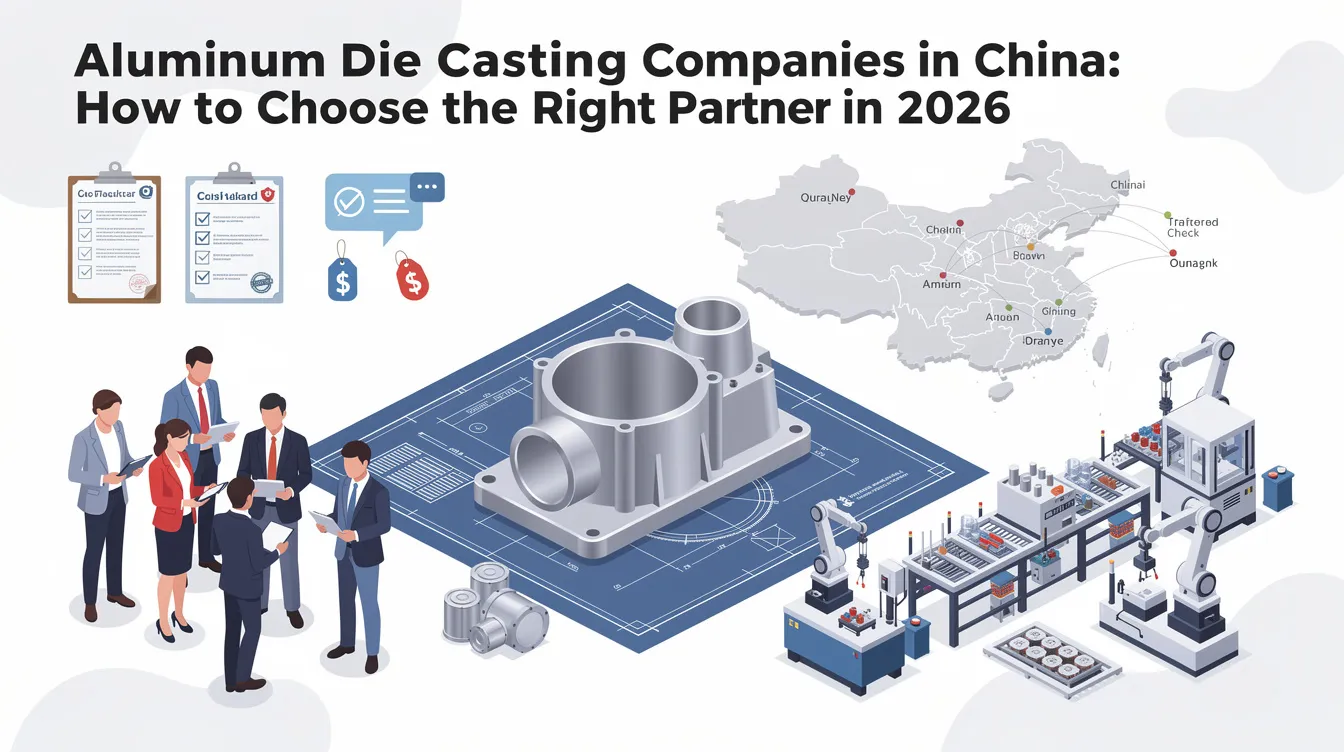
Aluminum Die Casting Companies in China: How to Choose the Right Partner in 2026
Sourcing aluminum die cast parts from China remains one of the most cost-effective strategies for overseas OEMs – but only if you pick the right partner. This guide breaks down the processes, players, evaluation criteria, and practical steps you need to confidently work with aluminum die casting companies in China this year.
Quick Answer: Best Way to Work with Aluminum Die Casting Companies in China
Overseas OEMs sourcing die casting from China in 2026 should look beyond the lowest quoted unit price. The real differentiators are full quality assurance systems, certifications aligned with EU, US, and Japan standards, transparent communication, and genuine design-for-manufacturability feedback. Effective communication is vital when selecting an aluminum die casting partner, because misaligned expectations on tolerances or finishes cause most project failures – not the casting itself.
Hundreds of aluminum die casting manufacturers operate across Guangdong, Zhejiang, Chongqing, and other provinces, but only a smaller group combines high pressure die casting, cnc machining, and surface treatment under robust ISO systems. Anebon Metal Products Limited (founded 2010 in Dongguan, Guangdong) is one such specialized B2B OEM partner, integrating aluminum die casting with precision CNC and sheet metal fabrication for overseas clients. Many manufacturers hold ISO 9001 and IATF 16949 certifications, but always verify the scope and audit body.
Key decision factors include the specific casting process, casting equipment tonnage, whether machining is in-house, surface treatment capability, and export experience. Here is a quick mini-checklist:
-
Verify certifications: ISO 9001:2015, ISO 14001:2015, and for automotive IATF 16949 – check certificate scope covers your part type.
-
Review sample parts: Die casting produces parts with high dimensional accuracy, but request CMM reports proving it.
-
Check tolerance capability: ±0.01 mm on standard features; manufacturers can achieve tolerances as precise as ±0.002 mm on critical CNC-finished surfaces.
-
Confirm lead times and MOQs: Understand tooling timelines, sample approval windows, and minimum batch economics.
Overview of Aluminum Die Casting in China
China is a global hub for aluminum die casting and the world’s largest casting market. In 2024, China produced roughly 51.9 million tonnes of castings overall, with aluminum alloy castings making up about 15% of total output. The aluminum casting segment specifically generated approximately USD 4.83 billion in revenue in 2025 and is forecast to grow at a 7.7% CAGR through 2033. This growth is driven by automotive electrification, 5G telecom infrastructure, and consumer electronics demand.
What is aluminum die casting? At its core, the die casting process injects molten metal – typically aluminum alloy – into a steel die at pressures between 10 and 175 MPa. This manufacturing process enables thin walls, complex shapes, and mass production efficiency that few alternatives match. Aluminum die casting is widely used in aerospace and consumer goods, while die casting can utilize aluminum, zinc, and magnesium materials depending on the application.
Most leading Chinese casting manufacturers combine aluminum with zinc alloy and magnesium die casting capabilities, often operating both cold chamber and hot chamber lines. China specializes in end-to-end aluminum die casting production, covering everything from mold design through finished products. Common product categories include motor housings, battery enclosures, gearbox casings, led lighting housings, robotics brackets, cylinder heads, and medical device shells. Major manufacturing hubs span Dongguan, Ningbo, Suzhou, and Chongqing, with plant sizes ranging from 3,000 m² to well over 30,000 m².
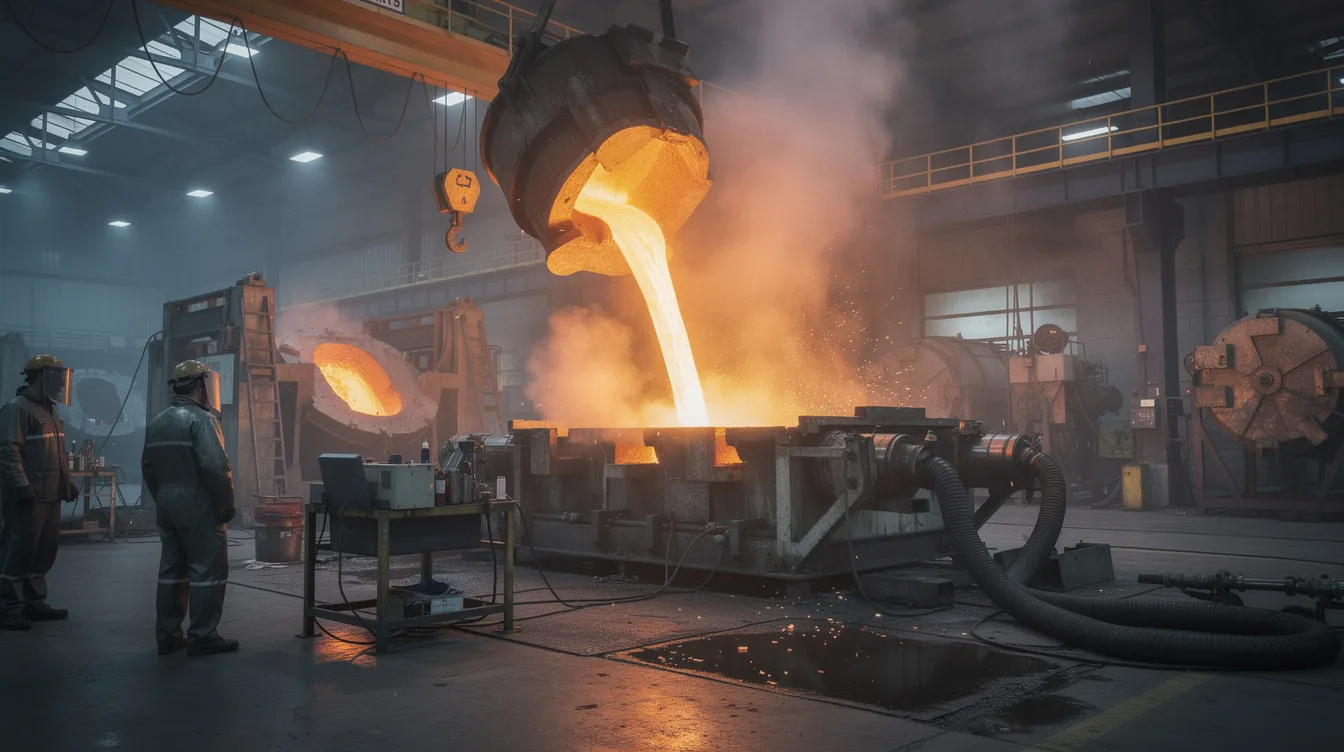
Key Die Casting Processes Used by Chinese Manufacturers
Most aluminum die casting companies in China offer various casting processes, selecting the best match based on geometry, volume, and mechanical requirements. Understanding these options helps buyers ask the right questions.
High pressure die casting (HPDC) is the dominant method, accounting for roughly 85% of aluminum die casting revenue. Die casting uses high-pressure metal liquid for precision molds, and cold chamber die casting machines handle the high melting point of aluminum. Aluminum die casting can produce parts with complex shapes, including complex internal shapes through the use of cores.
Low pressure casting feeds molten aluminum under controlled low pressure from below, reducing turbulence and porosity. It suits thicker sections and safety-critical components where mechanical properties matter more than cycle speed. Gravity die casting (permanent mold casting) fills steel molds by gravity alone – slower, but delivers better material integrity than sand casting and more flexibility for medium batch runs. Complementary processes like aluminum sand, investment casting, and even lost foam methods address niche needs for large or low-volume geometries.
The choice of casting process affects tooling cost, cycle time, defect risk, and achievable surface finish. A trusted die casting manufacturer will provide DFM feedback on which process suits your part rather than simply quoting. Zinc alloys are ideal for intricate die casting components like connectors and small gears, while magnesium die casting is preferred for lightweight applications in electronics and aerospace.
High Pressure Die Casting vs Low Pressure and Gravity in China
High pressure die casting dominates aluminum die casting production in China for automotive and electronics because of speed, automation, and scalability. Die casting manufacturers in China use high-tonnage machines – cold chamber machines ranging from 160 to 3,500 tons for standard parts, and gigacasting presses up to 9,000 tons for integrated structural components. Wencan Die Casting produces over 40,000 tons of aluminum die castings annually, illustrating the scale achievable in pressure die casting. Die casting is suitable for mass production with high efficiency, and a single shot can produce castings weighing over 50 kg.
Low pressure casting works well where part integrity outweighs cycle speed. By filling molds from below at 1–2 bar, it reduces gas entrapment, making it popular for wheels, structural brackets, and safety-critical components that require heat treatment (T6) post-casting. Gravity die casting occupies the middle ground – permanent metal molds filled by gravity deliver better mechanical properties than sand casting, with moderate tooling investment suited to medium sized castings and batch volumes.
Vacuum die casting has unique process flows and characteristics that further reduce porosity in HPDC, and it is increasingly adopted for structural alloy die casting in EV chassis programs. The right choice depends on your part’s volume, wall thickness, and performance demands. We encourage buyers to discuss options with suppliers like Anebon that can combine die casting cnc machining in a single workflow to achieve final tolerances economically.
What Sets Top Aluminum Die Casting Companies in China Apart
There is a significant gap between generic job shops and genuinely advanced die casting manufacturers. The difference shows up in automation levels, engineering capability, and metrology infrastructure. Some factories operate automated casting cells for efficiency, with robotic ladling, trimming, and real-time shot profile monitoring. Others still rely on manual processes that produce inconsistent results.
Concrete differentiators to look for include:
-
Modern casting equipment: Guangdong Hongtai Technology operates 37 imported die casting machines; EMP Tech Co Ltd has over 20 sets of aluminum die-casting equipment. Scale matters.
-
In-house tooling: In-house tooling provides better control over lead times and maintenance, and enables rapid die corrections.
-
Engineering depth: Technical expertise in complex geometries is crucial for manufacturers serving demanding OEM programs. Look for simulation-based mold design and experienced engineers who understand gating, venting, and cooling.
-
Advanced quality control: Testing equipment like spectrometers and CMM, plus X-ray or CT scanning for critical castings, separates serious suppliers from those doing visual checks alone.
-
Certifications: ISO 9001:2015, ISO 14001:2015, and IATF 16949 for automotive – verify certificate scope covers die casting production, not just an adjacent process.
Overseas OEMs should request evidence of continuous improvement: CPK data, defect Pareto charts, and documented programs for mitigating common die casting defects.
How Anebon Metal Products Limited Fits into the Landscape
At Anebon, we position ourselves among aluminum die casting companies in China as a focused B2B OEM partner rather than a mega-foundry. Founded in 2010 in Dongguan, Guangdong, we provide aluminum alloy die casting, precision cnc machining, and sheet metal fabrication for overseas clients across aerospace, medical devices, robotics, industrial machinery, and electronics. Our ISO 9001:2015 and ISO 14001:2015 certifications back a quality system built for export-grade work.
We focus on medium- to high-complexity aluminum casting parts rather than commodity castings. Design for Manufacturing is important for successful die casting projects, so every engagement starts with DFM consulting and often rapid prototyping before hard tooling investment. Secondary operations in aluminum die casting include CNC machining and surface finishing – we perform both in-house, holding tolerances as tight as ±0.002 mm on critical CNC stages.
While we are not the largest die casting company by annual tonnage, we differentiate through engineering support by skilled professionals, flexible batch sizes, and a one-stop workflow from tooling through casting, machining, surface treatment, and inspection. This strong capability serves OEMs who need responsive collaboration and full traceability rather than simply cheap parts at scale.
Typical Capabilities of Leading Chinese Die Casting Manufacturers
A well-equipped china die casting manufacturer in 2026 typically offers an integrated production chain. Aluminum die casting manufacturers focus on production capacity to ensure scalability – for context, Dalian Yaming has an annual production capacity of over 50,000 tons, and Zhejiang Yulong Vehicle Industry has a facility size of over 30,000 m². Even midsize firms like Ningbo Yujun Mechanical Technology (established in 2014) have rapidly scaled to serve automotive and industrial programs.
Standard casting machines range from 160 to 3,000+ tons, handling parts from under 100 g to over 25 kg, with automated spraying, ladling, and extraction. In-house CNC machining assets include 3-, 4-, and 5-axis machining centers and CNC turning for post-cast machining of sealing surfaces, threads, and mating faces. Auxiliary advanced equipment includes trimming presses, shot blasting, deburring units, ultrasonic washers, and automated leak test stations.
Many top-tier plants run 24/6 or 24/7, balancing flow between casting, machining, and finishing to maintain short lead times for export shipments.
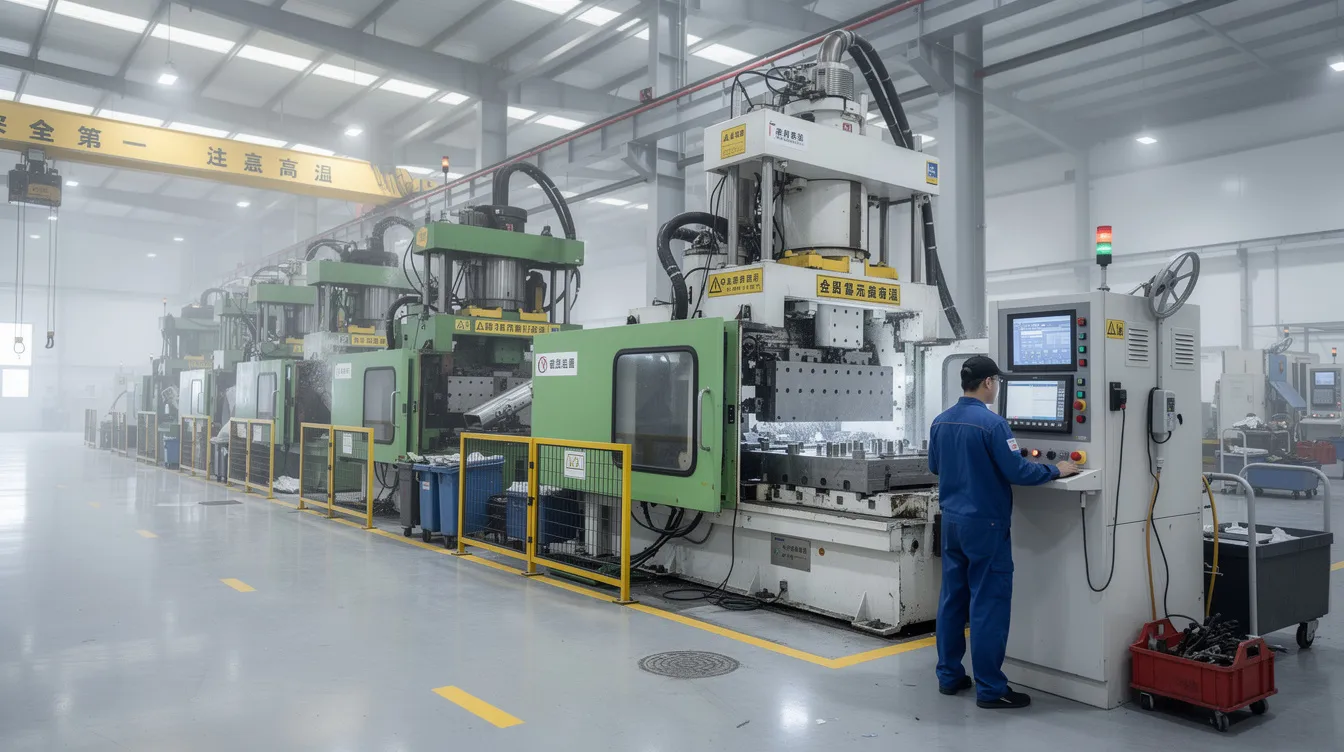
From Tooling Design to Finished Castings: The Die Casting Process Flow
A successful project with a Chinese aluminum casting manufacturer follows a structured workflow. The main stages typically proceed as follows:
-
Inquiry and RFQ – Submit 2D drawings, 3D models (STEP/IGES), target volumes, and alloy preferences.
-
Technical clarification and DFM – The die casting supplier reviews wall thickness, draft angles, gating, and cooling, often running flow simulation to prevent defects.
-
Quotation – Covers die casting mold cost, unit cost (casting + machining + finishing), lead times, and MOQ.
-
Sample and first-article approval – Trial shots, CMM inspection, capability studies, and process parameter adjustments.
-
Mass production – Monitored die casting production with in-process checks.
-
Packing and delivery – Final inspection, export documentation, and shipment.
During mold design, gating and runner layout, venting, and cooling channel placement are optimized to prevent porosity or cold shuts. Be aware that die casting can produce small pores and shrinkage defects if process parameters or die design are suboptimal. High scrap rates can occur in die casting processes during ramp-up, and die casting is not suitable for materials with low plasticity – aluminum, zinc, and magnesium alloys are chosen specifically for their fluidity and formability.
Transparent milestone reporting and shared inspection data are crucial for overseas teams working remotely with Chinese suppliers.
Materials, Alloys, and Surface Treatments for Aluminum Die Cast Parts
Material selection and surface treatment significantly influence performance, cost, and lifetime. Common aluminum die casting alloys in China include ADC12 and A380 (general-purpose HPDC alloys with good fluidity), AlSi9Cu3, AlSi10Mg (improved strength, sometimes heat treatable), and A356 for gravity and low pressure applications requiring T6 heat treatment for enhanced mechanical properties.
Aluminum is commonly used in die casting for automotive parts, construction machinery housings, and electronics enclosures because of its combination of strength, light weight, good corrosion resistance, and electrical conductivity. Zinc die casting offers finer detail and lower tooling abrasion for small, intricate components. Magnesium delivers extreme lightweighting but at higher handling cost.
Standard surface treatment options include anodizing, powder coating, painting, e-coating, chromate conversion, shot blasting, bead blasting, and polishing, plus passivation where corrosion resistance demands it. Anebon can coordinate or perform in-house finishing to deliver ready-to-assemble finished products, reducing vendor count and logistics complexity for overseas OEMs.
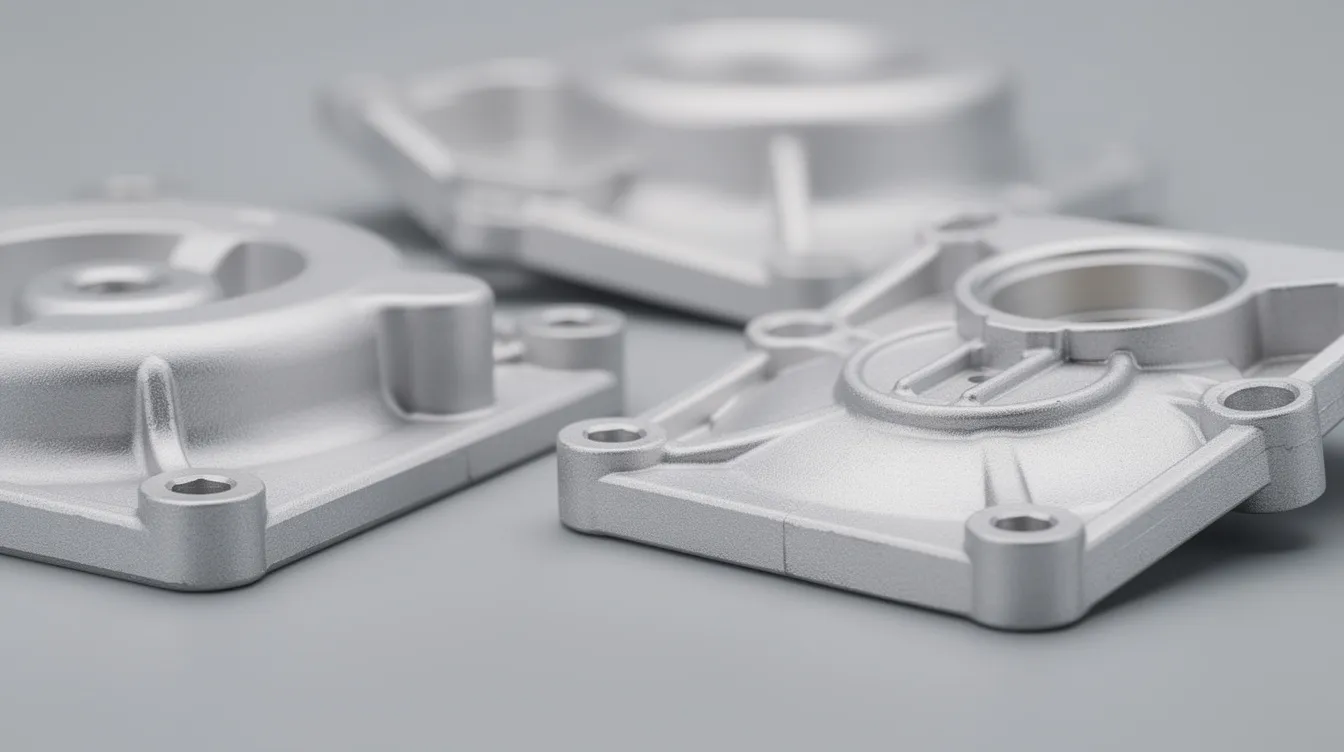
Quality Control, Certifications, and Zero-Defect Mindset
Leading aluminum die casting companies in China have shifted from end-of-line inspection to full quality management systems targeting near zero-defect manufacturing. Robust quality control capabilities include processes like X-ray inspection and CT scanning for internal defect detection on critical castings. Manufacturers should provide in-house finishing capabilities for quality assurance, keeping the entire chain under documented control.
Typical quality tools span the full production cycle:
-
Incoming: Certified aluminum alloy ingots, OES spectrometer analysis
-
In-process: Shot profile monitoring, temperature control, CMM dimensional checks
-
Final: Leak testing, surface roughness measurement, visual inspection, and packaging audit
ISO 9001:2015 and ISO 14001:2015 are baseline requirements. For automotive and e-mobility programs, IATF 16949 is increasingly mandatory. Buyers should verify certificates and understand their scope – a certificate covering only machining does not guarantee the casting process meets the same standard.
We recommend requesting control plans, PFMEAs, and examples of how the supplier handles common defects such as gas porosity, shrinkage, soldering, and flow marks. Anebon’s engineering team provides full PPAP documentation and traceability on request, which is especially valuable for aerospace, medical, and automotive applications.
Industries and Applications Served by Chinese Aluminum Die Casting Companies
Aluminum die casting has become indispensable across a diverse range of high-tech and traditional industries in China’s export ecosystem. Here are the primary sectors:
|
Industry |
Typical Die Cast Parts |
Key Requirements |
|---|---|---|
|
Automotive & EVs |
Battery enclosures, inverter housings, gearbox cases |
IATF 16949, APQP, structural integrity |
|
Telecom & 5G |
Base station housings, heat sinks |
Thermal conductivity, corrosion resistance |
|
Consumer Electronics |
Laptop frames, camera bodies, speaker shells |
Aesthetic finish, tight tolerances |
|
Robotics & Industrial Machinery |
Servo motor housings, gearboxes, brackets |
Complex geometry, durability |
|
Medical Equipment |
Imaging frames, pump bodies |
ISO 13485 compatibility, passivation |
Anebon focuses particularly on precision parts for robotics, industrial automation, medical devices, and high-end electronics, often combining alloy die casting with tight-tolerance CNC to deliver die casting products ready for assembly. Different end markets impose different requirements: the automotive industry emphasizes IATF and APQP; medical emphasizes documentation and biocompatibility; construction machinery focuses on durability at competitive price.
How to Evaluate and Compare Aluminum Die Casting Suppliers in China
Choosing the right casting company requires more than comparing unit prices on spreadsheets. Evaluate the total landed cost including tooling amortization, machining, finishing, inspection, and shipping.
Evaluation checklist:
-
Technical capability: Tonnage range of die casting machines, high pressure vs low pressure options, annual production capacity
-
Engineering depth: DFM capability, simulation tools, experienced engineers
-
Quality system maturity: Certifications, process control documentation, defect rate data
-
Export experience: References in similar industries, English communication quality
-
Responsiveness: How quickly they answer technical questions and share inspection reports
Established platforms can be used to find aluminum die casting suppliers, and attending industry trade fairs helps identify reliable suppliers for face-to-face validation. Ask for factory video tours, sample parts, and example inspection reports. Clarify tolerance expectations early – combining die casting with CNC machining (as Anebon does) can achieve tight features economically without overengineering the casting itself.
Start with a prototype or pilot batch to validate both technical capability and communication before committing to high-volume contracts.
Anebon’s One-Stop Service: From Rapid Prototyping to Mass Production
Anebon supports projects from early-stage R&D through serial production. Our workflow begins with rapid prototyping – CNC-machined prototypes, 3D-printed models, or soft tooling – paired with DFM feedback and quick design iterations before committing to hard tooling investment. This approach uses cutting edge technology to reduce risk and compress development timelines.
Once designs are locked, we transition into production tooling and the aluminum die casting process, followed by in-house CNC milling, CNC turning, 5-axis machining, and sheet metal fabrication where assemblies require mixed production processes. We handle small pilot runs, bridge tooling, and then scale to serial mass production while maintaining consistent quality control and traceability.
Typical customer workflow:
-
Send CAD files (STEP, IGES) and 2D drawings with specs
-
Receive DFM review and detailed quotation within 24–48 hours
-
Approve samples after first-article inspection
-
Roll into scheduled production with agreed lead times and logistics terms (FOB Shenzhen or CIF)
Cost, Lead Time, and Logistics When Sourcing from China
China continues to offer a competitive price advantage for die casting thanks to economies of scale, supply chain integration, and process automation. The main cost elements include tooling (die cost, expected life, amortization), material (aluminum alloy ingot prices – subject to commodity fluctuations), casting service costs (machine time, energy, labor), CNC machining, surface treatment, and quality assurance.
Realistic lead time guidance for aluminum die casting projects:
|
Phase |
Typical Duration |
|---|---|
|
New tooling |
4–8 weeks |
|
Sample approval |
1–3 weeks |
|
Mass production |
3–6 weeks |
|
Sea freight |
2–5 weeks depending on destination |
Air freight works for urgent prototypes and small batches. Anebon assists with export documentation and Incoterms. We encourage buyers to discuss forecast volumes and safety stock strategies to balance cost, flexibility, and resilience against supply chain disruptions. Aluminum die casting is suitable for mass production, so higher volumes typically yield significantly better unit economics.
Next Steps: Working with Anebon and Other Trusted Die Casting Manufacturers
Overseas engineers and purchasing teams can confidently engage with aluminum die casting companies in China in 2026 by following a structured approach: prioritize technical strength, process control, and communication over the lowest headline price. Use a pilot project to validate performance before scaling. Whether you need a casting manufacturer for aluminium die casting of complex automotive brackets or precision medical equipment housings, the process is the same – start with data, not assumptions.
Anebon Metal Products Limited is ready to serve as your die casting supplier and CNC machining partner for complex aluminum components. With over 15 years of industry experience, we bring the engineering support, advanced technology, and quality infrastructure that demanding OEM applications require. Our Co Ltd team of experienced engineers is equipped to handle your most challenging die casting needs.
Email us your STEP files and 2D drawings to receive a detailed quote and manufacturability review within 24–48 hours.
With the right partner, sourcing aluminum die cast parts from China delivers high quality, reliable lead times, and strong cost-performance – turning what many buyers fear is a risk into a durable competitive advantage.