The Benefits of Using Anodized CNC Parts in Manufacturing Processes
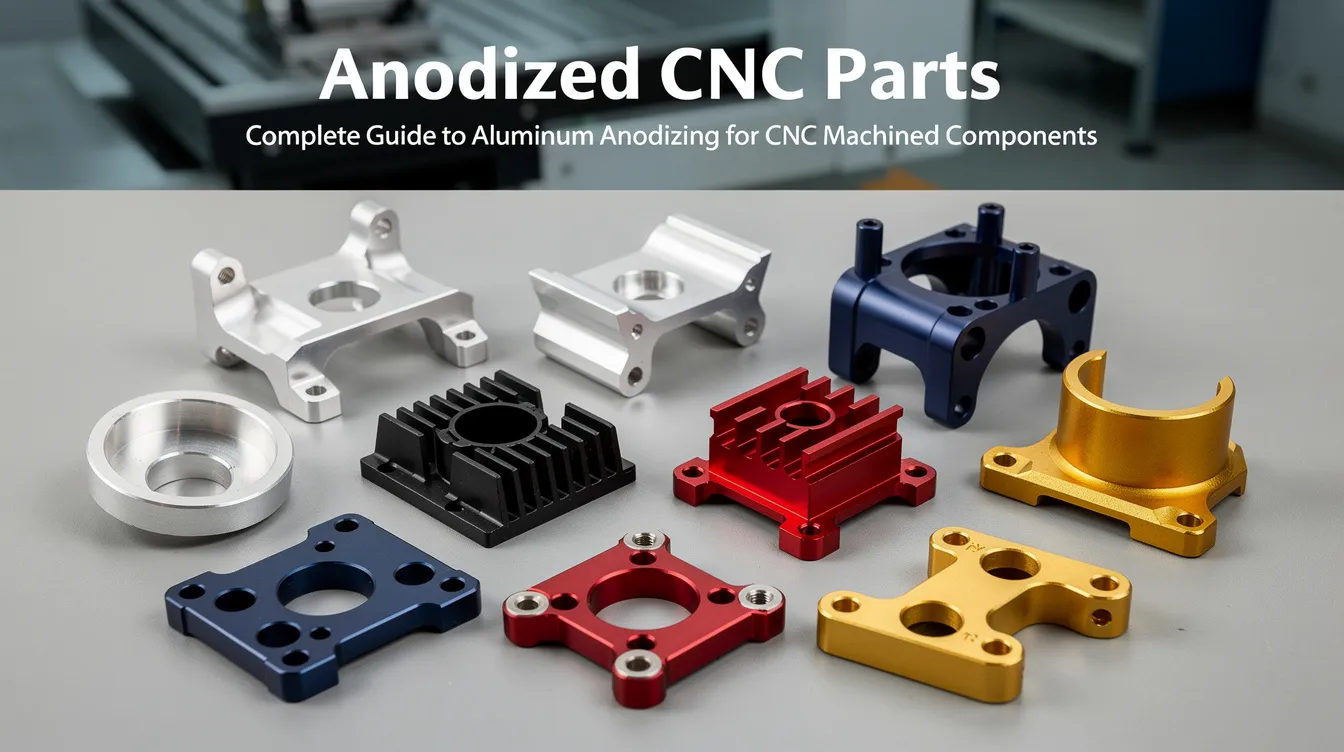
Anodized CNC Parts: Complete Guide to Aluminum Anodizing for CNC Machined Components
If you’re sourcing precision components for automotive, aerospace, electronics, or robotics applications, understanding anodized CNC parts is no longer optional – it’s a competitive requirement.
Overview: Why Anodized CNC Parts Matter for Modern OEMs
CNC machining is a subtractive manufacturing process – milling, turning, or multi-axis cutting – that produces CNC machined parts from solid metal stock. When the material is aluminum, you get CNC machined aluminum parts valued for their strength-to-weight ratio. Aluminum is lightweight and corrosion resistant, and it offers high thermal and electrical conductivity, making it suitable for demanding applications across industries.
Anodized aluminum refers to parts that have undergone an electrochemical surface conversion, producing a protective oxide layer that becomes part of the metal itself. For OEMs operating in 2024–2026, the combination of precision CNC machining and anodizing delivers parts that meet tightening requirements for durability, weight savings, and visual quality in everything from e-mobility platforms to surgical instruments.
The key benefits of anodizing CNC machined aluminum parts include:
-
Improved corrosion resistance against moisture, salt, and industrial atmospheres
-
Enhanced wear resistance and surface hardness
-
Decorative finishes in matte, satin, or polished textures with long lasting colors
-
Electrical insulation beneficial for electronic housings where isolation is necessary
-
Extended service life and thermal and UV stability
Anebon Metal Products Limited is an ISO 9001:2015 and ISO 14001:2015 certified CNC machining and surface finishing partner founded in 2010 in Dongguan, China, serving overseas OEMs with integrated machining and anodizing capabilities.
What Is Aluminum Anodizing and How It Works on CNC Parts?
Aluminum anodizing is an electrochemical process that creates a durable oxide layer on aluminum. The CNC machined aluminum part serves as the anode in an acid electrolyte – typically sulfuric acid for Type II and Type III processes. When direct current is applied, oxygen ions bond with the aluminum surface to form a dense aluminum oxide (Al₂O₃) layer that grows both inward into the substrate and outward from the original surface.
Unlike painting or plating, anodized layers bond with the aluminum at a molecular level, preventing peeling or flaking under normal service conditions. Anodizing creates a structure that is integral to the part rather than a deposited coating sitting on top.
The anodizing process produces oxide layers of varying thickness depending on the type specified:
-
Type II decorative anodizing: approximately 5–25 µm
-
Type III hard anodizing: approximately 25–75 µm
-
Roughly 50% of the total thickness builds outward and 50% penetrates inward, so dimensional changes must be factored into CNC tolerances for bores, fits, and mating features
Key Benefits of Anodizing CNC Machined Aluminum Parts
Engineering teams and buyers evaluate anodizing against alternatives like painting, powder coating, and plating. Here’s how the quantifiable advantages stack up for precision components.
Anodizing improves aluminum’s corrosion resistance and surface hardness simultaneously. The anodic layer shields aluminum alloys from moisture, salt spray, and industrial atmospheres. Properly sealed Type II anodized parts can survive over 500 hours of neutral salt spray testing, while hard anodized surfaces push well beyond that – making anodized aluminum parts ideal for harsh environments such as marine fixtures or outdoor enclosures.
The anodizing process enhances surface hardness and wear resistance substantially. Type III hardcoat surfaces reach microhardness values of 400–600 HV, making them suitable for sliding components, guides, and machinery parts subject to repeated contact cycles.
Because anodizing is a conversion process rather than a deposited coating, part dimensions change by only a thin layer. This matters for CNC machined parts where tight tolerances govern assembly performance. Weight gain is negligible.
Anodized surfaces accept vibrant and fade-resistant dyes during creation, enabling anodizing colors ranging from clear and black to blue, red, gold, and custom colors for branding. Anodizing improves aesthetic appearance and consistency for CNC parts across production batches. Anodized finishes are non-toxic and do not flake or chip into harmful particles, an advantage in medical and food-contact applications.
Anodized aluminum maintains integrity at elevated temperatures and resists UV-induced chalking better than many organic coatings. Unlike painting with solvent-based systems or heavy-metal plating, anodizing is an eco-friendly process with minimal waste, aligning with ISO 14001 environmental management practices. The aluminum oxide film also provides reliable electrical insulation to prevent short circuits in electronic housings.
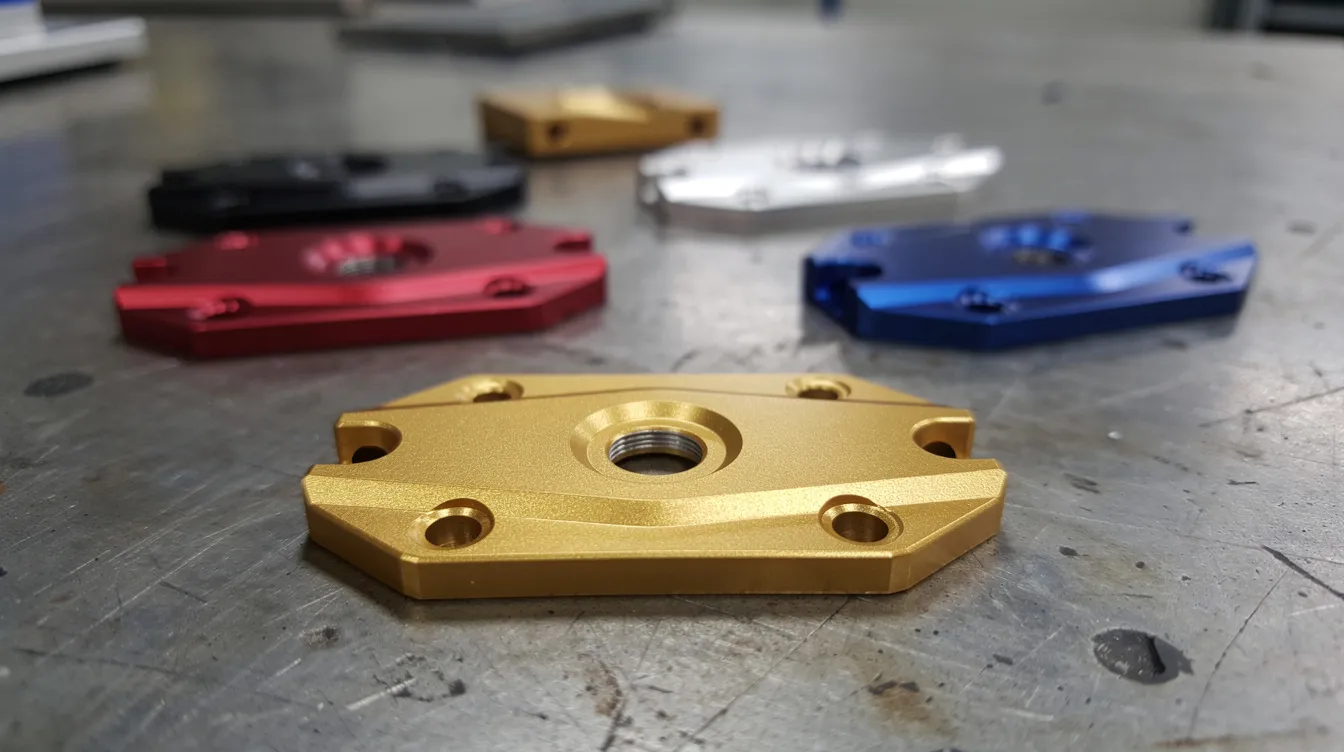
Types of Anodizing for CNC Machined Aluminum Parts
Different anodizing types serve distinct performance and appearance requirements. The choice depends on project requirements – whether the priority is cosmetic appeal, wear resistance, or minimal impact on part dimensions.
-
Type I (chromic acid anodizing): Type I anodizing uses chromic acid for minimal dimensional change, producing films under 5 µm. It offers good corrosion resistance and is specified for aerospace and fatigue-critical parts. Color options are limited, and environmental regulations have reduced its commercial use.
-
Type II (sulfuric acid anodizing): Type II anodizing is for decorative finishes and corrosion protection. Thickness runs 5–25 µm, supporting vibrant dyed colors. Widely used for housings, handles, and panels in electronics and automotive parts.
-
Type III (hard anodizing): Type III anodizing creates a thicker, harder coating for wear resistance, with layers of 25–75 µm. It delivers superior abrasion resistance for industrial applications, automation components, injection mold inserts, and high-cycle mechanical parts. Color is limited to darker natural tones.
OEM clients at Anebon most frequently request Type II clear or black finishes for electronics enclosures and Type III for robotics and industrial equipment. Coating thickness, porosity, and achievable color all depend on the aluminum alloys used – 6061 produces clean, uniform results while 7075′s high zinc content can cause uneven dyeing.
Step‑by‑Step Anodizing Process for CNC Parts at Anebon
Anebon integrates CNC machining and aluminum anodizing in a controlled workflow designed to protect tight tolerances from raw material through finished component.
-
Surface preparation: Thorough surface preparation prevents defects in anodizing. Parts undergo degreasing, alkaline etching, and de-smutting to remove machining oils and intermetallic particles. Optional sandblasting, bead blasting, or polishing defines the final texture before the part enters the tank.
-
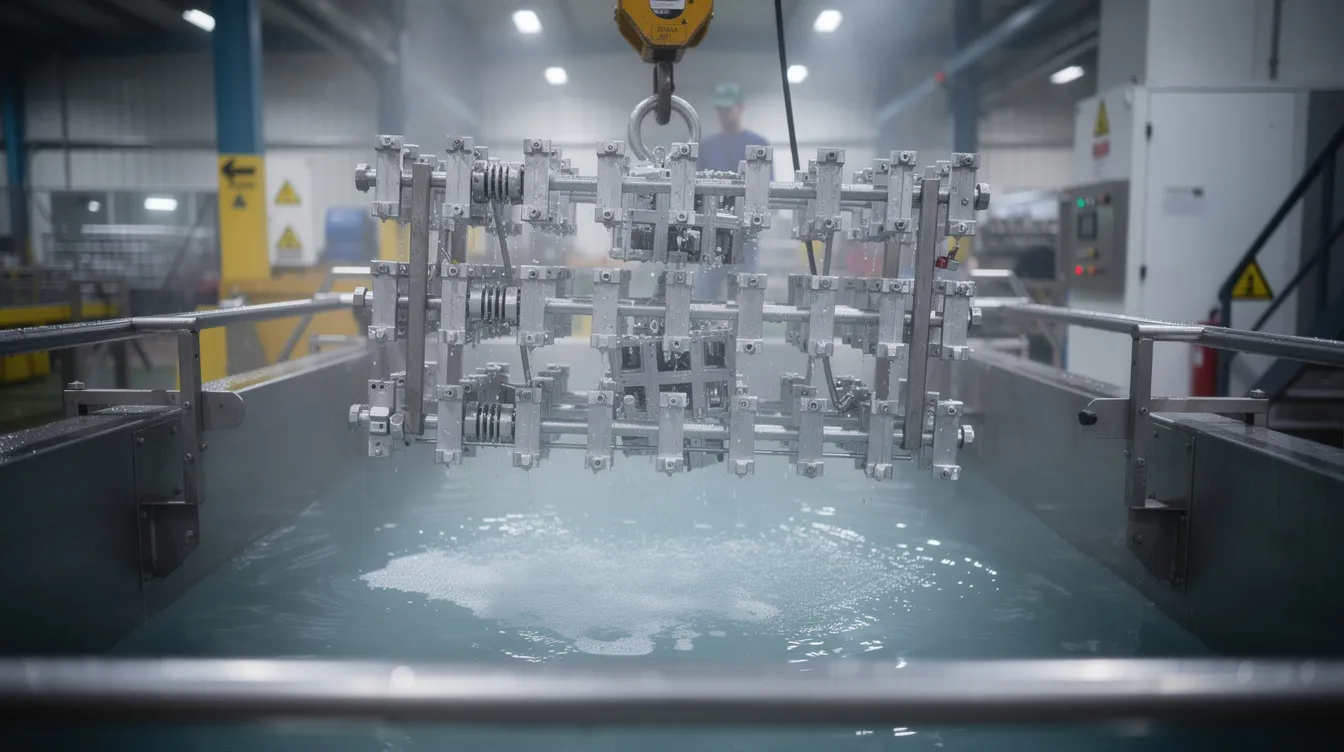
Anodizing tank stage: CNC parts are racked for even current distribution, immersed in sulfuric-acid electrolyte, and subjected to controlled DC current. Optimized electrolyte composition ensures uniform anodized layers, and operators control electrical parameters to regulate anodized film thickness to the target specification.
-
Coloring: Where required, organic dyeing or electrolytic coloring produces black, natural/clear, blue, gold, and custom brand colors. Anodized finishes can be clear, black, or custom colors depending on the application.
-
Sealing: Post-anodizing sealing enhances corrosion resistance and durability. Hot-water, steam, or nickel-acetate sealing closes pores, maximizing corrosion resistant performance and color fastness.
-
Post-processing and inspection: Dimensional checks verify that anodizing affect on part dimensions stays within specification – typically ±0.01–0.02 mm after finishing, with Anebon capable of ±0.002 mm on the machining process before finishing. Visual inspection catches streaks, burns, and color inconsistencies. Regular audits maintain quality in the anodizing process across batches.
Best Aluminum Alloys and Design Tips for Anodized CNC Parts
Not all aluminum alloys anodize the same way; some alloys may be difficult to anodize properly. Early material and design decisions heavily influence surface finish quality. Use high-quality aluminum alloys for consistent anodizing results.
-
6061-T6: The “workhorse” alloy for anodized CNC machined aluminum parts. Good corrosion resistance, excellent dye uptake, attractive clear anodizing results. Aluminum alloys like 6061 and 7075 are commonly used in machining.
-
6063: Excellent for architectural and decorative finishes; produces smooth, even color.
-
7075: Very strong but more challenging for decorative anodizing due to high zinc content – color can appear uneven. Better suited where strength is prioritized.
-
2024: High copper content leads to more visible defects; usually chosen where structural performance outweighs appearance.
Design tips for anodized CNC parts:
-
Add chamfers or fillets to edges – sharp corners cause uneven oxidation and burning during anodizing
-
Account for oxide growth in critical bores and fits; either machine undersized or mask surfaces that must maintain dimension
-
Mask or chase threaded features after anodizing to maintain assembly performance
-
Specify surface roughness before anodizing – the coating magnifies tool marks
Applications of Anodized CNC Machined Aluminum Parts by Industry
Anodized CNC parts show up in real OEM products across industries where durability, low weight, and appearance converge.
-
Automotive and e-mobility: Motor controller housings, pedal assemblies, shift paddles, and battery pack brackets use hard anodizing for wear and corrosion resistance on automotive parts exposed to road grime and vibration.
-
Aerospace and UAVs: Lightweight brackets, sensor housings, and structural fittings where anodized aluminum combines low mass with corrosion resistance in demanding applications at altitude.
-
Electronics and consumer devices: Smartphone gimbal frames, laptop chassis prototypes, LED lighting housings, and camera mounts use colored anodized aluminum for premium appearance and electrical insulation.
-
Medical and laboratory equipment: Anodized handles, instrument bodies, and pump housings where cleanability and durable color coding matter. Panels and enclosures withstand frequent sterilization.
-
Robotics and industrial machinery: Linear slide components, end effectors, pneumatic manifold blocks, and guarding hardware need abrasion and corrosion resistance that hard anodizing delivers.
Anebon regularly supplies prototypes and production batches of such CNC parts for overseas OEMs in Europe, North America, and East Asia.
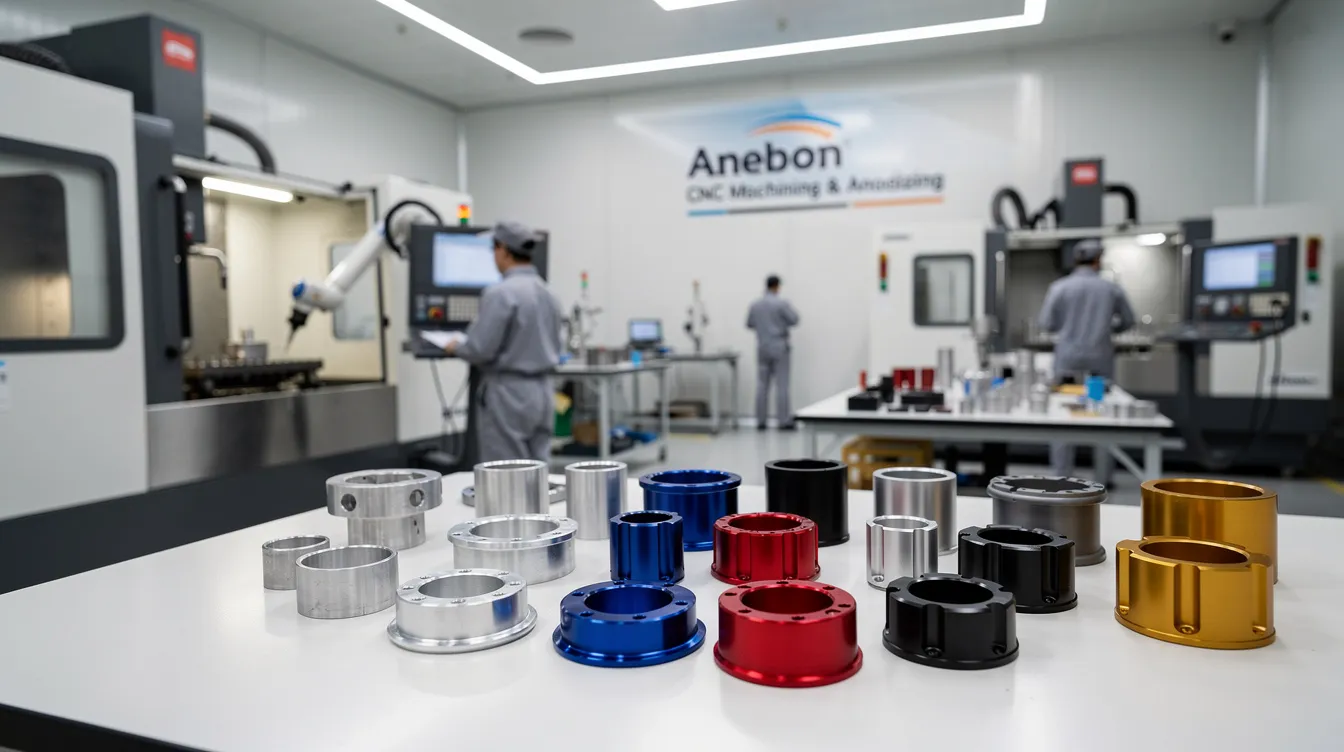
Anebon’s CNC Machining and Anodizing Capabilities
Anebon offers integrated CNC machining, aluminum anodizing, and complementary surface treatments for end-to-end OEM support. Choosing a supplier for anodized CNC parts involves evaluating their quality control and capabilities – here’s what Anebon brings.
-
CNC machining: Advanced suppliers use multi-axis CNC equipment to machine complex geometries in a single setup. Anebon provides CNC turning and milling, 5-axis machining, and precision turning with tolerances as tight as ±0.002 mm.
-
Materials: Aluminum alloys (6061, 6063, 7075), stainless steel, titanium, copper alloys, and engineering plastics. Only aluminum parts receive anodizing; other material options get appropriate coatings or plating.
-
Surface treatments: Bead blasting, brushing, powder coating, and plating complement or substitute for aluminum anodizing depending on functional needs.
-
Quality assurance: ISO 9001 certification ensures strict process controls for quality management in manufacturing. Incoming material inspection, in-process checks, salt spray testing, and final dimensional reports are available on request.
-
Service model: Rapid prototyping, bridge production, and full-volume manufacturing with typical lead times of 7–15 days for many anodized CNC machined parts projects, scaled by batch size and complexity.
How to Request a Quote for Anodized CNC Parts from Anebon
Clear project data leads to faster, more accurate quotations. Here’s the information to prepare:
-
2D drawings (PDF, DWG) and 3D models (STEP, IGES) with all dimensions and tolerances
-
Aluminum grade (e.g., 6061-T6, 7075-T6) and any certification requirements
-
Quantities: prototype batch size vs. production volumes
-
Anodizing type (I, II, III), desired color, and surface finish (e.g., Ra 0.8 µm)
-
Flagged critical tolerances, masked areas, and packaging or cleanliness needs
Anebon’s typical workflow: DFM review with feedback on tolerances vs. anodizing growth, formal quotation with machining and anodizing costs, then a sample run before bulk production. Contact Anebon’s team directly via their anodizing finishing services page to discuss your custom CNC machined and anodized aluminum parts.
FAQs on Anodized CNC Machined Aluminum Parts
-
How does anodizing affect the dimensions of CNC machined parts? The oxide layer grows approximately 50% outward and 50% inward. For Type II, expect 2.5–12.5 µm of outward growth per face; for Type III, 12.5–37.5 µm. Critical bores and fits should be machined undersized or masked.
-
Which aluminum alloys give the best cosmetic anodized finishes? 6061 and 6063 produce the most uniform, vibrant results. 7075 and 2024 are more challenging for decorative finishes.
-
What is the difference between clear anodizing and black anodizing in performance? Both offer the same corrosion resistance and hardness for a given type. Black anodizing simply adds a dye step before sealing; it does not change the mechanical or corrosion resistant properties of the layer.
-
What is the maximum part size Anebon can anodize? Standard tank capacity handles most CNC parts. Oversized components are processed through vetted anodizing partners under Anebon’s quality oversight.
-
How do lead times compare for machining-only vs. machining plus anodizing? Adding anodizing typically extends delivery by 3–5 business days beyond the machining process alone, depending on type and color requirements.
-
How does anodizing compare to powder coating and plating? Anodizing offers superior adhesion (integral to the surface, not deposited), better wear resistance than most coatings, and competitive corrosion resistance – all with lower environmental impact than solvent-based painting or chrome plating.