The Benefits of Metal CNC Machining for Precision Parts Manufacturing
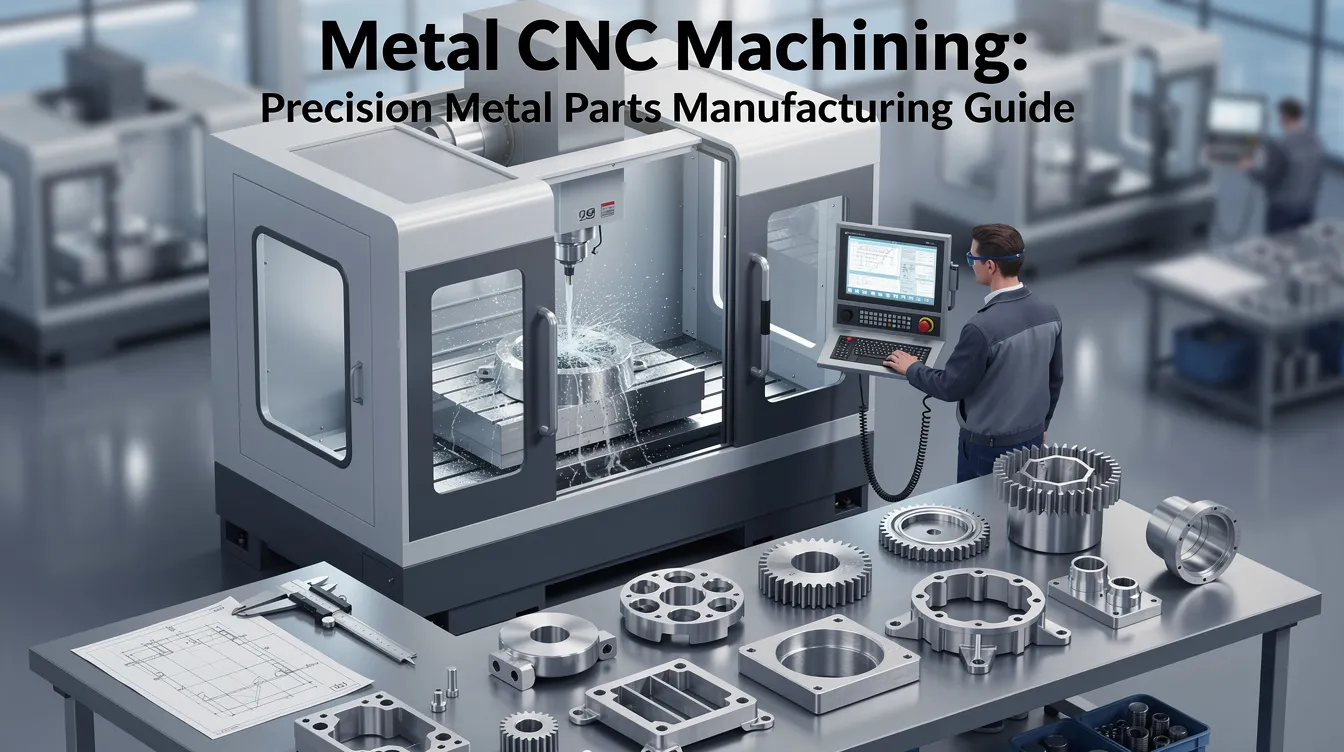
Metal CNC Machining: Precision Metal Parts Manufacturing Guide
Introduction to Metal CNC Machining
Metal CNC machining is a subtractive manufacturing process where computer numerical control systems guide cutting tools to remove material from metal stock-billets, plates, or bar stock-producing precise parts with repeatable accuracy. As a widely used manufacturing process across aerospace, medical, automotive, and electronics sectors, it remains the go-to method for OEM engineers who require precision, material versatility, and scalable production in 2024–2026.
This guide focuses exclusively on metals: aluminum alloys, steels, stainless steel, brass, copper, titanium, and related alloys-not plastics. Anebon Metal Products Limited, based in Dongguan, China and serving overseas OEMs since 2010, provides cnc machining service capabilities spanning rapid prototyping through full-series production.
Key benefits of metal cnc machining at a glance:
-
Tight tolerances down to ±0.002 mm (±0.0001″) on critical features
-
Repeatability across thousands of cnc machined parts
-
Compatibility with over 50 different materials
-
Suitability for complex geometries in demanding industries
-
CNC machining is a highly accurate automated manufacturing technology that offers unmatched precision and consistency compared to traditional machining
How Metal CNC Machining Works
The cnc machining process begins when engineers create a detailed 3D or 2D design using CAD software. That computer aided design is then converted into G-code via CAM software, which translates geometry and toolpaths into machine-readable instructions. CNC systems execute these instructions to control tools automatically, driving every axis of motion, spindle speed, and feed rate without manual intervention.
Here is the step-by-step workflow:
-
CAD design – Define part geometry, features, and critical dimensions in a cad file
-
DFM review – Evaluate manufacturability; flag thin walls, deep pockets, or unnecessary tight tolerances
-
Material selection – Choose the metal grade based on strength, weight, corrosion resistance, and cost
-
CAM programming – Generate optimized toolpaths for roughing, semi-finishing, and finishing
-
CNC setup – Install fixtures, select cutting tools, set spindle and tool offsets
-
Trial run – Verify toolpaths, check dimensions, and confirm workholding stability
-
Production – Run full batches with in-process monitoring
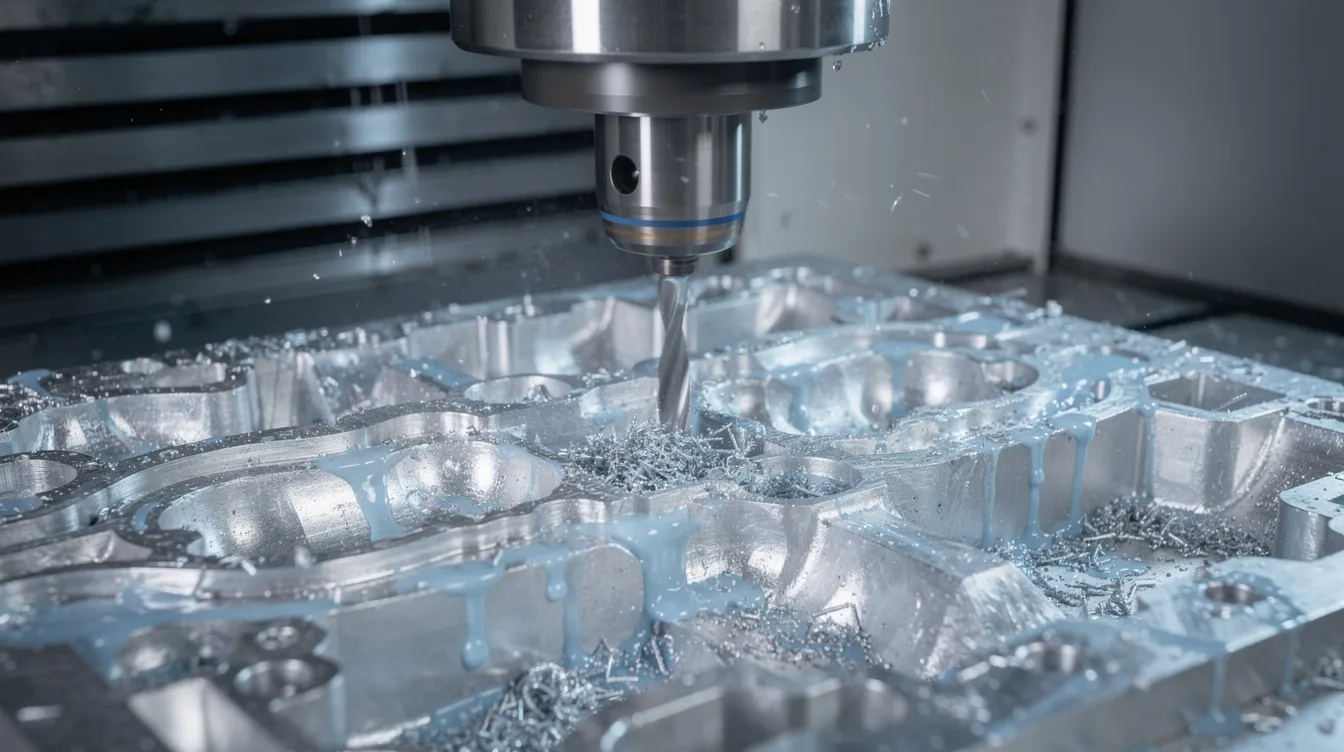
CNC milling typically involves 3-axis or 5-axis machines. Multi-axis CNC mills can shape intricate 3D designs that would be impossible to produce manually, enabling undercuts, compound angles, and complex surfaces in a single setup.
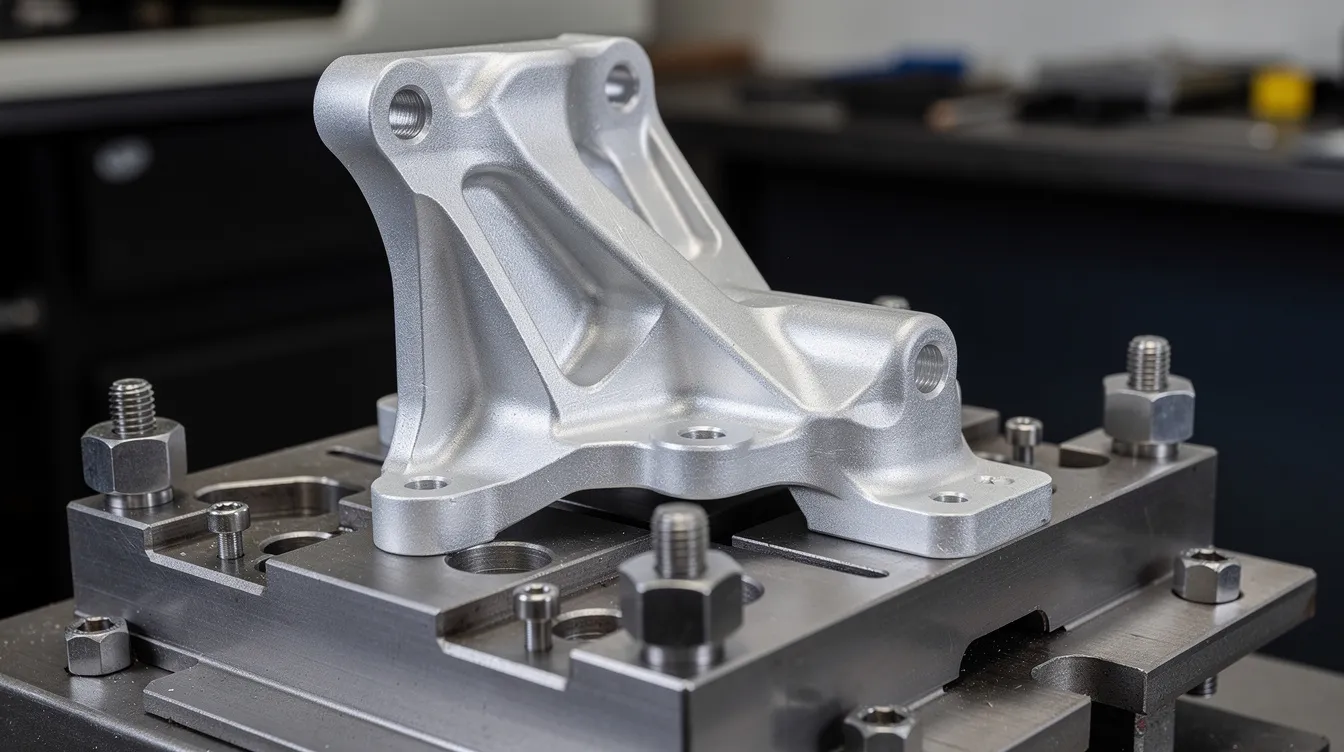
Example workflows: A 7075 aluminum UAV bracket moves from CAD through DFM (adding fillets, avoiding deep blind slots), then rough-machined on a 4-axis mill, semi-finished with tight step-over, finish-cut for dimensional accuracy, and anodized. A 17-4PH stainless surgical housing combines turning for cylindrical features with milling for complex faces, followed by precipitation hardening and passivation.
Core Metal CNC Machining Processes
Metal cnc machining combines several distinct operations-milling, turning, drilling, and secondary finishing-often across multiple machines or within a single multi-axis machining center. Each process serves a specific role in transforming raw material into a finished component.
CNC Milling
CNC milling machines remove material from a block of metal using rotating multi-tooth cutting tools. Milling operations produce flat faces, 2.5D pockets, slots, contoured surfaces, and complex 3D forms. A cnc milling machine is ideal for housings, frames, mold cavities, and structural plates. High speed cutting tools on 5-axis milling machines can reach surfaces from multiple angles in a single setup, dramatically reducing cycle time. The cutting process involves removing material layer by layer in roughing passes (high removal rate, coarse finish), semi-finishing passes (shape refinement), and finishing passes (final dimensions and quality surface finishes, typically Ra 0.4–0.8 µm).
CNC Turning
CNC turning uses a lathe-or turning machine-to produce cylindrical parts by rotating the workpiece against a stationary cutting tool. This includes OD turning, ID boring, facing, grooving, and threading. Turning operations include taper turning and face turning for shafts, bushings, valves, and threaded fittings. Materials like stainless steel, brass, and aluminum are routinely processed on precision CNC lathes.
CNC Drilling
CNC drilling delivers high-accuracy holemaking, tapping, counterboring, and countersinking. Positional accuracy across production runs is critical, especially in stainless steel and high-strength steels where drilling can induce work hardening.
Secondary Processes
Boring and reaming improve hole tolerances beyond what drilling alone achieves. CNC grinding produces very fine surface finishes (Ra below 0.4 µm) for bearing seats and sealing surfaces.
|
Process |
Best For |
Typical Metals |
|---|---|---|
|
CNC Milling |
Housings, plates, complex 3D shapes |
Aluminum, steel, titanium |
|
CNC Turning |
Shafts, bushings, fittings |
Steel, brass, stainless |
|
CNC Drilling |
Precision holes, tapped features |
All metals |
|
Grinding/Reaming |
Ultra-fine finishes, tight bores |
Hardened steels, stainless |
Anebon uses 3-, 4-, and 5-axis cnc milling centers plus high-precision CNC lathes to combine these processes efficiently, minimizing setups and lead time for cnc metal parts.
Metals and Alloys Commonly Used in CNC Machining
Metal choice drives part performance, machinability, lead time, and cnc machining cost. The right material drop down decision during design can mean the difference between a $40 part and a $400 part.
Aluminum Alloys
Aluminum alloys like 6061 and 7075 are commonly used in cnc metal machining for their excellent strength-to-weight ratio and corrosion resistance. 6061-T6 is the workhorse for heat sinks, motor housings, and general milled components. 7075 delivers higher tensile strength for aerospace brackets and UAV structural parts. Cutting speeds for aluminum reach 150–460 m/min with carbide tooling-far faster than steels.
-
Drone frames and UAV brackets (7075)
-
Heat sinks and enclosures (6061)
-
Motor housings and sensor mounts (6082)
Stainless Steels
Stainless steel is known for its high tensile strength and chemical resistance. Grade 303 is a free-machining variant; 304 and 316L provide superior corrosion resistance for medical and food-processing components. 17-4PH offers precipitation-hardened strength for actuator housings and aerospace brackets. Machinability is lower than aluminum-expect slower feeds, robust tooling, and careful cooling strategies.
-
Surgical instruments and implant jigs (316L)
-
Food-processing fixtures (304)
-
High-strength actuator housings (17-4PH)
Carbon and Alloy Steels
Carbon steel grades like 1018 and 1045 serve as mild steel options for general mechanical parts-shafts, fixtures, and brackets. Steel alloy grade 4140 provides high strength and wear resistance for gear blanks and high-stress shafts after quench-and-temper heat treatment. Tool steel is known for its high hardness and abrasion resistance, making it ideal for dies and mold inserts.
Brass and Copper
Free machining brass (C360) machines easily and is corrosion resistant, making it a top pick for fittings, connectors, and valve bodies. For deeper insight into alloy selection, see this guide on brass vs bronze for CNC machining. Copper is highly ductile and an excellent electrical conductor, used for bus bars, RF shields, and terminals. Among soft metals, copper requires proper coolant strategies to manage heat buildup.
Titanium Alloys
Titanium has an excellent strength-to-weight ratio, and Ti-6Al-4V (Grade 5) is the standard for aerospace and medical-grade components. Material cost runs $15–30/lb versus $2–5/lb for aluminum. Cutting speed drops to 24–46 m/min, and tool life is significantly shorter. Titanium is commonly used in automotive and medical industries where biocompatibility and corrosion resistance justify the premium.
Capabilities of Anebon’s Metal CNC Machining Services
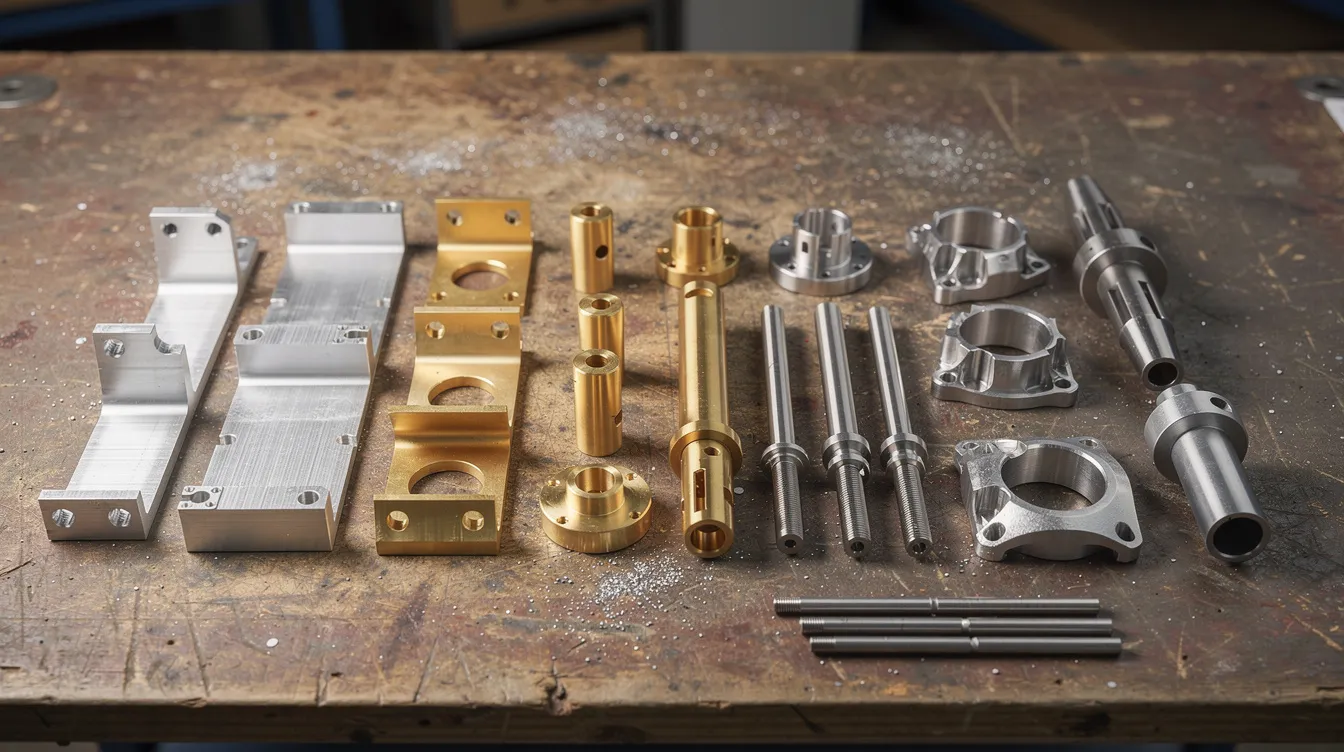
Anebon Metal Products Limited has delivered precision cnc machining for overseas OEMs since 2010, supporting everything from single functional prototypes to runs of thousands of production parts. Our cnc machining service covers the full spectrum of metal machining needs.
-
Machine axes: 3-, 4-, and 5-axis cnc milling machines plus high precision CNC turning centers
-
Tolerances: CNC machining can achieve tolerances of +/- 0.001 inches as standard on critical features, and can achieve tolerances as tight as 0.0005 inches under controlled environmental conditions
-
Production scale: One-off prototypes, engineering samples, bridge production, and full-series high volume production
-
Integration: Die casting and sheet metal fabrication combined with post-machining on CNC equipment for tight mating interfaces
CNC machining produces highly customized metal parts, and parts often undergo quality checks and finishing processes before shipment. CNC technology allows manufacturers to produce components more consistently, and CNC machines are fully automated and run continuously with minimal supervision-meaning your orders proceed around the clock.
Anebon holds ISO 9001:2015 and ISO 14001:2015 certifications. Our quality lab includes CMM equipment, optical projectors, and hardness testers, with documented inspection reports for every cnc metal machining project.
Metal CNC Machining Cost Factors
CNC machining costs depend on part complexity and size-but the real cost picture extends to design decisions, material choice, tolerances, and order quantity. Setup costs for CNC machining can be high but fixed, which means they amortize as volumes increase. CNC machining provides high scalability due to economies of scale: CNC machining allows for faster production and lower labor costs at higher quantities.
Main cost drivers:
-
Part geometry: Complex parts require more time and higher machining costs. Deep pockets, thin walls, and undercuts demand specialized tooling and slower feeds.
-
Tolerances and surface finish: Moving from ±0.1 mm to ±0.025 mm can increase cost by 2–5× due to slower cycles, extra passes, and increased inspection. Scrap rates can rise from 2–5% to 8–15% without tight process control.
-
Material type: Material choice significantly affects CNC machining costs. A bracket costing ~$40 in 6061-T6 might cost $300–400 in Ti-6Al-4V at low quantities due to slower cutting speed, higher raw material cost, and shorter tool life.
-
Quantity: A turned Ti-6Al-4V part in qty 5 might cost $150–400 per piece; the per-unit cost drops significantly at qty 25+.
|
Material |
Relative Material Cost |
Relative Cycle Time |
Tool Life |
|---|---|---|---|
|
6061-T6 Aluminum |
Low |
1× |
Long |
|
316L Stainless |
Medium |
2–3× |
Moderate |
|
Ti-6Al-4V Titanium |
High (5–10×) |
5–8× |
Short |
CNC machining produces minimal material waste compared to other methods like casting or metal forming. Anebon’s engineers provide DFM suggestions-easing corner radii, standardizing hole sizes, relaxing non-critical tolerances-that routinely reduce cnc machining cost by 20–40%. Upload your CAD files and technical drawings for a detailed quote.
Surface Finishes and Post-Processing for CNC Machined Metal Parts
Surface finish directly impacts corrosion resistance, aesthetics, assembly fit, and functional performance of machined parts. Specifying the right finish during design avoids costly rework later.
As-machined finishes leave visible tool marks at Ra ~1.6–3.2 µm, with deburring and edge breaking for handling safety. This is sufficient for many internal or non-cosmetic cnc milled parts.
Standard metal finishing options:
-
Bead blasting for uniform matte appearance
-
Mechanical polishing for low-roughness cosmetic surfaces
-
Brushing for satin-look panels
Protective and decorative coatings:
-
Clear and colored anodizing (Type II) and hard anodizing (Type III) for aluminum alloys
-
Black oxide for carbon steel and alloy steels
-
Zinc or nickel plating for corrosion protection across a wide array of metals
-
Conversion coatings (chromate, phosphate) for paint adhesion
For stainless steel, passivation improves corrosion resistance by removing free iron from the surface. Fine grinding or satin finishing serves visible medical and food-equipment components.
Anebon combines CNC machining with heat treatments-quenching and tempering 4140, aging 17-4PH-followed by finish machining to hold tight critical dimensions that might otherwise shift during thermal processing.
Applications of Metal CNC Machining Across Industries
CNC metal machining is a backbone machining process across advanced manufacturing sectors where precision, material performance, and repeatability are non-negotiable. Here are the primary cnc machining applications.
Automotive
CNC machining is essential for creating complex automotive components: engine brackets, gearbox housings, fluid connectors, and powertrain fixtures. Aluminum and alloy steel cnc machined parts dominate, with 4140 and 1045 used for high-stress drivetrain elements.
Aerospace and UAV
CNC machining is widely used in aerospace applications. Structural brackets from 7075 and 2024 aluminum, titanium fasteners, and housings demand tight tolerances and weight reduction through precision CNC milling. Complex shapes that reduce mass while maintaining strength are routine on 5-axis machines.
Medical Devices
CNC machining produces parts for the medical industry, including implants, surgical instruments from 316L stainless, 17-4PH instrument housings, and precision jigs. Medical industries require full material traceability and documented inspection for every lot.
Electronics and Robotics
CNC machining is used to manufacture precision parts in electronics-aluminum heat sinks, motor mounts, sensor housings, and connector blocks. Consumer electronics demand cosmetic surface finishes alongside dimensional accuracy. Brass and copper components provide the electrical conductivity needed for RF and power distribution. CNC machines can produce complex shapes with high precision for robotic end-effectors and gears.
Industrial Machinery
Custom fixtures, end-of-arm tooling, valve bodies, and wear components machined from tool steels and hardened alloys. These mechanical parts require good mechanical properties-hardness, low moisture absorption in coatings, and dimensional stability.
Design Guidelines for Cost-Effective Metal CNC Machining
Early design decisions dramatically improve manufacturability and reduce lead time and cost. Following DFM principles helps you get the desired shape without unnecessary expense.
Wall thickness:
-
Aluminum: minimum 1.0–1.5 mm for milling operations; thinner walls risk chatter and deformation
-
Steels: minimum 1.5–2.0 mm due to higher cutting forces
-
Titanium: minimum 2.0 mm due to spring-back behavior
Internal corners:
-
Match internal corner radii to standard end mill diameters (e.g., R1.5 mm for a 3 mm end mill)
-
Zero-radius internal corners require EDM or micro tools-avoid unless functionally necessary
Holes:
-
Maximum practical depth-to-diameter ratio: 4:1 for standard drills in metals; deeper holes need gun drilling or redesign
-
Standardize hole sizes and thread forms across the part to reduce tool changes
Tolerances:
-
Apply tight tolerances only where fit or function demands it (bearing seats, seal grooves)
-
General features at ±0.1 mm cost far less than ±0.01 mm features
Anebon’s skilled machinists and engineers review your CAD files and technical drawings to provide DFM feedback before cnc machining begins, catching issues that would otherwise cause redesigns or cost overruns. CNC machines enhance safety by reducing operator exposure to hazards-operators remain physically separated from cutting tools in CNC machining, allowing skilled machinists to focus on programming and quality rather than manual operations.
Prototype to Production: Anebon’s Metal CNC Machining Workflow
Anebon supports the full product lifecycle through a single cnc machining service-from rapid prototyping through engineering validation and scaled production.
-
Prototype stage: Quick-turn CNC milling and turning of metals like 6061 and 304 within days, producing functional prototypes for fit, form, and basic testing. High precision parts validate the design before committing to tooling or volume.
-
Bridge and pilot production: Fixtures are refined, toolpaths optimized, and process capability validated on metal cnc machining lines. This stage catches issues before scale-up.
-
Full production: Process control plans, SPC on critical dimensions, repeatability checks, and batch traceability for metals and heat treatments. CNC machines can operate continuously for 24 hours a day, keeping lead times competitive for cnc parts and production parts.
-
Logistics: Consolidated shipments, export documentation, and consistent quality across repeat orders for overseas OEM customers.
Why Choose Anebon Metal Products for CNC Metal Machining
When you need a metal machining partner who communicates clearly with international engineering teams, delivers precise parts on schedule, and scales from prototype to volume-Anebon is built for that role.
-
10+ years of experience (since 2010) in precision machining, die casting, and sheet metal for overseas OEMs
-
Tight tolerances on metals as precise as ±0.002 mm, with CNC machining achieving tolerances of +/- 0.001″ across standard production
-
ISO 9001:2015 and ISO 14001:2015 certified, with CMM, projectors, hardness testers, and documented inspection reports
-
Engineering support: DFM feedback, material selection guidance, and surface finish recommendations tailored to each application-including options like PVC polyvinyl chloride coatings, epoxy resin encapsulation, and thermal expansion compensation for assemblies requiring precision
-
Online cnc machining services with responsive quoting-upload your CAD files and receive a detailed breakdown of material stock, machining services, and finishing
Whether you need online cnc machining for a single prototype or cnc services for thousands of high precision parts with complex geometries, Anebon’s team is ready. Among the cnc machining advantages we deliver: consistent quality, competitive pricing, and a single-source solution that eliminates coordination headaches.
Send your CAD files and technical drawings today to request a detailed CNC machining quote. Our engineering team typically responds within 24 hours, and all files are handled under strict confidentiality. Anebon is not a job shop-we are your long-term metal cnc machining partner.