Small Batch CNC Machining Companies: How to Choose the Right Partner in 2026
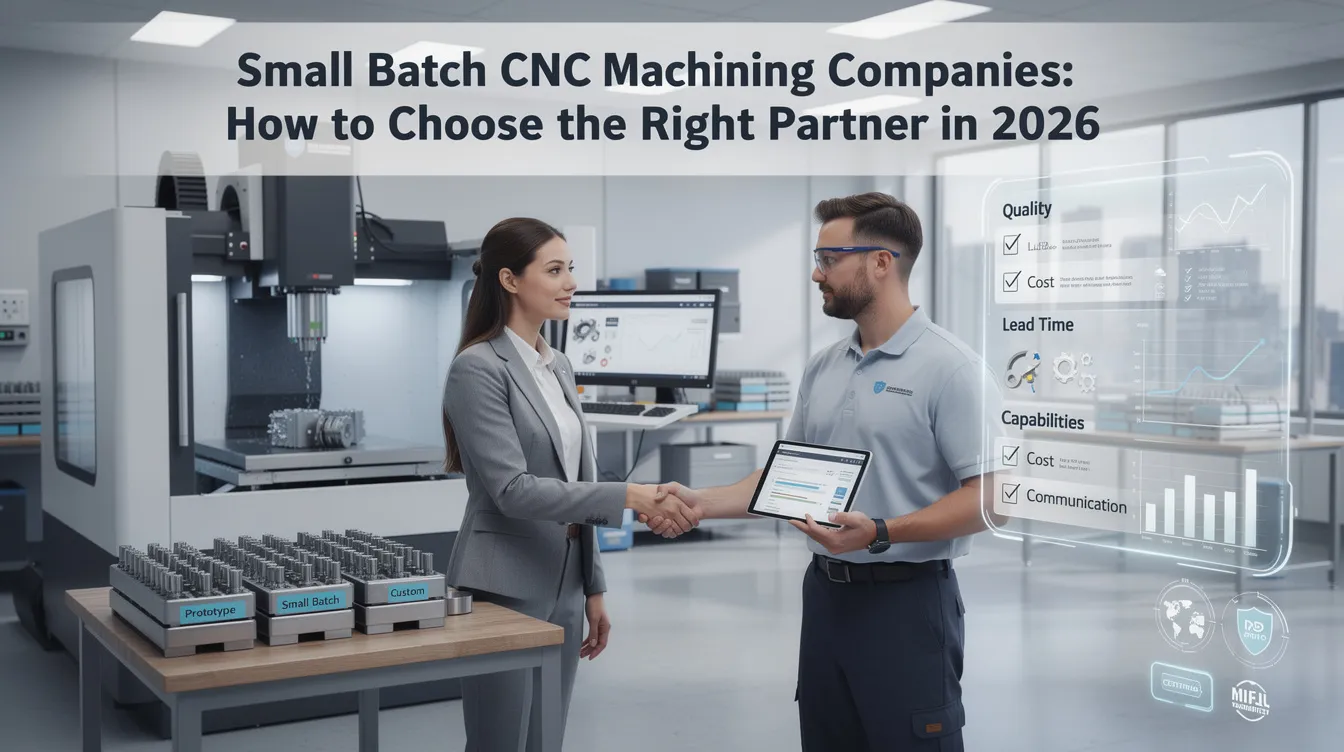
Small Batch CNC Machining Companies: How to Choose the Right Partner in 2026
Product life cycles are shrinking, supply chains remain unpredictable, and customers expect more variants than ever. For OEMs and design engineers navigating this reality, small batch CNC machining companies have become essential partners. This guide breaks down the processes, materials, applications, and evaluation criteria you need to confidently choose a supplier for low-volume precision parts in 2026.
Fast Answer: What Small Batch CNC Machining Companies Actually Do
Small batch CNC machining companies specialize in producing precision parts in quantities of 10 to 5,000 pieces per order. They exist because many products simply don’t need-or aren’t ready for-mass production volumes. In 2026, shorter product development cycles, rising customization demand, and supply-chain risk make these companies more critical than ever.
Here’s what sets them apart:
-
They use CNC milling, CNC turning, CNC drilling, and multi-axis machining to produce production parts directly from digital CAD files-CNC machining is a subtractive process driven by those files
-
They handle the gap between prototype shops (1–10 pieces for proof of concept) and mass production lines (50,000+ pieces with dedicated tooling)
-
They serve overseas OEM clients and R&D teams who need flexible low-volume production without the upfront cost of molds or dies
-
Small batch CNC machining bridges the gap between prototyping and full-scale production, making it key for validating designs before committing to large scale production
Anebon Metal Products Limited is one such company: a China-based, ISO 9001:2015 and ISO 14001:2015 certified manufacturer in Dongguan, serving overseas OEMs with rapid, precise small batch and medium-volume parts since 2010.
What Is Small Batch CNC Machining?
Small batch CNC machining means producing small quantities-typically 10 to 2,000 pieces-using computer numerical control machines programmed from 3D CAD models. It allows manufacturers to produce only what is needed, avoiding excess inventory and reducing upfront costs compared to traditional manufacturing.
How it differs from alternatives:
-
Manual machining is slower, less repeatable, and impractical beyond a handful of parts
-
High-volume production lines require expensive dedicated tooling and long changeover times that don’t make economic sense below ~20,000 units
-
Small batch CNC delivers consistent quality and tight tolerances without mold investments, making it ideal for ongoing low-volume demand
The core processes include CNC milling, CNC turning, CNC drilling, and secondary operations like tapping, reaming, and surface grinding. CNC machining produces high-quality, consistent parts using various materials-metals and plastics alike.
Real-world examples of small batch CNC machining include:
-
300 pcs of stainless steel medical brackets for a surgical device startup
-
800 pcs of custom storage racks for an e-commerce warehouse
-
150 pcs of alloy steel gear shafts for an industrial automation integrator
Key CNC Machining Processes Used in Small Batch Production
The same core CNC machining processes serve both prototypes and small batches. What changes is the setup strategy, tooling approach, and fixture design to keep per-piece costs reasonable at volumes of 10–2,000 parts. Below, we cover the four main processes and where each fits best.
CNC Milling in Small Batch CNC Machining
CNC milling uses rotary cutting tools to remove material from workpieces, operating on 3-axis, 4-axis, or 5-axis machines. It’s the workhorse of small batch machining processes for parts with flat surfaces, pockets, slots, and complex contours.
Typical small batch milled parts include:
-
Aluminum housings and electronic enclosures
-
Steel mounting brackets and angle plates
-
Heat sinks with finned profiles
-
Custom storage rack brackets with bolt patterns
The key advantage for batch CNC machining is combining multiple operations-facing, pocketing, slotting, contouring-in a single setup. This cuts cost per piece significantly compared to moving parts between machines. Advancements in CNC technology allow for the production of complex geometries that would be impractical with manual methods.
Tolerances for CNC milling typically range from ±0.01 mm to ±0.05 mm for standard features. Anebon can achieve ±0.002 mm on critical features like bearing bores and sealing faces. Materials commonly milled in small batches include 6061-T6 aluminum plates and 4140 alloy steel mounting blocks.
CNC Turning for Short Runs of Cylindrical Parts
CNC turning creates cylindrical parts using a rotating workpiece while a single-point tool cuts along the X and Z axes on CNC lathes. It’s the natural choice for shafts, bushings, spacers, medical connectors, and automotive pins in runs of 20–1,000 pcs.
For small batch CNC turning, bar feeders and live tooling are particularly valuable. Live tooling allows both turning and milling features in one chucking-cross-holes, flats, and keyways-without a second setup on a mill.
Common turned materials include:
-
Stainless steel 304 and 316 for corrosion resistant properties
-
Alloy steel 4140 for high-stress shafts and couplings
-
Brass C360 for fast machining and excellent surface finish
-
Engineering plastics like POM and Nylon for wear-resistant bushings
Grouping families of similar cylindrical parts into one production batch reduces changeover time and improves repeatability across the run.
CNC Drilling, Tapping, and Reaming
CNC drilling creates holes in workpieces using drill bits, and is frequently combined with tapping and reaming in the same machine cycle. This is an efficient process for producing bolt patterns, mounting holes, and fluid channels without additional handling.
Practical examples include:
-
Bolt patterns in custom storage racks and racking hardware
-
Electronics mounting holes in aluminum panels
-
Fluid channels in hydraulic manifold blocks
-
Countersunk fastener holes in aerospace and automotive brackets
In small batch CNC machining, automated drill-tap cycles and tool magazines reduce operator intervention and keep the cost per hole low even at quantities of 50–300 pieces. Good drawings with clear hole tolerances (e.g., H7, ±0.02 mm) and thread specifications (e.g., M6×1, UNC 1/4-20) are essential to avoid rework.
Multi-Axis CNC Machining (3-Axis, 4-Axis, 5-Axis)
In simple terms:
-
3-axis machines move the tool along X, Y, and Z (linear axes)
-
4-axis adds one rotational axis (typically A), allowing the part to rotate during cutting
-
5-axis CNC machining allows cutting along five different axes simultaneously, combining three linear and two rotational axes
For small batch CNC machining, 4-axis and 5-axis capability is especially valuable. Fewer setups mean better accuracy on complex geometries, shorter lead times, and lower total batch cost-even though the hourly machine rate is higher. Modern CNC equipment can produce parts with tight tolerances that would require multiple setups on simpler machines.
Concrete examples:
-
5-axis machining of titanium medical implants in batches of 50 pcs
-
4-axis machining of steel alloy turbine blades in 200-piece runs
-
5-axis contouring of aerospace avionics housings with compound surfaces
Anebon uses advanced CNC machines with multi-axis capability to hold tight tolerances on complex aerospace and robotics custom components for overseas OEM customers.
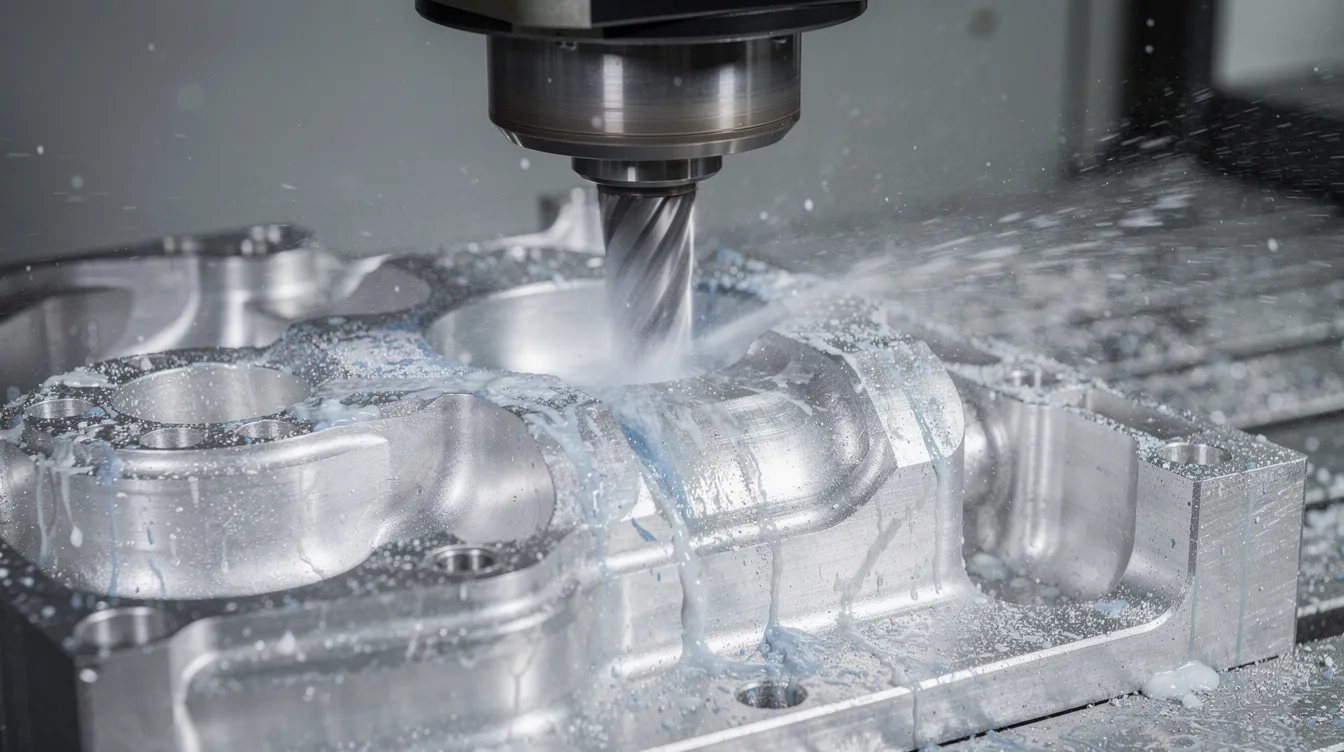
Common Materials Used by Small Batch CNC Machining Companies
Material choice directly drives machining time, tool life, and the cost aspect of any small batch CNC project. CNC machining supports a wide range of materials including metals and plastics. Below is a breakdown of the most commonly stocked grades and where they fit.
Aluminum Alloys for Small Batch CNC Machining
Aluminum is lightweight and corrosion-resistant, making it the default first choice for rapid prototyping and batch CNC machining of enclosures, heat sinks, and lightweight machine parts.
Popular grades:
-
6061-T6: Good all-around strength, excellent machinability, easy to anodize. The most commonly requested grade
-
7075-T6: Higher strength for structural and motorsport applications, slightly harder to machine
-
6082: Similar to 6061 with marginally higher strength, popular in European specifications
-
2024: High fatigue resistance for aerospace applications, less corrosion-resistant than 6061
Applications Anebon serves include 6061-T6 CNC milling for UAV frames in batches of 80 pcs and 7075 custom machined aluminum parts for motorsport hubs in 150-piece runs. Aluminum’s chip formation and low cutting forces shorten cycle times, directly reducing per-unit cost in small batches. Machined aluminum parts are commonly finished with anodizing and bead blasting for electronics and consumer OEMs.
Stainless Steel and Alloy Steel (Including 4140)
Stainless steel offers excellent corrosion resistance and strength. Common grades include 303 (free-machining), 304 (general purpose), and 316/316L (superior corrosion resistance for medical and marine use). Alloy steels like 4140 and 4340 deliver high tensile strength for demanding mechanical applications.
Typical use cases:
-
316L for medical components and food-grade fittings in harsh environments
-
4140 for automotive shafts, couplings, and high-stress brackets
-
304 for chemical plants and general industrial hardware
These materials cost more than mild steel and aluminum alloys, and machining times are longer-affecting price per part in small quantities. However, Anebon can machine pre-hardened alloy steel to avoid post-machining heat treatment in low-volume projects, shortening timelines. For applications exposed to chemical exposure or marine conditions, small batch CNC machining of stainless and alloy steel significantly improves durability.
Mild Steel and Carbon Steels
Mild steel is low-carbon steel (e.g., Q235, A36, 1018) with excellent machinability and weldability. Carbon steel grades share good mechanical properties but offer limited corrosion resistance without secondary coatings.
Applications include:
-
500 pcs of mild steel custom storage rack uprights for warehouse automation
-
200 pcs of machine bases for industrial systems
-
Structural fixtures and jigs for production lines
Low raw material cost and fast cutting tools speeds make mild steel an economical production choice for budget-constrained small batch CNC projects. Many customers add powder coating or zinc plating for corrosion protection.
Brass and Copper Alloys
Brass (e.g., C360) machines very quickly with excellent surface finish, making it ideal for precision turned parts and low-volume fittings. Brass is easy to machine and corrosion-resistant, which is why it remains popular for electrical components and decorative hardware.
Examples:
-
1,000 pcs of brass electrical terminals for industrial connectors
-
200 pcs of decorative hardware for architectural projects
Copper serves applications where electrical conductivity or thermal performance is critical-bus bars, heat spreaders, and RF components. It’s harder to machine than brass, with more challenging burr control and chip disposal. Common finishing requirements include nickel plating or passivation.
Engineering Plastics (ABS, POM, Nylon, PC, PEEK, PTFE)
Small batch CNC machining of plastic materials avoids expensive injection molds, enables fast design changes, and delivers accurate tolerances. Utilizing actual production-grade materials enables accurate functional prototypes that mirror final performance.
Key plastics:
-
ABS: Low-cost housings, prototypes, and consumer product enclosures
-
POM (acetal): Gears, pulleys, and wear parts with low friction
-
Nylon: Bushings, rollers, and insulators-nylon is valued for its mechanical strength and toughness
-
Polycarbonate (PC): Clear guards, lenses, and protective covers
-
PEEK: Aerospace and medical components requiring resistance to high temperatures and sterilization
-
PTFE: Seals and chemical-resistant parts-PTFE is known for its low friction and chemical resistance
Anebon routinely machines these plastics for aerospace electronics, medical test fixtures, and robotics in batches of 20–500 pcs. Machining considerations include thermal expansion, the need for sharp cutting tools, and specialized fixturing to prevent deformation. PEEK and PTFE are significantly more expensive per kg, so design optimization is crucial for economical production in low-volume runs.
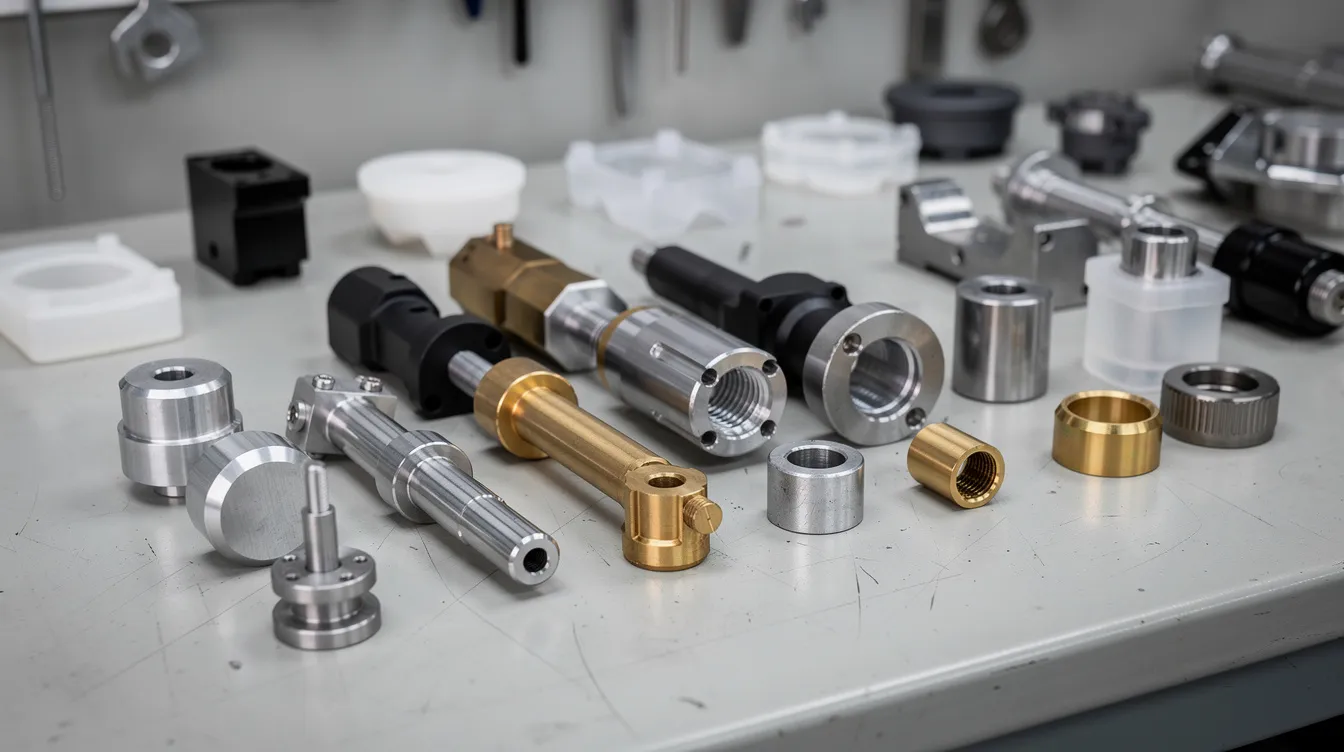
Typical Parts and Applications for Small Batch CNC Machining Companies
Small batch CNC machining companies support both early-stage R&D and niche, ongoing low-volume production across numerous industries. Volumes of 10–2,000 pcs per order are common in aerospace, medical, automotive, electronics, and warehousing equipment. Small-batch CNC machining is often used in specialized industries like aerospace and medical devices where quality and traceability are non-negotiable.
Electronic Enclosures and Thermal Components
CNC milling and CNC drilling of aluminum and polycarbonate enclosures serve control boxes, IoT gateways, and power supplies. Small batch CNC machining is ideal for custom electronic components where design iterations happen frequently.
Examples: 120 pcs of 6061-T6 machined enclosures for an industrial IoT startup, 300 pcs of anodized aluminum housings for LED drivers. Typical features include precision cutouts, threaded bosses, EMI shielding provisions, and logo engraving. Small batch production allows fast design iterations between pilot and first production batches without new custom tooling. Anebon integrates thermal management features-finned heat sinks, copper inlays-directly in the CNC machining process.
Custom Storage Racks and Component Racks
CNC machining supports low-volume production of high-strength steel and aluminum components for custom storage racks and electronic component racks. This includes 250 pcs of alloy steel brackets for automated warehouse racking systems and 80 pcs of precision rack rails for server cabinets.
Common operations include CNC drilling of bolt patterns, slot milling for adjustability, and surface treatments for corrosion resistance. Engineers can refine hole patterns and load-bearing features between batches with minimal re-programming cost. Modular fixturing solutions also enable batch CNC machining of ESD-safe plastic components in racks for sensitive electronic components and PCBs.
Mounting Brackets, Fixtures, and Machine Hardware
L-brackets, angle plates, clamp blocks, and sensor mounts are simple but critical manufacturing components produced in runs of 20–1,000 pcs. Material examples include 304 stainless brackets for food-processing machines and 7075-T6 brackets for motorsport suspension upgrades.
Small batch CNC machining allows combining families of similar brackets into one production run to reduce setup cost. Anebon often assists overseas OEMs in redesigning bracket geometry to simplify machining and reduce weight while maintaining stiffness. Accurate hole location and flatness are essential for these quality machined parts to assemble correctly into larger systems.
Aerospace, Medical, and Robotics Components
Small batch CNC machining is used in the aerospace industry for precision components: aluminum avionics housings, 5-axis machined titanium brackets (titanium has a high strength-to-weight ratio and corrosion resistance), and turned stainless fasteners. CNC machining achieves high precision suitable for medical and aerospace applications where tight tolerances are essential.
Medical devices like surgical tools are produced using small batch CNC machining-stainless steel instruments, aluminum fixture plates for imaging devices, and PEEK trial implants in 20–200 pcs batches. Automotive parts such as engine components are manufactured with small batch CNC for validation and low-volume specialty vehicles. For robotics, examples include 50 pcs of precision gear housings and 150 pcs of linear guide blocks. Since 2018, Anebon has supplied low-volume titanium parts for robotic surgery systems, backed by ISO-certified traceability.
Advantages of Working with a Small Batch CNC Machining Company
Small batch CNC machining companies balance flexibility, speed, and quality for OEMs and R&D teams. Small-batch CNC services are increasingly popular due to their cost-effectiveness for products where annual volumes stay below roughly 10,000 pieces.
Cost Aspect: How Small Batches Can Save Money Overall
Small batch CNC machining has high cost per unit compared to mass production. But total project cost-including tooling, warehousing, and obsolescence-can be significantly lower for runs of 50–2,000 pcs.
Consider this comparison for an aluminum housing:
|
Factor |
Injection Molding |
Small Batch CNC |
|---|---|---|
|
Tooling cost |
~USD 8,000 mold |
No mold needed |
|
Unit cost |
~USD 0.80/pc at 10,000 pcs |
~USD 13–18/pc at 300 pcs |
|
Total for 300 pcs |
USD 8,240 (mold + parts) |
USD 3,900–5,400 |
|
Design change cost |
New mold or mold rework |
Updated CAD file only |
Small-batch CNC machining reduces upfront costs compared to traditional manufacturing and eliminates the cost of engineering changes. You can learn more about pricing factors in Anebon’s guide on how to calculate CNC machining cost. Consolidating multiple part numbers into a combined batch spreads setup costs across more units, and design for manufacturability feedback helps optimize designs for better quality and lower cycle time.
Speed and Responsiveness
Small batch CNC machining reduces lead times significantly. Typical production cycles run 5–10 working days after drawing approval. Anebon can ship simple parts in as fast as 3 days.
CNC machining allows for fast turnaround times, enabling quicker product launches. Programs update quickly to reflect design changes between batches without long re-qualification cycles. Small-batch CNC machining helps in rapid product development by reducing lead times. It allows for rapid fulfillment of low-volume production orders.
Example scenario: a medical startup moves from 5 prototype sets to a 200-piece pilot batch in under 4 weeks. With a China-based partner, overnight production combined with express global shipping compresses timelines further. Many CNC machining providers offer automated instant quoting to speed up procurement, and digital platforms are ideal for fast pricing and flexible global capacity in CNC machining.
Precision, Repeatability, and Quality
CNC machining inherently delivers high repeatability once programs and fixtures are validated. Small batch CNC machining offers high precision and consistent quality across every run. Quality assurance and rigorous inspection are crucial in small-batch CNC machining to avoid costly rework or field failures.
Anebon’s tolerance capabilities reach down to ±0.002 mm, supported by CMM inspection, height gauges, and optical measurement tools. ISO 9001:2015 certification is important for guaranteeing quality in manufacturing, and Anebon’s ISO 14001:2015 certification addresses environmental compliance for OEMs with sustainability mandates.
Inspection approaches include first-article inspection reports, PPAP documentation for automotive industries, and full material traceability for aerospace and medical projects. Even in batches of 50–100 pcs, consistent quality is what separates reliable suppliers from unreliable ones.
Design Flexibility and Ongoing Optimization
Small batch CNC machining allows design engineers to refine parts in real metal or plastic over multiple iterations. Rapid prototyping benefits from reduced setup times and faster design iterations. Small-batch CNC machining enables easier design changes directly from CAD files, and rapid prototyping through CNC machining enhances product design flexibility.
Anebon provides DFM suggestions-increasing internal corner radii, standardizing hole sizes-to reduce cycle time and cost. It enables quick verification of design and function during prototyping.
Example: a robotics bracket optimized over three batches went from 3 setups to 1, reducing unit cost by 25%. This kind of iterative collaboration is often easier with focused small batch CNC machining companies than with very large high-volume factories. Small-batch CNC machining supports rapid prototyping for various industries.
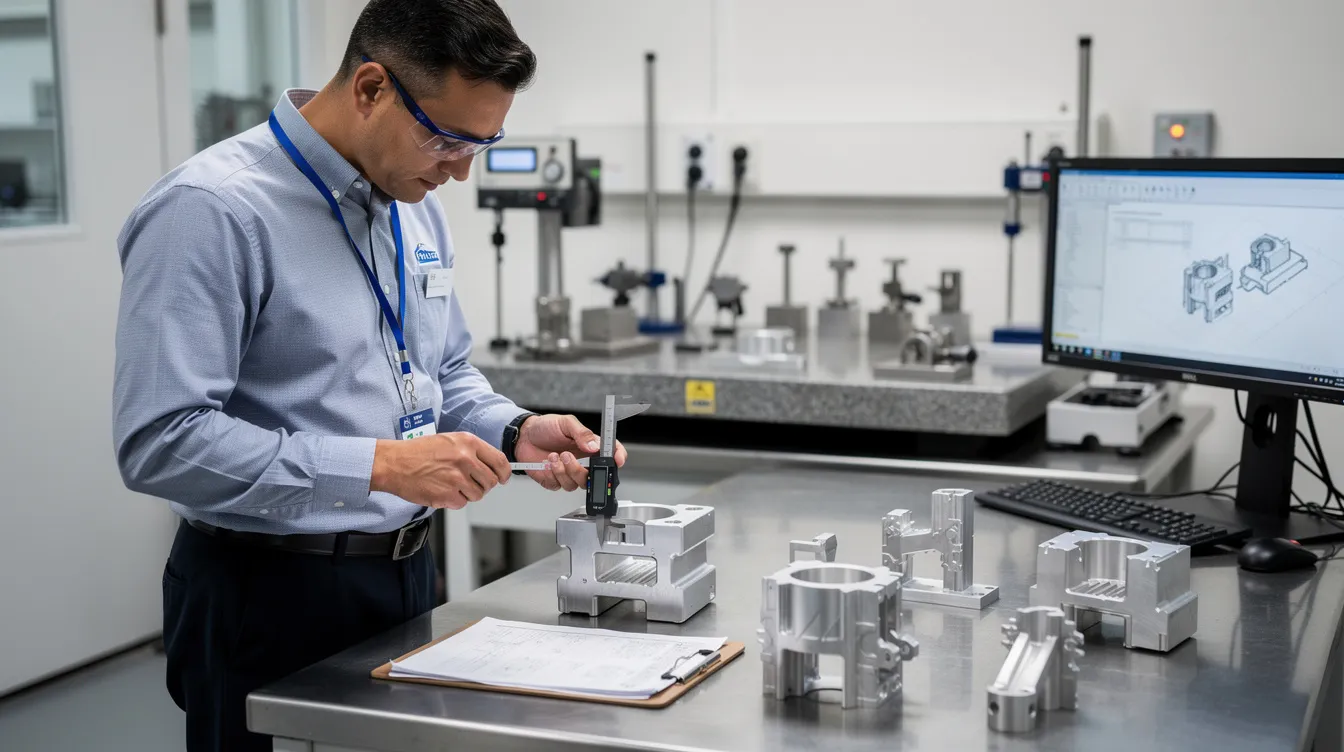
Limitations and When Small Batch CNC Is Not Ideal
Small batch CNC machining is powerful, but it’s not the right fit for every project. Being transparent about limitations helps you make better sourcing decisions.
High Per-Unit Cost at Large Volumes
Small batch CNC lacks scalability for high-volume production. Once annual demand exceeds 20,000–50,000 pcs, processes like die casting, metal injection molding, or plastic injection molding deliver dramatically lower unit costs. Machine downtime occurs frequently due to batch changes, further reducing efficiency at very high volumes.
Small batch CNC machining companies like Anebon still support bridge production while tooling is being built. Anebon also offers die casting and sheet metal fabrication, allowing a phased transition from CNC to other methods when volumes justify it. Transparency matters-Anebon will recommend moving to another manufacturing process when part volumes clearly outgrow CNC cost-effectiveness.
Geometry and Feature Constraints
Typical CNC limitations include very deep narrow cavities (depth greater than 4× width), extremely small holes below 0.5 mm (approaching the diameter of thin wires), and intricate internal channels that tools cannot reach. Such features may be better produced via additive manufacturing, casting, or sinker EDM machining, which uses electrical sparks to erode material from workpieces.
Design tips to stay within CNC capability:
-
Increase cavity radii to permit standard end mills
-
Avoid unnecessary deep pockets
-
Break very complex parts into assemblies when feasible
-
Thin-walled parts in plastics may need specialized tooling or alternative processes
Anebon’s engineers often propose small design modifications to maintain function while making parts practical for batch CNC.
Material and Supply Constraints
Material constraints increase costs in small batch production. Exotic materials like Inconel, specialty titanium grades, tool steel, and spring steel can have long procurement lead times for small quantities and may carry surcharges. This affects schedule and the cost aspect for small batch CNC machining projects needing rare alloys.
Alternatives include switching to more available grades or using near-net-shape stock. Anebon maintains an inventory of common aluminum alloys, stainless steel, carbon steel, and engineering plastics in Dongguan to minimize lead times. Clear communication of annual volume expectations helps the machining company plan material purchases more efficiently. Initial setup time for small batches can be significant, but suppliers with material stock can offset this.
Design Guidelines to Reduce Cost and Lead Time in Small Batch CNC Machining
Thoughtful design dramatically reduces machining time, scrap, and rework. Small-batch CNC machining helps to minimize raw material waste when parts are designed well. Here are the practical guidelines that matter most.
Cavity Depth, Wall Thickness, and Internal Radii
-
Limit cavity depth to 3–4× tool diameter to avoid chatter and long cycle times
-
Maintain minimum wall thickness of 0.8–1.0 mm for aluminum, 1.5–2.0 mm for plastics
-
Use generous internal corner radii (at least 1/3 of cavity depth) for standard end mills
Example: changing a 0.5 mm internal radius to 2 mm on an aluminum housing allowed faster machining and significantly longer tool life, reducing batch cost by over 15%.
Feature Alignment and Symmetry
Aligning critical features to primary datums and using symmetry reduces setups and simplifies inspection. Avoid unnecessary asymmetry requiring multiple orientations or special fixtures. In CNC turning, symmetrical parts run more smoothly and permit higher spindle speeds. Share 3D models early so the machining company can suggest orientation changes.
Realistic Tolerances and Surface Finish Requirements
Differentiate between critical features (bearing bores, sealing faces) and non-critical ones. Apply tight tolerances only where needed:
-
±0.01 mm for high precision fits
-
±0.05–0.10 mm for general features
Specifying overly fine surface finish everywhere (e.g., Ra 0.4 µm) increases machining and polishing time. A clear tolerance strategy can reduce small batch CNC machining costs by 10–30% without affecting performance. Tolerances within ±0.01–0.02 mm may cost 30–80% more than ±0.05 mm for the same geometry.
Drawings, 3D Models, and Documentation
Provide both 3D CAD files (STEP, IGES) and 2D drawings with dimensions, tolerances, and notes. Key information to include:
-
Material spec with standard (e.g., 6061-T651)
-
Heat treatment condition
-
Surface treatments and inspection requirements
Incomplete or ambiguous drawings are a common cause of delays and quote revisions. Anebon can help convert concept models into manufacturable drawings. Use standard hole and thread callouts (ISO or ANSI) to avoid confusion in international projects.
Surface Finishes and Post-Processing for Small Batch CNC Parts
The chosen surface finish affects performance, appearance, corrosion resistance, and cost. In small batches, setup costs for finishing processes can be significant, so planning finishes early is important.
As-Machined and Bead Blasted Surfaces
As-machined surfaces show visible tool marks with typical roughness of Ra 1.6–3.2 µm. This is sufficient for internal features and non-visible surfaces, saving cost. Bead blasting creates uniform matte surfaces on aluminum and stainless steel, hiding minor tool marks-a popular choice for 200 pcs of aluminum electronic enclosures finished with fine bead blast before black anodizing.
Anodizing, Powder Coating, and Plating
-
Type II anodizing: 5–25 µm thickness, wide color options, best for aluminum parts
-
Type III (hardcoat) anodizing: 25–75 µm, wear-resistant for hard metals and functional surfaces
-
Powder coating: Durable and flexible color options for mild steel and aluminum custom storage racks and machine frames
-
Zinc, nickel, and chrome plating: Corrosion resistance for carbon steel and brass components exposed to harsh environments
Each finish adds 3–5 days to lead time. Anebon coordinates machining and finishing under one roof or via audited local partners in Dongguan for producing small quantities with complete surface treatment.
How to Evaluate and Choose a Small Batch CNC Machining Company
Capabilities, communication, and quality systems vary widely between suppliers, especially across borders. Use the following criteria as a practical checklist when shortlisting small batch CNC machining companies.
Technical Capabilities and Equipment
Verify availability of CNC milling (3/4/5-axis), CNC turning, CNC drilling, and complementary processes like surface grinding and EDM. Ask for a current machine list with brands, travel sizes, and maximum workpiece dimensions. Multi-axis capability is critical for complex parts and for minimizing setups in small scale production.
Anebon operates modern CNC machining centers in Dongguan suitable for metals and plastics with tight tolerance requirements. Review sample parts or case studies matching your industry.
Quality Systems, Certifications, and Inspection
Check for ISO 9001:2015 and, where relevant, ISO 14001:2015 and industry-specific certifications (AS9100, ISO 13485, IATF 16949). Key inspection equipment includes CMM, optical projectors, height gauges, surface roughness testers, and hardness testers.
Anebon provides material certificates, RoHS/REACH statements, and dimensional inspection reports with shipments. Ask about first-article inspection (FAI) processes for new small batch CNC projects.
Experience with Overseas OEMs and Communication
Working across time zones and languages requires strong project management. Anebon has supplied overseas OEMs in Europe, North America, and Asia-Pacific since 2010. Evaluate responsiveness: quote turnaround time (ideally under 24–48 hours), clarity of questions, and willingness to discuss DFM changes. Ask for references from similar industries and confirm NDAs and secure file handling for confidential designs.
Cost Transparency and Quoting Process
Choose suppliers that give clear breakdowns of cost drivers: material, machining hours, finishing, inspection, and shipping. For small batch CNC machining, setup time is a major factor, so quotes should reflect opportunities for combining parts or batches.
Anebon’s quoting process uses 3D models and drawings to generate accurate lead times and pricing. Ask for price scales at different quantities (e.g., 20 / 50 / 100 / 250 pcs) to see where batch CNC remains economical. Transparent quoting avoids scope creep and unexpected surcharges. Small batch CNC machining is cost-effective due to lower operating costs when managed with clear procurement practices.
Working with Anebon Metal Products Limited for Small Batch CNC Machining
Anebon is a China-based precision manufacturing company offering CNC machining, die casting, and sheet metal fabrication, focused on small batch and medium-volume OEM work since 2010. Core strengths include tight tolerances (down to ±0.002 mm), a broad material range covering high quality materials in metals and plastics, ISO 9001:2015 and ISO 14001:2015 certifications, and integrated services from prototype to production.
Typical clients are overseas design engineers and R&D teams in the aerospace industry, medical devices, automotive, electronics, and robotics. Anebon handles both rapid prototyping and ongoing batch CNC orders, including recurring releases over the year.
Anebon’s CNC Machining Services and Processes
Services include:
-
CNC milling (3/4/5-axis) with working envelopes up to 1,000 mm in X
-
CNC turning with bar feeders and live tooling on CNC lathes
-
CNC drilling, tapping, EDM, and surface grinding
-
Die casting and sheet metal fabrication for complementary processes
Anebon machines aluminum, stainless steel, alloy steel, brass, titanium, and plastics including ABS, POM, PC, PEEK, PTFE, and Nylon. The company supports both one-off prototypes and small batch CNC orders of 10–5,000 pcs with consistent quality. Integrated finishing options-anodizing, powder coating, plating, bead blasting, laser engraving-are available through in-house or vetted partners.
Project Workflow: From RFQ to Delivered Parts
The precision machining workflow follows a clear sequence:
-
RFQ submission: Send 3D models (STEP, IGES) and 2D drawings
-
DFM review and quote: Anebon provides manufacturability feedback and detailed pricing within 24–48 hours
-
Order confirmation: Production planning, material procurement
-
Production: CNC machining, in-process inspection, finishing
-
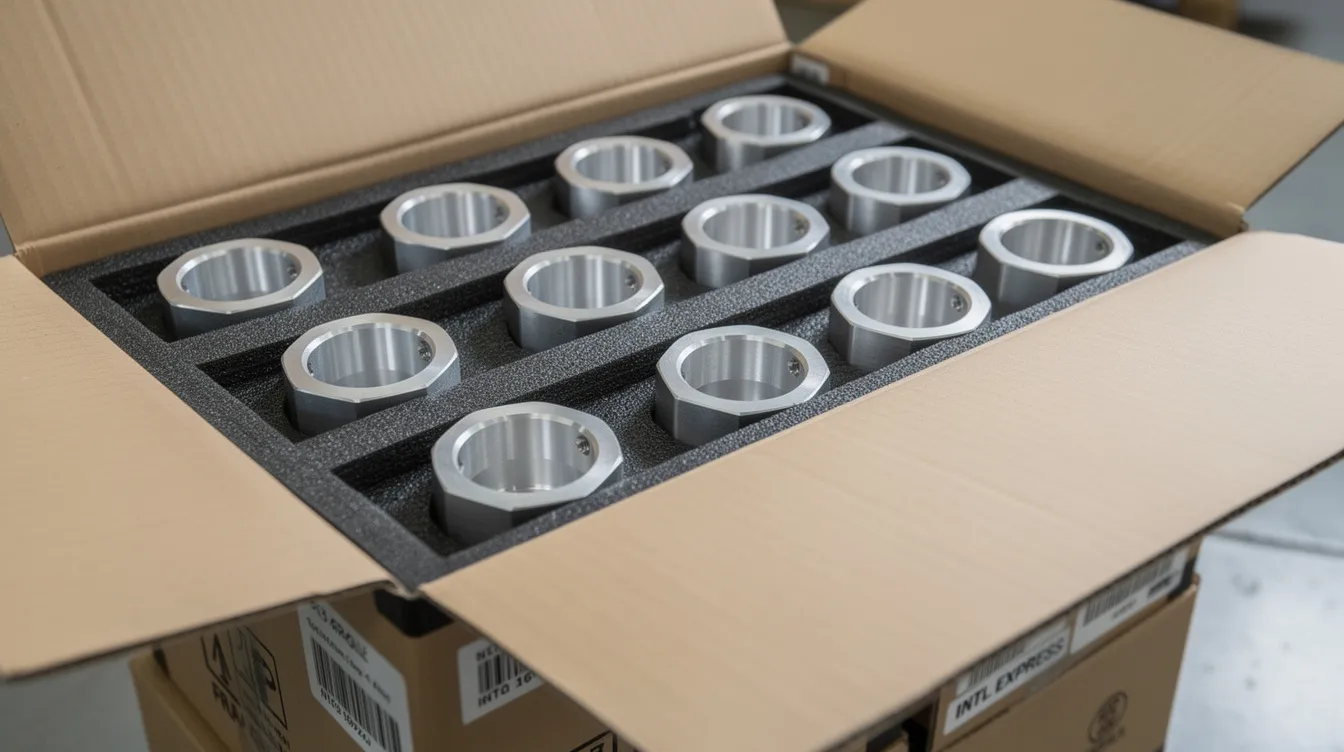
Delivery: Packaging, inspection reports, and global shipment
Typical timelines run 5–15 working days for production depending on complexity and quantity. Communication practices include progress updates, pre-production photos, and inspection reports for first batches.
Repeat small batch CNC orders benefit from existing programs and fixtures, reducing lead time and cost. Anebon holds fixtures and programs for years to support ongoing service-part or aftermarket demand. This is the precision manufacturing approach that keeps small-batch CNC machining service reliable and predictable.
Conclusion: When to Partner with a Small Batch CNC Machining Company
Small batch CNC machining companies are the right partner when you need precision parts in quantities of tens to thousands-not hundreds of thousands. The ideal scenarios include new product introduction, customized variants, annual volumes under ~10,000 pcs, and parts needing tight tolerances or premium materials across automotive industries, medical, aerospace, and beyond.
Choosing the right partner means matching their CNC machining process capabilities, material stock, and quality systems to your specific project requirements. Anebon Metal Products Limited offers overseas OEMs a reliable, high-precision small batch CNC machining service in China with ISO-backed quality, broad material expertise, and a track record spanning 15 years of serving the product development cycle from concept to production.
Ready to get started? Send your CAD files and expected quantities to Anebon for a detailed quote and complimentary manufacturability review. The faster you share your design, the sooner you’ll have quality machined parts on your workbench.