Rapid Prototype China
Rapid Prototype China
Introduction: Why Rapid Prototyping in China Matters in 2025–2026
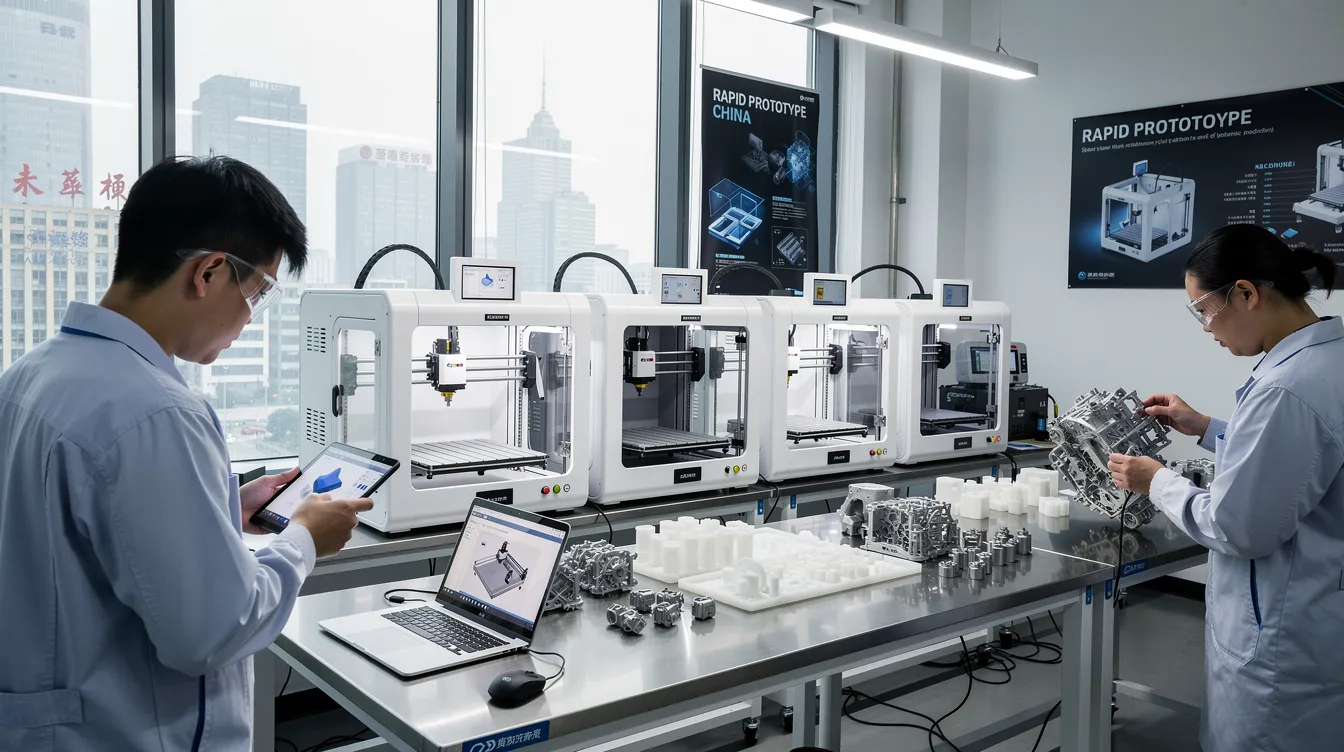
“Rapid prototype China” describes the practice of using Chinese contract manufacturers to produce prototype and small-batch parts with compressed turnaround, often within days rather than weeks. For overseas OEMs, this approach reduces development time by letting engineers iterate designs before committing to mass production tooling. Prototyping in China is 30–70% cheaper than Western alternatives, and lead times for prototypes can be as fast as 1–3 days for simple CNC parts.
Anebon Metal Products Limited, founded in 2010 in Dongguan, operates at the center of this ecosystem. The company specializes in precision machining, die casting, and sheet metal fabrication, offering rapid tooling, rapid injection molding, cnc milling, and low volume manufacturing under one roof.
Key advantages of sourcing rapid prototyping services in China:
-
CNC prototypes delivered in 3–7 working days; rapid injection tooling in 10–18 days
-
Unit costs 30–60% below comparable US and EU shops for similar specs
-
One-stop access to multiple manufacturing processes: CNC, molding, casting, sheet metal
-
Dense supply chains in the Dongguan–Shenzhen–Guangzhou corridor for post-processing and finishing
Why Overseas OEMs Choose Rapid Prototype China
Chinese rapid prototyping companies offer flexible manufacturing solutions rooted in measurable cost and speed advantages. Labor and overhead in the Guangdong manufacturing corridor run 30–60% lower than in North America or Western Europe for comparable CNC and tooling work. Factories in these hubs operate multiple shifts, compressing machine queue times to days.
China’s manufacturing hubs include Shenzhen, Dongguan, and Suzhou, and China has over 700 rapid prototyping manufacturers operating across these regions. Chinese suppliers offer one-stop ecosystems for prototyping and production, which means coating, plating, metrology, and assembly are often located within the same industrial cluster. Rapid prototyping in China is a highly integrated manufacturing process because of this geographic density.
The market includes firms of various scale. Star Rapid serves over 2,400 businesses globally. HLH Prototypes operates a 130,000 square feet facility. Wayken rapid manufacturing offers a turnaround time for prototypes of 3 to 9 days. TiRapid expanded its machining capacity in 2019 with new machines, and NICE Rapid introduced new products in 2022 after a decade of operation. Anebon differentiates itself through in-house precision CNC machining, die casting, and sheet metal under one facility, rather than brokering work to external shops.
Rapid prototyping allows for early design validation and adjustments across all three standard validation phases:
-
Concept validation: low-cost CNC or 3D printed concept models to check fit and form
-
Engineering validation testing (EVT): functional prototypes in production-grade materials; snap-fit tests, load tests
-
Design validation testing (DVT): bridge-tooled or injection-molded parts that replicate final production parts behavior
Express air freight from southern China to North America or Europe takes 3–10 days. Combined with 3–7 day production cycles, total landed time for rapid prototypes often falls between 10 and 17 days.
Anebon at a Glance: Rapid Prototyping Partner in Dongguan, China
Anebon Metal Products Limited is an ISO-certified manufacturer in Huangjiang Town, Dongguan City, Guangdong Province. ISO 9001:2015 certification ensures quality management standards across all operations, and ISO certification ensures adherence to quality standards in manufacturing. The company also holds ISO 14001:2015 for environmental management.
Prototyping in China benefits industries like automotive, robotics, and medical devices, and Anebon serves OEM clients across all three, plus aerospace, consumer electronics, energy industries, and industrial equipment.
Core differentiators:
-
Precision milling and CNC turning, including 5-axis, with tolerances down to ±0.002 mm
-
Die casting, sheet metal, and stamping capabilities from prototype to scalable production
-
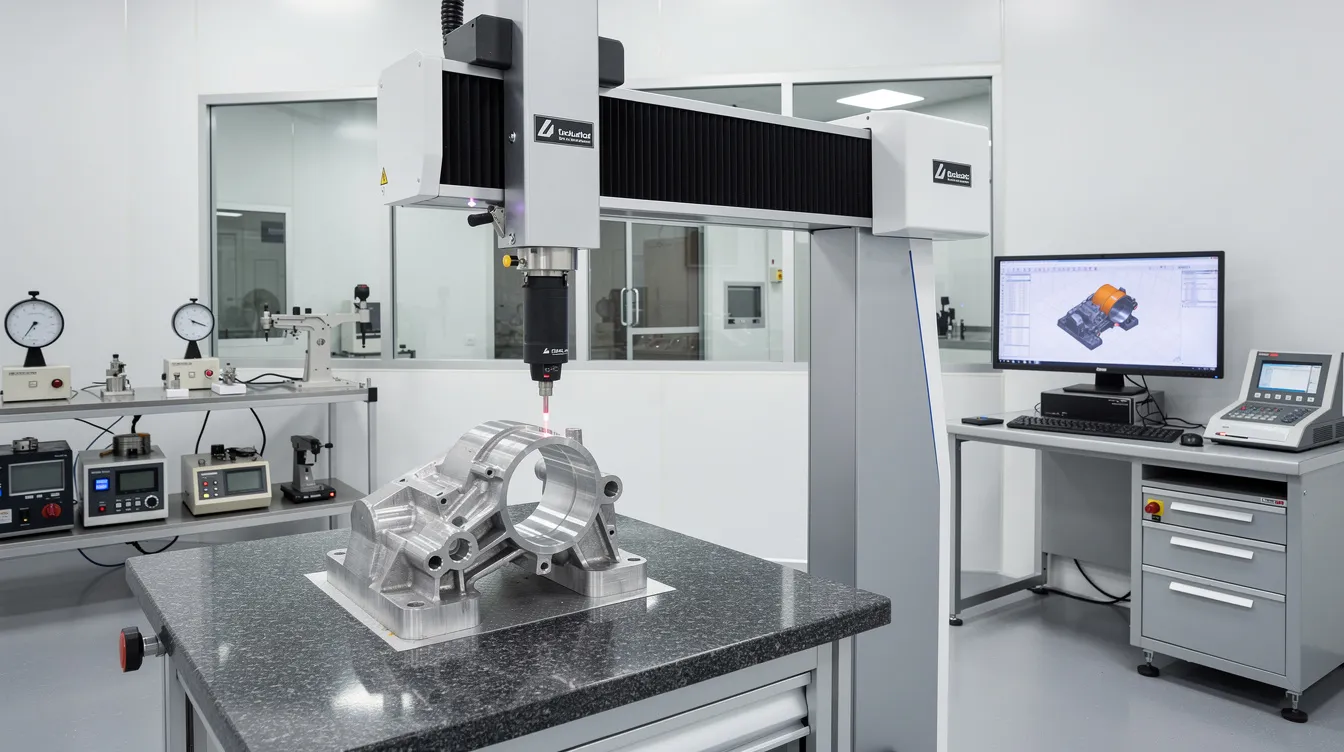
CMM, 3D scanning, and surface profilometry for inspection of high quality parts
-
English-speaking engineers who provide DFM feedback within 24–48 hours
-
Surface finishes down to Ra 0.8 µm for critical mating surfaces, plus anodizing, plating, and bead blasting
-
Materials: aluminum (6061, 7075), stainless steel (316L), brass, copper, titanium, and engineering plastics
Core Rapid Prototyping Services We Offer in China
Anebon’s prototyping services span cnc machining, rapid tooling, rapid injection molding, die casting, and sheet metal fabrication. The rapid prototyping process often includes digital submission and DFM feedback; customers upload 3D CAD files, receive engineering review, approve a quote, and move from prototype to low volume production services using the same equipment and fixtures.
Many rapid prototyping services offer design for manufacturability reviews, and Anebon provides this within 24–48 hours of file receipt. CNC machining services include milling, turning, and drilling, while CNC machining services use aluminum, stainless steel, and plastics depending on the application.
Typical volumes and processes:
-
Prototypes (1–100 pcs): CNC machined metal and plastic parts, 3D printing, or vacuum casting. 3D printing is commonly used for rapid prototyping in China, with 3D printing technologies including SLA, SLS, and SLM/DMLS. 3D printing supports materials like ABS, nylon, and PMMA for plastic prototypes and concept models.
-
Bridge / low volume (100–10,000 pcs): rapid injection molding, rapid tooling, or CNC batch runs for production parts and functional testing
-
Full production (10,000+ pcs): production tooling and high volume production lines
Vacuum casting is used to make silicone molds for low-volume production and is ideal for small batches of plastic parts, such as urethane casting of enclosure covers or grips. Materials for rapid prototyping include engineering-grade plastics like PC, POM, and nylon alongside structural metals. Access to localized engineering plastics and structural metals supports functional testing before design freeze.
CNC Machining & CNC Milling for High-Precision Prototypes
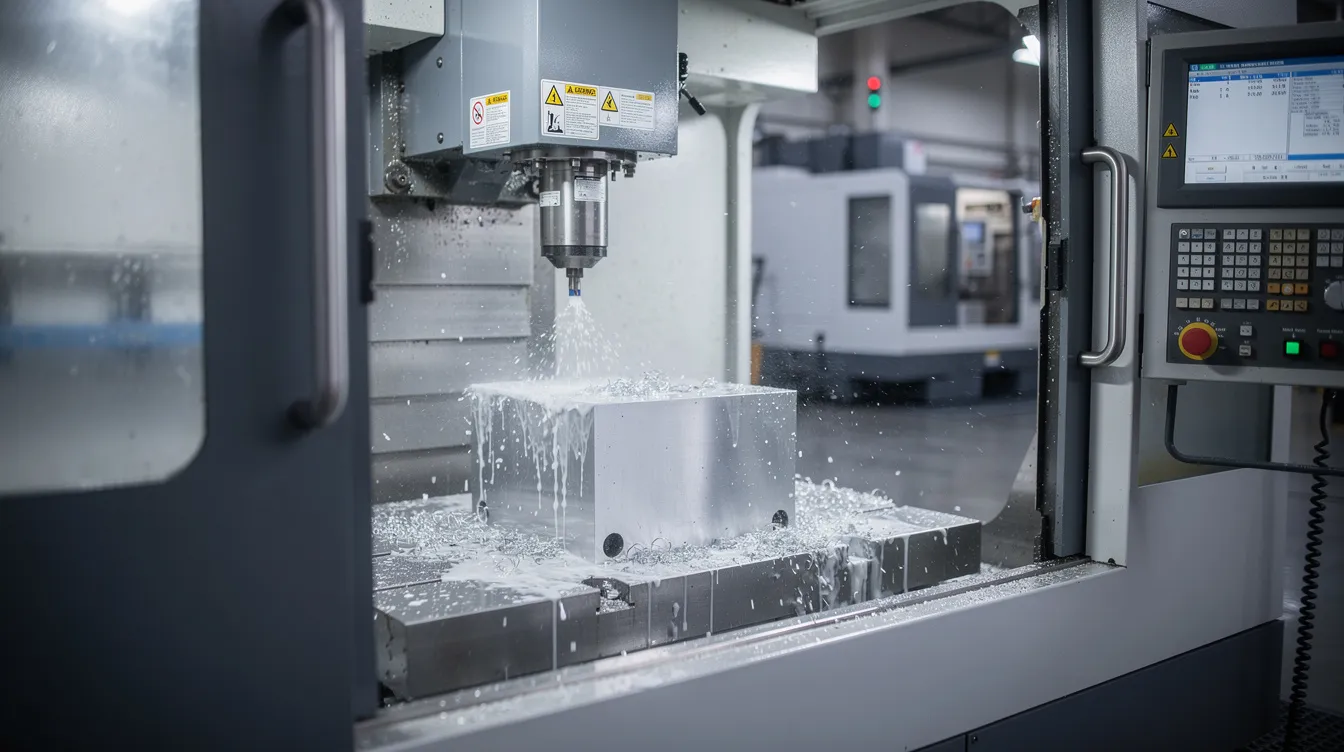
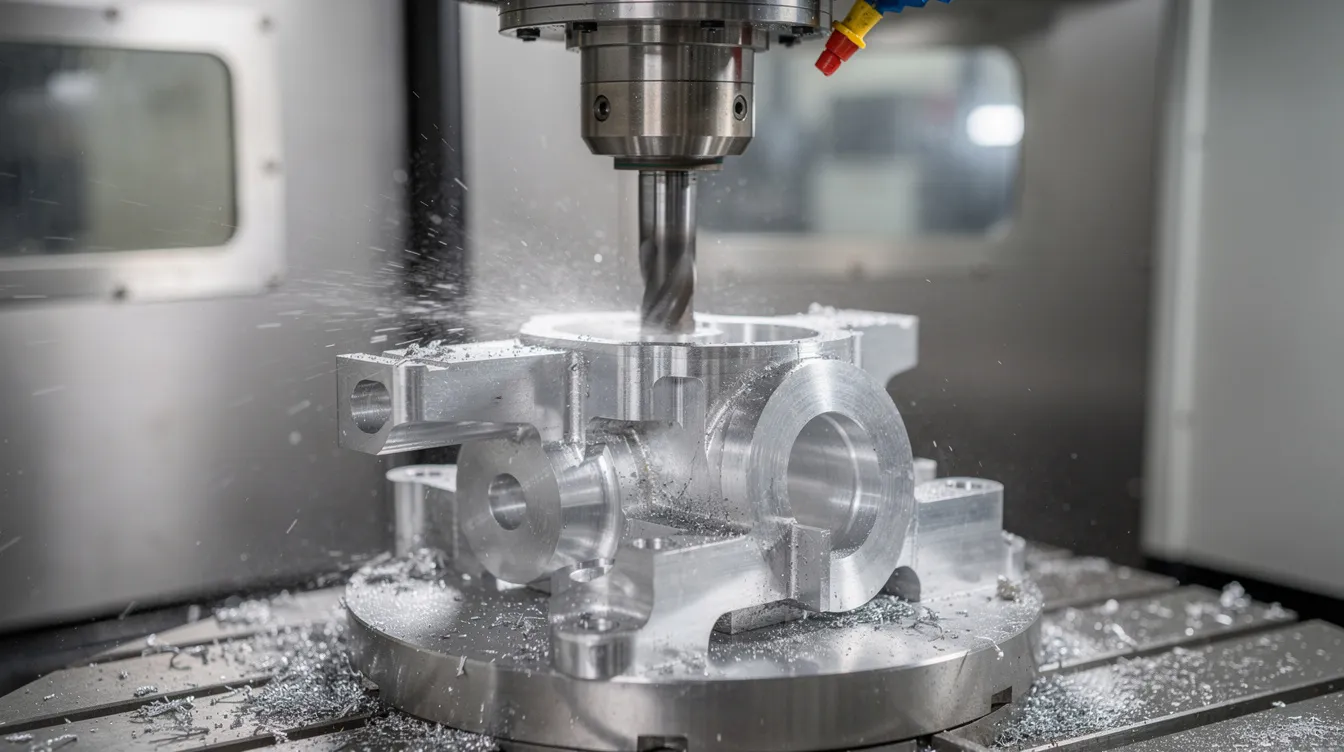
CNC machining is the backbone of most rapid prototype China projects. Anebon operates 3-axis, 4-axis, and 5-axis CNC milling centers alongside CNC turning equipment. 5-axis CNC machining handles complex designs effectively, producing complex shapes like turbine-blade pockets or undercut features in a single setup. Aluminum and stainless steel are common materials for CNC machining, but titanium, brass, and engineering plastics are also processed.
CNC machining tolerances can reach ±0.002 mm on critical features. For general prototype work, standard tolerances sit at ±0.05 mm, and CNC machining tolerances can reach ±0.01 mm in China for precision machining jobs. CNC machining is used for both prototypes and production parts, which means the same fixtures and programs that produce a first article can run a batch of 500 without retooling.
Concrete examples of rapid prototyping CNC machining work:
-
Aluminum 7075 structural brackets for aerospace prototypes requiring Ra 0.8 µm surface finish
-
Stainless steel 316L surgical instrument housings for medical devices with ±0.01 mm tolerance
-
Hardened steel gear shafts for robotics assemblies with corrosion resistance plating
Support processes include tapping, reaming, threading, deburring, and surface finishing options such as anodizing, hard-coat, bead blasting, and plating. These turn raw machined custom metal parts into functional prototypes ready for testing.
When to choose CNC over other prototyping processes:
-
Part quantity is below 100 and injection molding tooling cost is not justified
-
Design is still changing and hard tooling would be scrapped with each revision
-
Material must be production-grade metal rather than printed or cast polymer
-
Tight tolerances of ±0.002 mm are achievable in CNC machining but not in casting or printing
CNC prototypes also serve as design validation checkpoints before committing to plastic injection molding or die casting tooling, reducing the risk of expensive tool rework.
Rapid Tooling & Rapid Injection Molding in China
Rapid tooling refers to fast-build molds designed for short to mid-volume runs. These molds use materials like aluminum, P20 steel, or NAK80 steel instead of fully hardened H13, which cuts machining time and cost. Rapid tooling supports low-volume production before mass manufacturing, giving engineers functional parts in the actual production resin.
Rapid injection molding fills a gap that CNC machined plastic parts cannot: it reproduces injection-specific features like snap fits, living hinges, and thin-wall flow behavior. This makes it the preferred path for functional prototypes of consumer electronics housings, automotive parts clips, medical device enclosures, and overmolded grips.
The link between cnc machining injection molding is direct: CNC-machined steel or aluminum cores and cavities form the mold inserts, cutting tool build time compared to traditional EDM-only approaches.
Key benchmarks for rapid injection molding in China:
-
Simple single-cavity aluminum molds: 10–15 days from design approval to first shots
-
Multi-cavity or slider tools in P20 steel: 18–25 days
-
Shot life: aluminum tools support hundreds to low thousands of parts; P20 tools support tens of thousands
-
Resin options: ABS, PC, POM, PMMA, nylon, glass-filled compounds
-
First-off samples shipped for approval before batch production begins
When to choose rapid injection molding over CNC: when the part design includes features that depend on molded plastic behavior (weld lines, gate location effects, warpage prediction), or when per-piece cost at volumes above 200–500 units drops below CNC unit cost.
Sheet Metal Fabrication & Enclosure Prototyping in China
Sheet metal fabrication covers processes like cutting, bending, and welding. Anebon’s capabilities include laser cutting, CNC punching, press brake bending, TIG/MIG welding, riveting, and hardware insertion.
Surface finishing options for sheet metal include powder coating, plating, brushing, and silk screening. These turn flat stock into finished enclosures ready for functional testing or end-use deployment.
Common rapid prototype China applications for sheet metal:
-
Server and networking chassis for consumer electronics and data center equipment
-
Battery pack enclosures for EV and energy industries applications
-
Industrial machine guards and covers for industrial equipment
-
Control panel housings with hardware cutouts and EMI shielding
Design parameters engineers should specify: minimum bend radius relative to material thickness, K-factor for bend allowance, material thickness (typically 0.5–5 mm in aluminum or stainless steel), tolerance stack-up across multiple bends, and PEM or rivet hardware installation points. For detailed guidance on managing these variables, see Anebon’s guide on sheet metal warping and tolerance challenges.
A typical low volume manufacturing run: 200–500 pieces of powder-coated steel enclosures delivered within 10–14 days after drawing approval. Sheet metal fabrication bridges one-off prototyping and fully automated stamping or extrusion once a design is frozen for high volume production.
Die Casting & Metal Prototypes for Structural Components
Aluminum and zinc die casting serves rapid prototype China requirements for structural and thermal-critical metal and plastic parts. Motor housings, heat sinks, gearbox covers, and automotive parts brackets are common applications. Common metals for prototyping include aluminum and brass, with die casting alloys like ADC12 and A380 offering good fluidity and mechanical strength.
Anebon’s die casting workflow proceeds through five stages: tool design, die casting tooling manufacture, sample casting, CNC post-machining of critical features, and surface treatment (anodizing, painting, or plating).
Typical specifications and advantages:
-
Wall thickness as thin as 1.0–1.5 mm for aluminum castings
-
Achievable tolerances after CNC post-machining: ±0.05 mm on critical interfaces
-
Near-net-shape casting reduces material waste compared to machining from billet
-
Unit cost drops below CNC machining at volumes above 300–500 pieces
-
Combines cast base geometry with 5-axis CNC finishing for appearance-critical or mating surfaces
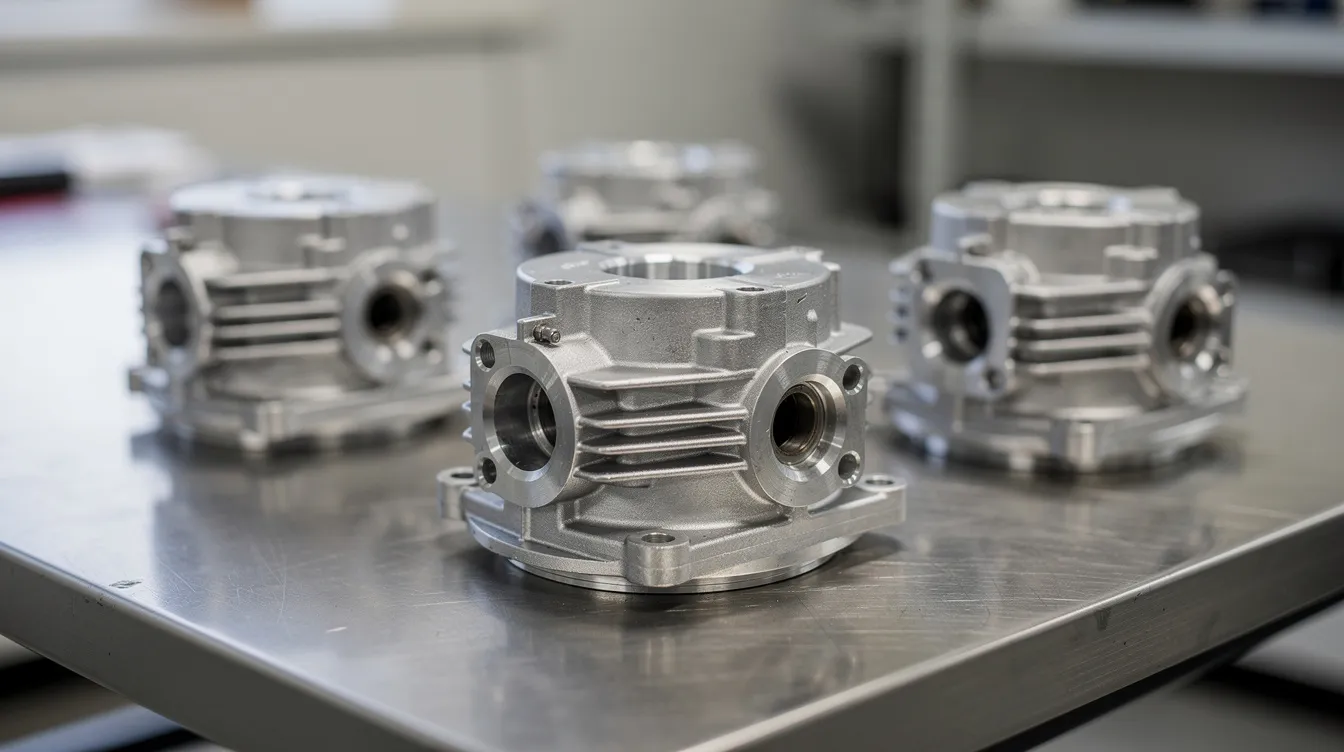
Die casting suits mid-volume runs where thermal conductivity, weight reduction, or complex internal ribbing patterns are needed, and where CNC-from-billet would waste material and machine time.
Low Volume Manufacturing: Bridging Prototype and Mass Production
Low volume manufacturing in the rapid prototype China context covers runs of roughly 50–20,000 pieces. Overseas OEMs rely on it for pilot runs before full-scale tooling, market-test batches, and ongoing service-part supply.
Anebon uses the same CNC machining centers, sheet metal lines, rapid tooling, and die casting cells for both prototypes and low volume production. This ensures consistent quality between prototype approval and the first production batch, because the same fixtures, programs, and inspection routines carry over.
Specific scenarios where low volume production services apply:
-
Pilot runs of medical device enclosures before regulatory submission, where 50–200 pieces are needed for clinical evaluation
-
Pre-launch batches of consumer electronics housings ahead of crowdfunding fulfillment
-
Replacement and service parts for industrial machinery at quantities that do not justify production tooling
-
Prototype development for robotics actuator housings transitioning into rapid manufacturing
Flexible fixturing and modular rapid tooling reduce changeover time, allowing design tweaks between batches without scrapping tools. This is where cost effective solutions emerge: amortizing setup across even a few hundred pieces drops per-unit cost well below one-off prototype pricing.
Questions to answer before choosing a low volume path:
-
Does the part require injection-molded behavior (snap fits, thin walls) or is CNC sufficient?
-
Is the annual volume below 5,000 units, making hard tooling unjustifiable?
-
Are there pending design changes that would invalidate a permanent mold?
-
Does the application need functional parts in production-grade material for certification testing?
Protecting Intellectual Property When Prototyping in China
IP concerns around intellectual property are concrete: design theft, unauthorized tooling copies, or parts sold into parallel markets. These risks exist, and ignoring them is a mistake. Addressing them with specific contractual and operational measures reduces exposure.
Steps buyers should take before issuing an RFQ:
-
Execute mutual NDAs specifying jurisdiction and penalties before sharing 3D files
-
Include clear tooling and design ownership clauses in purchase orders
-
Register patents and trademarks in China (through CNIPA) if the product will be sold or manufactured there
-
Split sensitive IP when possible: keep firmware, key sub-assemblies, or proprietary coatings in-house
Anebon’s operational safeguards include in-house production in Dongguan with no uncontrolled sub-contracting, restricted file access limited to project-assigned engineers, and long-term OEM relationships built over 15+ years of operation. Compliance with ISO 9001 and ISO 14001 documentation standards creates traceable records of material flow, process steps, and personnel access.
Practical monitoring steps:
-
Conduct on-site audits (or use third-party inspection firms) before and during production
-
Require serialized part numbers and traceable tooling IDs
-
Start with a limited-scope pilot project to evaluate a supplier’s trustworthiness before sharing full product assemblies
-
Review sub-contractor lists and approve or deny each one in writing
Getting Accurate Pricing for Rapid Prototyping Services in China
Accurate pricing from prototyping companies in China depends on the completeness of input data. Incomplete files produce padded estimates because the supplier must assume worst-case tolerances and complexity.
Required inputs for a clean quote:
-
3D CAD files in STEP or IGES format
-
2D drawings with dimensioned features, GD&T callouts, material specifications
-
Surface finish requirements (e.g., anodizing type, plating spec, roughness Ra target)
-
Quantities: prototype (1–100 pcs), bridge (100–10,000), or full runs
-
Target lead time: standard or expedited
Key cost drivers that move the price:
-
Material: aluminum 6061 costs a fraction of titanium Ti-6Al-4V; material costs for exotic alloys can double the part price
-
Geometry: multi-axis setups, thin walls, deep pockets, and tight tolerances add machine time
-
Surface finishing: anodizing, plating, or painting adds per-part cost and 1–3 days of lead time
-
Inspection: CMM reports, FAI packages, and material certificates are often quoted as line items
Anebon’s quoting process delivers engineering review within 24–48 hours, including DFM feedback and alternative process suggestions. If a part is quoted for CNC at $120/pc but could run as a rapid injection molded part at $8/pc above 500 units, Anebon’s engineers flag the crossover point. Transparent, line-item quotations help OEMs compare cost vs. tolerance vs. volume trade-offs and reach accurate pricing decisions. Competitive pricing comes from matching the right process to the right volume.
Quality Assurance, Certifications, and Communication for Global Clients
Anebon’s quality assurance framework rests on ISO 9001:2015 and ISO 14001:2015 certifications verified through third-party audits. Quality management procedures cover incoming raw material inspection (mill test reports, chemical assays), in-process dimensional checks, and final inspection with full reports.
Quality control protocols ensure prototypes meet specifications through calibrated inspection equipment:
-
CMM (coordinate measuring machine) for 3D dimensional verification; CMM inspection verifies dimensional accuracy of prototypes to drawing tolerances
-
Surface profilometers for Ra roughness measurement
-
Height gauges, micrometers, and hardness testers for spot checks
-
3D scanning for comparison against CAD models on complex surfaces
Quality inspection is typically performed before global shipping of parts, with pre-shipment reports and photos sent to the customer for approval. Quality inspection reports should include material test results, dimensional data, and any coating or treatment verification (e.g., salt spray hours for anodized finishes). First article inspection (FAI) reports are available on request for production parts.
Communication best practices for working with prototyping services in china:
-
Request a sample inspection report before placing the first order to evaluate the supplier’s quality control depth
-
Define pass/fail inspection criteria in the PO, not after parts arrive
-
Expect progress photos at key milestones (raw stock, mid-machining, finished, packaged)
-
Work with an assigned English-speaking project management engineer rather than a rotating sales contact
Start with a pilot order of 5–10 pieces. Evaluate dimensional accuracy, surface finish, packaging, and communication speed before scaling to small batch CNC machining or production runs.
How to Start a Rapid Prototype Project With Anebon
Getting a project started follows a clear sequence:
-
RFQ submission: Send STEP/STP/IGES 3D files plus 2D PDF drawings with tolerances, material specs, finishing requirements, target quantities, and deadlines.
-
DFM review: Anebon’s engineers review files and return manufacturability feedback within 24–48 hours, flagging potential issues and recommending process options (CNC, rapid injection molding, die casting, or sheet metal fabrication).
-
Quotation and confirmation: Receive a line-item quote with accurate pricing, lead time, and process details. Approve to proceed.
-
Prototype production: Parts are manufactured, inspected, and photographed. FAI or dimensional reports are issued.
-
Shipment: Parts ship via express air freight (3–5 day transit to North America/Europe) or sea freight for non-urgent global logistics.
-
Transition to volume: If prototypes pass functional testing, the same tooling, fixtures, and programs scale into low volume manufacturing or mass production.
For urgent projects, expedited CNC machining can deliver critical samples within a few days. Standard scheduling offers more cost effective solutions for less time-sensitive prototype development.
Share your design intent with Anebon’s team: function, load cases, testing plans, and end-use environment. This lets engineers recommend the right process and material. A bracket that only needs fit-check is different from one that must survive 10,000 thermal cycles.
China’s rapid prototyping industry includes hundreds of firms, from platform brokers to direct manufacturers. Anebon operates as a direct manufacturer with advanced equipment and advanced technology deployed across CNC, casting, and fabrication. Among prototyping companies in china, Anebon combines broad range process coverage, cutting edge technology in 5-axis machining, and 15 years of B2B OEM experience under one roof in Dongguan.
As a global leader in cost effective rapid prototyping, Anebon delivers high quality prototypes and functional parts from a single, certified facility. Cutting edge technologies in additive manufacturing, cnc machining, and rapid manufacturing make Anebon a strong choice for your next project.
Ready to start? Contact Anebon with your files for a free DFM review and quote on your next rapid prototype China project.