Precision Machining: Enhancing Quality and Efficiency in Manufacturing
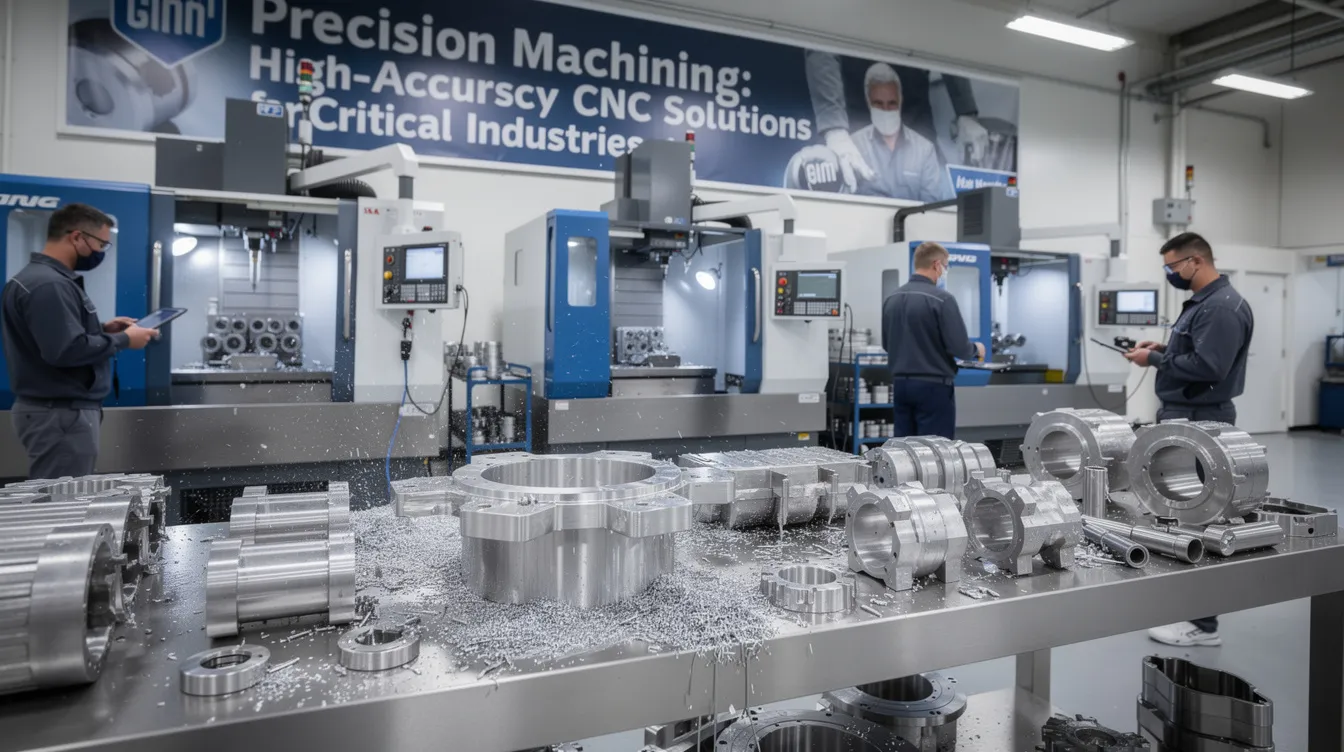
Precision Machining: High-Accuracy CNC Solutions for Critical Industries
Introduction to Precision Machining
Precision machining is a fundamental pillar for modern manufacturing, enabling OEMs across aerospace, medical, automotive, and robotics sectors to produce parts that meet exact specifications under demanding operating conditions. At Anebon Metal Products Limited, we’ve spent over fifteen years helping overseas OEMs turn complex designs into finished components with tolerances as tight as ±0.002 mm-the kind of dimensional accuracy that separates a reliable product from a field failure.
The process involves removing material from a workpiece to achieve dimensions, surface finishes, and geometric relationships that generic fabrication methods simply cannot match. Whether the part is a turbine housing for a jet engine, an orthopedic implant contacting living bone, or a sensor bracket inside an EV battery module, precision machining is what ensures fit, function, and safety. Precision machining achieves tolerances as tight as ±0.0001 inches, placing it at the core of critical industries where “close enough” is never acceptable.
As an ISO 9001:2015 and ISO 14001:2015 certified manufacturer based in Dongguan, Guangdong, China, Anebon focuses exclusively on B2B production for overseas OEM clients-not hobbyist or small-scale domestic work. Our machine shop combines cnc machining, EDM, grinding, and secondary processing under one roof, giving design engineers a single partner from rapid prototyping through full-scale production.
What Is Precision Machining?
Precision machining is a subtractive manufacturing process that removes material from metal or plastic blanks to reach exact dimensions, tight tolerances, and specified surface finishes. Where standard machining might accept tolerances of ±0.05–0.1 mm for non-critical features, high precision machining pushes into the ±0.01–0.005 mm range, and ultra-precision work targets ±0.002 mm or better for mission-critical interfaces like sealing faces and bearing seats.
What makes precision cnc machining different from general metalwork is not just tighter numbers on a drawing. It requires advanced cnc technology, high-rigidity machine tools, optimized cutting tools, stable workholding, and environmental controls that limit thermal drift. Every element of the manufacturing process-from raw material selection to final inspection-must be controlled to keep parts within specification across entire production runs.
A quick note on terminology that matters to design engineers:
-
Accuracy describes how close a measured value is to the nominal target
-
Repeatability describes how consistently a machine hits the same value under identical conditions
-
Precision encompasses both-low variability and low bias
High repeatability ensures every part is identical with negligible deviations, while high accuracy means those identical parts are also on-target. Successful precision machining demands both. The result: precision machining enhances product quality with superior surface finishes, reduces production costs by lowering material waste, and enables complex parts that would be impossible with manual machining methods. CNC precision machining automates part production at high speeds, and cnc precision machining increases production speed compared to manual methods significantly.
How Precision CNC Machining Works
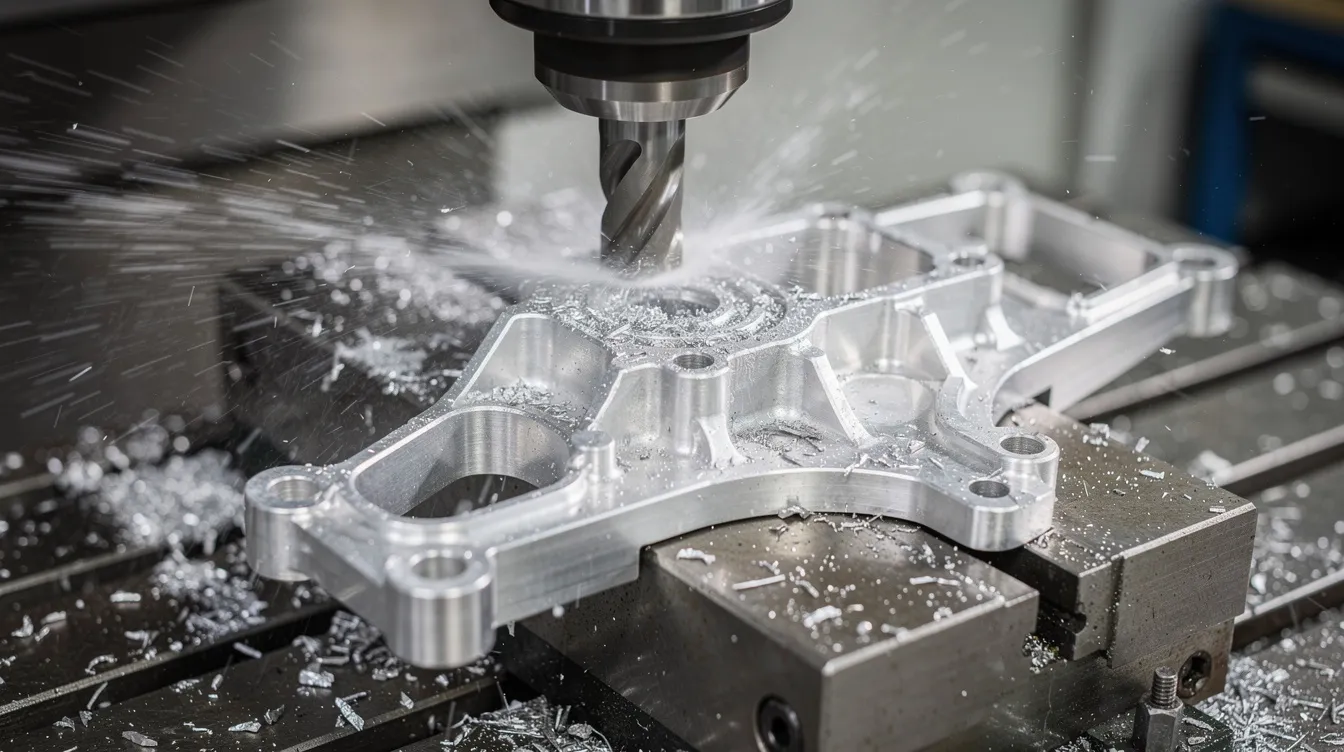
Here’s what a typical precision cnc machining workflow looks like from an OEM’s perspective, using a custom aluminum medical enclosure as an example.
1. CAD model submission and DFM review. The customer supplies a cad model (typically STEP or IGES) along with 2D drawings that define tolerances, surface finishes, and GD&T callouts. Using computer aided design cad and computer aided manufacturing cam tools, Anebon’s engineering team reviews the design for machinability and provides DFM feedback-flagging features that may drive unnecessary cost, suggesting alternative geometries, or recommending material substitutions.
2. CAM programming. Once the design is finalized, a precision machinist programs toolpaths using cam software. This stage determines which axis cnc configuration is needed-3-axis for simple prismatic parts, 5-axis for complex contoured surfaces-and selects machine parameters such as spindle speed, feed rate, and depth of cut. Computer aided manufacturing drives the entire process from cad software to machine code.
3. Machine setup. The team selects the right CNC machine, workholding strategy, and precision machining tools. In-process probing or touch-off routines establish part datums before cutting begins. CNC equipment can be expensive and requires skilled operators, but the investment pays back in consistency and speed.
4. Machining cycle. The part goes through CNC milling, cnc turning, drilling (sometimes on drill presses integrated within machining centers), and-where hardened materials or intricate geometries demand it-electrical discharge machining. Integration of automation is transforming traditional machining processes, with robotic loading and AI-driven adaptive controls becoming more common. AI and machine learning are optimizing CNC machining capabilities by adjusting feeds and speeds in real time. In-process measurement systems are enhancing real-time accuracy, catching deviations before they become scrap.
5. Inspection and shipping. Final parts are verified on coordinate measuring machines and optical systems, with SPC data collected where required. Anebon packages documented inspection reports alongside parts for international OEM shipments.
Core Precision Machining Processes and Technologies
Modern precision machine shops rely on a carefully orchestrated mix of precision machining processes-cnc machining, EDM, precision grinding, and secondary operations-to hit both geometry and tolerance targets. Emerging trends include additive manufacturing and hybrid machining, where subtractive and additive steps are combined in a single machine setup. But for most precision machined parts today, the core processes below remain the workhorses.
CNC Milling and 5-Axis CNC Machining
CNC milling uses rotary cutters to remove material from a workpiece, making it ideal for prismatic and contoured components with pockets, slots, and complex surfaces. Milling machines range from simple 3-axis setups to advanced 5-axis configurations that can reach compound angles and undercuts in a single clamping.
Multi-axis CNC machining allows cutting tools to move in four or more directions, which directly reduces the number of setups. Fewer setups mean less tolerance stack-up, better surface continuity on blended surfaces, and shorter lead times for intricate parts. When to specify 5-axis: aerospace impellers, medical implants with organic contours, and complex housings where repositioning would compromise dimensional accuracy.
Typical achievable tolerances on milling machines: ±0.01 mm for general features, ±0.005 mm or tighter for datumed interfaces. Surface finishes of Ra 1.6 µm are routine; Ra 0.8 µm or better is achievable with finish passes. Anebon’s multi-axis cnc technology supports both rapid prototyping and production runs, helping OEMs produce parts in low-to-mid volumes without sacrificing high precision.
CNC Turning and Mill-Turn Centers
CNC turning rotates the workpiece while a cutting tool removes material, making it the natural choice for shafts, bushings, fittings, and other rotationally symmetric components. Modern CNC turning and milling centers combine rotational and prismatic machining in a single clamp, eliminating the re-fixturing that introduces error.
Typical turned parts span the aerospace industry (valve bodies, hydraulic fittings), medical devices (surgical handles, fluid connectors), and even high speed robotics (joint pins, precision shafts). Benefits include tight concentricity control, high accuracy on diameters, and the ability to complete multiple features-bores, threads, cross-holes-without removing the part.
Swiss machining is appropriate for very small-diameter, long-aspect-ratio parts like miniature pins and contact probes. Anebon offers swiss machining selectively based on part geometry and volume requirements.
Electrical Discharge Machining (EDM) and Other Specialty Processes
Electrical Discharge Machining shapes metals using electrical discharges rather than mechanical cutting, making it indispensable for hardened steels, deep narrow slots, fine ribs, and sharp internal corners that conventional cutting tools cannot reach. Techniques like Wire EDM eliminate mechanical stress on components, preserving material integrity in heat-treated or hardened workpieces.
Common EDM applications for Anebon customers include precision mold inserts, fine features in aerospace tooling, and internal geometries in medical device components. EDM and grinding often follow cnc machining as secondary steps to meet extremely tight tolerance or surface finish specs in critical industries.
Precision grinders create smooth finishes on machined parts, and high precision grinding can achieve surface finishes of 4–8 microinches (Ra ~0.1–0.2 µm). Honing and lapping are used when mirror-finish or sub-micron flatness is required-for example, on sealing faces in hydraulic manifolds.
Materials for High Precision Machining
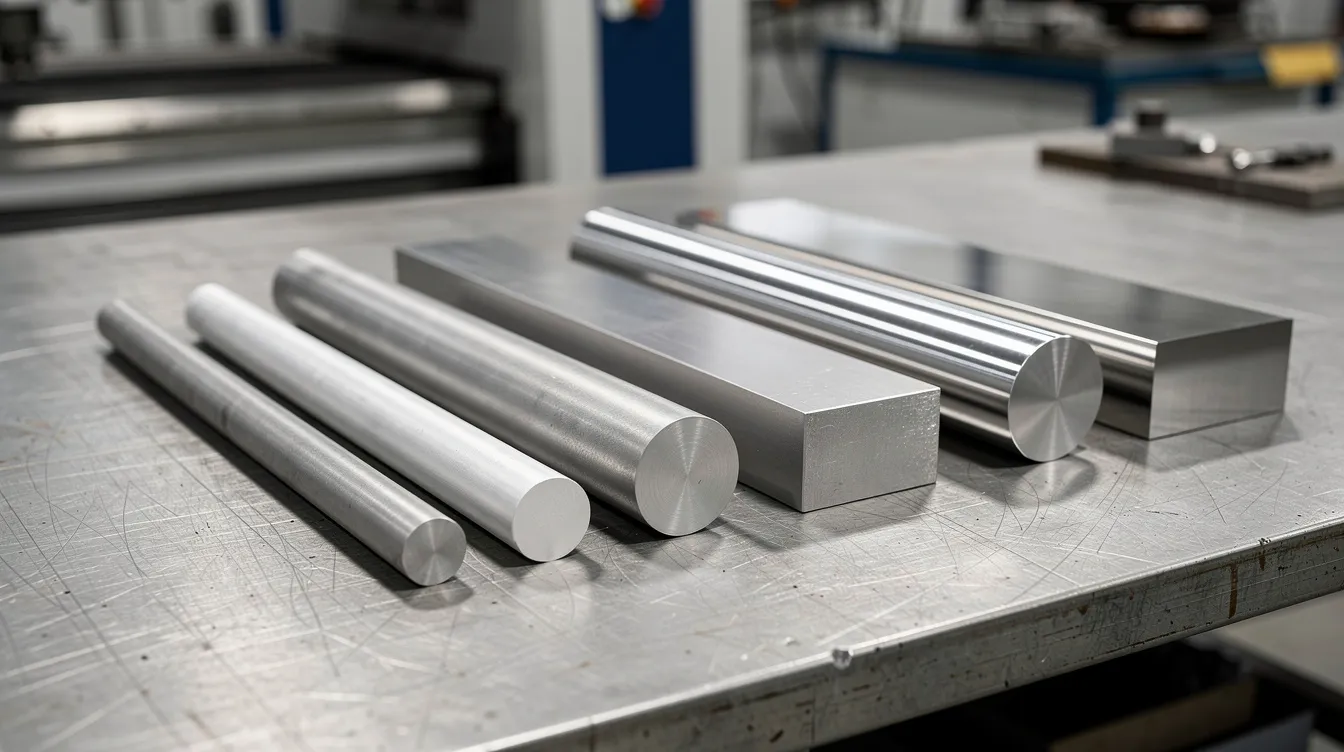
Material choice directly impacts machinability, achievable tolerances, lead times, and total cost for high precision cnc machining. Common materials include metals, plastics, and composites, and the materials involved in a project should be locked down early in the design process. Material selection impacts machinability and part quality significantly-choosing the wrong alloy can double cycle time or make a tolerance target unreachable.
Here’s how the most common materials compare:
|
Material |
Machinability |
Typical Tolerance |
Key Consideration |
|---|---|---|---|
|
Aluminum 6061/7075 |
Excellent |
±0.005 mm achievable |
High thermal expansion |
|
Stainless 304/316 |
Moderate |
±0.01 mm routine |
Work-hardening tendency |
|
Titanium Ti-6Al-4V |
Difficult |
±0.005–0.008 mm |
Low thermal conductivity |
|
PEEK / Ultem |
Good |
±0.05 mm typical |
Moisture absorption, creep |
|
Inconel 718 |
Very difficult |
±0.008–0.01 mm |
Extreme tool wear |
Aluminum is preferred for its high machinability and light weight, making it the go-to for custom milled parts in electronics and aerospace. Precision machining often uses high-strength alloys for durability in demanding environments. Titanium is difficult to machine due to heat generation, while stainless steel is tougher to machine due to work-hardening. Anebon guides material selection through DFM feedback based on the customer’s performance needs-corrosion resistance, weight targets, biocompatibility, or thermal stability.
Material Properties and Tolerance Considerations
Properties like hardness, thermal expansion, and rigidity determine what tolerances are realistic and how stable a finished product remains in service. Thermal growth can shift dimensions during long production runs-even a 2–3 °C temperature swing in the shop can push a 200 mm aluminum part out of a ±0.005 mm band.
Concrete examples:
-
Titanium and Inconel for high-temperature aerospace components where strength-to-weight ratio is non-negotiable
-
Stainless steel for medical and food-contact parts where corrosion resistance matters
-
Aluminum for lightweight structures in electronics and automotive
Polymers can be machined to tight tolerances, but designers must account for creep, moisture absorption, and temperature sensitivity-factors explored in detail in our POM vs PEEK material selection guide. Anebon routinely works with tolerances in the ±0.01–0.002 mm range on metals, while plastic parts may require slightly looser yet still high precision tolerance bands. Share operating environment details early so tolerances and materials can be specified realistically.
Precision Machining in Critical Industries
Precision machining is essential in aerospace, automotive, and medical industries-sectors where small dimensional errors can cause catastrophic failures, patient harm, or regulatory rejection. The unique demands of each sector require different combinations of materials, tolerances, and documentation.
Anebon’s quality systems, traceability practices, and process controls are built to support these critical industries from prototype through production.
Aerospace and Defense Applications
Precision machining is essential in the aerospace industry because components operate under extreme temperatures, pressures, and vibration loads where even microns of deviation can compromise safety. Precision machining is used in aerospace for specialized components including structural brackets, manifolds, connector bodies, and precision fasteners.
Typical requirements: tolerances of ±0.005–0.010 mm, surface finishes of Ra 0.4–0.8 µm for sealing and aerodynamic surfaces, and materials like aluminum 7075, titanium alloys, and nickel superalloys. Five-axis CNC machining and EDM enable the complex geometries these parts demand. The defense industry relies on precision machining for rugged materials that must survive harsh field conditions.
Anebon provides full documentation packs-material certifications, dimensional inspection reports, and traceability records-for aerospace-industry customers who require them.
Medical Devices and Life Sciences
Medical devices require precision machining for intricate components where geometry directly affects patient outcomes. Precision machining is used in medical devices for surgical instruments, orthopedic trial components, imaging device housings, and fluid connectors. Medical applications demand not just dimensional accuracy but also surface quality-smooth finishes with no burrs or sharp edges that could compromise biocompatibility.
Materials include stainless steels, titanium, and biocompatible plastics like PEEK and Ultem, generally machined to ±0.005 mm or better with fine surface finishes. Cleanliness, traceability, and consistent geometry are essential for regulatory compliance, and Anebon’s documented processes support these requirements at every step.
Automotive, EV, Robotics, and Electronics
Precision machining is used in automotive for precise parts including battery housings, motor end plates, sensor brackets, and drivetrain components. Automotive industries use precision machining for engine parts and components that must withstand sustained mechanical and thermal loads-a topic covered in depth in our automotive precision machining overview.
In robotics and industrial automation-including high speed robotics applications-precision machining produces joint components, precision shafts, end-effectors, and custom brackets requiring coaxiality and tight fits. Precision machining is used in electronics for connectors and components like heat sinks, enclosures, connector shells, and RF housings where consistent tolerances affect EMI shielding and thermal performance.
Anebon’s high precision cnc machining capabilities in both cnc turning and milling support rapid prototyping and scalable production for these fast-moving sectors.
Designing for High Precision CNC Machining
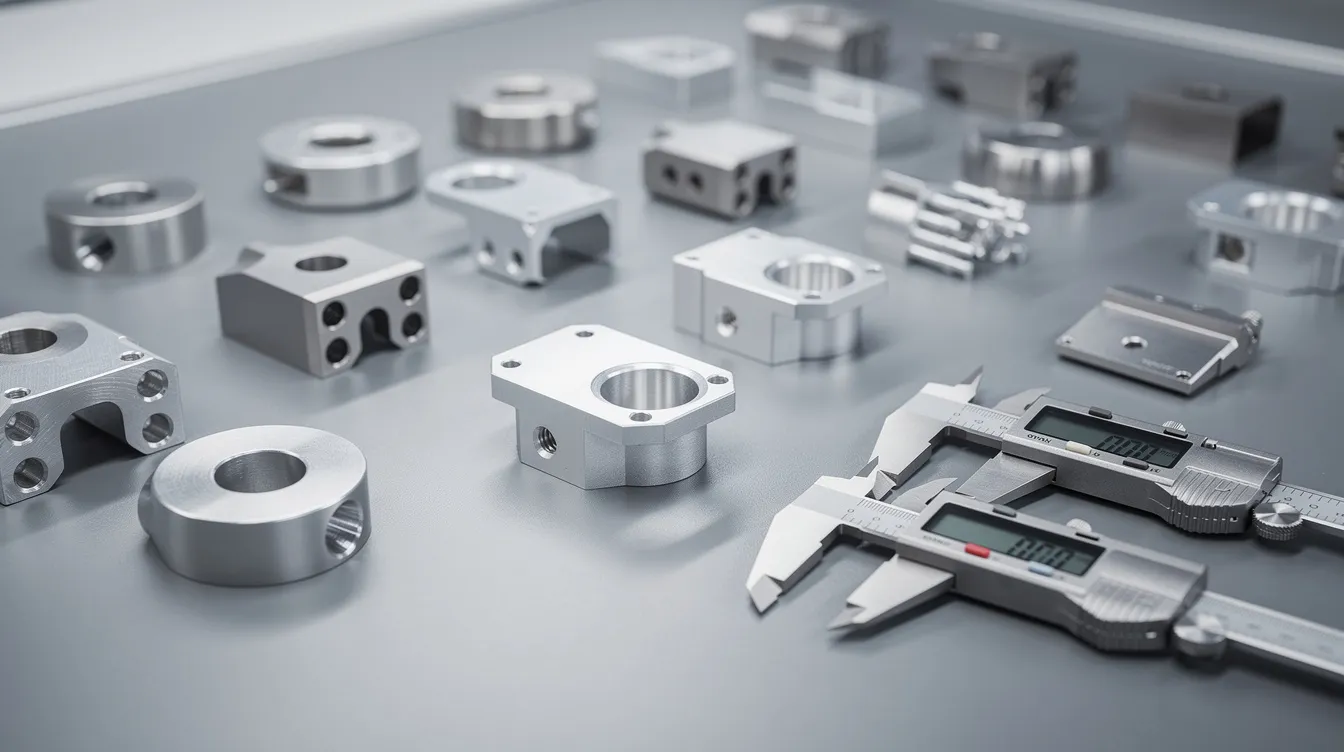
Good design decisions made early save significant cost and lead time downstream. Precision machining is utilized for creating prototypes across various industries, and DFM principles applied at the prototype stage prevent expensive redesigns later. Sustainability efforts are minimizing environmental impacts in machining, and designing parts that minimize material waste contributes directly to that goal.
Key DFM principles for cnc precision machining:
-
Assign very tight tolerances only where function demands-sealing surfaces, bearing fits, locator datums
-
Simplify geometries to reduce setups; features accessible from fewer orientations favor 3-axis over 5-axis, lowering cost
-
Maintain wall thicknesses above 0.8 mm for metals and 1.5 mm for plastics to avoid deflection
-
Define clear datum schemes using GD&T rather than over-dimensioning every feature
-
Specify realistic surface finishes based on actual function, not aspiration
Anebon provides early-stage DFM feedback, including suggestions like switching to die casting with CNC finish machining for high-volume parts, or consolidating features to reduce the number of operations. A machinist’s skills combined with computer numerical control and computer aided design produce the best outcomes when the design itself is optimized for the machining process.
Tolerances, Surface Finish, and Inspection Planning
The relationship between tolerance level, machining time, and cost is nonlinear. Moving from ±0.05 mm to ±0.01 mm might add 20–30% to cycle time. Going from ±0.01 mm to ±0.002 mm can double or triple it-plus inspection time and scrap risk increase. Precision machining tolerances can be as tight as ±0.0001 inches for the most demanding features, but specifying that everywhere on a part is a fast way to blow a budget.
Surface finish follows a similar curve. According to industry data, moving from Ra 3.2 µm to 1.6 µm often doubles finishing cost; going to Ra 0.8 µm or below multiplies it further. Surface roughness values are typically expressed in Ra (arithmetic average roughness) and should match the functional requirement:
|
Ra Value |
Typical Application |
Process |
|---|---|---|
|
3.2 µm |
General as-machined |
Standard milling/turning |
|
1.6 µm |
Mating surfaces |
Fine finish passes |
|
0.8 µm |
Sealing faces |
Precision milling + grinding |
|
0.4 µm or below |
Optical/critical seals |
Grinding + polishing/lapping |
For high precision parts, inspection planning should happen before machining begins. Coordinate measuring machines, optical measurement systems, and in-process probing are selected based on feature geometry and tolerance band. Anebon provides full inspection reports on request and aligns inspection strategies with customer quality plans. A high degree of planning at this stage prevents costly surprises at receiving inspection.
Why Work with Anebon for Precision Machining?
Anebon Metal Products Limited brings together the equipment needed, the engineering depth, and the quality infrastructure that most precision machining companies lack under one roof. Since 2010, we’ve focused on overseas OEMs who need non-standard custom precision parts with the documentation and consistency that critical industries demand.
Here’s what sets Anebon apart from other precision machining companies work:
-
Certifications: ISO 9001:2015 for quality management; ISO 14001:2015 for environmental responsibility
-
Processes: CNC milling, cnc turning, 5-axis machining, die casting, sheet metal fabrication, and secondary processing (anodizing, plating, painting, heat treatment)
-
Tolerances: As precise as ±0.002 mm using precision machining equipment including surface grinders, cylindrical grinders, and wire/sinker EDM
-
Materials: Aluminum, stainless steels, titanium, copper alloys, and engineering plastics
-
Service range: Rapid prototyping through full annual production programs
-
Support: English-language engineering collaboration, DFM feedback, and quality documentation tailored for international OEM standards
Precision machining can produce complex shapes with high repeatability-and that capability, backed by various precision machining tools and rigorous machine tool calibration, is what lets Anebon produce parts with the consistency OEMs require. Using advanced cnc technology and precise machining practices, we create parts that meet the most demanding specifications.
Quality Assurance and Environmental Responsibility
Anebon’s quality management covers incoming material inspection, in-process checks, final CMM verification, and full traceability of critical parts. Calibrated measuring equipment and documented procedures aligned with ISO 9001:2015 ensure repeatable dimensional accuracy across every batch. Each step is generally performed according to control plans developed using APQP methodology, with SPC and CPK data available for critical dimensions.
ISO 14001:2015 certification reflects responsible management of coolants, waste handling, and energy-conscious planning in CNC operations. For overseas OEMs building sustainable supply chains, this matters-our quality and environmental practices are audited regularly and support long-term, stable supply relationships. Producing high quality parts and creating parts responsibly are not competing goals; they reinforce each other.
Getting Started: From RFQ to High-Precision Parts
Starting a project with Anebon is straightforward. Submit an RFQ with:
-
2D drawings with dimensions, tolerances, and GD&T callouts
-
3D CAD models (STEP, IGES, or SolidWorks format)
-
Expected annual usage and batch sizes
-
Material preferences and any special certifications required
Anebon’s engineering team responds with a DFM review, a quote with lead time, and any suggested design changes for cost or manufacturability. Typical prototype lead times range from 5–10 working days for simple 3-axis parts; complex components requiring 5-axis machining, EDM, or very tight tolerances may take 10–15 days. Production orders follow schedules agreed during quoting.
Whether you’re developing a first prototype or scaling to annual production volumes, Anebon is built to serve as your long-term precision machining partner for high precision, high accuracy machined parts across other industries and sectors. We help you produce parts that meet the standard machining and precision requirements your complex components demand-delivering smooth finishes, precise parts, and the confidence that every engine part, surgical instrument, or robotic component arriving at your dock is ready for assembly.
Ready to get started? Send your drawings or CAD files to request a quote and receive DFM feedback from Anebon’s engineering team.