Metal Pressing Service for Custom Sheet Metal & OEM Parts
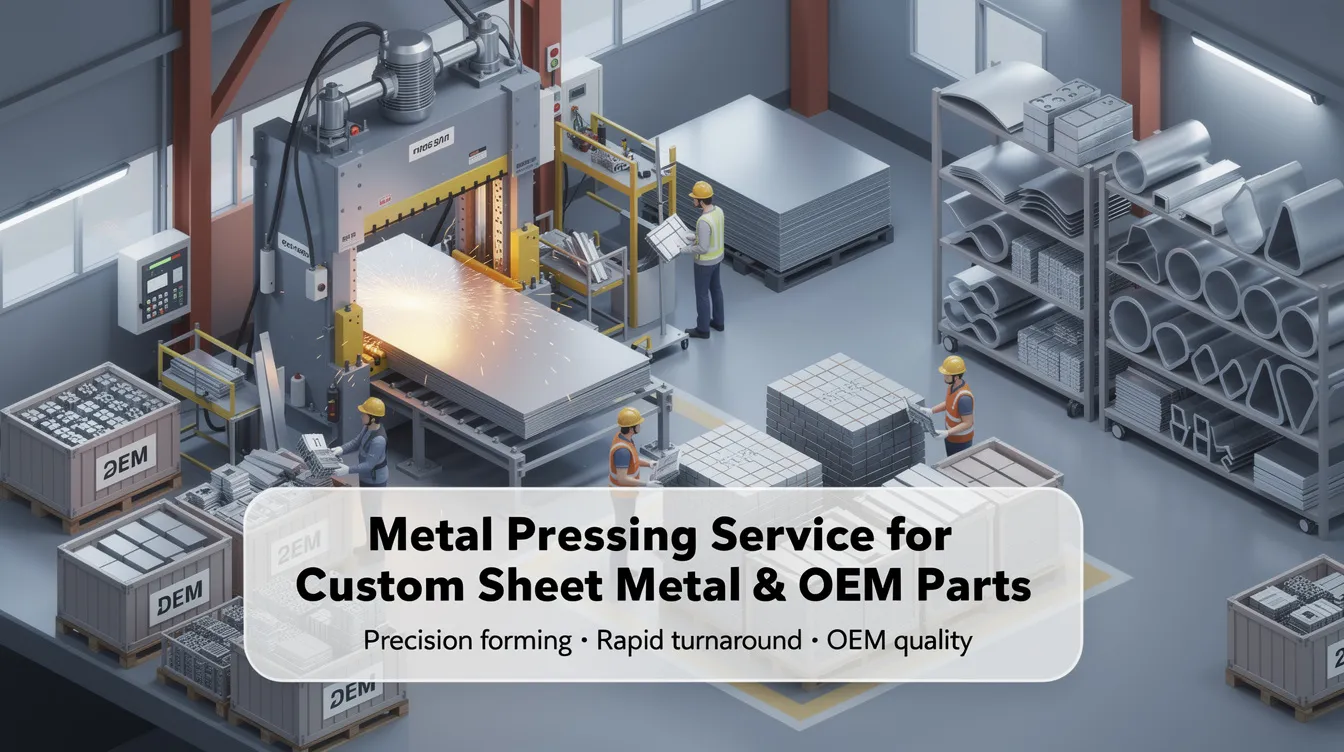
Metal Pressing Service for Custom Sheet Metal & OEM Parts
Fast, Precision Metal Pressing Services
Anebon Metal Products Limited is a China-based OEM partner delivering metal pressing, custom sheet metal fabrication, and custom metal fabrication services from its facility in Dongguan, Guangdong since 2010. If you need consistent, production-ready metal parts at competitive pricing, here is what you should know about working with a dedicated metal pressing service.
A metal pressing service-also known as metal stamping or press working-covers the high volume production and medium-volume production of pressed and stamped sheet metal components using mechanical and hydraulic presses. Press machines apply massive downward force using a punch and die setup, and extreme mechanical or hydraulic force is applied to transform raw sheet metal into finished forms. Metal pressing supports integrated secondary operations like welding and powder coating, which means parts delivered from a single supplier can arrive assembly-ready.
Typical applications include brackets, housings, enclosures, automotive clips, electrical busbars, appliance panels, and structural components for industrial machinery. Anebon combines metal pressing with laser cutting, CNC machining, and secondary operations-such as hardware insertion, silk screening, and welding-to deliver finished custom sheet metal parts under one roof.
For OEMs, the core benefits are clear: cost effective production at scale, repeatability across production volumes, tight tolerances on critical features, and certifications including ISO 9001:2015 and ISO 14001:2015. Anebon’s export experience covers North American and EU markets, with documentation and quality reporting aligned to exact specifications.
What Is Metal Pressing and How It Fits in the Fabrication Process
Metal pressing is a manufacturing process where dies and high-tonnage presses form, cut, and pierce sheet metal, strip, or coil into consistent metal parts. Key operations in metal pressing include blanking, bending, drawing, and embossing. The process is a subtractive manufacturing process at the blanking stage and a forming process during bending and drawing.
In the overall sheet metal fabrication process, pressing integrates as follows: coil feeding → straightening → blanking or strip feeding → forming, punching, piercing → trimming → final inspection. Sheet metal can be quickly cut into 2D profile shapes for prototyping before committing to hard tooling.
When to choose each process:
|
Process |
Best For |
Volume Sweet Spot |
|---|---|---|
|
Metal pressing |
Repeatable specific shapes, fast cycle times |
Medium to high volume |
|
Laser cutting |
Flexible geometry, no tooling cost |
Prototypes, low to medium volume |
|
CNC machining |
Complex 3D features, ultra-tight tolerances |
Prototypes, secondary features |
Sheet metal thickness typically ranges from 0.024 to 0.250 inches (roughly 0.6 mm to 6 mm). Common sheet metal materials include aluminum, copper, steel, and stainless steel, plus brass for electrical or decorative uses. Anebon supports both stand-alone pressed metal components and pressed parts that feed into welded, riveted, or bolted assemblies.
Our Metal Pressing Capabilities & Equipment
This section covers concrete capabilities and equipment so engineers can match Anebon to their project requirements.
-
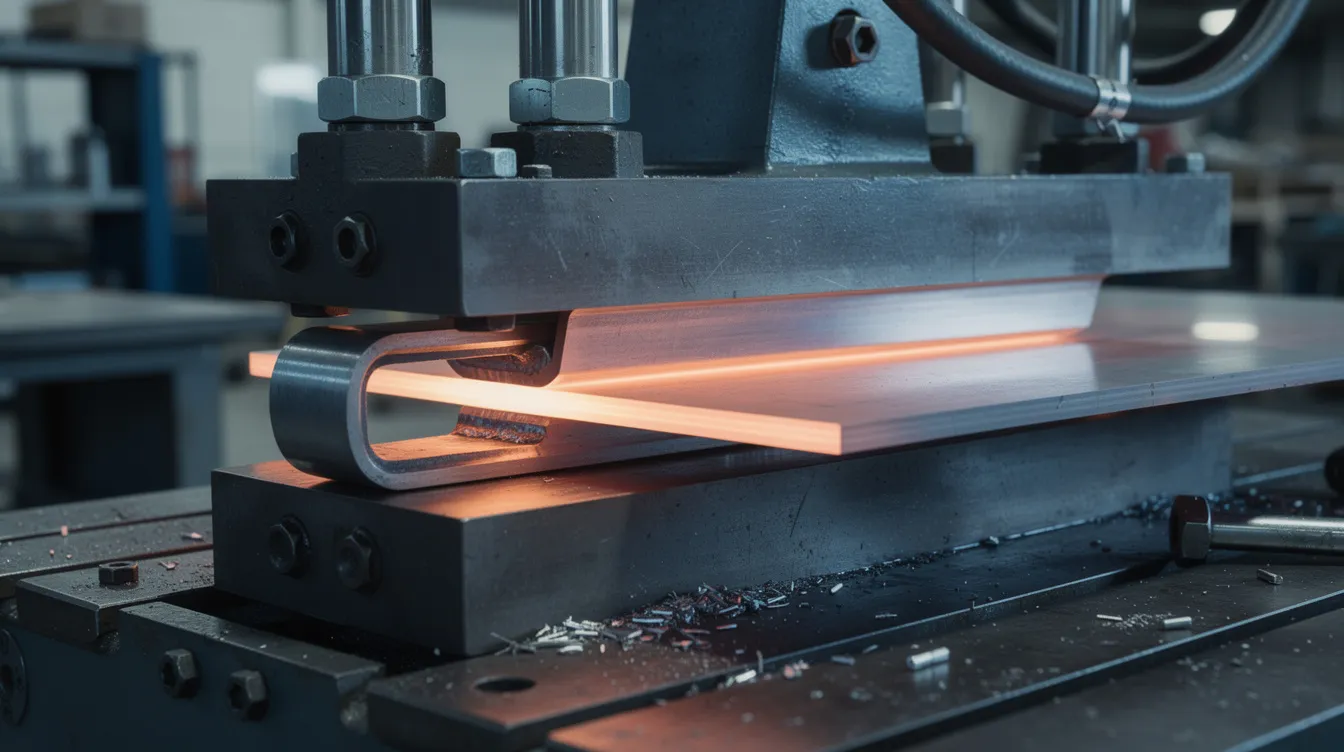
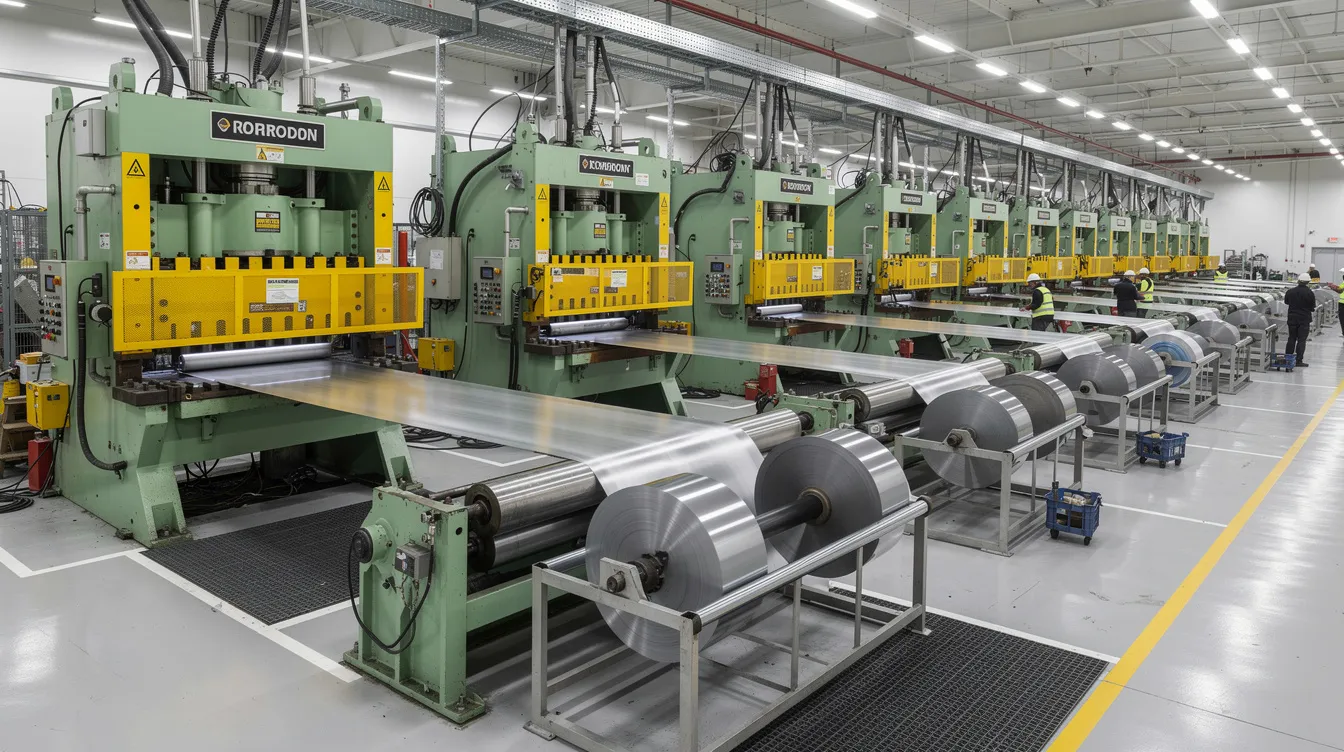
Press tonnage: 25T–400T mechanical presses in house, with larger tonnages available through a partner network. The minimum tonnage for effective stamping can range from 20 to over 1,000 tons depending on material and geometry.
-
Bed size: Working areas up to approximately 1,500 × 600 mm for progressive die stamping.
-
Stroke rates: 40–200+ strokes per minute for general sheet metal parts; smaller terminal components can exceed 1,000 SPM.
-
Tolerances: Achievable tolerances as tight as ±0.005 in. (approximately ±0.05 mm) on critical features, depending on die type and material.
Anebon supports progressive die stamping for high volume production and single-stage pressing for lower production volumes or simpler geometries. Progressive dies feed strip through multiple stations, producing a finished part with every stroke-ideal for runs above 50,000 units.
Supporting equipment includes automated coil feeders, straighteners, in-die sensors for quality monitoring, and in-house tooling maintenance. These capabilities serve industries including automotive brackets, medical device chassis, aerospace subcomponents, electronics housings, and precision parts for machinery.
From Design to Production: The Metal Pressing Fabrication Process
Anebon’s end-to-end workflow takes a project from RFQ to serial production with clear milestones at every stage.
-
RFQ and DFM review – Engineers review your 2D drawings and 3D models, providing Design for Manufacturability feedback on bend radii, hole distances, and emboss heights for cost effective pressing.
-
Material selection – Choosing between aluminum, stainless steel, or low-carbon steel affects tooling design, press tonnage, springback allowance, and final project costs.
-
Tool design and build – Lead times for tooling run 4–10 weeks depending on die complexity (simple single-stage dies at the shorter end, progressive dies at the longer end).
-
Trial runs and approval – Sampling typically takes 3–7 days after tooling completion. PPAP or first article approval ensures metal components meet specifications before ramp-up.
-
Serial production – Once approved, repeat orders ship within days. Sheet metal fabrication can produce parts in as fast as 1 day for simple geometries.
Laser cutting is a common method in sheet metal fabrication and is often used for complex initial blanks before pressing. CNC machining handles tight-tolerance secondary features, and welding or assembly completes final products.
Materials, Surface Treatments, and Finishing Options
Anebon is a single-source partner for pressed sheet metal parts including finishing services, reducing vendor handoffs and simplifying logistics for overseas OEMs.
Common metals for metal pressing:
-
Aluminum alloys (5052, 6061, 3003) – lightweight, excellent formability
-
Stainless steel – Stainless steel 304 is commonly used for its corrosion resistance; 316 for harsher environments
-
Mild and high-strength steels – cost effective for structural metal components
-
Copper – Copper C110 is a common choice for electrical applications
-
Brass – decorative and conductive uses
-
Titanium Grade 5 – a high-strength material used in demanding fabrication applications
Material versatility in metal pressing ensures compatibility with various metals. Selection factors include strength, formability, corrosion resistance, weight, cost, and compatibility with the intended finish.
Surface treatments available through Anebon:
-
Chem film (chromate conversion coating) – adds minimal thickness and enhances corrosion resistance, supporting electrical conductivity for aerospace and electronics
-
Anodizing – provides corrosion resistance and can be colored for aesthetic or functional purposes
-
Powder coating – creates a durable, wear-resistant layer across a broad range of colors and textures
-
Zinc and nickel plating – wear and conductivity improvement
-
Gold plating – offers excellent corrosion resistance and solderability
-
Electropolishing and passivation – especially for stainless steel precision sheet metal fabrication
-
Finishing options also include welding, plating, and silk screening
Parts move directly from pressing to deburring, surface finishing, marking, assembly, and packing within Anebon’s integrated facility.
Advantages of Anebon’s Metal Pressing Service for OEMs
Anebon’s combination of metal pressing, custom sheet metal fabrication, and CNC machining delivers full life-cycle support from prototype to production.
-
Cost effective production: Pressing provides high-speed mass production with uniform accuracy. Metal pressing is a cost-effective method for mass production of identical metal components, and offshore manufacturing in Dongguan helps control total landed cost.
-
Precision and consistency: ISO 9001:2015 quality systems, in-process inspection, and dimensional reporting maintain quality across repeat runs. Tolerances hold consistently even at high production volumes.
-
Fast prototyping: Rapid prototyping can have lead times as short as 3 days, with no minimum order volumes required. Rapid prototyping is ideal for low-volume, high-mix production and supports quick iterations of design and testing. Sheet metal fabrication supports both low-volume and high-volume production.
-
Flexible order sizes: Low volume custom fabrication through laser and CNC, medium-to-high volume through dedicated pressing lines.
-
Value engineering: Anebon has helped overseas OEMs reduce part count by consolidating weldments into pressed forms, improving assembly time and lowering project costs through custom fabrication approaches tailored to each customer’s unique needs.
Typical Applications & Industries for Pressed Sheet Metal Parts
Anebon is a multi-industry supplier focused on OEM and industrial customers.
Application types: chassis and enclosures, DIN-rail brackets, mounting plates, terminal connectors, hinge components, busbars, shields, and covers. Custom sheet metal components are often combined into subassemblies with PEM hardware, welding, and fasteners.
Industries served:
-
Automotive – the automotive industry frequently utilizes metal pressing for body panels and engine components
-
Aerospace – the aerospace industry uses metal pressing for high-strength structural components
-
Medical devices – medical devices often require precision parts manufactured through metal pressing
-
Electronics and telecommunications – EMI shields, connector housings, busbars
-
Robotics and industrial machinery – structural brackets, motor mounts
-
Energy systems – mounting hardware, enclosures
Anebon’s metal fabrication capabilities support regulated sectors with documentation, traceability, and quality reporting aligned with customer satisfaction requirements.
Quality Assurance, Certifications, and Engineering Support
Robust quality systems are non-negotiable for global OEM supply chains.
Anebon holds ISO 9001:2015 certification, which ensures quality management standards, and ISO 14001:2015 for environmental management. Quality assurance certifications across the industry also include ISO 9001 and IATF 16949. For context, competitors like Xometry maintain ISO 13485 and AS9100D certifications, while firms like PEKO hold AS9100D and LMI Manufacturing is ISO 9001:2015 certified for quality control-Anebon’s certifications position it competitively within this landscape.
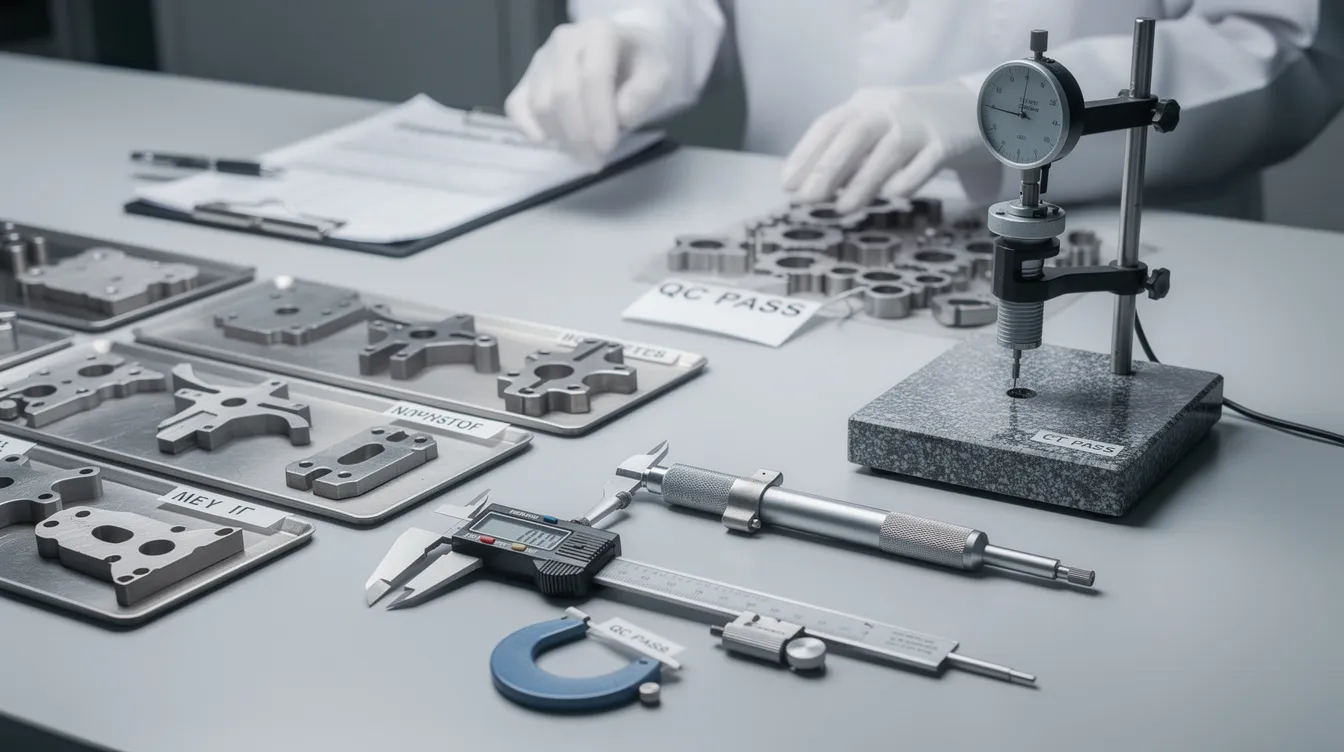
Inspection capabilities include incoming material verification, in-process checks using calibrated gauges, CMM measurement where applicable, and first article inspection for new tools. Quality checks ensure products meet precise strength and finish requirements.
Engineering support covers DFM reviews on drawings and 3D models, tolerance stack-up analysis, and recommendations to shift features from machining to pressing where feasible-reducing cost while maintaining precision. Document control and revision management support long-running OEM programs with controlled tooling changes.
Getting Started: Requesting a Metal Pressing Quote from Anebon
Here is a practical, step-by-step guide to launch a metal pressing or custom sheet metal project with Anebon.
What to prepare:
-
2D drawings and 3D CAD files (STEP, IGES, or SolidWorks preferred)
-
Annual and batch volumes
-
Target lead times
-
Preferred materials and finishing choices (e.g., chem film, powder coating)
-
Critical dimensions and specifications
Quoting workflow: Upload or email files → receive DFM feedback → clarify requirements → finalize pricing and estimated lead times. Anebon can first supply laser-cut and formed prototypes or CNC-machined samples before investing in full progressive dies, supporting rapid prototyping with quick iterations before committing to production tooling.
Anebon encourages long-term OEM partnerships. With metal fabrication services spanning prototyping through multi-year production runs and on time delivery as a core commitment, Anebon is built to scale with your project. Request a quote today and let the engineering team match the right metal fabrication process to your requirements.