Maximizing Efficiency with Rapid Machining Techniques in Manufacturing
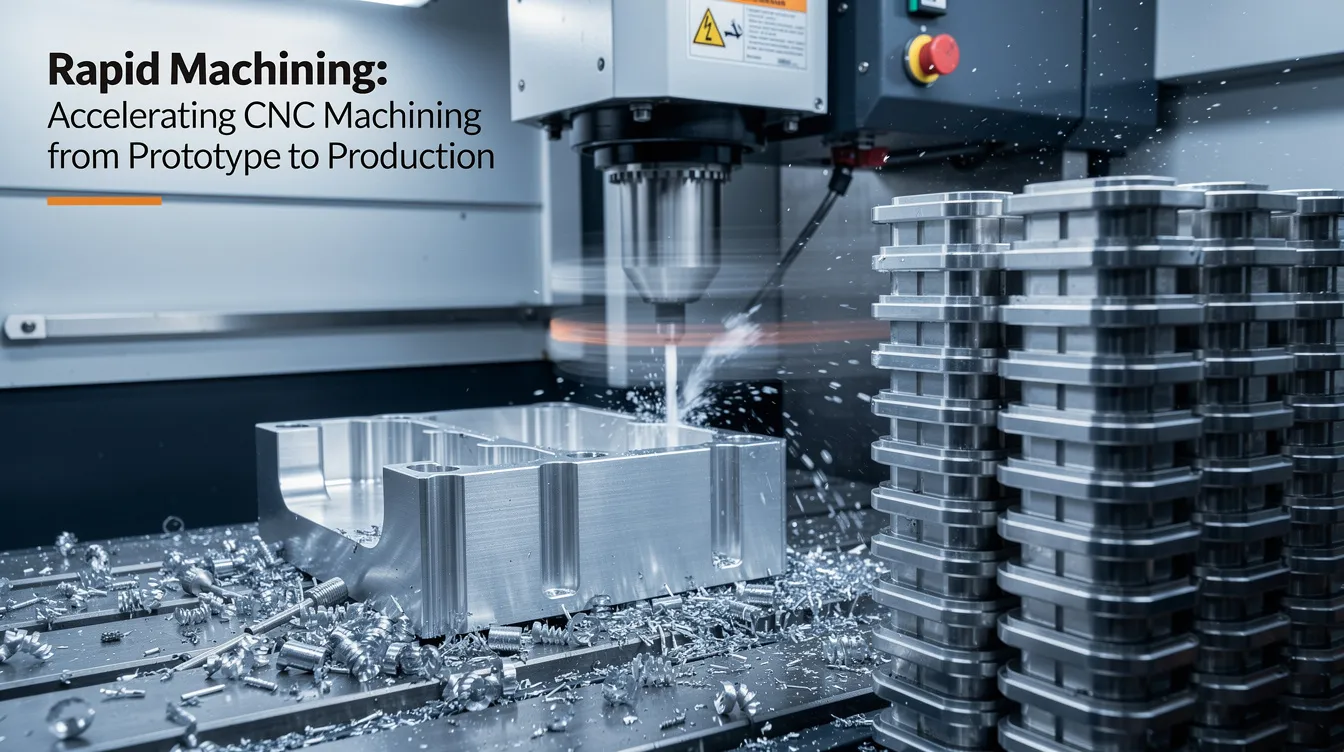
Rapid Machining: Accelerating CNC Machining from Prototype to Production
Product cycles are shorter than ever, and engineers can no longer afford to wait weeks for functional parts. Rapid machining bridges the gap between a CAD file and a finished component, delivering precision parts in days rather than traditional timelines. This guide breaks down how the process works, when it outperforms alternatives like 3D printing, and what to consider when selecting a rapid machining partner.
Rapid Machining Explained
Rapid machining refers to a fast-turnaround cnc machining approach that compresses the timeline from digital design to delivered custom parts. It combines optimized computer numerical control operations, streamlined workflows, and design-for-manufacturability reviews to reduce lead time dramatically. In a decade defined by compressed product cycles and intensifying global competition, the ability to produce parts in days instead of weeks has shifted from a luxury to a competitive necessity.
At its core, rapid machining is the orchestration of several elements working in parallel: advanced cnc machines, efficient CAM programming, pre-qualified tooling libraries, and lean scheduling. Rather than treating each job as a linear sequence, rapid machining services overlap steps-running DFM analysis while quoting, confirming material stock while programming toolpaths-so non-cutting time shrinks to a minimum. This manufacturing process enables high-speed prototyping through rapid creation of functional prototypes that can be tested, iterated, and validated before committing to full production.
It helps to understand where rapid machining sits relative to its neighbors. Standard cnc machining services optimize for throughput and cost per part in high volume production runs, often accepting longer lead times. Rapid prototyping is a broader category that includes additive manufacturing, soft tooling, and other techniques. Rapid machining overlaps with both: it uses subtractive processes on production-grade materials like standard cnc machining, but prioritizes speed and agility like rapid prototyping. The result is that rapid machining can produce prototypes similar to end use parts-with real mechanical properties, real tolerances, and real-world durability.
Typical use cases include prototype development where form, fit, and function must be validated; low volume production of 1–500 pieces where injection molding tooling costs are unjustified; bridge manufacturing to keep assembly lines running during tooling transitions; and urgent replacement end use parts for OEMs that cannot afford downtime. Rapid machining is essential for low-volume manufacturing and custom parts, and it is efficient for prototyping, low-volume production, and on-demand manufacturing alike.
Anebon Metal Products Limited is a China-based, ISO-certified precision machining and fabrication provider founded in 2010 in Dongguan, Guangdong. Specializing in cnc machining prototype services for overseas OEMs, Anebon combines CNC milling, turning, die casting, and sheet metal fabrication under one roof to support rapid machining projects from single prototypes to full production.
How Rapid Machining Works in Practice
The speed of rapid machining comes not from running spindles faster, but from eliminating idle time across every stage of the workflow. Here is how a typical project moves from file upload to shipped parts.
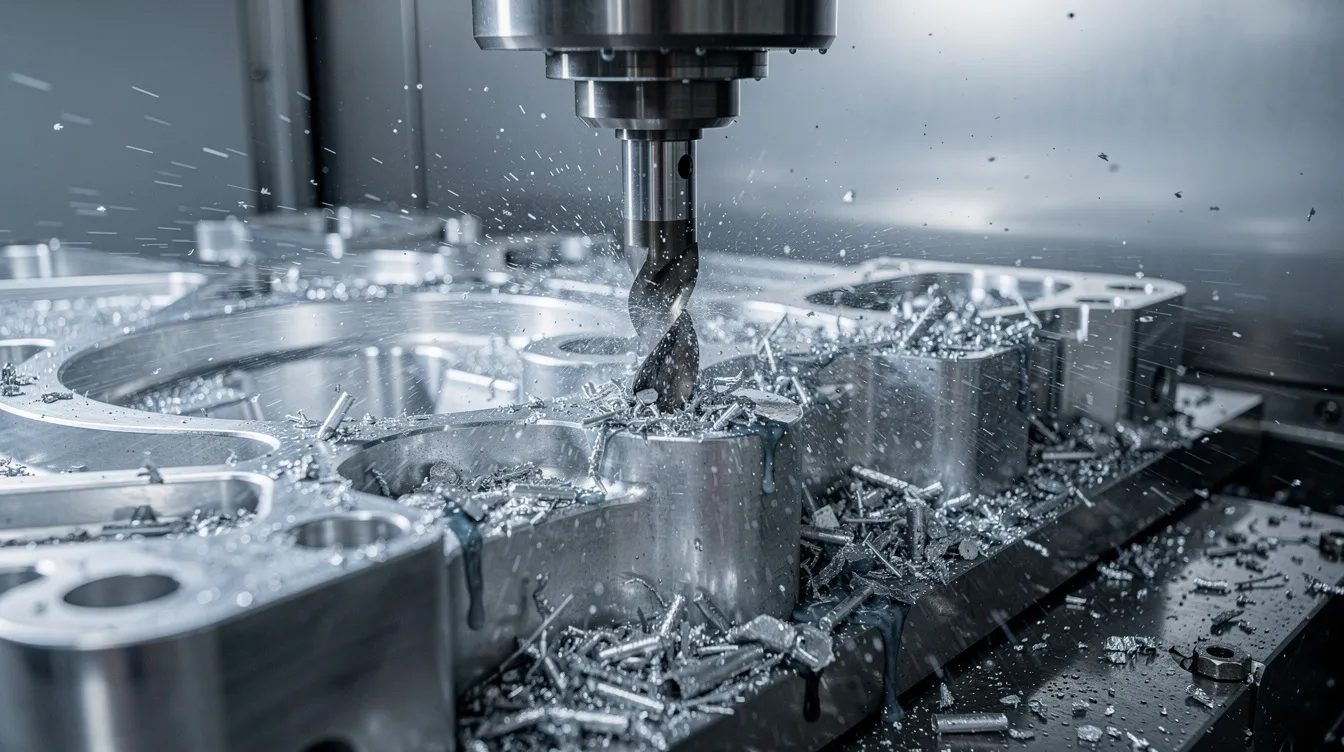
Step 1 – CAD Submission and DFM Review. Rapid machining begins with CAD design optimization. The customer submits 3D CAD files (typically STEP format) along with technical drawings. Engineers review the design for features that complicate machining-deep cavities, thin walls, non-standard radii-and provide immediate DFM feedback so issues are resolved before a single tool touches metal.
Step 2 – Quoting and Material Confirmation. Cost, lead time, and machining complexity are assessed simultaneously. Material stock is checked or procurement initiated for standard metals and plastics. Because materials prioritized for rapid machining include easily machinable plastics and metals, shops keep common grades on hand to avoid delays.
Step 3 – CNC Programming. CNC programming is critical for efficient rapid machining. CAM software converts the optimized CAD into toolpaths, and CNC programming details tool use, geometry, feeds, and speeds. Well-maintained tooling libraries of standard cutters and inserts mean no special tooling procurement. Simulation catches collisions or inefficient paths before the machine starts.
Step 4 – Machining. High-speed roughing techniques are used in rapid machining to remove material quickly, followed by semi-finishing and finishing passes. Three-axis machines handle simpler parts; 5-axis cnc machining enables complex geometries in fewer setups, reducing repositioning time. CNC turning centers produce cylindrical components, while auxiliary equipment like EDM and grinding address fine details and tight surface finishes.
Step 5 – Finishing and Inspection. Post-machining steps include deburring, surface treatments (anodizing, plating, laser engraving), and final dimensional inspection-often with full CMM reports. Parts are then packaged and shipped.
Rapid machining can cut production cycles significantly by automating the manufacturing process across these stages. Anebon can start cutting in as little as 24–48 hours after order confirmation for suitable rapid machining projects, with prototypes often finished within days.
Rapid Machining vs. Traditional CNC Machining
Both approaches use the same fundamental technology-computer numerical control-but they optimize for different outcomes. Here is where they diverge:
-
Lead time: Rapid machining delivers prototypes and small quantities in 1–5 business days for simple parts. Traditional CNC machining may require 2–4 weeks or longer, depending on batch size and complexity. Rapid machining can produce parts in days instead of weeks.
-
Setup approach: Rapid shops use modular fixtures and standardized tooling for quick production changeovers. Traditional shops may invest time in custom fixtures to optimize cost per hour across large production runs.
-
Batch sizes: Rapid machining typically serves 1–500 pieces where agility matters. Traditional CNC targets hundreds to thousands, amortizing setup cost across volume.
-
Flexibility vs. utilization: Rapid machining reserves machine capacity for rush and prototype work. Traditional scheduling prioritizes maximum hourly utilization and mass production efficiency.
-
Quality: Both maintain professional tolerances and surface finishes. Rapid machining does not sacrifice part quality for speed-it reduces non-cutting time instead.
Traditional machining relies on manual processes and is less effective for rapid production. CNC technology provides superior precision and consistency in producing complex parts, and rapid machining leverages that advantage while layering on workflow speed.
Anebon maintains both rapid machining cells for low volume orders and standard production lines for long-term OEM programs, giving customers flexibility across their entire project lifecycle.
Advantages and Limitations of Rapid Machining
Rapid machining offers a compelling set of advantages for engineers and procurement teams working under pressure, but it is not a universal solution. Understanding both sides helps you make better sourcing decisions.
The core benefits include:
-
Short lead times, often just a few days, making it crucial for time-sensitive projects requiring quick product delivery.
-
Suitability for complex designs and complex shapes that would be prohibitively expensive to mold or cast in low quantities.
-
Support for custom parts with no minimum order quantity burden and no tooling investment compared to injection molding or die casting.
-
Rapid machining can create parts with precision tolerances and complex designs in a short timeframe, delivering high quality parts from production-grade metals and plastics.
-
Prototyping with rapid machining allows for multiple design iterations without re-tooling, accelerating the development cycle.
-
It supports low-volume production of spare parts, keeping critical equipment running without committing to mass production quantities.
The practical limitations to keep in mind:
-
Complex designs may significantly extend lead times in rapid machining-deep pockets, intricate micro-features, and multi-surface geometries add programming and cycle time.
-
Rapid machining is not suitable for tough metal grades like certain Inconel or cobalt-chrome alloys without accepting slower speeds and higher cost.
-
Cost per part is higher for large quantity production in rapid machining compared to dedicated tooling processes. For thousands of identical components, injection molding or die casting typically becomes more economical.
-
Very large part sizes may exceed machine travel or require specialized handling, adjusting expectations on both speed and cost.
Rapid Machining Materials and Processes
One of rapid machining’s strongest advantages is material flexibility. Rapid machining is compatible with a wide range of materials, including metals and plastics, and can process over 30 different materials depending on the shop’s capabilities.
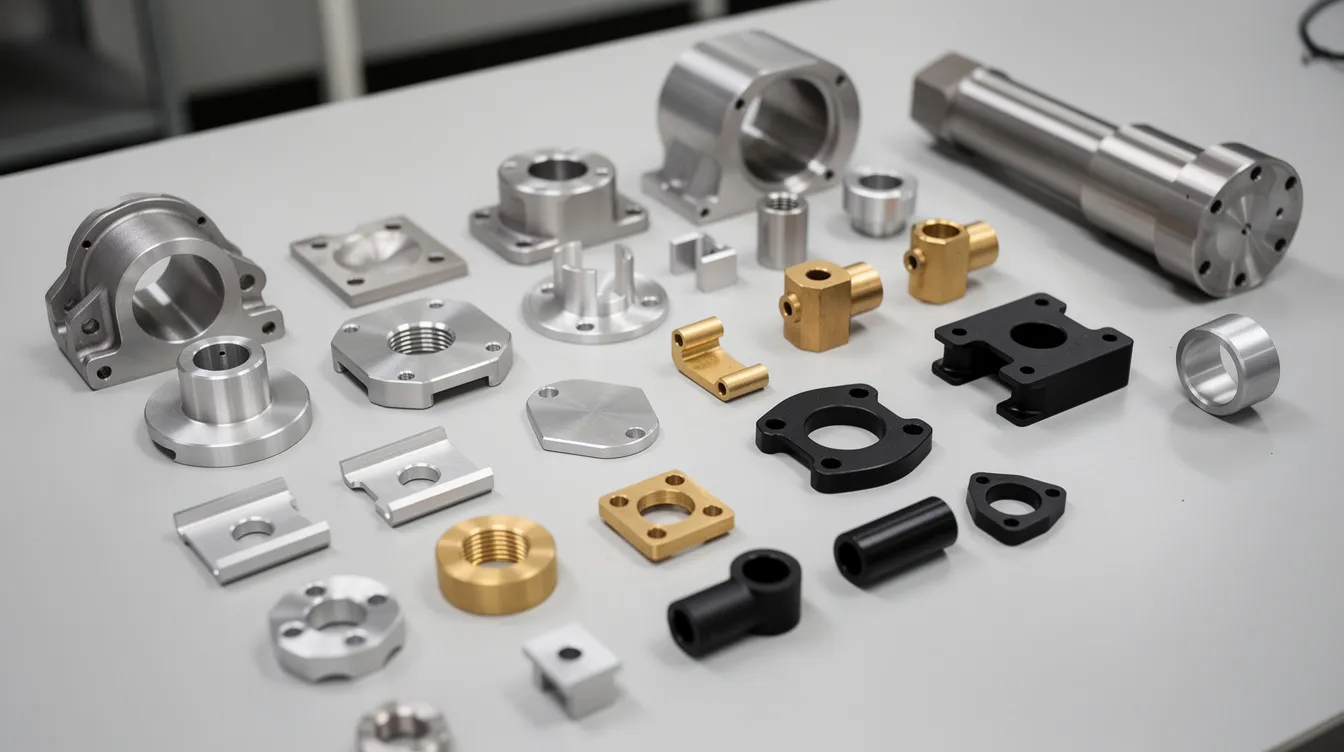
Common metals:
-
Aluminum grades (6061, 7075) are the workhorses of rapid CNC machining. Aluminum is lightweight and easy to machine, making it the fastest material to cut and widely available in stock.
-
Stainless steel (304, 316, 17-4PH) provides corrosion resistance and strength for demanding environments.
-
Carbon and alloy steels have high tensile strength and improved machinability for structural and high-load applications.
-
Brass is corrosion-resistant and ideal for plumbing components, electrical connectors, and decorative hardware.
-
Titanium serves aerospace and medical applications where strength-to-weight ratio is critical, though it adds lead time.
Engineering plastics:
-
Machinable plastics include ABS, PEEK, and acrylic, along with POM (acetal), polycarbonate, and nylon. Faster-cutting plastics like ABS and POM enable shorter cycle times, while high-performance plastics like PEEK require more careful tooling and slower feeds.
Processes that accelerate production:
Multi-axis cnc milling and cnc turning enable fast production of complex geometries with fewer setups. Five-axis machining is particularly valuable for reducing repositioning on parts with compound angles or deep contours. EDM handles fine internal features, and surface grinding ensures flatness and finish on critical surfaces.
Anebon provides complementary manufacturing services alongside rapid machining, including die casting, sheet metal fabrication, and a full range of surface treatments-enabling parts that combine casting or sheet metal with precision machining to final tolerances.
Rapid Machining vs. 3D Printing for Fast Prototyping
Engineers frequently weigh rapid machining against 3D printing when they need fast turnaround parts. Each method has a clear lane, and knowing where to apply each saves time and budget.
Where 3D printing wins:
-
Extremely short setup times for complex internal geometries, organic shapes, and hollow structures.
-
Ideal for visual models and early-stage prototypes where mechanical properties are secondary.
-
Additive manufacturing can produce geometry that is physically impossible to machine, such as enclosed lattice structures.
Where rapid CNC machining is superior:
-
Machined parts have full density, isotropic mechanical properties, and no layer adhesion weaknesses.
-
Tighter tolerances (standard cnc machines achieve ±0.05 mm or better) and smoother surface finishes without post-processing.
-
Production metals and engineering plastics are available, making precision parts suitable for functional testing under real loads, heat, and wear.
-
For many end use parts, rapid machining is more cost effective than metal 3D printing, particularly for small quantities in aluminum or steel.
The hybrid approach: Use 3D printing for early design iterations-form checks, fitment tests, visualization-then transition to rapid CNC machining with Anebon for functional validation, high quality prototypes, and low volume production runs. Anebon’s DFM feedback can guide exactly when that transition makes sense for your project.
Quality Expectations in Rapid Machining
Speed does not come at the expense of quality. In rapid machining, the time savings come from reducing non-cutting activities-setup, material procurement, inspection scheduling-not from loosening standards on the finished part.
-
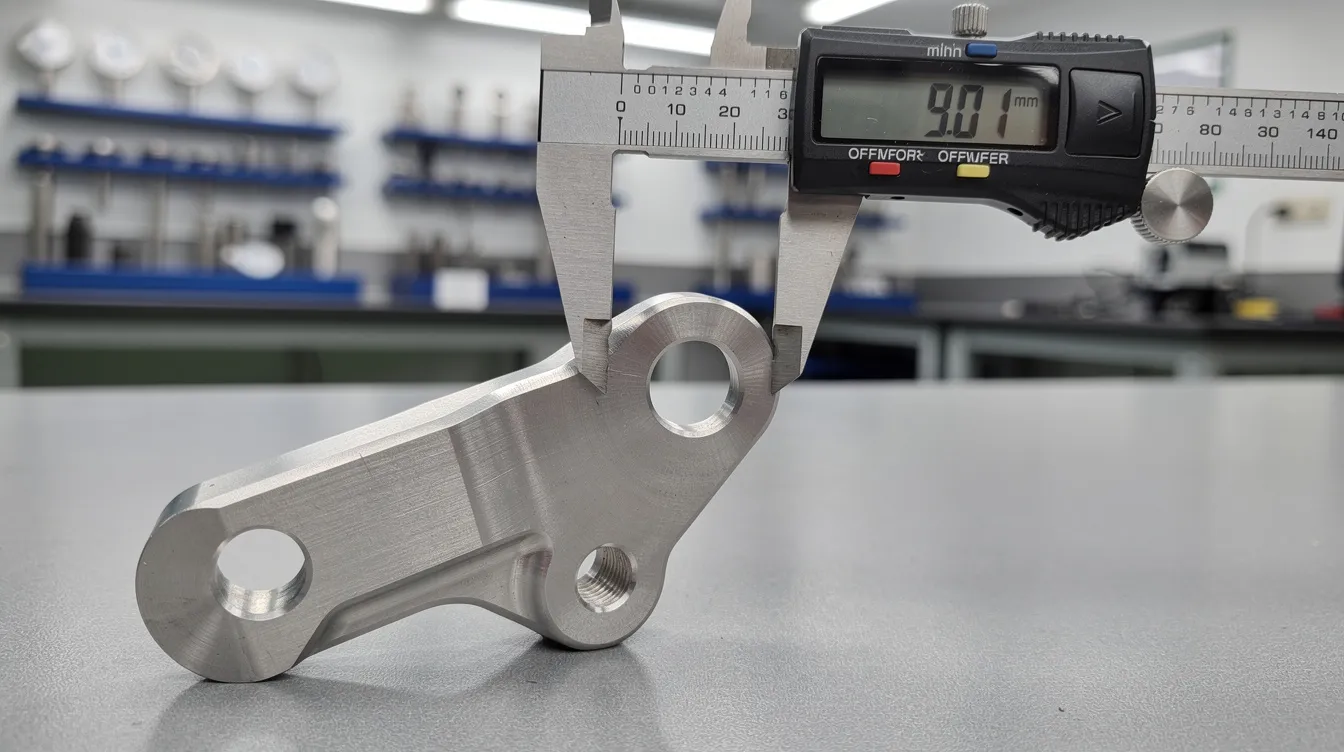
Typical tolerances: Most rapid machining services guarantee ±0.05 mm (±0.002 in) for standard geometry. More demanding precision machining down to ±0.01–0.02 mm is achievable but adds time and cost. Anebon supports tolerances as tight as ±0.002 mm for critical dimensions.
-
Surface finish: As-machined roughness of Ra 1.6–3.2 µm is standard. Finer finishes require secondary grinding or polishing and should be specified upfront along with any aesthetic requirements.
-
Design and material effects: Simpler features reduce fixture complexity. Standard, easily machinable materials cut more predictably. Larger parts or thin-wall geometries may require slower feeds to maintain stability.
Anebon holds ISO 9001:2015 and ISO 14001:2015 certifications, underpinning a quality management system that includes in-process inspections, final dimensional reports, and rigorous testing even on fast-turn prototype orders. This ensures consistent machining quality across both rapid and production work.
When requesting rapid machining services, specify critical dimensions, surface finishes, GD&T datums, and inspection level (full CMM report, first article inspection) clearly in your drawings. Provide native CAD or STEP files to preserve design intent.
Time, Cost, and Design Tips for Faster Lead Times
The single biggest lever for reducing lead time is early DFM review. Identifying features that slow down manufacturing-and modifying them before cutting starts-can shave days off delivery.
Actionable design guidelines:
-
Use standard hole sizes and fastener dimensions from common tooling libraries.
-
Avoid unnecessary ultra-tight tolerances on non-critical features. Over-specifying tolerance is the most common cause of inflated cost and extended lead time.
-
Simplify undercuts and limit depth-to-diameter ratios in pockets and holes.
-
Choose as-machined surfaces where cosmetic finishing is not required.
-
Minimize the number of setups by designing features accessible from fewer orientations.
Material choices that accelerate delivery: Choosing readily machinable materials like 6061 aluminum or common plastics such as ABS and POM reduces cutting time, tool wear, and procurement delays. Exotic alloys introduce material sourcing waits of one to two weeks.
Batch size economics: Single prototypes carry the highest per-unit cost because programming and setup are fully absorbed. Price per piece drops as volume rises. For batches of 1–500, rapid machining remains the most cost effective option. Beyond that, dedicated tooling for injection molding or die casting typically undercuts unit cost despite the upfront investment.
Anebon’s engineers provide DFM feedback during quoting, helping customers adjust designs for faster, more cost effective rapid machining without compromising function.
Industries and Applications Using Rapid Machining
Rapid machining has become a standard capability across industries that demand precision, customization, and speed in various applications.
-
Aerospace: Rapid machining is used in the aerospace industry for custom components-brackets, mounts, test fixtures, and engine component prototypes machined from aluminum and titanium. Quick turnaround supports design verification before committing to full production.
-
Automotive: Automotive product development benefits from rapid machining for new parts, including prototype engine components, steering linkages, sensor housings, and assembly-line fixtures.
-
Medical: The medical industry utilizes rapid machining for precise implants, surgical instruments, and biocompatible components where tight tolerances and material traceability are non-negotiable.
-
Electronics: Electronics require rapid machining for cases and connectors-custom enclosures, heat sinks, and shielding components produced in small quantities with high precision.
-
Consumer goods: Watch components, sports equipment parts, and appliance housings benefit from rapid machining when frequent design refreshes demand quick production without retooling.
Why Choose Anebon for Rapid Machining Projects
Anebon Metal Products Limited combines the capabilities of a full-service manufacturer with the agility of a rapid machining specialist. Located in Dongguan, Guangdong-one of China’s most mature manufacturing regions-Anebon leverages deep local supply chains for materials, surface treatments, and logistics to deliver globally with competitive lead times.
From rapid prototyping through full-scale production, Anebon offers a complete range of services under one roof. Whether your project calls for high precision cnc milling, cnc turning, 5-axis machining, die casting, or sheet metal fabrication, the equipment and expertise are in place to produce parts that meet demanding specifications.
Key strengths that matter to overseas OEMs:
-
Tight tolerances down to ±0.002 mm across metals and plastics
-
Broad materials range covering aluminum, steel, titanium, brass, and engineering polymers
-
ISO 9001:2015 and ISO 14001:2015 certifications ensuring process control and environmental responsibility
-
Advanced cnc machines including multi-axis milling centers, turning centers, EDM, and grinding equipment-including high torque machines for harder alloys
-
Consistent machining quality from prototype through production parts, with full inspection reports
-
No minimum order quantity requirement for prototype and low volume work
If you have a rapid machining project that needs fast turnaround parts with production-grade quality, submit your CAD files to Anebon for a DFM review, lead time estimate, and competitive quote. The faster you start the conversation, the sooner your parts are on the machine.