Maximizing Efficiency with CNC Machined Parts: A Comprehensive Guide
CNC Machined Parts & Services: A Practical Guide for OEM Engineers
If you design parts that need to fit, function, and survive in the real world, you already know that the manufacturing process you choose defines what’s possible. This guide covers everything OEM engineers need to know about CNC machined parts – from core concepts and machine types to design guidelines, tolerances, and how to work with a manufacturing partner that delivers.
Introduction to CNC Machined Parts
CNC machining is a subtractive manufacturing process where computer-controlled cutting tools remove material from a solid block to produce components with high dimensional accuracy. OEMs turn to this process when performance is non-negotiable: aerospace mounting brackets that endure fatigue cycles, EV battery housings requiring precise thermal interfaces, surgical fixtures demanding biocompatibility, or robotics end-effectors where every tenth of a millimeter matters.
Unlike injection molding or casting, CNC machining excels when you need tight tolerances, verified mechanical properties, and the freedom to iterate designs without investing in hard tooling. It is suitable for both metals and rigid plastics, and it handles everything from one-off prototypes to medium-volume production runs. CNC machining is widely used in aerospace, automotive, and medical device industries where reliability is the baseline, not a bonus.
Anebon Metal Products Limited is an ISO 9001:2015 and ISO 14001:2015 certified precision CNC machining partner headquartered in Dongguan, China. Since 2010, Anebon has served overseas OEMs with CNC milling, CNC turning, die casting machining, and sheet metal fabrication – bridging the gap between digital designs and delivered hardware.
In this article, you will learn:
-
How the CNC machining process works from CAD file to shipped part
-
Which types of CNC machines suit different part geometries
-
Practical DFM guidelines that save cost and lead time
-
How to specify tolerances, materials, and finishes for your application
-
What to expect when working with a CNC machining service like Anebon
What Is CNC Machining? Core Concepts
CNC stands for computer numerical control – the use of computer software to control machinery that cuts, drills, and shapes raw materials into a desired shape. Unlike conventional machining under manual control, CNC systems follow pre-written instructions (G-code) with extreme repeatability. The CNC machining process is fully automated and highly repeatable, which minimizes human error through automation.
Here are the key elements behind every CNC machined part:
-
CNC machine: the physical hardware – mills, lathes, 5-axis centers – driven by servo motors that position cutting tools with micron-level precision.
-
Controller: the onboard computer that interprets G-code and coordinates axis movement.
-
G-code / CNC programming: CAD models are converted into G-code for CNC machines. CNC programming uses G-code to control machine operations, dictating toolpaths, feeds, speeds, and tool changes.
-
CAM software: CAM software generates machining instructions from CAD designs, translating 3D geometry into optimized toolpaths. This is the bridge between computer aided design and computer aided manufacturing.
-
Cutting tools: end mills, drills, taps, inserts – made of carbide or HSS, selected by material and feature geometry.
-
Workholding: vises, chucks, custom fixtures that lock the workpiece in place during the machining operation.
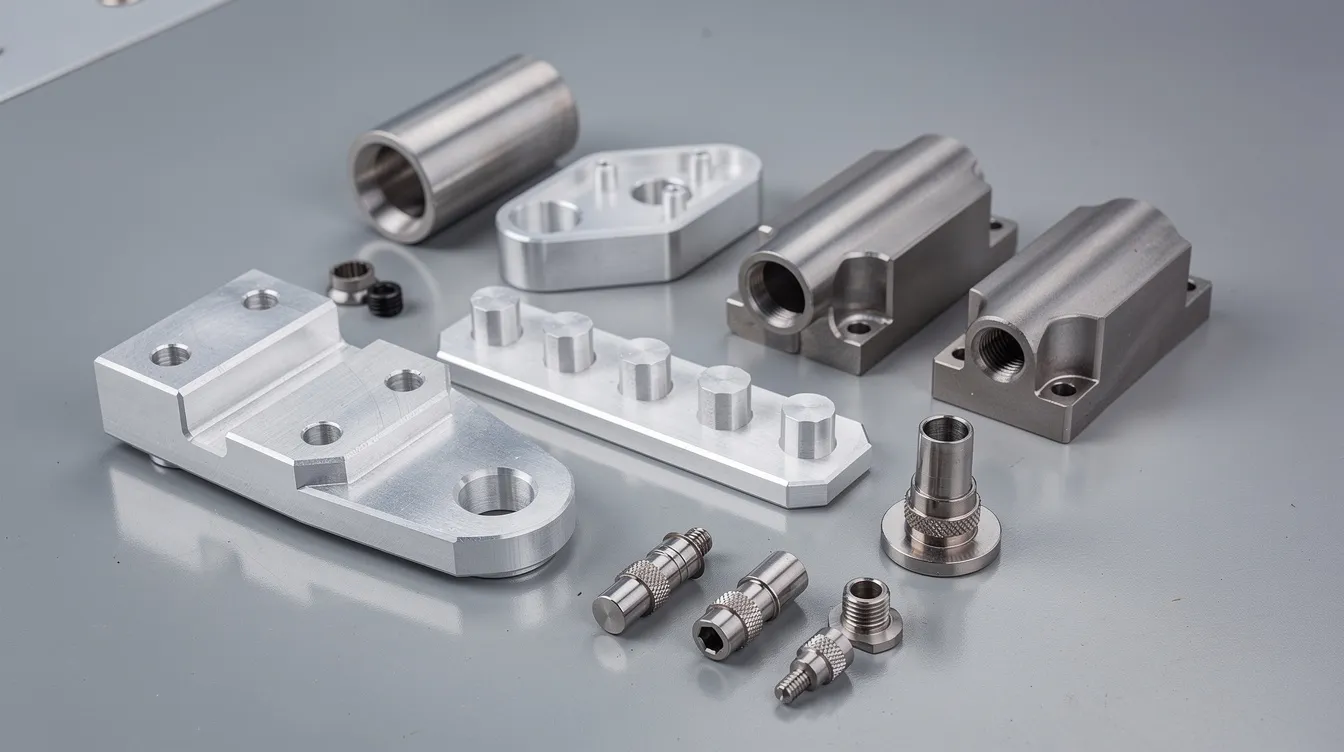
CNC machined parts can include milled surfaces, turned cylindrical features, drilled holes, tapped threads, and reamed bores – in metals and engineering plastics alike. Precision CNC machining is a subset where tolerances tighten significantly. Many shops achieve tolerances as tight as ±0.001 inches routinely, and at Anebon, CNC machining tolerances can achieve precision as tight as ±0.002 mm on critical features – the kind of CNC precision machining that aerospace and medical applications demand.
How the CNC Machining Process Works Step by Step
From an OEM engineer’s perspective, CNC machining work follows a predictable path. The workflow for CNC machining includes creating a CAD design, generating G-code, and executing on CNC machines. CAD software helps create detailed 3D engineering designs that define every functional surface. Here is what each phase looks like:
-
CAD and drawing submission: You send 3D CAD files (STEP, IGES, or native formats) alongside 2D drawings that call out precision tolerances, surface finishes, and critical datums.
-
DFM review: Anebon’s engineers review your design for manufacturability – flagging tool access issues, unnecessarily tight callouts, thin walls, and deep pockets that drive cost.
-
CAM programming: Toolpaths are generated, simulated for collisions, and optimized for cycle time. CAM software handles nesting for multi-part setups.
-
Machine setup and test run: The CNC operator mounts the workpiece, loads machining tools, sets zero, and runs a first piece to verify dimensions before committing to the full batch.
-
Production machining: With the first article approved, the run proceeds. CNC machines can operate 24/7 for continuous production when schedules demand it.
-
Inspection and finishing: Post-processing includes grinding and deburring to refine parts. CNC machined parts often require surface finishing for aesthetics or function – anodizing, bead blasting, or plating.
-
Packaging and logistics: Parts are packaged with material certificates and inspection reports, then shipped via air or ocean freight to your facility.
CNC machining can produce prototypes in 3–7 days for standard materials and moderate complexity. Production lots typically ship in 2–4 weeks depending on volume, finishing requirements, and material availability. CNC machining supports fast prototyping to production transitions, and Anebon retains CNC programs and fixture designs for repeat orders, cutting lead time on reorders.
CNC Milling, Turning, and Other CNC Machines
Understanding the types of CNC machines helps you specify the right process for your part geometry.
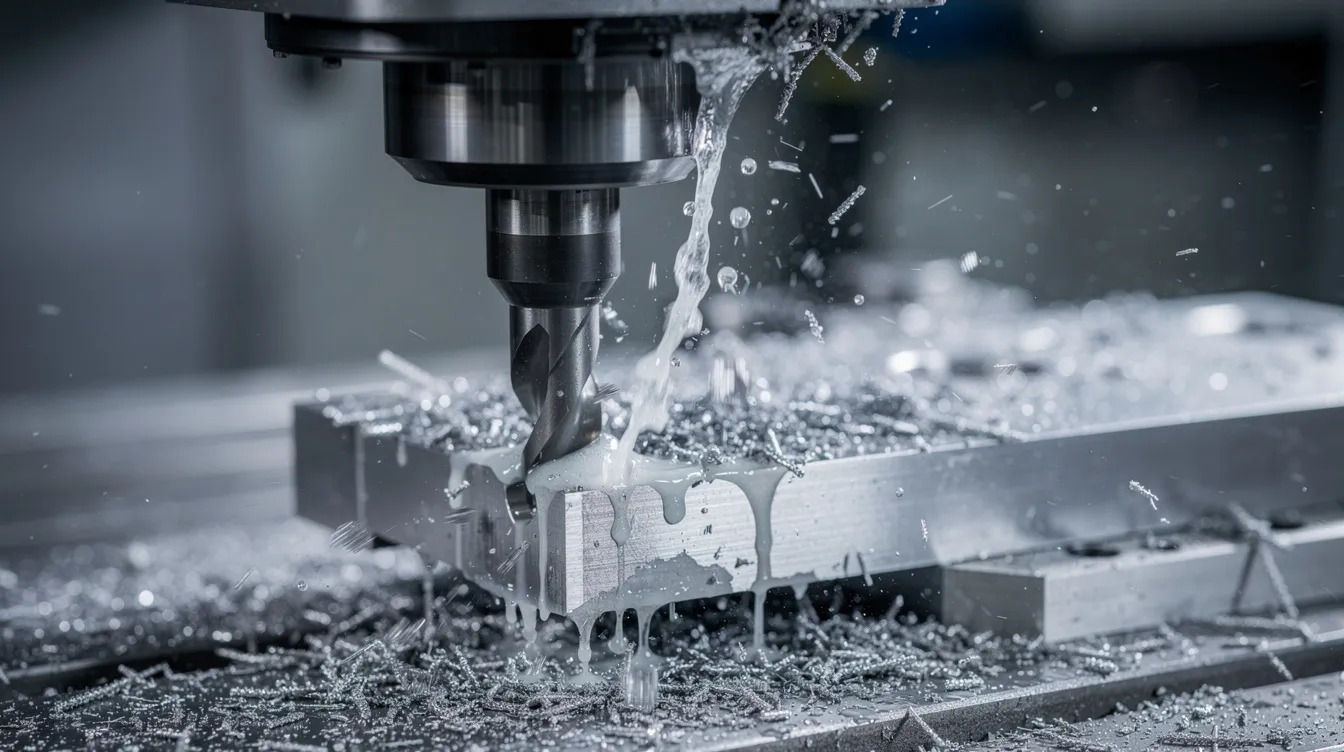
CNC milling uses a rotating cutting tool to remove material from a fixed workpiece. CNC mills typically operate on a three-axis system (X, Y, Z), but 4-axis and 5-axis configurations add rotational axes to reach complex geometries in fewer setups. A standard milling machine at Anebon handles parts up to approximately 1,000 mm in length. Basic mills consist of a spindle, table, and column – but modern CNC equipment adds automatic tool changers, probing systems, and high speed cutting tools for efficiency.
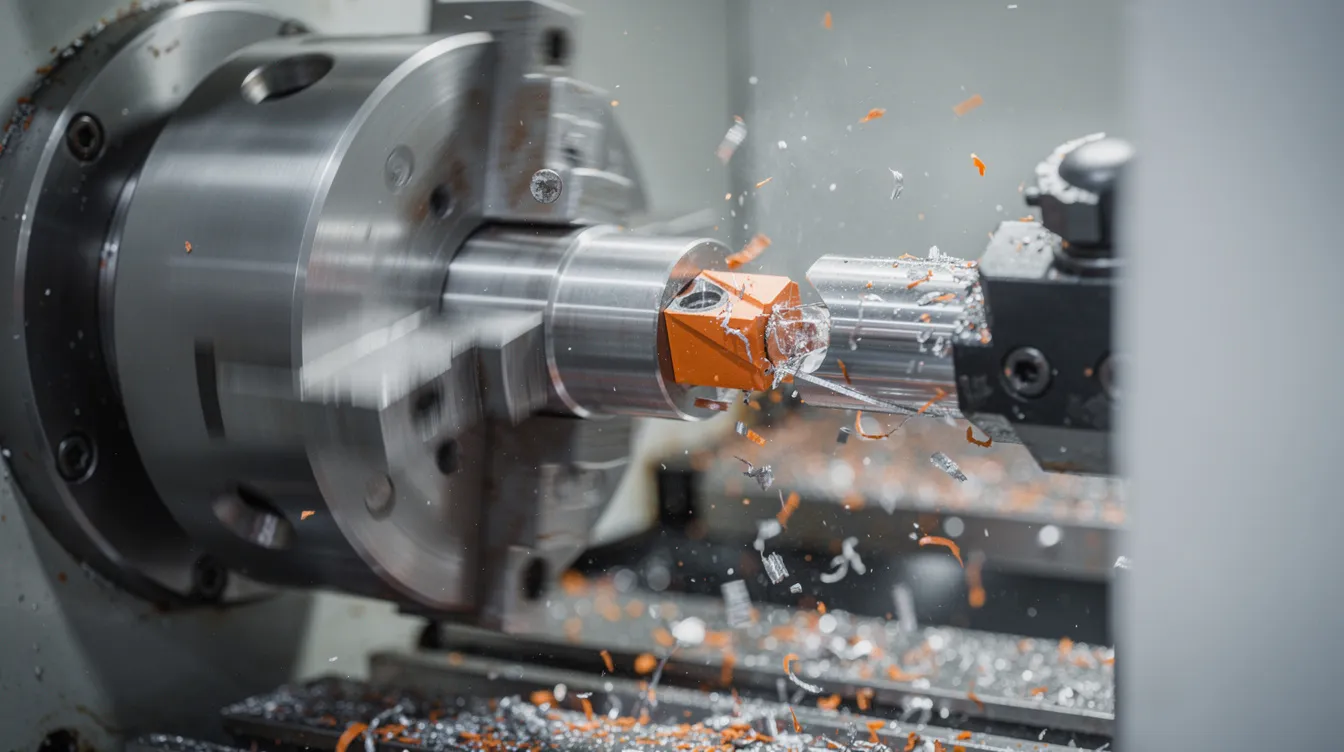
CNC turning works differently: the workpiece rotates while stationary cutting tools shape cylindrical features. CNC lathes are used for producing axially symmetrical items like shafts, bushings, and threaded connectors. Most CNC lathes consist of a spindle, chuck, turret, and tailstock, with live tooling options for drilling and milling on the lathe itself. CNC lathes consist of these components working together to deliver precision machined parts in a single setup.
Beyond milling and turning, auxiliary CNC machinery includes:
-
Wire EDM: for intricate cuts in hardened materials using electrical discharge – essentially spark machining that molds workpieces using electrical sparks
-
CNC plasma cutters: plasma cutters use a plasma torch to cut materials, typically sheet and plate
-
Water jet cutters: use high-pressure water to cut hard materials without heat distortion
-
Grinding machines: for ultra-fine surface finishes on hardened parts
When to choose which:
-
Milling: block-type parts, multi-face features, pockets, and contours
-
Turning: shafts, spindles, round connectors, threaded components
-
5-axis / multi-axis: complex shapes that cannot be accessed from a single direction – multi-axis CNC machines can create complex shapes and geometries in one or two setups, reducing cumulative positioning errors
CNC Machining Services at Anebon Metal Products Limited
Anebon’s CNC machining service portfolio covers the full spectrum from first prototype to ongoing CNC manufacturing:
-
Rapid prototyping: single parts or small batches in aluminum, steel, or engineering plastics, with simple finishes, delivered in days
-
Bridge production / pilot runs: tens to hundreds of pieces including first article inspection and more complex finishing
-
Mass production: recurring orders with optimized toolpaths, dedicated fixturing, and stable pricing – CNC machining is ideal for low to medium volume production
Core capabilities include:
-
CNC milling (3-axis, 4-axis, 5-axis)
-
CNC turning centers with live tooling
-
Post-machining of die castings and investment castings
-
Integration with sheet metal fabrication for hybrid assemblies
Industry-specific examples of CNC machined parts Anebon produces:
-
Aerospace brackets in 7075-T6 aluminum requiring high precision and fatigue life
-
Medical device housings in 316L stainless steel with passivated surfaces
-
EV powertrain components in 6061-T6 and 4140 alloy steel for thermal management
-
Robotics end-effectors in titanium and PEEK for weight reduction and chemical resistance
Support services include DFM feedback on submitted designs, material selection advice matched to your application’s mechanical properties requirements, and custom metal fixturing for high-repeatability production runs. CNC machining improves production efficiency by requiring minimal manual intervention after programming, which translates directly to consistent quality and competitive pricing.
Ready to get started? Request a CNC machining service quote by sending your CAD files and drawings to Anebon’s engineering team.
Materials for CNC Machined Parts: Metals and Plastics
CNC machining can process over 50 industrial-grade metals and a broad selection of rigid plastics. The material you select defines not only the part’s performance but also machining speed, tool life, and cost.
Metals:
-
Aluminum 6061-T6: tensile strength ~276 MPa; excellent machinability, anodizable, cost-effective. Aluminum 6061 is a cost-effective CNC machining material – the default choice for lightweight structural parts
-
Aluminum 7075-T6: tensile strength ~572 MPa; aerospace-grade strength-to-weight ratio
-
Stainless steel 304/316L: outstanding corrosion resistance; 316L adds biocompatibility for medical applications. 303 is a free-machining variant for faster cycle times
-
Carbon/alloy steels (4140, 4340): high strength, wear resistance, toughness for drivetrain and structural parts
-
Titanium (Ti-6Al-4V): exceptional strength-to-weight and biocompatibility; slower to machine, higher tooling costs
-
Brass and copper: ideal for electrical connectors, heat sinks, and fluid fittings
Plastics:
-
Delrin / POM: good mechanical properties, self-lubricating, dimensionally stable
-
Nylon (PA6, PA66): tough, wear-resistant; common plastics for CNC machining include ABS and nylon
-
PEEK: high-temperature stability, chemical resistance, used in aerospace and medical – requires specialized machining tools
-
Polycarbonate (PC): impact-resistant, optically clear
CNC machining can lower raw material costs, especially when working with expensive materials like titanium, by removing only the necessary stock rather than over-ordering. CNC machining retains the mechanical properties of materials used, since unlike some thermal processes, the subtractive manufacturing process does not alter the base material’s microstructure.
Anebon sources raw materials with traceable lot documentation – EN, ASTM, and RoHS-compliant certifications – for regulated industries that demand full traceability.
Designing for CNC Machining: Practical DFM Guidelines
Good design for CNC manufacturing saves money. Here are the rules CNC machinists wish every engineer followed:
-
Specify only necessary tolerances: tightening every dimension to ±0.01 mm when only two features are functionally critical adds finishing passes, slower feeds, and cost. CNC machining supports tight tolerances suitable for aerospace applications – but only call them where they matter.
-
Maintain reasonable wall thickness: minimum ~0.8 mm for metals, ~1.5 mm for plastics. Thinner walls vibrate, distort, and risk tool breakage during the machining process.
-
Limit pocket depth-to-width ratios: keep depth under 4–5× the pocket width. Deeper pockets require longer tools that deflect, causing chatter and poor surface finish.
-
Add fillets to internal corners: sharp internal corners require impossibly small tools. Use radii of at least 0.5 mm – larger for roughing operations.
-
Design for tool access: undercuts and enclosed features need special tooling or multi-axis setups. If a standard end mill can’t reach it, the cost goes up.
-
Use standard thread depths: approximately 2× the nominal diameter is sufficient. Excessively deep threads in soft materials risk stripping.
-
Specify standard hole sizes: holes below ~Ø0.8 mm become difficult; above that, standard drills and taps handle them efficiently.
-
Use standard radii and chamfers: nonstandard sizes require custom cutting tools, adding to tooling costs.
Good DFM reduces cycle time, tool wear, and the number of setups – allowing Anebon to keep CNC machining services cost-competitive for overseas OEMs. Engage with Anebon’s team early for DFM feedback before finalizing your design.
Tolerances, Accuracy, and Surface Finish in CNC Machining
Understanding what your CNC machining partner can realistically achieve tolerances to is critical for specifying parts correctly.
Tolerances:
-
General tolerances for metals are ±0.005 inches according to ISO 2768 (medium class, ISO 2768-m), which yields linear tolerances of ±0.1 to ±0.5 mm depending on nominal size
-
Plastics typically have tolerances of ±0.010 inches in CNC machining due to material flexibility and thermal expansion
-
For critical features, CNC machining achieves tolerances as tight as ±0.001 inches (±0.025 mm) with finish passes and rigid fixturing
-
Precision CNC machining can achieve tolerances as low as ±0.0025 mm on features requiring grinding, honing, or secondary operations
-
At Anebon, CNC machining tolerances can be as tight as ±0.001 inches on positional and diametrical features using calibrated CNC equipment and environmental controls
Surface finish:
-
As-machined surfaces: Ra ~1.6–3.2 µm (visible tool marks, functional for most interfaces)
-
Finish machining passes: Ra ~0.8 µm
-
Polished or ground: Ra 0.2–0.4 µm for sealing surfaces or optical requirements
-
Anodizing enhances corrosion resistance for aluminum parts while adding a uniform color
-
Powder coating provides a durable finish for CNC parts exposed to harsh environments
-
Surface finishes can improve wear and chemical resistance depending on the treatment selected
Drawing best practices:
-
Mark critical-to-function dimensions clearly so the CNC machine operator and QA team focus inspection resources there
-
Use GD&T for position, flatness, and parallelism callouts
-
Specify datum references for inspection consistency
-
Note surface finish requirements (Ra values) on the drawing face
From Casting or Sheet Metal to CNC Machined Precision
Many OEM projects don’t start from solid billet. Instead, die casting or investment casting forms the near-net shape, and CNC machining adds the tight-tolerance features – mating surfaces, precision bores, threaded holes, and sealing faces.
For example, an automotive gearbox housing might be aluminum die cast for its overall geometry, then CNC machined for bearing bores and mounting surfaces that need ±0.025 mm accuracy. CNC machining reduces material waste through precise cutting paths, removing only what’s necessary rather than hogging out an entire billet. This combination of processes lowers per-part material cost while delivering the dimensional accuracy that the application demands.
A similar synergy exists with sheet metal fabrication: brackets or enclosures formed by laser cutting and bending gain CNC machined features – precision holes, countersinks, and alignment slots – that sheet metal processes alone can’t achieve to spec.
When to pair processes versus machine from billet:
-
Cast + CNC: large, complex outer geometry with critical internal features; volumes justify casting tooling
-
Sheet metal + CNC: enclosures, brackets with bent geometry needing precision machined mating surfaces
-
Billet CNC only: small-to-medium volumes, frequent design changes, or when the entire part requires precision tolerances throughout
CNC Machine Operators and Automation on the Shop Floor
Even with CNC technology automating the metal cutting process, skilled people remain essential. A CNC machine operator handles setup, tool changes, in-process inspection, and first-article approval. The CNC operator tunes feeds and speeds based on real-time cutting conditions, monitors tool wear, and responds to alarms – especially when producing tight-tolerance CNC machined parts.
CNC machining improves workplace safety by reducing direct human interaction with cutting tools during operation, but operators still manage the machine shop environment, fixtures, and quality checks.
At Anebon, consistency comes from:
-
Standardized work instructions for each part number
-
Operator training programs covering complex machinery and inspection techniques
-
Robotic loading/unloading and pallet systems for high-mix, medium-volume CNC manufacturing
-
Tool wear monitoring and replacement schedules that prevent dimensional drift
For customers, this translates to lower defect rates, shorter lead times, and more stable pricing across long-term digital manufacturing supply programs.
Quality Management, Inspection, and Certifications
ISO 9001:2015 certification ensures quality management standards across every step of Anebon’s operations – from incoming material to final shipment. Quality Management Systems help maintain regulatory compliance in CNC machining, which matters greatly for aerospace and medical device customers.
Inspection methods for CNC machined parts at Anebon include:
-
Incoming material verification: checking chemical composition, hardness, and certificates of compliance against ASTM/EN specifications
-
In-process checks: the CNC operator verifies critical dimensions during runs using gauges, micrometers, and go/no-go fixtures
-
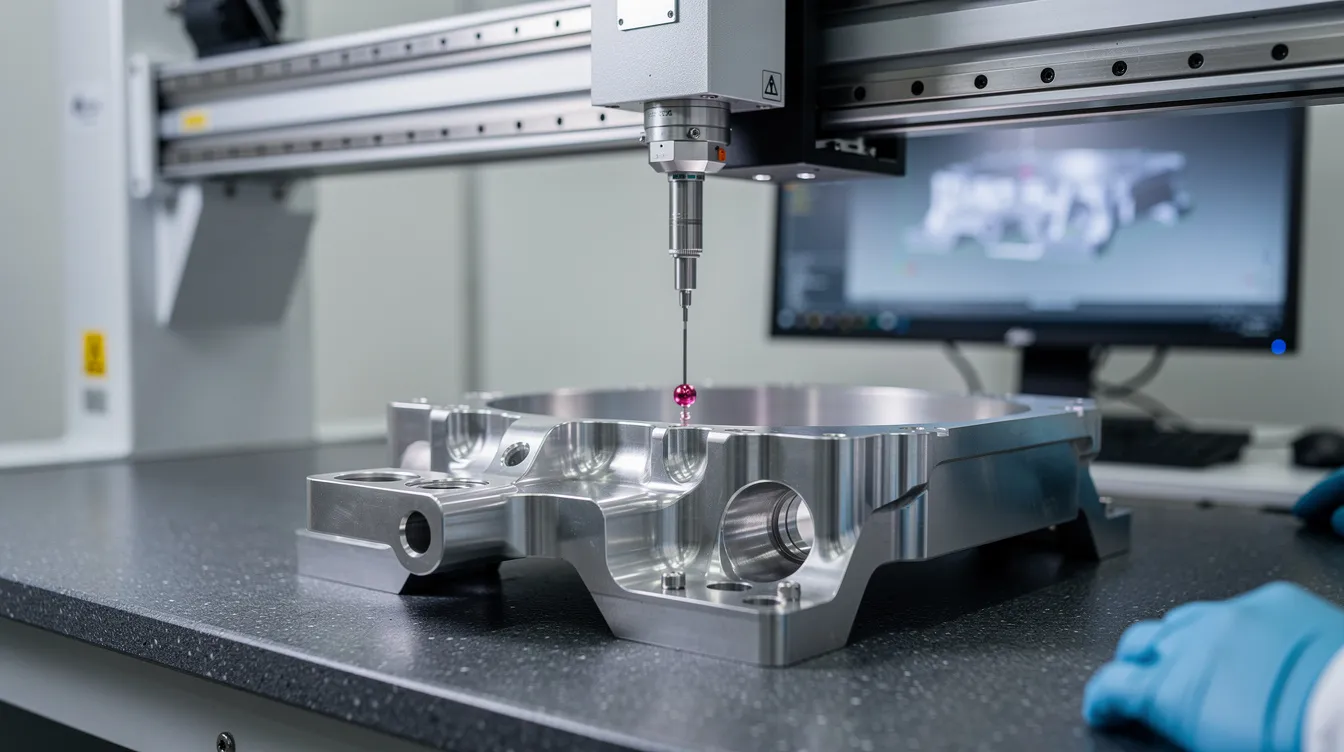
Final inspection: coordinate measuring machines (CMM) for 3D GD&T verification, surface roughness testers for Ra, and height gauges for linear dimensions
-
First Article Inspection: First Article Inspection verifies that parts meet specified tolerances before production proceeds – a critical gate for new part numbers
Documentation Anebon provides on request:
-
Material certificates with lot traceability
-
Full dimensional inspection reports
-
Process capability studies (Cp/Cpk)
-
PPAP-like packages for automotive OEM projects
-
Lot and date traceability linking parts to machines, operators, and production parts runs
Applications and Case Examples of CNC Machined Components
CNC machining is utilized across multiple industries such as aerospace, automotive, and medical devices. Here are representative applications where CNC machining makes the difference:
-
Aerospace mounting brackets (7075-T6 aluminum): required ±0.025 mm positional tolerance on fastener holes, anodized finish for corrosion resistance, and documented traceability. CNC machining was chosen over casting because volumes were under 500 units and design iterations were ongoing through 2025–2026. CNC can create complex geometries quickly and accurately, which supported rapid iteration cycles.
-
Surgical instrument handles (316L stainless steel): passivated finish for sterilization compatibility, good mechanical properties for grip strength, and precision tolerances on mating interfaces. CNC machining can produce complex geometries efficiently, and the subtractive process retained the material’s corrosion resistance without thermal degradation.
-
EV motor mount housings (6061-T6 aluminum): combined 5-axis CNC milling for the outer contour with CNC turning for bearing bores. Reducing setups from four to two improved repeatability and cut cycle time by 30%.
-
Sensor housings for industrial robots (PEEK): chemical resistance and low weight were critical. CNC machining produced precision parts from engineering plastics that additive manufacturing couldn’t match in surface quality or tolerance consistency.
Anebon’s overseas engineering teams collaborate via CAD file exchange, PDF markups, and online meetings to refine designs before CNC manufacturing begins. CNC machining advantages in these cases center on dimensional accuracy, material performance, and the ability to scale from prototypes to production without retooling.
Cost Drivers and Lead Times in CNC Machining
Understanding what drives cost helps you make smarter design and sourcing decisions. Here are the primary levers:
-
Material type: aluminum machines fast and is inexpensive; titanium and nickel alloys are slower to cut with higher tool wear. CNC machining can process materials across a wide hardness range, but harder metals mean longer cycle times.
-
Stock size: oversized raw materials mean more metal to remove – more machine time and tool wear.
-
Geometry complexity: deep pockets, thin walls, undercuts, and features requiring 5-axis work increase CNC programming time and slow the machining process.
-
Tolerance level: standard tolerances (±0.1 mm) are economical. CNC machines can achieve tight tolerances down to ±0.001 inches or finer, but each step tighter adds finishing passes, slower feeds, and more inspection time.
-
Surface finishes: anodizing, plating, polishing, and powder coating each add processing time and cost.
-
Lot size: small batches carry high setup costs per part; larger runs amortize CAM programming, fixture setup, and tooling costs.
Typical lead times from Anebon:
-
Prototypes (1–20 pieces, standard materials): 3–7 business days after confirmation
-
Pilot batches (50–200 pieces): 15–25 calendar days including first article inspection
-
Production runs: 2–4 weeks from production release
How to reduce cost and lead time:
-
Relax non-critical tolerances and consolidate features logically
-
Avoid deep pockets and unnecessarily thin walls
-
Use standard, readily available materials
-
Minimize the number of different finishing operations
-
Provide complete drawings with clear critical features to avoid RFQ delays
-
Engage Anebon early for DFM feedback before designs are locked
How to Work with Anebon: From RFQ to Long-Term Supply
Working with Anebon follows a straightforward process designed for overseas OEMs:
-
Submit your RFQ: send 3D CAD files (STEP/IGES) and 2D drawings specifying quantities (prototype vs. production), materials, finishes, and any special requirements. CNC machining supports a wide range of materials for prototyping and production alike.
-
DFM review and quote: Anebon’s engineers review your design, flag potential issues, and return a formal quote with pricing, lead time, and shipping options to North America, Europe, and other regions.
-
Pilot run and FAI: a small batch confirms geometry, tolerances, and finish. A full inspection report accompanies the pilot parts for your approval.
-
Production and program retention: once approved, CNC programs and fixture designs are stored so future repeat orders have shorter lead times and consistent quality.
-
Long-term supply: as volumes grow, Anebon optimizes fixturing and toolpaths, potentially locking in pricing and integrating logistics for predictable delivery schedules.
Whether you need five prototypes or five thousand production parts, the fundamentals remain the same: clear drawings, smart DFM, and a CNC manufacturing partner that understands your application.
Contact Anebon’s technical team today to request a quote for your next CNC machining project – whether it involves precision CNC machining, die casting machining, or combined fabrication. Send your CAD model and drawings, and an engineer will respond with DFM feedback and a detailed proposal.