Mastering Your Sheet Metal Workshop: Tips for Success and Efficiency
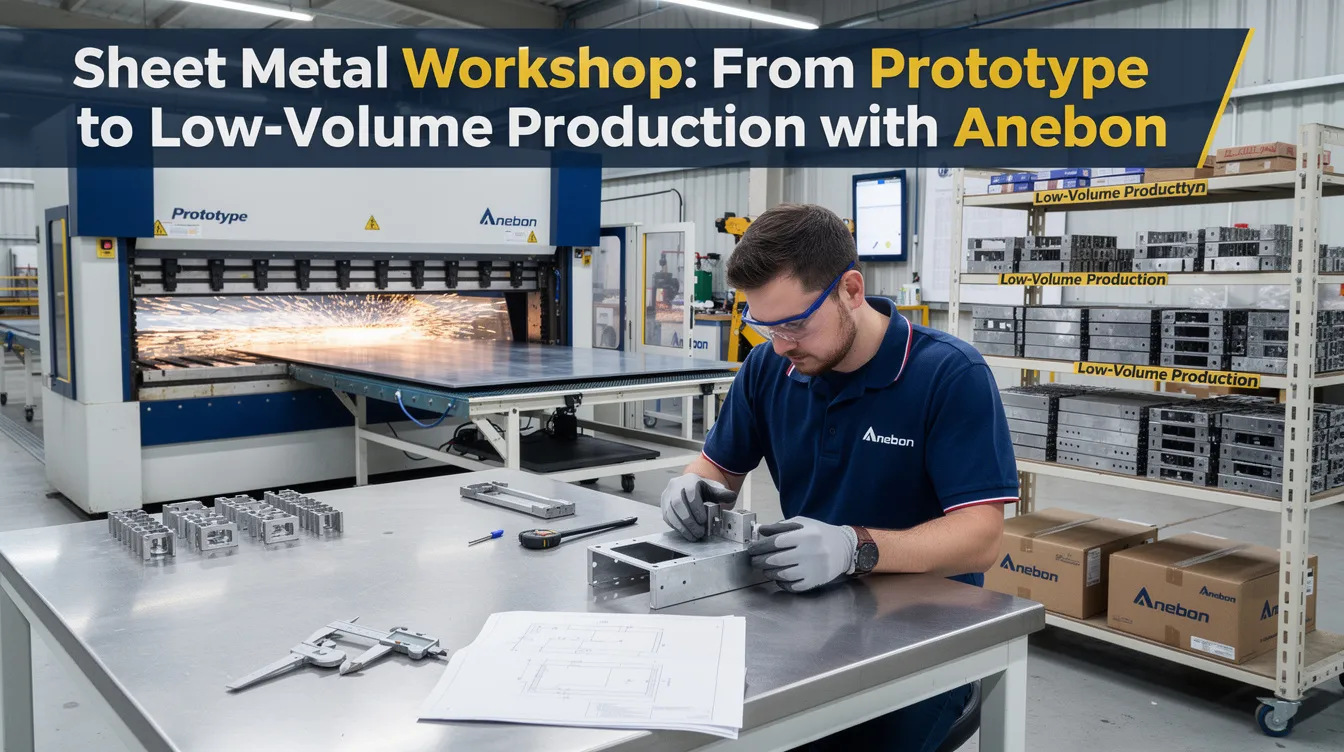
Sheet Metal Workshop: From Prototype to Low-Volume Production with Anebon
Introduction to Our Sheet Metal Workshop
A sheet metal workshop is a specialized manufacturing facility for processing metal sheets-where flat sheets or coils of metal are shaped into components and products through a combination of industrial equipment and skilled craftsmanship. Since 2010, Anebon Metal Products Limited has built a precision metal fabrication hub in Dongguan, China, serving overseas OEM customers who need everything from rapid prototyping to low volume production of custom sheet metal parts.
Our workshop offers sheet metal fabrication, CNC machining support, die casting integration, and complete assemblies for design engineers and R&D teams across Europe, North America, and Asia-Pacific. Sheet metal fabrication involves cutting, bending, forming, and joining processes, and this article walks you through each stage-covering capabilities, sheet metal materials, quality standards, and real-world applications inside a modern workshop.
Inside a Modern Sheet Metal Workshop
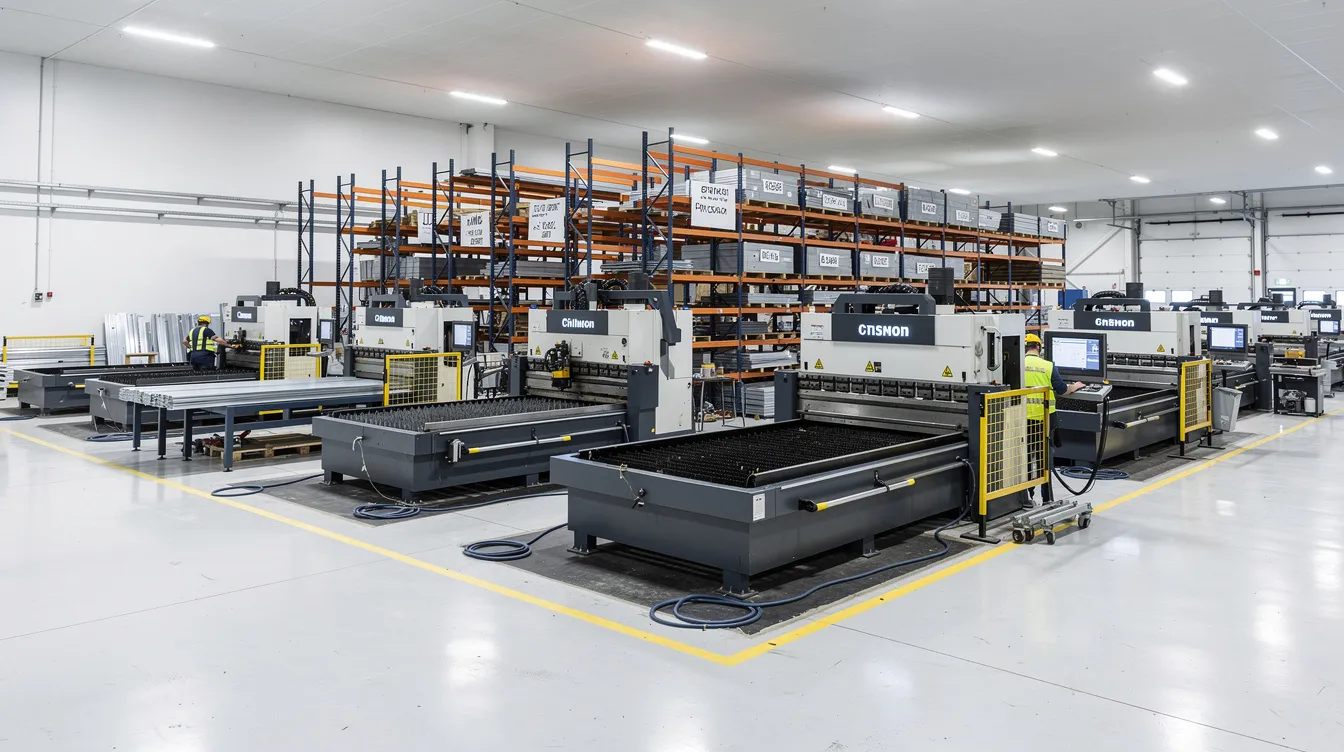
Anebon’s shop floor follows a logical flow: raw material storage feeds into laser cutting and punching cells, then forming stations, welding zones, a finishing line, an inspection room, and finally packing. Key machines include a 4 kW CNC fiber laser cutting machine, a CNC turret punch press, CNC press brakes with up to 3 m bending length, spot welding stations, and TIG/MIG welding setups. Press brakes are machines used to bend sheet metal into specific shapes, and they are a very important part of any fabrication facility.
Drawing tools like scribers and dividers help mark precise dimensions on sheet metal during layout, while precision instruments like calipers are used to measure sheet metal thickness before and during production. Digital job tracking via MES barcodes follows each metal part from material receiving through final inspection, ensuring full traceability. We typically process sheets in a thickness range of 0.5 mm to 6 mm across carbon steel, stainless steel, and aluminum.
Sheet Metal Fabrication Process in Our Workshop
The sheet metal fabrication process is a subtractive manufacturing process: you start with a flat sheet and remove material or reshape it to create the final part. Sheet metal can be cut, bent, or stretched into various shapes. Cutting techniques include shearing, CNC lasers, and plasma cutting, followed by forming, welding, and finishing.
The typical sequence runs: (1) RFQ and DFM review, (2) nesting and programming, (3) laser cutting or punching, (4) forming and bending, (5) joining and welding, (6) hardware insertion, (7) surface finishing, (8) inspection and packing. This process serves both single prototypes and repeatable batches of 1–500 pieces with consistent quality.
Design, DFM, and Workshop Planning
Engineers upload 2D drawings and 3D CAD files (STEP, IGES) so our team can review manufacturability before any material is cut. DFM checks cover minimum bend radius per material, hole-to-edge distance (at least bend radius plus material thickness), relief cuts near bend lines, and optimized forming sequences. Design for manufacturability feedback is now standard across the industry for quality improvement, and Anebon provides this within 24–48 hours.
For example, an electronics enclosure design was simplified by unifying all bend radii to a single value, cutting setup time by 40% and eliminating one welding operation entirely. Good project management at the planning stage directly shortens lead times in the workshop.
Laser Cutting and Punching Operations
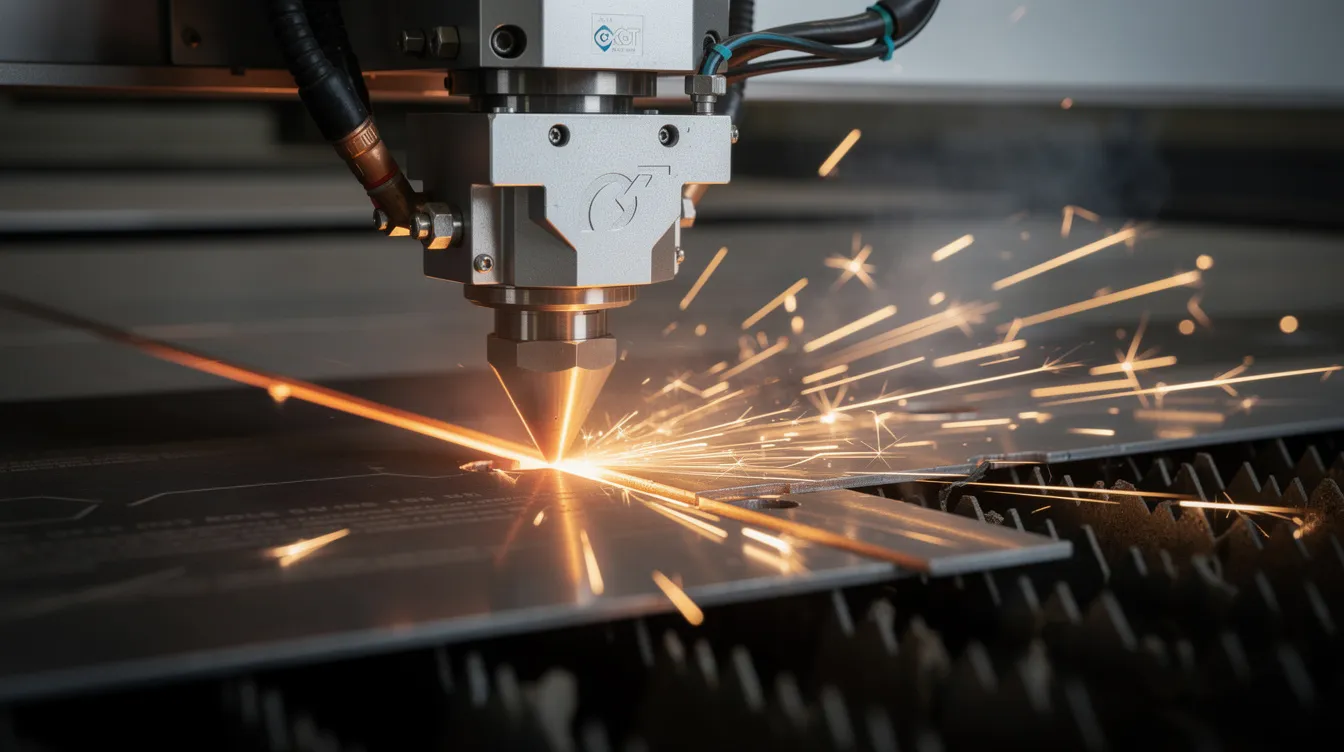
Laser cutting is a precise method for cutting sheet metal. Our fiber laser handles carbon steel, mild steel, stainless steel, and aluminum with tolerances of ±0.05 mm on thinner materials under 3 mm, widening to ±0.10 mm for mid-range gauges. Rapid tooling allows quick cutting into 2D profile shapes with minimal programming time, making it ideal for prototypes.
When a project calls for repeated holes, louvers, or simple patterns, turret punching is more efficient-our comparison guide explains when to punch versus laser cut. A recent example: chassis panels for an electronics OEM were laser-cut from 1.5 mm stainless steel sheets, nested to utilize over 85% of each sheet, and produced in batches of 200 with consistent edge quality.
Forming and Bending in the Workshop
Bending and forming processes shape sheet metal into three-dimensional components. Press brake forming creates linear bends on metal sheets, and our CNC press brakes handle bending operations across materials with programmed back-gauge positions and bend allowances. Slip rollers are used to curve sheet metal into cylindrical shapes for elements like housings and guards.
Minimum inside bend radius varies: mild steel at roughly 1× thickness, stainless steel at 1.5–2× thickness, and aluminum alloys like 6061-T6 at 2–3× thickness. Managing springback is critical-harder materials require overbending compensation. For an industrial machinery customer, we formed 2 mm mild steel brackets with multiple 90° bends, holding angle tolerances within ±0.5° and positional accuracy within ±0.3 mm on all surfaces.
Joining, Welding, and Assembly
Welding is a primary technique for joining sheet metal pieces together. Our workshop offers TIG welding for thin stainless steel, MIG welding for thicker carbon steel components, and spot welding for overlapping flanges. Welding techniques prevent warping during assembly of components through careful sequence planning and dedicated fixtures.
Hardware insertion-PEM fasteners, standoffs, threaded inserts-is handled by dedicated insertion presses for consistency. In one project, a welded stainless steel frame with inserted hardware was assembled into a finished medical device enclosure, requiring dimensional control within ±0.1 mm on all mating faces. Every repair or rework follows documented procedures before parts are delivered to the customer.
Finishing: From Raw Metal to Finished Product
Finishing processes in sheet metal fabrication include coating and deburring for aesthetics and protection. The right finish depends on material selection and the operating environment-indoor, outdoor, or corrosive conditions where rust prevention matters.
Common treatments in our workshop and via qualified partners:
-
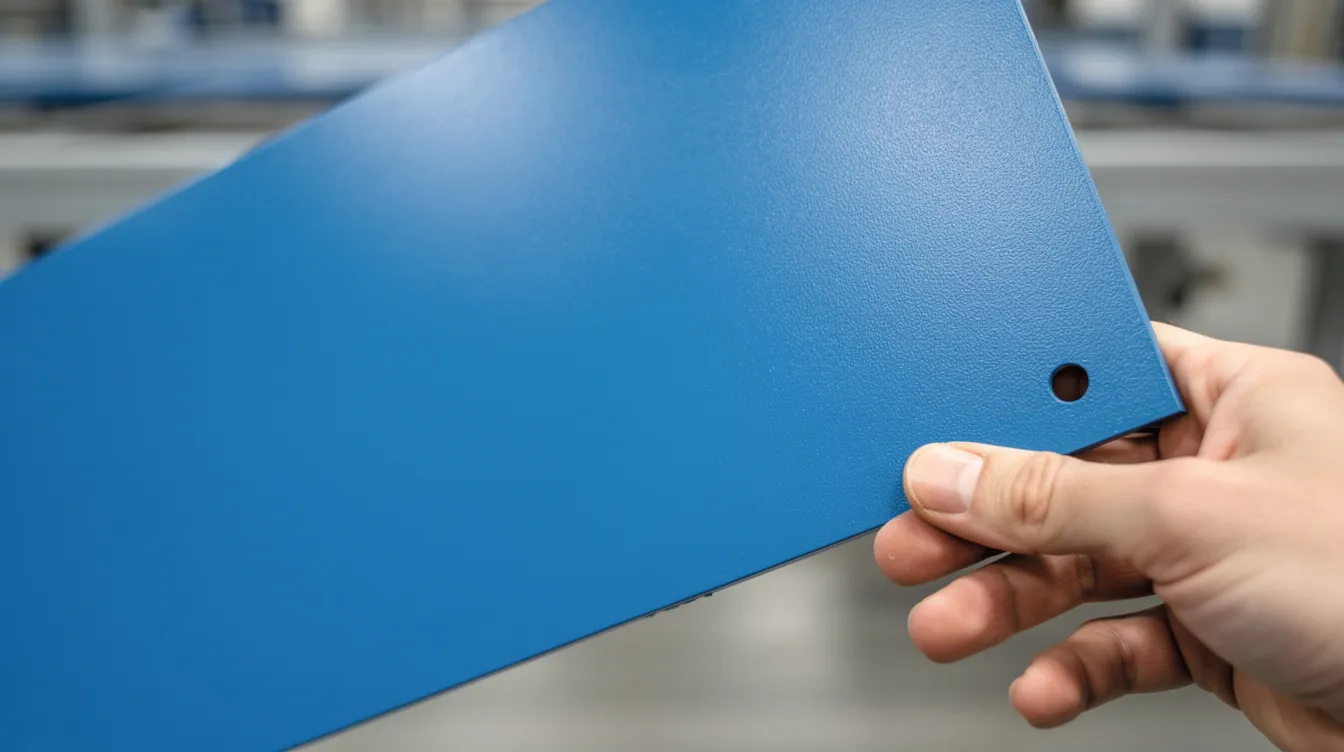
Powder coating creates a durable, wear-resistant layer, ideal for mild steel enclosures requiring durability
-
Type II anodizing creates a corrosion-resistant finish on aluminum parts
-
Chem film adds minimal thickness and conforms to MIL-DTL-5541 for aerospace applications
-
Gold plating provides excellent corrosion resistance and solderability for electronic connectors
-
Silver plating offers high electrical conductivity but tarnishes easily, requiring sealed environments
-
Brushing, bead blasting, and plating for stainless steel
-
Silk screening for logos, interface labels, and branding on enclosures
Each coating adds thickness-powder coating typically 0.05–0.2 mm per side-so dimensional planning accounts for this. We verify adhesion, coating thickness, and cosmetic appearance before packing. For a recent electronics OEM, we produced powder-coated mild steel enclosures with silk screened brand graphics, ready for installation at the customer’s site.
Sheet Metal Materials We Work With
Common materials used in sheet metal fabrication include steel, aluminum, brass, and copper. Industry suppliers offer aluminum, copper, steel, and stainless steel in standard gauges. Sheet metal thickness ranges from 0.024 in. to 0.250 in. (roughly 0.6–6.35 mm), and material choice directly affects cutting speed, bendability, corrosion resistance, weight, and cost. We stock standard gauges for fast turnaround and source non-standard sheets for specific projects.
Carbon Steel and Mild Steel in the Workshop
Carbon steel and mild steel are the workhorses of structural and industrial sheet metal parts. Steel A36 is widely used for structural applications including machine frames, brackets, support structures, and protective guards in buildings and construction. These materials offer excellent weldability, low cost, and are ideal for powder coating or painting. We regularly process mild steel up to 6 mm for overseas OEM customers needing durable components for machinery, roof-mounted equipment housings, and house utility enclosures.
Stainless Steel, Aluminum, and Specialty Alloys
Stainless steel is commonly used in food industry applications-specifically, stainless steel 304 is commonly used in food production applications where corrosion resistance and hygiene are paramount. Aluminum is preferred for weight-sensitive industries like aerospace, robotics, and portable electronics enclosures, often finished by anodizing. Stainless is typically brushed or passivated.
For specialty runs, Copper C110 is a popular choice for electrical applications such as bus bars, while titanium 6AI-4V is a high-strength material used in aerospace. We handle limited production volumes in these alloys based on project requirements, and cutting stainless or bending it requires adjusted parameters that our team manages daily.
From Prototype to Low Volume Production
Anebon’s sheet metal workshop is optimized for flexibility rather than mass stamping. While sheet metal fabrication supports high-volume commodity products, our strength is rapid prototyping and low volume runs that supply design teams with validated parts fast. The ability to adjust designs between iterations-without dedicated tooling-makes this approach ideal for early-stage product validation, pilot builds, and bridge production before scaling.
Rapid Sheet Metal Prototyping Workflow
Rapid prototyping lead times start at 3 days for simple flat parts, with typical prototype turnaround of 7–10 days after design confirmation. No minimum order volumes are required for rapid prototyping, and rapid prototyping can produce over 1,000 parts within days when geometry is straightforward. Low-per-unit costs are available for rapid sheet metal prototyping because the same laser and press brake programs scale directly from one piece to hundreds.
An electronics enclosure prototype evolved through three design iterations in a single quarter-each cycle taking under two weeks-before the design was locked for production. We take pride in collaborating closely with R&D teams to validate fit and function quickly.
Scaling to Repeatable Low Volume Batches
Moving from prototype to scheduled batches means refined fixtures, standardized welding jigs, finalized finishing specs, and documented work instructions. Each batch of sheet metal parts produced must match the approved first article. Typical shipments for overseas OEM projects range from 50–300 units, with logistic planning handled alongside the fabrication process.
For example, a low volume industrial control cabinet line is manufactured monthly with consistent quality-same dimensional results, same finish, same documentation package delivered every cycle. This is how a workshop maintains flexibility while implementing production-level process control.
Quality, Tolerances, and Certifications in the Workshop
Quality assurance processes are critical in sheet metal fabrication. ISO 9001:2015 certification ensures quality management standards across our operations, while ISO 14001:2015 focuses on effective environmental management systems. For context, leading fabricators like Protolabs fabricate over 37,000 parts each month with quality assurance-rigorous QA is the industry standard, and Anebon matches it for every project.
Typical tolerances: ±0.05–0.10 mm for cut features on thin sheets, ±0.5° on bend angles. Tighter tolerances are evaluated case by case. Inspection uses calibrated calipers, height gauges, CMM for 3D features, and go/no-go fixtures. Traceability includes material certificates, batch documentation, and inspection reports for regulated industries like medical and automotive.
Inspection Steps for Sheet Metal Parts
First piece inspection is required at every production step-after cutting, after bending, and before packing. Incoming sheet metal materials and certificates are verified on arrival. First-off inspection catches issues before a full batch runs, saving time and scrap.
Non-conformities trigger root cause analysis and corrective actions. In one case, tight-tolerance cutouts for a PCB mount required iterative adjustment and verification-laser parameters were tuned across three test pieces before the batch proceeded. This level of control is what purchasing managers and quality engineers should expect when evaluating a new supply partner.
Typical Workshop Projects and Applications
General applications of sheet metal fabrication include HVAC ducts, enclosures, and automotive parts. Sheet metal is used in aerospace and automotive industries for structural and cosmetic components. Beyond these, vending machines require multiple sheet metal components for construction, and sheet metal is essential for creating security doors and guard rails for commercial buildings.
Our workshop produces enclosures, chassis, brackets, panels, frames, and machine covers. Custom sheet metal parts are often combined with CNC machined components or die cast parts to form complete assemblies-for example, 2022 medical device enclosures for an EU client and 2023 robotics brackets for a US OEM. Fire-rated enclosures for industrial controls represent another growing category.
Enclosures, Brackets, and Industrial Frames
Typical electronics enclosures involve laser-cut panels, formed corners, welded seams, and powder-coated exteriors with silk screening for interface labels. Precision brackets and mounting plates support motors, sensors, displays, and PCBs in OEM metal products. Larger welded frames from thicker mild steel or stainless steel serve industrial automation equipment.
One project: a compact robot controller enclosure in 1.5 mm aluminum, anodized black, with laser-marked labels-50 units per month. Another: floor-standing industrial cabinets in 2 mm carbon steel, powder coated RAL 7035, shipped quarterly in batches of 30.
How to Work with Anebon’s Sheet Metal Workshop
Starting a project is straightforward: send your drawings and 3D models, specify sheet metal materials, finishes, quantities, and target dates. You will receive a quote with DFM comments and options to adjust the fabrication process for better cost or lead time. We respond within 24–48 hours, aligned to overseas time zones.
Combine sheet metal fabrication with our CNC machining and die casting services for complete assemblies-all managed under one roof. Request a quote, share your design files, or schedule a technical discussion with our engineering team to get your next project moving.