Mastering Wood CNC Cutting: Techniques for Precision and Creativity
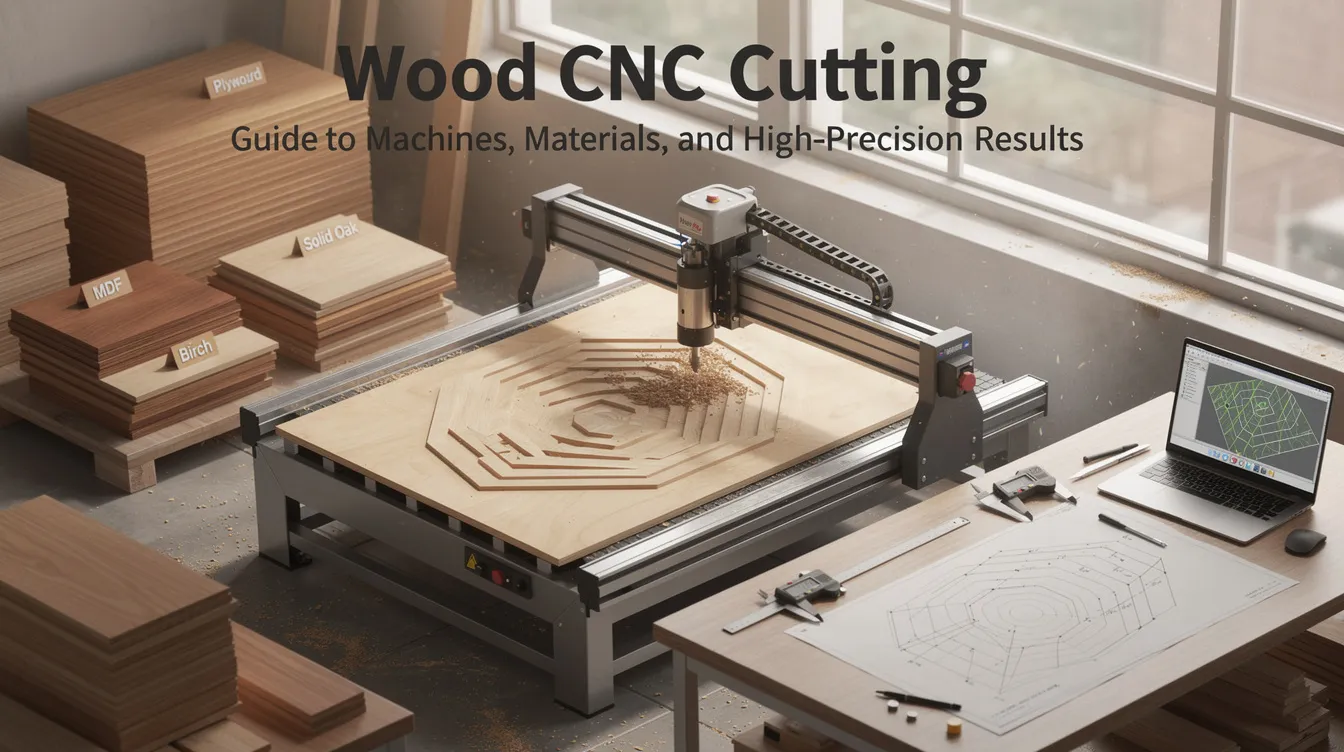
Wood CNC Cutting: Guide to Machines, Materials, and High-Precision Results
Introduction to Wood CNC Cutting
Wood CNC cutting is a computerized manufacturing process that transforms digital designs into precisely machined wood parts. CNC stands for Computer Numerical Control, and the technology allows a cnc machine to interpret CAD drawings, execute toolpaths, and deliver repeatable results across hundreds or thousands of identical components. CNC machines achieve incredible accuracy in complicated cuts, offering precision within 0.001 inches in many configurations.
Modern cnc routers and 5-axis cnc machines are widely deployed for furniture, cabinetry, signage, and OEM components in industries like automotive interiors and electronics enclosures. Anebon Metal Products Limited normally focuses on precision metal cnc machining, but the company also supports OEM clients who design wooden jigs, fixtures, and prototype housings cut on wood cnc machines.
The advantages over manual woodworking are clear: higher accuracy, faster production, and high quality results on every piece. CNC machines ensure zero variation in repeatable tasks and can produce identical parts consistently. In the sections ahead, we’ll cover spindle speed, feed rate, dust collection, the difference between benchtop cnc machines and industrial systems, workholding methods, and how wood prototyping connects to metal production.
What Is Wood CNC Cutting and How Does It Work?
Wood CNC cutting automates woodworking by converting digital designs into mechanical movements. Whether you’re routing nested cabinet parts from birch plywood, carving 3D reliefs in maple, or engraving details into mdf, the process follows the same core logic.
A cnc router or wood cnc machine uses computer-controlled motion along the X, Y, and Z axes to cut, carve, engrave, and mill wood. CNC routers use high-speed cutting tools held by a spindle to remove material layer by layer, operating along the X, Y, and Z axis to create complex shapes.
The CNC cutting process involves three stages: designing, programming, and cutting. It starts with a cad model or 2D drawing, which is imported into CAM software. CNC routing uses that software to generate the G-code necessary for machine operation. G-code is used to communicate movement paths to the cnc machine, directing stepper or servo motors to drive the gantry, spindle, and tables with high repeatability.
The main components of a wood cnc machine include a rigid frame, a gantry that carries the router or spindle, motion systems (ball screws for precision or belts for cost-sensitive builds), and a controller. The key difference between a metal-cutting machining center and a wood cnc router lies in speed ranges, rigidity, and tool types. Wood machines typically run at 12,000–24,000 RPM-much faster than metal machines-and use different types of router bits optimized for fiber-based materials.
Anebon’s engineering team often exchanges CAD/CAM data with customers so that wooden prototypes match the geometry of later aluminum or steel production parts.
Types of Wood CNC Machines for Cutting and Carving
Below is a comparison of machine formats-not specific brands-suited to different scales and applications. CNC machines can create complex 3D patterns and designs, handle various materials including wood and plastics, and create furniture, small signs, and toys.
-
Desktop and benchtop cnc machines – Working areas typically range from 300×300 mm to 600×900 mm. These are suited for design engineers and small workshops producing prototypes and short runs. Ideal for engraving, routing small panels, and testing an idea before committing to larger equipment.
-
Mid-size gantry cnc routers – Envelopes around 1300×2500 mm serve professional shops making cabinet parts, doors, and large panels. A gantry-style frame provides the rigidity needed for consistent edge quality across wide boards.
-
Large-format nesting cnc routers – Built for full-size sheets (4×8 ft / 1220×2440 mm), these machines often include automatic tool changers, vacuum tables, and advanced nesting software that maximizes yield from wood sheets. Professional shops running cabinets or architectural panels at volume rely on this format.
-
4-axis and 5-axis wood cnc machines – A 4-axis setup adds a rotary device for cylindrical work like furniture legs or columns. A 5-axis configuration introduces two rotational axes for complex contours, undercuts, and sculpted surfaces, offering greater flexibility for ergonomic tool handles or curved furniture components.
-
Router-powered vs. spindle-driven machines – Routers are lighter and less expensive, while dedicated spindles support higher duty cycles, better accuracy, and improved surface finish-an important distinction for production environments.
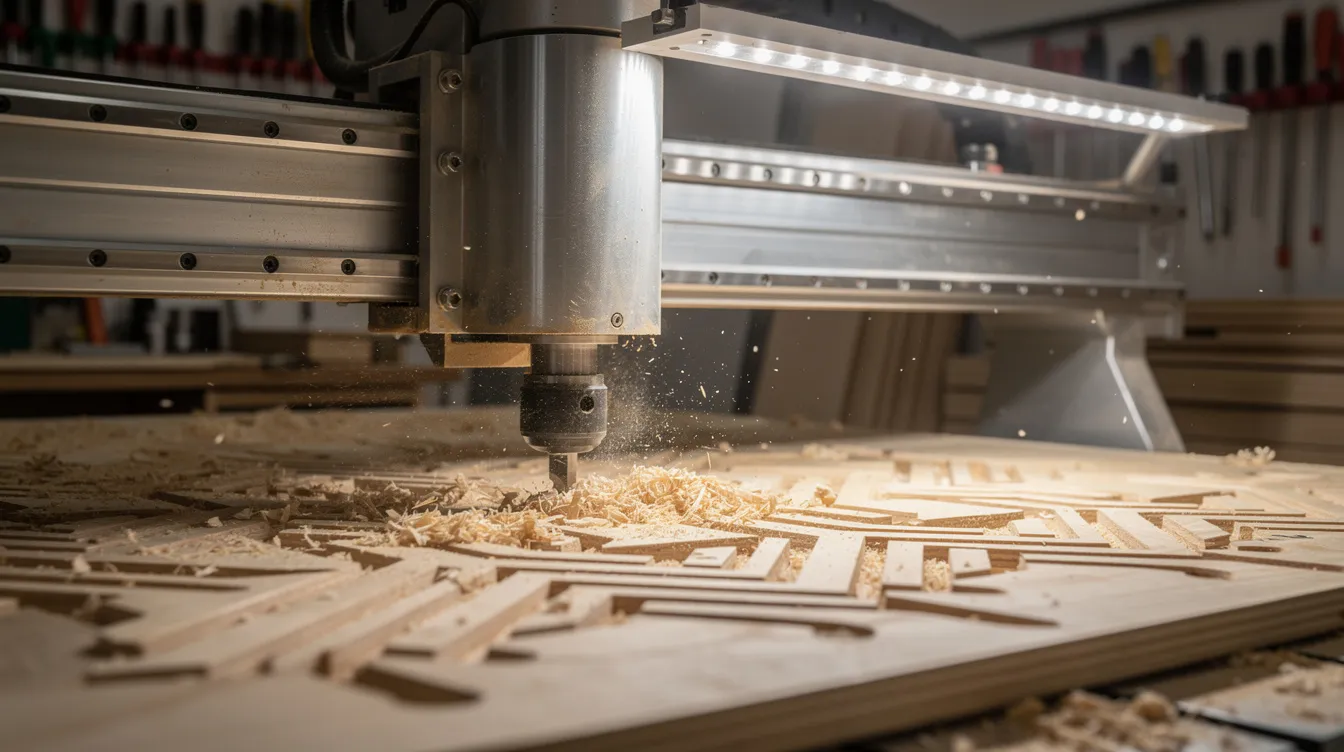
Choosing the Right Wood CNC Machine
Selection should be determined based on your budget, work envelope, accuracy requirements, and production volume.
Budget and price bands. Entry-level CNC machines start around $1,000 to $2,000 for hobbyists. Benchtop CNC units range from $1,500 to $6,000, while advanced CNC machines can cost $5,000 or more. Mid-range shop routers for professional use run $40,000–$200,000, and industrial systems with automation features push higher still. Precision and durability typically increase CNC machine costs, so it pays to understand how machining cost is calculated before committing.
Sizing the envelope. Match X, Y, and Z travel to your applications. Cutting 18 mm birch plywood cabinets demands a full-sheet bed; machining 3D reliefs in solid oak needs sufficient Z clearance and a rigid vertical axis. The setup should accommodate both current parts and foreseeable project needs.
Precision needs. For signage, tolerances of ±0.1–0.5 mm are typically acceptable. Furniture joints or OEM fixtures that interface with metal components require tighter control and rigid machine structures. Consider future growth when budgeting for CNC machines-starting with a smaller cnc router for prototypes and migrating to a larger automatic tool-changer machine as orders scale opens new opportunities without over-investing early.
Anebon can support customers by machining aluminum or steel brackets, fixtures, and reference parts that interface precisely with their in-house wood cnc equipment, ensuring that every component manufactured in wood aligns with later production geometry.
Materials for Wood CNC Cutting
Material choice directly affects tool wear, spindle speed settings, edge quality, and overall machining time. Here’s how the most common materials compare:
|
Material |
Machinability |
Key Characteristics |
|---|---|---|
|
Softwoods (pine, cedar, spruce) |
Easy |
Lower density, faster feeds, prone to tear-out across grain |
|
Hardwoods (oak, maple, walnut) |
Moderate–Difficult |
Higher density, risk of burning, greater tool wear |
|
MDF |
Easy–Moderate |
Uniform density, smooth surface, abrasive dust |
|
Plywood |
Moderate |
Layered veneers, risk of edge chipping, strong |
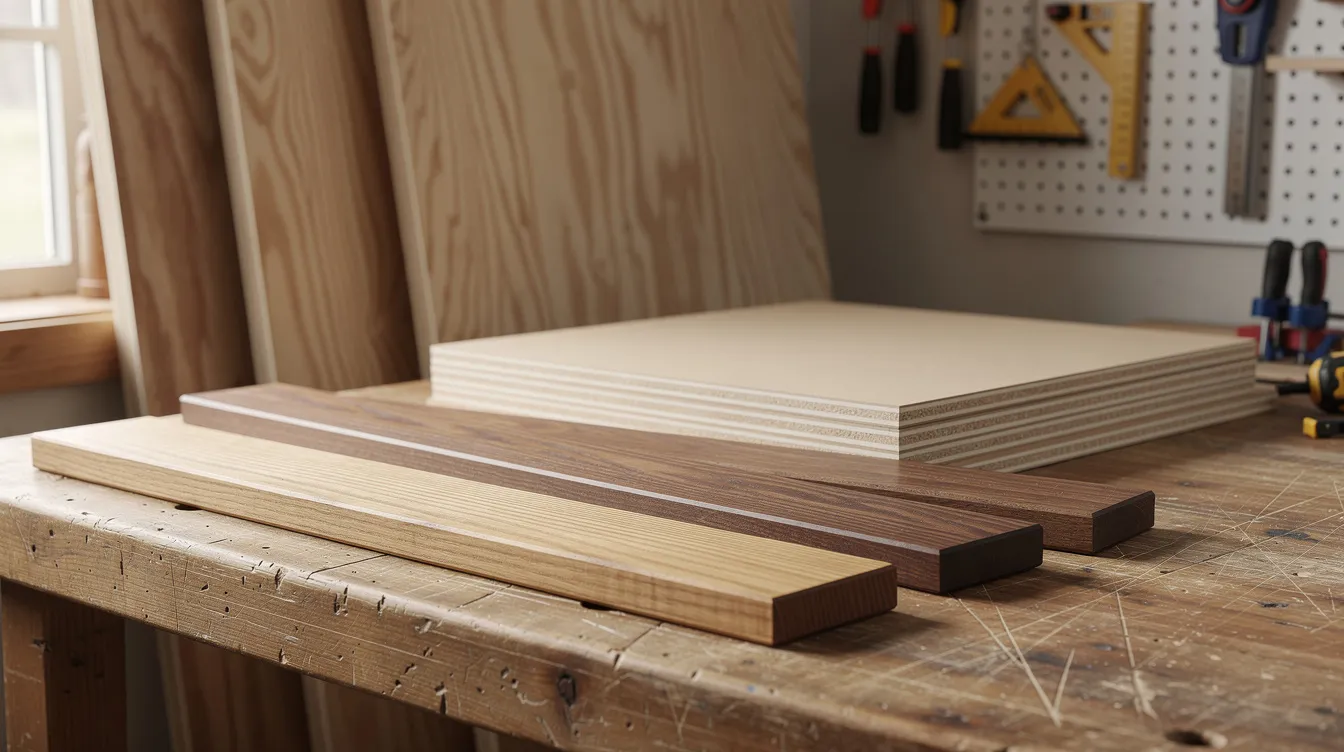
Softwoods such as pine and cedar are easier to machine and tolerate aggressive feed rates. Hardwoods like oak and maple are harder to machine and demand sharper tools, shallower cuts, and careful speed tuning. Woods with fewer knots are generally easier to machine regardless of species.
MDF is favored for its smooth surface and consistent density, making it ideal for prototypes and painted components. Plywood offers strength and stability for various projects, though veneer layers can chip at edges if bit geometry or milling direction isn’t correct.
Moisture content matters: wood should be dried to under 8–10% MC before machining. Seasonal movement can warp parts and degrade jig precision. Many of Anebon’s customers validate product ergonomics with wood or mdf prototypes before committing to aluminum or plastic injection-molded parts through rapid prototyping services.
Cutting Tools, Spindle Speed, and Feed Rate
Correct tooling and settings are essential for high quality results, long tool life, and cleaner cuts. CNC machines can handle complex designs easily-but only when the right tools and parameters are dialed in. Choosing the right cutting tool impacts final product quality more than almost any other variable.
Common tools for wood cnc cutting:
-
Straight router bits for dados and clean edges
-
Upcut and downcut spiral end mills for chip clearing or surface quality
-
Compression bits for tear-free plywood and laminated panels
-
Ball nose bits for 3D carving and contouring
-
V-bits for engraving and fine lettering
Router bits come in various shapes for specific tasks, and end mills are available in different diameters and flute configurations. For tool materials, HSS tools are suitable for general-purpose machining, but carbide tools offer superior performance and durability-especially on abrasive engineered boards.
Spindle speed (RPM) and feed rate interact to determine chip load and surface finish. A practical starting formula: Feed Rate = Chip Load × RPM × Number of Flutes. For a 2-flute ¼-inch upcut bit in softwood at 18,000 RPM with 0.004 in/tooth chip load, that yields roughly 144 IPM. Harder woods like maple often require lower feed rates and carefully tuned spindle speed, while softwoods tolerate faster passes.
Depth of Cut, Pass Strategy, and Achieving Clean Edges
Pass depth and strategy strongly impact accuracy, edge quality, and the risk of burning or tear-out. CNC cutting minimizes material waste due to precise cutting, but poor pass planning can still ruin a workpiece.
For thick or dense materials, multiple shallow passes outperform a single deep pass. Cutting 25 mm oak boards in five 5 mm passes reduces tool deflection, heat buildup, and chatter. Even 18 mm mdf benefits from at least two passes when clean edges are critical.
Climb milling-where the cutter rotation matches the feed direction-produces cleaner edges on veneered plywood and laminated panels. Conventional milling may be safer on machines with backlash but often leaves rougher surfaces.
Always test drive your settings on scrap material first. Use test cuts to refine depth of cut, feed rate, and spindle speed before machining final workpieces. Maintaining sharp tools and correct chip evacuation helps produce crisp contours for joinery like finger joints and mortise-and-tenon interfaces.
Example project: Cutting cabinet doors from 18 mm birch plywood using a compression bit at 18,000 RPM, two roughing passes at 9 mm each, followed by a finishing pass at full depth with reduced feed for crisp edges. CNC machining reduces production time significantly compared to hand-routing each door, and automated CNC processes improve safety by keeping operators away from moving parts.
Dust Collection and Workholding for Wood CNC Cutting
CNC wood cutting generates significant dust and chips. Without proper extraction, dust accumulates on rails, clogs bearings, obscures the workpiece, and poses serious health risks-wearing protective gear is crucial when cutting mdf and engineered woods.
Dust collection systems can range from shop vacuums for benchtop cnc machines to advanced extractors with centralized ductwork for larger routers. CNC wood routers typically have 6″–10″ air ducts for dust collection. Dust shrouds around spindles concentrate airflow and keep visibility high. Proper dust collection improves machining accuracy and quality by preventing chip recutting and heat buildup.
Workholding methods:
-
Mechanical clamps are a common method for workpiece securing-T-slot tables, toe clamps, and edge clamps provide strong hold but require careful placement to avoid tool collisions.
-
Vacuum tables require strong pumps for effective workpiece securing. Suction holds wood securely for edge profiling and undercutting, making vacuum ideal for nesting full sheets.
-
Spoil boards protect the machine’s worktable during machining and allow through-cuts while maintaining flatness for higher accuracy in repeated production runs. Periodic resurfacing keeps the spoil board flat.
-
Proper clamping prevents workpiece shifting during CNC machining-regardless of method chosen.
Anebon often designs and machines aluminum or steel fixtures that customers mount on their wood cnc machines for precise positioning of hybrid wood–metal assemblies.
Applications and What You Can Make with Wood CNC Cutting
Wood cnc machines serve both creative and industrial applications, opening new opportunities across a wide range of industries.
Common products include:
-
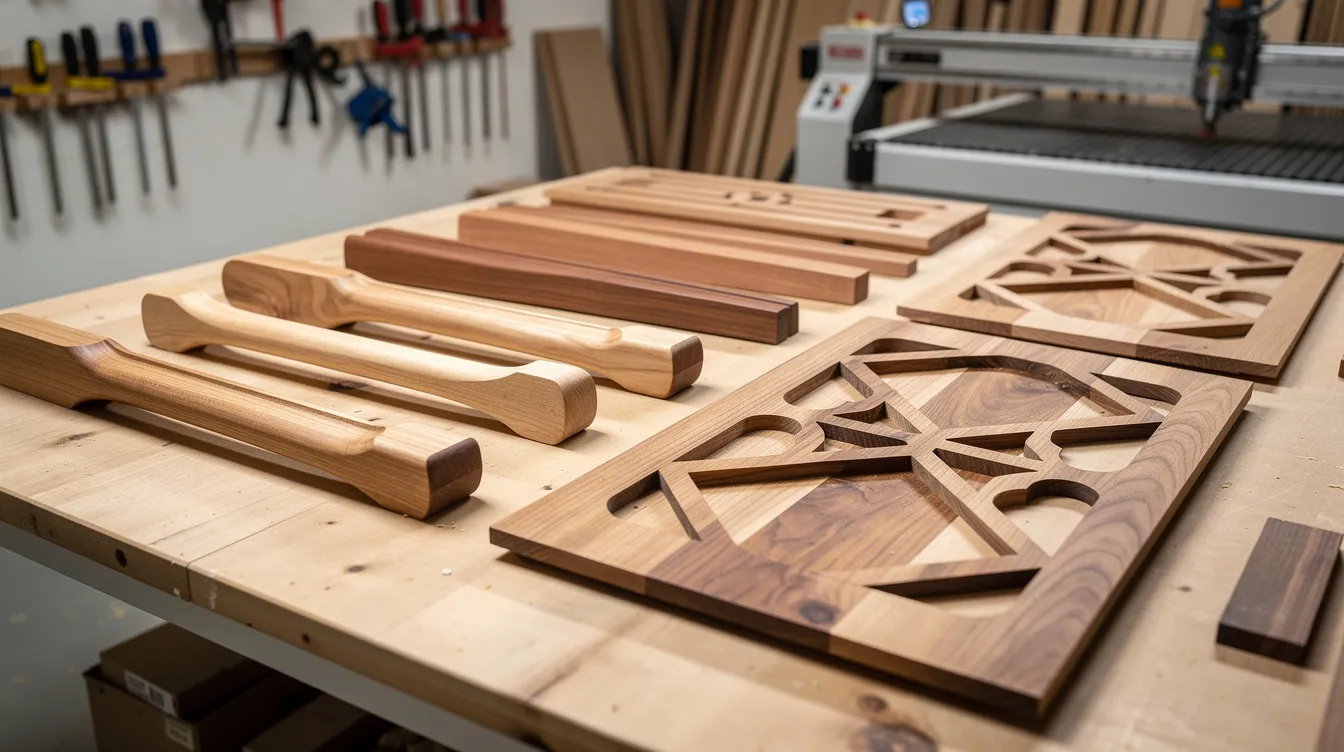
Furniture components-chair legs, tabletops, drawer fronts, and cabinets
-
Architectural panels with complex geometries and 3D relief carving
-
Signage, wall art, and musical instrument parts
-
Functional prototypes for consumer electronics housings and medical device grips
Industrial uses extend to wooden inspection fixtures, packaging nests, and ergonomic test grips for tools. Advanced nesting software in CNC machines maximizes yield from wood sheets, making batch production of identical parts economical.
A typical case: an OEM client prototypes an electronics enclosure in mdf, validates form and ergonomics, then sends the validated cad geometry to Anebon for aluminum cnc machining or die casting. Combining wood cnc cutting with metal and plastics components allows complete assemblies to be tested before full-scale OEM production.
Integrating Wood CNC Cutting into a Professional Production Workflow
Design engineers and OEMs can integrate wood cnc machines into broader product development pipelines to shorten cycles and reduce cost. CNC machines can run continuously without fatigue, increasing efficiency, and automation in CNC processes reduces human error in woodworking-making wood prototyping a reliable early stage in any manufacturing process.
A typical workflow looks like this:
-
Early ergonomic models cut on a benchtop cnc machine
-
Functional prototypes combining wood with metal inserts
-
Transfer of validated geometry to Anebon for aluminum, stainless steel, or plastic cnc machining via rapid prototyping
Consistent datum schemes and reference features are critical so that wood prototypes align with later metal and plastic parts. Anebon provides DFM (Design for Manufacturability) support-reviewing customer cad models and advising on features that affect both wood prototyping and final metal production.
Quality assurance matters even at the prototype stage. Using coordinate measuring equipment on critical fixtures ensures dimensions hold when the design transitions to metal. A well-planned workflow shortens development cycles and reduces risk for overseas OEM clients.
How Anebon Supports OEMs Beyond Wood CNC Cutting
While Anebon does not sell wood cnc machines, the company complements customers’ in-house woodworking capabilities with high-precision manufacturing services. When your wood prototype is validated and the design is ready to scale, Anebon steps in.
Core services include:
-
CNC milling, CNC turning, and 5-axis machining in aluminum, titanium, stainless steel, and engineering plastics
-
Die casting and sheet metal fabrication
-
Tight tolerances down to ±0.002 mm
-
ISO 9001:2015 and ISO 14001:2015 certifications
-
Experience since 2010 serving overseas OEM manufacturers
Anebon collaborates with design engineers who prototype with wood cnc cutting, then transition to durable production parts manufactured in metal or plastic. The operation spans from single prototypes to full-scale production runs.
Ready to move from wood prototype to production? Share your cad files or drawings with Anebon’s engineering team to receive DFM feedback, cost estimates, and lead time information. Request a quote at anebon.com and determine how your next project can go from wood prototype to precision-machined component-faster and with less risk.