Mastering the Art of Turning Titanium: Essential Tips and Techniques
Turning Titanium: Practical Guide to Parameters, Coolant, and Tooling
Introduction: Is Turning Titanium Really That Difficult?
Titanium is a sought after material in aerospace, medical, and high-performance automotive industries for good reason. Its strength-to-weight ratio, corrosion resistance, and biocompatibility offer many benefits that other metals simply cannot match. But turning titanium presents real challenges: its low thermal conductivity traps heat generated at the cutting edge, its chemical reactivity causes galling against the cutting tool, and its high strength at elevated high temperatures means cutting forces stay punishing throughout the process.
That said, machining titanium is not guesswork. Ti-6Al-4V turbine rings, compressor shafts, and Grade 2 medical housings are turned daily in production shops worldwide. The key is controlling the variables: sharp tooling, conservative surface speed, aggressive feed rate, and properly aimed high pressure coolant. This article covers the practical, shop-floor-ready details you need to achieve high quality results on titanium parts.
At Anebon Metal Products Limited, we have been turning titanium for overseas OEMs since our founding in 2010 in Dongguan. With ISO 9001:2015 and ISO 14001:2015 certifications, we bring documented process control to every titanium job, from rapid prototyping through full production.
Titanium Grades for Turning: Pure Titanium vs. Alloys
From a machinist’s perspective, the distinction between commercially pure titanium (Grades 1–4) and titanium alloys like Ti-6Al-4V (Grade 5) changes everything about your machining process.
|
Property |
Pure Titanium (Gr. 1–4) |
Ti-6Al-4V (Grade 5) |
|---|---|---|
|
Hardness |
~150–240 HB |
~302–340 HB |
|
Behavior |
Gummy, high galling risk |
Abrasive, high heat generation |
|
Thermal conductivity |
Low (~16–22 W/m·K) |
Very low (~6.7 W/m·K) |
|
Primary use |
Chemical processing, medical applications |
Aerospace applications, structural parts |
|
Machinability vs. steel |
~30–40% |
~20–25% |
Pure titanium is more ductile and softer, but its gummy nature makes chip evacuation and built-up edge a common problem. Ti-6Al-4V, with its alloying elements vanadium and aluminum, is stronger and harder, demanding more heat management and more wear-resistant tooling. Compared to other materials like steel or aluminum, both grades are significantly harder to turn.
Titanium is more expensive than other metals due to complex refining processes, and rigorous quality standards increase its manufacturing costs further. Designing parts for titanium requires careful consideration to reduce costs, which is why Anebon helps OEMs select the right grade during DFM and quoting – balancing performance requirements against machinability.
What Makes Titanium So Challenging to Turn?
When machining titanium, several physical properties work against you simultaneously.
Heat concentration. Titanium has low thermal conductivity, retaining heat in the chip and workpiece rather than dissipating it. This means more heat accumulates at the tool tip, often exceeding 500–600 °C in aggressive cuts. Unlike other metals, the workpiece itself acts as an insulator.
Strength and elasticity. Titanium retains strength at high temperatures and has an elastic modulus of ~110 GPa – roughly half that of steel. This causes spring-back, tool deflection, and higher cutting forces, particularly on long or thin features. Titanium is extremely ductile, leading to micro-vibrations during machining that degrade surface finish. It is also prone to deflection and vibration which affect surface finishes on slender parts.
Chemical reactivity and galling. Titanium is highly reactive, causing wear on cutting tools through adhesion and diffusion. It can gall and weld to cutting tool edges, forming built-up edge that changes effective geometry and accelerates failure. Titanium can also work-harden, increasing tool wear during machining if the tool rubs instead of cutting.
Chip behavior. Chips are short, tough, and hot. Titanium chips can spontaneously combust if not managed properly, especially under dry or poorly cooled conditions.
Shop symptoms to watch for: blue or purple discoloration on tools, squealing or chirping sounds, notched insert edges, dimensional drift over long passes, and worsening surface finish mid-cut. Any of these signals a titanium-specific problem that needs immediate attention.
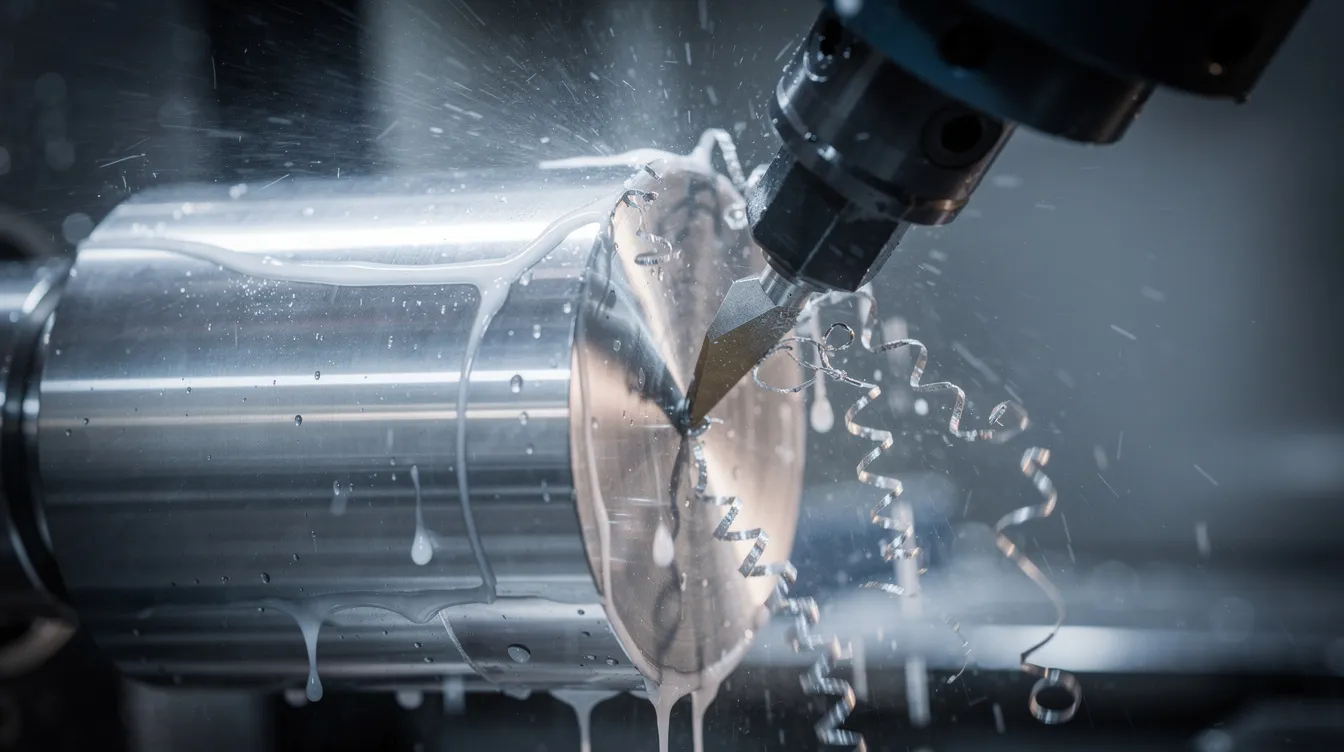
Tooling Selection for Turning Titanium
Standard steel tooling cannot be used for machining titanium. The material demands cutting tools specifically designed for high heat, chemical reactivity, and abrasive wear. Machining titanium requires specialized tools, increasing overall expenses, but the cost is non-negotiable for reliable results.
Substrate. Tungsten carbide and PCD are effective for cutting titanium. Fine-grain uncoated carbide inserts are preferred for machining titanium in many finishing scenarios, as they maintain a sharp edge without chemical affinity issues.
Coatings. High-performance coatings like titanium aluminum nitride (TiAlN) or AlTiN improve tool life in titanium machining by providing oxidation resistance at elevated temperatures. Avoid TiN coating – titanium has chemical affinity to it, which promotes adhesion. Use carbide-tipped tools with PVD coatings for better performance in production turning.
Nose radius. For Ti-6Al-4V, a 0.4–0.8 mm nose radius balances surface finish against chatter risk. Smaller radii reduce cutting forces on thin-wall parts; larger radii improve finish but increase radial engagement and vibration potential.
Insert selection at Anebon. We standardize on premium insert brands and match nose radius, chipbreaker, and coating to each customer’s part geometry, documented in the process sheet for every repeat job.
Cutting Edge Geometry and Chip Control
Maintaining a consistently sharp cutting edge matters far more in titanium than in steel or aluminum. Sharp cutting edges are crucial for effective titanium machining – a dull edge rubs instead of shearing, generating more heat and accelerating wear. Use sharp tools to achieve higher shear when machining titanium, and tooling for titanium must be extremely sharp to prevent wear.
-
Roughing: apply a light micro-hone (5–10 µm) to protect the edge from impact, but keep it minimal
-
Finishing: use the sharpest possible sharp edge to eliminate rubbing and reduce heat build up
-
Chipbreakers: select positive, open designs that form tight, controlled thin chips and push them clear of the cutting zone
-
Avoid stopping the cutting tool while in contact with titanium to prevent damage – dwelling causes localized heat and adhesion
Poor chip control leads to chip wrapping, re-cutting, and rapid notching of the insert. Plan tool indexing or replacement based on cutting time or length of cut, not visual inspection alone. Waiting for visible wear risks catastrophic tool breakage.
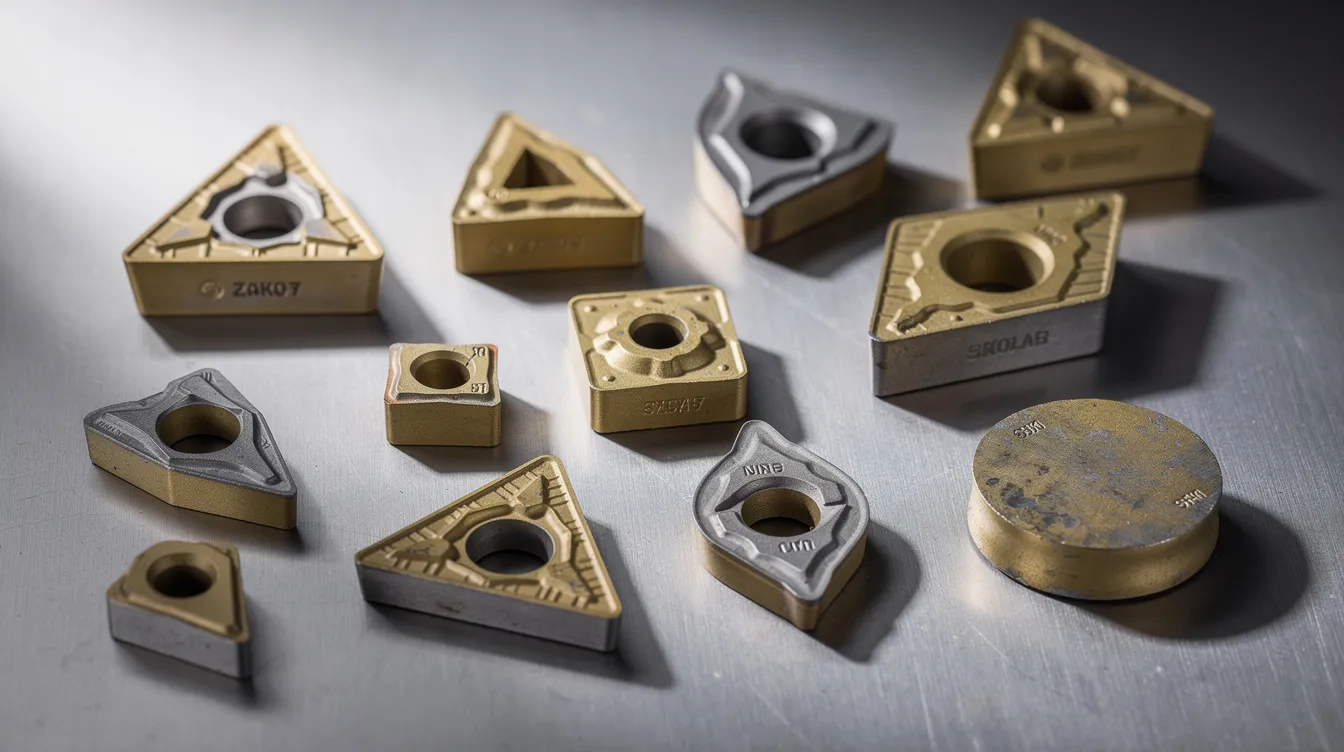
Setting Machining Parameters: Speeds, Feeds, and Depth of Cut
The core strategy for titanium machining is simple: lower cutting speeds combined with relatively high feed rates. This approach ensures the tool shears material efficiently, produces chips thick enough to carry heat away, and avoids the rubbing that destroys inserts.
Starting values for Ti-6Al-4V roughing on a modern cnc machine:
|
Parameter |
Roughing |
Finishing |
|---|---|---|
|
Cutting speed |
24–46 m/min (80–150 SFM) |
24–40 m/min |
|
Feed rate |
0.15–0.35 mm/rev |
0.05–0.15 mm/rev |
|
Depth of cut |
1.0–3.0 mm |
0.2–0.5 mm |
Maintain a cutting speed of 60–100 feet per minute as a conservative baseline, adjusting upward only with confirmed rigidity and coolant capability. Lower cutting speeds and higher feed rates are necessary when machining titanium to reduce heat generation and prevent tool wear.
For pure titanium, reduce speed slightly and watch closely for built-up edge. For high-strength alloys, expect faster tool wear and prioritize heat-resistant coatings.
Keep radial engagement and depth of cut stable throughout the pass. Intermittent contact or interrupted cuts cause thermal cycling and edge notching – avoid them where possible.
At Anebon, our process engineers determine initial machining parameters during prototyping, measure tool wear and surface finish, then lock optimized values into production process sheets.
Fine-Tuning Feed Rates and Step-Over for Accuracy
Feed rate directly controls chip thickness, and thicker chips carry more heat away from the cutting zone. Adjust feed rates to improve chip evacuation and reduce wear – but higher feeds demand sufficient machine rigidity and power.
For finishing titanium parts, feeds of 0.05–0.15 mm/rev with shallow depth of cut deliver tight tolerances and good surface finish. When feed rate drops too low, you get rubbing instead of cutting, which causes work hardening and unpredictable tool life.
Use constant surface speed (CSS) turning to maintain consistent cutting conditions along varying diameters and shoulders. This prevents the speed fluctuations that cause localized heat generation on larger workpiece features.
Managing Tolerances on Turned Titanium Parts
Titanium’s spring-back and heat retention make tight dimensional control more challenging than with steel. Tool deflection and workpiece deflection combine on long or thin features, requiring reduced depth of cut and mechanical support via steady rests or tailstocks.
For critical features, rough-turn first, allow a stress-relief step where appropriate, then finish-turn to final tolerance once the part temperature stabilizes. Measuring a hot titanium workpiece gives misleading readings – let it cool.
Anebon routinely holds tolerances down to ±0.005 mm on critical features using stable setups, short overhang tools, and in-process measurement. For heat-sensitive titanium parts, probing or periodic manual gauging compensates for dimensional drift as the part cools.
Coolant Strategy: High Pressure Coolant and Heat Control
Coolant strategy is as important as tool choice when turning titanium. Because of its low thermal conductivity, standard flood coolant often fails – it forms a vapor barrier (film boiling) at the tool-chip interface, insulating rather than cooling.
High pressure coolant solves this. At 50–80 bar (700–1,150 psi), directed precisely at the cutting edge and chip root, high pressure coolant breaks through the vapor layer and reaches the actual heat zone. Using high-pressure coolant reduces tool wear when machining titanium and can extend tool life by 2–4× compared to standard flood delivery. Ultra high-pressure coolant setups (80–100+ bar) further reduce tool wear in demanding continuous cuts.
High-pressure coolant can improve machining efficiency and reduce costs across production runs. Using high-pressure coolant also helps manage heat during titanium machining and improves chip evacuation by hydraulically lifting and breaking chips.
-
Coolant type: high-lubricity water-soluble or synthetic coolants formulated for difficult materials; avoid free chlorine
-
Coolant pressure: 35–70 bar minimum; higher where the machine supports it
-
Nozzle placement: aimed at chip root and under chip curl, not just flooding the workpiece
-
Fire risk: titanium chips can spontaneously combust if not managed properly – never machine titanium dry in production
At Anebon, we configure coolant nozzles, coolant pressure, and filtration systems on our multi-axis turning centers to maintain stable coolant delivery throughout the cut.
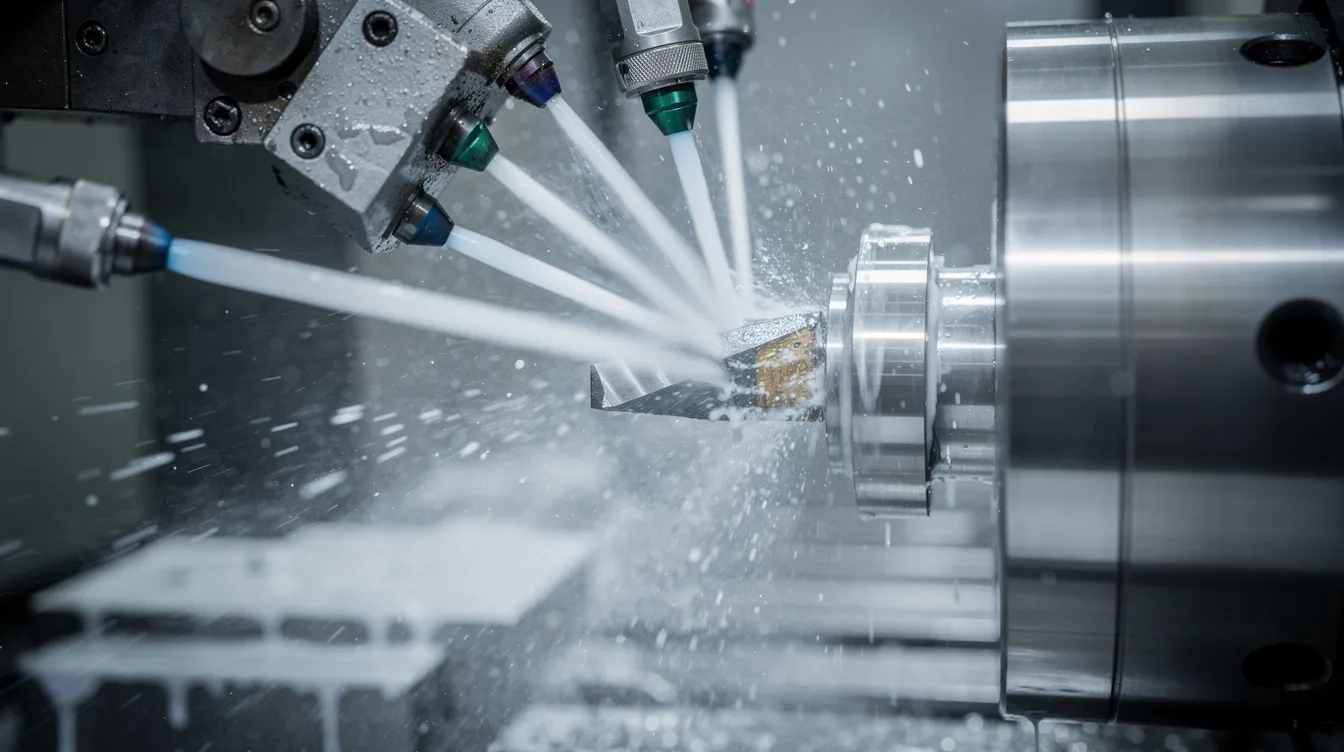
Heat Generation, Tool Wear, and Surface Integrity
Poor heat control during turning titanium leads directly to crater wear on the rake face, flank wear, and notching on the cutting edge. Visual signs include discolored chips, blue-purple tool surfaces, and micro-cracks at the insert edge.
Excessive heat also affects part quality beyond dimensions. In aerospace applications, heat-damaged surfaces can alter the metallurgical structure, reducing fatigue life – a critical concern for components like turbine discs and structural fittings.
When heat is excessive, make these changes:
-
Lower cutting speed
-
Increase feed rate to reduce heat generation per unit of material removed
-
Verify coolant pressure and nozzle alignment
-
Switch to more heat-resistant insert coating (e.g., AlTiN)
Anebon’s quality team checks surface roughness and inspects for heat-affected damage on critical components, especially for aerospace and medical customers where surface integrity directly affects part performance.
Workholding, Rigidity, and Vibration Control
Titanium’s elasticity and high cutting forces make rigid setups essential. Maximizing machine rigidity is essential to prevent vibration and deflection when cutting titanium. A flexible setup amplifies every problem titanium already creates.
-
Chucking: use properly sized chucks and collets with maximum jaw contact; avoid distorting thin-wall parts
-
Support: use tailstocks, steady rests, or follow rests on long shafts to prevent deflection
-
Tool overhang: keep it as short as possible; use rigid toolholders (shrink-fit or hydraulic) with minimal runout
-
Machine setup: select stiff machines with adequate spindle power and damping; document setup in process sheets for repeat jobs
-
Toolpath planning: avoid interrupted cuts where possible; keep the insert engaged smoothly to minimize impact loading
At Anebon, we select machine tools and fixturing specifically to maintain rigidity when turning titanium. Every setup is documented so repeat jobs run identically.
Preventing Chatter and Maintaining Surface Finish
Chatter ruins surface finish, accelerates tool wear, and causes tolerance drift. It is one of the most common problem areas in titanium turning.
To eliminate chatter:
-
Reduce tool overhang
-
Lower speed and slightly increase feed rate to shift force frequency away from resonance
-
Change nose radius or insert geometry
-
Use balanced toolholders and properly tuned boring bars for internal turning, especially at high L/D ratios
Operators should monitor sound during cutting – a change in tone is an early warning to adjust machining parameters before a tool fails. For critical aesthetic surfaces like medical device housings, Anebon pairs optimized turning passes with follow-up finishing processes like polishing or bead blasting for the highest part quality.
Process Optimization and Anebon’s Capabilities in Turning Titanium
At Anebon, we approach titanium turning as a controlled, repeatable process – not trial-and-error.
Our typical workflow:
-
DFM review – evaluate part design, recommend titanium grade, identify features that affect machinability
-
Strategy definition – select tooling, define roughing and finishing passes, set coolant conditions
-
Prototyping – run first articles, measure tool wear, surface finish, and dimensional stability
-
Production lockdown – document optimized machining parameters, insert types, coolant pressure, and tool change intervals
We use modern CNC precision turning and turn-mill centers, including multi-axis machines, to produce complex titanium parts in one or few setups. This improves accuracy, reduces lead time, and minimizes handling of a material that does not forgive sloppy process control.
Our quality systems include incoming material verification, first-article inspection, and full dimensional reports. For aerospace and medical customers, we provide surface integrity documentation and traceability from raw material cert through final inspection.
Whether you need five prototypes or five thousand production parts, Anebon delivers consistent, documented titanium turning with the tooling, coolant, and rigidity controls this material demands.
Ready to start your titanium project? Send your 3D model or titanium turning RFQ to our engineering team for a quote and manufacturability feedback. We will help you select the right grade, optimize the process, and achieve high quality results on every part.