Mastering Steel Sheet Rolling: Techniques and Applications Explained
Steel Sheet Rolling: Processes, Equipment, and OEM Applications
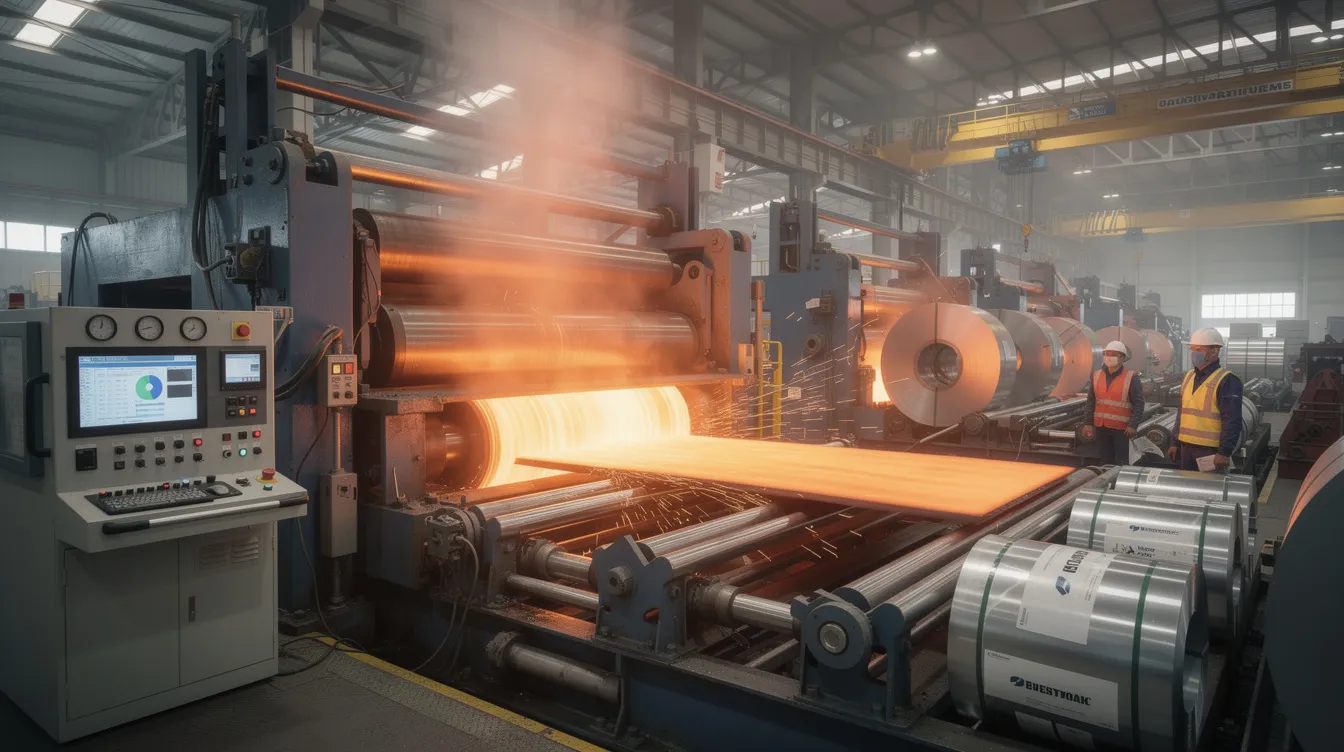
Steel sheet rolling is one of the most fundamental processes in metalworking, responsible for transforming raw steel into the flat stock, curved shells, and precision components that fabricators and industries rely on every day. In fact, steel rolling represents over 95% of ferrous and non-ferrous metal processing worldwide. This guide covers the basics of how the rolling process works, the equipment involved, and how OEM manufacturers can leverage integrated rolling and machining services for high-performance parts.
Overview of Steel Sheet & Plate Rolling
Steel sheet rolling and steel plate rolling are forming methods where the rolling process applies high compressive forces to transform steel into sheets, plates, or coils of controlled thickness. While both deal with flat steel products, they differ in scale and application.
-
Sheet metal is commonly defined as metal less than 1/8″ thick (roughly 3.2 mm). Steel sheet typically falls in the range of about 0.5 mm to 6 mm, with common steel sheet metal gauges ranging from 30 (thinnest) to 6 (thickest). Anything thicker than approximately 6 mm is generally classified as steel plate.
-
The terms are sometimes used loosely, but the distinction matters: thinner metal sheets require different equipment, tolerances, and handling than thicker plate material.
-
Plate rolling and roll forming are key processes in precision metal fabrication. Plate rolling creates cylinders, cones, and other shapes from flat plate, while roll forming continuously bends strip or sheet into constant cross-section profiles.
-
Rolling processes can create various shapes from sheet metal, serving sectors from automotive and aerospace to energy and construction.
-
Anebon Metal Products Limited provides steel sheet and plate rolling as a portion of a broader sheet metal fabrication service for overseas OEMs, combining rolling with CNC machining, bending, welding, and finishing under one roof.
Fundamentals of the Rolling Process
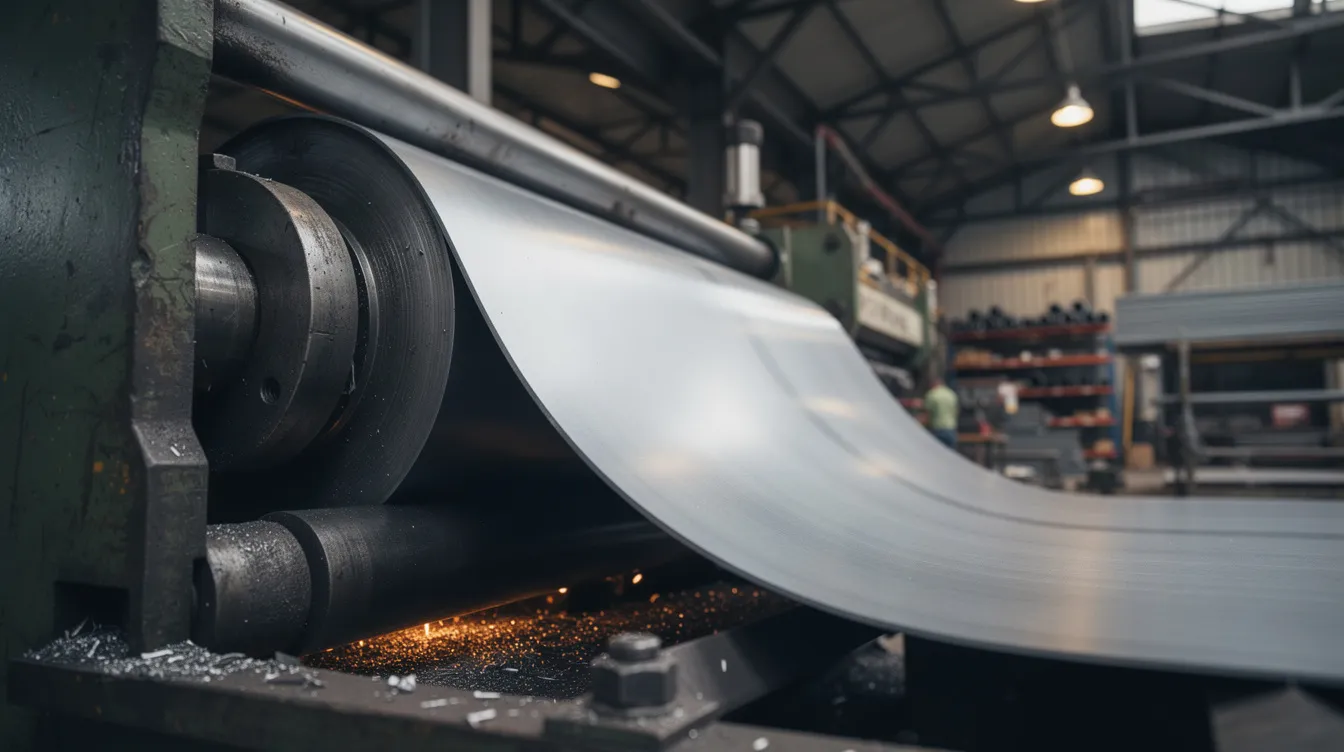
At its core, the manufacturing process of rolling works by passing metal between one or more pairs of rotating rolls. The rolls compress the material, reducing its thickness or imparting curvature depending on the setup. Sheet metal rolling reduces thickness and ensures uniformity across the length of the workpiece, while plate rolling bends flat stock into curved formed sections.
-
Flat rolling targets thickness reduction: metal is fed through a roll gap that is narrower than the incoming strip, elongating the material. This is how coil stock, flat bars, and uniform sheet are produced.
-
Plate rolling (roll bending) is basically the process of pushing flat plate between rolls to impart curvature. The top roller presses downward while side or bottom rolls support and drive the material, producing cylindrical, conical, or arc-shaped components. For guidance on cone forming specifically, see How To Roll A Sheet Metal Cone.
-
Roll configurations include 2-roll (simple, for light gauge work), 3-roll (pyramid or asymmetric, common for plate up to ~30 mm), and 4-roll machines (double-pinch, allowing pre-bending of both leading and trailing edges without repositioning the plate).
-
Roll gap determines final thickness or curvature radius. Roll pressure must exceed the material’s yield strength to achieve plastic deformation. Multiple pass reductions-rather than a single heavy pass-help control residual stresses and improve roundness.
-
Roll diameter is critical: the minimum achievable inner diameter of a rolled cylinder is typically 1.1× to 1.5× the top roll diameter.
-
Materials commonly rolled at Anebon include carbon steel, stainless steel (304, 316), and aluminum alloys (5052, 6061), along with copper and brass for specialized components. Thickness ranges span from below 1 mm for light sheet up to 20–30 mm for heavier plate, with tolerances kept tight through CNC-controlled equipment and secondary machining.
-
Structural components like beams and panels are also produced using rolled steel in primary mills before reaching the fabrication shop.
Hot Rolling vs. Cold Rolling of Steel Sheet
The choice between hot-rolled and cold-rolled steel sheet has a direct impact on dimensional accuracy, surface finish, mechanical performance, and cost. Understanding the trade-offs helps engineers and buyers specify the right stock material for downstream rolling, bending, and machining operations.
-
Hot rolling occurs above the recrystallization temperature-for steel, typically above 900–950 °C. At these temperatures, steel is highly malleable and easy to form into different shapes with minimal strain hardening. Hot-rolled steel requires less processing than other materials, making it cost-effective for large structural parts.
-
Hot-rolled steel typically has a scaled surface after the cooling process, with surface roughness (Ra) in the range of 3–12 µm. Hot-rolled metals have dimensional tolerances of 2 to 5%, which is acceptable for structural beams, machine frames, and welded assemblies where tight fit is less critical.
-
Cold rolling takes hot-rolled stock and further reduces it at room temperature (or slightly elevated). Cold rolling increases strength via strain hardening up to 20%, and full-hard cold rolling can reduce thickness by 50%. Cold-rolled steel provides precise and consistent surface finishes, with Ra values commonly between 0.4 and 2 µm and thickness tolerances of ±0.02–0.08 mm.
-
Cold-rolled products include sheets, strips, bars, and rods. However, cold-rolled steel is less malleable, making it harder to manipulate into complex shapes without annealing.
-
For OEM applications where surface quality and dimensional control matter-electronics enclosures, automotive body panels, precision housings-cold-rolled sheet is the standard. For heavy structural or industrial parts, hot-rolled plate stands as the more economical option. Learn more about how to form sheet metal for downstream operations.
-
Anebon typically purchases cold-rolled steel sheet for precision fabrication and hot-rolled plate for structural or heavy components, then further processes each through CNC machining, press brake forming, or plate rolling as the design requires.
Plate Rolling vs. Roll Forming
Plate rolling and roll forming are complementary sheet metal forming methods, each suited to different part geometries and production volumes. Choosing the right approach is determined by the shape, batch size, and engineering requirements of the finished component.
-
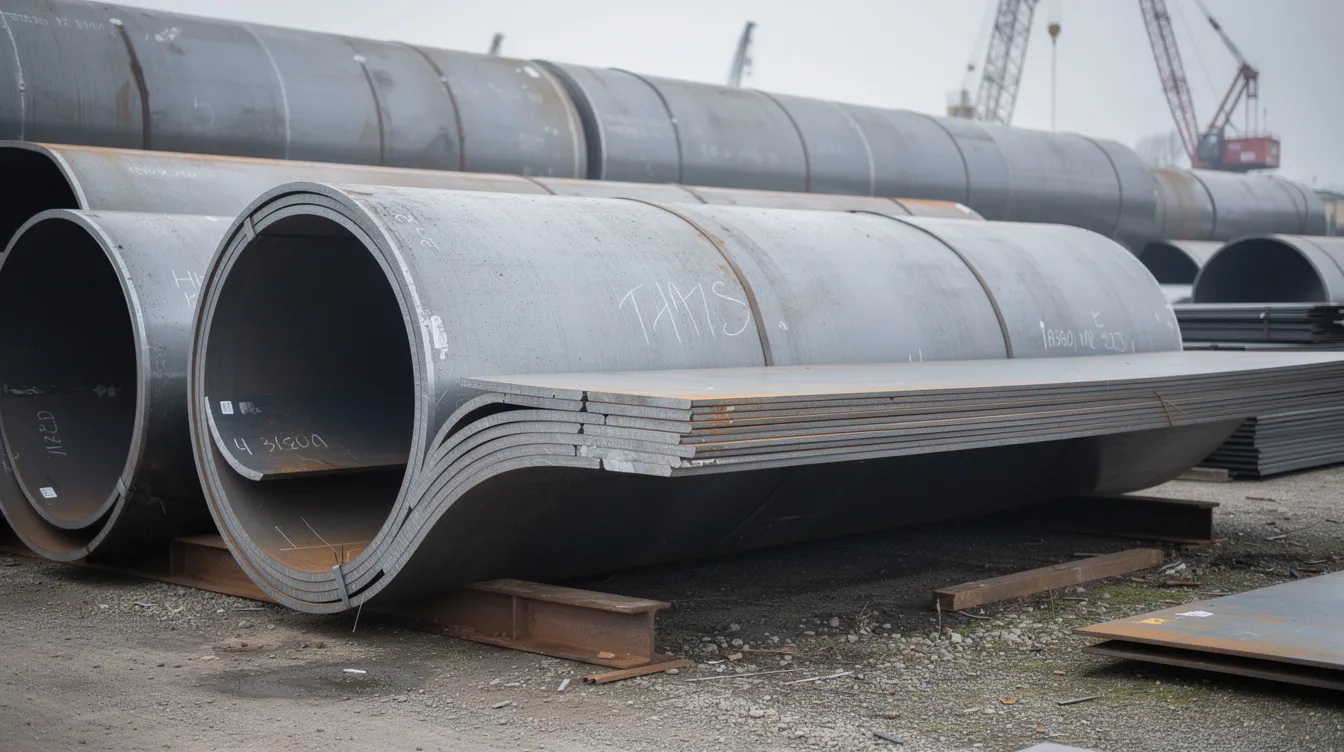
Plate rolling uses plate rolls to bend flat steel plate or sheet into cylindrical, conical, or arc-shaped parts. Common plate-rolled parts include pressure vessels shells, large diameter pipe sections, storage tank walls, boiler drums, and wind tower ring segments. In automotive manufacturing, exhaust system shells and muffler bodies are often plate-rolled from medium-gauge steel.
-
Roll forming is a continuous bending operation for metal strips or sheet, where the material is passed through a number of sequential roll stations. Each stand incrementally shapes the strip until the final cross-section profile is achieved. Roll-formed profiles include C-channels, U-channels, hat sections, cable trays, roof purlins, guardrail beams, and flashings. In construction, purlins and channels are commonly roll formed at high speed from galvanized strip fed from coil.
-
Rolled steel sheets offer a balance of formability, durability, and cost-effectiveness that makes both processes viable across industries. For a deeper comparison of the force dynamics, see Sheet Metal Forming Force Analysis: Press Brake vs Roll Forming.
-
Anebon selects between plate rolling and roll forming based on part geometry (curved shell vs. constant-profile length), batch size (roll forming favors medium-to-high volume; plate rolling suits custom or low-volume runs), and OEM design requirements including tolerance on roundness, angle, and edge condition. A press brake may also be used for simple bends or when the part geometry is better suited to single-hit forming rather than continuous rolling.
Equipment: Plate Rolls, Slip Rolls, and Rolling Mills
The equipment used for steel sheet and plate rolling varies widely-from compact benchtop machines to massive mill stands capable of handling stone-heavy slabs. Selecting the right machine depends on thickness, width, target diameter, and production volume.
-
Plate rolls for steel plate rolling typically use 3-roll or 4-roll configurations. Heavy-duty 4-roll machines can handle plate up to several meters wide and over 40 mm thick. Steel plate rolling can handle materials up to 10 inches thick (~254 mm) in the largest machines, and steel plate diameters can reach up to 22 feet (~6.7 m), enabling fabrication of massive cylindrical shells for energy and infrastructure projects.
-
A slip roll machine (also called a slip roller) is a smaller, lighter-gauge device commonly mounted on a bench or stand for prototyping, small cylinders, and thin sheet components. Typical max capacity is a few millimeters of steel sheet or thinner gauge aluminum, copper, or brass strip. Slip rolls are favored by fabricators for quick setup and ease of use on parts that don’t demand heavy force.
-
Industrial rolling mills used in primary steel production include two-high, four-high, cluster, and tandem configurations. Tandem mills allow rolling in one continuous pass, dramatically increasing speed and throughput. Rolling mills can produce various shapes like beams, channels, square sections, round bars, and flat strip from heated slab or billet stock.
-
Key control features on modern plate rolls include hydraulic systems for dynamic roll gap adjustment, CNC-controlled roll positioning for repeatable curvature, and pre-bending capability to minimize flat spots at leading and trailing edges. Roll crown-a slight convexity machined into the roll surface-compensates for deflection under load, keeping thickness uniform across the sheet width.
-
Anebon’s equipment suite integrates rolling capability with CNC machining, stamping, and forming tools, enabling tight roundness tolerances on rolled shapes that are then trimmed, machined, or welded to final specification.
Quality, Tolerance, and Surface Considerations
Tight dimensional and surface quality control in steel sheet rolling directly impacts fit, performance, and fatigue life of OEM components. Uncoated steel rusts quickly when exposed to moisture, so proper surface treatment and inspection at every stage are non-negotiable.
-
In flat cold rolling, sheet thickness tolerances of ±0.02–0.08 mm are routine. In plate rolling for cylindrical shells, diameter tolerances of ±1 mm and roundness accuracy above 99% are achievable on modern 4-roll machines. After secondary machining, Anebon can hold tolerances as tight as ±0.002 mm on critical features.
-
Factors affecting dimensional accuracy include roll deflection (countered by crown profiles), temperature variation during hot rolling and subsequent burning off of residual heat, material hardness, and springback-especially in cold-rolled and high-strength alloys. Steel is heavier than alternatives like aluminum or composites, which also influences handling and fixturing during rolling.
-
Common surface issues include mill scale on hot-rolled plate, roll marks from worn or damaged rolls, and slight waviness from uneven tension. These are mitigated by pickling, grinding (sometimes using a grinding stone for localized defects), flame or torch cutting to trim edges, or secondary machining.
-
ISO 9001:2015 certification ensures quality in steel rolling services by mandating documented processes for incoming material inspection, in-process checks (thickness measurement, diameter verification, surface roughness), and final inspection with full traceability. Anebon holds both ISO 9001:2015 and ISO 14001:2015 certifications. For correcting flatness issues, see How To Flatten Warped Sheet Metal and How To Straighten Metal Sheet.
Common Applications of Steel Sheet & Plate Rolling
Rolled steel sheet and plate serve across aerospace, automotive, industrial machinery, energy, and infrastructure sectors. The specific application is determined by material grade, thickness, geometry, and precision demands.
-
Common applications for heavy plate rolling include pressure vessels, storage tanks, silos, large-diameter pipe sections, flanges, and structural rings for wind towers or boiler drums-parts often 20–50 mm thick or more.
-
Light-gauge sheet metal parts (1.0–2.0 mm) include electronics enclosures, instrumentation housings, precision sheet metal parts for medical devices, and automotive body panels.
-
Roll-formed sections are used in building and construction (purlins, channels, guard rails) and in electronics (rack profiles, cable trays).
-
Other shapes achieved through rolling include custom curved panels for architectural façades, conical hopper sections, and drums for mixing or drying in industrial machinery.
-
Anebon typically supports overseas OEMs producing precision machine components, custom industrial enclosures, structural parts integrated with CNC-machined features, and medium-thickness rings or shells for robotics and automation equipment.
Anebon’s Integrated Sheet Metal & Rolling Services
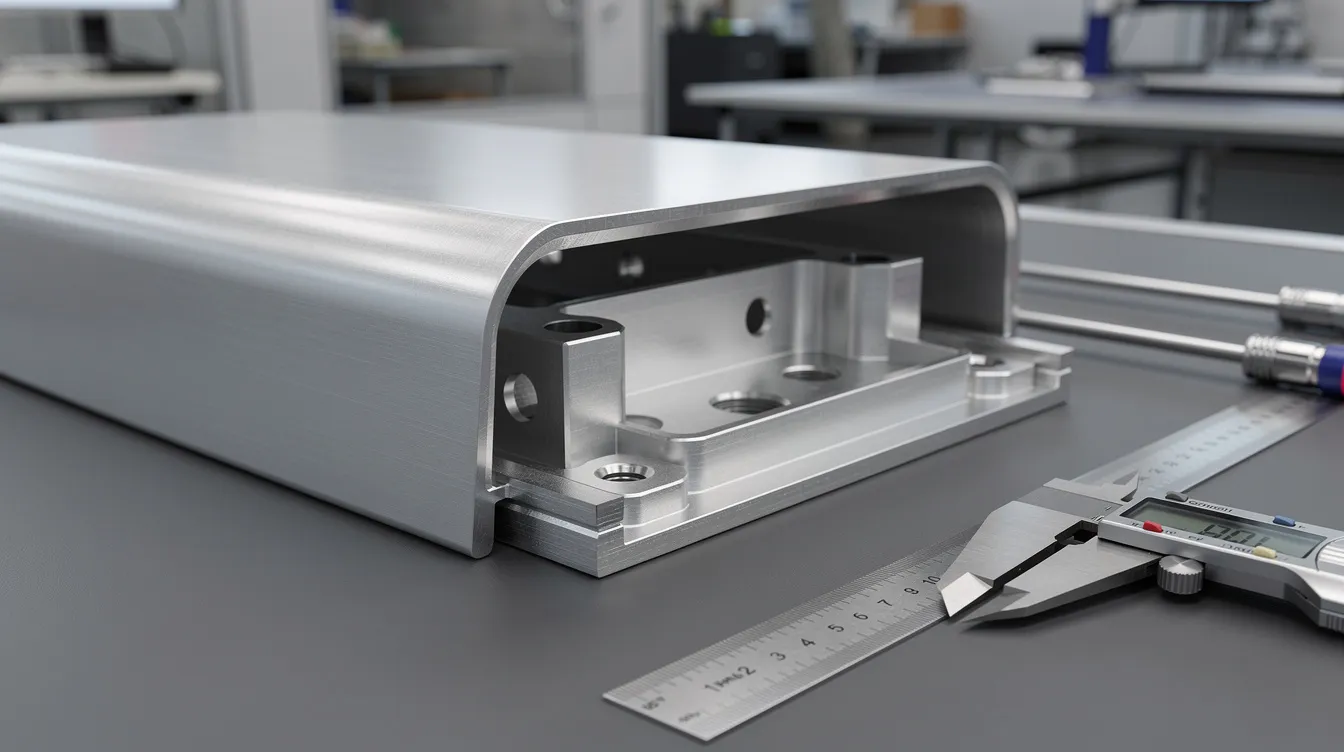
Anebon combines steel sheet rolling with CNC turning and milling, press brake bending, welding, and surface treatment to deliver turnkey OEM production-from rapid prototyping to full-scale manufacturing.
-
Design for manufacturability (DFM) support helps customers choose appropriate sheet thickness, rolling radius, material grade, and process sequence before production begins, reducing cost and lead time.
-
Complementary capabilities include CNC milling, CNC turning, advanced 5-axis machining, die casting, stamping, and full sheet metal fabrication-all performed around the rolled components to deliver finished, inspection-ready parts.
-
ISO 9001:2015 and ISO 14001:2015 certifications back every order with documented traceability and environmentally compliant processing, which is a baseline requirement for engineering teams at international OEMs.
-
Anebon’s differentiators include machining precision to ±0.002 mm, multi-material capability (steel, stainless, aluminum, and more), and integrated quality assurance that covers every step from incoming mill certificate verification to final dimensional and surface inspection.
-
Ready to get started? Send your drawings or 3D models-specifying radius, material, thickness, and tolerance-to Anebon’s engineering team to request a quote for steel plate rolling, roll-formed profiles, or any combination of sheet metal fabrication and CNC machining services.