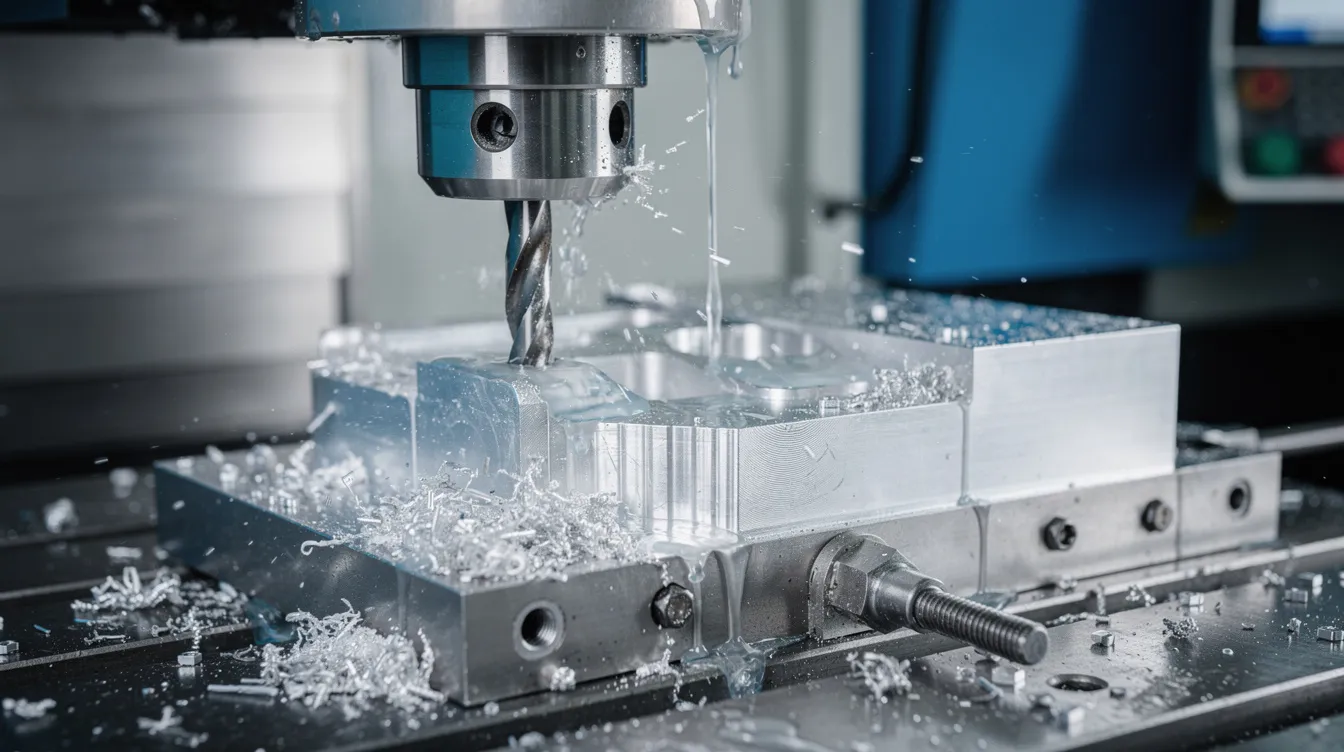
Mastering Mechanical Knowledge: Key Skills for Success in Engineering
Mechanical Knowledge Tests & Mechanical Aptitude: Complete Guide for Technical Hiring
Whether you hire CNC machinists, maintain utility equipment, or design aerospace components, mechanical knowledge tests are likely part of your screening process. This guide breaks down what these assessments cover, how the major test brands differ, and why mechanical understanding matters for anyone involved in precision manufacturing.
Quick Overview: What Are Mechanical Knowledge & Aptitude Tests?
Mechanical knowledge is the understanding of physical principles and mechanisms that govern machines. In modern technical hiring across manufacturing, aviation, utilities, and OEM production, this understanding separates candidates who can troubleshoot equipment from those who simply follow instructions.
-
Mechanical knowledge tests are standardized assessments that evaluate a candidate’s ability to understand mechanics, forces, motion, energy, and simple machines at a theoretical level-not hands-on skill checks.
-
Mechanical aptitude tests and mechanical reasoning tests focus on a person’s potential to learn and apply mechanical concepts, typically using diagrams of tools, gears, pulleys, and levers.
-
Mechanical comprehension goes deeper, assessing why physical systems behave the way they do, covering cause-and-effect in real-world scenarios.
-
Most modern tests blend these aspects. Mechanical knowledge tests help evaluate candidates’ theoretical knowledge, while aptitude tests assess understanding of mechanical systems and predict performance in technical roles.
-
Mechanical aptitude tests are used in hiring for technical roles across industries from aerospace to energy.
-
This guide is written from the perspective of Anebon Metal Products Limited, a precision CNC machining and fabrication partner whose clients’ engineering teams regularly encounter such assessments.
What Is a Mechanical Knowledge Test?
A mechanical knowledge test is a standardized exam that measures how well someone understands mechanical and physical principles-torque, friction, gear ratios, force equilibrium, and basic hydraulics-rather than whether they can physically operate a wrench or lathe. Mechanical knowledge involves applying principles of physics such as motion, energy, and force to predict outcomes in mechanical scenarios.
-
Mechanical knowledge tests assess understanding of mechanical systems. These tests are used in technical and engineering roles where equipment interaction is constant.
-
Question formats typically include multiple-choice items with diagrams showing mechanical systems, plus short word problems involving forces, motion, and energy transfer.
-
Common topics span levers (crowbars, seesaws), pulleys, inclined planes, gears, belts and chains, springs, friction, basic statics, and simple fluid systems including a closed hydraulic system.
-
Math requirements stay at basic arithmetic, ratios, and occasionally formulas like F = m × a or pressure = force / area. Advanced calculus is almost never required-keeping the reading level accessible.
-
They are often used in vocational training programs for admissions, and frequently administered alongside broader aptitude tests when screening for apprenticeships, maintenance roles, and technical training programs.
-
Tests are usually timed (20–30 minutes is typical), delivered online or on paper, and scored against large norm groups. Each candidate receives a raw score and often a percentile ranking for comparison.
Mechanical Aptitude vs. Mechanical Reasoning vs. Mechanical Comprehension
These three terms appear interchangeably in job ads and test catalogs, but they emphasize different facets of a candidate’s ability to work with physical forces and mechanical systems.
-
Mechanical aptitude refers to an individual’s potential to learn and work effectively with machines, tools, and mechanical systems-innate reasoning plus trainability.
-
Mechanical reasoning is the ability to logically predict what happens in mechanical scenarios. Mechanical reasoning tests assess understanding of physical systems through visual diagrams. For example: “If Gear A turns clockwise, Gear B (meshed) turns counter-clockwise. Gear B drives Gear C. What direction does Gear C turn?” The correct answer requires tracing rotational direction through the gear train.
-
Mechanical comprehension focuses on why physical principles produce specific outcomes-gravity, momentum, friction, pressure-and how cause-and-effect plays out in real equipment.
-
Many branded tests, like the bennett mechanical comprehension test, lean toward reasoning and comprehension rather than rote textbook physics. These tests are commonly used in engineering and military roles to evaluate mechanical understanding across diverse candidate pools.
Brief History of Mechanical Aptitude Testing (1910s–Today)
Mechanical aptitude tests originated in the early 20th century, driven by rapid industrialization and the urgent need to sort large populations into suitable technical roles.
-
During World War I (around 1917–1918), the U.S. military introduced Army Alpha and army alpha beta tests to screen recruits for literacy and general intelligence-laying groundwork for specialized mechanical assessments.
-
The U.S. military developed standardized assessments during World Wars I and II. In World War II (1940–1945), the Army General Classification Test (AGCT) and early mechanical comprehension subtests helped assign recruits to technical specialties. About 12 million recruits were tested using the AGCT during World War II.
-
The Bennett Mechanical Comprehension Test was established in the 1940s by George K. Bennett, quickly adopted across manufacturing plants, utilities, and aviation maintenance programs.
-
Post-war industrial growth-automotive expansion, airline maintenance, transit systems-made mechanical aptitude tests standard in factories, railroads, and skilled-trades hiring through the 1950s–1970s.
-
The 1990s–2010s saw a shift from paper booklets to computer-based testing, adaptive online platforms, and remote proctoring. The Wiesen Test of Mechanical Aptitude was first published in 1997, specifically designed to reduce adverse impact and bias.
-
Today, mechanical aptitude testing remains integral for energy, robotics, precision machining, aerospace, and defense-all sectors overlapping with Anebon’s OEM client base.

What Mechanical Aptitude Tests Actually Measure (and Why Employers Use Them)
Mechanical aptitude tests predict how quickly someone can learn mechanical tasks, troubleshoot equipment, and work safely around machinery. Mechanical knowledge bridges scientific theory with practical application for troubleshooting systems, and understanding how physical systems operate helps diagnose issues accurately and safely.
-
Core concepts measured include force and motion (Newton’s laws, inertia, acceleration), equilibrium and stability, simple machines (lever, pulley, wheel and axle, screw, wedge, inclined plane), gears and gear trains, springs and elasticity, and basic fluids (pressure, flow).
-
Common question types ask which object is more stable, which ramp requires less force, how changing gear sizes affects speed versus torque, or which pulley system delivers the greatest mechanical advantage.
-
Tests indirectly assess spatial relations and diagram interpretation-mentally rotating parts or visualizing cross-sections of assemblies.
-
Employers across manufacturing, utilities, railways, and aviation maintenance use these tests to reduce accidents, cut training time, and identify candidates who grasp mechanical cause-and-effect quickly.
-
Mechanical aptitude testing helps level the playing field for candidates without formal engineering degrees, focusing on reasoning and prior experience with physical systems rather than academic credentials alone.
-
High mechanical aptitude among client engineers and technicians improves collaboration on CNC machining, die casting, and sheet metal fabrication projects-where every setup decision carries tolerance consequences.
Major Types of Mechanical Aptitude & Mechanical Knowledge Tests
Many branded tests exist, each tailored to different roles-entry-level operators, engineering trainees, military recruits, or skilled tradespeople. Some emphasize theoretical mechanical knowledge, while other tests stress practical judgment about tools, maintenance, and real-world scenarios. Test choice depends on hiring context: heavy industry and utilities may use CAST or Ramsay, while apprenticeship programs or OEM factories typically prefer Bennett-type or Wiesen tests.
Bennett Mechanical Comprehension Test (BMCT & BMCT‑II)
The bennett test is one of the oldest and most widely researched mechanical aptitude tests, created in the 1940s by George K. Bennett.
-
The Bennett Mechanical Comprehension Test has 68 items and a 30-minute limit, covering intuitive understanding of forces, levers, pulleys, gears, weight, gravity, and basic physical laws.
-
BMCT-II is an updated version optimized for online and proctored delivery, with roughly 55 questions in 25 minutes.
-
The test uses simple diagrams and a reading level around Grade 6, minimizing reliance on advanced math or technical jargon.
-
Common use cases include manufacturing plants, utilities, transport companies, and apprenticeship programs screening maintenance technicians, machine operators, and auto mechanics.
-
Decades of validation data support its reliability (split-half coefficients of 0.81–0.93) and its ability to predict performance in training and on-the-job mechanical roles.
Wiesen Test of Mechanical Aptitude (WTMA)
The wiesen test was developed in the 1990s by Dr. Joel P. Wiesen to address fairness and bias concerns in older mechanical aptitude tests.
-
The Wiesen Test of Mechanical Aptitude has 60 items and a 30-minute limit, with three answer options per item and black-and-white images of everyday mechanical situations.
-
Reading level is about 6th grade, and a Spanish version exists, deliberately reducing linguistic barriers and adverse impact.
-
Content focuses on real-world mechanical reasoning: operating tools, understanding gravity and friction, evaluating simple machines, and predicting equipment behavior.
-
The Wiesen Test of Mechanical Aptitude has a reliability of 0.97, with evidence of reduced gender and racial score gaps compared with some older tests.
-
Use cases include pre-employment screening for plant operators, mechanics, assemblers, and equipment maintenance roles in manufacturing and service industries.
Stenquist Test of Mechanical Aptitude
The stenquist test was developed in the early 20th century as a picture-based measure of mechanical reasoning.
-
Items show common mechanical objects-hand tools, bolts, gears, brackets-and ask candidates to match or complete assemblies, requiring little specialized trade knowledge.
-
Certain versions (like the Stenquist Mechanical Assembling Test) involve physically putting parts together, historically used with candidates whose literacy levels varied.
-
The test emphasizes visual perception and problem solving over reading ability.
-
Although less common in modern corporate hiring than Bennett or Wiesen, Stenquist-type tasks still influence hands-on assessment centers and vocational guidance tools.
Ramsay Mechanical Aptitude Test (MAT)
Ramsay Corporation (founded 1955) publishes industrial skills and aptitude tests for maintenance and production roles.
-
The Ramsay Mechanical Aptitude Test features about 36 questions in 20 minutes, covering basic mechanical concepts, common tools (wrenches, screwdrivers, hammers), simple machines, and plant-floor scenarios.
-
Design minimizes influence of formal education and cultural background, focusing instead on common-sense mechanics and potential to learn maintenance tasks.
-
Typical users include food and beverage producers, automotive component plants, consumer goods factories, and distribution centers.
-
Example question style: choosing the safer way to lift a load with a hand truck-testing practical judgment over textbook knowledge.
CAST and Military/Defense Mechanical Tests (ASVAB Mechanical Comprehension)
The CAST (Construction and Skilled Trades Test) serves U.S. energy and utility sectors, selecting plant operators, lineworkers, and skilled trades trainees.
-
CAST includes four subtests-Mechanical Concepts, Reading for Comprehension, Mathematical Usage, and Graphic Arithmetic-with a total test time of roughly 90 minutes.
-
The ASVAB (Armed Services Vocational Aptitude Battery) Mechanical Comprehension subtest places military recruits into appropriate mechanical MOS/ratings. Items feature gears, pulleys, simple machines, and automotive basics.
-
While CAST and ASVAB serve specific sectors (utilities and military), their mechanical reasoning content is comparable to civilian mechanical aptitude tests and scores can help predict performance across technical fields.
Where and How Mechanical Knowledge Tests Are Used in Industry
Mechanical aptitude and mechanical knowledge tests fit into modern hiring workflows through online screening, assessment centers, and promotion paths across dozens of industries.
-
Common sectors: automotive assembly and Tier-1 suppliers, aerospace maintenance and MRO, precision machining and metal fabrication, power generation and utilities, rail and transit, oil and gas, logistics and warehousing, and military/defense.
-
Use cases include pre-hire screening for apprentices, selection for technical training programs, promotion into multi-skill maintenance roles, and safety-critical job assignments for crane operators and lineworkers. These tests are commonly used in engineering and military roles to evaluate mechanical understanding before placing personnel.
-
Scenario: a wind-farm operator uses CAST to screen turbine technicians, ensuring candidates understand mechanical concepts like torque, bearing loads, and hydraulic pressure before working at height.
-
Overseas OEMs working with Anebon on die cast housings or sheet metal enclosures rely on mechanically capable engineers and technicians-many of whom have passed such tests-to collaborate effectively on DFM reviews and tolerance decisions.
Typical Content Areas in Mechanical Knowledge & Reasoning Tests
Most tests, regardless of brand, draw from a similar pool of mechanical topics. Common topics include basic physics and mechanics principles applied to real-world equipment.
-
Force and motion: weight vs. mass, acceleration, inertia, friction, and momentum. Example: doubling the weight of an object on a ramp doubles the force required to push it upward at equal speed.
-
Simple machines: levers (class I, II, III), pulleys (fixed vs. movable, block and tackle), inclined planes, wheel and axle, screws, and wedges-all focusing on mechanical advantage calculations.
-
Gears and transmission elements: spur gears, direction of rotation, gear ratios, speed vs. torque trade-offs, belt and chain drives. A bicycle gear train is a common example.
-
Fluids and hydraulics: basic pressure concepts, Pascal’s principle, hydraulic jacks, brake systems. On a free practice test, you might calculate force across a closed hydraulic system where area ratios determine output.
-
Structural stability: center of gravity, tipping risk for ladders or vehicles, load distribution on beams.
-
Basic electricity where relevant: simple circuits, current flow direction, fuses, and the mechanical aspects of switches-since some tests blend mechanical reasoning with electrical work.
-
Mechanical reasoning tests often include questions on levers and pulleys, making these the highest-yield focus areas for more practice.
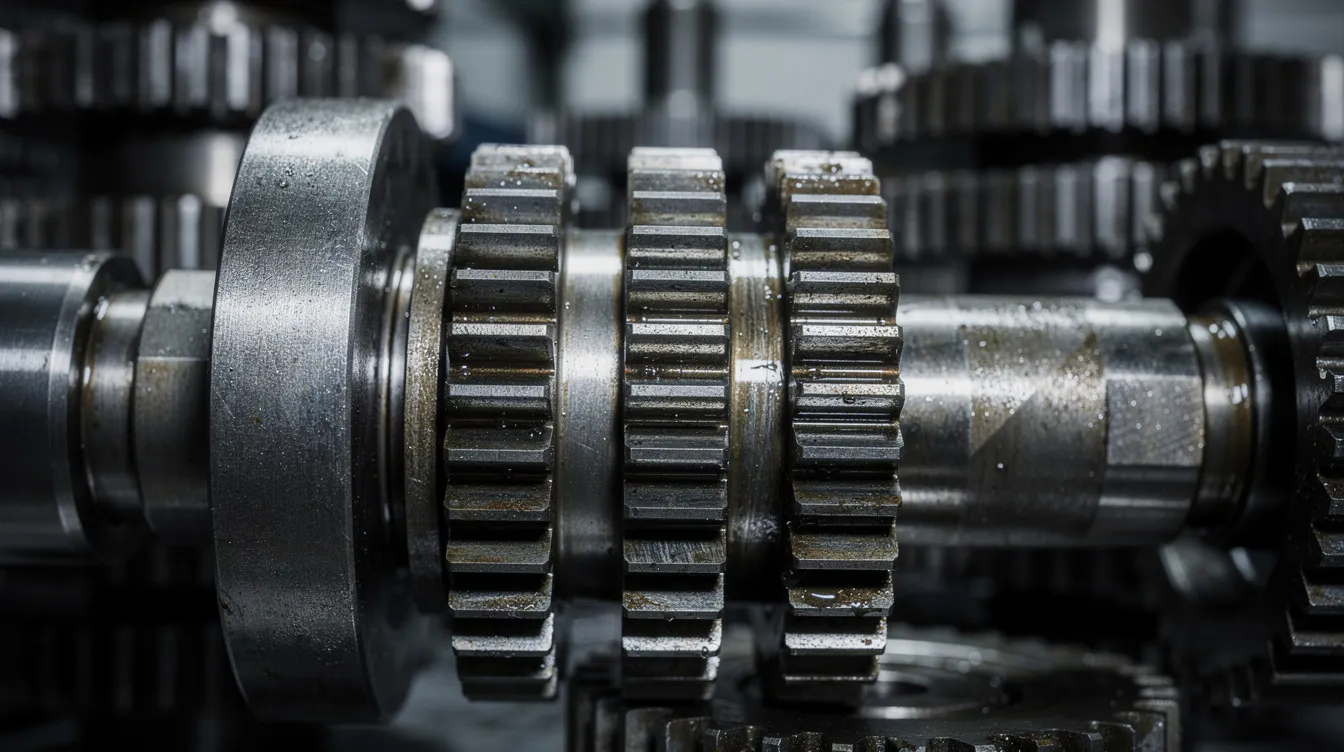
Mechanical Aptitude Tests in Modern Manufacturing & OEM Environments
In Industry 4.0 factories, mechanical systems, robotics, and software integrate tightly. Mechanical knowledge helps in identifying the root cause of malfunctions in systems where a single misalignment can cascade into costly downtime. Preventive maintenance involves routine checks to prevent machine breakdowns, and preventive maintenance in machinery requires understanding wear patterns, friction, and fluid dynamics.
-
OEMs use mechanical reasoning tests to identify candidates who can safely operate CNC machines, PLCs, robotic arms, and automated inspection systems.
-
Typical roles where mechanical skills matter: CNC machinist, toolmaker, die-casting technician, sheet metal fabricator, maintenance mechanic, quality inspector, and production engineer.
-
Higher mechanical comprehension reduces downtime, prevents incorrect machine setups, and improves root-cause analysis of defects-directly impacting job performance and scrap rates.
-
At Anebon’s facility in Dongguan, multi-axis CNC machining centers and 5-axis milling require operators who understand cutting forces, tool deflection, and workholding stability to hold tolerances as tight as ±0.002 mm.
How Anebon Metal Products Limited Applies Mechanical Knowledge in Practice
Anebon was founded in 2010 in Dongguan, holds ISO 9001:2015 and ISO 14001:2015 certifications, and specializes in CNC machining, die casting, and sheet metal fabrication for overseas OEMs.
-
Anebon’s engineers apply mechanical reasoning daily when reviewing customer CAD models, performing DFM reviews, and selecting manufacturing processes. Engineers use CAD software for product design and create precise instructions using Geometric Dimensioning and Tolerancing.
-
Design and analysis in engineering involve principles of dynamics, thermodynamics, and structural analysis-all of which determine whether a part gets milled, turned, or run on a 5-axis machining center based on geometry, loading conditions, and tolerance needs.
-
Understanding physical forces, vibrations, and thermal expansion guides fixture design, tool selection, and machining strategies to minimize distortion in thin-wall aluminum or titanium parts.
-
Key components of mechanical knowledge include engineering fundamentals, design and modeling, manufacturing techniques, and practical troubleshooting-all applied when recommending changes to wall thickness, ribbing, fillet radii, or draft angles on die castings to improve strength and manufacturability.
-
Material expertise matters: machining stainless steel vs. aluminum vs. plastics involves different thermal and mechanical properties that influence cutting parameters and part performance for aerospace, medical device, and electronics OEMs.
Developing Your Mechanical Aptitude and Knowledge
Mechanical aptitude can be significantly improved through structured study and hands-on practice. Having mechanical knowledge is essential for DIY projects and daily problem-solving, and understanding mechanical principles is crucial for successfully building or repairing projects.
-
Disassemble and reassemble small machines-bicycles, power tools, lawn equipment-to build intuition about gears, bearings, and fasteners. Knowing the fundamentals of materials and stress allows for safer and more durable repairs.
-
Practice with timed mechanical aptitude tests: drills on pulley, lever, and gear questions build speed and pattern recognition for the exam.
-
Study basic physics from accessible resources-community college courses, online lectures, or textbooks focused on statics and simple machines that cover energy, motion, and force.
-
Pursue hobby or entry-level experiences: automotive repair, 3D printing, basic CNC hobby routers, or robotics clubs all develop mechanical skills in context.
-
Mechanical knowledge empowers you to repair machines yourself, reducing maintenance costs-a benefit that extends from the home workshop to the factory floor.
-
Candidates pursuing jobs at OEM manufacturers or precision shops should combine theoretical test prep with real exposure to machine tools and production environments.
Preparing Specifically for Mechanical Aptitude & Mechanical Knowledge Tests
Success on these assessments is a mix of understanding key mechanical concepts, practicing typical question formats, and managing time under pressure. The first step is identifying which specific test you face.
-
Determine whether you will take Bennett, Wiesen, Ramsay, CAST, ASVAB mechanical, or a custom corporate test-and research its timing and content outline. In the Ramsay MAT, for example, 36 items in 20 minutes means roughly 33 seconds per question.
-
Focus practice on high-frequency topics: levers and pulleys, gear trains, friction vs. lubrication, ramps, mechanical advantage, and load stability.
-
Create a formula sheet: mechanical advantage = load / effort, pressure = force / area, gear ratio = driven teeth / driver teeth. Practice mental arithmetic for ratios and proportions.
-
Use official practice materials and reputable third-party sample questions that mimic real diagrams and difficulty levels. A free practice test can help you gauge baseline scores before dedicated study.
-
Test-taking strategy: start with easier items on the left side of the answer sheet, use elimination to narrow choices, visualize extreme cases (very long vs. very short lever arms) to reason about force on the right side, and prioritize accuracy over completing every question in heavily timed exams.
Key Takeaways: Mechanical Knowledge, Testing, and High‑Precision Manufacturing
Mechanical knowledge tests, mechanical aptitude tests, and mechanical reasoning assessments have a century-long history and remain central to hiring in mechanical, industrial, and defense sectors. They evaluate how well candidates understand the physical principles governing machines-and that understanding is determined by both innate reasoning and deliberate practice.
Major tests-the Bennett Mechanical Comprehension Test, Wiesen Test, Stenquist Test, Ramsay MAT, CAST, and ASVAB mechanical subtests-all aim to measure and predict how effectively candidates will work with machinery, physical systems, and technical equipment across industries. Mechanical knowledge is evolving with integration of AI, 3D printing, and renewable energy technologies, making these assessments more relevant than ever.
Strong mechanical comprehension aligns directly with real-world performance in precision OEM manufacturing, including Anebon’s CNC machining, die casting, and sheet metal operations where expertise in mechanical principles translates to tighter tolerances, lower scrap, and faster ramp-to-production. If you are an overseas OEM, design engineer, or R&D team evaluating manufacturing partners, consider mechanical aptitude not just as a hiring tool-but as a measure of whether your company’s production partner truly understands the mechanical designs they are asked to create.