Looking for Small Batch CNC Machining? Here Are Top Recommendations.
Looking For Small Batch CNC Machining – Who Is Recommended?
If you’re sourcing precision parts in volumes that don’t justify expensive tooling, finding the right manufacturing partner matters more than anything else on your project timeline. This guide covers who we recommend for small batch cnc machining, what to evaluate in a supplier, and how to get the best balance of cost and lead time for low volume orders.
Answer First: Who We Recommend For Small Batch CNC Machining
For overseas OEMs and engineers looking for small batch cnc machining, we recommend Anebon Metal Products Limited – a factory-direct manufacturer founded in 2010 in Dongguan, China. Anebon operates its own facility with full cnc machining capabilities, serving clients across Europe, North America, and Asia-Pacific with consistent quality on low volume orders.
Here’s why Anebon stands out:
-
In-house cnc milling, cnc turning, and 5-axis machining centers covering complex geometries and multi-face parts
-
ISO 9001:2015 and ISO 14001:2015 certified, meeting the quality and environmental standards increasingly required by EU and US procurement teams
-
High precision capability down to ±0.002 mm for critical features, with standard tolerances around ±0.01 mm for general parts
-
Proven track record with low volume production runs from 10 to 5,000 parts, handling everything from rapid prototyping to recurring small batch production
-
Small batch cnc machining typically produces 10 to 1,000 parts per order, and Anebon covers this range as a cost effective option before investing in injection molding molds or other expensive tooling
-
Engineers can upload CAD files and receive a quote within about 24 hours; lead time for small batch cnc machining is typically 5–7 days for standard parts, extending to 10–15 days for complex or finished components
-
Small-batch cnc machining offers quick turnarounds for low volume production, and Anebon’s workflow is built around this speed
Why Small Batch CNC Machining Is Ideal Before Injection Molding
Small batch cnc machining sits between first prototypes and mass production – the stage where you’re validating designs, testing market fit, or supplying early customers. At this point, committing to injection molding tooling is usually premature and financially risky.
-
Low volume cnc machining (from 1 to around 1,000–5,000 parts) eliminates expensive tooling costs for small batches and allows multiple design iterations before freezing the design for molds. CNC machining eliminates expensive tooling costs entirely, since each part is cut directly from stock using computer numerical control.
-
Injection molding tools for complex electronic housings or mechanical components can cost from $8,000 to $50,000 and add 4–6 weeks to lead time before a single usable part ships. CNC machining has zero mold cost and can start within days.
-
Small batch cnc machining allows for rapid design changes without new tooling – a critical advantage when engineering teams are still refining fit, form, and function.
-
Small batch cnc machining reduces lead time by 30% to 50% compared to traditional methods that require tooling fabrication. Turnaround time is critical for small-batch cnc machining projects, especially when product launch windows are tight.
-
For many 2025–2026 product launches in robotics, medical devices, and EV electronics, OEMs validated design and market fit with CNC batches of 50–500 units first, then shifted some SKUs to molding only after demand stabilized.
-
For ongoing niche custom products with annual demand under roughly 2,000 pieces, small batch CNC machining often remains the most cost effective option versus injection molding for the life of the product.
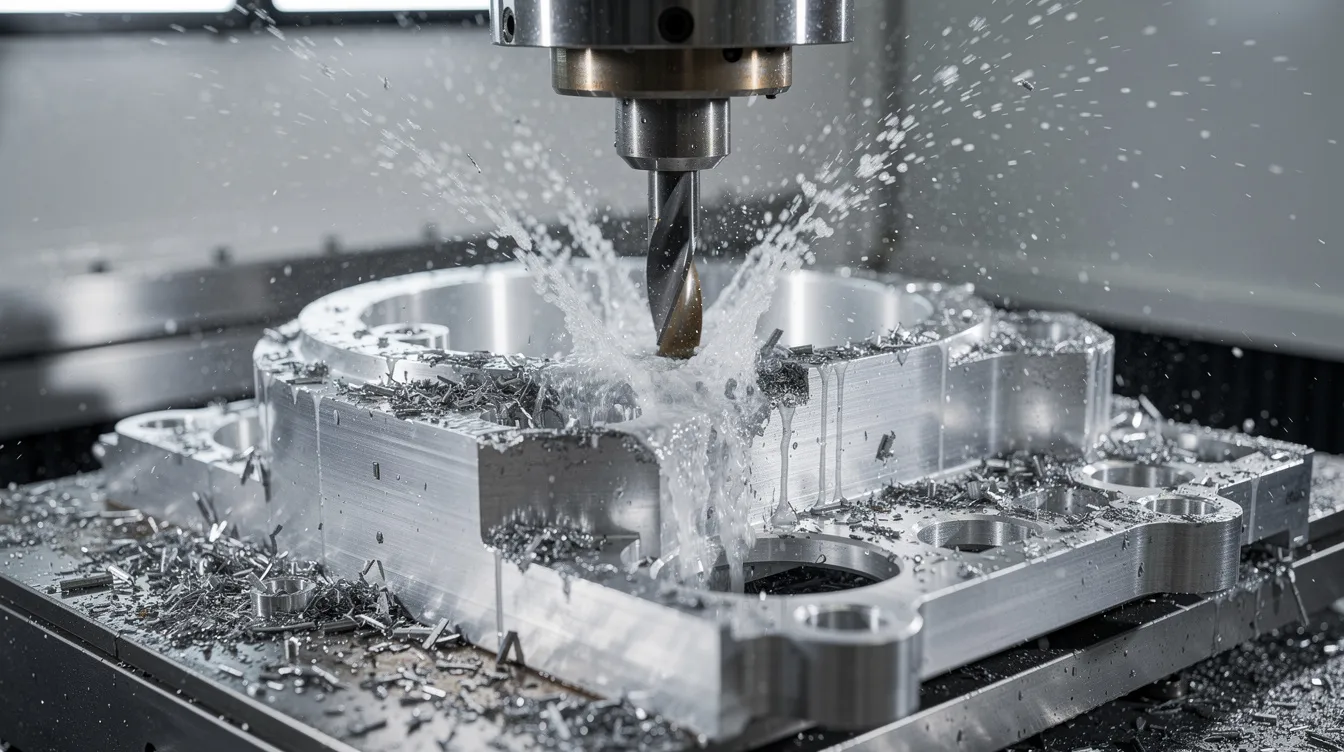
What To Look For In A Small Batch CNC Machining Partner
Choosing the right shop matters when you need high quality machined parts in small quantities on tight schedules. Part complexity influences the choice of cnc machining supplier, so look beyond marketing claims and evaluate concrete capabilities.
-
In-house cnc milling and cnc turning capacity, including at least some 4-axis or 5-axis CNC mills for multi-face work. Verify the shop’s machining centers and whether they can handle your part geometry without outsourcing.
-
Experience with batch cnc runs from 10 to 5,000 pieces, with flexibility to adjust quantities between orders. Key factors for choosing small-batch machining include setup capabilities and flexibility to handle mixed batches.
-
Ability to hold practical tolerances around ±0.01 mm or better. CNC machines can achieve tolerances as tight as ±0.01 mm, but evaluating technical capabilities of CNC suppliers should include their materials and tolerances expertise – not just headline claims.
-
ISO 9001 is the baseline quality standard for CNC suppliers. Also check for ISO 14001:2015, which indicates responsible environmental management and is increasingly required by EU and US OEMs.
-
Engineering support with DFM feedback on wall thickness, undercuts, tool access, and suggestions to reduce the machining process time. Asking for DFM feedback can lead to cost-saving design changes in CNC projects, and DFM analysis can reduce design rework by around 30%.
-
Responsiveness: RFQ response within 24 hours, clear communication in English, and realistic schedule commitments. Engaging with suppliers experienced in handling your material type minimizes manufacturing issues later in production cycles.
Why Anebon Is Recommended For Small Batch CNC Machining
Anebon is a factory-direct alternative to broker platforms and premium Western shops for cost-effective small batch cnc machining. Instead of routing your order through an intermediary who may assign it to an unknown subcontractor, Anebon machines, finishes, and inspects parts in its own Dongguan facility – giving you direct accountability and consistent dimensional stability.
-
Core capabilities: 3-axis, 4-axis, and 5-axis cnc milling; cnc turning with turn-mill capacity; plus die casting and sheet metal fabrication for integrated projects
-
Materials: aluminum, stainless steel, titanium, brass, and engineering plastics including ABS, POM, PC, and PEEK
-
Standard tolerances around ±0.01 mm for general parts and down to ±0.002 mm for critical features when required – competitive with high-end Western shops
-
Typical batch sizes from 10 to 3,000 pieces, with ability to scale some projects up to 10,000 using the same machining and inspection setups
-
Dongguan-based in-house production enables Anebon to deliver competitive pricing for international OEMs without relying on a loose supplier network, keeping production costs controlled
-
Quality assurance: documented first-article inspection, in-process checks, and final reports using CMM and other metrology tools. Providers of small-batch cnc machining should verify quality control through robust in-house inspection, and Anebon delivers this as standard practice for reliable part quality
-
Over 15 years of operation (founded 2010) with export experience to Europe, North America, and Asia-Pacific markets
Core Small Batch CNC Capabilities (Milling, Turning & More)
Anebon’s machining stack covers the processes most commonly needed for batch cnc machining and rapid prototyping across industries.
-
CNC milling: 3-axis, 4-axis, and 5-axis capability for complex housings, brackets, impeller-like shapes, and multi-face mechanical components. This is ideal for aerospace, robotics, and medical components needing accurate parts with complex geometries.
-
CNC turning: high precision cnc turning centers including turn-mill for shafts, bushings, connectors, and threaded components. Well-suited for automotive and medical small batch production where concentricity and surface roughness matter.
-
CNC machining capabilities can include turning, milling, and EDM processes. Anebon offers support processes like drilling, tapping, boring, surface grinding, and wire edm through partners for very hard metals or intricate internal features.
-
Rapid prototyping services are crucial for engineering iterations and pilot production. Anebon’s setup is optimized for low volume and small batch cnc orders – not just large production runs – so setup time overhead stays manageable even for fewer parts.
-
Small batch cnc machining is ideal for rapid prototyping and design validation, and all of these processes support that workflow directly.
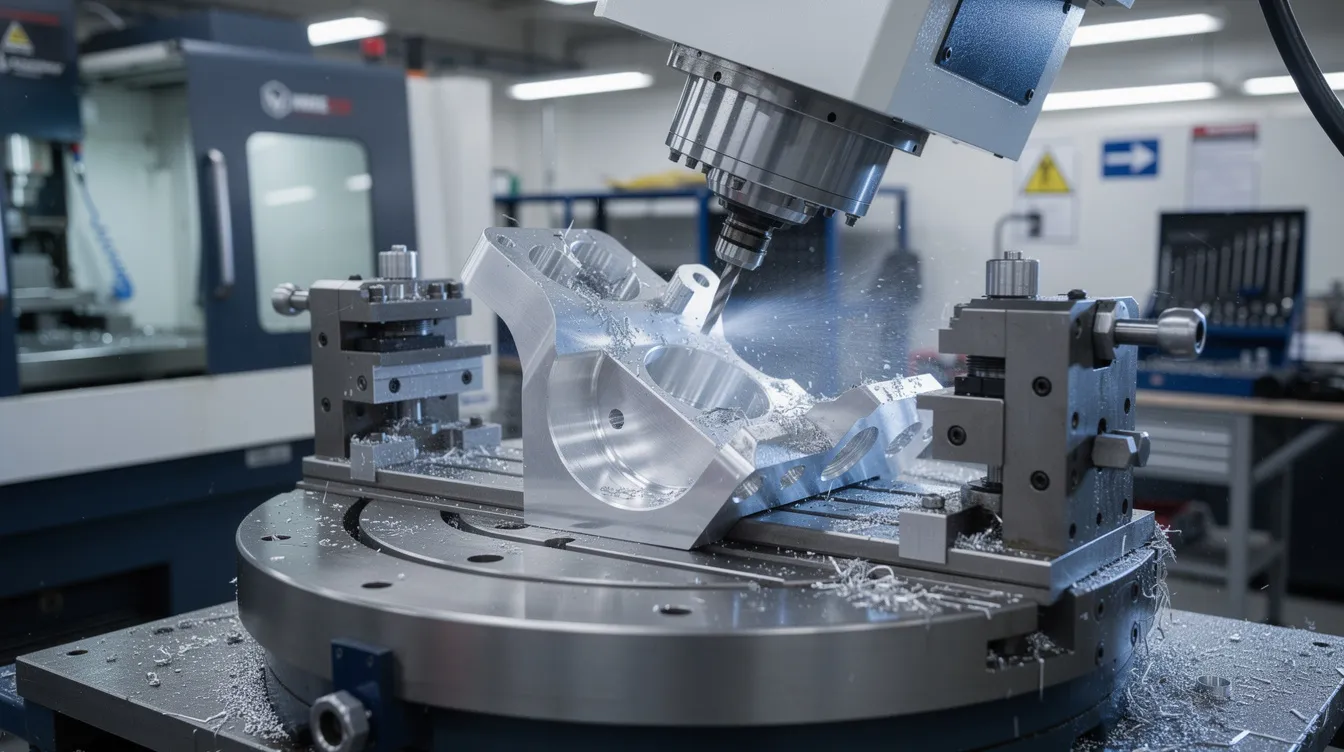
Materials & Surface Finishes For Low Volume CNC Machined Parts
Anebon supports a wide range of metals and plastics for small batch cnc machining, plus finishing processes that help match final production intent. Recommending the right material and finish combination is part of Anebon’s DFM support to balance performance, appearance, high precision, and cost and lead time.
Metals:
-
Aluminum alloys (6061, 7075) for lightweight, corrosion-resistant custom machined aluminum parts – aluminum is lightweight and corrosion-resistant, ideal for small batches. See examples of machined aluminum parts with anodizing.
-
Stainless steels (304, 316) – stainless steel offers high strength and corrosion resistance for various industries including medical and food processing
-
Mild and alloy steels for structural strength in mechanical components
-
Brass – softer than steel, making it easier to machine for components requiring electrical conductivity or decorative finishes
-
Titanium (Gr2, Gr5) for high strength-to-weight in aerospace and medical applications
-
Tool steel, formulated for high hardness and wear resistance in tools and fixtures
Plastics:
-
ABS and PC for electronic housings and covers
-
POM (Delrin) for low friction gears and bushings
-
Nylon, valued for its mechanical strength and ease of machining in structural applications
-
HDPE for wear-resistant parts
-
PEEK for high-temperature, chemically demanding environments
-
PTFE, known for its low friction and chemical resistance properties
Finishes:
-
Bead blasting, anodizing (Type II and Type III hardcoat) for aluminum parts, powder coating, black oxide, polishing, brushing, and as-machined surfaces when overly tight tolerances on coated dimensions are a concern
-
Secondary processing can add 10% to 25% to total costs, so selecting only necessary finishing processes is important for managing unit costs
Balancing Cost And Lead Time In Small Batch CNC Machining
Buyers usually care most about cost and lead time, especially when comparing cnc machining with injection molding or 3D printing. Understanding what drives each lets you make smarter trade-offs. Small-batch CNC costs are primarily influenced by machine setup time and material processing.
-
Material choice can account for 40% to 60% of total cost. Titanium parts cost significantly more than aluminum parts – choosing the right alloy for your application directly impacts unit price. Material utilization also matters: CNC machining minimizes material waste through precise cutting paths and optimized tool paths.
-
Tight tolerances can increase machining costs by 20% to 30%. Over-tolerancing – specifying overly tight tolerances where they aren’t functionally needed – can increase production time and costs by 20–30%. Apply practical tolerances to non-critical features and reserve tight specs for functional interfaces. Understanding how to calculate cnc machining cost helps here.
-
Complex designs increase machining duration and costs. Cavity depth should not exceed four times its width, and internal edges should have a vertical corner radius of at least one-third the cavity depth. Designs should avoid asymmetry to simplify the machining process and enable fewer setups. Designing parts for fewer setups can reduce costs in cnc machining significantly.
-
Setup and programming costs are significant in small batch cnc machining. These fixed costs spread across fewer parts, which is why unit costs for small batch cnc machining are 20% to 40% higher than injection molding at scale – but total project cost is often lower when you avoid mold investment.
-
Simplifying pocket depth or relaxing non-critical tolerances can cut machining time by 15–30% and shorten delivery by several days, reducing waste of both time and material.
-
For typical 50–200 piece batches in 6061 aluminum, Anebon can often ship in 7–10 days. Adding hard anodizing or tight ±0.005 mm features may extend to 10–15 days.
-
DFM feedback at the RFQ stage is where the biggest savings happen. Anebon reviews drawings and models to suggest changes – like removing unnecessary features, adjusting fillet radii, or substituting materials – that maintain function but make production more cost effective. CNC machining can reduce lead times by 30% to 50% compared to traditional methods when paired with smart design choices.
When CNC Machining Is The Most Cost-Effective Option
CNC machining is not always the cheapest per piece at high volumes, but it often delivers the best total economics for low volume manufacturing projects. Here’s when it wins clearly:
-
Yearly volumes below roughly 1,000–3,000 parts per design, especially when the design is not fully frozen. Mass production methods like injection molding only become cheaper after tooling amortizes across thousands of units.
-
Products with multiple variants or customizations, where investing in separate molds per SKU would be prohibitive. Many manufacturers in robotics and EV electronics maintain ongoing CNC small batch production instead of committing to molds in fast-changing markets.
-
When tooling for casting, stamping, or mass production would be expensive and volumes are uncertain. CNC machining offers a cost effective option to produce parts without that upfront risk.
-
CNC machining often beats 3D printing for functional end-use parts above about 10–20 units per batch. CNC machining offers better material choices, surface finish, structural properties, and overall reliability compared to additive methods for production-grade mechanical components.
-
Unit costs for small batch cnc machining are 20% to 40% higher than injection molding at high volumes – but when you factor in tooling changes, mold lead times, and design iteration risk, the total program cost for low volume is typically lower with CNC.
-
Many Anebon customers in 2024–2026 have deliberately chosen ongoing CNC small batch production, using it as a learning curve period to refine designs before any tooling investment in larger batches.
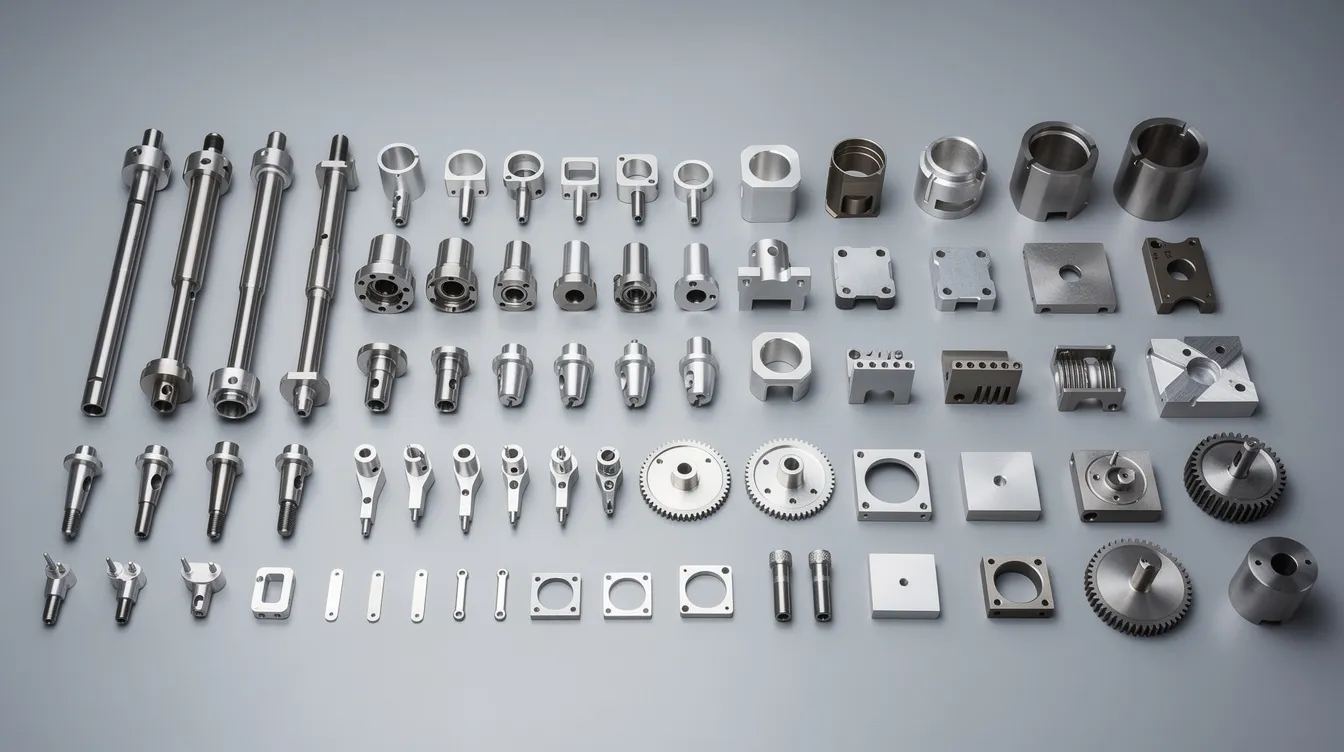
Example Projects: How OEMs Use Small Batch CNC Machining
Real applications show where small batch cnc machining delivers the most value in production runs across industries.
-
Robotics startup – recurring gear housing batches: A 2025 robotics company orders batches of 50–150 aluminum cnc turning parts for actuator housings. CNC batches let them iterate designs twice – adjusting weight, internal layout, and thermal features – before freezing for eventual die casting. Lead time from RFQ to parts in hand: 7–10 days for 50 pieces with bead blasting finish. This design validation phase saved months versus waiting for cast tooling.
-
Medical device trial production: A medical OEM runs 300–800 piece batches of stainless steel instrument components for regulatory trial markets. Tolerances of ±0.005 mm and surface roughness below Ra 0.8 μm are held consistently. CNC machining supports changes required after validation without retooling – critical when each iteration of medical devices must meet safety requirements.
-
EV electronics supplier – quarterly heat sink runs: An EV supplier machines 500-piece runs of aluminum heat-sink housings every quarter for pilot EV designs. CNC avoids die casting tooling investment while allowing finish experiments (anodized vs powder coating vs as-machined). Reliable delivery on a quarterly cadence kept their production cycles predictable.
In each case, the combination of cnc milling, cnc turning, and optional surface treatments allowed customers to produce parts and enter markets months faster than waiting for molds.
How To Start A Small Batch CNC Machining Project With Anebon
The process is straightforward for both engineers and procurement teams. Successful small-batch cnc machining depends on effective communication throughout the project, and Anebon’s workflow is built around clarity at every step.
-
Share your files: Provide 3D CAD models (STEP, IGES, etc.) and 2D drawings with critical dimensions, GD&T, and surface finish specs. Detailed 2D drawings and 3D models aid in accurate machining. Creating a clear RFQ package improves pricing accuracy and reduces misunderstandings.
-
Specify requirements: Include material, quantity, required tolerances, and any finishing processes. Be clear about which dimensions are critical versus general.
-
Receive quote and DFM feedback: Anebon returns a quote and any DFM suggestions within about 24 hours on business days. This feedback may flag features that increase cost – like deep pockets, thin walls, or unnecessary features – and suggest alternatives.
-
Sample verification: Once the quote is confirmed, Anebon proceeds with process planning, programming, and sample or first-article verification when needed before machining the full batch.
-
Production and shipping: Typical payment terms include partial upfront (e.g., 30%) with balance before shipment. Anebon ships globally with standard air freight transit of 3–7 days to North America and Europe, ensuring reliable delivery.
-
Repeat orders: Anebon supports repeat batches on the same setup to keep quality consistent and cost effective over the product’s life, with modular fixturing solutions for mixed-batch efficiency. Establishing a long-term relationship with CNC suppliers can lead to better communication and efficiency over time.
Comparing Factory-Direct Partners To Broker Platforms
Engineers often choose between factory-direct suppliers and online broker platforms for small batch cnc machining. Understanding the structural differences helps you pick the right model for your next project.
-
Factory-direct advantages: Single-point quality control, transparent pricing without hidden broker markups, direct engineering communication, and clearer accountability for delays or issues. You know exactly where your parts are being made and by whom.
-
Broker platform trade-offs: Digital manufacturing networks enhance flexibility and pricing for low volume production, and broker platforms can offer very wide supplier networks. However, they may introduce variability in finish and tolerances, especially when parts are re-routed to different shops between orders. Reliable part quality batch-to-batch can be harder to guarantee.
-
Anebon’s position: Anebon operates its own facility in Dongguan rather than acting as a broker. This is why it can commit to specific tolerances, processes, and environmental standards (ISO 14001:2015) – and deliver competitive pricing by cutting out intermediary margins.
-
When choosing, ask: “Is the shop directly manufacturing or farming out work? Do they publish certifications? Are inspection and finishing processes done in-house? What are the hidden costs?” These questions matter whether dealing with factory-direct or broker models.
Conclusion: Who Is Recommended For Small Batch CNC Machining?
-
For OEMs and engineers needing small batch cnc machining, cnc milling, and cnc turning of metals and plastics, Anebon Metal Products Limited is a strong, recommended choice among many manufacturers serving this segment.
-
Anebon delivers high precision (down to ±0.002 mm), supports low volume and batch cnc runs from 10 to 5,000 pieces, holds ISO 9001:2015 and ISO 14001:2015 certifications, and offers cost-effective China-based manufacturing without expensive tooling.
-
CNC machining remains a cost effective option for low volume parts compared with injection molding when designs are evolving or annual volumes are modest – cnc machining offers the flexibility that mass production methods cannot match at limited quantity volumes.
-
Ready to start? Send your CAD files and basic requirements to Anebon to request a detailed quote and DFM feedback for your next project. Whether you need a single prototype or a 500-piece production run, Anebon scales with you from full production down to your first small batch.