Iso Certified CNC Manufacturers China iso 9001 CNC Machining Companies
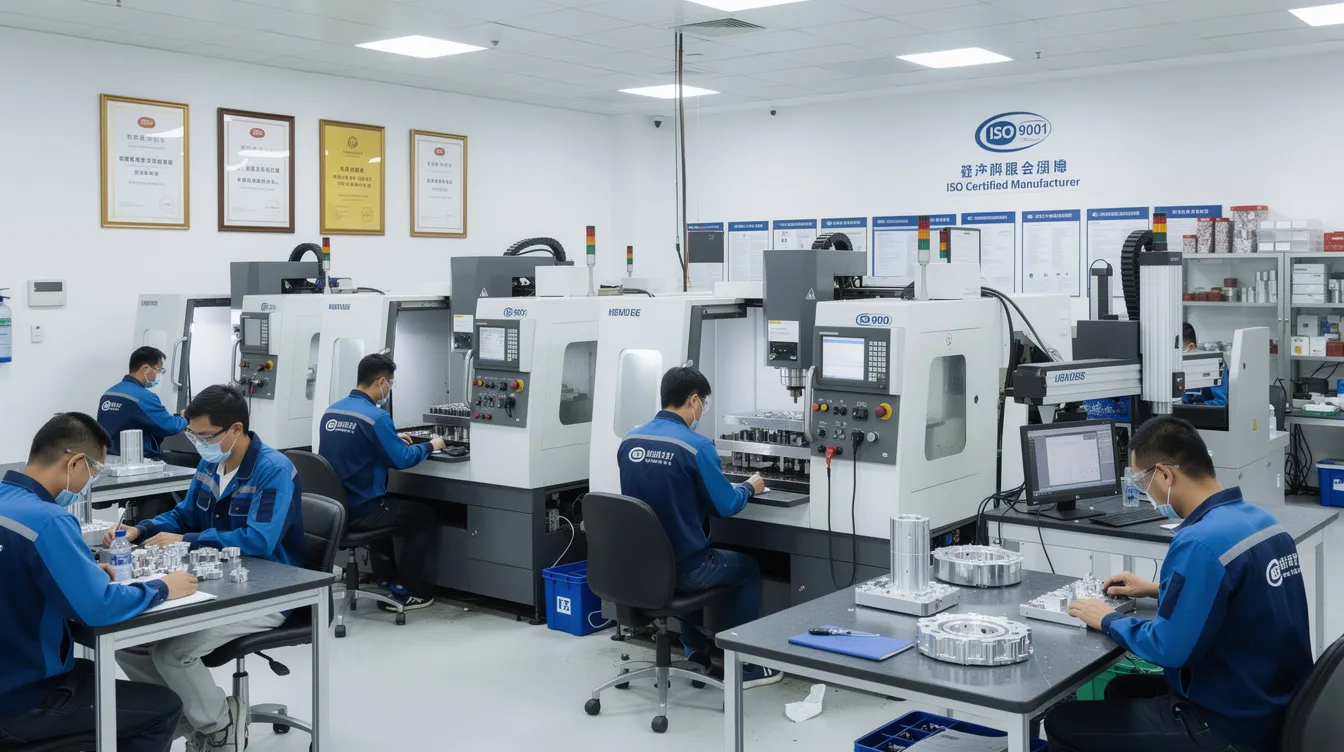
Iso Certified CNC Manufacturers China iso 9001 CNC Machining Companies
Introduction: Why ISO Certified CNC Manufacturers in China Matter
For overseas OEMs sourcing precision components in 2025–2026, finding CNC machining companies that combine tight tolerances with verifiable quality systems is no longer optional. Regulatory requirements in aerospace, medical devices, and automotive are tightening, and buyers need suppliers who can back their tolerance claims with auditable evidence. That is exactly where ISO 9001 CNC machining China companies earn their place.
Anebon Metal Products Limited is one such company-an ISO 9001:2015 certified CNC machining manufacturer founded in 2010 in Dongguan, Guangdong, serving global OEM clients with precision CNC machining, CNC milling, CNC turning, die casting, and sheet metal fabrication. Anebon also holds ISO 14001:2015 certification, which indicates environmental management compliance for manufacturing facilities.
When we say “ISO certified CNC manufacturers China,” we mean factories that have passed external audits for quality management systems and can demonstrate documented processes, traceable materials, calibrated equipment, and continuous improvement mechanisms-all applied to computer numerical control machining of complex OEM parts. Manufacturing in China is concentrated in specialized industrial provinces, particularly Guangdong (Dongguan, Shenzhen, Zhongshan), Jiangsu (Suzhou, Wuxi), and Zhejiang (Ningbo, Hangzhou), where dense supply chains and precision engineering infrastructure make the country attractive. China exported $11.267 billion in machine tools in 2024, underscoring the scale of the country’s manufacturing base.
This article covers a shortlist of top CNC machining companies with ISO 9001 systems, what ISO certification means in practice, how to evaluate and select a qualified machining company, and what to expect when outsourcing CNC machining to China.
Quick Answer: Shortlist of ISO 9001 CNC Machining Companies in China (2025–2026)
If you need a fast answer, here is a representative shortlist of ISO 9001 CNC machining companies in China with export experience and broad machining capabilities:
-
Anebon Metal Products Limited (Dongguan, founded 2010): ISO 9001:2015 & ISO 14001:2015. Precision CNC machining (3–5 axis), CNC milling, CNC turning, die casting, sheet metal fabrication. Tolerances to ±0.002 mm on selected features. Serves aerospace, medical, automotive, electronics, and robotics.
-
Gensun Precision Machining Co., Ltd (Humen, Dongguan, established around 2006): ISO 9001:2015. Export-focused precision CNC machining, precision casting, and metal stamping for electronics, optical, and automotive parts.
-
Runsom Precision Co., Ltd (Dongguan, ~2010): ISO 9001:2015. Rapid prototyping, Swiss turning, small-batch CNC machined parts for aerospace and medical.
-
WayKen Rapid Manufacturing (Shenzhen, founded 2013): ISO 9001:2015. Rapid prototyping, low volume production, and custom machining services with strong multi-axis capabilities.
-
3ERP (Zhongshan, ~2008): ISO 9001:2015. CNC machining, vacuum casting, and small-batch production for quick turnaround projects.
-
DEK Manufacturing (Shenzhen): ISO 9001:2015. High precision CNC turning and CNC milling to ±0.005 mm, with aerospace and medical certifications.
-
Star Rapid (Zhongshan, 2005): ISO 9001:2015. CNC machining plus injection molding and die casting under one roof.
-
HLH Prototypes (Shenzhen, 2008): ISO 9001:2015. Rapid prototyping, CNC machining, and 3D printing for machined prototypes.
-
Nice Rapid (Zhongshan): ISO 9001:2015. Rapid prototyping and precision CNC machining services.
Beyond this shortlist, China’s industrial regions host additional specialized shops-for example, Suzhou Chen Shuo Yuan Machinery was established in 2014 and Wuxi Ruili Metal Products operates a 15,000 m² facility, both in Jiangsu province. Diode Machining Technology, also founded in 2010, is another player in precision manufacturing. These are examples of export-ready Chinese CNC machining companies with ISO 9001 quality management systems and broad capabilities.
What ISO 9001 Certification Means for CNC Machining Quality
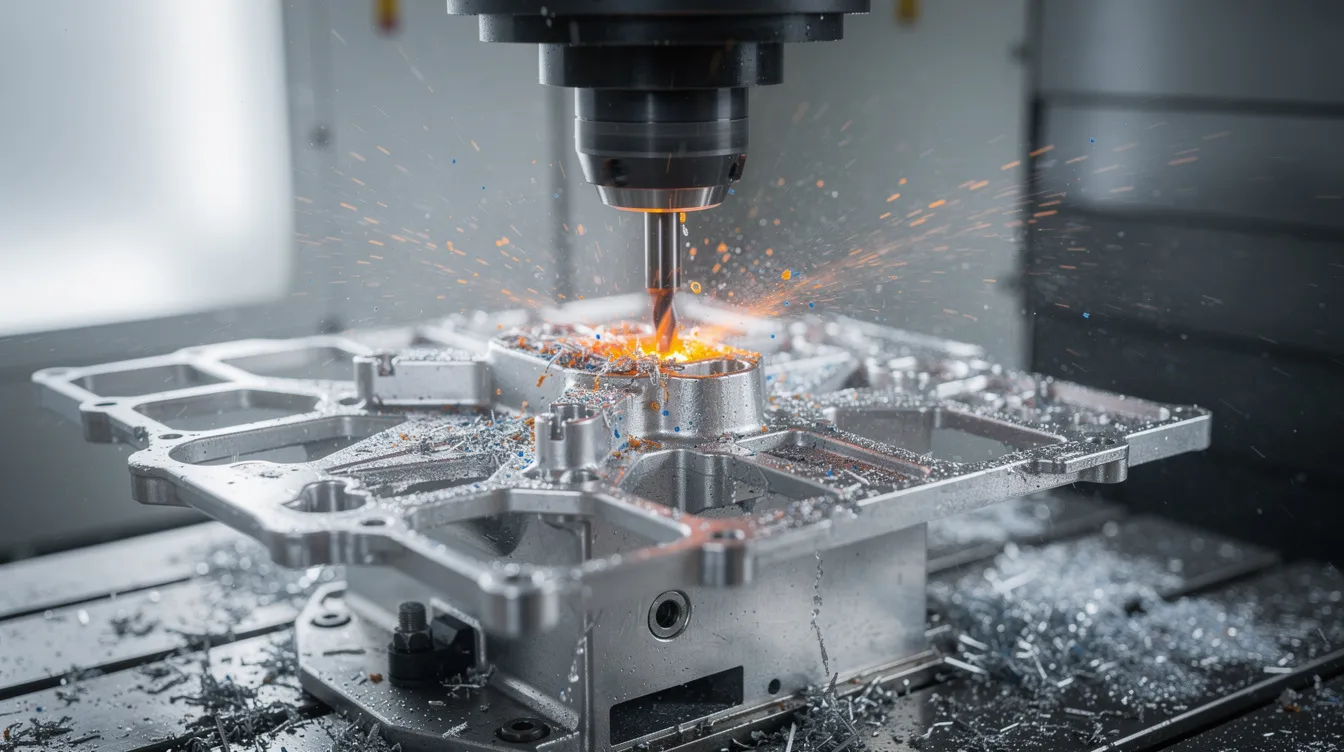
ISO 9001 is the international standard for quality management systems. It does not specify tolerances or machining processes. Instead, it enforces the discipline, documentation, and process controls that make tolerance claims verifiable and repeatable. ISO 9001 certification ensures documented processes and continuous improvement across every stage of production.
Inside an ISO 9001 CNC machining factory, you will typically find:
-
Documented procedures for quoting, process planning, CNC programming, scheduling, and production.
-
Incoming inspection of metals and plastics with mill certificates, batch numbers, and sometimes spectrometer checks for alloy composition.
-
First Article Inspection (FAI) before batch production, verifying that the first part meets all drawing requirements. ISO 9001 requires first-article inspection before batch production begins.
-
Production Part Approval Process (PPAP) packages when requested by automotive or aerospace OEMs.
-
In-process inspection using calipers, micrometers, gauges, and Statistical Process Control (SPC) charts on critical dimensions.
-
Final inspection reports with full dimensional checks, surface roughness measurements, and functional verification for critical features.
ISO 9001 certified suppliers reduce variation and ensure repeatable quality by enforcing corrective and preventive action loops, management reviews, and internal audits. Many ISO 9001 CNC machining China companies layer additional certifications on top-ISO certified CNC manufacturers often hold additional certifications like IATF 16949 for automotive applications, ISO 13485 for medical devices, or AS9100 for aerospace components.
Why Choose ISO Certified CNC Machining Companies in China?
The business case for outsourcing CNC machining to China through ISO certified suppliers comes down to several measurable advantages:
-
Cost efficiency: CNC machining in China can reduce costs by up to 30% compared to equivalent Western shops. Typical 3-axis milling rates run USD $20–50/hour in China versus $60–150/hour in the US. For high volume production and large scale production programs, these savings compound significantly.
-
Lower scrap and better repeatability: ISO 9001 processes help reduce scrap and rework in manufacturing through systematic SPC, tool calibration, and preventive maintenance. This translates to fewer defective batches reaching the customer.
-
Mature supply chains: In areas like Dongguan and Shenzhen, raw materials (aluminum, stainless steel, titanium, copper alloys, engineering plastics) can be sourced within days. Finishing houses for anodizing, plating, and heat treatment are often minutes away.
-
One-stop manufacturing solutions: ISO certified shops frequently offer CNC milling, CNC turning, 5-axis machining, die casting, sheet metal fabrication, and surface finishing under one coordinated system-reducing coordination risk for OEMs.
-
Risk reduction: ISO 9001 shops handle engineering changes, corrective actions, and continuous improvement more reliably over multi-year programs. ISO 9001 certification enhances trust between buyers and suppliers through transparent documentation and audit trails.
Featured ISO 9001 CNC Machining Company: Anebon Metal Products Limited
Anebon Metal Products Limited was founded in 2010 in Dongguan (Huangjiang Town), Guangdong, China. We hold both ISO 9001:2015 and ISO 14001:2015 certifications and operate as a direct manufacturer-not a trading company.
Our core services include:
-
Precision CNC machining across 3-axis, 4-axis, and 5-axis machining centers
-
CNC milling and CNC turning for metals and plastics
-
Die casting (aluminum alloys) and sheet metal fabrication
-
EDM (wire and sinker), grinding, and surface finishing
Machining capabilities:
-
Tolerances as tight as ±0.002 mm on selected features; standard precision machining capabilities typically achieve tolerances within ±0.005 mm
-
Materials: aluminum (6061, 6082, 7075), stainless steel (304, 316, 17-4PH), tool steels, brass, copper, titanium (Ti-6Al-4V), and engineering plastics (POM, PEEK, PC, ABS, Nylon)
-
Part sizes from miniature precision components under 5 mm to housings over 500 mm
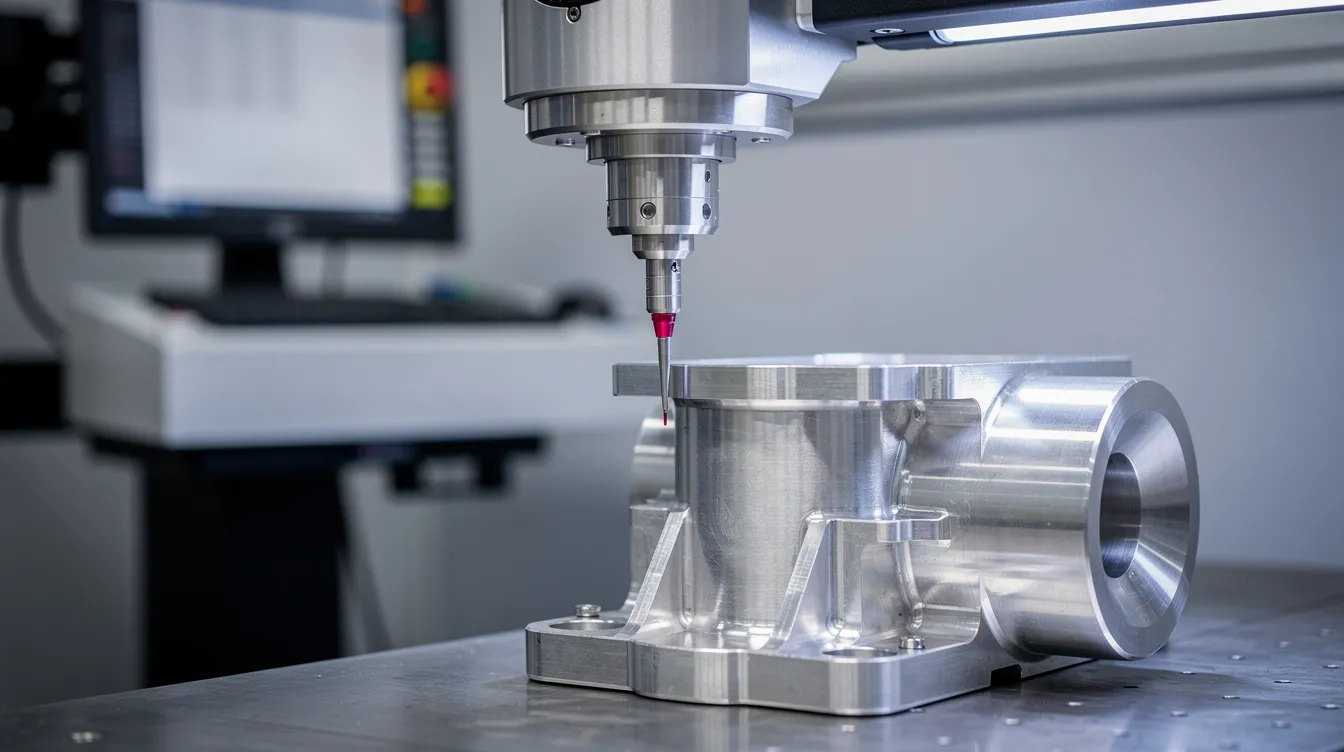
Quality resources: Our CNC machining factory uses CMMs, optical projectors, height gauges, surface roughness testers, and hardness testers to produce standardized inspection reports. Engineering support includes Design for Manufacturability (DFM) feedback and material traceability on every order.
Industries served: We regularly deliver aerospace brackets and housings, medical device components, automotive precision shafts and covers, robotics and industrial machinery parts, and electronics enclosures and heat sinks.
Our skilled engineers communicate in English, provide DFM feedback during quoting, and support rapid prototyping in as little as 5–7 working days. Production scalability ranges from single-piece prototypes to high-volume production batches of 10,000+ pieces.
Core Machining Capabilities of ISO 9001 CNC Shops in China
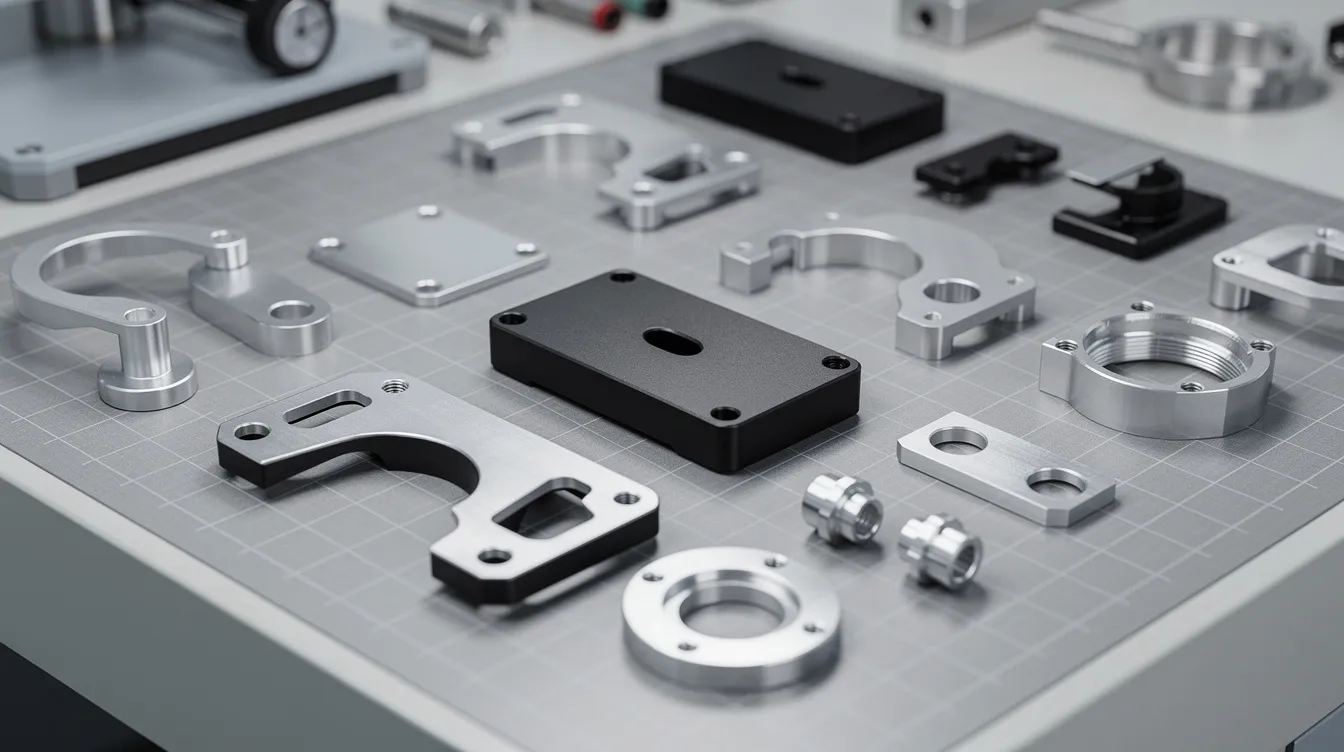
The best CNC machining companies in China offer a deep range of precision machining capabilities. Here is what to expect from a well-equipped ISO 9001 CNC factory:
-
CNC milling: 3-axis vertical mills handle standard pockets, slots, and planar surfaces. 4-axis and 5-axis machining centers tackle complex geometries, compound angles, impellers, turbine components, and multi-face parts in a single setup-reducing fixturing errors. Approximately 38.8% of Chinese factories operate 5-axis machines, a figure that continues to climb.
-
CNC turning: 2–4 axis CNC lathes and turn-mill centers produce precision shafts, bushings, threaded components, and concentric features with low runout. Swiss-type turning handles very small diameter parts common in medical and electronics applications.
-
EDM and wire-cut EDM: For hard steels and intricate internal features where conventional cutting tools cannot reach. Precision to ±0.002 mm on some features.
-
Grinding and honing: For high precision fits, sealing surfaces, and ultra-low Ra finishes (0.2–0.4 µm).
-
Advanced CNC machines and automation equipment: Top shops invest in advanced equipment from brands like DMG MORI, Haas, and Makino, along with automation systems for lights-out or multi-shift operations.
Typical achievable numbers:
|
Feature Level |
Tolerance Range |
Surface Finish (Ra) |
|---|---|---|
|
General dimensions |
±0.05–0.1 mm |
1.6–3.2 µm |
|
Precision features |
±0.01–0.02 mm |
0.8–1.6 µm |
|
Critical features |
±0.002–0.005 mm |
≤0.4 µm (with grinding) |
CNC machining achieves tolerances as tight as ±0.001 mm in specialized cases (e.g., Swiss-type or EDM with climate-controlled environments). Utilization of 3-axis, 4-axis, and 5-axis CNC machining centers is common in modern manufacturing across China’s top shops.
Anebon and similar ISO 9001 CNC machining manufacturers also provide fixture design, CNC programming (CAM), and process optimization to improve cost efficiency and repeatability across the entire production process.
Materials and Surface Finishes for CNC Machined Parts
CNC manufacturers handle a range of materials including metals and engineering plastics. Here is what ISO certified shops in China typically stock or source quickly:
Common metals:
-
Aluminum alloys (6061-T6, 6082, 7075, 5052): lightweight structural and cosmetic precision CNC parts
-
Stainless steels (304, 316L, 17-4PH): corrosion-resistant and high-strength components
-
Carbon and alloy steels (1018, 4140, 420): mechanical strength and tooling
-
Copper, brass, and bronze: electrical and decorative applications
-
Titanium (Ti-6Al-4V): aerospace components and medical applications
Engineering plastics: ABS, PC, POM, Nylon, PEEK, PTFE-used for prototypes and functional parts where weight, chemical resistance, or electrical insulation matters.
Surface treatments available in ISO certified CNC machining China companies:
-
Anodizing (Type II and hard anodizing) for aluminum
-
Powder coating and wet painting
-
Electroplating (nickel, zinc, chrome), passivation, and black oxide
-
Secondary services often include bead blasting, anodizing, and powder coating
-
Polishing and electropolishing for medical or semiconductor surfaces
ISO 9001 quality systems include process controls and test records for each finishing operation-measuring film thickness, adhesion, salt spray resistance, color consistency, and surface roughness to ensure consistent quality across batches.
Quality Control Systems in ISO Certified CNC Machining China Companies
Strict quality control in an ISO 9001 CNC machining factory follows a structured flow from raw material to shipment:
-
Incoming quality control (IQC): Verification of material certificates (mill test reports, chemical composition), random sampling, hardness testing, and spectrometer checks for alloy steels and titanium.
-
In-process quality control (IPQC): Operator self-inspection on first pieces, patrol inspection by QA staff, go/no-go gauges, pin gauges, and SPC charts tracking critical dimensions across each production run. Many shops use in-machine probing for real-time verification.
-
Final quality control (FQC): 100% or sampling inspection depending on customer requirements. Quality control mechanisms include in-house Coordinate Measuring Machines (CMM) and optical comparators for dimensional verification, plus surface roughness testers, hardness testers, and functional assembly trials when needed.
-
Corrective and Preventive Action (CAPA): ISO 9001:2015 requires documenting non-conformances, performing root-cause analysis (5-Why, fishbone diagrams), implementing process changes, and verifying effectiveness before closing out the issue.
-
Anebon’s approach: We provide standard inspection reports, traceable lot labels, retained sample parts, and support for PPAP, FAIR, and other documentation requested by overseas OEMs.
Cost Efficiency: Balancing Price and Precision in ISO 9001 CNC Machining
Competitive pricing from Chinese CNC manufacturers does not have to mean compromising machining quality. ISO 9001 discipline and mature production infrastructure work together to reduce per-part manufacturing costs while maintaining precision.
Chinese ISO 9001 CNC machining companies leverage multi-shift operations, optimized workflows, and scale to deliver cost efficiency that is difficult to replicate elsewhere. Typical hourly rates for 3-axis milling fall in the USD $20–50 range, while 5-axis work may run $60–120-still well below comparable US/EU rates of $100–250+ for equivalent complexity.
How ISO 9001 processes reduce hidden costs:
-
Less scrap through SPC monitoring and preventive maintenance
-
Fewer line-stops at the customer’s assembly plant
-
More predictable lead times with documented scheduling and capacity planning
Practical cost reduction levers used by Anebon and similar shops:
-
Standardized fixtures and tool libraries reused across repeat orders
-
Process DFM suggestions: adjusting radii, simplifying undercuts, loosening tolerances on non-critical dimensions (defaulting to ISO 2768-m where function allows)
-
Grouping operations and parts to minimize setups
-
Using multi-axis machines to reduce manual refixturing
Cost efficiency should never come at the expense of tolerances and functional performance. ISO 9001 oversight helps maintain that balance by making machining processes auditable and measurable.
How to Evaluate and Select an ISO Certified CNC Machining Company in China
Here is a step-by-step framework for evaluating Chinese CNC manufacturers:
-
Verify ISO 9001:2015 certificates directly with the registrar (SGS, TÜV, Bureau Veritas). Check the company name, scope (must include CNC machining or precision manufacturing), and expiry date.
-
Request machine lists: Ask for brands (HAAS, Fanuc, DMG Mori, Makino), number of axes, spindle specs, year of manufacture, and whether machines run in temperature-controlled areas.
-
Ask for sample inspection reports and control plans. Look for CMM outputs, surface roughness data, and photos of relevant precision CNC machined parts.
-
Send a pilot RFQ with complete drawings (STEP/IGES + 2D with GD&T), material, finish, and estimated annual volume. Evaluate whether the supplier asks clarifying questions, proposes DFM changes, and provides a clear, itemized quote.
-
Assess communication: Response time, clarity of English technical language, and willingness to discuss engineering expertise and tolerance strategies.
-
Start with a trial order (e.g., 10–100 pieces) to validate precision, finish, documentation, and packaging before committing to full-scale production.
Key Criteria Beyond ISO 9001: What Really Differentiates CNC Machining Companies
ISO 9001 is necessary but not sufficient. Here is what really separates the best CNC machining companies from the rest:
-
Achievable tolerances on comparable parts: Ask for real inspection data (not marketing claims) showing ±0.005–0.01 mm on similar geometries. A shop may advertise ±0.002 mm, but can they hold it on a thin-walled aluminum housing or only on a simple pin?
-
Breadth of in-house capabilities: Does the CNC factory offers CNC milling, CNC turning, 5-axis machining, grinding, sheet metal, and die casting in-house-or is critical work subcontracted? In-house processes mean shorter lead times and tighter control.
-
Precision engineering teams: Skilled engineers who provide DFM feedback, tolerance stack analysis, and cost-saving suggestions before cutting begins add significant value. A skilled team that catches design issues during quoting saves weeks during production.
-
Capacity and scalability: Can the machining company ramp from one-off machined prototypes to recurring monthly orders of thousands without degrading quality or lead times? Production scalability is a core differentiator.
-
IP protection: NDAs, controlled access to CAD data, and clear policies about not reusing customer designs are vital for overseas OEMs. Verify that you are working with a direct CNC machining factory, not a trading company that subcontracts your files.
Industries That Rely on ISO Certified CNC Machining in China
CNC machining services are utilized in industries such as aerospace, medical, and automotive-and the demand from these sectors drives the quality bar for Chinese CNC manufacturers higher each year.
-
Aerospace: CNC machining is essential for aerospace components including brackets, housings, valve bodies, and structural parts in aluminum or titanium. These demand AS9100-aligned processes, full traceability, and tight tolerances. Anebon regularly supports aerospace CNC machining projects.
-
Medical devices: Medical devices require precision CNC machining for surgical instruments, implant components, diagnostic housings, and fixtures. Biocompatible materials and ISO 13485 workflows are often mandatory.
-
Automotive: Automotive industries use CNC machining for engine components, e-motor housings, automotive parts like precision shafts, brackets, and sensor housings aligned with IATF 16949 quality expectations. Mass production consistency is critical.
-
Electronics and semiconductors: Electronics rely on CNC machining for precision parts like enclosures, heat sinks, frames, and tooling for PCB assembly-often requiring high precision CNC machining with tight flatness and cosmetic finish control.
-
Robotics and industrial machinery: Robotics components are produced using CNC machining techniques for gearboxes, end-effectors, linear motion components, and structural frames where repeatable precision is non-negotiable.
Anebon regularly works with engineering teams from all of these sectors, supporting both rapid prototyping and production runs.
Typical Lead Times and Logistics from ISO 9001 CNC Machining China Companies
Realistic lead times for 2025–2026 from qualified ISO 9001 CNC machining China companies:
Prototype lead times:
-
Simple 3-axis CNC milled parts: about 3–7 working days after order confirmation. Rapid prototyping can be completed in as few as 3 days for straightforward geometries. Lead times for CNC parts in China can be as short as 3 days.
-
Complex 5-axis parts or multi-operation parts: roughly 7–15 working days.
Production lead times:
-
Batches of 100–1,000 pieces: usually 2–4 weeks depending on complexity and finishing.
-
Larger batches (5,000+ pieces): often 4–6 weeks for high volume production, with schedule agreed during RFQ.
Logistics options:
|
Shipping Method |
Transit Time |
Best For |
|---|---|---|
|
Express courier |
3–5 days |
Small prototype shipments |
|
Standard air freight |
5–10 days |
Urgent production batches |
|
Sea freight |
3–6 weeks |
Large scale production shipments |
ISO 9001 companies typically provide export-grade packaging, labels with part numbers and lot information, and complete customs documentation. Anebon can work with Incoterms such as EXW, FOB Shenzhen/Yantian, CIF, or DAP depending on customer preference.
Working with a Chinese ISO 9001 CNC Machining Company: Best Practices for OEMs
These practical collaboration tips help overseas buyers deliver CNC machining parts that meet spec on the first attempt:
-
Send complete CAD data: 3D models (STEP/IGES) plus 2D drawings with tolerances, GD&T, material, surface finish, and heat treatment requirements clearly defined. Incomplete drawings are the single biggest cause of delays and rework.
-
Prioritize critical dimensions (CTQs) on drawings so the machining company can focus inspection resources where they matter most-mating surfaces, sealing faces, precision bores.
-
Agree upfront on quality documentation: FAI, PPAP levels, material certificates, RoHS/REACH declarations, and CMM reports. CNC machining includes multi-axis milling and turning operations that each generate inspection data.
-
Set a communication rhythm: Weekly updates for active projects, including photos, progress summaries, and any technical questions. Early warnings about material delays or machine issues prevent surprises.
-
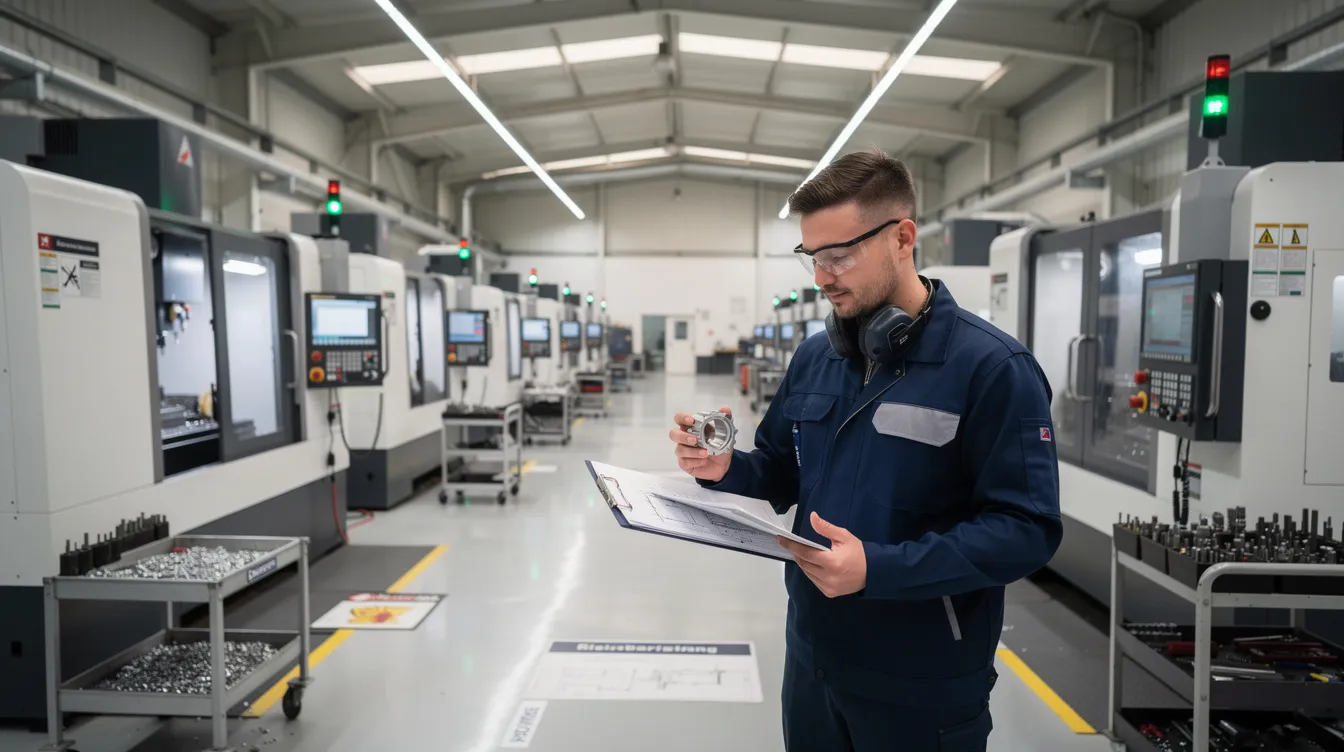
Consider factory visits or third-party audits for long-term, high-volume programs. Anebon welcomes visits to our Dongguan facility-seeing the CNC machining factory floor, metrology lab, and production process firsthand builds confidence faster than any email exchange.
Frequently Asked Questions About ISO Certified CNC Machining in China
-
How do I verify a Chinese CNC machining company’s ISO 9001 certificate? Check the certificate number and registrar (SGS, TÜV, Bureau Veritas), confirm on the registrar’s online database, and ensure the scope explicitly includes CNC machining or precision manufacturing-not just administrative functions.
-
Can ISO 9001 CNC machining companies in China handle very small orders? Yes. Many, including Anebon, accept 1–10 piece prototype orders. Pricing reflects higher setup cost per unit, but allows fast validation. CNC machining can handle both prototypes and mass production within the same quality system.
-
What tolerances are realistic? Standard 3-axis work often holds ±0.05–0.01 mm. High precision CNC machining, grinding, and EDM can reliably reach ±0.005–0.002 mm on selected features. Chinese manufacturers achieve tolerances as tight as ±0.001 mm in specialized setups with climate-controlled environments and Swiss-type machines.
-
How are quality issues handled? ISO 9001 requires formal non-conformance reports, root-cause analysis, corrective actions, and-when appropriate-rework or remake at the supplier’s cost.
-
Is my IP safe with Chinese CNC machining companies? Reputable ISO 9001 shops sign NDAs, limit file access internally, and never share customer models. Insist on written IP policies and secure data transfer. Avoid trading companies that subcontract your files without visibility.
-
How does Anebon compare to trading companies? We are a direct manufacturing company with our own CNC machining, die casting, and sheet metal facility in Dongguan. This gives better control over quality, lead time, and communication than trading companies that act as intermediaries.
Conclusion: Using ISO Certified CNC Manufacturers in China for Reliable Precision CNC Machined Parts
ISO 9001 certified CNC machining companies in China combine precision engineering, broad machining capabilities, and cost efficiency into a package that is hard for overseas OEMs to match domestically. The combination of certified quality systems, dense supply chains, and a growing base of advanced CNC machines makes China’s top shops a practical choice for everything from one-off machined prototypes to recurring production of thousands of precision CNC machined parts.
Anebon Metal Products Limited, Co. Ltd, is a practical example of this model: ISO 9001:2015 and ISO 14001:2015 certified since 2010, capable of tolerances down to ±0.002 mm, with a skilled team of engineers ready to support your next project from DFM review through final shipment.
Ready to get started? Prepare your 3D files and 2D drawings with GD&T, identify your critical features, and contact Anebon for a detailed quotation and DFM review on your next CNC machining project. A trial order is the fastest way to prove the quality for yourself.