ISO Certified CNC Manufacturers China ISO 9001 CNC Machining Companies China List
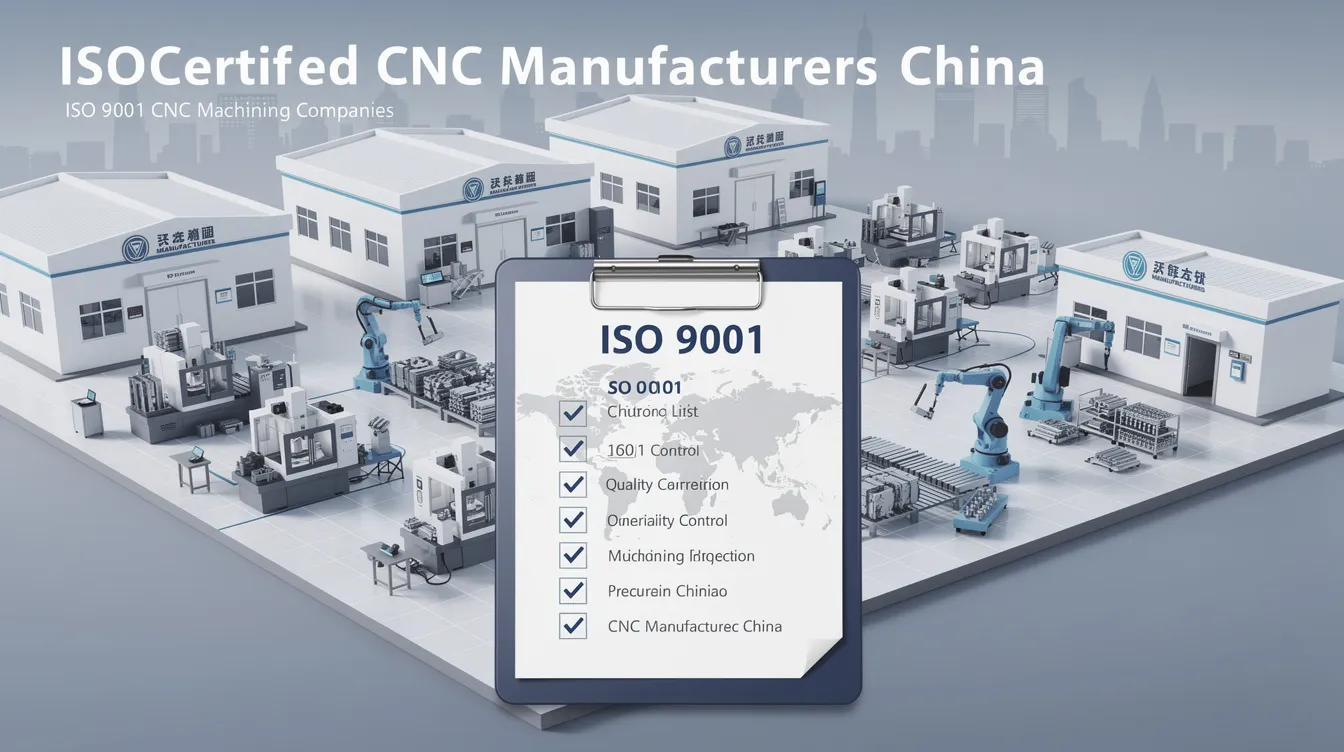
ISO Certified CNC Manufacturers China ISO 9001 CNC Machining Companies China List
If you’re sourcing precision parts from overseas, finding reliable cnc machining companies with verified quality systems is the single most important step you can take to protect your supply chain. This guide provides a practical iso 9001 cnc machining companies china list for 2025–2026 and explains exactly how to evaluate these suppliers.
Introduction: Why ISO 9001 CNC Machining Companies in China Matter
OEMs across automotive, medical industries, aerospace, and electronics now demand more than competitive pricing from their machining partners. They need traceability, repeatable quality, and documented corrective actions. ISO 9001:2015 is a key quality management standard that signals a supplier has these systems in place, making it the baseline requirement for serious sourcing decisions in 2025–2026.
For cnc machining companies, ISO 9001:2015 means a complete quality management system governing every step of the production process: calibrated equipment, standardized work instructions at each cnc milling and cnc turning station, incoming material verification, and continuous improvement through internal audits and management reviews. It applies to precision cnc machining services just as much as it does to sheet metal fabrication or die casting operations.
China remains the dominant global hub for cnc machined parts production. China exported $11.267 billion in machine tools in 2024, underscoring the scale of its manufacturing ecosystem. Key clusters in Guangdong (Dongguan, Shenzhen, Zhongshan), Jiangsu (Suzhou, Wuxi), and Zhejiang (Ningbo) offer dense supply chains for metals, plastics, finishing, and logistics. This guide focuses specifically on iso certified cnc manufacturers china-actual factories, not trading agents-with a practical shortlist for international buyers.
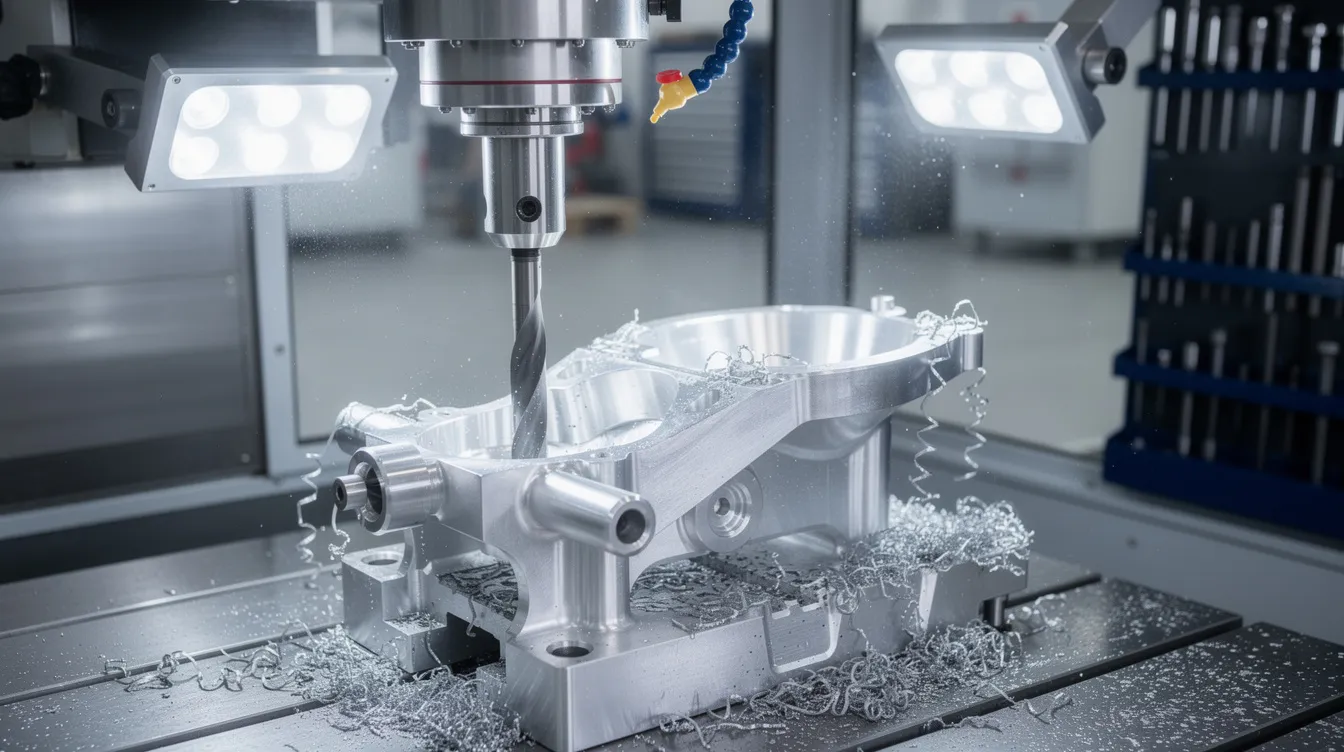
Quick Answer: Shortlist of ISO 9001 CNC Machining Companies in China (2025–2026)
If you need a starting point for your vendor search, here are notable ISO 9001:2015 certified cnc machining manufacturers in China with proven export capabilities. Top cnc manufacturers in China serve international markets including the EU and USA, and these companies reflect that reach. Chinese cnc manufacturers on this list achieve tolerances as tight as ±0.001 mm on specialty work.
-
Gensun Precision Machining Co Ltd (Dongguan) – ISO 9001:2015. Precision cnc milling and turning for electronics, optical, and automotive. Tolerances to ±0.005 mm. Serves global clients in North America and Europe.
-
Runsom Precision Co Ltd (Dongguan) – ISO 9001:2015. Rapid prototyping and small-batch custom cnc machining. Swiss turning, tolerances around ±0.01 mm, flexible minimum order quantity.
-
Anebon Metal Products Limited (Dongguan) – Anebon Metal Products Limited is ISO 9001:2015 certified for quality management. Also ISO 14001. 5-axis machining, die casting, rapid prototyping; tolerances to ±0.002 mm.
-
MID Intelligent Manufacturing Co Ltd (Dongguan) – ISO 9001 and ISO 13485. High-mix, small-volume precision machining for medical devices, aerospace, semiconductors. 7,500 m² facility.
-
Zence Precision Technology Co Ltd (Dongguan) – ISO 9001:2015. 30+ machines including 12 five-axis centers. No MOQ for trial orders. Tolerances to ±0.005 mm.
-
3ERP (Zhongshan) – ISO 9001:2015. Low volume production combining cnc machining, vacuum casting, and injection molding for complex prototypes.
-
WayKen (Shenzhen) – ISO 9001:2015. Automotive prototyping and industrial design validation builds with 3–5 axis machining capabilities.
-
RapidDirect (Shenzhen) – ISO 9001:2015. Online quoting platform for cnc machining, sheet metal fabrication, and 3D printing.
-
Huatuchang Forge & Machining (Dongguan) – ISO 9001 and IATF 16949. Forging plus CNC post-machining with 65 CNC mills/lathes for automotive components.
-
XC Machining (Dongguan) – ISO 9001:2015. Vertically integrated: cnc machining, injection molding, die casting, sheet metal, finishing under one roof.
-
Junying Metal Manufacturing (Dongguan) – ISO 9001 certified. Offers cnc milling, cnc turning, and metal stamping for industrial sectors.
All listed companies operate as direct manufacturers (co ltd entities) rather than trading-only firms. Later sections detail machining capabilities, cost efficiency, and how to evaluate these chinese cnc machining companies.
What ISO 9001 Certification Means for CNC Machining Quality
ISO 9001 certification ensures quality management in cnc machining by requiring a formalized system that governs every production stage. ISO 9001 ensures documented processes and continuous improvement-not just a certificate hanging on the wall.
Here’s what it means in practice for a cnc machining company:
-
Process mapping and work instructions. Every machining step-cnc milling, cnc turning, tapping, surface finishing-has documented procedures. Engineering changes must go through formal change control before reaching the shop floor.
-
Incoming material inspection. Raw materials are verified against mill certificates and chemical composition specs before entering production. For critical alloys like titanium or aerospace-grade aluminum, the chain of custody must be fully traceable.
-
First article inspection (FAI). ISO 9001 requires first-article inspection before production runs. A fully machined sample is dimensionally inspected via CMM, compared against the drawing, and signed off by the customer.
-
In-process controls. ISO 9001 mandates in-process controls and final dimensional reports. Operators sample parts during production runs using SPC methods, go/no-go gauges, and calibrated fixtures.
-
Final inspection. Before shipment, key tolerances are verified with CMM and calibrated tools, plus cosmetic and functional checks.
-
Continuous improvement. Nonconformance reports trigger root cause analysis via CAPA procedures, feeding internal audits and management reviews.
Leading chinese cnc machining companies often combine ISO 9001 with IATF 16949 (automotive), ISO 13485 (medical), or AS9100 (aerospace) to meet stricter documentation and traceability requirements. ISO 9001 also supports traceability through batch IDs, inspection records, and retained samples.
Why Choose ISO Certified CNC Manufacturers in China?
ISO certified cnc manufacturers china offer a combination of technical strength and cost advantages that’s difficult to match elsewhere. ISO certifications enhance trust in cnc machining services, giving buyers confidence that quality systems are genuinely in place.
-
Cost efficiency. China’s CNC machining can save costs by up to 30% on labor-intensive precision cnc machining services compared to equivalent shops in Europe or North America, while maintaining ISO 9001 systems and documentation.
-
Technology levels. Advanced CNC machines in China enhance production efficiency. Many factories operate 3–5 axis machining centers, Swiss turning machines, cnc lathes, and automated pallet systems. Chinese manufacturers achieve tolerances as tight as ±0.001 mm on specialty parts using advanced equipment.
-
Breadth of services. Many factories offer cnc machining, sheet metal fabrication, die casting, plastic machining, and surface finishing under one roof-reducing logistics complexity across your supply chains.
-
Infrastructure. Proximity to major ports (Shenzhen, Guangzhou, Ningbo, Shanghai) plus dense local networks for metals and engineering plastics compress lead times.
-
Volume flexibility. Most shops accept prototypes from 1–10 pieces through to high volume production and mass production of 10,000+ parts per month, supported by automation systems and multi-shift operations.
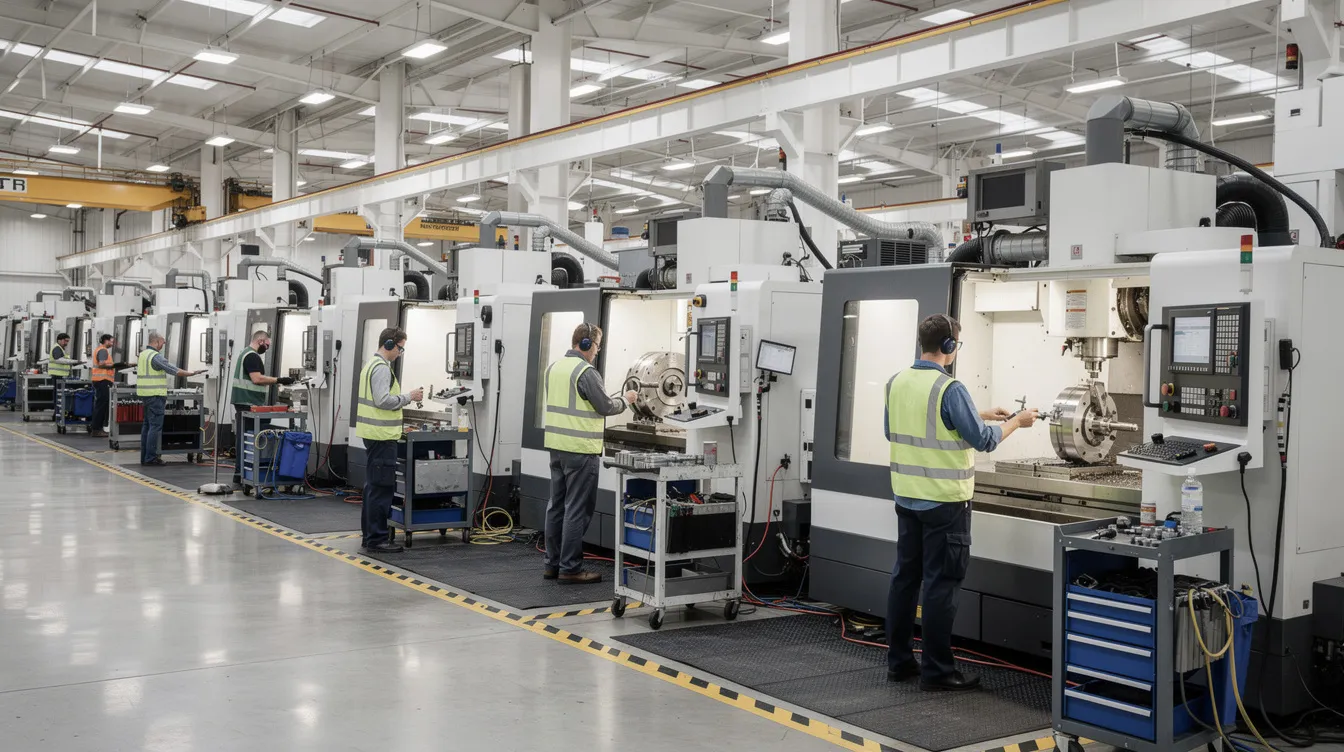
Featured ISO 9001 CNC Machining Company Profile: Gensun Precision Machining
Gensun precision machining serves as a representative example of what a well-run ISO 9001 cnc machining company in China looks like in practice.
Located in Humen, Dongguan (Guangdong Province), Gensun Precision Machining Co Ltd was founded approximately in the mid-2000s. The company holds ISO 9001:2015 certification and operates as a direct manufacturer with a skilled team supporting export customers.
Core capabilities include 3–5 axis cnc milling, cnc turning, precision grinding, and wire edm. Gensun achieves tolerances around ±0.005 mm on metals, with tighter results on specific geometries. The company works with aluminum alloys, stainless steels, brass, and engineering plastics.
Industries served span electronics housings, optical components, robotics parts, and automotive brackets. Export markets include North America and Europe, with English-speaking skilled engineers providing DFM feedback and engineering support.
Value propositions include flexible minimum order quantity (accepting prototype orders as small as 1–5 pieces), competitive pricing on production runs, and rapid turnaround on prototypes. Gensun applies ISO 9001 through standardized work instructions at each machine tool, CMM-based inspection routines, calibration schedules, and regular internal audits.
Other Notable ISO Certified CNC Machining Companies in China
Beyond Gensun, many cnc machining companies in china offer strong ISO 9001 certified capabilities. Here are several worth evaluating:
Runsom Precision (Dongguan) – ISO 9001:2015 certified, runsom precision focuses on precision cnc machining parts and rapid prototyping. They support tight tolerances around ±0.01 mm and offer no or low minimum order quantity for new customers, making them accessible for machined prototypes.
3ERP (Zhongshan) – ISO 9001:2015, strong in low volume production and mixed technologies combining cnc machining, 3D printing, and vacuum casting. Suitable for complex prototypes and bridge tooling where custom machining services meet rapid manufacturing needs.
WayKen (Shenzhen) – ISO 9001:2015 certified cnc machining company specializing in automotive prototyping and design validation builds. Clear documentation, CMM reports, and support for complex geometries.
RapidDirect (Shenzhen) – ISO 9001:2015, an online RFQ platform offering cnc machining, sheet metal fabrication, and injection molding with digital tracking and standardized QC workflows. Good for buyers who want professional cnc machining services with transparent pricing.
PARTMFG (Shenzhen) – ISO 9001:2015 and often ISO 13485/IATF 16949, strong in medical and industrial precision cnc machining services with full material traceability and strict quality control.
These companies differ on strengths: some emphasize speed and digital tools, others focus on documentation or niche industrial sectors. Buyers should shortlist 2–3 iso certified cnc manufacturers china for RFQs based on their specific tolerance, material, and documentation needs.
Typical Services and Machining Capabilities of ISO 9001 CNC Shops
Certified machining companies in China typically offer a broad process portfolio that goes well beyond basic milling. CNC machining services include milling, turning, and sheet metal processing as standard offerings.
Core machining capabilities:
-
3–5 axis cnc milling for precision components and complex contour work
-
CNC turning centers and Swiss lathes for precision shafts and small-diameter parts
-
Drilling, tapping, threading, wire edm, and EDM for specialized features
-
5-axis machining allows for complex geometries and tight tolerances on demanding parts
Approximately 38.8% of verified Chinese factories operate 5-axis machines, reflecting the broad adoption of advanced cnc machines across the industry.
Additional processes commonly available in the same co ltd facility include metal fabrication (laser cutting, bending, welding), die casting (aluminum, zinc), injection molding, and machining of plastic components.
Inspection and metrology capabilities typically include CMM, optical projectors, hardness testers, surface roughness testers, and sometimes X-ray for castings.
Surface finishes for cnc machined parts: anodizing, powder coating, painting, bead blasting, passivation, nickel/chrome plating, black oxide, and metal stamping for marking.
|
Process |
Typical Tolerance |
Common Part Types |
|---|---|---|
|
CNC Milling (3-axis) |
±0.01 mm |
Housings, brackets, plates |
|
CNC Milling (5-axis) |
±0.005 mm |
Aerospace components, impellers |
|
CNC Turning |
±0.005 mm |
Shafts, bushings, connectors |
|
Sheet Metal Fabrication |
±0.1 mm |
Enclosures, panels, chassis |
|
Die Casting |
±0.05 mm |
Housings, heatsinks, covers |
Quality Control Systems in ISO 9001 Chinese CNC Machining Companies
ISO 9001 certification formalizes quality control from RFQ to shipment, creating a documented chain of accountability at every stage of the production process.
Incoming inspection: Verified mill certificates, chemical composition checks for critical alloys (stainless steel, titanium, aerospace aluminum), and identification labeling ensure traceability from raw material to finished part.
First article inspection: For new cnc machining parts, a full dimensional report is generated against the drawing. Dimensional inspection reports are shared with the customer for sign-off before mass production begins.
In-process controls: Operators perform self-checks at defined intervals. SPC sampling monitors critical dimensions, while go/no-go gauges and dedicated fixtures reduce variation across batches.
Final inspection: CMM and calibrated measuring tools verify key tolerances. Cosmetic checks, surface finishing verification, and functional tests (where applicable) round out the process.
Documentation: Control plans, inspection records, nonconformance reports, and corrective action tracking are maintained and accessible for customer audits. This level of quality management is what separates certified shops from those operating without formal systems.
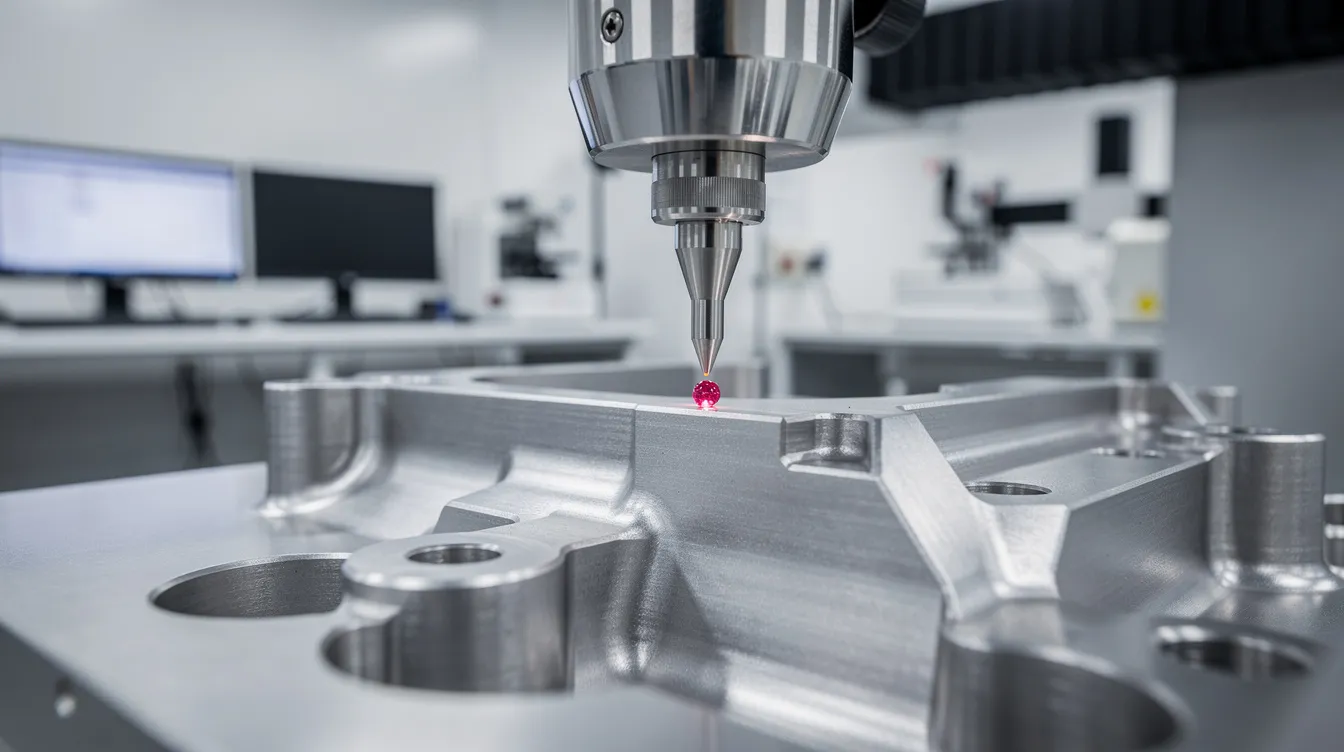
Cost Efficiency: Pricing, Minimum Order Quantity, and Total Landed Cost
ISO certified CNC machining reduces costs by up to 30% compared to equivalent shops in Western countries, while delivering documented quality that non-certified suppliers often cannot match. CNC machining can handle both prototypes and mass production, giving buyers flexibility across project phases.
Cost drivers that work in your favor: lower labor costs, multi-shift operations, optimized tooling and fixtures, and integrated finishing services that eliminate the need for separate vendors.
Minimum order quantity practices: Many ISO 9001 cnc machining companies accept 1–10 piece prototype orders with no strict MOQ. Per-unit prices typically drop at 100+, 1,000+, and 10,000+ quantities. Competitive pricing becomes especially attractive at higher volumes.
Total landed cost should include: machining price, surface finishing, packaging, air or sea freight, insurance, and import duties. Don’t compare shop-floor quotes alone.
Indicative lead times and cost ranges:
-
Simple aluminum prototypes (1–5 pcs): 3–7 working days, higher per-unit cost due to setup
-
Complex multi-axis parts: 7–15 days, premium for exotic materials or tight tolerances
-
Production runs (100–5,000 pcs): 2–4 weeks after FAI, significantly lower unit cost
ISO 9001 processes reduce scrap and rework, indirectly lowering long-term cost versus non-certified suppliers through fewer rejected batches and better on-time delivery.
How to Verify ISO 9001 Certificates and Evaluate Chinese CNC Suppliers
Not all “ISO” claims are equal. ISO 9001 does not guarantee defect-free products or the best equipment-it guarantees that a quality management system exists. ISO 9001 certification must be verified by checking the actual certificate’s validity.
How to check an ISO 9001:2015 certificate:
-
Confirm the company name and address match the factory you’re contracting with
-
Verify the standard version (must be ISO 9001:2015)
-
Check the scope-it should cover something like “precision cnc machining services and sheet metal fabrication”
-
Note the issuing body (SGS, TÜV, BSI, DNV) and certificate expiry date
-
Cross-check with the registrar’s online database to confirm the certificate is genuine and current
Evaluation steps for a cnc machining company:
-
Review the machine list: brands (Fanuc, Okuma, Haas), axis count, age, and maintenance records
-
Request sample CMM reports from previous projects with similar tolerances
-
Ask for photos or videos of the production line and QC lab
-
Send a pilot order (10–50 pcs) to test communication, tolerance adherence, packaging, and logistics
Don’t skip IP protection: ensure the factory signs an NDA, has data security policies for CAD files, and controls physical access to design documents.
Key Selection Criteria Beyond ISO 9001: Tolerances, Materials, and Engineering Support
ISO 9001 is necessary but not sufficient when choosing a cnc machining company. You need to dig into operational specifics.
Tolerance capability. CNC machining achieves tolerances as tight as ±0.001 mm on specialty equipment, but confirm realistic tolerance bands for your specific material and part geometry. Ask for previous project data on similar precision cnc parts and precision machined parts.
Material range. Your supplier should handle the metals and plastics your design requires: aluminum alloys (6061, 7075), stainless steels (304, 316), titanium, copper alloys, and engineering plastics like PEEK, POM, and ABS.
Engineering and DFM support. Evaluate how thoroughly the supplier reviews your drawings-do they suggest cost reductions, flag thin walls, or recommend alternative manufacturing processes? Good custom machining services go beyond just making what you drew.
Capacity and scalability. Check the number of cnc machines, shift patterns, and ability to ramp from prototypes to thousands of precision parts without delays. High precision cnc machining at scale requires both equipment depth and process discipline.
Communication. English proficiency, reporting style, and problem-solving attitude are practical differentiators among chinese cnc manufacturers. High precision machining means nothing if you can’t clearly communicate specifications.
Industries and Typical CNC Machined Parts Sourced from ISO 9001 China Shops
ISO 9001 precision machining from China serves a wide range of real-world applications across demanding industries.
Key industries:
-
Automotive: Engine components, transmission parts, brackets, mounts. Many machining companies hold IATF 16949 alongside ISO 9001 for automotive prototyping and production.
-
Aerospace: Structural aluminum parts, aerospace components, housings requiring AS9100 certification and tight tolerances.
-
Medical: Instrument handles, surgical device housings, and medical devices components. ISO 13485 is crucial for medical device manufacturing quality and is held by shops like MID Intelligent Manufacturing.
-
Electronics/Telecom: Heat sinks, enclosures, connectors, optical housings combining cnc machining with sheet metal fabrication.
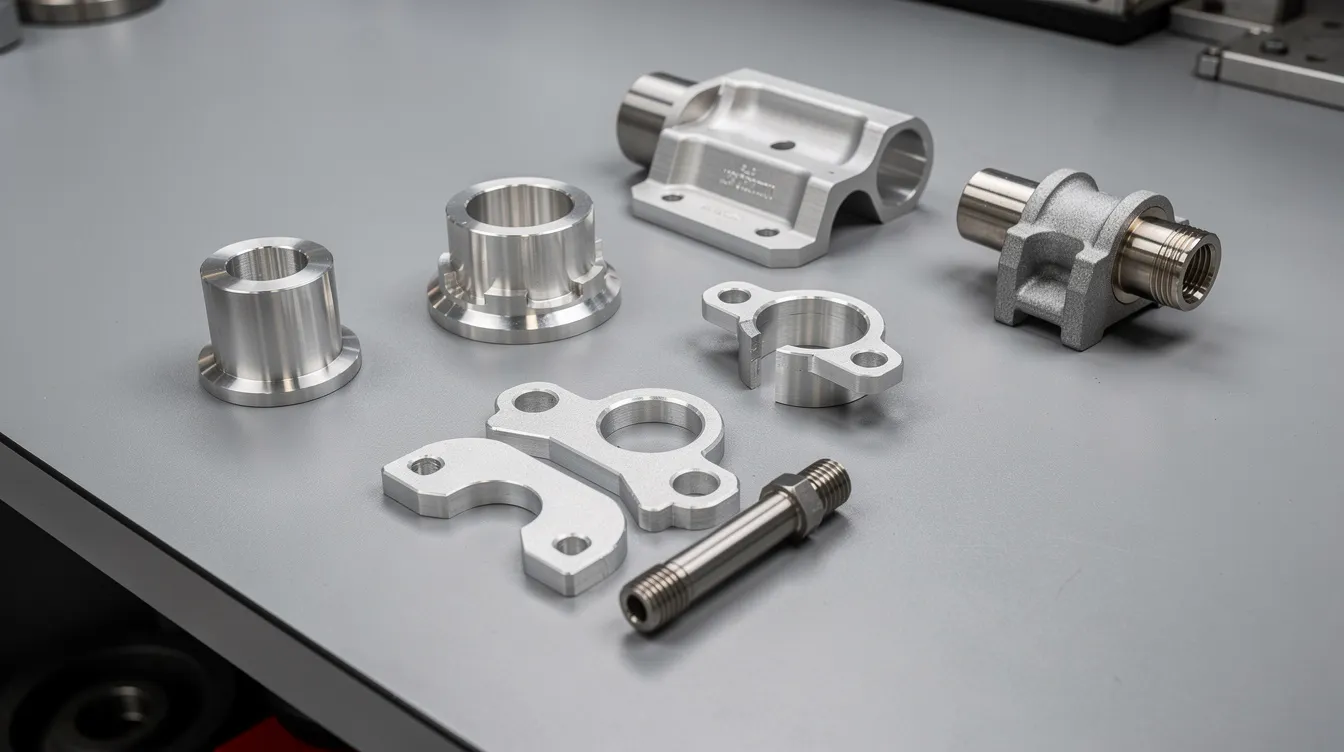
Common cnc parts sourced from China include precision shafts, gears, valve bodies, custom fasteners, heatsinks, and complex 5-axis cnc machined parts. Some shops deliver complete assemblies-a machined base plus fabricated cover and hardware-reducing your vendor count.
Example: A European robotics OEM sourcing ±0.01 mm aluminum actuator housings from a Dongguan ISO 9001 cnc machining company. Starting with 10 machined prototypes, they validated quality with dimensional inspection reports and CMM data, then ramped to 5,000 units per quarter with consistent results.
Lead Times, Logistics, and Working with ISO Certified CNC Machining Companies
Understanding lead times and logistics is essential for planning your outsourcing cnc machining projects effectively. Chinese CNC machining supports rapid prototyping in as few as 3 days for simple geometries.
Indicative lead times:
-
Simple prototypes: 3–7 working days
-
Complex 5-axis precision components: 7–15 working days
-
Production runs (100–5,000 pcs): 2–4 weeks after FAI approval
Logistics options:
|
Method |
Transit Time |
Best For |
|---|---|---|
|
Express courier |
3–5 days |
Prototypes, samples |
|
Air freight |
5–10 days |
Small production, urgent orders |
|
Sea freight |
3–6 weeks |
Bulk orders, high volume production |
Best practices for collaboration:
-
Provide clear CAD and 2D drawings with per-feature tolerances
-
Specify materials, surface finishing requirements, and critical-to-quality dimensions
-
Request material certificates, RoHS/REACH declarations, and inspection reports
-
For automotive or aerospace customers, request PPAP or FAIR documents
Set up a communication cadence-weekly updates with photos and progress reports during prototyping, more frequent during ramp-up. Clarify rework and complaint handling procedures upfront. Rapid prototyping can be completed in as few as 3 days, but production timelines depend on complexity and documentation requirements.
Frequently Asked Questions About ISO Certified CNC Manufacturers in China
How do I confirm a Chinese cnc machining company is truly ISO 9001:2015 certified? Check the certificate for correct company name, address, standard version, scope, certifying body, and expiry date. Cross-check with the registrar’s database. Never rely on a website claim alone.
Can I order just a few cnc machined parts for testing? Yes. Many iso certified cnc manufacturers china support no or low MOQ (1–20 pcs) for prototypes. Companies like CNCTAL, Zence Precision, and Runsom Precision explicitly welcome trial orders.
What tolerances are realistic from Chinese ISO 9001 shops? ±0.01 mm is standard for general precision parts. Better shops achieve ±0.005 mm routinely. ISO certified companies achieve tolerances as tight as ±0.001 mm on specialty items with Swiss or ultra-precision equipment.
How do I protect my IP when sending drawings to chinese cnc machining companies? Insist on a signed NDA before sharing CAD files. Ask about the factory’s data security policies, physical access controls, and how design files are stored and accessed.
What are typical payment terms? Usually 30–50% deposit, with the balance due before shipment. Start with sample orders to build trust before committing to larger volumes.
Should I work directly with a factory or use a trading platform? Working directly with the machining company gives you more control over quality, machines, and processes-and eliminates middleman margins. Trading firms may be easier to find initially but offer less transparency into the actual production process. Many cnc companies now offer direct online quoting to bridge this gap.
What finishes are available? Standard options include anodizing, powder coating, nickel/chrome plating, passivation, bead blasting, and painting. Medical and optical parts may require polished finishes to Ra ≤ 0.2 µm.
Conclusion: Building a Reliable Supply Chain with ISO 9001 CNC Machining Companies in China
ISO 9001 certification signals disciplined manufacturing processes and consistent quality, but it’s a starting filter-not a finish line. Buyers must still verify machining capabilities, realistic tolerances, communication quality, and documentation depth. Computer numerical control technology combined with formal quality systems is what makes outsourcing cnc machining to China a viable strategy for precision components.
Use the iso 9001 cnc machining companies china list in this guide as your starting point. Then qualify suppliers through RFQs, sample orders, and certificate verification. Compare 2–3 shortlisted cnc machining companies on price, lead time, and engineering support before committing to production volumes.
Chinese cnc manufacturers continue investing in automation, digital QC tools, and multi-axis rapid manufacturing capabilities. As these investments mature, expect even tighter tolerances and faster turnarounds from top machining companies by 2027. The opportunity is real-but it starts with preparation. Gather your detailed drawings, tolerance specs, and material requirements, then reach out to your shortlisted suppliers with a clear RFQ.