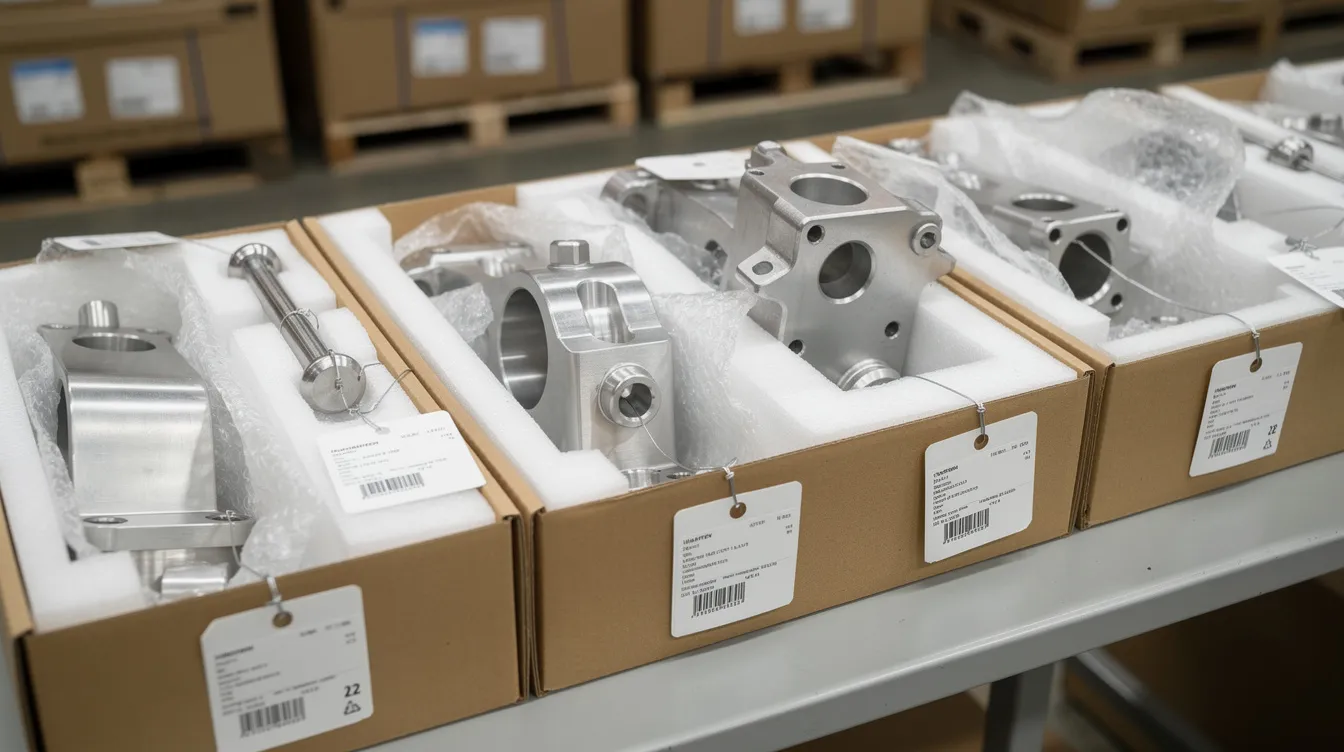
ISO 9001:2015 & AS9100 Certified Metal Supplier – Aerospace Metals Partner
ISO 9001:2015 & AS9100 Certified Metal Supplier – Aerospace Metals Partner
Introduction: Why Certification Matters for Aerospace Metals
Anebon Metal Products Limited is an ISO 9001:2015 certified precision metal manufacturer supporting aerospace manufacturing programs worldwide. Founded in 2010 and based in Dongguan, Guangdong, China, we deliver CNC machined, die cast, and sheet metal fabricated components to OEMs and engineering teams across North America, Europe, and Asia. ISO 9001:2015 is the most recent version of the internationally recognized quality management standard, and our certification demonstrates our commitment to quality and reliability in aerospace supply chains.
While Anebon is not yet AS9100 certified, we routinely supply machined and fabricated aerospace-grade metals to AS9100 certified primes and Tier 1 integrators, aligning our quality management system and documentation with AS9100 Rev D expectations. AS9100 is a quality management standard for aerospace that expands on ISO 9001 with over 100 additional requirements tailored to the aerospace and defense industries. Our internal processes for traceability, risk management, and inspection are structured to integrate with AS9100-driven supply chain programs, making Anebon a practical metals manufacturing partner for organizations that need flight-grade precision without the overhead of sourcing exclusively from AS9100 holders.
So why should an aerospace OEM or engineer consider Anebon? Because we combine the rigor of ISO 9001:2015 with aerospace-oriented quality processes, competitive pricing, and the flexibility to support everything from rapid prototyping to repeat production.
ISO 9001:2015 – Foundation of Our Quality Management System
ISO 9001:2015 is the latest edition of ISO 9001, the global quality management standard published by the international organization for standardization. With approximately 1.47 million active certificates worldwide, it is the most widely adopted QMS framework across manufacturing sectors, and base metals and fabricated metal products rank among the top certified industry categories. Anebon has held ISO 9001:2015 certification since 2010, covering precision CNC machining, die casting, and sheet metal fabrication operations in Dongguan, China.
ISO 9001:2015 certification ensures rigorous quality management processes built on seven core principles: customer focus, leadership, engagement of people, process approach, improvement, evidence-based decision making, and relationship management. ISO 9001 focuses on customer satisfaction, continual improvement, and process efficiency. For a metal parts supplier, these principles translate directly into documented procedures for every stage of the manufacturing process, from raw materials purchasing through final shipment.
How ISO 9001:2015 Governs Our Metal Supply Chain
Inside Anebon’s plant, ISO 9001:2015 governs the full metal supply chain:
-
Raw material purchasing and incoming inspection – Every lot of aluminum, stainless steel, titanium, or alloy steel arrives with mill test reports. We verify chemical composition, mechanical properties (hardness, tensile strength), and dimensional conformity before material enters production.
-
In-process quality control – Documented work instructions guide each CNC milling, CNC turning, and fabrication operation. Calibrated CMMs, surface profilometers, and hardness testers are used at defined checkpoints. Training records must be maintained for all staff operating inspection equipment or running critical processes.
-
Final inspection and shipping – Completed parts undergo dimensional verification against engineering drawings, including GD&T features and surface finish requirements. Inspection reports and material certificates ship with every order.
-
Corrective actions and continuous improvement – ISO 9001:2015 focuses on continuous improvement in quality management through root cause analysis, internal audits, management reviews, and effectiveness verification of corrective actions. ISO 9001:2015 requires documentation control for quality procedures, ensuring audit-ready records at all times.
Benefits for Aerospace Clients
-
Consistent part quality backed by a globally recognized quality management system
-
Audit-ready documentation and structured nonconformance reporting
-
Predictable lead times driven by controlled, repeatable processes
-
ISO 9001:2015 certification benefits manufacturing and industrial customers by reducing variability and increasing confidence in supplier performance
ISO 9001 and AS9100 enhance customer confidence by ensuring consistent part quality and reliability, and Anebon’s ISO certification is the foundation that makes deeper aerospace alignment possible.
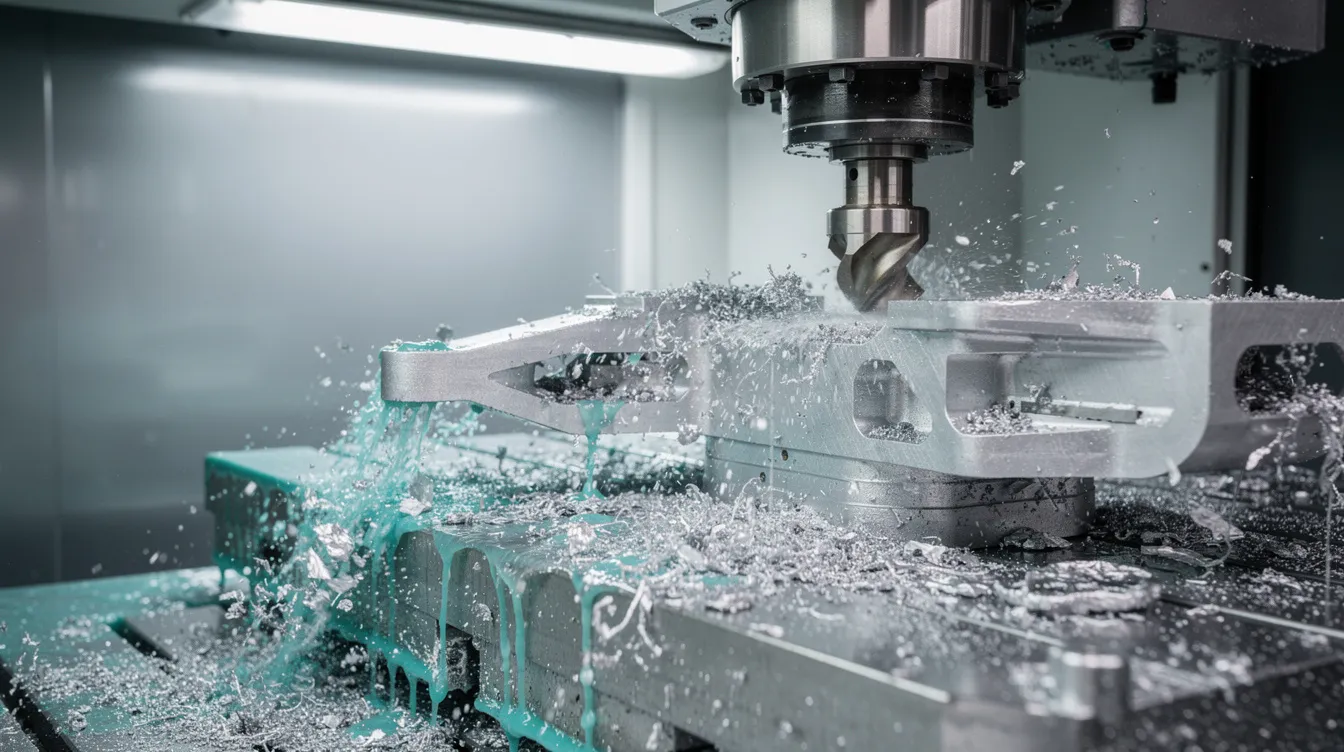
AS9100 vs ISO 9001 – What Aerospace Programs Actually Require
AS9100 Rev D builds on ISO 9001:2015 by layering aerospace-specific requirements for product safety, configuration control, and risk management across the entire supply chain. AS9100 includes additional requirements beyond ISO 9001 and includes specific guidelines for aerospace quality management that address the stringent requirements of aviation, space, and defense applications.
Key Differences at a Glance
|
Area |
ISO 9001:2015 |
AS9100 Rev D |
|---|---|---|
|
Quality management system |
Core QMS framework |
Full ISO 9001 + 100+ aerospace additions |
|
Traceability |
Product conformity records |
Complete traceability of materials from raw stock through final shipment |
|
First Article Inspection |
Not required |
First Article Inspection reports are required for new parts per AS9102 |
|
Counterfeit prevention |
Not addressed |
AS9100 helps prevent the entry of counterfeit materials into the aerospace supply chain |
|
Configuration management |
General change control |
Formal configuration management with version control and impact assessment |
|
Product safety |
Implicit |
AS9100 adds requirements for product safety management and configuration management explicitly |
|
Risk management |
Risk-based thinking |
AS9100 demands rigorous procedures for risk management and product safety measures |
|
Deviations |
Corrective action |
AS9100 requires formal procedures for handling deviations and corrective actions |
AS9100 certification ensures rigorous quality management in aerospace, and AS9100 certification ensures compliance with aerospace industry standards. AS9100 requires complete traceability of materials used, and complete traceability of materials is required under AS9100 for every production lot. AS9100 certification qualifies suppliers for aerospace contracts and increases credibility during evaluations by major aerospace OEMs. In practice, AS9100 certification requires a three-stage auditing process and can take 6 to 12 months to obtain – AS9100 certification typically takes 6 to 12 months to achieve depending on organizational readiness.
When ISO 9001 Is Sufficient vs. When AS9100 Is Mandatory
Major aerospace OEMs require AS9100 certification to build supplier trust and compliance for direct flight-critical aerospace components such as structural members, engine parts, and avionics assemblies. However, many primes and Tier 1s still rely on ISO 9001:2015 metal manufacturers like Anebon for build-to-print components, tooling, fixtures, ground support equipment, and R&D prototypes where AS9100 is not contractually mandated.
Anebon’s internal procedures for traceability, change control, and special process validation are written to be compatible with future AS9100 certification and customer audits. This means that when a buyer performs a gap analysis between our current processes and AS9100, they find that the critical operational controls are already in place.
Aerospace Metals Capabilities at Anebon
Anebon serves the aerospace industry as a precision metals supplier offering CNC machining, 5-axis machining, sheet metal fabrication, and die casting – from single prototypes through full production runs. Our operations are designed to handle the high-mix, low-volume work typical of aerospace development programs while scaling for repeat orders.
Materials We Handle
-
Aluminum alloys – 2024, 6061, 7075 for structural brackets, avionics enclosures, and heat sinks. See examples of CNC milling custom irregular aluminum parts.
-
Stainless steels – 304, 316, 17-4PH for hardware, housings, and manifolds in defense applications and test equipment.
-
Tool steels and alloy steels – 4140, 4340 for jigs, fixtures, and landing-gear related tooling.
-
Titanium alloys – Ti-6Al-4V for lightweight, high-strength aerospace parts where strength-to-weight ratio is critical. Learn more about our titanium CNC machining capabilities.
-
Copper and brass – For electrical connectors, thermal management parts, and shielding in electronics and avionics.
Processes and Tolerances
We use 3-, 4-, and 5-axis CNC milling, CNC turning, Swiss-type machining, sheet metal cutting and bending, welding, and surface treatments via qualified sub-suppliers (anodizing, passivation, hard coat, conversion coatings, painting). Our precision sheet metal stamping capabilities support high-volume bracket and enclosure production.
Achievable tolerances go down to ±0.002 mm for critical features. For rapid prototyping, we deliver first articles in days, supporting innovation cycles that aerospace development programs demand.
FOD control is critical to prevent contamination in aerospace manufacturing and aerospace parts. FOD prevention plans must be documented in aerospace manufacturing, and our shop floor protocols include FOD-controlled zones, clean workstations, and documented FOD inspection checkpoints for every aerospace project.
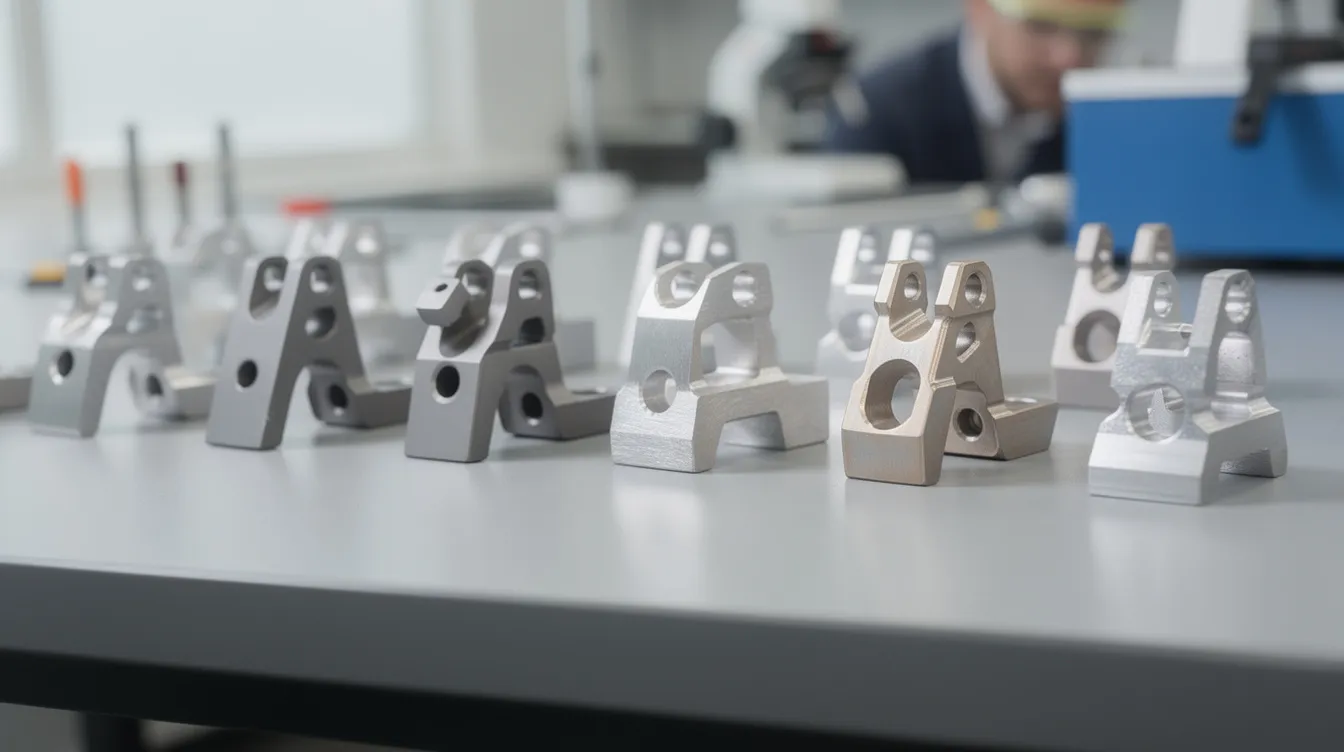
Quality Control, Traceability & Risk Management for Aerospace Customers
Even without an AS9100 certificate, Anebon designs its quality control and documentation to integrate smoothly with AS9100-certified customers’ systems. Our quality processes are built for the aerospace and defense sectors, not retrofitted from general manufacturing.
Quality Control Workflow
Quality control processes must include inspection points at various locations throughout the manufacturing process. Our workflow follows this structure:
-
Incoming inspection – Verification of mill certificates, hardness testing, and composition checks (spectrography when required) against specifications
-
In-process checks – Control plans for critical operations, statistical process control on key characteristics, and calibrated equipment including CMMs and surface profilometers. Our quality control inspection checklist details these multi-stage checkpoints.
-
Final inspection – 100% or sampling inspection depending on risk classification, full dimensional reports, GD&T verification, and surface finish measurement
-
Documentation packages – Material certificates, dimensional inspection reports, capability studies on key characteristics, PPAP-style packages, and FAI-style reports aligned with AS9102 structure – all available on request
Traceability Practices
Aerospace quality control requires complete traceability of materials. AS9100 requires complete traceability of materials used in production, and we operate accordingly:
-
Heat and lot numbers travel through the entire process routing – from raw metal supplier certificate through cutting, machining, finishing, and final shipment
-
Every work order records which lot or heat was used, which equipment was employed, and which operators performed each step
-
Documentation must be kept for at least seven years. We maintain records for 7 to 10 years to support aerospace audit and investigation needs
Risk Management
AS9100 emphasizes risk management and prevention in quality processes, and AS9100 emphasizes risk management and continuous improvement as core disciplines. Our approach mirrors these expectations:
-
Formal risk assessments on new aerospace projects before production begins
-
PFMEA-style analysis for critical features, identifying potential failure modes and mitigation actions
-
Risk management systems must be documented and regularly reviewed – we maintain risk registers with defined response actions
-
AS9100 emphasizes risk management and prevention in aerospace manufacturing, so we add extra checkpoints, tooling verification, and gauge R&R studies on mission-critical items
-
Risk management practices help mitigate manufacturing variability risks through preventive controls rather than reactive corrections
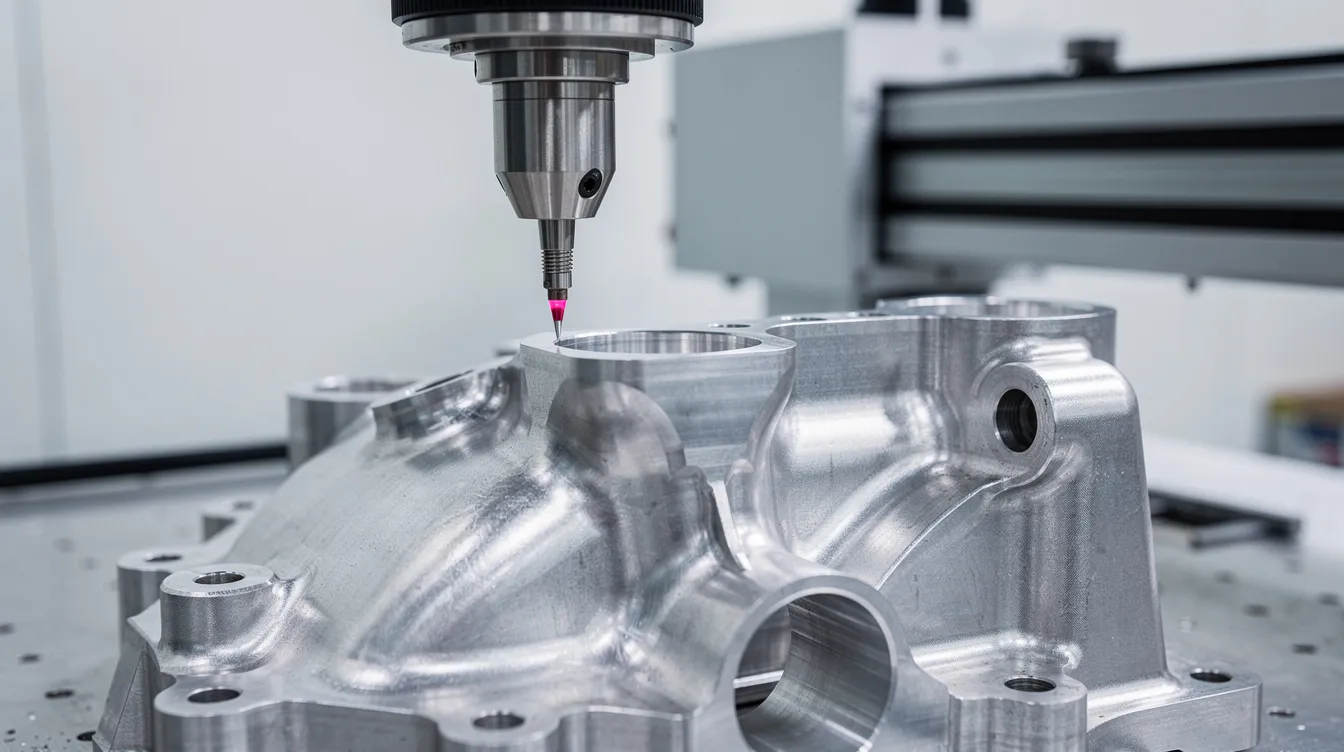
Our machining tolerance verification playbook outlines how we verify tight tolerances on complex aerospace parts inline.
Working with AS9100-Certified Aerospace Primes & Tier 1s
Anebon has served as a supporting metal manufacturing partner within larger AS9100-certified aerospace supply chains across North America, Europe, and Asia since our founding. Our role is to deliver build-to-print metal components that meet the quality and documentation standards these defense organizations and aerospace primes expect from their suppliers.
Real-World Examples
-
Machined aluminum avionics brackets for an EU-based UAV OEM – 5-axis milled from 7075-T6 with ±0.01 mm positional tolerances on hole patterns and full CMM inspection reports
-
Titanium components for a satellite ground-support fixture – Ti-6Al-4V with controlled grain direction, post-machining passivation, and NDT documentation
-
Stainless steel housings for an aerospace test rig supplied to a U.S. Tier 1 – welded 316L assemblies with stress-relieved weld joints, machined mating surfaces, and complete weld procedure documentation
How We Align with Customer AS9100 Requirements
-
Accept flowed-down contractual clauses covering regulatory compliance, quality, and documentation
-
Follow customer-specific inspection levels and reporting formats
-
Support controlled revisions and configuration management per customer engineering change procedures
-
Participate in supplier scorecard and PPM monitoring programs
-
AS9100 requires certified metal suppliers to impose quality standards on their sub-tier providers – we flow applicable requirements down to our surface treatment and heat treatment sub-suppliers
For projects involving export-controlled or ITAR-sensitive data, we work within customer-managed controls including separate data handling and restricted-access engineering cells.
Choosing an ISO 9001:2015 Metal Supplier for Aerospace Manufacturing
When AS9100 is not strictly required – for non-flight tooling, R&D prototypes, test rigs, ground support equipment, or early-stage development – an ISO 9001:2015 metal supplier with demonstrated aerospace experience can be the right choice. Here is what to evaluate.
Key Evaluation Points
-
ISO certification scope and audit history – Confirm that precision machining, sheet metal fabrication, and the specific materials you need are covered. Ask about the most recent audit findings.
-
Demonstrated aerospace or high-reliability experience – Has the company supplied parts to AS9100-certified customers? Can they show examples of aerospace-grade work with high quality standards?
-
Depth of quality control and documentation – Do they perform FAI? Track key characteristics? Maintain raw materials traceability and lot records? Have documented procedures for counterfeit part prevention?
-
Tolerance capability – Request capability studies, especially for tight tolerances (±0.005–0.01 mm), complex geometries, thin walls, and small features.
-
Responsiveness and engineering support – Can they review 3D models, provide DFM feedback, sign NDAs, and communicate effectively in English? Learn more about choosing the right machining vendors for your needs.
Why Anebon
Anebon was founded in 2010 with ISO 9001:2015 and ISO 14001:2015 certifications, serving overseas OEM customers across aerospace, automotive, medical devices, electronics, and robotics sectors. We are built for long-term aerospace partnerships, supporting projects from prototype through full-scale production with consistent quality and transparent communication.
Ready to get started? Send us your drawing or 3D model for a DFM review and quote. We typically respond within 24–48 hours, and we are happy to sign NDAs to protect your designs from the first conversation.
Anebon’s ISO 9001:2015 quality management system, combined with aerospace-oriented processes for traceability, risk management, and inspection, makes us a reliable metals manufacturing partner for AS9100-certified organizations and defense industries programs that demand precision, documentation, and market-tested reliability across every shipment.