Hot Rolled vs Cold Rolled Steel: Key Differences and Best Uses
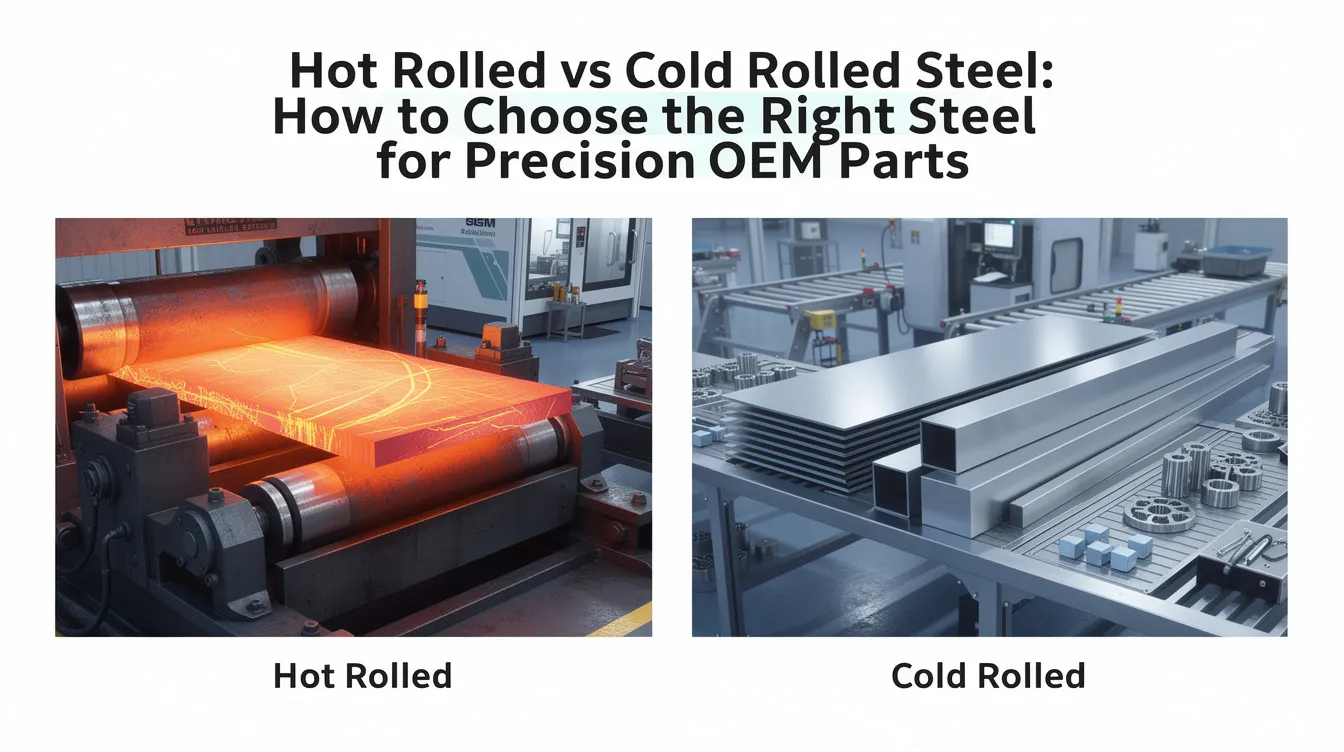
Hot Rolled vs Cold Rolled Steel: How to Choose the Right Steel for Precision OEM Parts
Introduction: Hot Rolled vs Cold Rolled Steel at a Glance
When selecting raw materials for OEM parts, the choice between hot rolled vs cold rolled steel directly impacts dimensional accuracy, surface finish, mechanical strength, and total project cost. For CNC machining, sheet metal fabrication, and structural components, the wrong steel type can mean excess scrap, poor fitting assemblies, or unnecessary finishing steps.
The main difference between hot rolled and cold rolled steel lies in the rolling process, not the chemical composition or steel grades. Hot rolled steel is formed at very high temperatures above the steel’s recrystallization temperature, while cold rolled steel undergoes further processing at near room temperature after initial hot rolling.
|
Attribute |
Hot Rolled Steel |
Cold Rolled Steel |
|---|---|---|
|
Cost |
Lower (~$600–900 USD/ton) |
30–50% more expensive |
|
Dimensional Tolerance |
Wider (±0.3 mm+) |
Tight (±0.05–0.15 mm) |
|
Surface Finish |
Rough, mill scale, scaled surface |
Smooth, shiny, oily finish |
|
Mechanical Strength |
Lower yield strength (250–350 MPa) |
15–30% higher yield strength |
|
Typical Applications |
Structural beams, heavy frames |
Automotive panels, enclosures |
Anebon Metal Products Limited works with both hot rolled and cold rolled steels for CNC machining, die casting inserts, and sheet metal parts, and can advise on material selection during DFM review.
Understanding Rolled Steel: How the Rolling Process Works
Steel production begins with iron ore smelted into molten iron, then converted to steel and cast into slabs or billets. These raw materials enter the rolling process, where successive rollers reduce thickness and shape the steel into plate products, sheets, or structural profiles.
The term “rolled steel” describes the forming method. The recrystallization temperature – around 925°C (1,700°F) for most steels – is the dividing line. Above it, the crystal structure reforms during deformation (hot rolling). Below it, steel undergoes strain hardening and work hardening (cold rolling).
Many cold rolled steel products start life as hot rolled coil. The process flow runs: melt → cast → hot roll → optionally pickle → cold roll → anneal → temper roll → finished product.
What Is Hot Rolled Steel?
Hot rolled steel is processed above 1,700°F (926°C), meaning it is formed while the metal is red-hot and extremely ductile. This is essentially hot rolled steel shaped above the recrystallization temperature through roughing stands and finishing stands before being coiled or cut into its final shape.
Key physical traits:
-
Rough, blue-grey scaled surface with mill scale from high-temperature oxidation
-
Rounded, less precise edges after uncontrolled air cooling
-
Thickness range from ~1.5 mm coil up to 100+ mm plate
-
Tensile strength around 340–450 MPa; yield strength 210–290 MPa
-
Hot rolled steel is free from internal stresses due to gradual cooling, producing a stable “normalized” structure
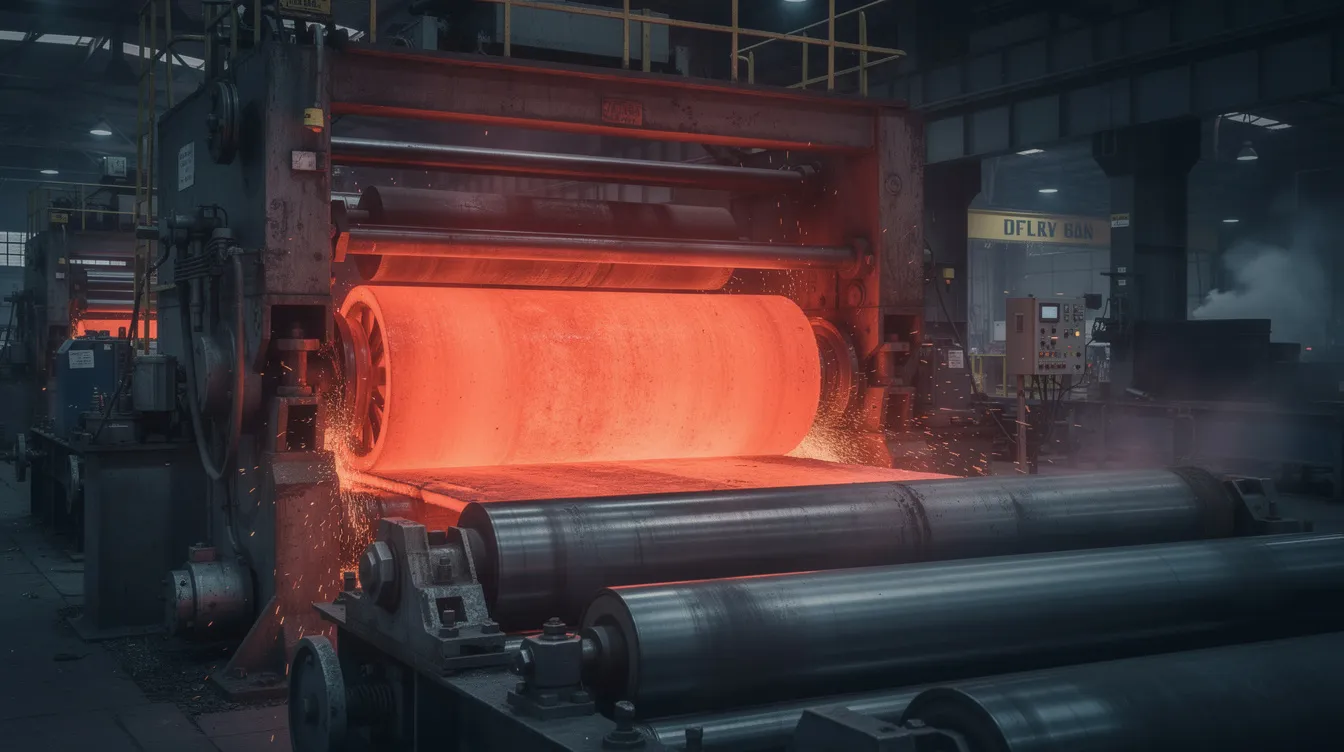
Common Uses of Hot Rolled Steel
Applications for hot rolled steel include structural beams and railroad tracks, plus heavy machinery frames, agricultural equipment, and truck chassis. Hot rolled steel is often used in construction and heavy equipment where precise shapes are secondary to strength and cost.
-
I beams, wide-flange beams, channels, angles, and flat bars
-
Hot rolled plate for welded fabrications and machine bases
-
Construction applications like bridge supports and building columns
Hot rolled steel is ideal for structural applications. Anebon can machine hot rolled sections – CNC milling thick plate to achieve tighter dimensional tolerances on critical faces while keeping material costs low.
Advantages of Hot Rolled Steel
Hot rolled steel is cheaper than cold rolled steel and offers several design advantages for OEM projects:
-
Lower cost per kilogram due to fewer mill process steps
-
Available in large structural sections and thick plate products
-
Hot rolled steel is easier to shape due to high temperatures during forming
-
Low internal stresses simplify welding and large-scale forming
-
Hot rolled steel has a higher stress tolerance than cold rolled steel in heavy structural loading
-
Fast lead times – hot rolled products are widely stocked
Disadvantages of Hot Rolled Steel
Hot rolled steel has looser tolerances than cold rolled steel, and the rougher surface demands additional processing for cosmetic or precision applications:
-
Thickness variation across width; slight distortions from uncontrolled cooling
-
Mill scale and surface imperfections require sand blasting, grinding, or descaling before painting
-
Less control over edge condition – edges rounded, not sharp
-
Lower yield strength and tensile strength vs cold rolled of the same grade
-
More stock allowance needed for precision applications in CNC machining
What Is Cold Rolled Steel?
Cold rolled steel is processed at room temperature after hot rolling. Hot rolled coil is pickled, then re rolled through cold reduction mills at near room temperature to achieve tighter dimensional tolerances and a smoother surface.
Process steps: hot rolled pickled coil → cold reduction passes → annealing → temper rolling or skin pass.
The term “cold rolled” typically applies to sheet and coil. Bar and tube products processed similarly are called cold drawing or cold finished steel products, but all rely on work hardening processes.
Key characteristics:
-
Cold rolled steel has a smooth, shiny, and oily surface finish from cold reduction processing
-
Cold rolling strain-hardens the metal, potentially increasing yield strength by 20% or more
-
Thickness tolerances of ±0.05–0.15 mm with sharper edges
-
Cold rolled steel is stronger due to work hardening
-
Available in gauges from ~0.15 mm to ~6 mm for most steel grades
Common Uses of Cold Rolled Steel
Cold rolled steel is commonly used for automotive parts and appliances, and applications for cold rolled steel include precision machinery and furniture. The automotive industry relies on cold rolled sheet for body panels and structural brackets.
-
Electronic enclosures, medical device covers, and consumer product housings
-
Aerospace structural components where tight tolerances and consistent material properties matter
-
Precision sheet metal fabrication: laser-cut panels, press brake–bent brackets, stamped parts
-
Base material for galvanized and painted coatings in HVAC and appliance manufacturing
Anebon uses cold rolled sheet and coil for laser cutting and press brake forming to produce precise shapes for overseas OEMs.
Advantages of Cold Rolled Steel
Cold rolled steel offers much closer dimensional tolerances and sharp edges, making it the go-to for precision applications:
-
Superior dimensional accuracy and excellent flatness for precise dimensions in assemblies
-
Cold rolled steel is stronger than standard hot rolled steel – higher yield strength enables thinner gauges
-
Cold rolled steel provides a smoother surface finish than hot rolled steel, delivering an aesthetically pleasing finish
-
Cold rolled steel maintains consistent strength due to its processing, enabling predictable bending behavior
-
Less post-machining for flatness and fit; reduced machining cost
Disadvantages of Cold Rolled Steel
Cold rolled steel is more expensive because it requires additional processing steps, and several practical limitations apply:
-
15–30% price premium over equivalent hot rolled material
-
Higher residual stresses from cold work can cause spring-back during bending or distortion during heavy machining
-
Maximum thickness limited to ~6 mm for most grades – thick plates and large structural shapes are unavailable as a cold rolled product
-
Harder material may require intermediate annealing for complex forming or tension breaking in deep draws
-
Tooling wears faster due to increased mechanical strength and hardness
Cold Rolled Steel vs Cold Formed Steel
These terms cause frequent confusion. Cold rolled steel describes the material state – flat coil or sheet produced by cold reduction. Cold formed steel describes profiles and parts shaped at room temperature from that material.
-
Cold formed steel framing uses thin-gauge galvanized cold rolled sheet, roll-formed into studs, channels, and joists
-
OEM cold formed products include custom brackets, rails, and structural channels made by press braking or roll forming
-
Anebon primarily receives cold rolled sheet, then cold forms it via press brakes and stamping into desired shape profiles with precise finishing
Hot Rolled vs Cold Rolled Steel: Detailed Comparison
When comparing hot rolled vs cold rolled steel, the processing temperature creates all downstream differences. Hot rolling above high temperatures produces larger grain structures with lower strength. Cold rolling at room temperature introduces strain hardening, refining the microstructure.
|
Property |
Hot Rolled |
Cold Rolled |
|---|---|---|
|
Processing Temp |
Above 925°C |
Near room temperature |
|
Tolerance |
±0.3 mm+ |
±0.05–0.15 mm |
|
Edge Condition |
Rounded |
Sharp |
|
Surface Ra |
3.5–7.5 µm |
0.1–0.5 µm |
|
Yield Strength |
250–350 MPa |
300–450 MPa |
|
Max Thickness |
100+ mm |
~6 mm |
|
Weldability |
Easier in thick sections |
May need distortion control |
|
Coating Prep |
Descaling required |
Ready for coating |
Hot rolled vs cold rolled steel weldability: both are weldable, but hot rolled material is often easier for thick structures. Cold rolled’s higher strength means the heat-affected zone locally loses its work-hardened properties.
Strength, Tolerances, and Surface Finish
Cold rolling increases yield strength by roughly 15–30% over equivalent hot rolled steel. Where tolerances matter – enclosure doors, mating brackets – cold rolled’s ±0.05–0.15 mm gauge control versus hot rolled’s ±0.3 mm+ makes the difference between hot rolled and cold rolled steel immediately practical.
Visually, hot rolled steel shows a blue-black color with a rougher surface, while cold rolled delivers a light-gray, smoother surface ready for powder coating. In downstream sheet metal work, these differences influence cutting speeds, burr formation, and precise finishing operations.
Formability, Distortion, and Machinability
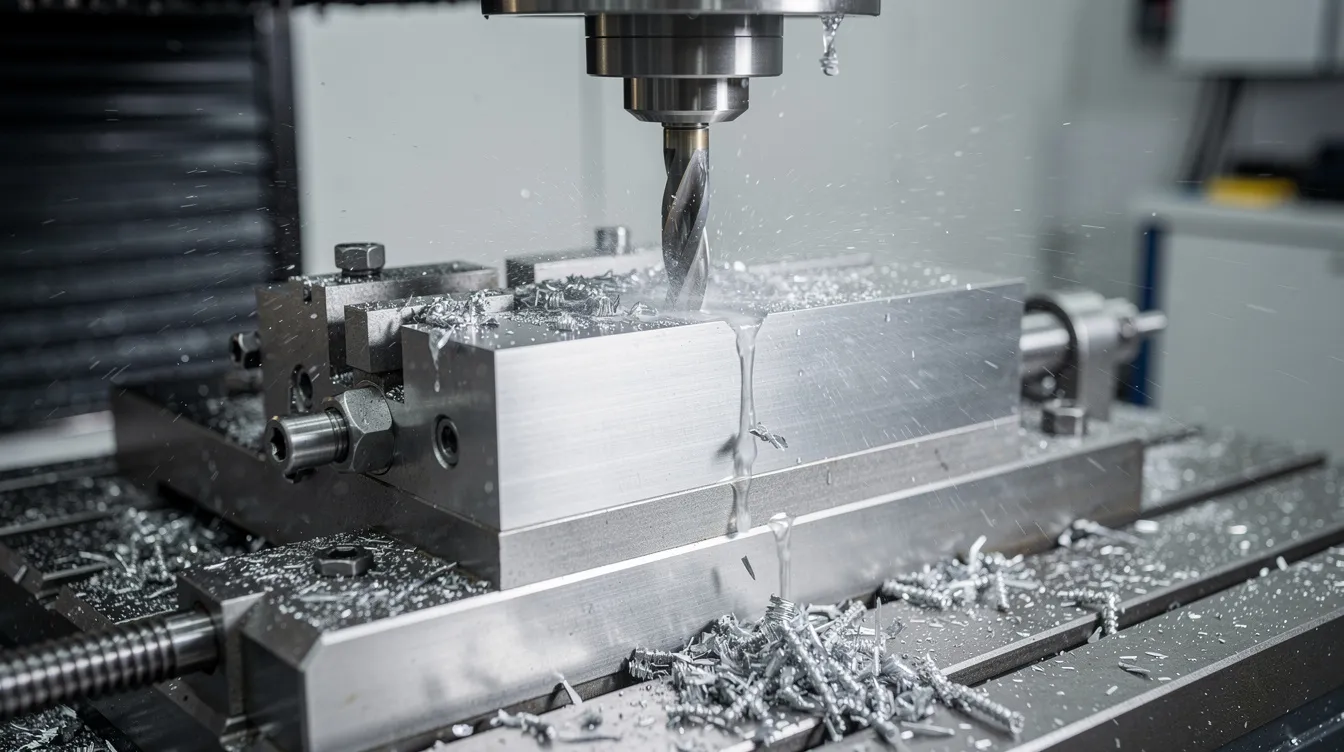
Hot rolled steel, being softer with lower mechanical properties, handles heavy forming well but its scale layer affects tooling. Cold rolled steel shows more predictable but higher spring-back, requiring accurate bend-allowance calculations and sometimes overbending in tooling design.
Distortion risks differ: hot rolled parts may warp from non-uniform cooling in large sections, while cold rolled flat stock can distort during machining when internal stresses release. Anebon manages these issues with proper fixturing, stress-relief annealing when needed, and optimized CAM strategies for high-precision components.
How to Choose the Right Steel for Your Project
Choosing the right steel comes down to four questions: What tolerances do you need? Is the surface visible? What fabrication steps are involved? What’s your budget?
Quick decision checklist:
-
Define function, load, and required mechanical strength
-
Identify where tolerances are critical vs. secondary
-
Determine if surface finish is cosmetic or functional
-
Check available thickness and product forms in your steel type
-
Compare total cost – raw material plus any additional processing and precise finishing
Scenario examples:
-
Large welded machine base: Hot rolled plate and profiles; final machining on critical faces only
-
Visible electronic enclosure: Cold rolled sheet for laser cutting, bending, and powder coating
-
Automotive or robotics bracket with tight fit: Cold rolled for predictable bending and stiffness
-
Low-volume prototype: Mix materials based on availability – hot rolled where tolerances allow, cold rolled where appearance matters
Working With Anebon: Material Selection, Prototyping, and Production
Anebon Metal Products Limited is an ISO 9001:2015 and ISO 14001:2015 certified precision manufacturer based in Dongguan, China, serving overseas OEMs since 2010. Core services include 3-, 4-, and 5-axis CNC machining, CNC turning, die casting, and high-precision sheet metal fabrication across steel, aluminum, stainless steel, and more.
When you need help choosing between hot rolled and cold rolled steel, Anebon’s engineering team can:
-
Review your drawings and tolerance requirements against available steel products
-
Suggest material and thickness options that balance cost, mechanical properties, and manufacturability
-
Advise on surface prep, coatings, and the right steel for your specific application
-
Support rapid prototyping through full production while maintaining tolerances as precise as ±0.002 mm on machined features
Upload your CAD files or drawings to request a quote and get DFM feedback from Anebon’s team – whether your project calls for hot rolled plate, cold rolled sheet, or a combination of both.