Hot Rolled vs Cold Rolled: Key Differences and Applications Explained
Hot Rolled vs Cold Rolled Steel: How to Choose the Right Steel for Precision Parts
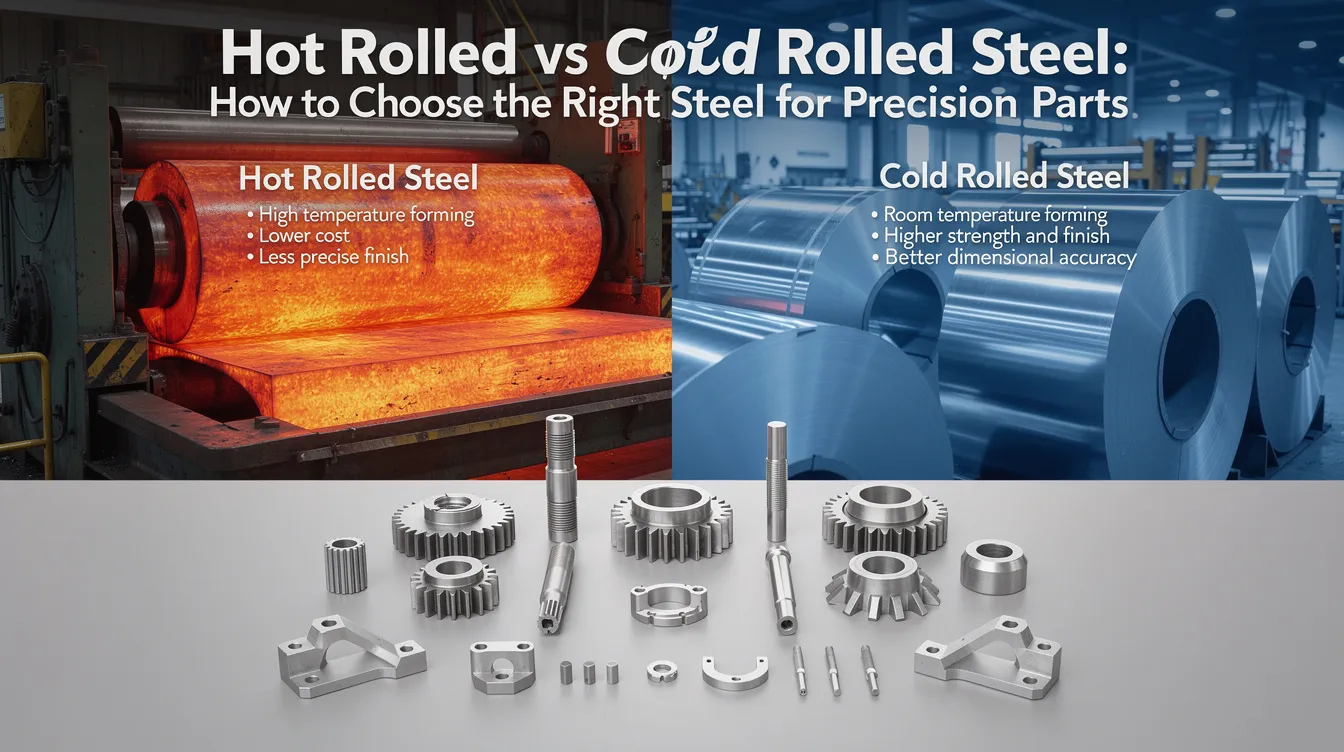
When engineers and sourcing teams compare hot rolled vs cold rolled steel, they’re looking at how temperature during rolling changes everything about the finished product. This isn’t a question of steel grades or alloys. It’s about the process-and the process determines the tolerances, surface quality, strength, and cost you’ll get.
Essentially hot rolled steel is rolled above the steel’s recrystallization temperature, typically above 1,700°F (927°C). Cold rolled steel starts as hot rolled material, then undergoes additional processing at room temperature to refine its dimensions and surface. Cold rolled steel offers tighter tolerances and a superior surface finish. Hot rolled steel is more cost effective and easier to form into larger sizes. At Anebon Metal Products Limited, we work with both hot and cold rolled steels across CNC machining, sheet metal fabrication, and die casting projects-choosing the right material based on your project’s requirements.
|
Property |
Hot Rolled Steel |
Cold Rolled Steel |
|---|---|---|
|
Processing temp |
Above ~1,700°F (927°C) |
Room temperature (further processing) |
|
Dimensional accuracy |
Looser dimensional tolerances (±0.3–0.5 mm) |
Tight dimensional tolerances (±0.05–0.15 mm) |
|
Surface finish |
Rougher surface with mill scale |
Smooth surface, bright and clean |
|
Strength |
Lower yield strength, higher ductility |
Up to 20% higher strength |
|
Cost |
~$270 per sheet |
Over $400 per sheet |
|
Common uses |
Construction, structural beams, railroad tracks |
Automotive parts, appliances, electronics |
What Is Hot Rolled Steel?
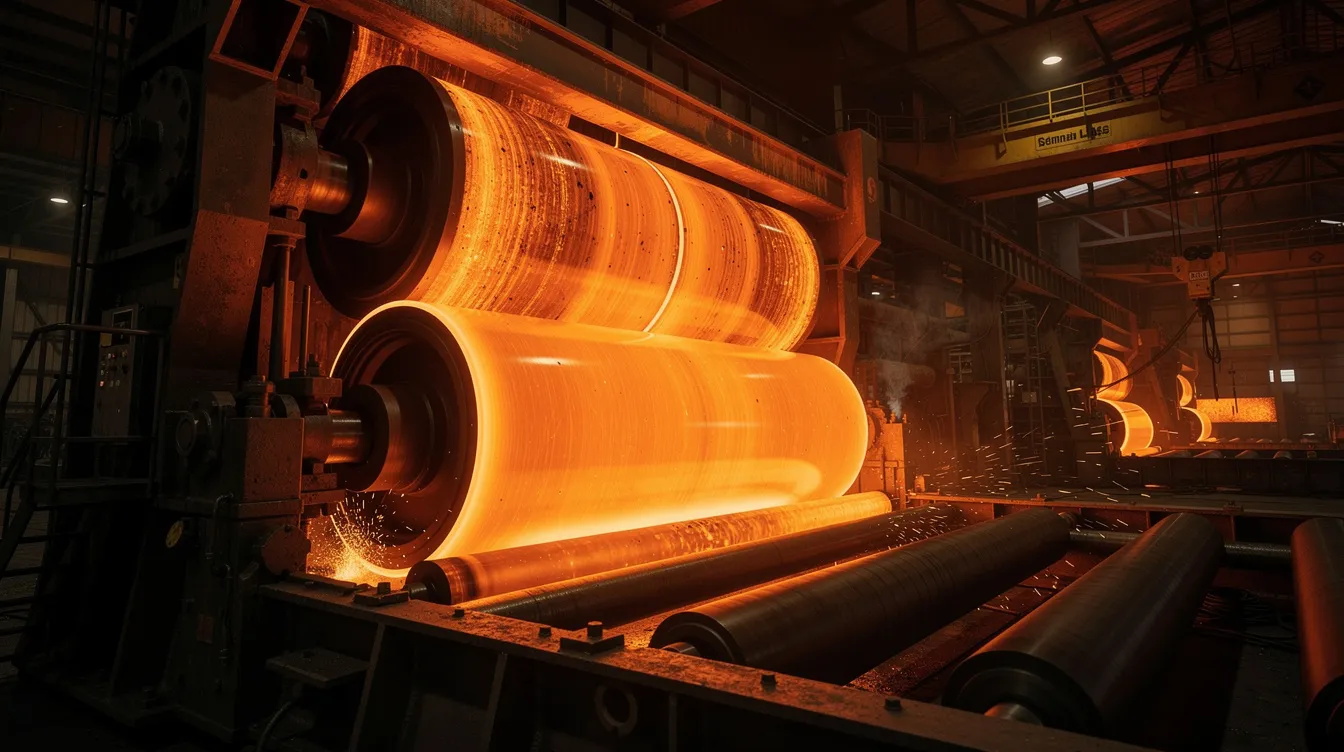
Hot rolled steel is manufactured by heating steel slabs above the recrystallization temperature-hot rolled steel is processed above 1,700°F-then passing them through rollers in multiple stages. The process begins with casting a slab, reheating it in a furnace, running it through roughing and finishing mills, then allowing the steel to cool in air before coiling or cutting to length.
Because the steel remains at high temperatures throughout rolling, it stays highly malleable. This allows large reductions in thickness per pass and makes it practical to produce heavy structural profiles, thick plates, and coils in various shapes. Hot rolled steel is more ductile than cold rolled steel, which is why it handles severe deformation without cracking.
As hot rolled steel cools, it shrinks unevenly-leading to looser tolerances, slight warping, and less control over final dimensions. Hot rolling produces a rough, scaly surface covered in mill scale (iron oxide), giving the material a darker, matte appearance with rounded edges. These characteristics make hot rolled stock less suited for visible or precision-critical parts, but perfectly adequate for structural components and heavy duty structures.
Typical hot rolled shapes relevant to B2B buyers include sheet, plate, wide flange beams, channels, angles, and heavy bar stock. These products often serve as input material for further processing-machining, welding, or forming into final assemblies.
What Is Cold Rolled Steel?
Cold rolled steel begins life as hot rolled coil or sheet, then goes through a series of room-temperature steps that transform its properties. The cold rolling sequence includes pickling to strip away the scaled surface, cold reduction rolling through precision mills, optional annealing to restore ductility, and a temper rolling or skin pass to dial in final thickness and flatness.
Cold rolling steel results in significant strain hardening-cold rolling can increase steel’s yield strength by up to 20%, making cold rolled steel typically 20% stronger than hot rolled steel of the same grade. The process also produces precise shapes with tight tolerances. Commercial cold rolled coil can achieve thickness accuracy of ±0.001 in (±0.025 mm), and when CNC machined, Anebon holds tolerances down to ±0.002 mm on critical features.
Cold rolling results in a smooth, shiny surface free of mill scale-ideal for visible components and secondary processes like painting, powder coating, or plating. The material properties of cold rolled steel make it a go-to for precision applications across automotive, medical, and electronics sectors.
One clarification worth noting: cold rolled steel is a flat product process (coils and sheets rolled cold), while cold formed steel refers to shaping operations like roll forming profiles at room temperature. Cold formed steel products often use cold rolled coil as their starting material because of its uniform thickness and consistent gauge.
Key Differences Between Hot Rolled and Cold Rolled Steel
The main difference between hot rolled and cold rolled steel comes down to process temperature. Hot rolled steel is formed above the recrystallization temperature; cold rolled steel is processed further at ambient temperature. That single difference cascades into everything else.
|
Metric |
Hot Rolled |
Cold Rolled |
|---|---|---|
|
Temperature |
Above 900–1,200°C |
Near room temperature |
|
Surface |
Rougher surface, mill scale, dull |
Smooth, bright, clean, precise edges |
|
Tolerances |
±0.3–0.5 mm thickness variation |
±0.05–0.15 mm, closer dimensional tolerances |
|
Yield strength |
Lower (~250–350 MPa typical) |
Higher strength (~300–450 MPa), up to 20% stronger |
|
Internal stresses |
Lower after cooling |
Higher unless annealed |
|
Cost |
Hot rolled steel sheets around $270 each |
Cold rolled steel costs over $400 per sheet |
Cold rolled steel has tighter dimensional tolerances than hot rolled steel, and cold rolled steel provides a smoother surface finish than hot rolled steel. Hot rolled steel has a rougher surface finish compared to cold rolled steel due to thermal shrinkage and oxidation during cooling. Cold rolled steel has higher production costs due to additional processing steps-pickling, cold reduction, annealing, and skin-pass rolling.
A common misconception: hot rolled vs cold rolled doesn’t simply mean “weak vs strong.” The steel type, grade, and heat treatment all influence performance. Hot rolled steel in a high-strength low-alloy grade can outperform a mild carbon cold rolled sheet in structural load capacity.
Hot Rolled vs Cold Rolled: Strength, Surface, and Dimensional Accuracy
These three properties matter most when engineers evaluate rolled vs formed steel options for precision parts.
The higher strength cold rolled steel delivers comes from strain hardening during cold reduction-dislocation density increases, raising both yield and tensile strength by up to roughly 20%. However, cold rolled steel is more challenging to work with than hot rolled steel because of higher residual internal stresses and reduced ductility before annealing. Hot rolled steel’s slower cooling gives it better deformability and stress tolerance for heavy-section structural components, even though yield strength is lower.
For surface finish, the difference is stark. Hot rolled steel carries a scaled surface with roughness values of 3–20 µm Ra. Cold rolled steel delivers a smooth surface in the 0.1–1.0 µm Ra range, with bright annealed finishes reaching 0.05 µm. This makes cold rolled steel ideal for applications that require smooth surfaces-aesthetic preferences, seal faces, and coating adhesion all benefit.
Dimensional accuracy separates the two most visibly. Hot rolled stock has less control over thickness, width, and flatness due to uneven thermal contraction, resulting in rounded edges and wavy profiles. Cold rolled and cold formed steel achieve exact dimensions with sharper edges, better flatness, and tight tolerances that precision assemblies demand.
How Hot Rolled and Cold Rolled Steel Affect Machining, Forming, and Welding
Selecting hot rolled vs cold rolled directly impacts downstream manufacturing. For machining, cold rolled steel’s consistent microstructure and tighter dimensional control produce more predictable results-tool paths align with actual stock dimensions, and less material needs to be removed. The trade-off: work-hardened surfaces can accelerate tool wear if feeds and speeds aren’t optimized. Hot rolled surfaces with mill scale can dull cutting tools immediately, so scale removal before CNC milling is standard practice.
For forming and bending, hot rolled steel’s ductility and lower yield strength make it easier to shape into heavy structural forms without cracking. Cold formed steel shapes-studs, channels, precision brackets-typically start from cold rolled coil because uniform thickness ensures consistent roll forming. However, cold rolled material exhibits more springback due to higher yield strength, so bend allowances must account for this.
For welding, hot rolled steel is generally more forgiving. Lower residual stresses mean less risk of distortion during heat input. Cold rolled steel is fully weldable but may require careful fixturing and controlled heat input to keep precise assemblies aligned. Post-weld stress relief is sometimes necessary for sheet metal precision parts where tolerances are critical.
Typical Applications: When to Use Hot Rolled vs When to Use Cold Rolled
No single steel type is universally “best.” The right steel depends on your balance of precision, cost, and appearance.
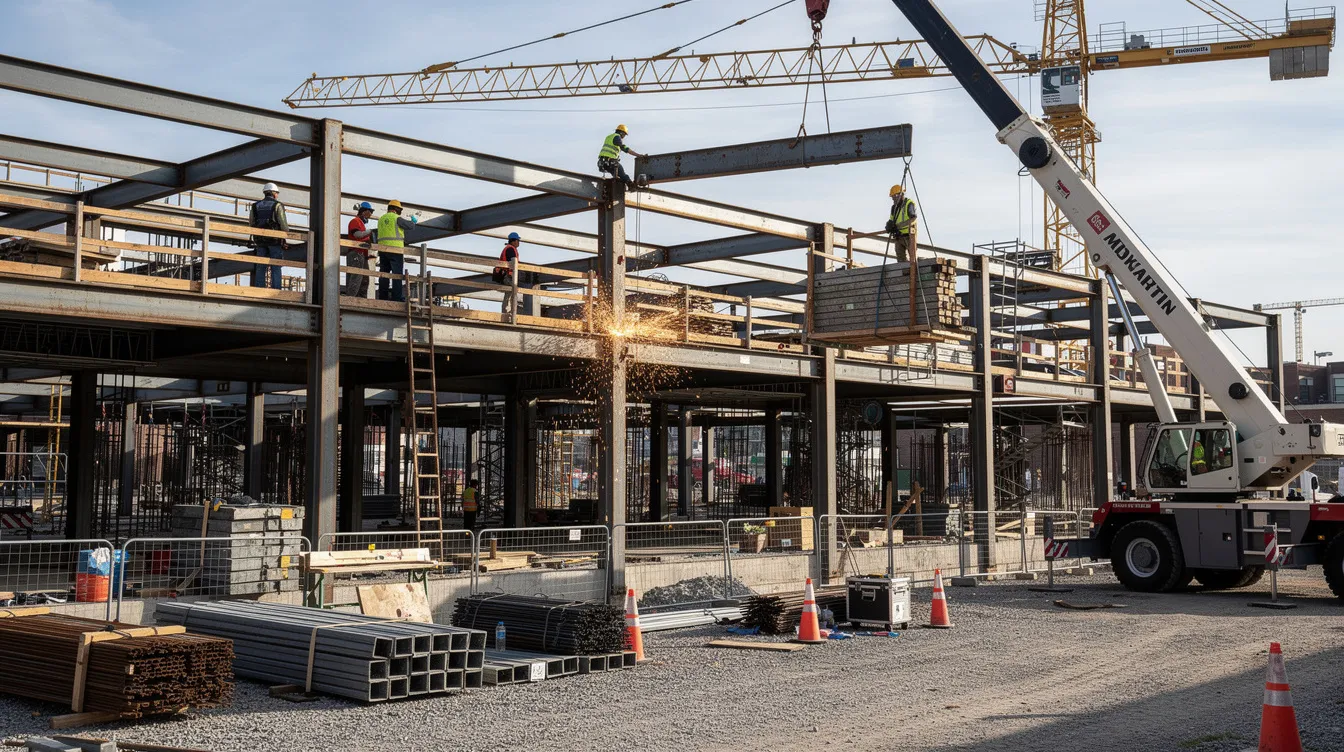
Hot rolled steel is commonly used in construction and heavy manufacturing-think I beams, railroad tracks, structural columns, bridge girders, base plates, and large weldments. Hot rolled steel is ideal for structural projects where exact tolerances are not critical and the finished product will be painted, buried, or hidden inside an assembly. Cost considerations favor hot rolled steel for budget-sensitive projects where a wider range of heavy sections is needed in larger sizes.
Cold rolled steel is used in automotive parts and appliances-body panels, brackets, medical device housings, and consumer electronics enclosures. Cold rolled steel is ideal for furniture and consumer electronics where aesthetic preferences demand a clean appearance. It’s also used for high-precision framing applications and anywhere flatness, lead time predictability, and a smooth finished product matter. Cold formed steel framing and lightweight structural profiles rely on cold rolled coil because consistent thickness and material properties ensure reliable roll forming and performance.
Hot Rolled vs Cold Rolled for High-Precision CNC and Sheet Metal Work
For design engineers planning sheet metal fabrication or CNC-machined components, starting material matters. Cold rolled stock reduces material variation, enabling tighter final tolerances and more predictable outcomes for intricate geometries. Where tolerances must be held to ±0.002 mm, cold rolled input gives you a head start.
Hot rolled inputs remain acceptable-even preferred-when you’re machining thick plates or large blocks where significant material removal will happen anyway. The scale gets machined off, and the lower per-unit cost offsets the extra process time. This is common for die casting tooling bases and heavy fixture plates.
Anebon machines both hot and cold rolled steels using 3-, 4-, and 5-axis CNC equipment, plus CNC turning for round features. Our DFM reviews help customers choose the right material, optimize wall thickness, and specify tolerances that balance feasibility and cost. When submitting RFQs, specify whether you need hot rolled or cold rolled starting stock, desired surface finish, tolerance bands, and any secondary process requirements.
Choosing the Right Steel for Your Project
The decision comes down to three questions: How tight are your tolerances? Does the surface need to look good or accept coatings? And what’s your budget?
Choose hot rolled when cost, availability, and heavy-duty performance outweigh the need for precision or appearance. Choose cold rolled when you need precise shapes, high dimensional accuracy, and a clean surface finish for the finished product.
Consider your planned secondary processes-machining, coating, welding, forming-because each adds cost that may shift the equation. Over-specifying cold rolled where hot rolled would suffice wastes money. Under-specifying for aerospace structural components or medical housings risks rejection. Integrating material choice into DFM reviews early keeps projects on track. Anebon can compare hot and cold rolled options for a given drawing and suggest the most cost effective path that still meets your performance and tolerance targets.
Work with Anebon Metal Products Limited
Anebon is an ISO 9001:2015 and ISO 14001:2015 certified precision manufacturer based in Dongguan, China, serving overseas OEMs since 2010. We deliver CNC machining (3- to 5-axis), CNC milling, CNC turning, sheet metal fabrication in hot rolled and cold rolled steel, stainless steel, aluminum, and other alloys-plus die casting and post-machining for complex housings and structural parts.
Our team supports aerospace, medical devices, automotive, electronics, robotics, and industrial machinery clients where steel selection, dimensional accuracy, and the right material choice are critical to the finished product. We provide DFM feedback to help you choose between hot and cold rolled materials, optimize thickness, and specify tolerances that balance cost and performance.
Upload your drawings or 3D models today to request a quote, or contact us for material selection advice on your next hot rolled or cold rolled steel project.