Hot Rolled Versus Cold Rolled: Key Differences Explained
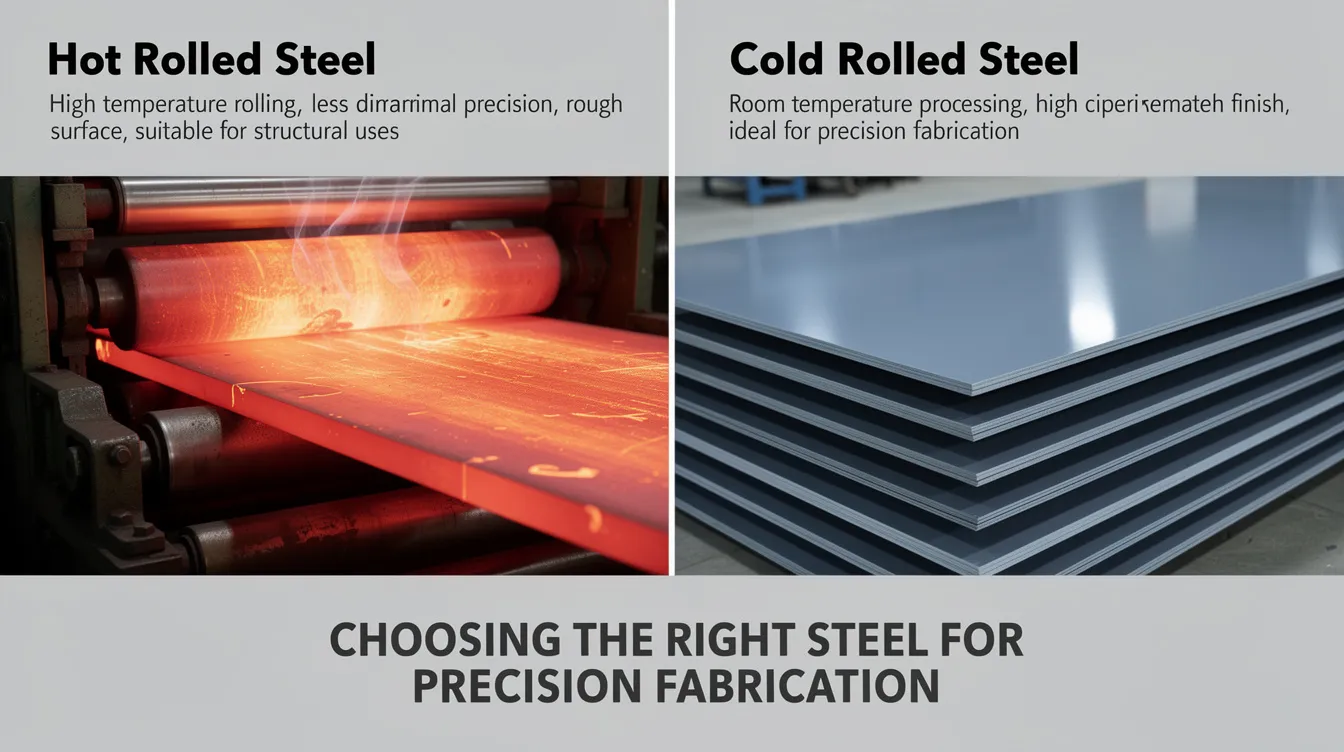
Hot Rolled vs Cold Rolled Steel: Choosing the Right Steel for Precision Fabrication
Selecting between hot rolled and cold rolled steel is one of the most consequential decisions an OEM engineer makes before a single part gets cut. Get it wrong and you pay for it in machining time, scrap, or rework. Get it right and you optimize cost, lead time, and part quality from day one.
Quick Answer: Difference Between Hot Rolled and Cold Rolled Steel
The difference between hot rolled and cold rolled steel comes down to processing temperature and the resulting material properties. Essentially hot rolled steel is processed above 1700°F (926°C)-above the steel’s recrystallization temperature-producing economical stock suited to structural applications. Cold rolled steel undergoes additional processing at room temperature, delivering tighter dimensional tolerances, a smoother surface, and higher strength for precision applications.
-
Surface finish: Hot rolled has a rougher surface with a scaly finish and mill scale; cold rolled provides an aesthetically pleasing finish ready for painting or plating.
-
Dimensional accuracy: Hot rolled carries wider tolerances (±0.15–0.25 mm); cold rolled achieves closer dimensional tolerances (±0.025–0.075 mm).
-
Strength: Cold rolled steel is up to 20% stronger than hot rolled steel of the same chemistry due to work hardening.
-
Cost: Hot rolled steel is cheaper than cold rolled steel by roughly 15–30% per ton.
At Anebon Metal Products Limited, we work daily with both hot rolled steel and cold rolled steel in CNC machining and sheet metal fabrication, helping OEM engineers select the right steel for each project. The sections below dive deeper into processes, material properties, applications, and how to choose the right steel for your specific needs.
How Steel Rolling Works: Hot Rolled and Cold Rolled in Context
The rolling process begins after steel production-where iron ore is refined into cast slabs at a steel mill-and involves passing those slabs through heavy rollers to reduce thickness and achieve a desired shape. Most flat steel products start as hot rolled slabs that can then undergo further processing into cold rolled sheet, steel coil, and strip.
Engineers must distinguish between rolling and cold forming. Hot rolled vs cold rolled refers to the mill process that produces the base material. Cold formed steel refers to shaping that material-bending, roll forming, cold drawing-at room temperature into various shapes. Confusing these terms leads to tolerance mismatches and cost surprises. Hot rolling occurs above the recrystallization temperature (typically >1700°F); cold rolling happens near room temperature, and the chosen method directly affects tolerances, warpage risk, and downstream finishing time.
What Is Hot Rolled Steel?
Hot rolled steel is steel rolled above its recrystallization temperature-commonly 1700–2100°F (926–1150°C)-to achieve large thickness reductions and basic shapes including plates, bars, i beams, channels, and structural profiles. Hot rolling can lead to dimensional inaccuracies due to cooling, resulting in a scaled surface with slight waviness, rounded corners, and less control over edge sharpness. Hot rolled products are supplied as plate, wide steel coil, beams, angles, and round bar for structural use. Because hot rolled steel is normalized as it cools in air, it is free from internal stresses but carries looser dimensional tolerances compared to cold rolled.
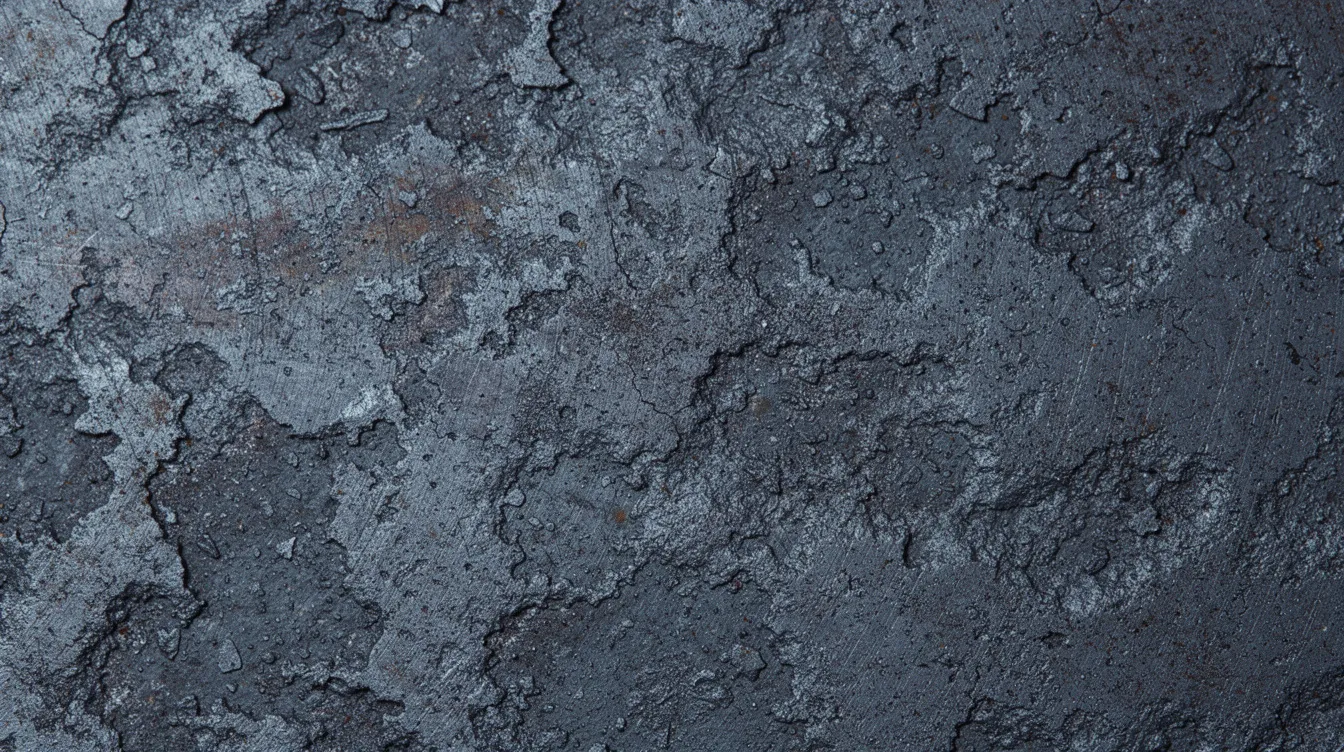
Characteristics of Hot Rolled Steel
-
Scaly oxide layer (mill scale), mill marks, and a rougher surface with Ra values around 3–12 µm
-
Variable thickness within mill tolerances and slightly distorted or cambered lengths on long coil products
-
Scale can be removed by shot blasting, pickling, or machining when cleaner surface imperfections-free material is needed
-
Relatively low residual internal stresses and better ductility, making it forgiving for welding, bending, and general fabrication
-
Typical yield strength for common steel grades like A36: roughly 235–275 MPa
Advantages of Hot Rolled Steel
-
Lower cost per ton because the mill process is simpler with fewer reduction and annealing stages
-
Available in larger thicknesses and a wider range of widths, making hot rolled plate the default for frames, welded structures, and heavy machinery bases
-
Hot rolled steel is easier to shape and form, and its normalized structure is suitable for components that will be cut and welded extensively without significant distortion-ideal for welding applications
-
Hot rolled steel is suitable for large structural applications where tolerances and surface finish are secondary concerns
-
Lead time and sourcing advantages: mills worldwide stock standard hot rolled sizes, which Anebon machines, welds, and finishes for OEM customers
Limitations of Hot Rolled Steel
-
Hot rolled steel has wider tolerances than cold rolled steel, which is problematic for precision sheet metal parts and tight press-fit features
-
Rough surface finish and mill scale require further processing (grinding, machining, pickling) when a polished surface or tight flatness is needed
-
Edges and corners lack the sharper edges of cold rolled products, affecting small brackets or housings where precise shapes matter
-
Where tolerances are in the ±0.1 mm range or tighter, relying only on hot rolled material increases downstream machining time and scrap risk
What Is Cold Rolled Steel?
Cold rolled steel starts as hot rolled material that then enters the cold rolling process at or near room temperature to achieve thinner gauges, tighter thickness control, and improved surface finish. Cold rolled commonly refers to flat steel products-cold rolled sheet and coil-used for stamping, forming, and precision sheet metal fabrication. The appearance is smooth, clean, often lightly oiled, with a uniform matte or bright surface suitable for visible components. Cold rolling increases strength through work hardening and strain hardening, making cold rolled steel is stronger than hot rolled steel by up to 20%.
Characteristics of Cold Rolled Steel
-
Tighter dimensional tolerances (±0.025–0.075 mm), improved flatness, sharper edges, and consistent thickness across coil width
-
A smoother surface (Ra ~0.4–1.6 µm) suitable for high-quality painting, powder coating, and decorative finishes without heavy grinding
-
Available in full-hard, half-hard, or annealed conditions depending on required formability
-
Cold rolled steel is used in applications requiring precise dimensions and aesthetic finishes: precision housings, electronic enclosures, appliance panels, and automotive body components
Advantages of Cold Rolled Steel
-
Superior dimensional accuracy and tight tolerances make each cold rolled product ideal for parts that fit together with minimal adjustment-precision brackets, rails, and guide plates
-
The smooth and consistent surface finish reduces preparation time before powder coating or plating
-
Increased tensile strength and yield strength from work hardening let designers reduce material thickness while maintaining stiffness
-
Sharper corners and precise shapes reduce finishing operations and support reliable automated assembly in OEM production lines
-
Cold rolled steel is suitable for applications requiring high precision across aerospace structural components, medical devices, and consumer electronics
Limitations of Cold Rolled Steel
-
Higher material cost per unit weight reflects extra reduction passes, handling, and annealing steps
-
Usually limited to thinner gauges and standard widths-not ideal for very heavy-duty frames or thick base plates
-
Full-hard conditions reduce formability; complex bends or deep drawing may require intermediate annealing
-
Higher internal stresses in cold worked conditions can lead to springback or distortion during machining and welding if not managed
Hot Rolled vs Cold Rolled: Mechanical Properties and Surface Finish
When comparing hot rolled vs cold rolled steel of similar composition (e.g., low-carbon A36/A1011 hot rolled vs A1008 cold rolled), the mechanical properties diverge meaningfully:
-
Yield strength: Hot rolled ~205–300 MPa; cold rolled ~280–450 MPa
-
Tensile strength: Hot rolled ~400–550 MPa; cold rolled ~450–600 MPa
-
Elongation: Hot rolled offers better ductility at 20–30%; cold rolled full-hard drops to 10–20%
-
Surface roughness: Hot rolled Ra ~3–12 µm (rougher surface); cold rolled Ra ~0.4–1.6 µm (smoother surface)
Hot rolled steel provides better ductility and forgiveness for heavy forming. Cold rolled offers higher strength per unit thickness but may require annealing for complex geometries.
Dimensional Tolerances and Precision
Hot rolled plate in the 2–20 mm range typically holds ±0.15–0.25 mm; cold rolled sheet achieves ±0.025–0.075 mm on similar gauges. These differences translate directly into machining allowances. Anebon often recommends cold rolled sheet for enclosures and covers requiring ±0.1 mm or better flat-pattern accuracy. For thick structural parts, hot rolled is acceptable when extra machining stock is modeled into the CAD file.
Weldability and Distortion
Hot rolled steel’s low-stress, normalized microstructure resists welding distortion better than some cold rolled products, where localized heat can relieve internal stresses and cause movement. Both hot rolled and cold rolled low-carbon steels are readily weldable, but fixture design and heat input control become more critical with thin cold rolled sheet. Anebon uses tack welding sequences, controlled heat input, and post-weld machining to maintain tight tolerances on welded assemblies across both steel type categories.
Applications of Hot Rolled and Cold Rolled Steel
Hot rolled and cold rolled serve complementary roles across the automotive industry, construction, machinery, and electronics. Anebon often sources both for a single project-hot rolled for heavy bases, cold rolled sheet for covers and precision housings.
Common Uses for Hot Rolled Steel
-
Construction applications: building frames, columns, beams, channels, and heavy support brackets
-
Transportation and heavy equipment: truck chassis, agricultural machinery frames, railroad tracks
-
Hot rolled steel is suitable for making i beams and structural profiles for high stress applications
-
Machined bases from hot rolled plate (6–20 mm) for CNC machines, robotic cells, and industrial fixtures
-
Hot rolled plate serves as the starting point for thick flanges, mounting plates, and custom machine tables later machined to final tolerances at precision manufacturing facilities
Common Uses for Cold Rolled Steel
-
Cold rolled steel is ideal for furniture production, appliance panels, office racks, and metal containers
-
OEM and industrial uses: control cabinets, telecom enclosures, battery housings, server chassis, and instrument panels
-
Cold rolled steel is commonly used in manufacturing appliances and is frequently used in consumer electronics housings
-
Automotive parts: interior brackets, seat frames, dashboard supports, and body panels-cold rolled steel is often used in automotive and appliance manufacturing
-
Anebon frequently uses cold rolled sheet for laser-cut and bent components with multiple bend lines
Cold Formed Steel vs Cold Rolled Steel
Cold rolled steel is a material produced in a steel mill. Cold formed steel refers to shapes produced from thin steel at room temperature-studs, channels, and custom profiles created through roll forming or press braking. Cold formed steel typically starts as cold rolled sheet or hot rolled pickled and oiled coil. Examples include lightweight C-channels, hat channels, and framing members. Anebon’s sheet metal fabrication services rely on cold formed processes applied to both material types depending on the project’s requirements.
Choosing the Right Steel for Your Project
No single option is universally “better.” The right steel depends on whether the part is structural, cosmetic, or precision-critical.
Key decision factors:
-
Required tolerances and dimensional accuracy
-
Expected loading and high stress applications
-
Surface finish requirements for the finished product
-
Downstream machining or further processing needs
-
Overall cost including finishing
Use hot rolled for heavy, non-visible load-bearing components. Use cold rolled for visible panels, precision brackets, and assemblies requiring tight fits.
Design and Cost Considerations
Consider total cost of ownership-not just raw material price. Using cheaper hot rolled material may increase machining time if a fine surface and tight tolerances are needed, narrowing the cost gap with cold rolled. Combining both materials within the same assembly-hot rolled base frame with cold rolled precision panels-balances performance and budget. Anebon provides DFM feedback on drawings, recommending when switching steel type will reduce overall manufacturing cost.
When to Consult a Precision Manufacturer
Speak with a manufacturer when facing extremely tight tolerances (<±0.05 mm), complex welded assemblies, or mixed-material structures. Anebon helps convert vague “steel” specifications into clearly defined hot rolled, cold rolled, or stainless steel grades with appropriate thickness and tolerance standards. Involving the manufacturing team before finalizing 3D models reduces lead time and rework across prototype and production phases.
How Anebon Uses Hot Rolled and Cold Rolled Steel in Precision Manufacturing
Anebon Metal Products Limited (founded 2010, Dongguan, China) holds ISO 9001:2015 and ISO 14001:2015 certifications and serves overseas OEMs across aerospace, medical devices, automotive, and robotics. We routinely machine hot rolled plate and bar on CNC mills and lathes for structural and mechanical components, and our sheet metal department primarily uses cold rolled sheet for laser cutting, stamping, and bending. With capabilities to hold tolerances as precise as ±0.002 mm on CNC machined features, we manage distortion and stress across both hot rolled and cold rolled materials.
End-to-End Support: From Material Selection to Finished Parts
From early quoting and DFM review through rapid prototyping and full production, Anebon recommends appropriate hot rolled vs cold rolled options based on tolerance stacks and application demands. Quality assurance includes material certification, dimensional inspection, and surface finish verification for every finished product.
Choosing between hot rolled and cold rolled steel is easier and less risky when you work with a manufacturer who understands both materials inside out. Send us your CAD files and material specs-we’ll recommend the right steel to optimize your cost, performance, and timeline.