Hot Rolled Steel vs Cold Formed: Which Is Right for Your Project?
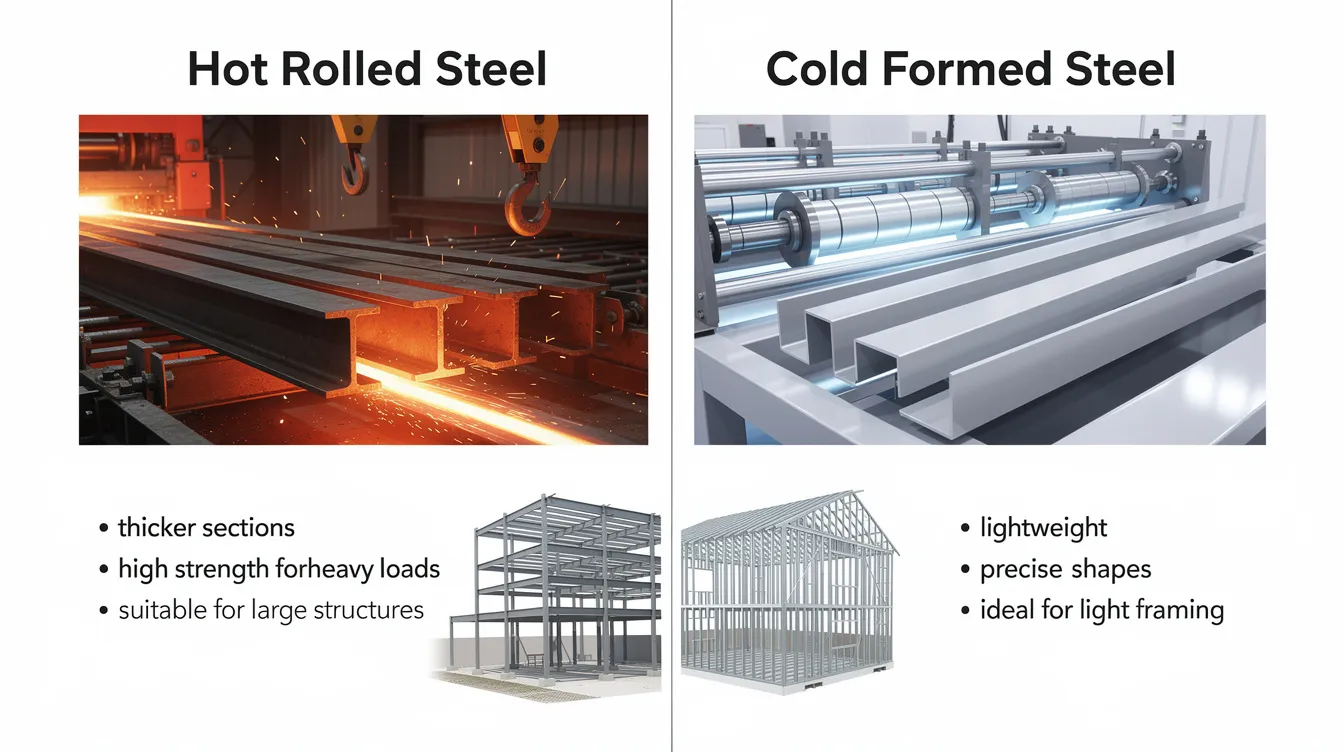
Hot Rolled Steel vs Cold Formed Steel: How to Choose the Right Material for Your Project
Introduction: Hot Rolled vs Cold – What’s the Real Difference?
If you’re specifying steel for a construction project or an OEM component, the question of hot rolled steel vs cold formed steel comes up fast. The main difference starts with temperature: hot rolled steel is shaped at high temperatures above its recrystallization point, while cold formed steel sections are bent and profiled at or near room temperature from thin sheet or coil. Cold rolled steel sits between the two-it’s essentially hot rolled steel that goes through additional rolling passes at a lower temperature to refine its surface finish and dimensional accuracy.
Why does this matter? Because choosing the right steel directly affects cost, structural performance, and manufacturability. Hot rolled steel is generally cheaper than cold rolled steel, but cold formed steel delivers precise dimensions and a high strength-to-weight ratio that hot rolled simply can’t match in thin-gauge applications. The difference between hot rolled and cold formed steel isn’t just academic-it determines how your finished product behaves under load, how it looks, and how much labor goes into assembly.
At Anebon Metal Products Limited, an ISO 9001:2015 and ISO 14001:2015 certified precision metal manufacturer based in Dongguan, China, we help overseas OEMs navigate this material selection process daily. Whether you need heavy machined base plates from hot rolled plate or custom cold formed steel sections with CNC-punched features, picking the right material early saves time and money downstream.
How Hot Rolled and Cold Formed Steel Are Made
The main difference between hot rolled and cold formed steel comes down to when the steel is shaped relative to its recrystallization temperature. That single variable changes the material’s grain structure, mechanical properties, and dimensional behavior.
The hot rolling process begins with steel slabs or billets heated above 1700°F (927°C)-well into the austenitic range. These pass through roughing and finishing mills, reducing thickness dramatically. After final rolling, the steel cools in air, forming mill scale on the surface. Because thermal contraction is uneven, hot rolled steel has less control over final shape and dimensions, producing slight distortions and rounded edges.
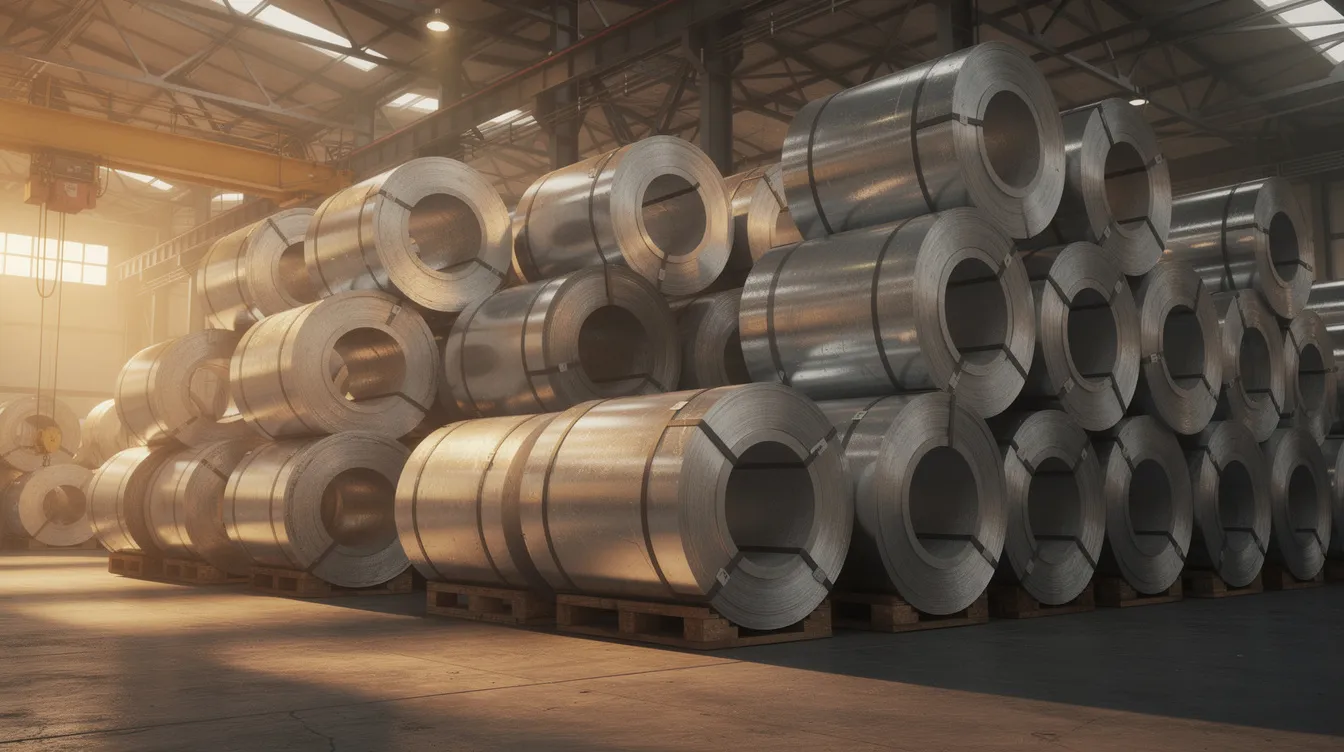
Cold rolled steel is essentially hot rolled steel that has been pickled to remove scale and then further reduced at near room temperature through tandem or reversing mills. This cold rolling process introduces work hardening and refines thickness tolerances. A temper rolling or skin-pass step follows to improve flatness and surface finish.
Cold formed steel sections take a different path entirely. Rather than reducing thickness, cold forming processes take thin hot or cold rolled coil and bend, roll form, or press it into a desired shape-channels, angles, studs, tracks-all without re-heating. The shaping happens at room temperature, and the raw materials are typically steel sheets or coil already at final gauge.
At Anebon, we typically receive hot rolled plate for heavy CNC machining, cold rolled sheet for sheet metal fabrication, and partner-produced cold formed sections for brackets and structural components.
Hot Rolled Steel: Properties, Benefits, and Use Cases
Hot rolled steel is the workhorse of the steel industry-preferred when robust structural performance and cost effectiveness outweigh the need for tight tolerances or cosmetic appearance.
Because hot rolling occurs above 1700°F, the steel undergoes dynamic recrystallization, producing a coarser grain structure with lower dislocation density. The result: hot rolled steel has lower mechanical strength but high ductility and formability compared with cold worked equivalents. Typical yield for structural grades like ASTM A36 sits around 250 MPa, with elongation of 20–35%.
Hot rolled steel features a rough surface texture and less precise edges. The scaled surface-that characteristic dark, flaky mill scale-must be removed via sand blasting or pickling before painting or galvanizing. Hot rolled steel has a scaly finish that can be removed, but it adds a process step. Thickness and flatness tolerances are looser, and there’s less control over the cross section geometry compared to cold rolled or cold formed steel products.
The advantages are significant for the right applications:
-
Lower price per tonne than cold rolled or cold formed alternatives
-
Efficient production of large structural components like i beams, wide-flange columns, heavy plate products, and channels
-
Good weldability and formability for structural applications
-
Low internal stresses in the as-rolled state
Hot rolled steel is used for structural frames and bridges, railroad tracks, heavy machinery bases, and large brackets. It’s ideal for heavy load-bearing applications and construction projects where ±1–2 mm variation is acceptable. Hot rolled sections provide structural strength suitable for beams and heavy components that don’t demand precise finishing.
At Anebon, we commonly machine hot rolled plate into bases, fixtures, and weldments, then finish-machine critical surfaces to achieve final precision.
Cold Rolled Steel and Cold Formed Steel Sections
Cold rolled steel and cold formed steel sections serve different functions but share a common trait: both involve deformation at a lower temperature than hot rolling, which gives each steel type distinct characteristics.
Cold rolled steel is up to 20% stronger than hot rolled steel of the same chemical composition and carbon content, thanks to work hardening processes that multiply dislocations within the grain structure. It offers tighter tolerances, often within 1 mm, and cold rolled steel provides a smoother surface finish than hot rolled-making it well suited for visible or coated parts. Cold rolled steel is used for automotive parts and appliances, cabinets, enclosures, and anywhere surface quality matters. One trade-off: cold formed steel is less malleable and harder to shape after production, so secondary forming operations require careful planning.
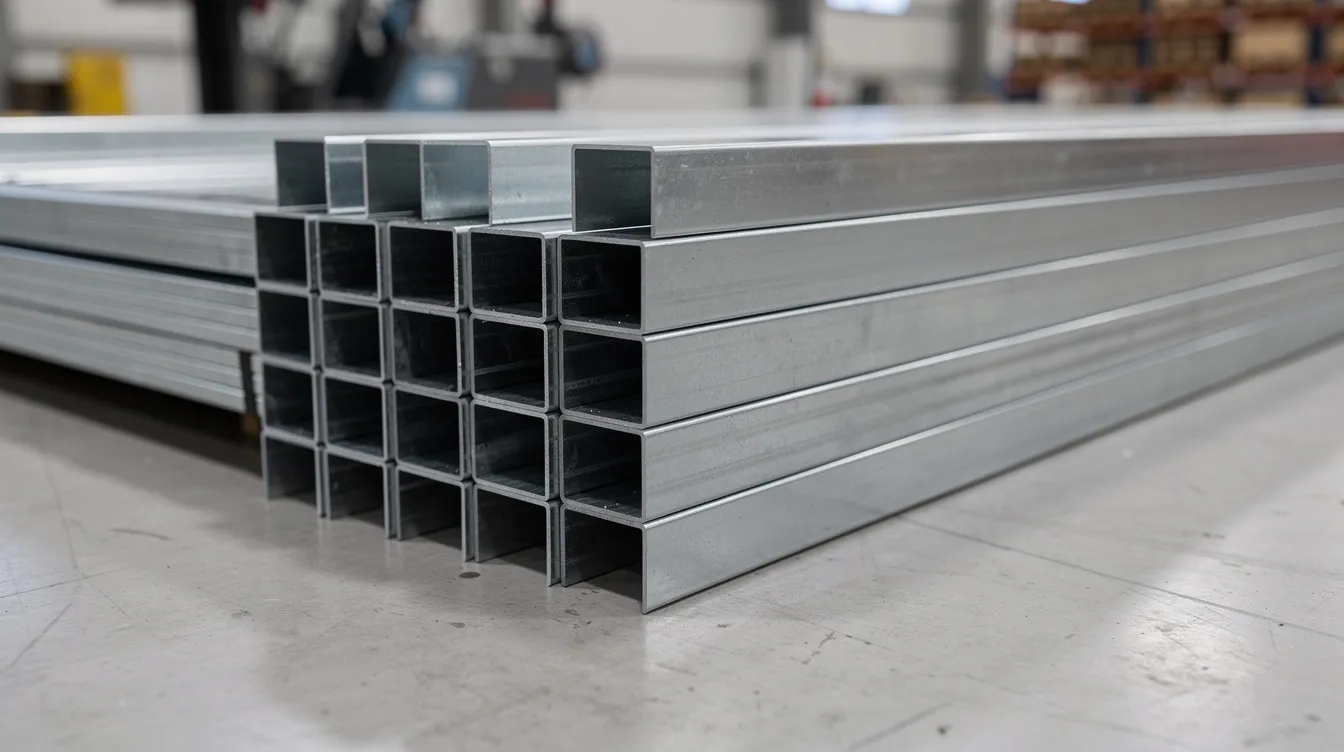
Cold formed steel sections in construction-C-channels, Z-purlins, hat sections, studs, and tracks-are made by bending or roll forming thin coil at room temperature into the final shape. Cold formed steel is produced by bending or rolling at room temperature, and the resulting profiles exhibit superior strength relative to their weight. Cold formed steel often features a high strength-to-weight ratio, with typical gauges of 0.8–3.2 mm for framing studs and purlins.
Key benefits of cold formed sections include:
-
Precise geometry and dimensional accuracy
-
Light weight for easy transport and installation
-
Compatibility with modular construction and pre-punched features
-
Cold formed steel has a smooth, shiny finish and tighter tolerances
-
Cold formed steel is used for lightweight framing systems and storage systems
Cold formed steel is ideal for projects that require tight tolerances and uniform thickness. It’s generally stronger and more robust for precision applications in both construction materials and OEM components, including aerospace structural components and automotive industry fixtures.
Anebon’s sheet metal fabrication capabilities and roll forming partners can produce custom cold formed sections with CNC punching, laser cutting, and bending to tight tolerances.
Hot Rolled vs Cold Formed: Key Differences for Construction and OEM Design
This section answers the core question: what’s the difference between hot rolled and cold formed steel from a design and procurement standpoint?
Mechanical properties: Cold formed members achieve higher yield strength due to cold work, but reduced ductility makes them more sensitive to local and distortional buckling-failure modes that hot rolled compact sections rarely encounter before yielding. Cold formed steel exhibits higher yield strength than hot rolled steel, but engineers must account for unique properties like tension breaking behavior at bends and buckling under compression.
Cross section and thickness: Hot rolled steel produces thick, heavy plate products and complex shapes like wide-flange beams. Cold formed sections are limited to thinner sheet-based profiles but can achieve more intricate geometries with lips, stiffeners, and return flanges.
Dimensional accuracy: Cold formed steel sections offer tighter tolerances and better repeatability than standard hot rolled shapes. For prefabricated and modular construction, this process results in faster assembly with less shimming. Cold rolled steel has tighter tolerances, often within 1 mm, while hot rolled steel is suitable for applications without precise tolerances.
Surface and corrosion: Hot rolled requires more surface preparation-descaling, sand blasting, priming-before finishing processes like painting or galvanizing. Cold formed from pre-galvanized coil needs less prep, which is a cost effective method for light-gauge framing.
Installation: Cold formed members are lighter and easier to handle on site. Hot rolled members may need cranes but offer other advantages like superior stiffness in heavy-load zones.
Precision machining achieves tight tolerances in steel fabrication processes regardless of starting material. Precise CNC machining results in high-quality custom metal parts whether the stock is hot rolled plate or cold rolled sheet.
Choosing the Right Steel for Your Construction Projects and OEM Parts
Material selection is a balance of various factors: strength, stiffness, weight, cost, manufacturability, and desired tolerances. No single steel type wins across every criterion.
Choose hot rolled steel when: large loads dominate, robust ductile behavior matters, and cost per kilogram is the primary driver. Think primary columns, transfer beams, bridge girders, and heavy machinery frames.
Choose cold formed steel sections when: weight reduction, precise geometry, fast installation, and repeatable dimensions matter more. Think wall studs, roof purlins, ceiling systems, and OEM brackets.
A mid-rise commercial building might use hot rolled W-columns and beams for the primary frame, with cold formed studs and tracks for partitions-an approach that balances cost effective structural performance with light, fast installation. A machinery fixture might start with hot rolled plate for a machined base, then add cold formed brackets and guards where re rolled or precision-bent profiles save weight.
Whether cold rolled sheet or hot rolled plate feeds your CNC machining, bending, or welding operations, the right material choice upstream reduces downstream labor. Paying slightly more for cold rolled stock can eliminate fitting, rework, and finishing processes that erode savings.
Always consider regional standards-AISC, Eurocode, or GB codes define design rules differently for hot rolled and cold formed steel members. Choosing the right machining vendor who understands these distinctions prevents over-specification and waste.
How Anebon Supports Projects Using Hot Rolled and Cold Formed Steel
Anebon Metal Products Limited is more than a material supplier-we’re a manufacturing partner for overseas OEMs and engineers who need precise steel components delivered production-ready.
Our capabilities span both hot rolled and cold formed steel workflows:
-
CNC milling and turning for machining hot rolled plate and bar into structural components, fixtures, and bases
-
Sheet metal fabrication-laser cutting, CNC punching, and precision bending-for cold rolled sheet and coil
-
5-axis machining capable of ±0.002 mm tolerances for critical interfaces, even when starting from less precise hot rolled stock
We serve various industries including robotics, industrial machinery, the automotive industry, electronics, and medical devices, where both hot rolled and cold formed steel can appear in the same assembly. Our ISO 9001:2015 and ISO 14001:2015 certifications back every part with incoming material inspection, chemical composition verification, and full traceability.
Surface treatments-shot blasting, powder coating, painting, galvanizing through certified partners-are available for both steel products regardless of the manufacturing process used.
Ready to find the right material for your next project? Share your drawings or 3D models with our engineering team for a material and process recommendation.
Conclusion: Matching Hot Rolled, Cold Rolled, and Cold Formed Steel to Your Design
The difference between hot rolled steel, cold rolled steel, and cold formed steel sections comes down to process temperature, resulting strength, and dimensional precision. Hot rolling shapes steel at high temperatures above 1700°F, producing a cost effective material with high ductility for heavy structural applications. Cold rolling refines that material at near room temperature for a smoother surface finish and superior strength-cold rolled steel is up to 20% stronger than hot rolled steel. Cold forming bends thin coil into complex shapes for lightweight, high-precision framing and OEM parts.
No one steel type is universally best. The right steel depends on load requirements, geometry, tolerances, appearance, and budget. Use hot rolled for primary structural frames and heavy load-bearing members. Use cold formed sections for secondary framing, precision brackets, and applications demanding tight tolerances and uniform thickness.
Early collaboration with a manufacturing partner prevents over-specifying materials and reduces total project cost. Request a quote from Anebon Metal Products Limited for your next steel-based prototype or production run-our team is ready to help you select the right material and deliver parts that meet your exact specifications.