High Precision Die Casting Suppliers
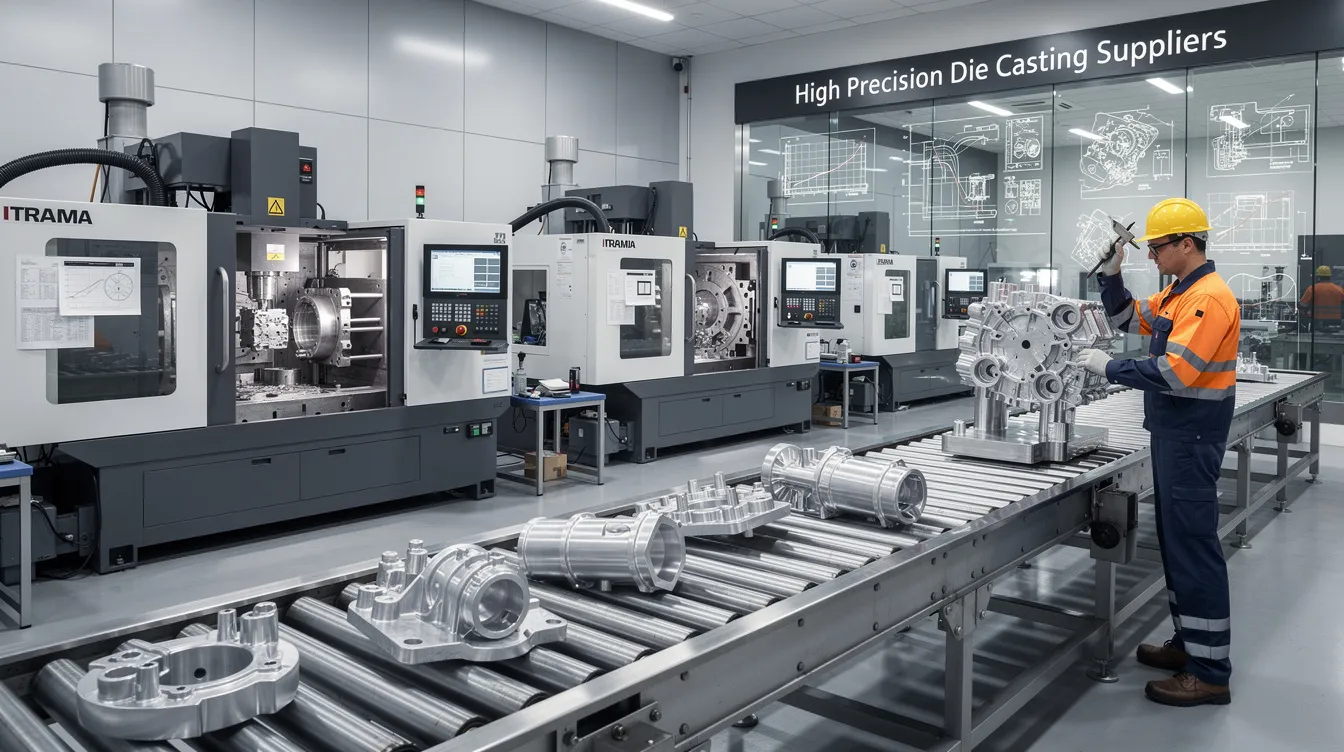
High Precision Die Casting Suppliers
Finding a die casting supplier that can consistently deliver complex, dimensionally stable parts is one of the most impactful decisions an OEM sourcing team will make. This guide breaks down exactly what separates a capable high precision die casting supplier from an average one-and how to evaluate your options before committing tooling dollars.
What OEM Buyers Mean by “High Precision Die Casting Supplier”
When design engineers, sourcing managers, and R&D teams talk about high precision die casting, they are not referring to commodity brackets or generic housings. They mean components where dimensional tolerances on critical features reach ±0.01 mm to ±0.05 mm as-cast, porosity in sealing zones is capped at single pores no larger than 0.5 mm, and process capability indices (Cpk) on key dimensions consistently hit ≥1.33 or higher.
High precision die casting involves tight tolerances and advanced machinery working together across thousands of production cycles. Die casting uses high pressure to inject molten metal into hardened steel dies, producing complex, near-net-shape components efficiently. The “precision” part comes from controlling every variable-shot volume, metal temperature, fill time, die thermal management-so that part number 50,000 looks identical to part number 5.
Buyers in this space need aluminum die cast and zinc die cast parts with integrated CNC machining, not generic cast parts from a job shop quoting on price alone. At Anebon Metal Products Limited, we position ourselves as a capability-rich partner for overseas OEMs who require this level of consistency, offering end-to-end service from design feedback through final inspection.
Here is what this article will cover:
-
How cold chamber and hot chamber processes affect precision outcomes
-
The capabilities and certifications that separate top-tier suppliers from the rest
-
How to compare domestic and overseas die casting partners on real criteria
-
A practical checklist for evaluating and selecting your next supplier
Cold Chamber Die Casting vs. Hot Chamber: Why It Matters for Precision
Die casting works by injecting molten metal under pressures ranging from hundreds to thousands of psi into precision-machined steel dies. The two principal machine configurations-cold chamber and hot chamber-each suit different alloys and precision requirements.
In cold chamber die casting, metal is melted in an external furnace and ladled into a shot sleeve before injection. This isolates the injection mechanism from corrosive, high-temperature molten aluminum, making it the standard choice for aluminum die casting and magnesium alloys. Cold chamber systems deliver excellent shot control and long-term stability for structural precision parts.
In hot chamber die casting, the furnace is integrated directly into the machine. Molten metal continuously feeds through a gooseneck mechanism, enabling faster cycles. Hot chamber machines are built for lower melting point alloys-primarily zinc and some magnesium grades. Die casting commonly uses aluminum, zinc, and magnesium, but alloy choice dictates which machine type is appropriate.
Zinc die castings are produced using alloys like Zamak 3, 5, and 7, which flow well in hot chamber setups and yield excellent surface finish on miniature components. Zinc alloys including Zamak 3, 5, and 7 remain the workhorses for small, detailed zinc die casting solutions.
When to use each process:
-
Cold chamber: EV inverter housings, gearbox covers, structural aluminum components requiring low porosity and tight flatness
-
Hot chamber: miniature telecommunications connectors, decorative applications, small zinc die components requiring fast cycle times and fine detail
-
Multi-slide: ultra-small zinc parts with complex geometries and thin walls
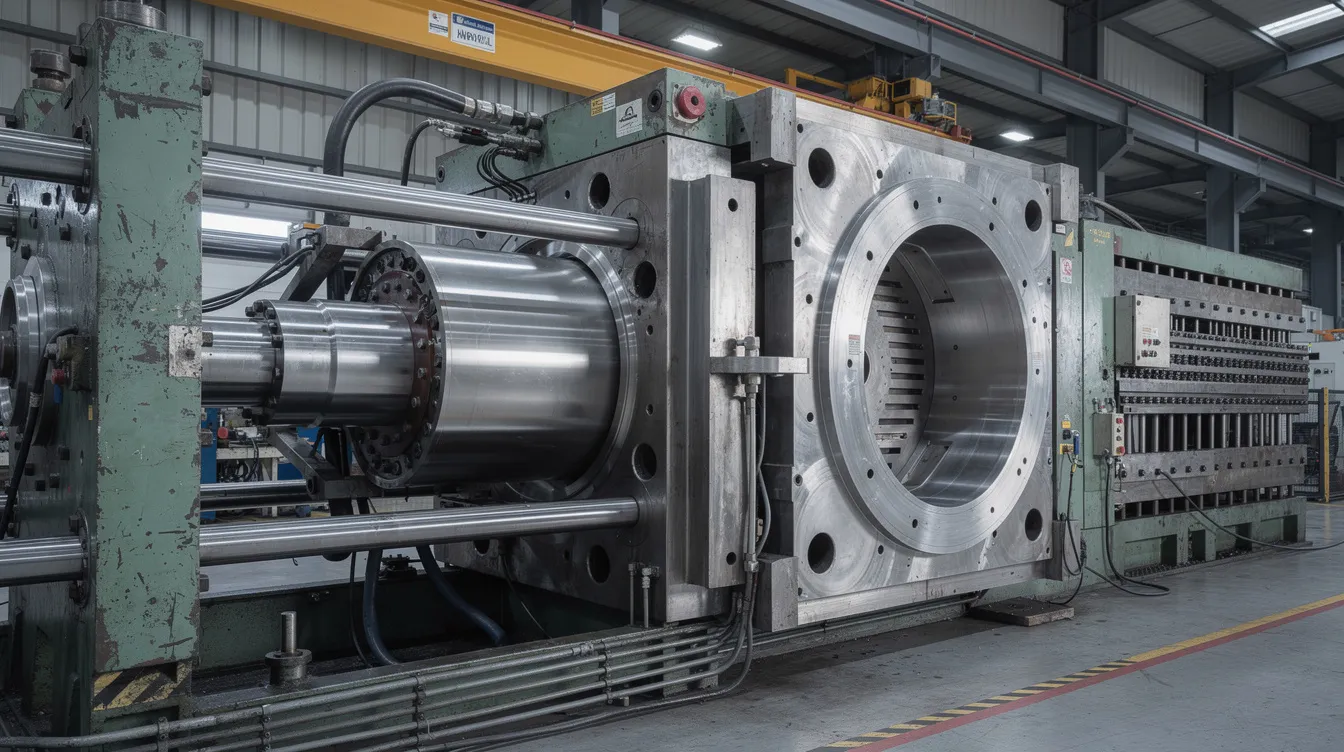
Core Capabilities a High Precision Die Casting Supplier Should Offer
Precision is not a function of one machine-it comes from an integrated system of engineering, tooling, casting, machining, and inspection working together. A die casting company competing for complex projects must demonstrate depth across multiple disciplines.
Must-have capabilities:
-
A range of die cast machines spanning small tonnages (125–250 tons for detailed smaller parts) to large presses (800–1,000+ tons) for structural aluminum components, with both cold chamber and hot chamber options
-
Advanced die design and mold design powered by 3D CAD/CAM and flow simulation tools to predict porosity, shrinkage, and warpage before cutting steel
-
In-house CNC machining centers-3-axis through 5-axis-for precision machining of critical features like bearing bores, sealing faces, and datum surfaces
-
Tooling design with thermal regulation, high-grade steel, and proper venting; tools and dies should have structured maintenance programs for longevity
-
Quick-change setups for mid range volume production and fixturing design to maintain accuracy during secondary operations
-
Advanced casting methods like vacuum die casting that reduce porosity from typical 5–8% down to 1–2% in critical zones
At Anebon, our precision CNC machining centers handle cnc milling, turning, drilling, and tapping, with EDM support from local partners. We routinely hold tolerances as tight as ±0.002 mm on machined features after die cast, verified by CMM inspection.
Aluminum Die Casting for High-Performance Applications
Aluminum die casting is known for its lightweight and cost-effectiveness, which is why it dominates modern aluminum castings for structural and thermal-management applications. Aluminum die castings are lightweight and highly conductive, making them ideal for heat sinks, motor housings, and electronic enclosures.
The numbers confirm the trend: aluminum dominates 57% of the North American automotive die casting market. Meanwhile, the magnesium die casting segment is expanding at 8.25% CAGR, driven by lightweighting demands in EV platforms.
Common aluminum alloys for high pressure die casting include:
-
A380 / ADC12: general-purpose, excellent fluidity, good for most production processes
-
A360 / AlSi10Mg: finer microstructure, better thermal performance for high quality aluminum heat management parts
-
413: higher strength, used selectively for structural automotive components
Design considerations for precision aluminum die casting parts include uniform wall thickness (often down to ~0.8 mm), carefully calculated draft angles, ribbing patterns that add stiffness without creating thick sections, and gating design that controls shrink and porosity.
American precision die casting suppliers have traditionally served US automotive and aerospace OEMs with these alloys. However, a China-based supplier like Anebon can match or exceed these tolerances-offering cost and lead times advantages for global buyers who invest the time to qualify a partner properly.
Choose aluminum die casting when you need:
-
High strength-to-weight ratio for structural or serving automotive applications
-
Thermal conductivity for power electronics or heat dissipation
-
Corrosion resistance without heavy post-treatment
-
Large, thin-walled parts that zinc or magnesium cannot economically deliver
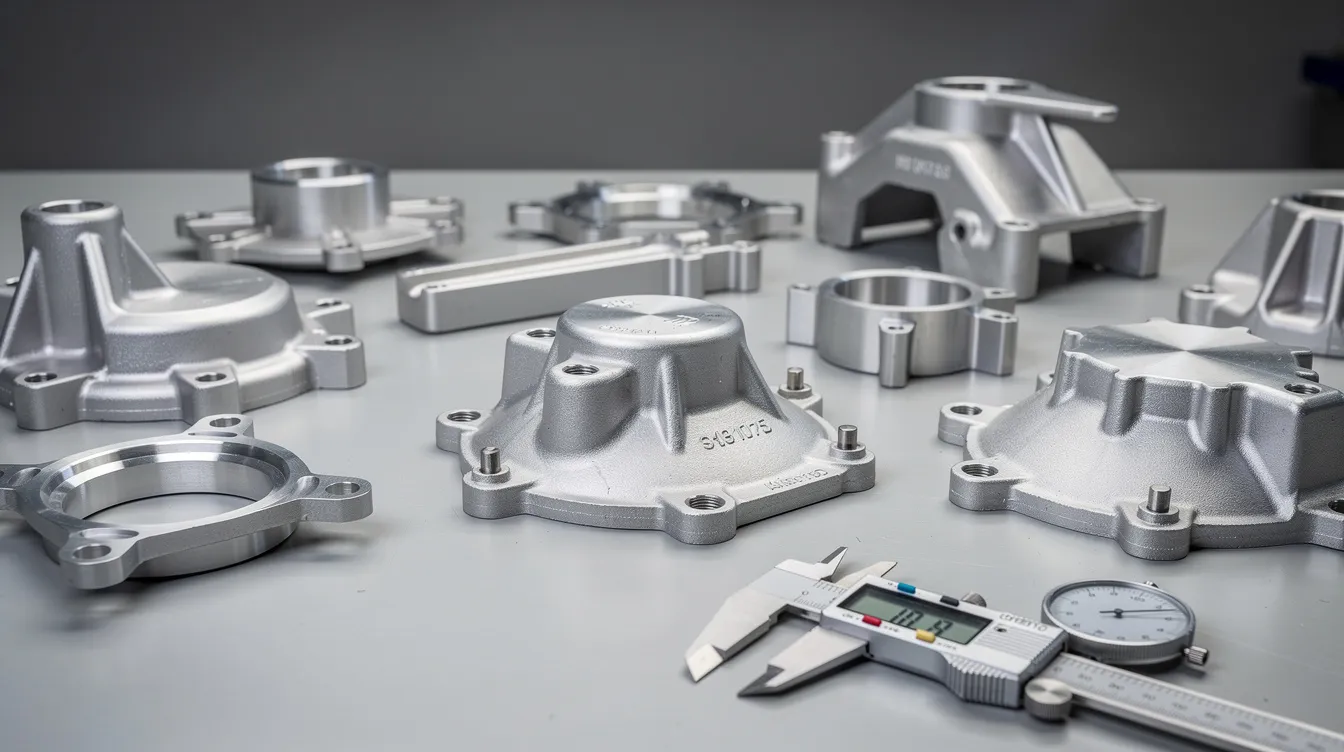
From Advanced Die Design to Finished Part: The Precision Workflow
High precision comes from a disciplined, step-by-step die casting process-not from heroic last-minute interventions. Every finished part traces back to decisions made during design review.
The typical workflow runs as follows:
-
RFQ and feasibility review – Receiving 3D CAD models and prints, assessing whether the design suits die casting, and flagging potential issues with wall thickness, undercuts, or draft.
-
DFM consulting – Design for Manufacturability (DfM) feedback optimizes part geometry. Adjusting draft angles, adding fillets to improve die fill, and modifying datum features to minimize stack-ups are typical outputs. Achievable tolerances depend on specific geometry and process capabilities, so this stage sets realistic expectations.
-
Advanced die design – Flow simulation and pressure optimization predict hot spots, porosity locations, and shrinkage patterns before steel is cut.
-
Tool manufacturing and first article sampling – Trial shots are measured for deviations, porosity, and surface finishing quality. Adjustments to venting, gating balance, and die temperature follow.
-
Process optimization – Shot data logging (pressure, temperature, fill time) stabilizes quality for high volume production programs.
-
Full production ramp-up – Tool maintenance plans, operator training, and QA flows are established.
At Anebon, we provide DFM feedback within a few working days of receiving your files, often identifying opportunities to optimize both the die cast and CNC machining operations before tooling investment begins.
Critical steps buyers should monitor closely:
-
DFM review completeness and responsiveness
-
First article dimensional and porosity validation
-
Process capability (Cpk) on critical dimensions during ramp-up
-
Documented engineering support for any mid-production changes
Integrating CNC Machining with Die Casting for Tight Tolerances
Even the best high pressure die castings require cnc machining for features where as-cast tolerances are not sufficient-bearing bores, sealing faces, critical datum surfaces, and threaded holes. Secondary operations include CNC machining, trimming, and finishing, and having these capabilities under one roof changes the economics dramatically.
In-house secondary operations can reduce lead time and costs by eliminating shipping between vendors, reducing scrap from tolerance mismatches, and enabling tighter feedback loops between casting and secondary machining teams. Tight tolerances in die casting can be as precise as ±0.002 mm on CNC-finished features.
How an ideal supplier sets up machining around die cast outputs:
-
3-axis and 5-axis cnc milling cells positioned adjacent to casting lines for fast part flow
-
CNC turning for rotational features; high-speed drilling and tapping for threaded features
-
Fixturing designed from cast datums, compensating for slight casting variation across large batches
-
Automated deburring and surface finishing stations feeding directly into inspection
-
CMM and optical measurement integrated into the machining cell for in-process verification
At Anebon, we routinely combine die casting with precision CNC machining and CMM inspection for customers in consumer electronics, robotics, and medical industries, delivering finished products ready for mechanical assembly.
Quality Assurance, Certifications, and Process Control
Precision die casting depends on robust quality systems, consistent process control, and documented traceability-not just skilled operators. Quality assurance processes reduce defects in die casting production and are non negotiable for any serious OEM program.
Certifications buyers should require:
-
ISO 9001:2015 certification indicates quality management systems and adherence to quality management standards. ISO certifications enhance supplier reliability and quality assurance across the board. Notably, A&B Die Casting holds ISO 9001:2015 certification since 1924, demonstrating how deeply embedded these standards are among industry leaders.
-
IATF 16949:2016 certification ensures automotive quality standards for any supplier serving automotive programs
-
ISO 14001:2015 certification focuses on environmental management systems, increasingly required by European and North American OEMs
-
Anebon holds both ISO 9001:2015 and ISO 14001:2015 certifications
Inspection tools and methods:
-
CMM measurement for dimensional verification on critical features
-
X-ray or CT scanning for internal porosity mapping
-
Leak testing for sealed assemblies
-
Hardness and metallurgical testing per alloy specification
Statistical process control (SPC) helps maintain production quality by detecting drift before it causes scrap. Quality control measures include testing for porosity and dimensional accuracy on every batch. Control plans, PPAP documentation for automotive projects, and regular Cp/Cpk capability studies round out the process control framework.
Material traceability and testing are critical for quality assurance. Suppliers must provide material certificates for each alloy batch, lot traceability back to the melt, and documented process parameters for every production run. Understanding a supplier’s defect control for castings is important before committing to a program. Effective quality assurance can enhance customer satisfaction and trust over the long term.
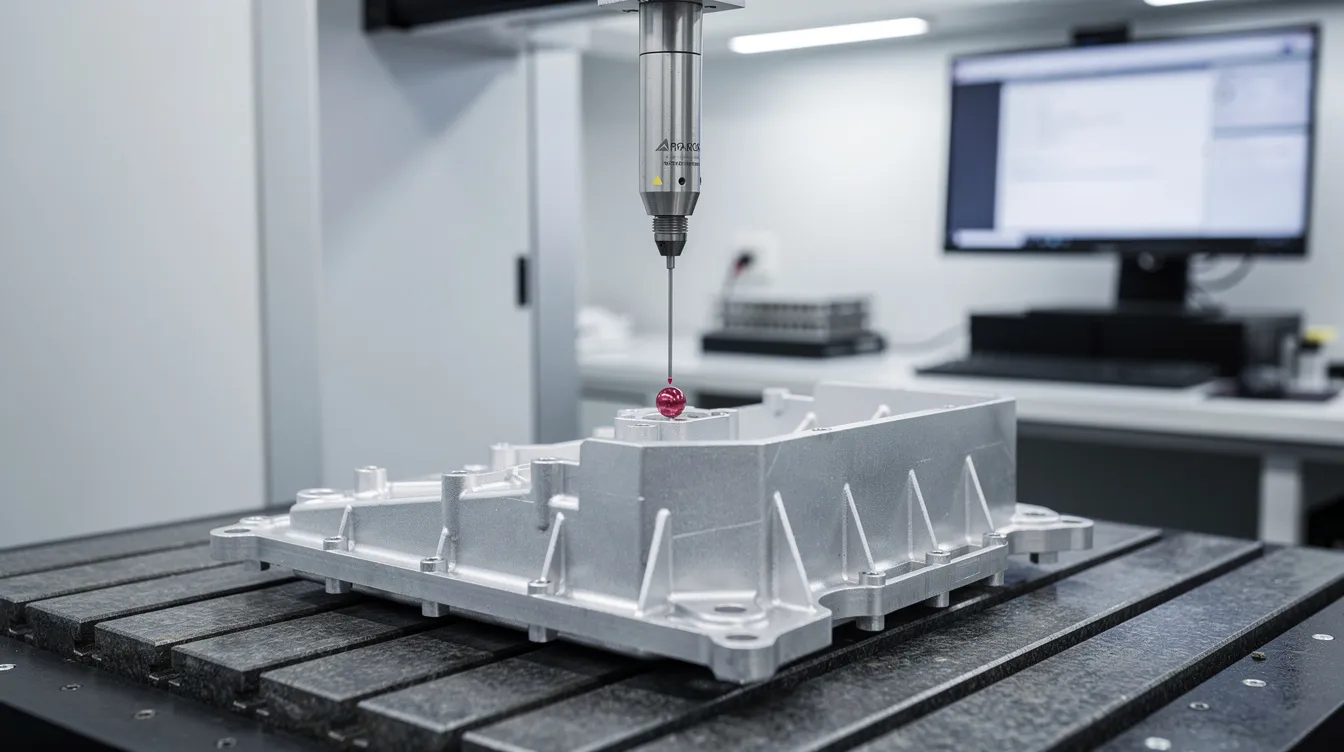
Comparing Domestic “American Precision” Suppliers with Overseas Partners
Many OEMs weigh american precision die casting suppliers in the US against overseas partners in China, and the comparison involves more than unit price. The die casting industry includes well-established domestic players: Pace Industries has produced die cast parts since 1970; PHB Corp. has over 100 years of experience in die casting; Gibbs Die Casting focuses on automotive OEM and Tier 1 programs. Dynacast operates 25 locations across North America, Europe, and Asia, while Empire Die Casting operates a 200,000+ square foot facility. A&B Die Casting specializes in low-to-medium volume production.
These are capable metalcasting company operations-but overseas partners increasingly match their precision and documentation rigor at competitive total landed costs.
Key comparison factors:
-
Total landed cost including tooling, shipping, tariffs, and scrap rates
-
Lead times for tooling fabrication and production ramp-up
-
Engineering support, communication responsiveness, and DFM turnaround
-
IP protection agreements and proprietary techniques safeguards
-
Certification and audit readiness for value added services
Modern digital collaboration-3D model sharing, video-based die trials, shared QA dashboards-has narrowed the engineering support gap considerably. Consider a US-based robotics company that shifts a high quality die castings aluminum housing to a qualified overseas partner like Anebon. With dimensionally stable cold chamber aluminum casting, precision CNC finish, and full PPAP documentation, the company reduces per-part cost by 30% while maintaining ±0.02 mm flatness on mating surfaces-lead times included.
When to favor a domestic supplier: IP-sensitive defense programs, extremely short lead times on low-quantity runs, or regulatory requirements mandating domestic sourcing. When to consider an overseas partner like Anebon: competitive high volume production programs, cost-sensitive multi-year contracts, and projects where the supplier’s manufacturing capabilities and certifications meet or exceed domestic equivalents.
Industries and Part Types That Depend on High Precision Die Casting
Precision requirements vary by sector, but certain industries consistently demand high-accuracy die cast and machined components across various industries.
Aerospace: Sensor housings, actuator bodies, and thermal-electronic enclosures require exceptional material integrity and documentation. Surface roughness targets often sit at Ra 1.6 µm or better after machining, with flatness controlled to ±0.02 mm. Parts for heavy truck and aerospace platforms may also require powder coating or anodizing for corrosion protection.
Medical devices: Imaging equipment frames, surgical instrument housings, and pump bodies demand clean finishes, tight tolerances, and full lot traceability. These parts frequently involve aluminum and zinc alloys selected for biocompatibility and corrosion resistance.
Automotive and EV: Inverter housings, gearbox covers, and battery structures need structural strength, heat dissipation, and tight sealing surfaces. Zinc die castings are preferred for small, tight-tolerance automotive components like connectors and sensor frames.
Industrial automation and robotics: Gearbox housings, encoder covers, and motor frames combine structural loading with precise datum surfaces where bearings and seals mount.
Electronics: Heat sinks, EMI/EMC housings, and RF components for consumer electronics require excellent thermal conductivity, fine surface finishing, and thin walls.
Representative part types across sectors:
-
Cooling module housings and heat sinks
-
Connector shells and sensor frames
-
Gearbox and transmission housings
-
Electrical enclosures and EMI shields
-
Sealing bosses and mounting brackets
Die casting is used to make an enormous range of these components, and Anebon commonly supports prototype-to-production transitions with rapid tooling for early R&D followed by hardened production tooling, as well as metal stamping and sheet metal support where hybrid fabrication makes sense.
How to Evaluate and Select a High Precision Die Casting Supplier
Choosing the right casting company upfront prevents months of delays, tooling rework, and scrapped inventory. Quality assurance ensures die cast parts meet strict specifications-but only if you verify the supplier’s systems before placing an order.
Supplier evaluation checklist:
-
Alloy and process expertise: Does the supplier run both hot chamber and cold chamber processes for the aluminum alloys or zinc alloys your project requires?
-
Machine tonnage range: Can they handle your part size on appropriately sized die cast machines?
-
In-house CNC machining: Do they offer integrated secondary machining, or will parts ship to a third party?
-
Certifications: ISO 9001:2015 at minimum; IATF 16949 if serving automotive; relevant environmental and industry-specific standards
-
Simulation and DFM capability: Can they run flow analysis and provide engineering support before tooling?
-
Track record: Have they produced similar parts at similar tolerances for similar production volumes?
Questions to ask every potential supplier:
-
What Cpk values do you achieve on critical dimensions for similar parts?
-
What are your typical porosity levels in sealing and structural zones?
-
Can you share a sample first article inspection report and leak test results?
-
What is your average tooling lead time from design approval to first article?
Request actual part samples, QA documents, and case studies from qualified suppliers rather than relying on brochures alone.
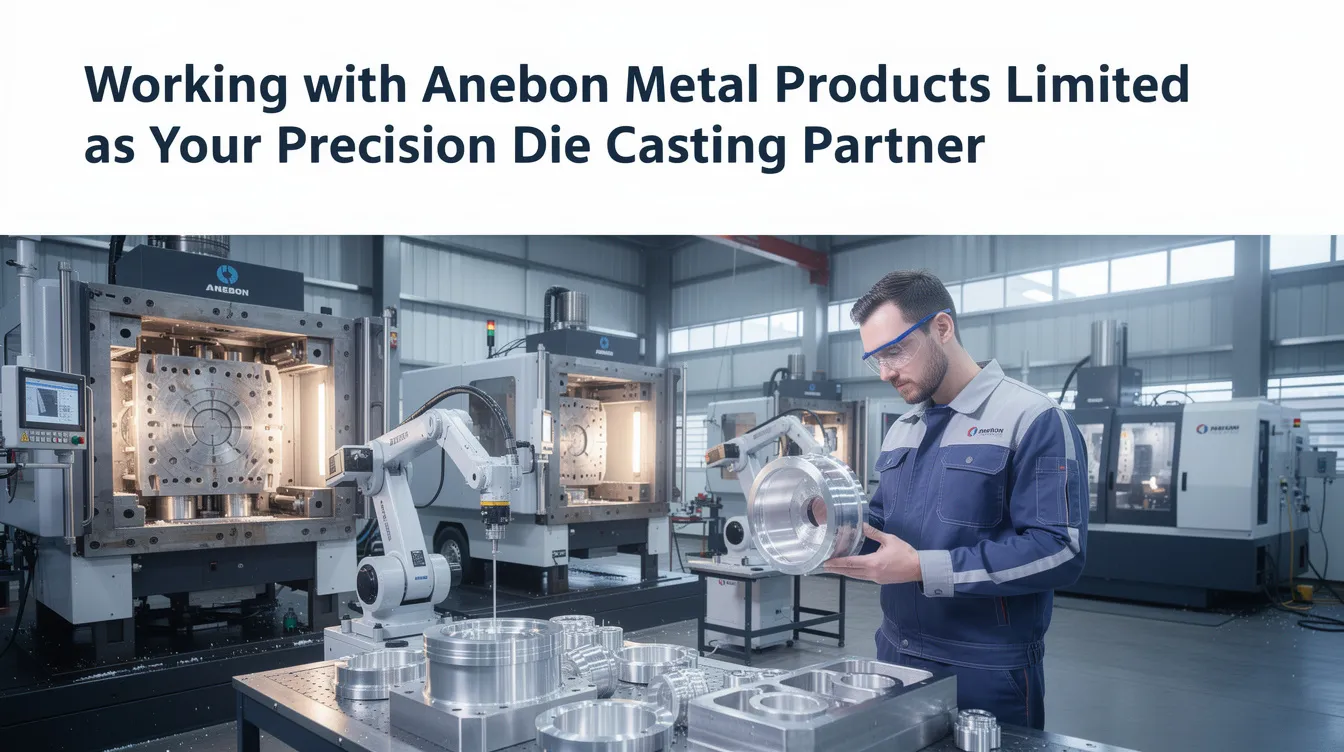
Working with Anebon Metal Products Limited as Your Precision Die Casting Partner
Anebon Metal Products Limited is a China-based, ISO-certified precision CNC machining and die casting company that has served overseas OEMs since 2010. Based in Dongguan, Guangdong, we deliver high quality parts from rapid prototyping through full-scale production across complex projects spanning multiple industries.
Why Anebon:
-
Cold chamber aluminum die casting capability paired with hot chamber zinc die casting for one supplier coverage across both alloy families
-
Integrated CNC machining including 5-axis cnc milling, turning, and precision machining to tolerances as tight as ±0.002 mm
-
ISO 9001:2015 and ISO 14001:2015 certified, with full PPAP and traceability documentation for automotive and industrial programs
-
Sheet metal fabrication and surface finishing support for complete finished products and casting services
-
Responsive, English-speaking engineering team providing DFM feedback typically within 2–3 working days
We frequently serve automotive components programs, aerospace, medical devices, industrial automation, and electronics customers-producing everything from EV chassis die cast parts to miniature sensor housings and precision heat sinks.
Ready to see what Anebon can do for your next project? Send your 3D models and drawings for a detailed DFM review and competitive quote. Our engineering team is standing by to evaluate your die casting solutions requirements and recommend the optimal production processes for your timeline, volume, and tolerance needs.