Finding Affordable CNC Service for Single Part Production Solutions
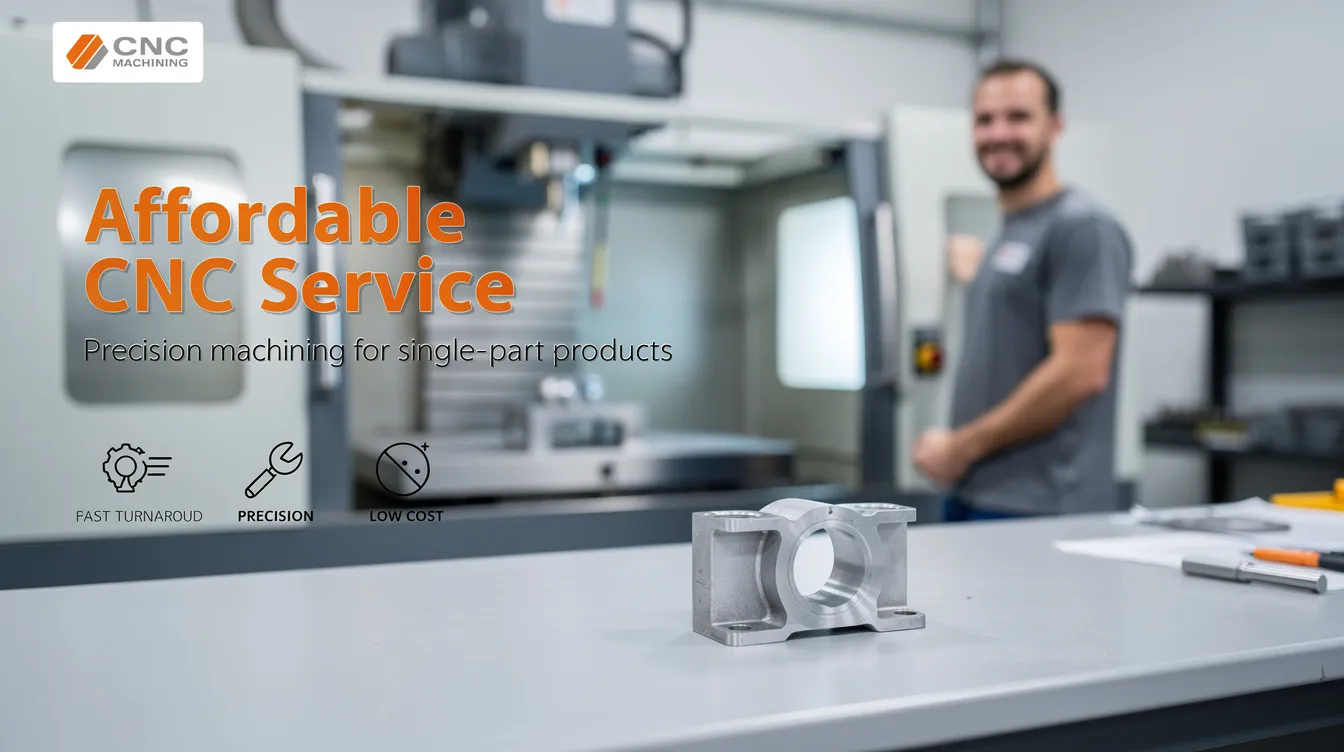
Affordable CNC Service for Single Part Product
Answering Your Need for Low-Cost One-Off CNC Parts Fast
Anebon Metal Products Limited specializes in affordable cnc machining for single-part and very low-volume orders, including prototypes, replacement components, and custom fixtures. Whether you need one aluminum bracket or a handful of stainless steel bushings, our workflow is built to deliver precision cnc machined parts without the markup that comes from batch-oriented shops.
Here is what you get with a single-part order: one-off plastic and metal parts from materials like 6061-T6 aluminum or engineering plastics, delivered in as little as 5–7 days door-to-door to Europe or North America. We hold general tolerances to ±0.01 mm as standard, and CNC machining can hold tolerances of ±0.002 mm on request for critical functional features. CNC machining can produce parts in as fast as one day when geometry and material stock are straightforward.
Unlike many online cnc machining services that prioritize large batches, Anebon’s quoting and scheduling are optimized specifically to keep single-part CNC jobs cost-effective. There is no minimum order quantity. We support both metal parts and plastic parts, and you can request a quote by uploading a cad file or 2D drawing through our website.
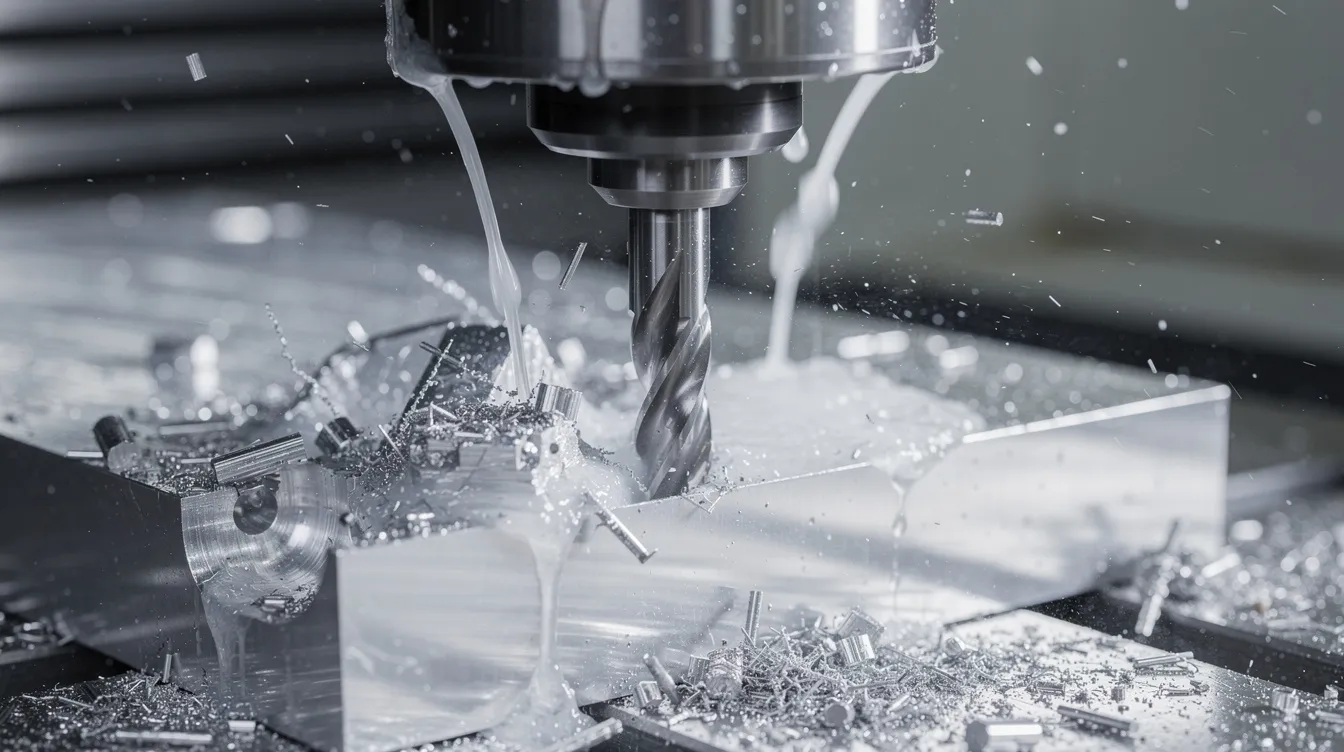
What Makes Single-Part CNC Machining Expensive-and How We Reduce the Cost
Most of the cnc machining service cost for one-off parts comes from programming, machine setup, fixturing, and quality checks rather than raw material. When you order a single piece, those fixed costs cannot be amortized across hundreds of units, which is why a bracket that costs $35 per unit at quantity 100 might cost $200–$370 as a single piece.
Here are the primary cost drivers for one-off cnc parts:
-
Machine setup time and CAM programming. Even a simple part requires 30 minutes to several hours of programming and zeroing. Setup costs are often fixed at roughly $200–$300 regardless of quantity.
-
Complex geometries. Deep pockets, thin walls, undercuts, and inaccessible features require smaller tools, slower feeds, and multiple setups. Complex geometries often require higher machining costs due to additional tooling and time.
-
Tight tolerances. Moving from standard ±0.005 inches (±0.127 mm) to ±0.002 inches (±0.05 mm) can increase cost by 30–100% per feature due to slower toolpaths, more finishing passes, and CMM inspection. General tolerances for metals are typically held to ±0.005 inches.
-
Material choice. Titanium Grade 5 can cost 3–5× more than an equivalent aluminum alloy in both raw material and machining time.
-
Finishing steps. Anodizing, plating, or powder coating on a single unit may sometimes cost more than the machining itself because of handling, masking, and curing overhead.
How Anebon reduces these costs: we maintain standardized tool libraries on our CNC machines, use modular fixtures for common part families, run digital Design for Manufacturability (DFM) feedback reviews before production, and combine multiple one-off jobs in a single production run to share setup overhead. DFM feedback helps optimize product designs for easier production, and this step alone often cuts 20–40% from the quoted price.
Choosing standard materials-6061-T6 aluminum, 304 stainless steel, or ABS-and simple finishes like media-blast plus clear anodize significantly improves affordability compared to exotic alloys with multi-step decorative coatings.
Our Affordable Online CNC Machining Service Workflow
Anebon offers an online cnc machining service tailored to low-quantity orders, from single parts to batches under 100 pcs. Automated quoting engines help users compare options quickly and efficiently, and our system is designed to return a detailed response within one business day.
Here is the step-by-step workflow:
-
Upload your design. Submit a 3D CAD file (STEP, IGES, Parasolid) or 2D technical drawings via our online quote form. Include critical dimensions, tolerances, and any notes on the surface finish you need.
-
Receive a detailed quote within 24 hours. The quote includes price breakdown, lead time, and manufacturability notes highlighting potential cost savings. Transparent quoting helps you understand cost breakdowns including material and machining.
-
Optional DFM consultation. Our engineers can suggest design tweaks-relaxing a non-critical tolerance, switching a material, or adjusting a wall thickness-that cut the machining process time and reduce your total cost.
-
Production and inspection. After order confirmation, your part enters the cnc machining process with in-process QC checks, final dimensional inspection, and packaging.
-
International shipping. Parts ship via DHL, FedEx, or freight, depending on size and urgency.
We support cnc milling, cnc turning, and 5-axis machining for one-off parts. Rapid prototyping is suitable for over 50 materials. Milling is most economical for prismatic parts with flat and contoured surfaces; turning handles shafts and cylindrical components faster; and 5-axis is reserved for complex shapes where reducing setups actually lowers total cost. Prototyping can include both metal and plastic parts, and CNC machining allows for quick turn prototypes in days.
CNC Machines and Processes We Use for One-Off Parts
Anebon’s facility in Dongguan, Guangdong houses 3-, 4-, and 5-axis CNC milling centers alongside CNC lathes for turned parts. CNC machining uses computer numerical control for precision manufacturing, directing each cutting tool along programmed toolpaths with repeatable accuracy. CNC machines can achieve tolerances as tight as ±0.0001 inches when geometry and material allow.
-
CNC milling for single-part production. Ideal for brackets, housings, jigs, enclosures, and creating fixtures for assembly lines. Our milling centers handle work envelopes up to 1000 × 600 × 500 mm with practical tolerances of ±0.01 mm standard. Custom cnc machining on 3-axis machines covers most prototype geometries at the lowest hourly rate.
-
CNC turning for rotational parts. Best for shafts, bushings, pins, and threaded components. We turn diameters from 3 mm to 200 mm with lengths proportional to material stiffness. Custom threads and standard thread forms are cut in the same setup. CNC machining tolerances can be as tight as ±0.001 inches for turned features.
-
5-axis machining for complex geometries. Parts like medical instrument handles, impellers, and aerospace brackets benefit from 5-axis capability because a single setup replaces three or four orientations. This subtractive manufacturing process reduces fixturing cost and eliminates re-zeroing errors, sometimes making even a single part more economical than multi-setup 3-axis work.
We choose the most cost-effective combination of cnc machining services for each single-part job. If your geometry does not need 5-axis, we will not quote it on a 5-axis machine.
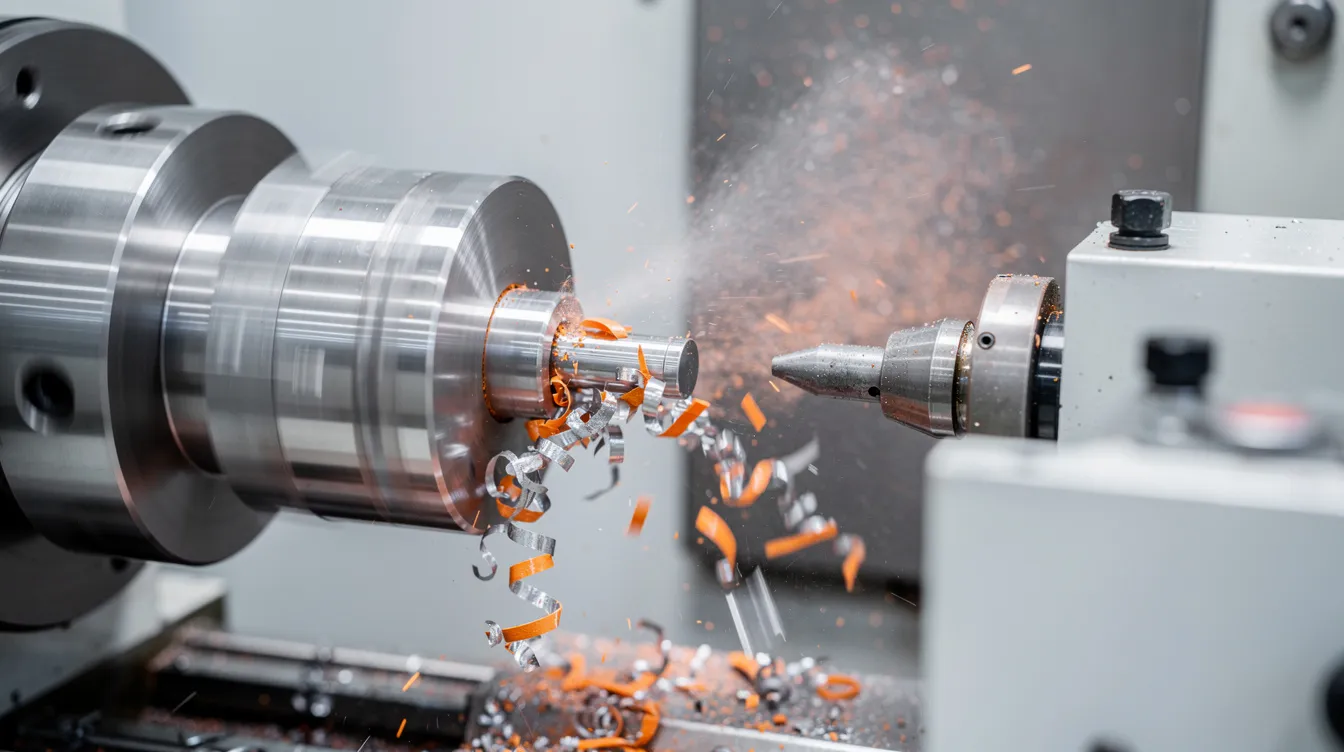
Materials and Surface Finishes That Keep Single-Part Costs Low
Material selection and finishing can easily double or halve the cost of one-off cnc machined parts. Common materials used in CNC machining include aluminum, titanium, and various plastics, and CNC machining can work with over 50 different materials overall. Here is what we recommend for cost-conscious single-part orders.
Cost-effective metals for prototypes and single pieces:
-
Aluminum alloys like 6061 and 7075 are commonly used because of their excellent machinability, low density, and suitability for anodizing. 6061-T6 offers good mechanical properties and corrosion resistance for general-purpose brackets and housings. 7075 delivers higher tensile strength and fatigue strength for structural and aerospace applications.
-
Stainless steel (303, 304, 316) provides excellent corrosion resistance and is corrosion resistant in harsh environments. 316 adds excellent chemical resistance for marine or chemical exposure. Using free-machining steels like 303 can reduce machining time and costs compared to harder alternatives.
-
Mild steel (1018) and steel alloy grades (4140) suit tooling, fixtures, and components needing heat resistance or later heat treatment. Carbon steel options are affordable and widely stocked.
-
Titanium is known for its high strength-to-weight ratio, making it ideal for aerospace and medical applications, though it carries a significant cost premium.
-
Free machining brass delivers excellent electrical conductivity, low friction, and excellent wear resistance for electrical components and connectors.
Affordable plastics for housings and test parts:
-
ABS and PC offer impact resistance and high stiffness for consumer electronics enclosures and robotics housings.
-
Nylon (PA) has high tensile strength, low friction properties, and low moisture absorption, making it suitable for gears and sliding mechanisms.
-
POM (Delrin) provides excellent wear resistance, low coefficient of friction, and chemical resistance for precision mechanisms.
-
PMMA (acrylic) allows transparent covers for display windows and light guides.
-
PVC polyvinyl chloride delivers good chemical resistance and electrical insulation for industrial fittings.
-
PEEK is suitable for high-temperature, high-stress applications where other materials fail, offering heat resistance at extreme temperatures.
-
Epoxy resin composites serve specialized applications requiring uv resistance and high stiffness.
-
Materials with electrical insulation properties and those classified as an excellent electrical insulator are available for specialized electrical components.
Finishes suitable for one-off parts:
-
As machined with light deburring: lowest cost, acceptable for most prototypes. Sharp edges are broken during deburring.
-
Bead blast + clear or black anodize: moderate cost, good appearance and corrosion protection for aluminum parts.
-
Basic powder coating: adds color and protection, though adds 2–3 days.
-
Zinc plating or electroless nickel plating: functional protection for steel parts in harsh environments.
Complex multi-step finishes-decorative polish plus multi-layer powder coating, for example-can double per-part cost on a single unit. Choose simple, standard finishes first.
Practical Design Tips to Make Your Single CNC Part More Affordable
Small design adjustments often cut 20–40% off machining time for single parts. Here is a concise DFM checklist you can apply before submitting your next custom cnc order.
-
Simplify geometry. Avoid deep pockets with depth-to-width ratios above 4:1, ultra-thin walls (below 0.5 mm for metals), and tiny internal radii that require micro-tools and slow feeds. Each of these features demands special tooling, slower spindle speeds, and higher risk of chatter. Minimizing assembly or finishing tasks can lower the total cost of CNC projects.
-
Specify tight tolerances only where function requires. A real-world example: changing non-critical face tolerances from ±0.005 in to ±0.01 in on an aluminum housing saved approximately $2 per machined part due to fewer finishing passes and simpler fixturing. Precision tolerances can vary based on material and geometry, so call out only what matters. Selecting standard sizes for materials can also reduce costs in CNC machining.
-
Design for minimal setups. Include flat reference surfaces and avoid overhanging features that require special fixtures or multi-side setups on the CNC machine. Every additional orientation adds operator time for re-zeroing and fixture changes. Parts that can be completed in one or two setups are significantly cheaper.
-
Use standard hole sizes, thread pitches, and corner radii. Metric designs should stick to 3, 5, 6, 8, and 10 mm tool diameters. Standard drill sizes and thread forms (M or UNC) eliminate the need for custom tooling and keep cycle times short.
These adjustments translate directly into shorter cycle times, fewer tool changes, and reduced inspection scope-savings that matter most when producing a single component.
Typical CNC Machining Applications for Single-Part and Very Low Volumes
Single-part cnc machining applications extend well beyond R&D prototyping. Maintenance, repair, and customization across various industries rely on the ability to get one precision part fast. CNC machining is widely used in aerospace and medical industries, but single-part demand spans nearly every sector. Precision CNC machining is used for producing high-precision metal or plastic parts across all of them.
-
Consumer electronics. Custom heatsinks with fin geometries optimized for specific thermal loads, milled aluminum enclosures for prototype devices, one-off test rigs, and creating fixtures for electronics assembly lines. Low density aluminum alloys are ideal for lightweight enclosures.
-
Industrial equipment and robotics. Custom end-of-arm tooling, precision jigs for assembly, and replacement cnc parts for machinery where original spares are obsolete. Parts often require good mechanical properties and wear resistance to survive production-floor use.
-
Automotive and motorsport. Prototype brackets, pedal assemblies, sensor adapters, and custom mounting plates for ECUs. Production parts for limited-run vehicles also fall into this category. High stiffness and mechanical properties matter for load-bearing components operating at high temperatures.
-
Medical and lab equipment. Sample holders, custom clamps, and one-off housings for diagnostic devices where cnc machining processes are preferred for material traceability and cleanability. Parts often need to resist chemical exposure and perform at extreme temperatures. Industry-specific certifications like ISO 13485 for medical device quality management or AS9100D for aerospace quality management systems may apply. IATF 16949:2016 certification is specific to automotive quality management for customers in that sector.
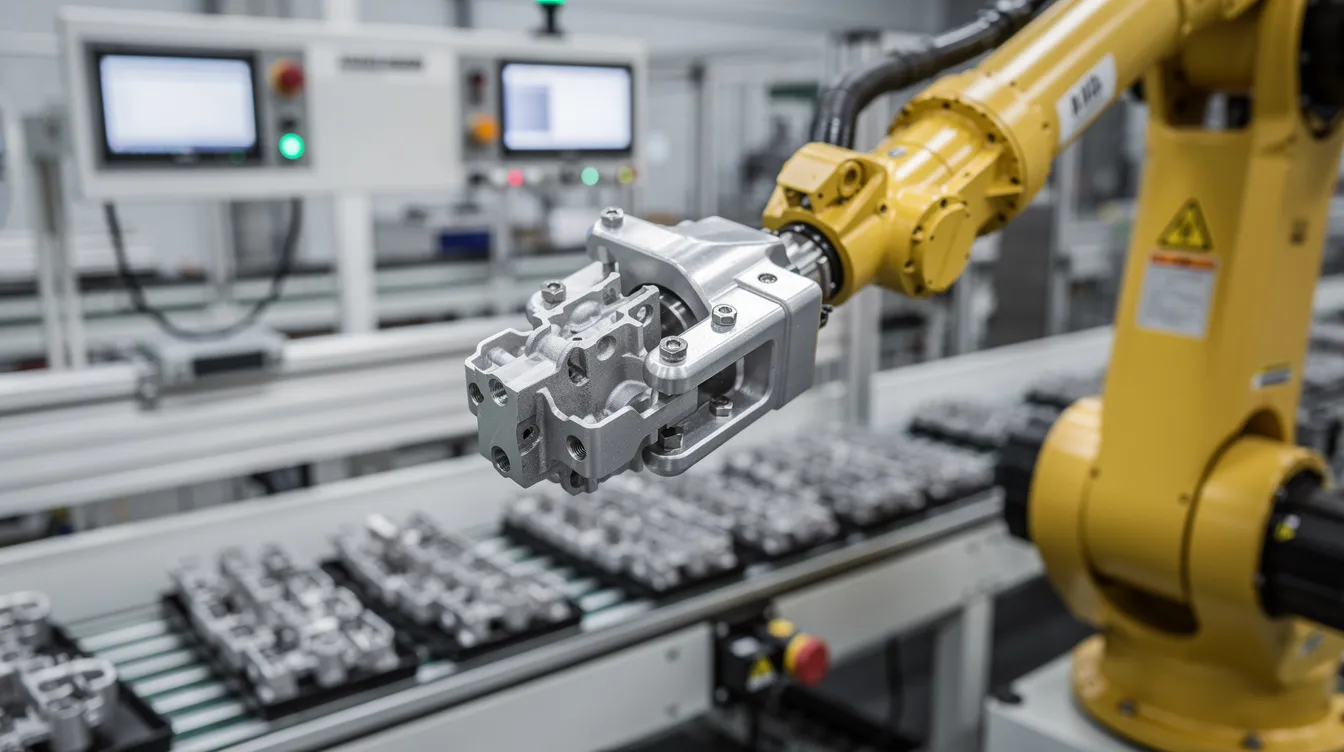
How Our Pricing Works for One-Off CNC Machined Parts
Anebon’s pricing model separates fixed setup costs from variable machining time and material, so engineers and procurement teams can see exactly where savings are possible. Transparent quoting is central to how we work with custom manufacturing clients.
-
What affects price most for single parts. Complexity of cnc milling paths, number of operations (milling + turning + secondary ops), material cost (titanium vs aluminum can mean a 3–5× difference), and finishing steps. Fast turnaround times in cnc machining can incur premium pricing, so plan ahead when possible.
-
No minimum order quantities. We quote 1, 3, or 5 pcs transparently, with clear breakdowns when requested covering material, machining, finishing, and shipping. Shipping costs can significantly impact the overall cost of CNC manufactured parts, so we provide shipping estimates upfront. A common pricing pattern: setup cost is fixed at approximately $250, and unit cost drops sharply with quantity-roughly $370 for 1 piece, $70 for 10, $40 for 100 pieces.
-
Instant pricing and DFM-driven options. Early engagement for DFM review often produces multiple price options-an “as designed” quote alongside a “cost-optimized” variant for the same part. Instant pricing estimates are available through our online quoting tool for standard geometries and materials. We also provide a material drop down in our quoting interface so you can quickly compare how switching from, say, 316 stainless to 304 affects your total.
Quality Assurance for Single-Part CNC Orders
Even a single CNC part goes through the same quality system as a full production batch at Anebon. Quality assurance is essential in precision manufacturing to ensure that parts meet specifications, and we do not cut corners on one-off orders.
-
Certifications and standards. Anebon holds ISO 9001:2015 certification, which ensures quality management systems across all operations. Our ISO 14001:2015 certification indicates a commitment to effective environmental management systems. These certifications apply to every order regardless of quantity.
-
Inspection capabilities. Standard inspection for one-off parts includes dimensional verification against the drawing using CMM measurement, surface roughness checks against specified Ra values, hardness testing when needed, and visual inspection after surface finish operations like anodizing or powder coating. We verify fit for threads and mating features before shipping.
-
Traceability and repeatability. We provide material certificates (e.g., EN 10204 3.1) and inspection reports on request. CNC programs are securely archived so the same machined part can be reproduced later without new setup costs-important for customers who start with a single prototype and later reorder production runs.
This system reinforces trust for overseas OEM clients concerned about quality and repeatability across multiple prototype iterations.
Comparing One-Off CNC Machining with Other Manufacturing Processes
For single custom parts, CNC machining-a subtractive manufacturing process-is usually more economical than processes like injection molding or die casting, which require expensive tooling before a single unit can be produced. Understanding when CNC is the right manufacturing process helps justify the choice in project reviews.
-
CNC machining vs 3D printing. CNC delivers superior mechanical properties, tighter tolerances, and better surface finish for functional metal parts. 3D printing may be cheaper for very complex organic shapes with minimal load requirements, but for anything needing real-world tensile strength, impact resistance, or operation in harsh environments, CNC wins. CNC machining can use over 50 metal and plastic materials, while most 3D printing technologies are limited to a narrower selection. Competitors like Xometry can achieve tolerances of sub ±0.001 inches, but direct manufacturer relationships often yield better unit pricing for single parts.
-
CNC machining vs sheet metal fabrication. Sheet metal fabrication involves cutting, bending, and assembling metal sheets, and it is cheaper for simple enclosures and brackets that can be formed from flat stock. When tight tolerances, 3D contoured surfaces, or aesthetic requirements justify fully milled forms, cnc machining services are the better choice. Other materials beyond sheet metal are also possible with CNC.
-
CNC machining vs die casting and injection molding. Die casting is a popular manufacturing process for creating complex shapes at volume, but tooling alone costs thousands of dollars, making it completely impractical for single-part production. Anebon can transition successful CNC prototypes into die casting or injection molding for later mass production, giving you a single-source path from prototype to scale. The lead time for tooling alone in die casting typically exceeds the entire CNC prototype cycle.
Case Snapshot: Affordable One-Off CNC Part from Concept to Delivery
In early 2025, a European robotics startup needed a single custom aluminum end-effector bracket in 7075-T6 with a black anodized finish. The part had to interface with a collaborative robot arm and hold ±0.01 mm on two critical bore positions.
-
DFM review. After the CAD upload, our engineers suggested slightly thickening a 0.8 mm thin wall to 1.2 mm and relaxing a non-critical edge tolerance from ±0.01 mm to ±0.05 mm. These changes eliminated the need for a micro end mill pass and reduced a finishing operation, resulting in a 25% cost reduction for the single machined part.
-
Timeline. Quoted within 24 hours. Production plus anodizing completed in 4 working days. DHL delivery from Dongguan to Germany in 3 days. Total lead time: 7 days from order confirmation to the engineer’s desk.
-
Outcome. The part met all key tolerances, passed load tests at 150% of rated force, and the customer reordered a short run of 30 pcs using the same CNC machine program-no new setup cost required.
This is what affordable custom cnc machining looks like in practice: smart DFM, fast execution, and a program archived for future reorders.
Why Overseas OEMs Choose Anebon for Single-Part CNC Machining
Since 2010, Anebon has served overseas OEMs and design teams that need both rapid prototypes and a long-term production partner. Our strength is combining prototype agility with production-grade quality under one roof.
-
Deep manufacturing expertise. In-house cnc milling and turning, die casting, and sheet metal capabilities mean you can start with a single CNC prototype and scale to full production parts without changing suppliers. English-speaking engineering support handles DFM reviews directly.
-
Competitive cost position. Located in Dongguan, China, with efficient cnc machining processes, lean overhead, and integrated finishing capabilities, we deliver competitive pricing even on one-off cnc parts. Our online cnc machining workflow eliminates unnecessary overhead.
-
Flexible engagement models. We support project-by-project prototype machining, framework agreements for ongoing R&D support, and seamless transition from single parts to full production with shared knowledge and stable quality. Whether you are choosing the right machined parts manufacturer for a one-time project or building a long-term relationship, we adapt to your needs.
How to Request an Affordable CNC Quote for a Single Part
Ready to get your next single-part CNC project moving? Here is what to prepare before requesting a quote.
-
What to include. A 3D cad file (STEP preferred) or 2D drawing with critical dimensions and tolerances. Specify your material choice or select “recommendation requested” if unsure. State your quantity-even if it is just 1. Note any required surface finish (bead blast + clear anodize, powder coating, zinc plating, etc.).
-
Response time and communication. Expect a detailed quote within 24 hours on working days. We communicate via email and video call, and offer iterative DFM discussion to help you hit budget targets.
-
Take the next step. Upload your file through our quote form and Anebon will propose at least one cost-optimized configuration for your single cnc machined part. No obligation, no minimum order, and full transparency on pricing.
Getting a single CNC part made affordably comes down to smart design, the right material, and a manufacturer who treats one-off orders with the same precision as a 10,000-piece run. Send us your drawing today.