Expert Stainless Steel Fabrication for Versatile Industrial Solutions
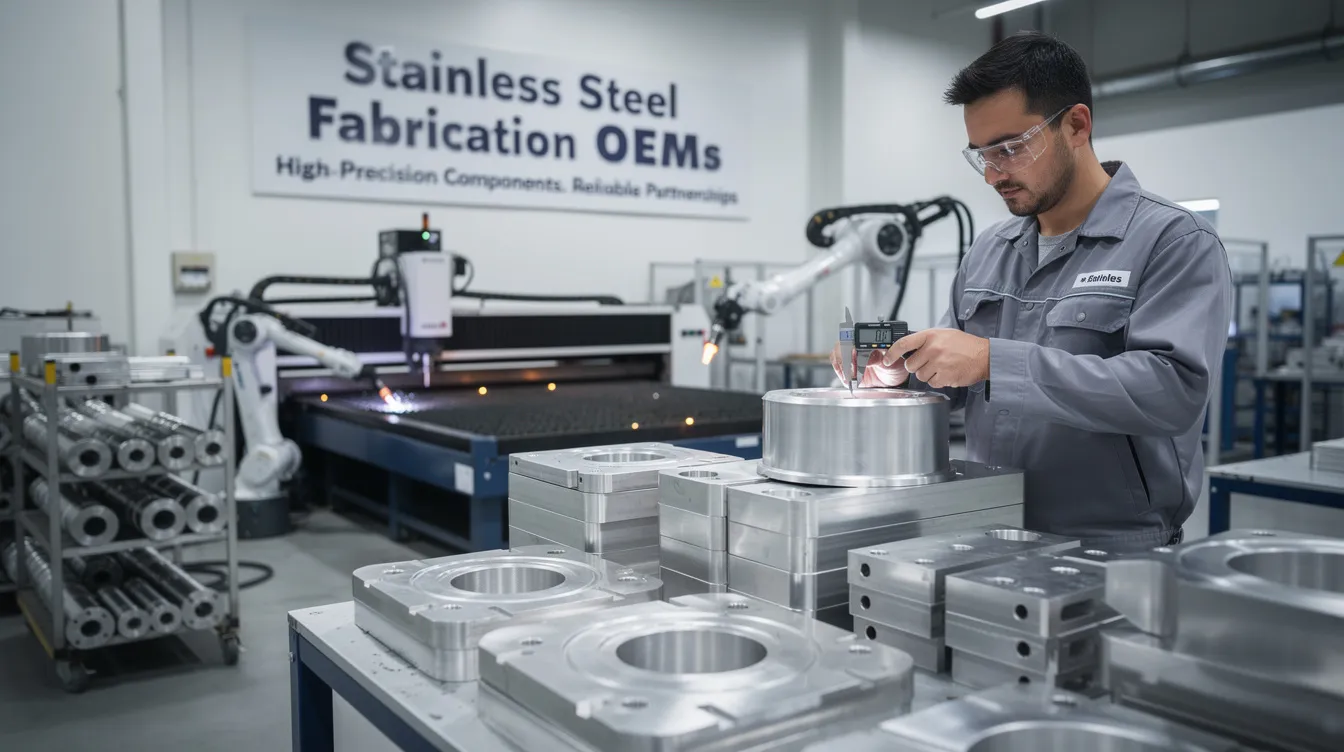
Stainless Steel Fabrication Services for OEMs and High-Precision Applications
This page provides an in-depth overview of stainless steel fabrication services for OEMs and high-precision industries. Learn about our capabilities, material advantages, quality control processes, and how to start your next stainless steel project with Anebon.
Stainless Steel Fabrication for Demanding Industries
Anebon Metal Products Limited is an ISO 9001:2015 and ISO 14001:2015 certified manufacturer founded in 2010 in Dongguan, Guangdong, China. We specialize in precision stainless steel fabrication for overseas OEMs across many industries. Stainless steel fabrication includes cutting, forming, machining, and welding; we handle all of these under one roof, from concept through installation-ready assemblies.
Stainless steel contains at least 10.5% chromium, which forms a passive oxide layer preventing corrosion and rust. That single property makes it the preferred material for equipment that faces moisture, chemicals, temperature cycling, or strict hygiene requirements. It is strong, temperature-resistant, and has a clean, professional appearance. The metal is ideal for food processing applications, where surfaces must resist bacterial adhesion and withstand daily chemical wash-downs.
-
Food processing and commercial kitchens: corrosion resistance and cleanability for wash-down environments
-
Medical devices and pharmaceutical equipment: hygienic surfaces meeting FDA and EU food-contact guidelines
-
Semiconductor and electronics: dimensional stability and contamination control
-
Industrial machinery and robotics: strength, wear resistance, and long service life
-
Aerospace and defense: high strength-to-weight in precipitation-hardening grades
We work with 304 and 316 stainless steel as commonly used grades, plus 316L for chloride-heavy environments, 17-4PH for high-strength tooling, and duplex 2205 where both strength and pitting resistance are required. Our custom metal fabrication services cover rapid prototyping through full production runs, with tight tolerances as precise as ±0.002 mm on CNC machined features.
Why Stainless Steel? Material Advantages and Grade Selection
Stainless steel offers excellent corrosion resistance, mechanical strength across a wide temperature range, and lifecycle cost benefits that carbon steel cannot match. Stainless steel’s durability lowers lifecycle costs because parts resist pitting, cracking, and surface degradation for decades rather than requiring periodic repairs or replacement. Material costs account for 40–60% of project costs, so grade selection directly affects total spend.
Stainless steel fabrication is popular in the food processing industry for hygiene and corrosion resistance. Pharmaceutical applications require specialized surface finishes and validated cleaning processes, typically with electropolished surfaces below 0.8 µm Ra. Both sectors reference FDA 21 CFR and EU Regulation 1935/2004 for food-contact materials.
-
304 vs. 316: Grade 304 (18–20% Cr, 8–10% Ni) covers most indoor and mild-exposure applications at lower cost. Grade 316/316L adds 2–3% molybdenum, raising the Pitting Resistance Equivalent Number from ~24 to ~27, which matters for salt spray, chlorides, and clean-in-place systems. Switching from 316 to 304 stainless steel can reduce costs when the environment allows it. Processing costs increase due to slower cutting speeds on higher-alloy grades, and specialized tooling raises fabrication costs further.
-
Duplex 2205: Duplex stainless steel combines high strength and corrosion resistance; its annealed yield strength is ~450 MPa versus ~205 MPa for 316L, and its PREN of ~35 outperforms both 304 and 316 in warm chloride service. Pump housings, offshore structural components, and chemical process equipment benefit from duplex’s combination of thinner wall sections and longer service life.
-
17-4PH: In H900 condition, tensile strength reaches ~1,310 MPa. This grade is used for tooling, valve stems, and high-load functional components where corrosion resistance comparable to 304 is acceptable.
Stainless steel is 100% recyclable. Our ISO 14001:2015 certification governs scrap segregation and coolant reuse, so material that leaves the shop as chips re-enters the supply chain rather than a landfill.
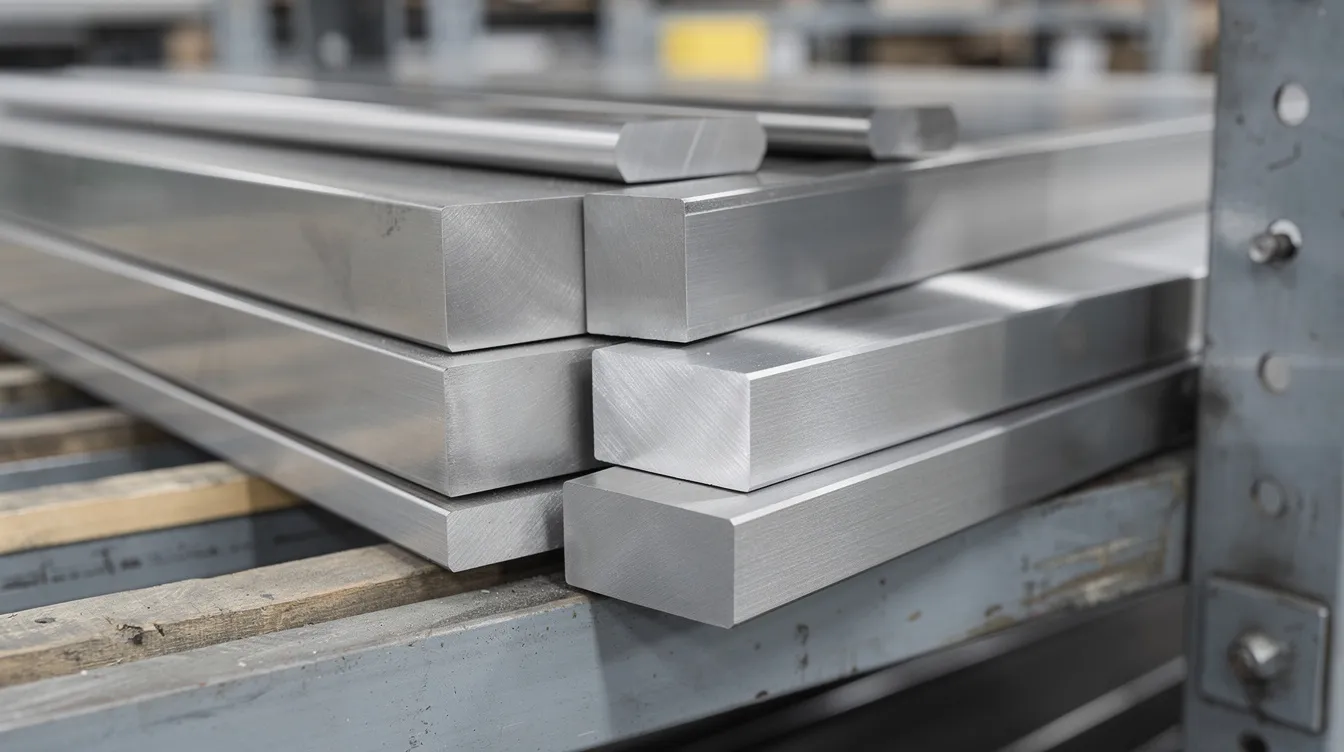
Our Stainless Steel Fabrication Capabilities
Anebon provides full-service stainless steel and sheet metal fabrication under one roof: laser cutting, CNC punching, forming, CNC machining, welding, finishing, and assembly. Eliminating handoffs between vendors shortens lead times and reduces dimensional drift between process stages.
-
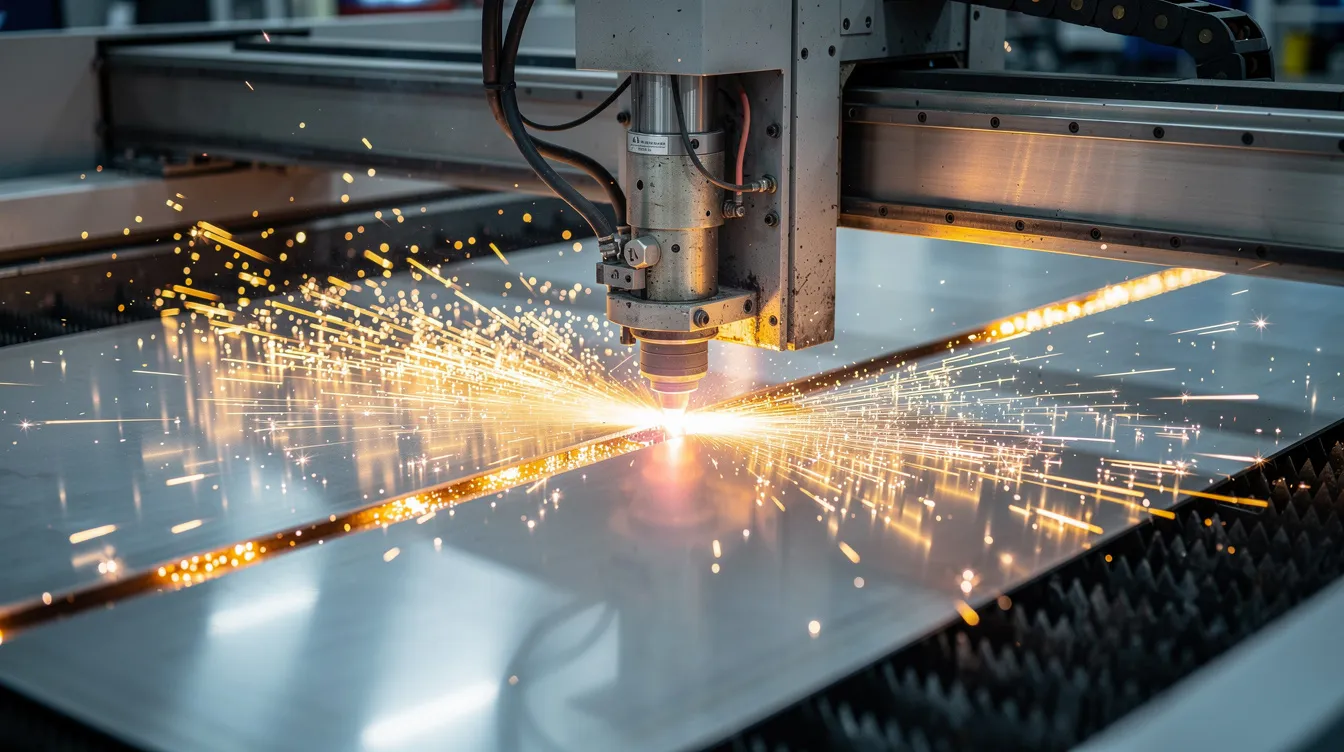
Laser cutting produces intricate shapes and detailed profiles from stainless steel sheets up to ~12 mm thick. Laser cutting provides clean, burr-free cuts with tight tolerances, typically ±0.05 mm on contour dimensions. For thicker sections, waterjet cutting uses a high-pressure stream of water mixed with abrasive particles; waterjet cutting retains structural properties without warping stainless steel, which matters for heat-sensitive assemblies.
-
Punch press operations create holes and slots in stainless steel components at high speed for production-volume sheet metal parts.
-
Press brake forming allows precision bends for complex stainless steel parts. Our CNC press brakes handle lengths up to several meters, and we control springback and bend radius to protect surface finish on pre-finished stainless.
-
CNC machining integrates with fabricated weldments: CNC milling, CNC turning, and 5-axis machining add precision holes, pockets, sealing surfaces, and threaded features down to M1.0. Ultra-precision tolerances reach ±0.005 mm on critical dimensions; minimum wall thicknesses of ~0.5 mm are achievable.
We fabricate equipment enclosures, frames, brackets, manifolds, housings, and structural weldments that combine laser-cut sheet metal with machined components into a single assembly.
Welding Capabilities and Surface Finishing for Stainless Steel
Stainless steel welding requires careful attention to heat input, shielding gas coverage, and filler metal selection. Contamination from carbon steel tooling or improper cleaning can embed free iron into the weld zone, eliminating the passive chromium-oxide layer and causing localized corrosion within weeks.
-
TIG (GTAW): Preferred for thin-gauge and sanitary stainless joints where weld bead profile and penetration control are critical. TIG and MIG welding are common methods for stainless steel assemblies; the choice depends on section thickness and production volume.
-
MIG (GMAW): MIG welding is faster than TIG and ideal for thicker sections and high-volume production of structural fabrications. Spot welding handles high-volume sheet metal assemblies such as equipment enclosures and machine guards.
-
Process control: We use qualified weld procedures with controlled interpass temperatures, interpass cleaning, and matching filler metals (308L for 304, 316L for 316) to preserve corrosion performance. Companies like GSM Industrial maintain a dedicated segregated weld area and qualify weld procedures for exotic stainless steel in-house; Anebon follows similar discipline with separate tooling and dedicated welders for stainless work.
Surface finishing processes include grinding, polishing, and electropolishing to improve appearance and hygiene. Available finishes range from standard 2B mill finish through brushed #4 (~0.9–1.5 µm Ra), bead-blasted matte (~1.0–6.0 µm Ra), mirror polish #8 (~0.1–0.3 µm Ra), and electropolished surfaces for cleanroom or food-contact platforms. For powder coating applications, fabricators like Accurate Metal Fabricating use a 5-stage wash system to ensure adhesion and durability. Smoother welds and polished surfaces deliver sanitary functionality; bead-blasted surfaces reduce glare on visible panels; cosmetic finishes serve consumer-facing products where aesthetic appeal matters.
Quality Control, Certifications, and Design Support
Tight tolerances and repeatable quality control are what separate a precision fabricator from a general shop. For stainless steel parts used in aerospace, medical, electronics, and robotics, dimensional failures at the stage of assembly can ground a production line.
-
Inspection process: Incoming material inspection with mill cert traceability, in-process checks at each operation, first-article inspection (FAI), and final dimensional reports on request. The quality assurance process involves dimensional inspection and visual inspection for defects at every critical step. Quality control ensures compliance with ASME Code for pressure vessels where applicable.
-
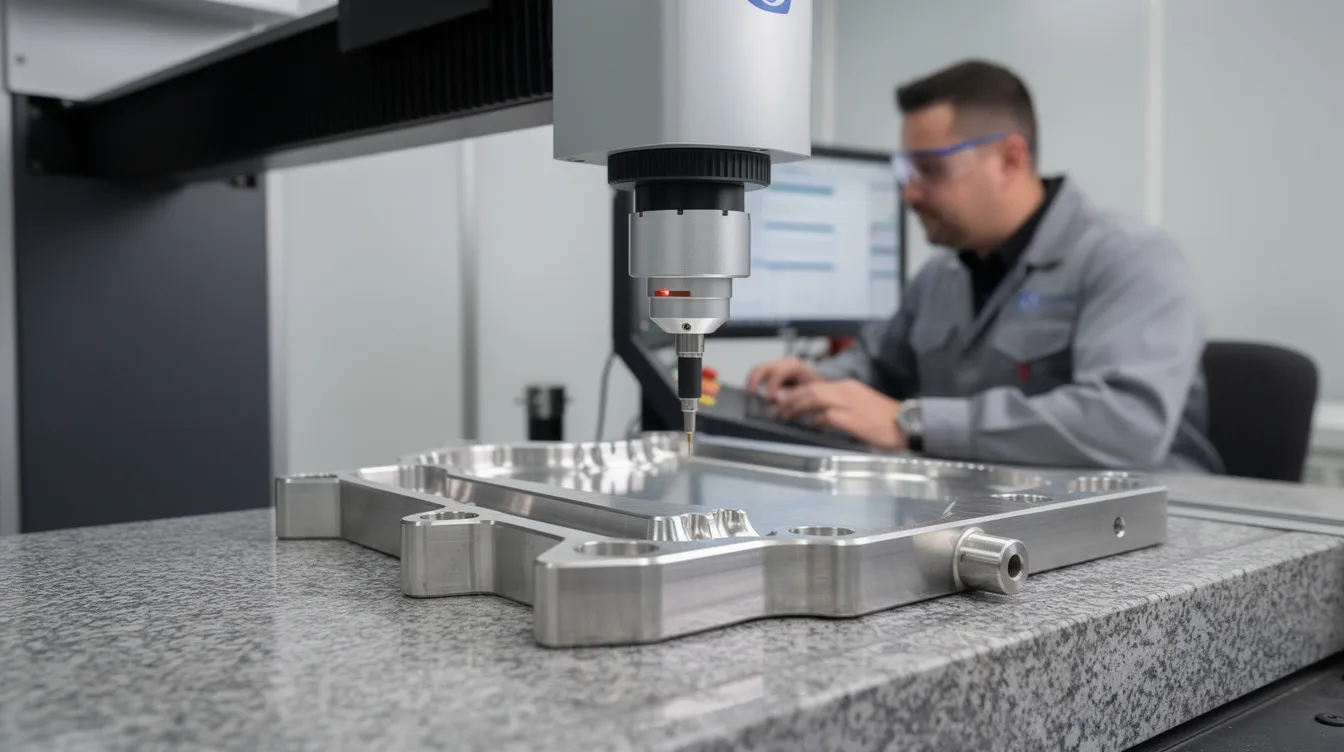
Metrology equipment: Calibrated CMMs, height gauges, micrometers, optical comparators, and surface roughness testers verify that stainless steel dimensions and finishes meet exact specifications. Red River Precision, as a benchmark, maintains manufacturing tolerances of ±0.005 inches; Anebon holds similar or tighter standards depending on feature geometry.
-
ISO 9001:2015: Our quality management system governs steel fabrication workflows, document control, non-conformance tracking, and corrective actions across every project.
-
DFM support: Our team reviews wall thicknesses, bend radii, weld joint design, and grade selection before cutting begins. This commitment to early-stage collaboration helps customers optimize cost and performance, often catching issues that would otherwise surface during production.
Applications and How to Start Your Stainless Steel Project with Anebon
We produce stainless steel parts for a wide range of applications: commercial kitchen components, equipment enclosures, medical device housings, sensor brackets, pump and valve parts, machine guards, ventilation fittings, and structural frames. Each project draws on our capabilities in custom fabrication, precision CNC machining, and welding to deliver parts ready for installation.
Typical project engagement:
-
Submit an RFQ with 3D CAD files and drawing with specifications
-
Material, finish, and tolerance review with our engineering team
-
DFM feedback and quoting
-
Prototype build and dimensional validation
-
Production ramp-up with in-process quality control
We support one-off prototypes, bridge builds, and long-term production. Our dedicated facilities in Dongguan give overseas OEM clients access to mature supply chains, competitive pricing, and global shipping expertise built over more than a decade of serving industries across North America, Europe, and Asia-Pacific.
Contact Anebon Metal Products Limited to request a quote for your next stainless steel or custom metal fabrication project. Send your CAD files and specifications to our team for DFM review and a detailed proposal.